
Hungarian tutors · Los Angeles · Since 2006
Hungarian Tutors & Classes in Los Angeles. Szia.
Private lessons with native-speaking instructors. Matched to your goals, your schedule, and your life. Start any time.



Your instructors
Hungarian class instructors
I want to learn…
Every tutor, personally met. — founder-vetted since 2006, in Los Angeles and online worldwide.
Get a personalized plan
Pick your language — a language advisor will match you with the right tutor and map out your path.


German studeis Specialized translator
hungarian
Specialties
Also speaks: English, German, Spanish
German studeis Specialized translator
hungarian
Specialties
I also speak: English, German, Spanish
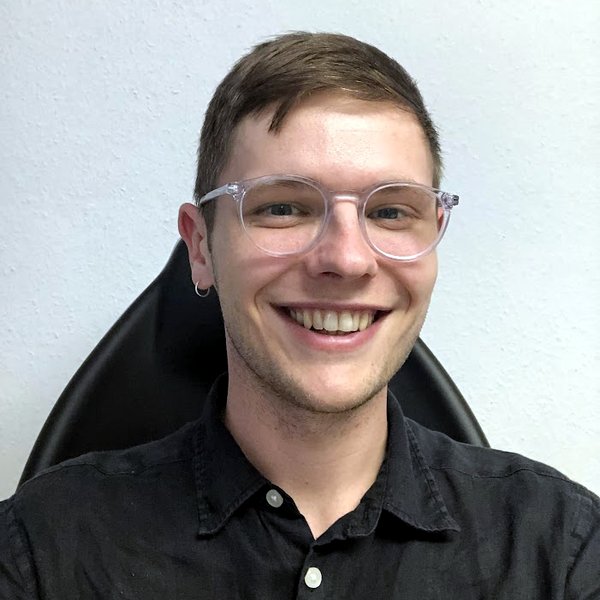
M.A. in TheologyCertificate of Philosophy · M.A. in TheologyCertificate of Philosophy
Native Bavarian Speaker and Experienced Tutor in German, English, and More!
Specialties
M.A. in TheologyCertificate of Philosophy · M.A. in TheologyCertificate of Philosophy
Native Bavarian Speaker and Experienced Tutor in German, English, and More!
Specialties
Why Hungarian?
Four reasons to take Hungarian classes
Europe's Most Unique Language
Hungarian is unrelated to any neighboring language — it belongs to the Finno-Ugric family, closer to Finnish and Estonian than to German or Slavic languages. It's a genuine linguistic adventure.
Live in Budapest, Europe's Hidden Gem
Budapest offers world-class architecture, thermal baths, and nightlife at a fraction of Western European prices. Hungarian fluency is your key to actually living there.
Rewire How You Think About Language
Hungarian's 18 grammatical cases and vowel harmony system are unlike anything in English. Learning it fundamentally changes how you understand what language can do.
Punch Above Your Weight Professionally
Very few non-natives speak Hungarian, making fluency an extremely rare and valuable skill. In diplomacy, business, or academia, it sets you apart immediately.
Since 2006
Hungarian in Los Angeles
Hungarian is one of the most unusual languages in Europe. It is spoken by about 13 million people, mostly in Hungary and in Hungarian-speaking communities in Romania, Slovakia, and Serbia. It is not related to any of its neighbors, not Germanic, not Slavic, not Romance. Hungarian belongs to the Finno-Ugric family along with Finnish and Estonian, but the relationship is so distant that speakers of one cannot understand another. The grammar uses 18 grammatical cases (linguists argue about the exact count), agglutinates suffixes onto word stems, and operates on vowel harmony. The result is words that look impossibly long and sentences that pile information onto a single root in ways English speakers find disorienting at first.
The Hungarian community in LA goes back to mid-20th-century waves of immigration after 1956 and during the Cold War. There is a small but persistent Hungarian-American community in Hollywood, the Westside, and the Valley, with cultural anchors like the Hungarian Reformed Church and Hungarian House. Many of our students are heritage speakers reconnecting with grandparents, professionals working with Hungarian companies in pharma, automotive, or film, or travelers who fell hard for Budapest and want to come back able to navigate Hungarian on its own terms.
Strommen has been matching students with private Hungarian tutors in Los Angeles since 2014. Our tutors are native speakers from Budapest and other parts of Hungary who can teach the formal standard or the casual register your family used at home. Hungarian rewards patience and consistency, and a good tutor knows how to make the case system feel logical instead of paralyzing. Lessons are one on one, online or in person, and built around what you actually need to do in Hungarian.
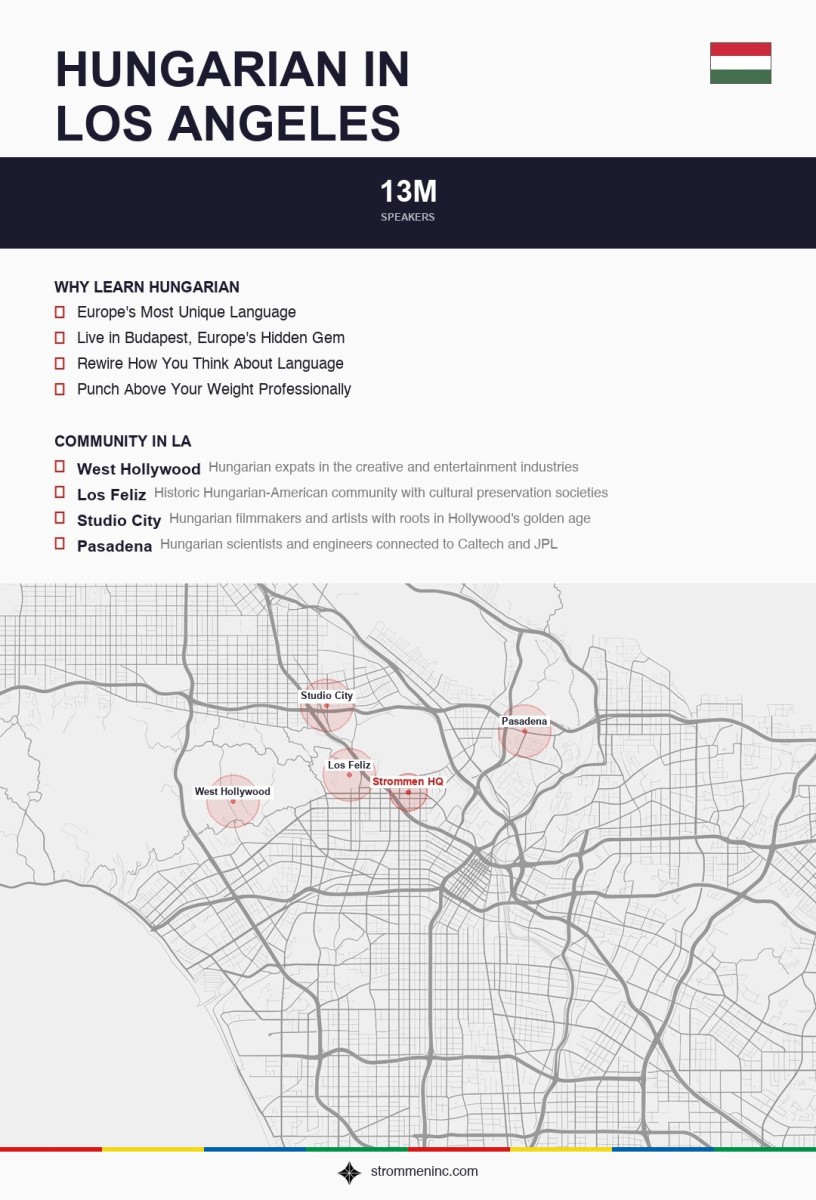
No public Hungarian group classes right now — but we can set up a semi-private class for your family, friends, or company with as few as two people. Get in touch.
Hungarian class FAQ
What is the best way to learn Hungarian?
With a patient, skilled native speaker — full stop. Hungarian grammar is complex enough that self-study usually hits a wall within a few weeks. The case system, vowel harmony, and verb conjugations all interact with each other, and you need someone to explain why things change the way they do. Flashcard apps can help with vocabulary, but they can't teach you how to construct a Hungarian sentence. Consistent lessons with a native tutor, combined with Hungarian media exposure between sessions, is the most reliable approach.
How long does it take to learn Hungarian?
The Foreign Service rates Hungarian as Category IV — one of the hardest for English speakers, on par with languages like Vietnamese and Turkish. Professional proficiency takes an estimated 1,100 class hours. For basic conversational ability, most students need 12 to 18 months of regular study. The grammar demands a lot of memorization upfront, but Hungarian is very consistent in its rules, so once you internalize the system, progress accelerates.
Is Hungarian hard for English speakers?
Honestly, yes. Hungarian is considered one of the hardest European languages for English speakers. There's almost no shared vocabulary, the grammar works on completely different principles, and the 18 cases take serious effort to learn. That said, pronunciation is consistent and phonetic, word order is flexible, and the language has a logical internal structure. It's hard, but it's not chaotic — every rule applies predictably. Students who enjoy systematic thinking tend to do well with it.
Can I take Hungarian classes online?
Yes, all Hungarian lessons are available online. Given how few Hungarian tutors are available in any single city, online lessons are often the best way to find a qualified native speaker. Our video-call format supports screen sharing for written exercises and lets you learn from anywhere in the LA area or beyond.
Are you a Hungarian teacher in Los Angeles? Join us →
Since 2006 · Los Angeles
Start Hungarian classes this week.
Call 323-638-9787 or fill out our form. We match you with an instructor within 24 hours.
Get Started