
 Farsi tutors · Los Angeles · Since 2006
Farsi Tutors & Classes in Los Angeles. Salam.
Private lessons with native-speaking instructors. Matched to your goals, your schedule, and your life. Start any time.


Your instructors
Farsi class instructors
I want to learn…
Every tutor, personally met. — founder-vetted since 2006, in Los Angeles and online worldwide.
Get a personalized plan
Pick your language — a language advisor will match you with the right tutor and map out your path.


Associates in three different majors
Learn with Me: Where Language Meets Culture, Creativity, and Conversation!
Personally vetted · Strommen’s note
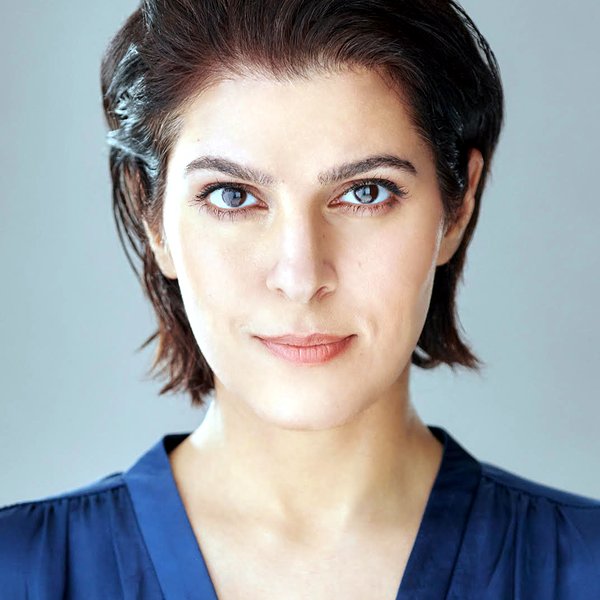
Sheida spent over fifteen years working with kids before she ever tutored one, and she's taught Farsi and French for eleven years since.
Specialties
Associates in three different majors
Learn with Me: Where Language Meets Culture, Creativity, and Conversation!
Specialties
Personally vetted · Strommen’s note
Sheida spent over fifteen years working with kids before she ever tutored one, and she's taught Farsi and French for eleven years since.


Master's degree in English teaching
Explore Persian Culture and gain fluency with Elaheh
Personally vetted · Strommen’s note
Fifteen years teaching English and Farsi, five of them as an international instructor, shaped how Elaheh builds lessons: around real situations, not scripts.
Specialties
Master's degree in English teaching
Explore Persian Culture and gain fluency with Elaheh
Specialties
Personally vetted · Strommen’s note
Fifteen years teaching English and Farsi, five of them as an international instructor, shaped how Elaheh builds lessons: around real situations, not scripts.
Francais langue seconde university of Montreal (CANADA), Le certificat La traduction de la langue francaise Allameh tabatabaei (IRAN), Le baccalaureat
Learn French and Farsi with an Experienced tutor
Personally vetted · Strommen’s note
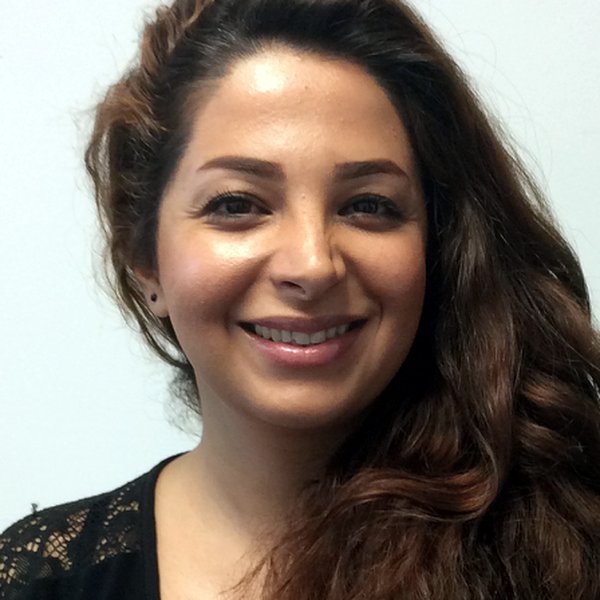
Université de Montréal-trained in French as a second language and fluent in Farsi, Maryam built her own interactive life-simulation game for lessons.
Specialties
Francais langue seconde university of Montreal (CANADA), Le certificat La traduction de la langue francaise Allameh tabatabaei (IRAN), Le baccalaureat
Learn French and Farsi with an Experienced tutor
Specialties
Personally vetted · Strommen’s note
Université de Montréal-trained in French as a second language and fluent in Farsi, Maryam built her own interactive life-simulation game for lessons.

Why Farsi?
Four reasons to take Farsi classes
Read Rumi and Hafez in the Original
Rumi is the best-selling poet in America — but English translations lose the meter, rhyme, and mystical wordplay. Farsi unlocks the real thing.
Speak Across Iran, Afghanistan & Tajikistan
Farsi (and its variants Dari and Tajik) is spoken by over 110 million people across Central and Western Asia. One language, three countries, countless dialects.
Understand a Pivotal Geopolitical Region
Iran has been at the center of world events for decades. Farsi literacy gives analysts, journalists, and diplomats an irreplaceable primary-source advantage.
Easier Than You Think
Farsi has no grammatical gender, no noun cases, and a largely phonetic script. Its grammar is simpler than most European languages, making it surprisingly approachable.
Since 2006
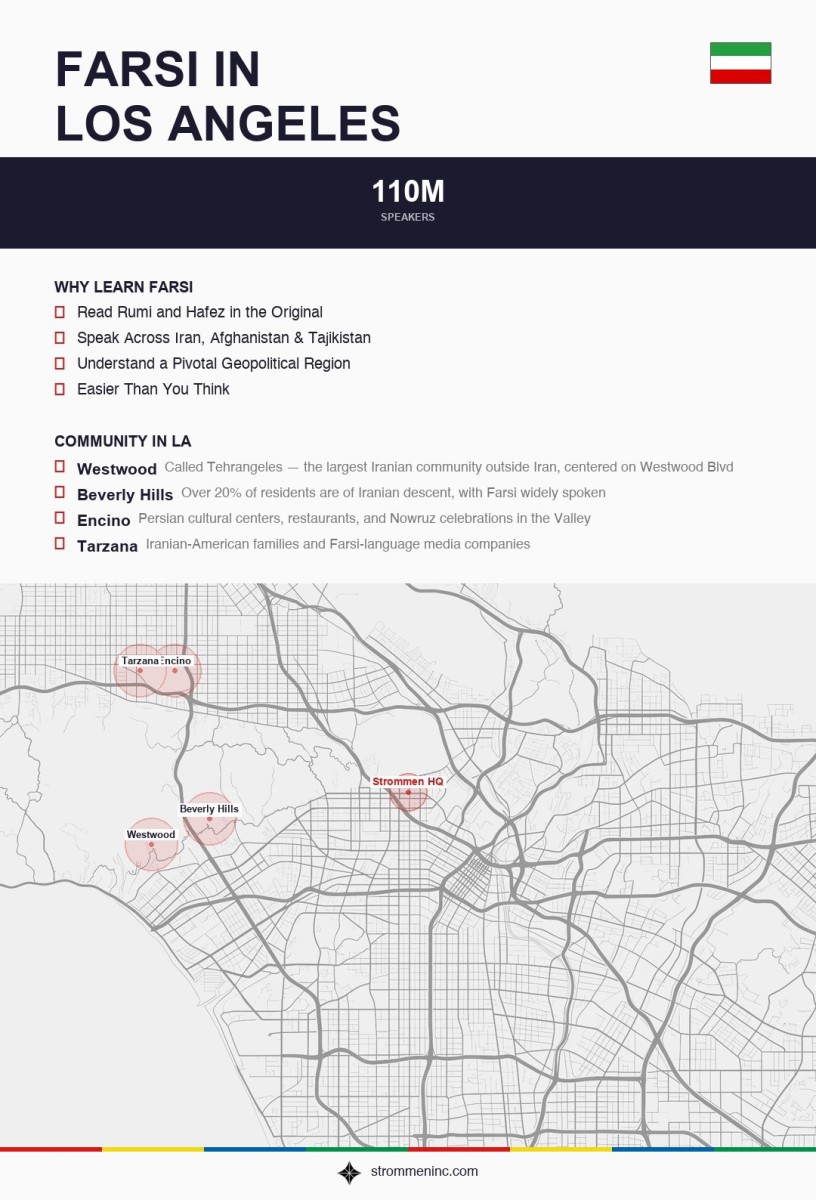
Farsi in Los Angeles
Farsi (also called Persian) is spoken by 110 million people across Iran, Afghanistan (where it is called Dari), and Tajikistan (where it is called Tajik). Despite being written in a modified Arabic script, Farsi is not related to Arabic. It is Indo-European, which means it shares deep structural roots with English, French, and German. The grammar is unexpectedly approachable for English speakers: no grammatical gender, no case system in the way German has, and a verb structure that becomes pattern-recognizable quickly. The script flows right to left, several letters look identical except for the dots above or below them, and most short vowels are not written. Once you crack the script the rest moves faster than people expect.
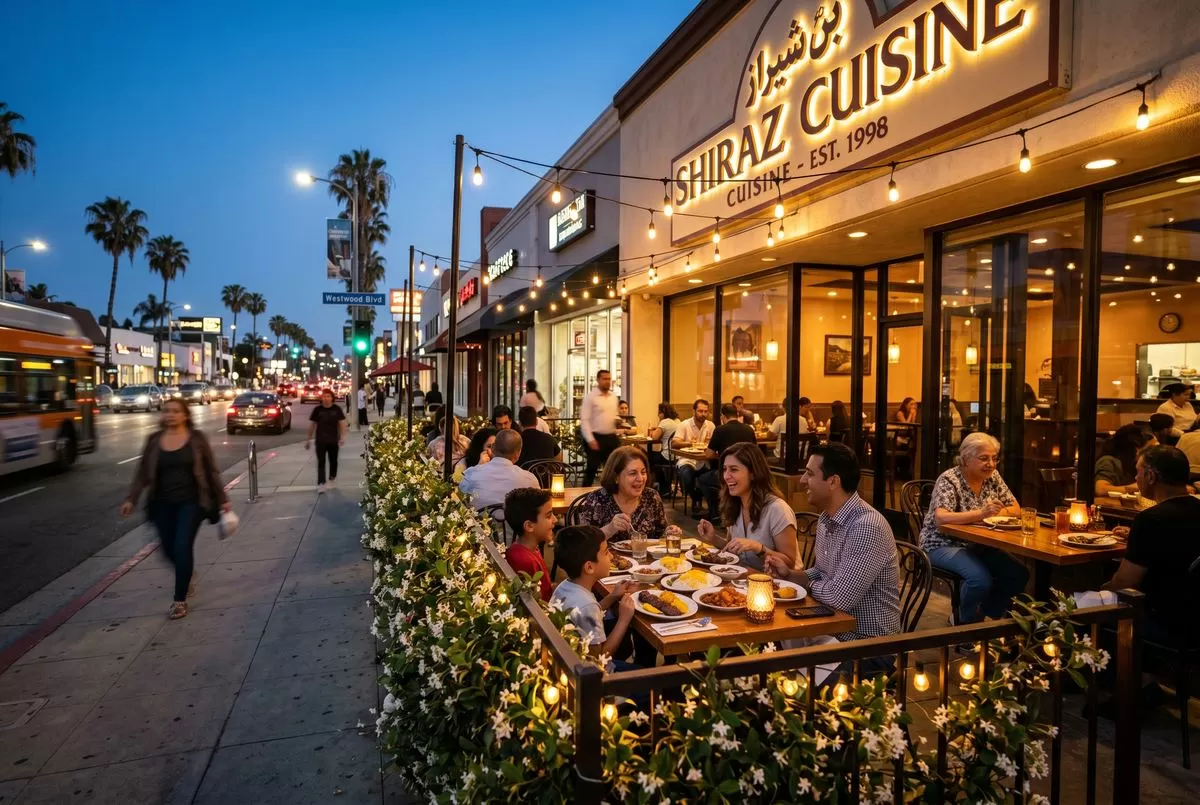
Los Angeles is home to the largest Iranian community outside Iran, often called Tehrangeles. The corridor from Beverly Hills through Westwood is where the community is most visible, but Persian businesses, restaurants, and cultural institutions extend across the Westside, the Valley, and into Glendale. Many of our Farsi students are heritage speakers, the children and grandchildren of Iranians who emigrated after 1979, who grew up hearing Farsi at home but never learned to read it. Others are partners of Iranian-Americans wanting to connect with in-laws, scholars and journalists interested in Iran or Afghanistan, or professionals working with the diaspora’s substantial business and entertainment networks.
Strommen has been matching students with private Farsi tutors in Los Angeles since 2014. Our tutors are native speakers from Iran and the Iranian diaspora who can teach standard Tehrani Farsi, work on the script and reading separately, or focus on the formal Persian poetry tradition (Hafez, Rumi, Saadi) that draws so many students to the language. Lessons are one on one, online or in person, and your tutor designs every session around your goals.
No public Farsi group classes right now — but we can set up a semi-private class for your family, friends, or company with as few as two people. Get in touch.
Farsi class FAQ
What is the best way to learn Farsi?
Regular conversation with a native speaker is the fastest path. Farsi grammar is straightforward enough that you can start forming sentences early, and a tutor helps you build the spoken fluency that matters most in real interactions. Learning the Persian script is important but secondary — many students start with transliteration and add the script once their spoken Farsi has some momentum. A native tutor also teaches you ta'arof, the elaborate politeness system that governs Persian social interaction and that no textbook covers well.
How long does it take to learn Farsi?
The State Department classifies Farsi as Category III, estimating about 1,100 class hours for professional proficiency. But Farsi is on the easier end of that category — the grammar is simpler than Arabic or Hebrew, and a surprising number of words are borrowed from French and English. Heritage speakers who understand spoken Farsi usually make fast progress in reading and formal speaking within 3-6 months.
Is Farsi hard for English speakers?
Less than you'd expect. Farsi is Indo-European, so the sentence structure feels more natural than Arabic or Chinese. There's no grammatical gender, no noun cases, and verbs are regular. The main hurdle is the script — Persian uses a modified Arabic alphabet that reads right to left and connects letters differently depending on position. Pronunciation is generally manageable, though there are a few guttural sounds that take practice.
Can I take Farsi classes online?
Yes. All of our Farsi lessons are available online via video call. This is especially popular with heritage speakers and professionals who want consistent weekly sessions without commuting. Screen sharing is useful for script practice and reading exercises. You work with the same native-speaking tutor each time, with lessons built around your specific needs.
Are you a Farsi teacher in Los Angeles? Join us →
Since 2006 · Los Angeles
Start Farsi classes this week.
Call 323-638-9787 or fill out our form. We match you with an instructor within 24 hours.
Get Started