
Since 2006 · Los Angeles · On-Camera & Live Interpreting
Interpreters who are great on camera.
Red carpets, award shows, fight nights, press junkets, live broadcasts, in-person events. Our roster includes interpreters who actually belong in front of a camera — trained linguists who are dressed for broadcast, comfortable next to talent, and steady under live conditions.
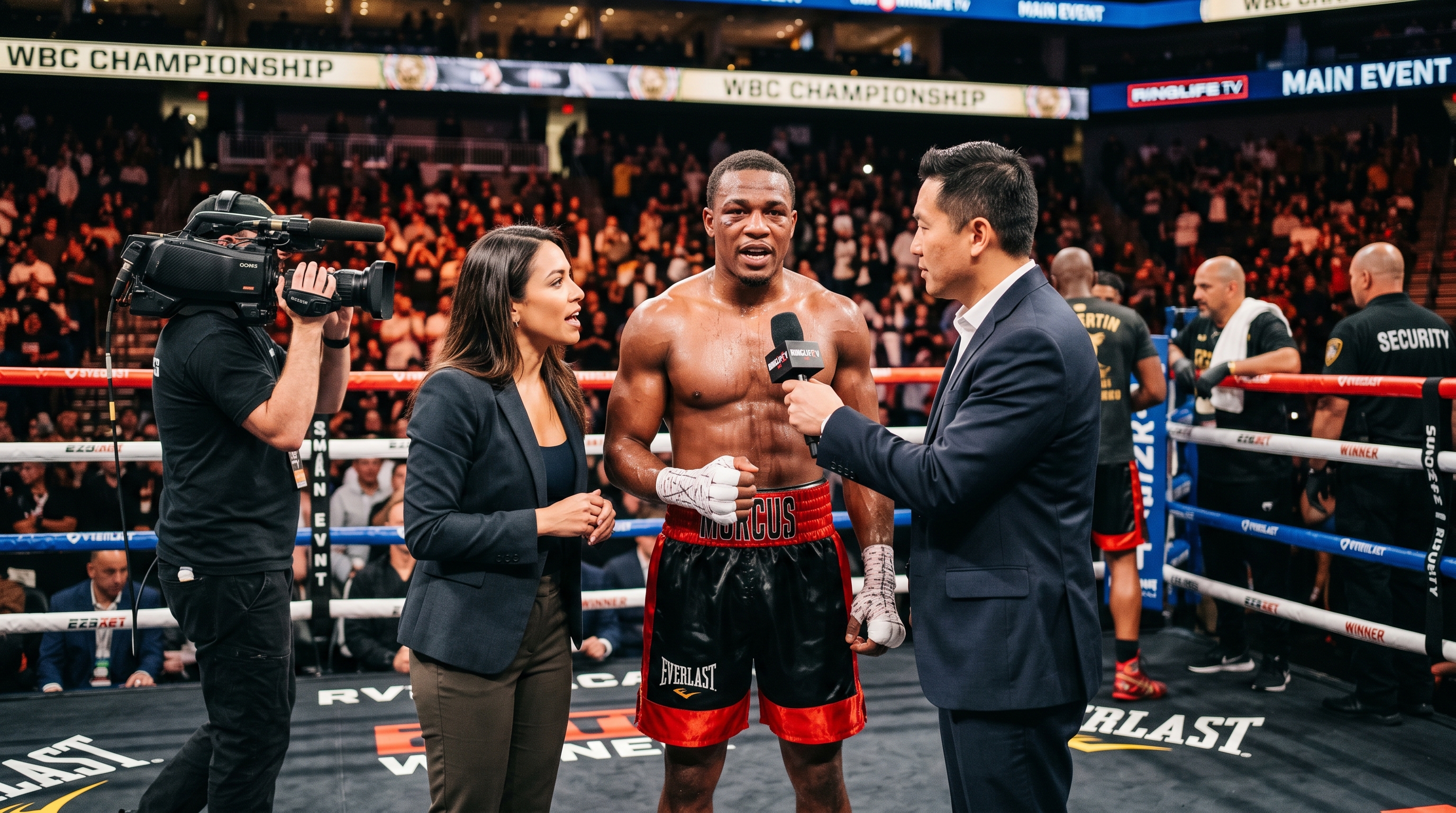
Settings we routinely staff
On set with productions including
What we cover
Where our interpreters show up.
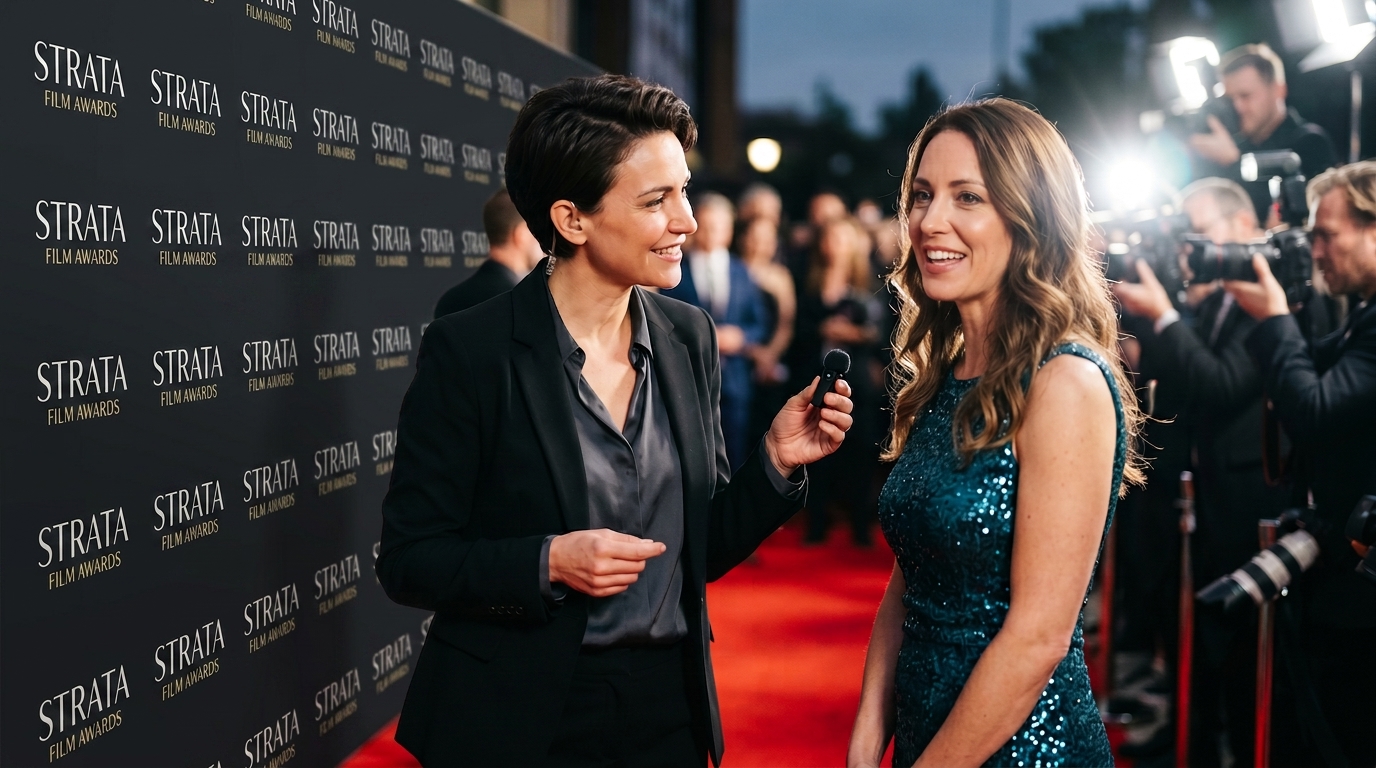
Red Carpets & Step-and-Repeats
Foreign-language talent on the carpet, English press in their face. Our interpreter stands beside them, dressed for camera, voicing their answers in real time.
Award Shows & Live Broadcasts
Live-to-air interpretation when an international winner takes the stage or a presenter switches languages. Calm under broadcast time pressure.
Fight Nights & Sports Press
Spanish-, Portuguese-, Russian-, Japanese-, and Mandarin-speaking fighters and athletes need an interpreter who keeps up with the moment. Our roster has worked the post-fight scrums.
Press Junkets & EPK Days
Back-to-back roundtables with a foreign-language star, all day. Same interpreter through every outlet so the talent stays comfortable and the answers stay consistent.
Live Event Stages & Keynotes
Conferences, brand activations, corporate keynotes, and panel discussions. Simultaneous from a booth or consecutive at the lectern, whichever your run-of-show needs.
On-Set & Production Interpretation
Foreign-language director, talent, or DP. Our interpreter sits next to video village, translates live notes, and keeps the day on schedule.
Remote Video & Studio Booth
Zoom interviews, satellite hits, and studio booth simultaneous when the talent is overseas. Same interpreters, framed for camera, on your link.
Simultaneous & Consecutive
Simultaneous: interpreter speaks at the same time, usually through an earpiece or booth. Consecutive: interpreter waits, then renders. We’ll tell you which fits your format.
Why producers keep coming back
The roster does this regularly.
Putting an interpreter on camera isn’t the same as putting one in a hospital or a deposition. It’s a different skill. The people we send to your set already have the reps.
- On-camera experience as a baseline, not an exception — the people we put on set have done it before.
- Dressed and groomed for broadcast. Mic-pack friendly. Comfortable next to talent and athletes without pulling focus.
- Calm in live conditions: cue lights, floor managers, countdowns, simultaneous timing, abrupt format changes.
- Trained interpreters first — not bilingual fans handed a microphone. Accuracy and tone both stay intact under pressure.
- Match the register: formal for awards, fast for sports press, conversational for junkets.
- NDA-ready and used to confidential pre-release material on set.
How it works
Four steps.
Tell us about the event
Date, location, language, format (simultaneous vs. consecutive), and whether the interpreter is on camera or off. Send it through our project inquiry form.
We match an interpreter
From our roster of working on-camera interpreters in that language. We send a short bio and confirm fit before locking.
Pre-event briefing
Call sheet, run-of-show, any pre-release material under NDA, names and proper-noun pronunciations, wardrobe notes. The interpreter shows up prepped.
Event day
Interpreter arrives early, syncs with your floor team, and works the event. Backup contact at Strommen on standby through the day.
Languages
40+ languages, regularly.
Most-requested on camera: Spanish, French, Portuguese, Italian, German, Japanese, Korean, Mandarin, Cantonese, Russian, Arabic, Hebrew, Farsi, Hindi, Urdu, Vietnamese, Thai, Tagalog, and more. If you don’t see your language, ask — we’ve probably staffed it.
Questions producers ask
On-camera interpreting FAQ.
Can your interpreter actually appear on camera?
Yes. That’s the point of this page. Our roster includes interpreters who routinely work on broadcast, on red carpets, and in-frame at events — not back-room voice-only interpreters reluctantly placed on set.
Simultaneous or consecutive — which do we need?
Tell us the format and we’ll tell you. Live broadcast and stage panels usually call for simultaneous (interpreter speaks at the same time, into an earpiece or via a booth). Red carpets, junkets, and post-fight interviews usually run consecutive (interpreter waits, then renders). Some events mix both.
How much lead time do you need?
For named talent or specialty languages, the earlier the better — ideally a week or more so we can match the right interpreter and brief them on the material. Same-day and next-day requests get handled when the language and format align with someone available.
Do you cover travel and out-of-LA events?
Yes. We staff events nationwide and abroad. Travel, lodging, and per diem are billed separately on the quote.
Will the interpreter wear our network’s wardrobe or take direction from our floor team?
Yes. Our on-camera interpreters expect wardrobe notes, mic packs, and floor direction. Send the call sheet and any wardrobe parameters and we’ll relay them.
How do we get a quote?
Send the event date, location, language, and a quick description of the format. We quote per project — rates depend on language, length, format (simultaneous vs. consecutive), and travel.
Ready when you are
Book an interpreter.
Send the date, location, and language. We’ll come back with a short list and a quote.