



Personally vetted instructors
Business Korean tutors, lessons & classes
반갑습니다 The formal-polite "pleased to meet you" that opens a Korean business introduction.
Personally vetted Business Korean tutors. Lessons built around the honorific register, the meeting conventions, and the unwritten workplace codes that decide how you land in a Korean professional setting.
Your instructors
Business Korean tutors for private lessons & classes
Strommen has been teaching Korean since 2006, and Business Korean has always drawn a particular kind of student: professionals with a real meeting on the calendar, a Korean parent company, or a client relationship that depends on getting the register right. Every tutor below was met and vetted by us. No marketplace, no automated profiles. Real teachers with real corporate and teaching backgrounds, which you can read about in their bios.
Filter by location, age, or price. Then book a 30-minute free trial and tell the tutor what is actually on your calendar.
Below are the Strommen tutors who specialize in Business Korean. Photos, ratings, and rates are real. Click any card to read a bio and book a free 30-minute trial.
I want to learn…
Every tutor, personally met. — founder-vetted since 2006, in Los Angeles and online worldwide.
Get a personalized plan
Pick your language — a language advisor will match you with the right tutor and map out your path.




Master of Arts (M.A.) in Education from the University of the People (US)Bachelor of Arts (BA) in Teaching Korean as a Second Language from the Korean Education Bank (Korea)Bachelor of Arts (BA) in International Commerce and Logistics from Seoul Cyber... · Level 2 Certificate of Korean Language Teaching
Multilingualism, Specialized Education, Extensive Experience, Target Audience, Practical Skills
Personally vetted · Strommen’s note
Sanghoon teaches Chinese, English, and Korean out of Hangzhou, pulling material from work with students across very different backgrounds.
Specialties
Master of Arts (M.A.) in Education from the University of the People (US)Bachelor of Arts (BA) in Teaching Korean as a Second Language from the Korean Education Bank (Korea)Bachelor of Arts (BA) in International Commerce and Logistics from Seoul Cyber... · Level 2 Certificate of Korean Language Teaching
Multilingualism, Specialized Education, Extensive Experience, Target Audience, Practical Skills
Specialties
Personally vetted · Strommen’s note
Sanghoon teaches Chinese, English, and Korean out of Hangzhou, pulling material from work with students across very different backgrounds.
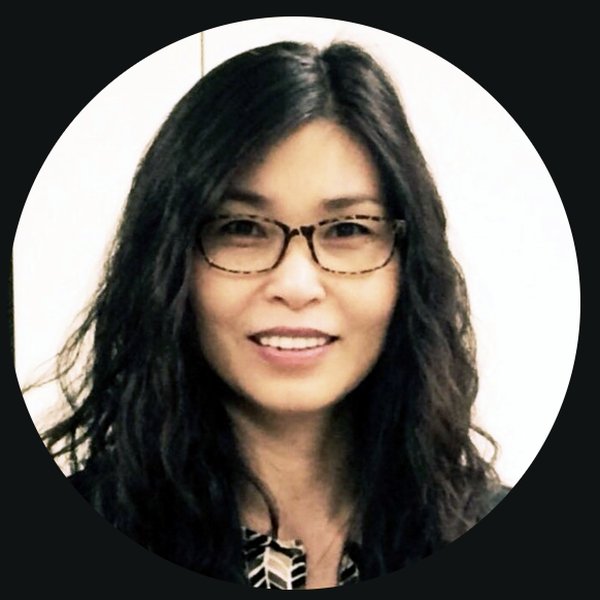
Masters' degree in Adult Education · New York State Professional teaching Korean language for K7-12
Learn Korean language from a cerfitied teacher!
Personally vetted · Strommen’s note
Twenty years teaching Korean, NYC-based and certified, and Nari still builds lessons around whatever culture-embedded material actually fits the student.
Specialties
Also speaks: English
Masters' degree in Adult Education · New York State Professional teaching Korean language for K7-12
Learn Korean language from a cerfitied teacher!
Specialties
I also speak: English
Personally vetted · Strommen’s note
Twenty years teaching Korean, NYC-based and certified, and Nari still builds lessons around whatever culture-embedded material actually fits the student.


Bachelor's degree · Chinese learning, Certified Korean language teacher
Light, Learning, Growth your languages.
Personally vetted · Strommen’s note
Jihoon starts with pronunciation basics, tongue position included, before moving into grammar. He teaches Chinese and Korean both, out of Bogotá.
Specialties
Also speaks: Japanese
Bachelor's degree · Chinese learning, Certified Korean language teacher
Light, Learning, Growth your languages.
Specialties
I also speak: Japanese
Personally vetted · Strommen’s note
Jihoon starts with pronunciation basics, tongue position included, before moving into grammar. He teaches Chinese and Korean both, out of Bogotá.
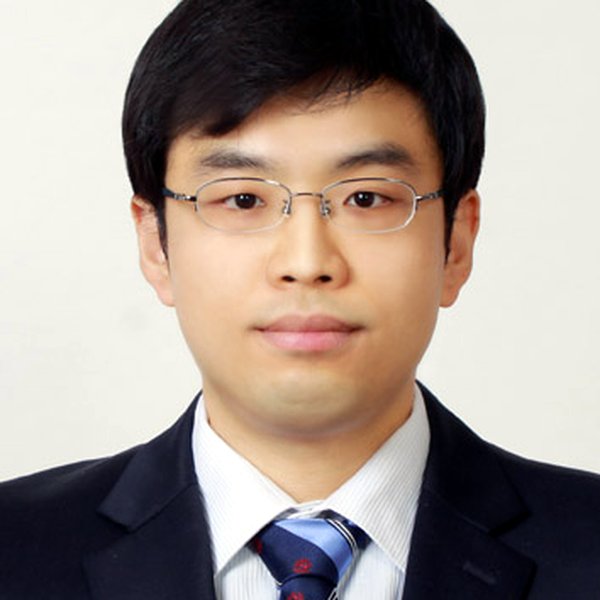
bachelor
Korean teacher fluent in Chinese and English
Specialties
bachelor
Korean teacher fluent in Chinese and English
Specialties

은어 / 신조어 — workplace culture
5 codes that decide how you land in a Korean workplace
These are not vocabulary items. They are the cultural codes a Korean colleague reads without thinking, and the ones a tutor who has worked inside a Korean office can actually teach. Save the card, then book a tutor for the rest.
-
01
눈치 (nunchi)
The skill of reading a room without being told what is in it: whether your boss wants you to stay, whether a client is genuinely interested or politely declining, whether it is time to leave. Korean professional life treats it as a competence, not a soft skill. Someone with 눈치가 빠르다 (quick nunchi) is considered sharp; 눈치가 없다 (no nunchi) is a real career ceiling regardless of technical ability.
e.g. In a meeting, a senior says the project "could be considered." A colleague with good nunchi hears a soft no and does not push.
-
02
회식 (hoesik)
The company dinner, still a real venue for relationship-building even as the culture has softened since the 2010s. It carries its own etiquette: when a senior pours for you, hold your glass with two hands; when you pour for a senior, two hands on the bottle; and when you drink with a senior present, turn your head away rather than facing them directly.
e.g. At a first hoesik with a new team, the senior pours the opening round and you receive it with both hands.
-
03
갑 / 을 (gap / eul)
The two sides of a Korean business relationship. 갑 (gap) is Party A, the side with leverage: the client, the buyer, the boss. 을 (eul) is Party B, the side without it: the vendor, the seller, the employee. The derived term 갑질 (gapjil) names the abuse of that leverage by the senior party, and it has been a major topic of Korean public debate since the mid-2010s.
e.g. A vendor describes a one-sided contract negotiation as a clear case of the gap dictating terms to the eul.
-
04
Workplace honorific titles
Korean colleagues are addressed by title, not first name. 사장님 (sajangnim) is the company president, used even toward a small-business owner; 부장님 (bujangnim) is the department head most office workers report to; 과장님 (gwajangnim) is a section chief; 선배 (sunbae) is anyone senior to you in tenure or experience. The suffix -님 marks formal respect, and -씨 attaches to a given name for polite peer address.
e.g. You greet the department head as 부장님 and a same-rank colleague named Minjun as 민준씨, never by family name alone.
-
05
우리 (uri) vs 제 (je)
Where English defaults to "my," Korean often uses 우리 (uri, "our") for things framed as collective: 우리 회사 (uri hoesa, "our company"), 우리 나라 ("our country"). 제 (je, the humble "my") is reserved for what is genuinely individual or for minimizing yourself before a listener. Saying 제 회사 where a Korean would say 우리 회사 sounds individualistic in a way that registers as slightly off.
e.g. Introducing where you work, you say 우리 회사 (our company), not 제 회사.
About Business Korean
Where the register carries the deal
Business Korean is less a separate vocabulary than a separate register, and the register is where the stakes sit. Korean encodes hierarchy more visibly than almost any other living language. Verb endings shift to mark how much deference the speaker shows the listener; nouns and verbs change form again when the subject of the sentence is socially elevated; and a whole set of separate stems exists for actions directed toward an elder or a superior. In an everyday conversation a learner can get away with a flat polite register. In a Korean boardroom, a meeting room, or an email to a 부장님, the layered honorific system is enforced, and getting it wrong is read not as charming foreignness but as a lapse in professional competence.
The core distinction every professional has to control is 존댓말 (jondaetmal, honorific speech) versus 반말 (banmal, casual speech). Honorific speech is the complete package: the polite 해요체 and formal-polite 합쇼체 endings, subject and object honorifics, honorific nouns, and the Korean habit of avoiding the word "you" in favor of a title plus the suffix -님. It is the default in any professional context. Casual speech is not something you drift into because a relationship feels warm. The move from 존댓말 to 반말 is asked for explicitly: the senior party says 말 놓으세요 (mal noheuseyo), "please lower your speech." Until that permission is given, both sides stay formal no matter how friendly the working relationship has become. American professionals, used to first-name informality as a sign of rapport, tend to read that persistent formality as coldness. It isn't. Warmth in Korean professional life lives inside the polite register rather than by abandoning it.
Around that register sits a layer of convention that no grammar book fully covers. The business-card exchange (명함 myeongham) is done with two hands, the card turned so the recipient can read it, and the card is read before it is put away. Bowing depth and duration encode formality and rank. Seating in a meeting room follows a hierarchy of 상석 (sangseok), the upper seat, and a junior person waits to be told where to sit. The company dinner (회식 hoesik) is still a real venue for relationship-building, with its own etiquette around how you hold your glass and which way you turn your head when a senior is present. None of this is decoration. It is the social grammar a Korean colleague reads instantly, and a tutor who has worked inside a Korean office can teach it the way they learned it.
Our Business Korean tutors include native speakers who have worked in Korean corporate settings, from chaebol affiliates to small firms, alongside longtime bilinguals who have taught the professional register for years. They calibrate to the actual situation. A first meeting with a Korean client reads differently from an internal team you will see every week, and a vendor relationship has its own dynamic again. The lesson plan tracks the meeting on your calendar, the email in your drafts folder, the title on the business card you were just handed. If you are weighing where Business Korean fits against broader study, our conversational Korean and advanced Korean tutors cover the same language from different angles, and the broader Korean classes page lays out the full range. The same teachers can help you decide.
None of this guarantees the meeting goes your way. What it changes is how you are read in the room. A professional who handles the honorific register and the meeting conventions without visible effort is treated as a counterpart rather than a guest being accommodated, and that difference is worth the months of register drilling it takes to get there.
What you'll cover
Lessons & classes tailored to Business Korean
The honorific register, drilled for the meeting room
The heart of Business Korean is controlling 존댓말 (jondaetmal) without effort. Lessons drill the formal-polite 합쇼체 endings used in presentations and first meetings, the polite 해요체 register for everyday professional speech, subject and object honorifics, and the honorific nouns that swap in for common ones. Tutors also teach the 말 놓으세요 ritual that governs when a relationship can move to casual speech, so you never drift into 반말 by accident.
Meetings, bowing, and the business-card exchange
The conventions around a Korean meeting are concrete and learnable: the two-handed 명함 (myeongham) exchange and the habit of reading a card before putting it away, bowing depth calibrated to rank and situation, and the seating hierarchy of 상석 (sangseok). Tutors who have worked in Korean offices walk you through a meeting start to finish so the choreography is automatic before you are in the room.
Business email and written register
A Korean business email is more formally scaffolded than its US counterpart and more concise in its core. Lessons cover the structure: the greeting with recipient title and -님, the self-identification line naming your company and department, the opening pleasantry, the 합쇼체 body, the closing pleasantry, and the formal signature block. You practice on the emails you actually have to send.
Hoesik, hierarchy, and chaebol-specific language
Relationship-building in Korean business happens partly outside the meeting room, and the etiquette of the company dinner (회식) is part of the job. For students working with or inside a chaebol, tutors also cover the specific title ladder (본부장, 상무, 전무, 부사장) and the conventions of 계열사 (affiliate) culture, which runs more hierarchical even by Korean standards.
FAQ
About Business Korean lessons & classes
What makes Business Korean different from regular Korean lessons?
It is mostly a question of register. Conversational Korean lets you operate in a flat polite register and get by. Business Korean asks you to control the full honorific system: the formal-polite 합쇼체 endings, subject and object honorifics, honorific nouns, and the convention of addressing people by title rather than name. It also covers the conventions that surround the language at work, from the two-handed business-card exchange to the etiquette of the company dinner. The grammar overlaps with general Korean. The precision required does not.
Do I need to be fluent in Korean before starting Business Korean?
No, though it helps to have a working foundation. Many students arrive at an intermediate level and shift their study toward the professional register because a job or a client made it relevant. If you are closer to the start, a tutor can build the core grammar and the business register together rather than making you finish one before touching the other. The free trial is where the tutor figures out where you actually are and what your timeline allows.
Why does the honorific system matter so much in a professional setting?
Because Korean encodes hierarchy in the grammar itself, and a Korean colleague reads your register instantly. Using casual speech with a senior is not a small slip. It reads as a lapse in judgment. Using overly formal speech with a close peer can read as cold. The honorific system is also why warmth at work is expressed inside the polite register rather than by dropping it. A tutor drills the register until the right form is automatic, which is the only way it holds up under the pressure of a real meeting.
Can you prepare me for a specific meeting or presentation?
Yes, and that is one of the most common reasons students book. Bring the agenda, the names and titles of who will be in the room, and the format. The tutor builds the lesson plan around it: the self-introduction, the formal-polite register for the presentation, the likely questions, and the meeting conventions from the business-card exchange to the seating. Students often book a short run of focused lessons in the weeks before a meeting that matters.
Are your Business Korean tutors native speakers with corporate experience?
Most are native speakers, and many have worked inside Korean corporate settings, from chaebol affiliates to smaller firms. A few are longtime bilinguals who have taught the professional register for years and are fully calibrated to it. Each tutor's bio specifies their background, so you can match yourself to someone whose experience fits your situation, whether that is a chaebol, a startup, or a vendor relationship.
Can I take Business Korean lessons online, or only in person?
Both. Many of our Business Korean tutors teach online via Zoom or Jitsi, available worldwide, which suits professionals who travel or work across time zones. Several also teach in person. The booking widget on each tutor's profile shows their available formats, and you can sort the tutor cards above by what works for you. The full Strommen tutor directory and the Korean classes page are good places to compare options if Business Korean is one of several things you want to study.
How long does it take to be comfortable in Korean business situations?
It depends on your starting level and how much you practice between lessons. A professional with a solid intermediate foundation can usually get comfortable with the honorific register and meeting conventions in a few focused months at one or two lessons a week. Building from a lower level toward confident professional use takes longer. A tutor sets concrete goals at the trial and adjusts as your real situations come up. The pace is realistic, not magical.
What does a typical Business Korean lesson cover?
Lessons are one-on-one and built around your goals. A session might mix register drills on the honorific endings, a role-play of a meeting introduction or a phone call, work on a specific business email you need to send, and a stretch on a cultural convention such as the company dinner or the seating hierarchy. No two students get the same plan. The tutor tracks what is actually on your calendar and works backward from it.
Ready for Business Korean lessons or classes?
Book a free 30-minute trial with one of our personally vetted tutors. Private lessons or small-group classes — your choice.