



Personally vetted instructors
Conversational Korean tutors, lessons & classes
안녕! Annyeong. Casual "hi," the way friends actually greet each other.
Personally vetted Conversational Korean tutors. Lessons centered on how Korean is actually spoken in everyday life: cafes, K-drama dialogue you want to follow, group chats, and the difference between the textbook line and the line a friend would say back.

Your instructors
Conversational Korean tutors for private lessons & classes
Strommen has been teaching Korean since well before the current global wave of interest, and conversational Korean has always been the entry point most adult learners actually want. Strommen is a curated practice rather than an open marketplace, so every teacher below was met and vetted by us. Bios are the tutors' own.
Filter by location, age, or price. Then book a 30-minute free trial and tell the tutor what you actually want to be able to say.
Below are the Strommen tutors who specialize in Conversational Korean. Photos, ratings, and rates are real. Click any card to read a bio and book a free 30-minute trial.
I want to learn…
Every tutor, personally met. — founder-vetted since 2006, in Los Angeles and online worldwide.
Get a personalized plan
Pick your language — a language advisor will match you with the right tutor and map out your path.

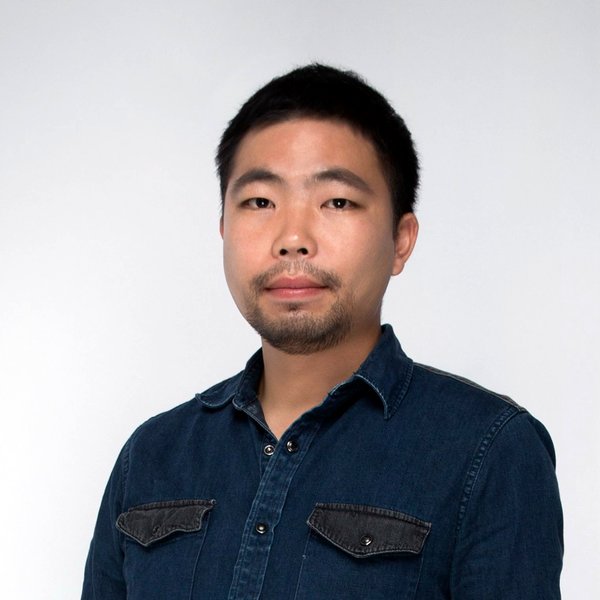


Master of Arts (M.A.) in Education from the University of the People (US)Bachelor of Arts (BA) in Teaching Korean as a Second Language from the Korean Education Bank (Korea)Bachelor of Arts (BA) in International Commerce and Logistics from Seoul Cyber... · Level 2 Certificate of Korean Language Teaching
Multilingualism, Specialized Education, Extensive Experience, Target Audience, Practical Skills
Personally vetted · Strommen’s note
Sanghoon teaches Chinese, English, and Korean out of Hangzhou, pulling material from work with students across very different backgrounds.
Specialties
Master of Arts (M.A.) in Education from the University of the People (US)Bachelor of Arts (BA) in Teaching Korean as a Second Language from the Korean Education Bank (Korea)Bachelor of Arts (BA) in International Commerce and Logistics from Seoul Cyber... · Level 2 Certificate of Korean Language Teaching
Multilingualism, Specialized Education, Extensive Experience, Target Audience, Practical Skills
Specialties
Personally vetted · Strommen’s note
Sanghoon teaches Chinese, English, and Korean out of Hangzhou, pulling material from work with students across very different backgrounds.

신조어 / 일상 한국어 — daily speech
5 cues that mark Korean you actually hear, not Korean from the book
These are not vocabulary items. They are the small cues that mark a learner who has been around Korean as it is spoken from one who has only studied it. Save the list. Then book a tutor to work through them in real dialogue.
-
01
Age-relative naming (오빠 / 언니 / 형 / 누나)
Korean leans on age-relative titles instead of names. A younger woman calls a slightly older female friend 언니 (eonni) and a slightly older male friend 오빠 (oppa). A younger man uses 누나 (nuna) and 형 (hyeong). The pattern extends into friendships, fandoms, and any close relationship, and using the right title is the texture of warmth in Korean. The Strommen post on oppa, noona, unnie, and hyung is the companion most learners bookmark.
e.g. A younger sister-in-law greeting her husband's older sister calls her 언니, never by first name alone.
-
02
대박 (daebak)
The all-purpose exclamation for surprise or impressive news, the rough Korean equivalent of "wow" or "awesome." Casual register, current, used constantly in spoken Korean and texted Korean. The intensified form 진짜 대박 (jinjja daebak) ramps the same reaction. A learner who can deploy it naturally sounds far more at home in conversation than one who reaches for textbook expressions of surprise.
e.g. 친구가 시험에서 1등 했다고? 대박! ("Your friend got first place on the exam? Daebak!")
-
03
Konglish that is not English (핸드폰 / 노트북 / 스킨십)
Korean-coined English-looking words used in everyday conversation. 핸드폰 (haendeupon) is the standard word for cell phone. 노트북 (noteubuk) is a laptop, not a paper notebook. 스킨십 (seukinsip) is physical affection. A learner who insists on the textbook 휴대전화 instead of 핸드폰 sounds formal in a way that the conversation does not call for, and using these loanwords is part of speaking current Korean.
e.g. 내 노트북이 고장 났어, 핸드폰만 가지고 가야 해. ("My laptop is broken, I have to bring just my phone.")
-
04
Sentence-final particles (거든, 잖아, 네, 지)
Small endings that carry the speaker's stance toward what they are saying. 거든 explains or justifies. 잖아 appeals to something the listener already knows. 네 marks fresh observation. 지 confirms or invites agreement. Grammatically perfect Korean without these sounds flat, and adding them is the largest single jump from textbook Korean to natural-sounding speech.
e.g. 비가 와서 늦었어요, 우산이 없었거든요. ("I was late because of the rain, you see, I didn't have an umbrella.")
-
05
Subject-dropping
Korean drops the subject of a sentence whenever context makes it clear, which is most of the time. American learners keep inserting 저는 and 나는 out of an English habit, and the surplus pronouns are exactly what marks otherwise reasonable Korean as still translated. A conversational tutor calls this out early and drills it until the dropped subject is automatic.
e.g. 어디 가요? Studied version: 당신은 어디 가요? Native version drops 당신은 entirely.
About Conversational Korean
Korean as it is actually spoken
Conversational Korean is the Korean a learner can use in the actual situations they want it for. Ordering at a cafe in Hongdae without rehearsing the line, following a few minutes of K-drama dialogue without subtitles, holding a group-chat exchange that does not read as obviously studied. It is also the variety most adult learners care about most and the one a beginner textbook serves least well. A textbook teaches the polite -요 forms in a tidy paradigm and stops there, and a learner who finishes the book finds that real Korean speakers drop subjects, use sentence-final particles the book never introduced, and switch register on cues that no chapter explained.
The first thing a conversational tutor establishes is which register a student actually needs. Korean has the formal-polite 합쇼체 (hapsyoche) of presentations and broadcasts, the everyday polite 해요체 (haeyoche), and casual 반말 (banmal) used between close friends, family members, and people younger than the speaker. The vast majority of conversational study lives in 해요체. It is the safe default for any adult in any new context, and a student who controls it can navigate Seoul, hold a workplace conversation with a colleague they do not know well, and follow most televised interviews without trouble. Banmal enters the picture later and only with people who have explicitly accepted that move with the phrase 말 놓으세요, please lower your speech. American learners, used to first-name informality as a sign of warmth, often want to skip past 해요체 toward banmal and have to be slowed down. Warmth in Korean lives inside the polite register, not by abandoning it.
K-drama and K-pop bring a great many students to Korean, and the question of whether they teach the language honestly comes up in almost every trial lesson. The honest answer is that they help and they are not sufficient. Drama Korean is dramatized: shouted confessions, voice-of-god narration, period-piece formality in a sageuk that no one uses on the subway. Idol-stage Korean leans on stylized phrases and English loanwords that flatter the chorus and would sound odd in a normal conversation. Where dramas do help is rhythm, intonation, and the sentence-final particles, the small endings like 거든, 잖아, 네, and 지 that carry the speaker's stance and that a textbook will never teach with enough context. A working tutor uses scenes from shows the student is already watching, pulls out the patterns that generalize, and flags the ones that are character-specific theater. The Korean spoken by a chaebol heir in a melodrama is not the Korean a learner needs at the cafe counter, and a tutor will name the difference rather than pretending the language is one thing.
There is also the layer of slang and Konglish that defines current spoken Korean and that no static textbook captures. 대박 (daebak) is the all-purpose exclamation for surprise or impressive news, the rough equivalent of "wow" or "awesome." 헐 (heol) is the texted reaction to bad news or absurdity. 화이팅 (hwaiting), from "fighting," is the encouragement Koreans use where English would say "good luck." 핸드폰 (haendeupon) for cell phone, 스킨십 (seukinsip) for physical affection, and 노트북 (noteubuk) for laptop are Konglish coinages that look English and are not used in English, and a learner who refuses to use them sounds bookish in a conversation that the words live in. Korean slang also dates fast: a phrase current five years ago can already sound off, which is why a working tutor teaches from what people say now rather than from a printed list compiled at some point in the past.
The age-relative naming system is the other piece of conversational Korean that no learner avoids for long. Korean does not lean on names the way English does. A young woman addresses a slightly older woman friend as 언니 (eonni, older sister) and a slightly older male friend as 오빠 (oppa, older brother). A young man uses 누나 (nuna, older sister) and 형 (hyeong, older brother). The same words extend out from family into friendships, fandoms, and any close relationship where age difference is on the table. K-pop fans who call a male idol 오빠 are using the word in exactly this way. The choice carries warmth, and a learner who uses 언니 with an older female colleague they have become friendly with reads as someone who understands the register, not as someone confusing relatives with strangers. Strommen has a dedicated post on the topic at korean honorific titles, and most conversational tutors point students at it early.
Ask a conversational tutor where adult learners stall and the answer is usually the same short list. Subject-dropping is one: Korean drops the subject of a sentence whenever it is clear from context, and American students keep inserting 저는 and 나는 out of an English habit, which makes their Korean sound slow even when the grammar is right. Sentence-final particles are another: 거든, 잖아, 네, and 지 are the difference between flat correct Korean and natural Korean, and they are almost never taught with enough context in a beginner course. Listening pace is the third: a learner who handles a graded dialogue easily often cannot keep up with two friends in a cafe at full speed, and that gap closes through deliberate exposure rather than more grammar. The 은/는 versus 이/가 distinction is the fourth and the slowest to settle, because the contexts overlap and the difference is felt more than it is parsed. A tutor diagnoses which of these is in the way and builds lessons around it rather than running through chapters in order.
Most students who reach out for conversational Korean fall into a few groups. Heritage speakers who grew up understanding Korean from grandparents and want to speak it back without sounding like a child. Travelers heading to Seoul or Busan who want to do more than point at a menu. K-content fans who have watched enough drama and listened to enough K-pop to want to follow the language directly. Adopted Koreans reconnecting with the language as adults. Partners of Korean speakers who want to be functional at a family meal. Each of these has a different starting point and a different finish line, and a good conversational tutor will not run them through the same lesson plan. If broader study is on the table, our advanced Korean tutors handle the late-intermediate plateau, our business Korean tutors handle workplace register, and the parent Korean classes page covers the small-group options for students who want both formats.
Our Conversational Korean tutors include native speakers from Seoul and elsewhere, alongside longtime bilingual teachers who have spent years moving adult learners from the textbook plateau into Korean they can actually use. They calibrate to your goal at the trial, build a lesson plan around it, and update the plan as you progress. You can read each tutor's background in their bio and book a 30-minute free trial directly from the profile. The full Strommen tutor directory lists every Korean teacher on the roster if you would rather browse the wider set first.
What you'll cover
Lessons & classes tailored to Conversational Korean
The polite register (해요체), built to be automatic
Most conversational study lives in the everyday polite 해요체. Lessons drill the form in real dialogue rather than paradigms, so that the right ending arrives without thinking. Tutors also teach when 합쇼체 (the formal-polite of a presentation or a first business meeting) is the right move and when shifting toward casual banmal is appropriate, including the 말 놓으세요 ritual that governs the shift between adults. A learner who controls 해요체 can navigate almost every adult situation in Korean.
K-drama and K-pop, used honestly
Drama and music brought many students to Korean, and lessons use them as input without pretending they are the whole language. A tutor pulls scenes from shows the student already watches, extracts the patterns that generalize to real life, and flags the bits that are character-specific theater. The work covers sentence-final particles, intonation, and current slang, with the limits of dramatized speech named rather than hidden.
Slang and Konglish that defines current Korean
Spoken Korean runs on a layer of slang and Korean-coined English-looking loanwords that no static textbook captures. Lessons cover the current set (대박, 헐, 화이팅) alongside the Konglish words (핸드폰, 노트북, 스킨십, 셀카) that learners need in order to sound contemporary rather than bookish. Tutors stay close to what people are actually saying now, because Korean slang dates fast and a phrase current five years ago can already sound off.
Listening at real speed and the late-beginner unstick
Many learners stall at the moment they can handle a graded dialogue and cannot follow two friends in a cafe at full speed. Lessons close that gap deliberately: real-speed listening with K-content the student already watches, drills on subject-dropping and sentence-final particles, and direct work on the 은/는 versus 이/가 distinction that stays unsettled longest. For students who want to push past comfortable conversational Korean toward true fluency, our advanced Korean tutors pick up where this leaves off, and the Korean classes page covers small-group options that complement one-on-one work.
FAQ
About Conversational Korean lessons & classes
Will K-drama and K-pop teach me Korean?
Helpful, not sufficient. Dramas and music are excellent input for rhythm, intonation, and exposure to sentence-final particles you would otherwise have to learn from a chart. They are also dramatized, period-stylized in a sageuk, or stage-stylized in a song, and a learner who tries to talk the way characters do at the cafe counter sounds odd. A good tutor uses scenes from shows you are already watching, pulls out the patterns that generalize, and flags the parts that are theater. Most students who learn well from K-content do so with a tutor checking the input rather than alone.
How long until I can actually chat with a native speaker?
Depends on what counts as a chat. Holding a simple cafe exchange in the polite register usually comes within a few months of one or two lessons a week with steady practice in between. Holding a relaxed ten-minute conversation about your day, your work, and what you watched last week takes longer, typically six to twelve months for an adult starting from beginner. Following a casual conversation between two native speakers at full speed is later still. Your tutor sets concrete weekly targets at the trial and adjusts based on what is working.
When can I drop polite endings and use 반말 with a friend?
When the senior party in the relationship has explicitly invited it with the phrase 말 놓으세요, please lower your speech. Until then, both sides stay in the polite register no matter how friendly the relationship feels. American students often want to skip past polite speech faster than the culture allows, and a tutor will slow that down. Warmth in Korean lives inside the polite register, not by abandoning it, and using banmal with the wrong person reads as untrained rather than informal.
What slang is okay to use as a non-Korean learner?
The standard set everyone uses is safe: 대박, 헐, 화이팅, 짱, and the Konglish loanwords like 핸드폰 and 노트북. The more colorful slang (older vulgar forms, certain age-marked youth slang) is best to recognize before you use, because tone and timing matter and a learner who has not heard them in context often misjudges the register. A tutor will guide what to deploy and what to leave for later, and they will stay close to what is actually current rather than what was current five years ago.
I am a heritage speaker who understands but barely speaks. Is this the right specialty?
Often it is. Heritage speakers usually have a strong listening foundation and a vocabulary base from family contexts, and what is missing is active speaking, modern register beyond the household, and confidence in unfamiliar situations. A conversational tutor builds on the listening you already have rather than starting from zero, which is much faster than a beginner course. Many heritage learners are functional in conversation within a few months once they start producing the language regularly.
Are your conversational Korean tutors native speakers?
Most are native speakers, the majority from Seoul or elsewhere in South Korea. A few are longtime bilingual teachers who have spent years moving adult learners through exactly this transition. Each tutor's bio specifies background and teaching experience. For conversational work the relevant question is less native or not and more whether the tutor can hear what is keeping your Korean from sounding natural and diagnose it specifically, which is a teaching skill in its own right.
Can I take Conversational Korean lessons online?
Yes. Most of our Conversational Korean tutors teach online via Zoom or Jitsi and work with students worldwide, which suits this specialty well since the lesson is mostly speaking and listening. Several tutors also teach in person around Los Angeles. The booking widget on each tutor profile shows the available formats. The full Strommen tutor directory and the Korean classes page are good places to compare options.
What does a typical conversational lesson actually look like?
Lessons are one-on-one and built around your goals. A session might pair fifteen minutes of guided conversation in Korean on a topic you chose, targeted work on whatever register or particle issue surfaced, a short listening segment from a show or podcast you are already following, and feedback on your own output. No two students get the same lesson. The tutor tracks what you actually want to be able to say and works backward from it.
Ready for Conversational Korean lessons or classes?
Book a free 30-minute trial with one of our personally vetted tutors. Private lessons or small-group classes — your choice.