



Personally vetted instructors
SIELE tutors, lessons & classes
Vamos al ordenador What a SIELE tutor says to open a computer-based exam simulation session.
Personally vetted SIELE prep tutors. Lessons calibrated to the four-skill Instituto Cervantes rubric the computer-adaptive exam actually scores against, with the digital-format awareness that makes the faster, panhispanic alternative to DELE land on the first sitting.

Your instructors
SIELE tutors for private lessons & classes
Strommen has prepped SIELE candidates since the exam launched in 2016 and grew through the years when it became the standard credential for many Latin American university admissions. Most students arrive with a target score band, a target sitting window, and an honest sense of one weaker skill. Every tutor below was met and vetted by us in person or via thorough video interview. No marketplace. No automated profile-creation. Real teachers with real Instituto Cervantes rubric experience.
Filter by location, age, or price. Then book a 30-minute free trial.
Below are the Strommen tutors who prep students for the SIELE. Photos, ratings, and rates are real. Click any card to read their bio and book a free 30-minute trial.
I want to learn…
Every tutor, personally met. — founder-vetted since 2006, in Los Angeles and online worldwide.
Get a personalized plan
Pick your language — a language advisor will match you with the right tutor and map out your path.

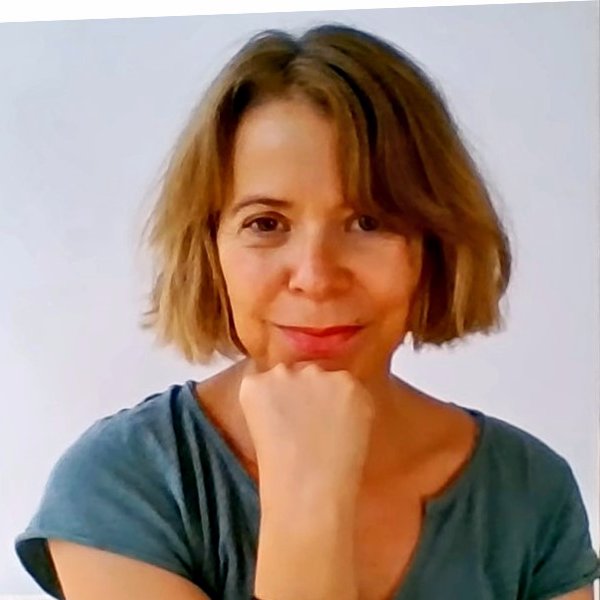


Bachelor’s Degree in Business Science and Finance · Spanish teacher as a second language
Spanish fluency. Speak from day one. Cognitive grammar.
Specialties
Also speaks: English, Swedish
Bachelor’s Degree in Business Science and Finance · Spanish teacher as a second language
Spanish fluency. Speak from day one. Cognitive grammar.
Specialties
I also speak: English, Swedish

SIELE strategy — exam playbook
5 SIELE moves candidates wish they'd learned earlier
These aren't textbook tips. They're the digital-format-aware habits that separate first-sit passers from candidates who underestimate the format. Screenshot the infographic, then book a tutor to drill the rest.
-
01
Practice on a keyboard, not on paper
SIELE writing is computer-typed on a standard keyboard within a fixed time window. Candidates who only practice handwritten compositions underperform on the typed format: typing speed differs from handwriting speed, the on-screen editing affordances (cut, paste, restructure) change how the composition can be developed, and the absence of visual layout cues that handwriting provides changes the writer's sense of structure. Drill timed typed compositions from week one.
e.g. Weekly typed composition on a SIELE prompt, within the real time window, on a standard QWERTY or Spanish keyboard.
-
02
The recorded oral has no live examiner
SIELE oral is recorded through the computer's microphone, with no live examiner present. The candidate responds to pre-recorded prompts within fixed time windows. Candidates accustomed to DELE-style face-to-face interviews sometimes underperform because the social scaffolding a live conversation partner provides (eye contact, encouraging nods, follow-up cues) does not exist. Prep with the recorded format specifically.
e.g. Record yourself responding to SIELE prompts within the real time window. Review the playback for fluency, pacing, and register.
-
03
Adaptive routing rewards strong early answers
The SIELE reading and listening sections use adaptive question routing: strong performance on early questions routes the candidate to harder later questions and the higher CEFR bands; weak early performance routes to easier later questions and caps at a lower band. The implication is that early answers matter disproportionately; rushing through early questions and rushing through misses is more costly than rushing through later ones.
e.g. First 10 reading questions: take your time, get them right. The routing decision rests on them.
-
04
Multiple regional varieties on the listening
SIELE deliberately uses multiple regional Spanish accents on the listening passages (peninsular, Mexican, Argentinian, Colombian, Caribbean), reflecting the panhispanic standard. Candidates whose Spanish was learned from a single regional source can be blindsided by an unfamiliar variety on exam day. Prep with deliberate exposure to multiple varieties: RTVE for peninsular, Mexican news for Latin American, Radio Ambulante for pan-Latin narrative.
e.g. Daily 15 minutes of listening rotating across peninsular, Mexican, Argentinian, and Colombian sources.
-
05
Pick the modular configuration that matches the need
SIELE offers SIELE Global (all four skills) and modular configurations S1-S5 testing specific skill pairs. Candidates whose target institution accepts a specific module rather than the full exam can save time and money by sitting the right configuration. Confirm with the accepting institution before registering.
e.g. University accepts reading + listening only? Sit SIELE S1 instead of SIELE Global.
About SIELE
SIELE: faster, panhispanic, on-screen
SIELE (Servicio Internacional de Evaluación de la Lengua Española) is the Instituto Cervantes' newer computer-administered Spanish proficiency exam, designed as a faster, more frequent, panhispanic alternative to the traditional DELE. The exam is co-sponsored by Instituto Cervantes, the National Autonomous University of Mexico (UNAM), the University of Salamanca, and the University of Buenos Aires, which gives it institutional backing across both peninsular and Latin American Spanish-speaking countries. SIELE was launched in 2016 and has grown significantly in recognition, particularly for university admissions in Spanish-speaking countries, professional certification, and immigration-adjacent purposes where speed of results and computer-based format matter more than the lifetime validity DELE offers.
The key structural differences from DELE shape the prep approach. SIELE is computer-administered at authorized centers worldwide rather than paper-based, with results returned in roughly three weeks rather than DELE's two to three months. SIELE produces a single composite score on the 0-1000 scale rather than the DELE's per-level Apto/No Apto outcome, mapped to CEFR levels (A1: 0-249, A2: 250-499, B1: 500-749, B2: 750-1000 for the SIELE Global; higher tiers extend to C1 and C2). The score has five-year validity rather than DELE's lifetime, which is a trade-off candidates should weigh against the speed and format advantages. The exam is offered in multiple modular configurations: SIELE Global (all four skills, the full credential), SIELE S1 (reading + listening only), SIELE S2 (reading + writing), SIELE S3 (listening + speaking), SIELE S4 (reading + speaking), SIELE S5 (writing + speaking). Candidates can sit individual modules to certify specific skill bands without taking the full exam.
The four skills tested are the same as DELE: comprensión de lectura (reading), comprensión auditiva (listening), expresión e interacción escritas (writing), and expresión e interacción orales (speaking). The content rubrics are equivalent to DELE because the underlying CEFR standards are the same. The format differs significantly. Reading and listening are multiple-choice and machine-scored, with adaptive question routing based on early answers (a candidate who scores high on early questions sees harder later questions and reaches the higher CEFR bands; a candidate who scores lower sees easier questions and caps at a lower band). Writing is computer-typed (the candidate writes on the screen with a standard keyboard), with the responses sent to certified human raters who score against the official rubric. Speaking is recorded through the computer's microphone (the candidate speaks into a headset, the computer records and submits the audio to certified human raters), with no live examiner present.
The absence of a live examiner is the structural feature that most distinguishes SIELE prep from DELE prep. On the DELE, the oral section is a face-to-face interview with one or two examiners who can adjust questions, prompt the candidate, and engage in genuine dialogue. On the SIELE, the candidate speaks into a microphone alone, responding to pre-recorded prompts and scenarios within fixed time windows. The skill set is similar but the affect is different: candidates who do well in face-to-face interviews sometimes underperform on the recorded format because they are accustomed to picking up cues from the examiner that the recorded format does not provide. Prep for SIELE oral requires specific practice with the recorded format, talking to a microphone within strict time limits without the social scaffolding of a live conversation partner.
The panhispanic standard is a meaningful feature for many candidates. SIELE explicitly accepts all standard varieties of Spanish (peninsular from Spain, Mexican, Argentinian, Colombian, Caribbean, Andean, and all the rest) on equal terms, and the audio passages on the listening section use multiple regional accents deliberately to test the candidate's ability to understand across the Spanish-speaking world. This is a feature DELE shares in principle but SIELE emphasizes more prominently. For candidates whose Spanish was learned from a specific regional source (a Mexican household, a Colombian partner, an Argentinian study-abroad year), SIELE prep includes deliberate exposure to other regional varieties so the listening section does not blindside the candidate. Tutors with experience across regions can calibrate the listening prep to whichever regional gaps the candidate has.
How SIELE compares to DELE in admissions and immigration contexts. DELE remains the preferred or required credential in several specific contexts: Spanish citizenship by residency (DELE A2 plus the CCSE cultural-knowledge test is the legal route), certain Spanish university admissions where DELE is named in the requirements, and professional licensing in Spain for specific regulated professions. SIELE is increasingly accepted as an equivalent or alternative for most other purposes: university admissions in Mexico, Argentina, Colombia, Chile, and other Latin American countries (where SIELE often has stronger recognition than DELE because of the co-sponsorship by UNAM and the University of Buenos Aires); professional certification across the Spanish-speaking world; corporate hiring for Spanish-language roles; and most adult-learner credentialing contexts. Candidates choosing between SIELE and DELE should check the specific accepting institution's requirements before registering, since the choice has implications for both speed (SIELE) and lifetime validity (DELE).
How our tutors prep candidates. Most lessons start with a diagnostic against a SIELE practice test (Instituto Cervantes publishes official sample materials on siele.org). The diagnostic produces a four-skill score profile mapped to CEFR levels. From there, lessons rebalance toward the weak skill. Writing is drilled with timed compositions typed on a real keyboard (not handwritten, since the exam is computer-typed) and graded against the official rubric. Speaking is rehearsed as recorded responses to SIELE-format prompts within strict time limits, then reviewed for register, fluency, argument structure, and recovery from stumbles. Listening practice uses audio across multiple regional varieties (RTVE for peninsular, Mexican news for Latin American, Radio Ambulante for narrative pan-Latin), at full native pace. Reading practice uses real exam-style texts with the same question patterns SIELE uses. Closer to the exam date, lessons shift to full timed computer-based simulations under real exam conditions. A reasonable arc to move from A2-equivalent to B1-equivalent is 3-4 months at one or two lessons per week with consistent self-study; B1 to B2 typically asks for 5-6 months.
The SIELE exam center network is broad and growing. SIELE is delivered at over a thousand authorized centers across more than eighty countries, with most major cities in the United States, Europe, Latin America, and Asia covered. Centers offer sittings on demand throughout the year (rather than DELE's fixed calendar of a few sittings per year), and candidates can typically book a sitting within 2-4 weeks of registering. The on-demand structure is one of SIELE's significant practical advantages: candidates can time the exam to their specific deadline rather than working around the DELE calendar. Cost varies by configuration and country; SIELE Global typically costs around 155 euros, with the individual modules priced lower. Our DELE page covers the sibling exam in more detail for candidates weighing the choice.
The Strommen SIELE roster includes native Spanish teachers trained as Instituto Cervantes examiners, tutors based in Spain and across Latin America familiar with the panhispanic standard from inside Spanish-speaking professional contexts, and longtime US-based bilinguals with classroom SIELE prep experience for English-speaking adult learners. Several of our SIELE tutors have graded mock recordings and written compositions against the official rubric and can tell within a paragraph or a recorded minute which rubric category is dragging your score. Each tutor's bio specifies where they are from, what configurations they prep (SIELE Global, S1-S5 modules), and what candidate profile they fit best. Match yourself to a tutor whose specialty matches your target score and your preferred regional variety. Browse the tutor list, find a bio that matches your situation, and book the free trial.
What you'll cover
Lessons & classes tailored to SIELE
Diagnostic + Instituto Cervantes rubric alignment
Your first lesson is usually a diagnostic against a SIELE practice test at your target level (sample materials on siele.org). The tutor scores all four skills on the actual rubric (coherencia, alcance, corrección, adecuación) and identifies your weakest skill. Subsequent lessons rebalance toward that weak skill while keeping the strong skills sharp.
Writing on the keyboard, not on paper
SIELE writing is computer-typed within a fixed time window. Lessons drill timed typed compositions on real keyboards (Spanish or QWERTY) with the same prompt styles SIELE uses. Structured argumentation (thesis → developed body → synthesis), the connector layer (por consiguiente, cabe señalar que, en lo que respecta a, no obstante), formal register, and the typing speed required to finish within the time window.
Recorded oral practice
SIELE oral is recorded through the computer microphone with no live examiner. Lessons rehearse recorded responses to SIELE-format prompts within strict time limits, reviewed for fluency, register, argument structure, and recovery from stumbles. The skill of speaking confidently to a microphone alone, without the social scaffolding of a live partner, is genuinely distinct from face-to-face interview skill and benefits from direct practice.
Pan-regional listening and full computer-based simulations
Listening practice uses audio across peninsular, Mexican, Argentinian, Colombian, and Caribbean varieties at native pace (RTVE, Mexican news, Radio Nacional Argentina, Radio Ambulante). Reading practice uses real exam-style texts. Closer to exam date, lessons shift to full timed computer-based simulations under real SIELE conditions. For the lifetime-credential alternative see our DELE page.
FAQ
About SIELE lessons & classes
What's the difference between SIELE and DELE?
Both are Instituto Cervantes credentials aligned to CEFR. SIELE is computer-administered, available on-demand at over a thousand centers worldwide, returns results in roughly three weeks, and is valid for five years. DELE is paper-based, sat on a fixed calendar of a few dates per year, returns results in two to three months, and has lifetime validity. SIELE produces a single composite score (0-1000) mapped to CEFR; DELE produces a per-level Apto/No Apto outcome. SIELE is co-sponsored by UNAM and the University of Buenos Aires alongside Instituto Cervantes and the University of Salamanca, which gives it strong recognition across Latin America. DELE remains preferred for Spanish citizenship by residency and certain Spanish-specific institutional contexts.
Which configuration should I sit: SIELE Global or one of the modules?
Depends on the accepting institution's requirements. SIELE Global tests all four skills and produces a full CEFR credential. Modular configurations (S1: reading + listening; S2: reading + writing; S3: listening + speaking; S4: reading + speaking; S5: writing + speaking) test specific skill pairs and produce a more limited credential. Candidates whose target institution accepts a specific module can save time and money by sitting the right configuration. Confirm with the accepting institution before registering.
Is SIELE accepted by universities?
Increasingly yes, particularly in Latin American countries (Mexico, Argentina, Colombia, Chile, and others) where SIELE often has stronger recognition than DELE because of the UNAM and University of Buenos Aires co-sponsorship. In Spain, some universities accept SIELE and others still specify DELE; check each university's published requirements. In the US, UK, and other non-Spanish-speaking countries, both SIELE and DELE are accepted by most universities for Spanish-language admissions purposes. For corporate hiring and professional certification, both are widely accepted.
Does SIELE accept Latin American Spanish or only peninsular Spanish?
Both, deliberately. SIELE was designed as a panhispanic exam, with audio passages on the listening section using multiple regional accents (peninsular, Mexican, Argentinian, Colombian, Caribbean) and the rubric accepting all standard varieties of Spanish on equal terms. What is graded is competence, register-appropriate usage, and internal consistency: a Mexican-Spanish speaker should not suddenly drop vosotros mid-essay; a Spaniard should not suddenly switch to ustedes in casual speech. Your tutor will calibrate to your existing variety and drill the register expectations the exam scores against.
How does the adaptive routing work?
SIELE reading and listening sections use adaptive question routing: the difficulty of later questions adjusts based on performance on earlier questions. Strong early performance routes the candidate into harder later questions and the higher CEFR bands; weak early performance routes into easier later questions and caps the score at a lower band. The implication is that early answers matter disproportionately. Rushing through the first ten reading questions and getting careless answers is more costly than rushing through the last ten.
How long does SIELE prep take?
Depends on starting level and target level. An A2-to-B1 jump typically takes 3-4 months at one or two weekly lessons plus consistent self-study. A B1-to-B2 jump usually takes 5-6 months because the argumentative production skills take longer to build. SIELE prep can run somewhat faster than DELE prep at equivalent levels because the format is more efficient (no months-long results wait) and candidates can sit re-tests on demand if they miss the target. The trial includes a placement diagnostic so the tutor can give an honest timeline.
Where can I sit the SIELE?
SIELE is delivered at over a thousand authorized centers across more than eighty countries, with most major cities in the United States, Europe, Latin America, and Asia covered. Centers offer sittings on demand throughout the year rather than on a fixed calendar, which is one of SIELE's significant practical advantages over DELE. Check siele.org for the current center network and to book a sitting near you. Most candidates can book a sitting within 2-4 weeks of registering.
Can SIELE prep be online?
Yes, and most candidates do. Most of our SIELE tutors prep students entirely online via Zoom or Jitsi, which works particularly well for SIELE because the exam itself is computer-based and the prep workflow is suited to video: timed typed compositions with shared screens, recorded oral practice with playback review, sample paper review with annotated notes. Several tutors also offer in-person lessons in Los Angeles.
Ready for SIELE lessons or classes?
Book a free 30-minute trial with one of our personally vetted tutors. Private lessons or small-group classes — your choice.