



Personally vetted instructors
Siciliano (Sicilian Italian) tutors, lessons & classes
Salutamu! The warm Sicilian hello, used among friends and family across the island. Standard Italian would say "ciao."
Personally vetted Sicilian tutors. Lessons in Sicilianu (lingua siciliana), the regional language of Sicily, taught alongside the standard Italian context that helps it travel.
Your instructors
Siciliano (Sicilian Italian) tutors for private lessons & classes
Strommen has taught Italian and its regional languages since 2006. Sicilian sits at the more specialized end of that work, and we've built the roster carefully with native speakers from across the island and Italian-fluent tutors with strong Sicilian backgrounds. Every tutor below was met and vetted by us in person or via thorough video interview. No marketplace, no automated profiles. Real teachers with real Sicilian.
Filter by location, age, or price. Then book a 30-minute free trial.
Below are the Strommen tutors who specialize in Sicilian. Photos, ratings, and rates are real. Click any card to read their bio and book a free 30-minute trial.
I want to learn…
Every tutor, personally met. — founder-vetted since 2006, in Los Angeles and online worldwide.
Get a personalized plan
Pick your language — a language advisor will match you with the right tutor and map out your path.

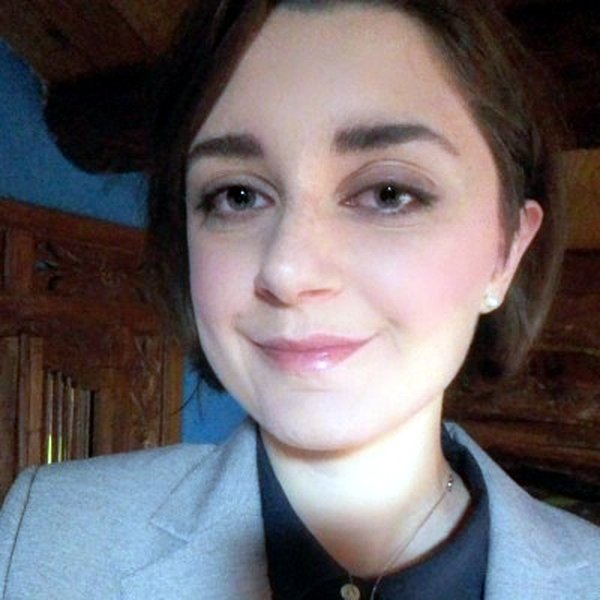
Bachelors degree in Teaching Italian as a Second Language and Translation
Learn Italian, Feel at Home
Personally vetted · Strommen’s note
Venice-based and fluent in five languages, Fabiana teaches two rare Italian threads, Sicilian dialect and Ladin, alongside standard Italian.
Specialties
Bachelors degree in Teaching Italian as a Second Language and Translation
Learn Italian, Feel at Home
Specialties
Personally vetted · Strommen’s note
Venice-based and fluent in five languages, Fabiana teaches two rare Italian threads, Sicilian dialect and Ladin, alongside standard Italian.
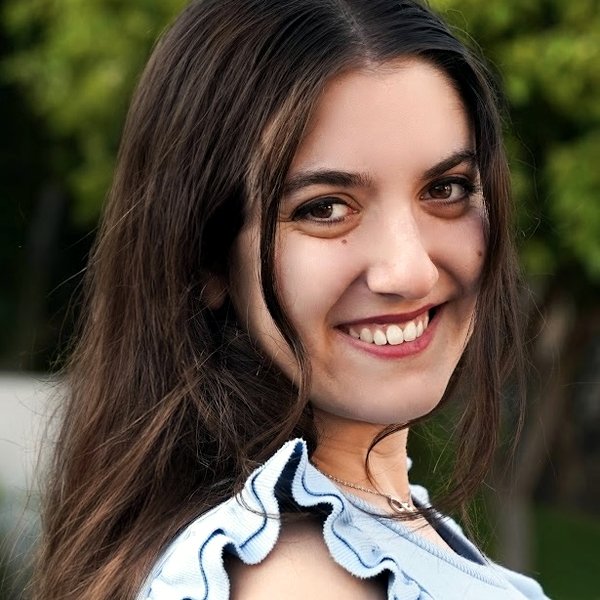

Certified in Teaching English as a Foreign Language, International TEFL and TESOL Training (2021)BA, Honors Theatre Studies, University of Guelph (2021)
English, Italian and Spanish teacher, dialect coach and accent reduction coach
Personally vetted · Strommen’s note
Amy coaches Sicilian, Neapolitan, and Calabrese dialects alongside standard Italian and English. She's also taught Italian kids English from age three up.
Specialties
Certified in Teaching English as a Foreign Language, International TEFL and TESOL Training (2021)BA, Honors Theatre Studies, University of Guelph (2021)
English, Italian and Spanish teacher, dialect coach and accent reduction coach
Specialties
Personally vetted · Strommen’s note
Amy coaches Sicilian, Neapolitan, and Calabrese dialects alongside standard Italian and English. She's also taught Italian kids English from age three up.
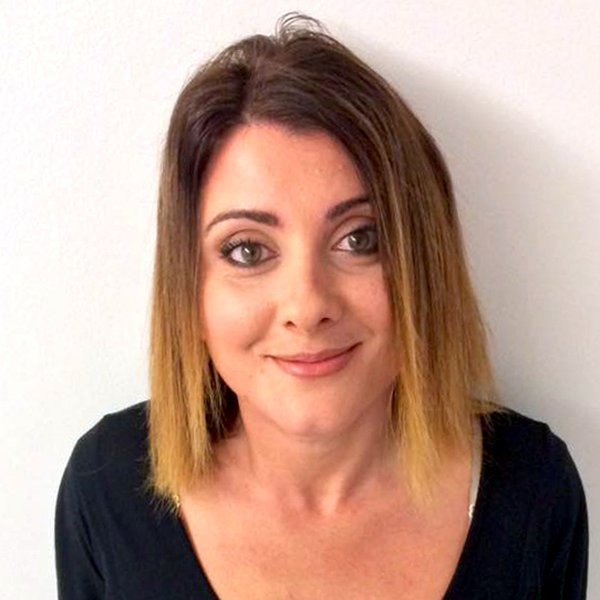

I have a degree in "Media and Journalism" from the Faculty of Political Science in Florence.I have obtained several certificates of suitability for teaching the Italian language L2/Ls to foreigners, and as administrator of the CILS exams (of all levels...
Learn Italian with confidence, clarity, and real-world results.
Personally vetted · Strommen’s note
Federica covers every CILS certification level from A2 to C2 in her Italian lessons, out of Barcelona, with Sicilian dialect and opera-singer coaching too.
Specialties
Also speaks: English, Spanish
I have a degree in "Media and Journalism" from the Faculty of Political Science in Florence.I have obtained several certificates of suitability for teaching the Italian language L2/Ls to foreigners, and as administrator of the CILS exams (of all levels...
Learn Italian with confidence, clarity, and real-world results.
Specialties
I also speak: English, Spanish
Personally vetted · Strommen’s note
Federica covers every CILS certification level from A2 to C2 in her Italian lessons, out of Barcelona, with Sicilian dialect and opera-singer coaching too.
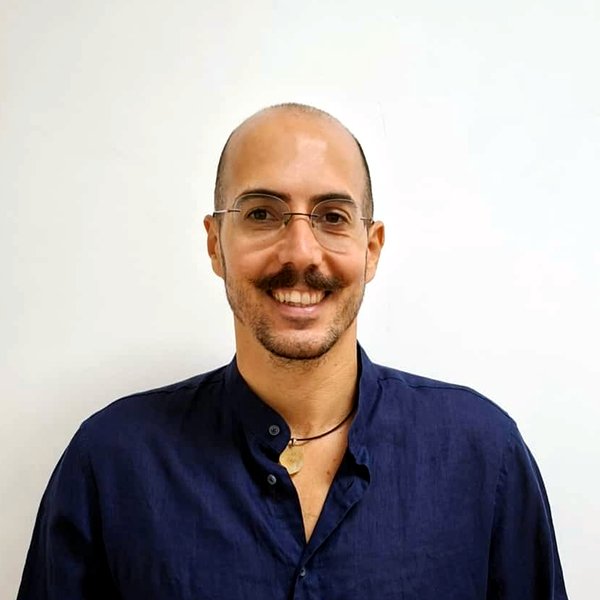
Bachelor's Degree
Learn Italian with a Sicilian soul. Relaxed, fun and effective classes.
Personally vetted · Strommen’s note
Sicilian-inflected Italian is Luca's specialty out of Trapani, plus a track built specifically for Spanish speakers working through the pronunciation traps.
Specialties
Bachelor's Degree
Learn Italian with a Sicilian soul. Relaxed, fun and effective classes.
Specialties
Personally vetted · Strommen’s note
Sicilian-inflected Italian is Luca's specialty out of Trapani, plus a track built specifically for Spanish speakers working through the pronunciation traps.
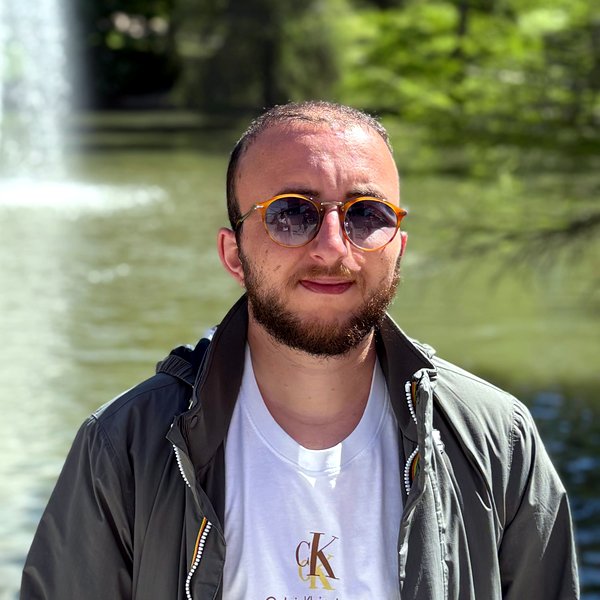
Master of Arts "Italian Modern Literature"
Move beyond the textbook. Speak Italian naturally.
Personally vetted · Strommen’s note
Textbook grammar drills take a back seat in Salvatore's Sicilian-inflected Italian lessons out of Acate, which lean on daily habits and cultural nuance instead.
Specialties
Also speaks: English, Spanish
Master of Arts "Italian Modern Literature"
Move beyond the textbook. Speak Italian naturally.
Specialties
I also speak: English, Spanish
Personally vetted · Strommen’s note
Textbook grammar drills take a back seat in Salvatore's Sicilian-inflected Italian lessons out of Acate, which lean on daily habits and cultural nuance instead.

Sicilianu — culture & language
5 things that mark Sicilian as its own language
Standard Italian gets you through the country. Sicilian gets you into the kitchen. These five features show why the two are genuinely different languages, not accent variants.
-
01
Picciotto / Picciotta
Sicilian for "young man / young woman." Standard Italian would say ragazzo / ragazza. The word travels through the older Sicilian-American immigrant lexicon and shows up in Godfather-tradition dialogue, but in Sicily it's everyday speech, not period dressing. The double tt is held intact, and the final o tends toward u in unstressed position.
e.g. Salutamu, picciotto, comu stai?
-
02
Camurrìa
A specifically Sicilian word for "annoyance, hassle, pain in the neck" with no exact standard Italian equivalent. Standard Italian reaches for scocciatura or seccatura; neither carries the same lived-in weight. Heard constantly in everyday Sicilian conversation and threaded throughout Camilleri's Montalbano novels, where it's often left untranslated even in the Italian narration.
e.g. Chista è na camurrìa! (This is such a hassle!)
-
03
Talé!
Sicilian for "look!", the dialect equivalent of standard Italian guarda. Compact, declarative, used to direct attention in a way that's distinctly Sicilian. Heard across the Camilleri world, in the Sicilian sections of The Godfather, and in everyday family speech. The accent on the final e is a true stress, and flattening it to tale reads as outsider speech immediately.
e.g. Talé chi successi! (Look what happened!)
-
04
U, a, i (the Sicilian articles)
Sicilian definite articles are u (masculine singular), a (feminine singular), i (plural for both), where standard Italian uses the full il / lo / la / i / gli / le set. The reduction is one of the first things a learner notices and one of the first things an Italian speaker has to internalize when crossing into Sicilian. The articles glue closely to the following noun in speech.
e.g. U picciriddu, a picciridda, i picciriddi (the child, the girl, the children).
-
05
The retroflex dd, from Latin -ll-
The most distinctive Sicilian consonant. Words that take a geminate -ll- in standard Italian (from Latin -ll-) take a retroflex dd sound in Sicilian: bello becomes beddu, cavallo becomes cavaddu, quello becomes chiddu. The sound is articulated with the tongue curled back toward the hard palate, giving it a quality English speakers often hear as a thickened d. Bonner's grammar drills this systematically.
e.g. Iddu è beddu (He is handsome). Standard Italian: <em>lui è bello</em>.
About Siciliano (Sicilian Italian)
Sicilian is its own language
Sicilian (Sicilianu, lingua siciliana) is a Romance language in its own right, not a dialect of Italian in the strict linguistic sense. It carries ISO 639-3 code scn. UNESCO's Atlas of the World's Languages in Danger classifies it as vulnerable. The Centro di Studi Filologici e Linguistici Siciliani in Palermo has worked since 1951 on documenting Sicilian as a distinct linguistic system, with its own grammar, lexicon, and literary tradition stretching from the 13th-century Scuola Siciliana of Frederick II's court (the cradle of the Italian sonnet, written in Sicilian before standard Italian existed) through Giovanni Meli, Luigi Pirandello, and the contemporary work of writers like Andrea Camilleri whose Montalbano novels are dense with Sicilianisms even when the prose itself is mostly Italian.
For students of Italian who haven't met Sicilian before, the practical experience is sharp. You arrive in Palermo or Catania confident in the standard Italian you've drilled. Two locals start a casual conversation in front of you. You catch a word here and there. The vowels are not what you learned. The verb endings are different. The vocabulary contains words that aren't in any Italian dictionary you own. The cadence is unfamiliar. This isn't because your Italian is weak. It's because they aren't speaking Italian, they're speaking Sicilian, and unless you've studied it specifically you have very little chance of following a fast in-group exchange. The good news: most Sicilians switch fluidly into standard Italian as soon as a non-Sicilian joins the conversation. The better news: learning Sicilian is genuinely tractable for an Italian speaker, and it opens a layer of cultural connection that standard Italian alone can't reach.
Sicilian has features that mark it immediately. The vowel system is reduced to five vowels in stressed position, but the unstressed vowels collapse toward i and u in ways standard Italian doesn't: beddu for Italian bello, nicu for piccolo, tuttu for tutto. The retroflex dd (a sound English speakers approximate by curling the tongue back toward the hard palate) is the most distinctive Sicilian consonant, descending from the Latin geminate -ll-: beddu (beautiful), cavaddu (horse), iddu (he). The tr cluster also takes a retroflex quality that sounds nothing like the standard Italian tr. The definite article system uses u (masculine singular), a (feminine singular), i (plural), where Italian uses il / la / i / le / lo / gli. The passato remoto is the everyday past tense in Sicilian where standard Italian (especially northern Italian) prefers the passato prossimo. Lexicon is layered with substrate and contact languages: Greek (from the long Hellenic presence in eastern Sicily), Arabic (from the 9th-11th century Emirate of Sicily, leaving words like zibbibbu, cassata, tabbutu), Norman French, Catalan, and Spanish, in addition to the Latin core. Treccani's Sicilian entries trace this history in detail for students who want the philological depth.
The Strommen Sicilian roster includes native speakers from Palermo, Catania, and the smaller centers across the island, plus Italian-speaking tutors with strong Sicilian competence who came to it through family, study, or long residence. The pedagogical approach varies by goal. For students with family roots in Sicily who want to reconnect with grandparents' speech, the work centers on listening and conversational confidence in a specific regional variety (Palermitano and Catanese differ noticeably from each other, and the inland and coastal varieties differ again). For actors preparing Sicilian-language or Sicilian-inflected roles, the focus shifts toward phonetic precision and the dialect choices the script demands. For students drawn in by Camilleri's Montalbano, by Sicilian cinema (Cinema Paradiso, Il Postino, Tornatore's wider work, the Sicilian sections of The Godfather), or by the Sicilian poetic and operatic tradition, lessons can ground the language in those reference points directly. Bonner's Introduction to Sicilian Grammar is a useful written reference between lessons. For broader Italian foundation work, the 1,000 most common Italian words list is the standard supplement.
For students with Sicilian-American family roots, the heritage layer is its own conversation. The great Sicilian diaspora to the United States ran from roughly 1880 to 1924 and concentrated in New Orleans, Brooklyn, the Bronx, the Gulf Coast, and parts of Chicago and Milwaukee. The Sicilian those immigrants brought with them was the spoken language of their home villages at the turn of the 20th century, often preserved more conservatively in American Sicilian-speaking communities than in Sicily itself, where the post-war television era pushed standard Italian deeper into everyday life. A student rebuilding the language of their grandparents is often rebuilding a specific early-20th-century western or central Sicilian variety with vocabulary that contemporary Palermo no longer uses every day. Tutors with experience in this register can calibrate: this is a different mode of work from teaching a contemporary urban Palermitano student, and the lesson plans differ accordingly. The lexicon of The Godfather's Sicilian scenes draws on this same diaspora-preserved register, which is part of why it lands as historically grounded rather than performative when the dialect coaching is done well.
The literary, operatic, and cinematic tradition runs deep enough to be its own reason to learn the language. The Scuola Siciliana of Frederick II's 13th-century Palermo court is widely credited with inventing the Italian sonnet form in Sicilian before standard Italian existed as a literary medium; Giacomo da Lentini, the notary credited as the form's father, wrote in Sicilian. Giovanni Meli's 18th-century Sicilian poetry remains read and quoted across the island. Luigi Pirandello, who won the 1934 Nobel in Literature, wrote in Italian but came from Agrigento and built much of his theatrical world on Sicilian cultural and linguistic foundations. Andrea Camilleri's Montalbano novels and their TV adaptations have done more than any single contemporary force to keep Sicilian present in mainstream Italian cultural life. Sicilian-set cinema runs from Visconti's The Leopard (1963, adapted from Lampedusa's Sicilian aristocratic novel) through Tornatore's Cinema Paradiso and Malèna through the Sicilian sections of The Godfather trilogy and Bellocchio's recent work. Ignazio Buttitta's 20th-century Sicilian poetry, sung by Rosa Balistreri, is the soundtrack of a particular kind of Sicilian cultural memory and a useful entry point for students drawn to the language through song. Salvatore Camilleri's and Giorgio Piccitto's Sicilian-Italian dictionaries and Ruffino's wider scholarly work on Sicilian linguistics are standard references for serious study.
A candid note on what catches students by surprise once they start. Sicilian written norms are not fully standardized. Different writers, different regions, and different scholarly traditions spell the same word differently (the dd sound shows up as dd, ddh, or dr depending on the convention). Pronunciation varies meaningfully across the island, so a Catanese tutor and a Palermitano tutor will give you slightly different sound systems and small lexical differences; that's a feature, not a bug, and the right move is to pick the variety that matches your goal rather than chase a non-existent neutral Sicilian. The relationship between Sicilian and standard Italian is genuinely bilingual: Sicilians don't drift between the two within a sentence, they switch entirely and deliberately. And the literary and TV Sicilian you'll meet through Camilleri or through The Godfather is a curated, accessibility-calibrated version of the language. Real spoken Sicilian goes further from standard Italian than those reference points suggest. Your tutor will tell you when you're hearing the polished version and when you're hearing the everyday register.
Lessons are one-on-one and built around your actual goal. Family heritage work, role preparation, cultural immersion, academic research, and conversational confidence are all different curricula, and the trial is where the calibration happens. The 30-minute trial is free. For related Italian programs the Italian course page shows the family of options, and the Italian dialect coach page covers regional Italian for actors more broadly. Or just browse the full tutor list and book a trial.
What you'll cover
Lessons & classes tailored to Siciliano (Sicilian Italian)
Sicilian as its own language
Sicilianu treated as a distinct Romance language with its own grammar, not as a regional accent of Italian. Five-vowel stressed system, the retroflex dd from Latin -ll-, the reduced article system (u / a / i), the passato remoto as everyday past tense, and the Greek, Arabic, Norman, Catalan, and Spanish lexical layers that distinguish Sicilian from the Tuscan-based standard. Treccani and the Centro di Studi Filologici e Linguistici Siciliani are the scholarly references.
Regional varieties within Sicily
Palermitano (Palermo and western Sicily) sounds different from Catanese (Catania and the east), which sounds different again from the inland varieties around Enna and the Caltanissetta highlands. Coastal versus inland, urban versus rural, and generational differences all matter. Pick the variety that matches your goal, whether it's family roots in a specific town, a role set in a specific region, or a Camilleri-shaped interest in Vigàta and the southern coast.
Heritage reconnection for Sicilian-descent students
Many students arrive wanting to understand the grandparents and great-grandparents they grew up hearing speak a language they never learned. The work centers on listening comprehension first, then conversational confidence, with attention to the early-20th-century Sicilian vocabulary and pronunciation that survived in the American immigrant communities of Brooklyn, the Bronx, New Orleans, and the Gulf Coast. The Sicilian your grandparents spoke is usually not the contemporary Sicilian of modern Palermo, and the tutor calibrates accordingly.
Sicilian for actors, writers, and researchers
Role preparation for Sicilian-language or Sicilian-inflected parts, from Godfather-tradition film work through Camilleri-tradition prestige TV through Sicilian-set theater. Literary Sicilian for readers of Meli, Pirandello, Camilleri, and the Scuola Siciliana poetic tradition. Academic and research support for students working on Sicilian linguistics, Mediterranean studies, or Italian regional history. Bonner's grammar and Ruffino's scholarship are standard references.
FAQ
About Siciliano (Sicilian Italian) lessons & classes
Is Sicilian a dialect of Italian or a separate language?
A separate language by most modern linguistic standards. Sicilian has its own ISO 639-3 code (scn), its own grammar, its own lexicon with substantial non-Italian elements (Greek, Arabic, Norman French, Catalan, Spanish), and a literary tradition older than standard Italian itself (the 13th-century Scuola Siciliana predates Dante). UNESCO lists Sicilian as vulnerable in its Atlas of the World's Languages in Danger. Calling it a dialect is the older folk classification; calling it a Romance language of Italy is the contemporary scholarly position, and it's the position Strommen's tutors work from.
Do I need to know Italian first?
It helps a lot but isn't strictly required. An Italian speaker has a real head-start: the verb system maps reasonably well, the basic Latin-derived vocabulary overlaps, and the cultural reference points are shared. Students starting from no Italian can still learn Sicilian, but the tutor will weave in standard Italian context because the two languages live alongside each other in real-world use, and a Sicilian speaker will often switch to Italian with a non-local. Most students benefit from at least a working Italian foundation before going deep into Sicilian.
Which Sicilian do you teach: Palermo, Catania, somewhere else?
Depends on your tutor and your goal. The Palermitano and Catanese varieties differ in vowel quality, intonation, and some lexical items, and the inland varieties differ again. Tutors teach the variety they speak natively. If you have a family connection to a specific town, we can match you to a tutor from that region or as close as the roster allows. If you don't have a specific tie, picking either Palermitano or Catanese gives you a workable foundation that crosses the island.
Will my Italian classes help me with Camilleri's Montalbano novels?
Partially. Camilleri's prose is mostly Italian with heavy Sicilian seasoning: vocabulary, syntactic moves, the occasional full Sicilian sentence. Strong Italian gets you through the narration. The dialogue is where Sicilian background pays off, especially the in-group exchanges among the Vigàta locals. Many students come to Sicilian specifically through Camilleri and want to read the books closer to how Italian readers experience them. The lessons can use Camilleri passages directly as material.
Can you help me with Sicilian for a film, TV, or theater role?
Yes. Sicilian role preparation is part of our Italian dialect coaching work. The approach is script-led: the tutor reads the script, identifies which lines are Sicilian and which are Italian, marks the regional and period specifics of the character, and builds a phonetic map for the part. For Godfather-tradition Sicilian, Camilleri-tradition contemporary work, or Sicilian-set period drama, see the Italian dialect coaching for actors page for the full method.
What does a Sicilian lesson actually look like?
One-on-one, calibrated to your goal. A typical hour for a heritage student might open with conversational listening, move into vocabulary drills targeted at the family register you're rebuilding, then close with a short reading from a Sicilian source. An actor's lesson might be entirely script-driven. A linguistics student's lesson might focus on a specific grammatical feature with comparative reference to standard Italian and the surrounding Romance landscape. No two students get the same curriculum, and the tutor adjusts as you go.
How fast can I expect to progress?
For an Italian speaker building Sicilian on top, conversational comfort with a familiar regional variety usually takes three to six months at one or two lessons a week plus regular listening practice. Reading-level comfort with Sicilian literary or Camilleri-style material takes longer, often a year or more. Coming in without prior Italian extends the timeline because the standard Italian foundation has to be built in parallel. Your tutor sets concrete weekly goals at the trial and we adjust from there.
Ready for Siciliano (Sicilian Italian) lessons or classes?
Book a free 30-minute trial with one of our personally vetted tutors. Private lessons or small-group classes — your choice.