



Personally vetted instructors
Italian Dialect Coaching for Actors tutors, lessons & classes
Ciao! The casual hello, originally Venetian — from <em>s-ciao vostro</em>, "your servant."
Personally vetted Italian dialect coaches for actors and voice-over artists. Script-led phonetic and cultural prep for Sicilian, Neapolitan, Roman, Florentine, Venetian, and Italian-American roles across film, TV, theater, and games.
Your instructors
Italian Dialect Coaching for Actors tutors for private lessons & classes
Strommen has coached Italian dialect work for film, TV, theater, and voice productions since 2006. Our roster ranges from native Italian speakers from specific regional zones (Sicily, Naples, Rome, the Veneto) to Italian-American specialists with deep Sopranos-tradition experience and theater-faculty coaches with stage credits in dialect repertoire. Every tutor below was met and vetted by us in person or via thorough video interview. No marketplace. No automated profiles. Real coaches with real on-set, on-stage, and in-booth credits.
Filter by location, age, or price. Then book a 30-minute free trial.
Below are the Strommen tutors who specialize in Italian dialect coaching for actors. Photos, ratings, and rates are real. Click any card to read their bio and book a free 30-minute trial.
I want to learn…
Every tutor, personally met. — founder-vetted since 2006, in Los Angeles and online worldwide.
Get a personalized plan
Pick your language — a language advisor will match you with the right tutor and map out your path.

BA
Discover Italian Charm with Elisa: Lake Como Born, TV Writer Turned Passionate Italian Tutor & Dialogue Coach!
Personally vetted · Strommen’s note
A former TV writer, Elisa now coaches Italian dialogue with the same instinct for what actually lands on screen.
Specialties
BA
Discover Italian Charm with Elisa: Lake Como Born, TV Writer Turned Passionate Italian Tutor & Dialogue Coach!
Specialties
Personally vetted · Strommen’s note
A former TV writer, Elisa now coaches Italian dialogue with the same instinct for what actually lands on screen.
Bachelor and Master in Language and History of art · Ditals
Italian teacher - Learn Napoletano with me!
Personally vetted · Strommen’s note
Vincenzo teaches three southern Italian dialects out of Salerno, Napoletano, Abruzzese, and Salentino, alongside standard Italian.
Specialties
Bachelor and Master in Language and History of art · Ditals
Italian teacher - Learn Napoletano with me!
Specialties
Personally vetted · Strommen’s note
Vincenzo teaches three southern Italian dialects out of Salerno, Napoletano, Abruzzese, and Salentino, alongside standard Italian.
AA Degree
Italian Professional Tutor and Voice teacher
Personally vetted · Strommen’s note
Raised by an opera tenor and a folk singer, Luna teaches Italian and French opera repertoire alongside conversational lessons and actor dialect coaching.
Specialties
AA Degree
Italian Professional Tutor and Voice teacher
Specialties
Personally vetted · Strommen’s note
Raised by an opera tenor and a folk singer, Luna teaches Italian and French opera repertoire alongside conversational lessons and actor dialect coaching.
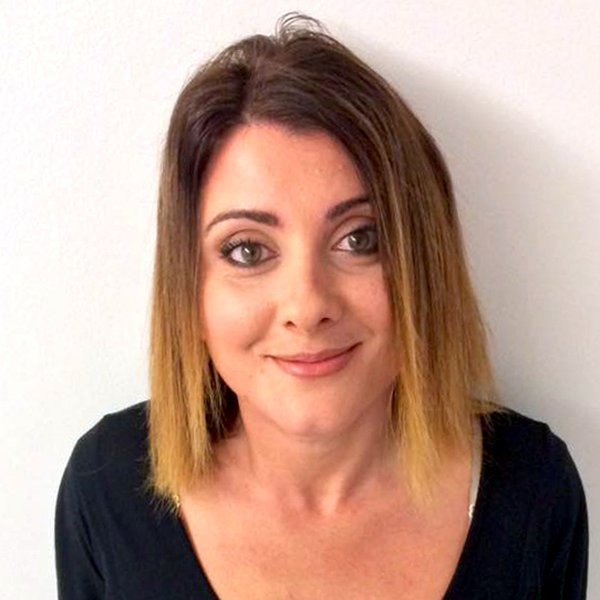


I have a degree in "Media and Journalism" from the Faculty of Political Science in Florence.I have obtained several certificates of suitability for teaching the Italian language L2/Ls to foreigners, and as administrator of the CILS exams (of all levels... · The certificate of suitability for teaching the Italian language L2/Ls to foreigners was issued by DILIT International House in Rome after being admitted through an initial test and passing the various stages of the training.
Learn Italian with confidence, clarity, and real-world results.
Personally vetted · Strommen’s note
Federica covers every CILS certification level from A2 to C2 in her Italian lessons, out of Barcelona, with Sicilian dialect and opera-singer coaching too.
Specialties
Also speaks: English, Spanish
I have a degree in "Media and Journalism" from the Faculty of Political Science in Florence.I have obtained several certificates of suitability for teaching the Italian language L2/Ls to foreigners, and as administrator of the CILS exams (of all levels... · The certificate of suitability for teaching the Italian language L2/Ls to foreigners was issued by DILIT International House in Rome after being admitted through an initial test and passing the various stages of the training.
Learn Italian with confidence, clarity, and real-world results.
Specialties
I also speak: English, Spanish
Personally vetted · Strommen’s note
Federica covers every CILS certification level from A2 to C2 in her Italian lessons, out of Barcelona, with Sicilian dialect and opera-singer coaching too.

Sul set — dialect & culture
5 dialect-distinctive phrases that show what regional Italian actually sounds like
Five phrases, five regions. Each one is the kind of detail a coach will mark up in your script the first time through, because the word your character chooses tells the audience where they're from before they finish the line.
-
01
Daje!
Romanesco for "come on, let's go." The signature Roman interjection: pure dialect, not a regional pronunciation of a standard Italian word. Heard constantly in Roman-set drama and in the Roma football tradition. If your character is from Rome, this is one of the first dialect markers a coach will calibrate; if your character isn't from Rome, this is one of the first words to keep out of the read.
e.g. Daje, ammó che se fa tardi!
-
02
Guaglione
Neapolitan for "young man" or "kid," pronounced roughly gwa-LYO-neh. Standard Italian would say ragazzo. The word travels through Italian-American speech (the song Guaglione by Renato Carosone was a 1956 hit) and is one of the words that signals Neapolitan character grounding immediately in a scene. The vowel quality matters, and flat vowels read as English-speaker imitation.
e.g. Uè guagliò, dove vai?
-
03
Talé!
Sicilian for "look!", the dialect equivalent of standard Italian guarda. Compact, declarative, used to direct attention in a way that's distinctly Sicilian. Heard in Camilleri's Montalbano world, in The Godfather's Sicilian scenes, in any Sicilian-set drama. Sicilian phonology compresses vowels and softens consonants in ways the coach will drill explicitly for actors stepping into a Sicilian character.
e.g. Talé, è arrivato Salvo!
-
04
Icché
Tuscan/Florentine for "what," replacing standard Italian che cosa. The geminate cch in icché is held intact (gorgia toscana, the famous Tuscan lenition that turns la Coca-Cola into la Hoha-Hola, applies only to single intervocalic stops, not geminates). For period work or contemporary Florence-set drama, the gorgia is one of the most identifiable Tuscan markers and easy to overdo.
e.g. Icché tu fai stasera?
-
05
Ciao
Worth knowing because the most common Italian greeting is actually Venetian in origin — from s-ciao vostro, "your humble servant." The phrase was Venetian dialect, spread through Italian-speaking territories, and became the global casual greeting it is today. The Venetian origin is useful coaching context: for a Venetian character, dialect work goes deeper than ciao, but ciao itself is a small reminder that what reads as "generic Italian" often has a specific regional history.
e.g. Ciao, come stai?
About Italian Dialect Coaching for Actors
Dialect work, built around your script
Italian dialect coaching for actors is script-led work. The first session is rarely a generic Italian-language lesson; it's a read-through with the coach holding the script, marking up the lines, asking the questions the part actually demands. Where is your character from, down to the region, the city, the neighborhood? What year? What social class? Did they leave the country? When? Who do they speak with at home, and what language do they answer in? A Sicilian fisherman from Aci Trezza in 1955 doesn't speak the same Italian as a Sicilian software engineer from Palermo today, and neither one speaks what most American audiences think of as "Italian." The work that follows from those questions is what dialect coaching actually is at Strommen.
Italy isn't a single language country, and that's the first thing the work has to honor. UNESCO and most modern linguists classify Neapolitan, Sicilian, Sardinian, Venetian, Lombard, and several others as distinct languages, not dialects of Italian. Standard Italian (the Tuscan-Florentine literary variety that became the official national language only after 1861) sits alongside these regional languages, not above them. A native Neapolitan speaker switches between Neapolitan and Italian deliberately, the way a bilingual Spanish-English speaker code-switches, not the way a Southerner softens toward General American on a job interview. For an actor, this distinction matters because the choice of "which Italian" carries the entire backstory of the character. Getting it right is the difference between a part the audience believes and a part that reads as costume.
The regional inventory most actors hit on a job: Sicilian (Siciliano) for the Godfather tradition, Camilleri-tradition crime drama, Sicilian-set period films, and southern-Italian-American family roots. Neapolitan (Napoletano) for Gomorra-tradition crime drama, L'amica geniale-tradition prestige TV, Sorrentino's Naples-set films, and the Eduardo De Filippo theater repertoire. Roman (Romanesco) for Sorrentino's Rome-set work, Pasolini's earlier films, Romanesco-marked comedy and drama from Mio fratello è figlio unico through contemporary RAI prestige. Florentine and broader Tuscan for the gorgia toscana phonetics that color period work and the literary cinema that draws from Florence. Venetian for Goldoni in the original commedia dell'arte tradition, period film set in the Veneto, and dialect-marked supporting roles. Sardinian, Calabrian, Piedmontese, Lombard each show up less often but with their own specific phonetics, lexicon, and cultural weight. Strommen's roster covers the major regional dialects with native or near-native coaches; less-common dialects are matched on a per-project basis. The complete guide to Italian regional languages on the blog covers the linguistic landscape in more depth.
Italian-American is a different craft entirely, and one Strommen's coaches handle as its own discipline. The English heard in The Sopranos, Goodfellas, The Many Saints of Newark, and the Godfather trilogy isn't Italian and isn't a generic American accent. It's American English shaped by Southern Italian (overwhelmingly Neapolitan and Sicilian) immigration to Brooklyn, the Bronx, Newark, Philadelphia, Boston, and Providence between 1880 and 1924. The lexicon (gabagool, capeesh, moolinyan, fuhgeddaboudit) descends from specific Southern Italian dialect words filtered through three to four generations of American urban speech. The vowel system, the prosody, the gesture economy, and the cultural codes (food vocabulary, family hierarchy, the specific cadence around an argument) are all separate study from Italy-Italian. Tell your coach in the trial which lane you're working in. The actors who get the worst notes on set are almost always the ones who showed up with the wrong one.
The method has a shape. Read the script first. The coach builds a phonetic map of the part: which sounds are dialect-distinctive, which the actor will hit cleanly with brief coaching, which need drilling. Listening drills come next, pulled from native sources the coach selects to match the character (a 60-year-old Sicilian woman from a fishing village in 1958 doesn't sound like a 25-year-old Sicilian DJ from modern Catania; the coach has to pick the right audio reference). The actor records the dialect passages and the coach corrects mouth shape, cadence, lexical choices, and the rhythmic-musical layer that often distinguishes credible Italian performance from competent-but-flat work. Cultural and gesture coaching threads through when the role demands it. For shoot weeks, the coach can be available on-set or on-Zoom for emotional-scene work where actors typically lose dialect under pressure. The whole arc is one-on-one, calibrated to the part and the production calendar.
Strommen has been the LA-based dialect resource for film, television, and theater since 2006. Our coaches have worked on Italian and Italian-American roles for major film and TV productions, prestige limited series, and theater productions in the US and Italy. Garrett Strommen has been quoted in trade press on Italian dialect work (see our Slate.com review of the Italian accents in House of Gucci for one published example). Productions are tight-lipped by contract about which coaches worked on which projects, so we won't publish credit lists, but the trial conversation is where references get exchanged when a casting director or producer needs them.
A few honest observations on what trips up actors taking on Italian dialect work for the first time. The most common stumble is doing "generic Italian" — there is no generic Italian. Every Italian speaks SOME regional variant, even when speaking standard, and the audience hears the absence of any regional grounding as fake. Going stagey-Italian is the next trap: the bad-Olive-Garden-mob-movie accent that piles on hand gestures, vowel stretching, and clichés the audience has been trained to read as bad acting. Real Italian dialect work goes the opposite direction: quieter, more specific, more rooted. Emotional scenes are where dialect drops first; high-emotion lines tend to revert to the actor's native phonology, and rehearsal under coach supervision is the only fix. Italian-American actors who grew up around heritage speakers sometimes assume they have the dialect already; usually they have one register from one generation and need to build out the others. And the script-to-set drift catches actors who prep at home alone: a line that sounds right in your own ear at 11pm rarely survives the first take in front of a director. Lessons drill all of these specifically rather than abstractly.
Between sessions, the immersion is character-specific. Your coach will send a curated reference list based on the role: L'amica geniale and Gomorra for Neapolitan, the Camilleri/Montalbano TV adaptations for Sicilian, La grande bellezza and Roman crime dramas for Romanesco, period neorealist cinema for 1940s-50s Italian, The Sopranos repeatedly for Italian-American. For broader Italian phonetic foundations, the Italian pronunciation guide and the Roman slang reference on the blog are useful supplements. For an actor without prior Italian, the foundation work runs alongside the dialect work rather than before it; you don't need to wait until your Italian is conversational to start coaching for a specific part.
The Strommen Italian dialect coaching roster includes native speakers from the major regional zones (Sicily, Naples, Rome, Florence, Venice, the Veneto, Milan), trained Italian theater actors with stage credits in dialect repertoire, and Italian-American specialists with deep experience in the Brooklyn / New Jersey / Bronx Sopranos-tradition register. Several coaches have direct on-set credits on prestige productions; others come from theater faculty positions at Italian conservatories. Each tutor's bio specifies regional background, dialect specialties, and which student profile they fit best (film/TV, theater, voice-over, opera character work, video games). Pricing reflects experience and credit list. You can match yourself to a Naples-born coach for L'amica geniale-tradition work, a Sicilian coach for Godfather-tradition work, an Italian-American specialist for Sopranos-tradition work, or a coach with theater credits in dialect repertoire for stage work. Our general Italian dialect coach page covers the same roster from a different angle; this page is specifically built for actors approaching a part.
Lessons are one-on-one and calibrated to the role. A coached lead role on an upcoming shoot is a different curriculum from a self-tape preparing for a callback, which is different again from foundation dialect-building between projects for an actor who wants to be ready when the next Italian role comes through. The trial is free, the coach reads the script with you, the study plan comes out of that read. For a head-start before the trial, our Italian course page shows the family of related programs, and our Business Italian and Italian academic writing specialties cover non-acting needs. Or just browse the full tutor list and book a trial. Bring the script. Tell us the role. We'll go from there.
What you'll cover
Lessons & classes tailored to Italian Dialect Coaching for Actors
Script-led phonetic mapping
Read the script with the coach, mark up the lines, identify the regional and generational specifics of the character (where from, what year, what class, who they speak with at home). Build the phonetic map: which sounds are dialect-distinctive, which the actor lands cleanly, which need drilling. Foundation step for any role-specific dialect work.
Regional dialects: Sicilian, Neapolitan, Roman, Florentine, Venetian, and more
Native or near-native coaches for the major regional zones. Sicilian for Godfather-tradition, Camilleri/Montalbano, southern-Italian-American family roots. Neapolitan for L'amica geniale, Gomorra, Sorrentino's Naples work, Eduardo De Filippo theater. Roman for Sorrentino's Rome films, Romanesco-marked comedy and drama. Florentine for gorgia toscana period work. Venetian for Goldoni and Veneto-set drama.
Italian-American dialect work (American English)
Sopranos-tradition coaching is its own craft: American English with Southern Italian phonological substrate, shaped by Brooklyn / Newark / Bronx / Philadelphia immigrant communities between 1880 and 1924. Coaches with deep experience in this register handle Sopranos-tradition crime drama, period films set in mid-century Italian-American New York and New Jersey, and contemporary Italian-American family productions.
On-set, on-Zoom, and pre-production support
For shoot weeks, coaches can be available on-set or on-Zoom for emotional-scene work where dialect tends to drop under pressure. Pre-production coaching for auditions and callbacks. Voice-over and game-character recording sessions. Self-tape calibration. Theater rehearsal coaching for stage runs. The deliverable is a credible dialect under real production conditions, not a polished demo reel.
FAQ
About Italian Dialect Coaching for Actors lessons & classes
What's the difference between this page and the general Italian Dialect Coach page?
Same roster of coaches, different angle. The general Italian Dialect Coach page covers the discipline broadly: what regional languages exist in Italy, how the standard / dialect relationship works, what dialect coaching is as a service. This page is built specifically for actors approaching a part: the method, the script-led process, the kind of decisions a coach makes when reading your script for the first time. Pick whichever framing matches where you are. Both link to the same tutors.
I'm playing a Sicilian / Neapolitan / Roman character. Do I learn the dialect or the regional accent of standard Italian?
Depends on the script and the production's intent. Some productions use full regional dialect for authenticity (Gomorra is entirely in Neapolitan, with Italian subtitles even for Italian audiences). Others use standard Italian with regional accent and occasional dialect vocabulary as character marking (L'amica geniale alternates deliberately). Others use a translation-friendly hybrid where standard Italian dominates and dialect markers carry the regional flavor. Your coach reads the script, talks to your director or showrunner if needed, and recommends the calibration. Often the answer is hybrid.
I have a callback in two weeks. What can we do in that time?
A lot, if the scope is the audition rather than the whole role. Typical fast-turnaround plan: a first script-read session within 48 hours of booking the coach, daily or every-other-day sessions through the prep window, recorded drills the actor runs every day, a dress-rehearsal pass with the coach 24-48 hours before the audition. Full-role coaching for a series regular or lead is a longer arc (4-6 weeks of intensive work plus continuing support through shoot); audition prep is its own focused mode. Tell us the deadline in the trial and we'll match a coach with availability.
Can you coach Italian-American (Sopranos-style) instead of Italy-Italian?
Yes, and it's a different discipline. Italian-American coaching is American English dialect work, not Italian-language work. We have coaches who specialize specifically in the Sopranos / Goodfellas / The Many Saints of Newark register, with deep experience in the Brooklyn, Newark, Bronx, and Philadelphia Italian-American communities the dialect descends from. Tell us in the trial whether your part is Italy-Italian or Italian-American; the right coach for one isn't necessarily the right coach for the other.
Do you support on-set coaching during production?
Yes. For lead roles in feature films, prestige TV, or theater productions with extended runs, on-set or on-Zoom coaching during shoot is common, especially for emotional scenes where dialect tends to drop, or for last-minute script changes that introduce new dialect material the actor hasn't drilled. Rates and availability for on-set work are arranged per-project; the trial conversation is where this gets scoped. We've staffed productions in Los Angeles, New York, and on-location internationally.
I'm a voice-over actor preparing for a game or commercial. Is this the right page?
Yes. Voice-over Italian dialect work is a core part of what these coaches do: for video game characters, animation, commercial voice-over, dubbing, audiobooks, and audio drama. The method is the same as for on-camera work (script-led, dialect-specific, phonetically mapped) but the focus shifts more toward microphone technique and recording-booth calibration. Several of our coaches have direct booth and dubbing credits.
I don't speak Italian at all. Can I still take dialect coaching for a role?
Yes. For non-Italian-speaking actors with a part that requires Italian dialect, the foundation work runs alongside the dialect work rather than before it. The coach builds out the specific lines and sounds the part requires, while the actor picks up enough Italian phonetics, vocabulary, and grammar to support the performance. Many actors who'd never studied Italian have delivered credible dialect work on screen this way. The script and the production calendar drive the curriculum, not the actor's prior Italian level.
What does the trial include?
30 minutes, free, with the coach you select. Bring the script (or the role you're auditioning for) if you have one. The coach will read or listen, ask the questions about the character that need answering, identify the highest-impact prep areas, and propose a study plan calibrated to your audition, shoot, or rehearsal date. Most actors continue with their trial coach; if the fit isn't right, swapping is easy and quick.
Ready for Italian Dialect Coaching for Actors lessons or classes?
Book a free 30-minute trial with one of our personally vetted tutors. Private lessons or small-group classes — your choice.