



Personally vetted instructors
Italian Dialect Coach tutors, lessons & classes
Salve The neutral Italian greeting actors use on set — formal enough for first meetings, casual enough not to feel stiff.
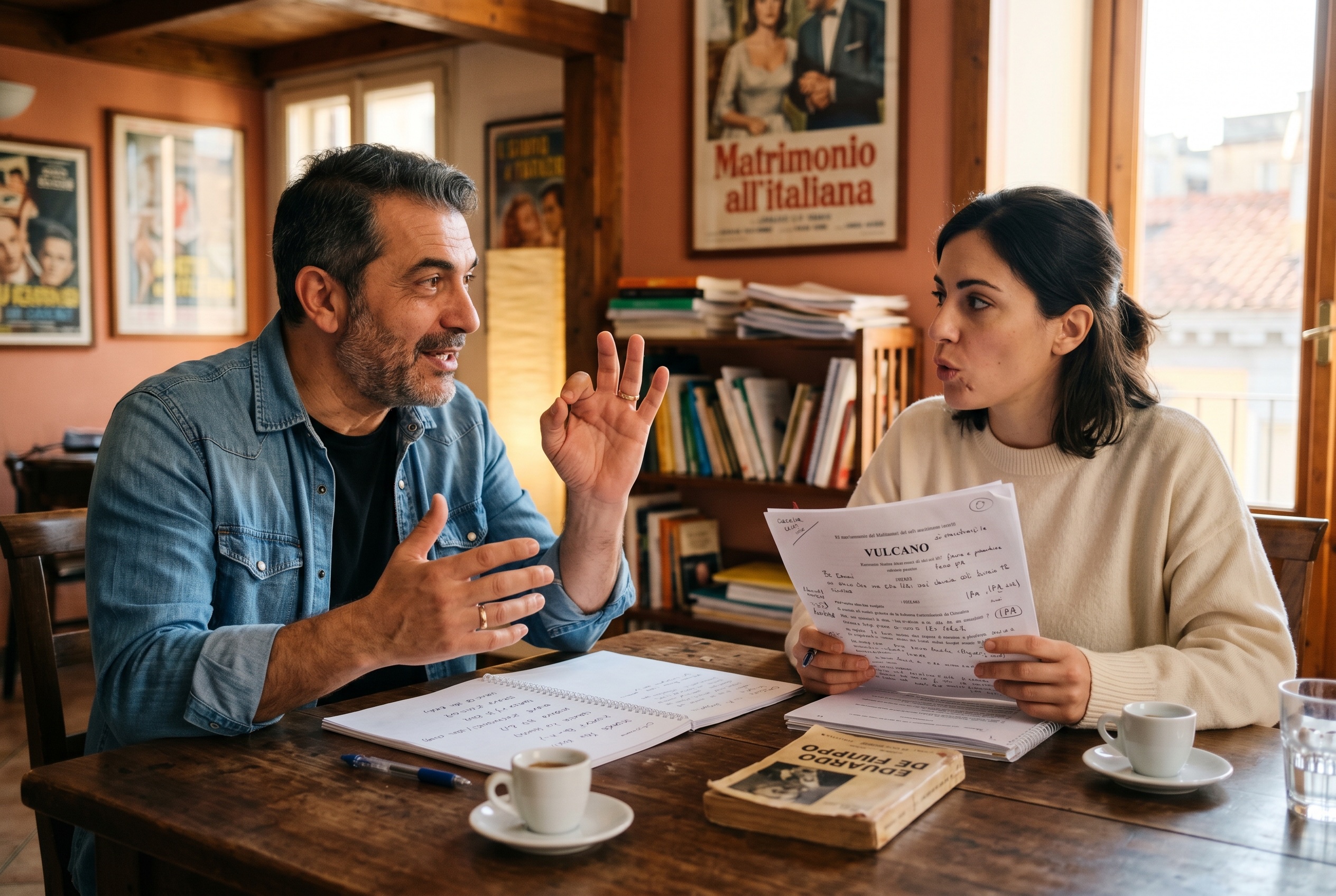
Personally vetted Italian dialect coaches for actors. Role preparation, accent work, and regional Italian (Sicilian, Neapolitan, Roman, Florentine, Venetian, Milanese) coaching for film, TV, and stage productions.
Your instructors
Italian Dialect Coach tutors for private lessons & classes
Strommen has been doing Italian dialect coaching since 2006, and the LA film industry has been a steady customer from the start, with credits across Italian-American crime dramas, period films set in Italy, opera training programs, and theatre productions. Our Italian dialect coaches range from native Italian speakers from specific regional dialect zones (Naples, Sicily, Rome, Milan) to Italian-American specialists with deep experience in Sopranos-tradition work. Every tutor below was met and vetted by us in person or via thorough video interview. No marketplace. No automated profile-creation. Real coaches with real on-set and on-stage backgrounds.
Filter by location, age, or price. Then book a 30-minute free trial.
Below are the Strommen tutors who specialize in Italian dialect coaching. Photos, ratings, and rates are real. Click any card to read their bio and book a free 30-minute trial.
I want to learn…
Every tutor, personally met. — founder-vetted since 2006, in Los Angeles and online worldwide.
Get a personalized plan
Pick your language — a language advisor will match you with the right tutor and map out your path.

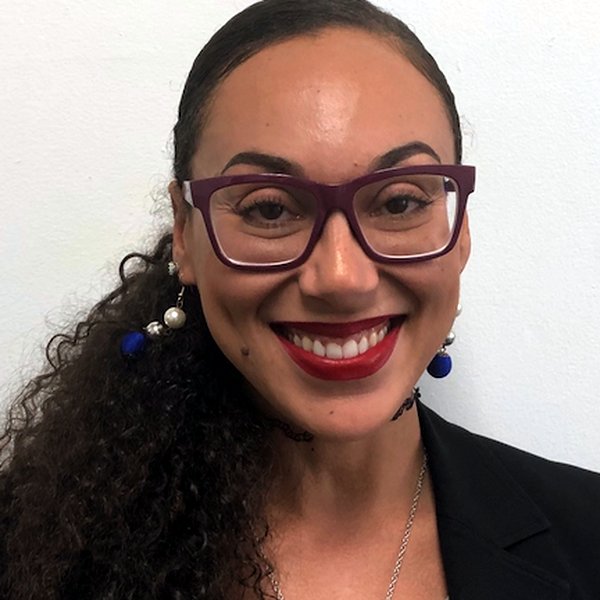


MBA and AS in Recording Arts · DALI, DELF, First Cert, SIZ Computer Science, Pro Tools, Dante
Multi-Culti Polyglot Linguist and Sound Engineer
Personally vetted · Strommen’s note
Vanessa speaks seven languages, has a sound-engineering background, and has spent two decades teaching. Her lessons range from accent coaching to art for kids.
Specialties
Also speaks: ASL American Sign Language, Chinese, Physics
MBA and AS in Recording Arts · DALI, DELF, First Cert, SIZ Computer Science, Pro Tools, Dante
Multi-Culti Polyglot Linguist and Sound Engineer
Specialties
I also speak: ASL American Sign Language, Chinese, Physics
Personally vetted · Strommen’s note
Vanessa speaks seven languages, has a sound-engineering background, and has spent two decades teaching. Her lessons range from accent coaching to art for kids.

Dialetti — region & character
5 things every actor should know about Italian dialect work
These aren't textbook conventions — they're the working principles every effective Italian dialect coach leans on for film and stage. Screenshot to share.
-
01
Italian-American ≠ Italian
Italian-American is American English with specific phonology and lexicon, not Italian. Confusing the two is the most common direction note actors get wrong. Sopranos-tradition coaching is American dialect work; L'amica geniale-tradition coaching is Italian dialect work. Tell your coach which you're doing in the first session.
e.g. "Gabagool" (Italian-American) vs "capocollo" (Italian).
-
02
Regional Italian = different language
Neapolitan, Sicilian, Venetian, Sardinian: UNESCO recognizes these as distinct languages, not dialects. A Neapolitan speaker switches between Italian and Neapolitan deliberately, not drifting. The bilingual switch is a different acting choice than the register-drift many actors are used to from American Southern dialect work.
e.g. Switching from standard Italian to Neapolitan mid-scene is a deliberate character choice.
-
03
Gesture is part of the language
Italian performance includes specific hand gestures that carry semantic content. They're not generic Italian-stereotype gesticulation, but a real grammar of gesture with regional variants. Naples has the most elaborate gesture vocabulary; central Italy more restrained; northern Italy more like northern European norms. Coaching includes gesture work for film actors who'll be visible in the frame.
e.g. The chin-stroke gesture means "I don't know," specifically Neapolitan.
-
04
Italian is musical
Pitch and intonation carry more emotional weight in Italian than in English. Flat-affect Italian sounds wrong even when grammatically correct. The musical pattern is part of the language, not decoration. Period work in 19th-century opera and neorealist cinema both lean into this. Coaching addresses the prosodic layer explicitly, not as an afterthought.
e.g. The same line read flat vs musical changes the character entirely.
-
05
The c / g hard-soft rule
Italian's hard-vs-soft consonant rules trip up English speakers consistently. C is hard before A, O, U (cane) and soft before E, I (cena). G follows the same pattern. CH and GH create hard consonants before E and I (chiave, laghi). Getting these wrong is one of the fastest accent tells. Drilled early in any Italian dialect work.
e.g. <em>Ciao</em> (CHOW), <em>chiave</em> (KYAH-veh): different C sounds.
About Italian Dialect Coach
Italian dialect coaching, for stage and screen
Italian dialect coaching for actors is a specialty within a specialty. Italy is not a single linguistic region; it's a peninsula of regional languages and dialects that have only been unified under standard Italian (Italiano standard, based on Tuscan) since the 19th century. For actors playing Italian or Italian-American roles, the choice of which Italian matters enormously. A character from Naples speaks Neapolitan-inflected Italian or full Neapolitan dialect depending on context. A Sicilian villager from the 1920s speaks a different language than a Roman waiter from 2010. A second-generation Italian-American from Bensonhurst doesn't speak Italian at all but speaks American English with specific Italian-American phonology and lexicon. Lessons in this specialty calibrate to the exact character, period, region, and class of the role.
The standard Italian foundation comes first for most actors. Italian operatic, dramatic, and film tradition runs on standard Italian, the educated Tuscan-Romance variety codified through Dante, Petrarch, and the Florentine literary tradition, refined through the 19th century, and standardized through 20th-century radio and TV (RAI). Most contemporary Italian film (Sorrentino, Garrone, Moretti, Bellocchio) uses standard Italian with regional flavoring as character detail. Most Italian theatre training assumes standard Italian as baseline. Strommen's Italian dialect coaches all work from this standard Italian foundation, layered with the specific regional or period detail the role requires.
Regional varieties are where the work gets specific. Neapolitan dialect (or, more properly, the Neapolitan language. UNESCO recognizes it as distinct from Italian) is the most-prominently-featured regional variety in international film. Films set in Naples (the works of Paolo Sorrentino's Hand of God, Massimo Troisi's films, Matteo Garrone's Gomorra, Roberto Saviano's TV adaptations) require Neapolitan-inflected Italian or full Neapolitan dialect. The HBO/Sky My Brilliant Friend series uses standard Italian and Neapolitan in different registers as a character marker. Sicilian dialect (also recognized as a distinct language) shows up in films from The Godfather through Cinema Paradiso through The Leopard. Roman Italian (Romanesco) shows up in Sorrentino's La grande bellezza, Pasolini's earlier work, and contemporary Roman crime dramas. Milanese, Venetian, and Florentine each have their own characteristic features. For period roles, archaic standard Italian (late-19th and early-20th century) carries specific vocabulary and syntactic features that distinguish it from contemporary Italian.
Italian-American is its own category entirely. The Italian-American English heard in films from Goodfellas through The Sopranos through The Many Saints of Newark is not Italian, it's American English with a specific phonology and lexicon shaped by southern Italian (mostly Neapolitan and Sicilian) immigration to American urban centers between 1880 and 1924. The vowel system, the rhythm, the specific lexical items (capeesh, gabagool, moolinyan, fuhgeddaboudit) all derive from this immigration history. Coaching Italian-American for actors means coaching the American English variety, not Italian, and several of our coaches specialize in this exact register, often for actors in Sopranos-tradition crime dramas, period films set in mid-century New York or New Jersey, or contemporary Italian-American family dramas. The training is different from Italian-Italian work.
For period work, the chronology matters. Italian opera and drama from the 19th century (Verdi, Puccini, Mascagni, Leoncavallo) requires the standard Italian conventions of that period. Italian neorealist cinema (De Sica's Bicycle Thieves, Rossellini's Rome Open City, the early Fellini) uses 1940s-50s standard Italian with regional flavoring. The Italian commedia all'italiana of the 1960s-70s (Sordi, Manfredi, Gassman, Tognazzi) uses a more colloquial register with substantial regional variation. Recent Italian cinema and prestige TV uses contemporary standard Italian. Roles in any of these traditions require period-calibrated diction work. For broader Italian foundations our 1,000 most common Italian words list is a useful supplement.
A few honest coach observations on what actors miss starting Italian dialect work. Italian is genuinely musical in a way English isn't. Pitch and intonation carry more emotional and pragmatic weight, and flat-affect line readings sound wrong in Italian even when the words and pronunciation are right. Hand gestures are real and load-bearing in Italian performance; not gesturing reads as withholding. Italian regions also have strong, distinct cultural identities that actors actually play, not generic Mediterranean coloring. A Sicilian character is not a Neapolitan character is not a Roman character, and audiences in Italy (and Italian-American audiences in the US) hear and see the difference. The relationship between standard Italian and dialect is bilingual rather than register-shifting too. A Neapolitan speaker doesn't drift between Neapolitan and Italian inside a sentence the way an American Southerner might drift between Southern and General American; they switch entirely, mid-conversation, deliberately. And the trap that catches the most actors: Italian-American is American, not Italian. Confusing the two is the most common direction-from-an-American-director mistake on set.
Between lessons, immersion is specific to the role. For standard Italian, listen to RAI news, watch contemporary Italian prestige cinema and TV (L'amica geniale, Gomorra, the Sorrentino canon), and ideally find Italian native speakers to converse with. For Neapolitan, the L'amica geniale series uses Neapolitan and standard Italian in alternation, with subtitles even on Italian streaming; Gomorra the series is entirely in Neapolitan. For Sicilian, the Andrea Camilleri / Salvo Montalbano TV adaptations use a Sicilian-inflected Italian that's specifically calibrated for accessibility while preserving Sicilian markers. For Italian-American, watch The Sopranos repeatedly. Every episode is dialect masterclass. For period work, period films are the reference; Bicycle Thieves for 1940s, Cinema Paradiso for 1950s, Sorrentino's Il Divo for 1990s political Italian, and so on. Your coach will recommend specific reference material for your role.
The Strommen Italian Dialect Coach roster includes native Italian speakers from the major regional dialect zones (Naples, Sicily, Rome, Milan, Florence, Venice), Italian-American bilinguals with regional family roots and acting backgrounds, and a small number of credentialed dialect coaches with film and theatre credits in both the US and Italy. Several of our coaches have direct on-set Italian dialect coaching credits: recent prestige TV productions, period films, theatre productions in the US and Italy. Each tutor's bio specifies their regional background, dialect specialties, and which student profile they fit best (film/TV actors, theatre actors, opera singers needing Italian dialect for character roles, voice-over actors). Pricing reflects experience. You can match yourself to a Neapolitan native for L'amica geniale-tradition work, a Sicilian native for Camilleri or Godfather-tradition work, an Italian-American specialist for Sopranos-tradition work, or a period-specialty coach for 19th-century opera or neorealist cinema. For other related programs, our Business Italian and Italian academic writing specialty pages cover non-acting Italian needs.
Lessons calibrate to your actual role. Role-specific work for an upcoming film or theatre production is different from general Italian dialect foundation-building for an actor building their toolkit before specific roles arrive, which is different again from on-set support during production. We don't run a generic Italian dialect coaching course. Each lesson is one-on-one, your coach plans it around your specific role and shooting/rehearsal timeline, and the trial is free. Existing acting training is foundation; this is the language layer on top. The most common adjustments for actors arriving with some Italian are precision on specific regional sound patterns, integration of dialect into character work (not as a costume but as embodied), and the rhythmic-musical layer of Italian performance. For a head-start, our Italian course page shows the family of related programs. Or just browse the full tutor list and book a trial. Bring the script. Tell us the role. Let's get to work.
What you'll cover
Lessons & classes tailored to Italian Dialect Coach
Standard Italian foundation for actors
The Italian sound system, pure vowels, hard-soft consonant rules, IPA-precise pronunciation, sentence rhythm and pitch patterns. Foundation for any Italian-language role regardless of region or period. Many actors arrive needing this even when their stated goal is regional dialect work, because the standard Italian foundation has to be solid before regional layering.
Regional dialect work: Neapolitan, Sicilian, Roman, Milanese, Venetian, Florentine
Specific regional dialects with native or expert coaches. Neapolitan for L'amica geniale-tradition and Gomorra-tradition productions. Sicilian for Godfather-tradition and Camilleri/Montalbano work. Roman for Sorrentino-tradition. Milanese, Venetian, Florentine for less-common roles. Period-specific dialect variation also covered.
Italian-American dialect (American English)
The Italian-American American English variety used in Sopranos-tradition crime drama, period films set in mid-century New York or New Jersey, and contemporary Italian-American family productions. This is American dialect work with Italian phonological substrate, not Italian-language work. Specifically trained coaches available.
Period roles, opera character work, voice-over
19th-century standard Italian for opera and period drama (Verdi-tradition). Italian neorealist cinema diction for 1940s-50s roles. Commedia all'italiana register for 1960s-70s roles. Voice-over Italian for dubbing or narration. Opera character work for singers needing dialect-specific characterization within a role.
FAQ
About Italian Dialect Coach lessons & classes
What's the difference between Italian and Italian-American dialect coaching?
Italian dialect coaching teaches Italian language (standard or regional) for roles where the character speaks Italian. Italian-American dialect coaching teaches American English with Italian phonological substrate for roles where the character speaks English but reads as Italian-American (Sopranos-tradition, period films set in Italian-American New York or New Jersey). They use different coaches and different methodologies. Tell us in the trial which you need.
I'm playing a Neapolitan character. Do I learn Neapolitan or Italian?
Depends on the script. Some productions use Neapolitan-inflected standard Italian (the character speaks Italian but with Neapolitan rhythm and occasional vocabulary). Others use full Neapolitan dialect, which is functionally a separate language. L'amica geniale alternates between both depending on context. Check your script: the dialect coach can read it and recommend an approach. Often it's a hybrid, and the coach will help calibrate which moments switch.
Can you coach for upcoming productions under deadline?
Yes. Pre-production dialect work under tight deadline is common. Typical timelines: a full role in 4-6 weeks of intensive coaching (2-3 sessions per week plus daily home practice), an audition scene in 1-2 weeks of focused work. The coach builds a study plan calibrated to your shoot or opening date. On-set or on-call support during production is also available for high-stakes productions.
I'm an opera singer. Can you help me with character dialect on top of standard Italian operatic diction?
Yes. Some opera roles call for regional dialect characterization on top of the standard operatic Italian foundation: a Sicilian peasant character in Cavalleria rusticana, a Neapolitan character in Pagliacci, regional characterization in verismo opera generally. The work is dialect-as-character on top of solid operatic diction, not replacing it. We coordinate with your voice teacher's work on diction-as-singing.
Are your coaches based in Los Angeles?
Most are LA-based. Strommen's roots are in the LA film industry, and our Italian dialect coaching roster has been built around productions shooting in LA or with LA-based actors. We also have coaches based in New York (for the theatre and NY-based film/TV market) and Italy (Rome, Naples, Milan) teaching via video. For LA-based actors with shoots in LA or NY, in-person sessions work well; for actors elsewhere, video lessons are equally effective for diction work.
Do you work with non-actors who want Italian dialect?
Occasionally, usually for voice-over artists, audiobook narrators, or video-game voice work where the character is Italian or Italian-American. We've also coached corporate clients who give Italian-language presentations and want regional flavor for cultural connection. But the bulk of this specialty is film, TV, theatre, and opera. For non-performance Italian needs, our Business Italian or conversational Italian specialties are typically better fits.
What does the trial include?
30 minutes, free, with the coach you select. Bring your script (or the role you're preparing) if you have one. The coach will hear you read or perform, identify the highest-impact areas to work on first, propose a study plan calibrated to your shoot or opening date, and you decide whether to continue. Most actors continue with the trial coach; if the fit isn't right, swap is easy.
Ready for Italian Dialect Coach lessons or classes?
Book a free 30-minute trial with one of our personally vetted tutors. Private lessons or small-group classes — your choice.