



Personally vetted instructors
Paraguayan Spanish tutors, lessons & classes
Mba'éichapa The Guaraní "how are you" that Paraguayans use alongside "hola" every day.
Personally vetted Paraguayan Spanish tutors. Lessons grounded in the bilingual Spanish-Guaraní country, where everyday speech braids two languages into one conversation.
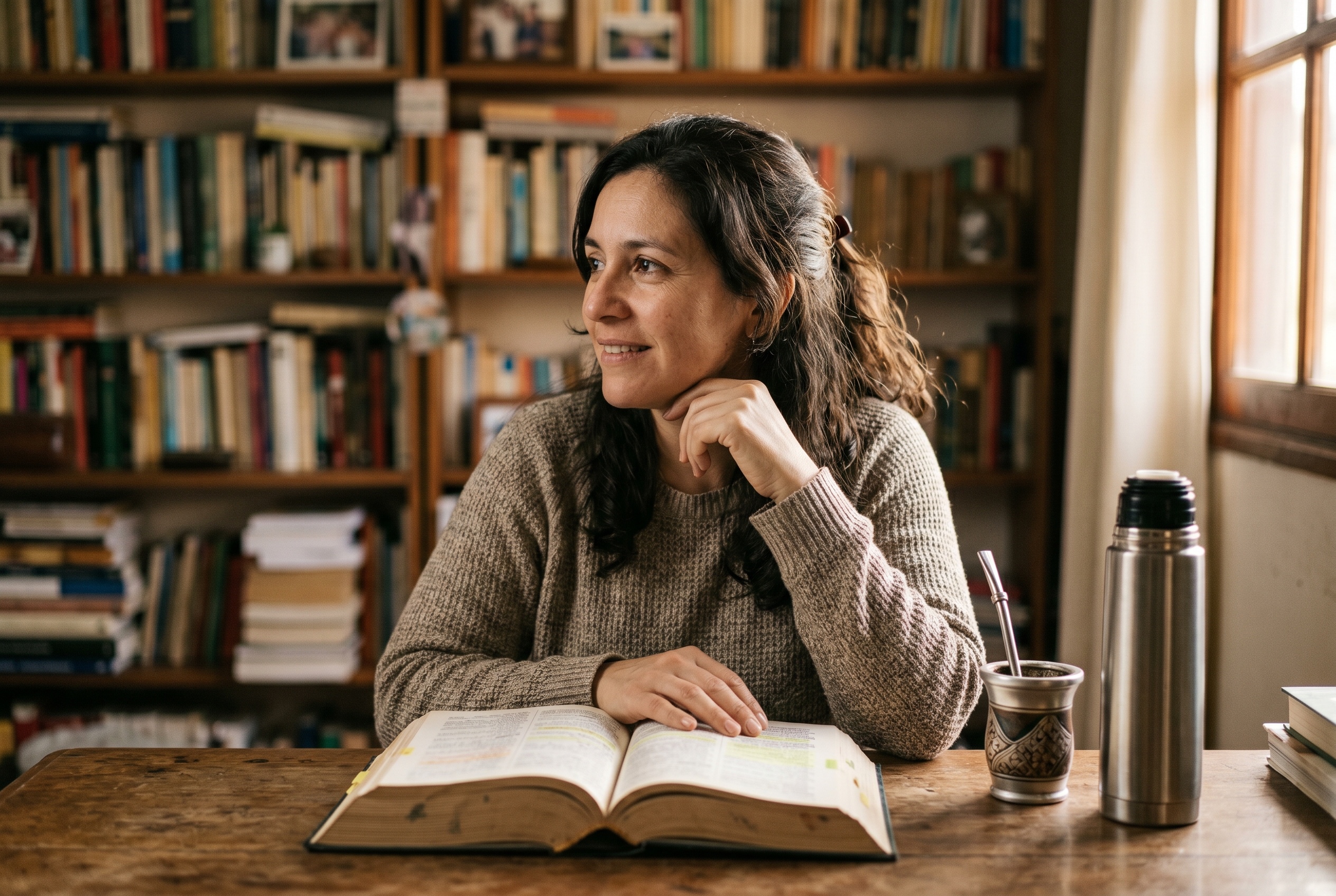
Your instructors
Paraguayan Spanish tutors for private lessons & classes
Strommen has been teaching Spanish since 2006. Paraguayan Spanish has always been a specific ask: family-connection Spanish for second-generation Paraguayan-Americans, mission and aid work in the interior, business Spanish for Mercosur teams operating across Asunción, and travel Spanish for the trip that touches both the Iguazú side and the country itself. Every tutor below was met and vetted by us, in person or via thorough video interview. No marketplace. No automated profile-creation. Real teachers with real bilingual backgrounds, which you can read about in their bios.
Filter by location, age, or price. Then book a 30-minute free trial.
Below are the Strommen tutors who specialize in Paraguayan Spanish. Photos, ratings, and rates are real. Click any card to read their bio and book a free 30-minute trial.
I want to learn…
Every tutor, personally met. — founder-vetted since 2006, in Los Angeles and online worldwide.
Get a personalized plan
Pick your language — a language advisor will match you with the right tutor and map out your path.

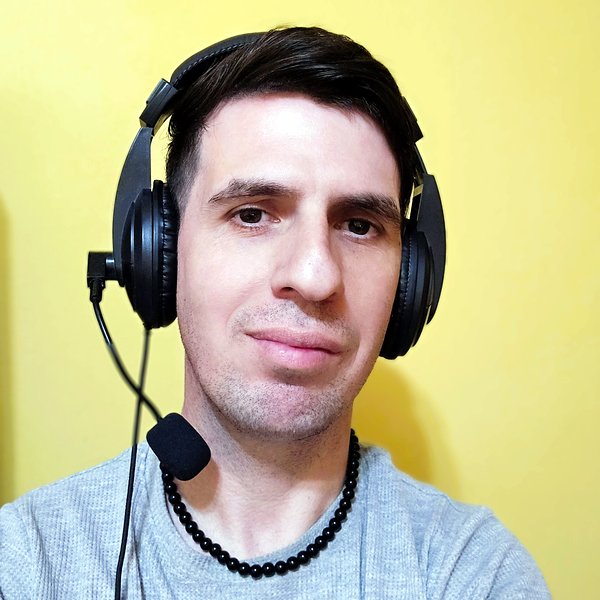
Título terciario (maestría)
Profesor certificado de niños, jóvenes y profesor ELE (Español Lengua Extranjera)
Personally vetted · Strommen’s note
A certified ELE tutor from Argentina, Pablo teaches a genuinely rare set of dialects: Paraguayan, Uruguayan, and Bolivian Spanish among them.
Specialties
Título terciario (maestría)
Profesor certificado de niños, jóvenes y profesor ELE (Español Lengua Extranjera)
Specialties
Personally vetted · Strommen’s note
A certified ELE tutor from Argentina, Pablo teaches a genuinely rare set of dialects: Paraguayan, Uruguayan, and Bolivian Spanish among them.

I have a Law degree from Buenos Aires university.
¡Muy buenas! Your Argentinian Spanish sherpa here.
Specialties
I have a Law degree from Buenos Aires university.
¡Muy buenas! Your Argentinian Spanish sherpa here.
Specialties

Jopará — culture & code-switching
5 features that mark Paraguayan Spanish
These aren't tourist phrases. They're the structural features that mark Paraguayan Spanish, and that reveal how deep the Guaraní layer runs in everyday speech. Screenshot the infographic, then book a tutor for the rest.
-
01
Jopará code-switching
The everyday vernacular that braids Spanish and Guaraní inside a single sentence. The word itself is Guaraní for "mixture." Distinct from "pure" Spanish (formal writing and official media) and "pure" Guaraní (traditional rural and academic registers). The de facto spoken language of urban Paraguay across class lines.
e.g. ¿Cuánto la naranja, ndéve? (Spanish question, Guaraní pronoun for "for you.")
-
02
Yeísmo rehilado
The letters ll and y realized as voiced /ʒ/ (the s in English "measure"), closer to older Montevideo speech than to Buenos Aires's newer /ʃ/. Paraguayan Spanish on first hearing can sound surprisingly Rioplatense for a country that doesn't border the river. Cf. our Rioplatense Spanish page.
e.g. <em>Yo me llamo</em> becomes "zho me zhamo" (not Mexican "yo me yamo").
-
03
Voseo + tuteo + usted
Vos is the unmarked default for informal singular "you," with full conjugations: vos sos, vos tenés, vos hacés. Imperatives shift in parallel (vení, mirá, contame). Tú appears in formal writing; usted in respectful address. Spoken everyday Paraguayan Spanish runs on vos.
e.g. Vos sos de Asunción, ¿no? ¿Vos tenés tiempo mañana? Contame.
-
04
Tereré, chipa, mitã, na
A working Guaraní lexical layer that lives inside everyday Spanish: tereré (cold yerba mate), chipa (cheese-cornstarch bread), mitã (kid, affectionate), karai (sir, used where Spanish would use don), sentence-final na (please). Not borrowed words from a foreign language. Native everyday vocabulary in a bilingual country.
e.g. Dame chipa, na, y tomamos tereré. (Give me chipa, please, and we'll have tereré.)
-
05
Guaraní-influenced syntax
Patterns that mark Paraguayan Spanish even when no Guaraní word appears. Leísmo paraguayo: an undifferentiated le object pronoun where standard Spanish would distinguish lo, la, le by case and gender, traceable to Guaraní's single third-person object marker. Sentence-final discourse particles. Nasalization habits in casual speech.
e.g. Le vi ayer (instead of standard "lo vi" or "la vi").
About Paraguayan Spanish
A country that speaks two languages at once
Paraguay is the only country in the Americas where a pre-Columbian indigenous language and a European language share official status and roughly equal everyday currency. About 7 million people live in Paraguay, and the most recent national surveys from the Dirección General de Estadística put the share who speak both Spanish and Guaraní in daily life at over 90 percent. Roughly a quarter of the population speaks Guaraní as a primary first language, sometimes monolingually in rural areas. The remainder grows up bilingual from the cradle. That demographic fact reshapes everything about Paraguayan Spanish, from sound to syntax to which language an everyday sentence even starts in. Linguistically, Paraguay is the Americas' clearest case of stable, mass, government-recognized bilingualism, and Paraguayan Spanish is what Spanish becomes when it sits in daily contact with Guaraní for four centuries.
The 1992 Constitution made Guaraní co-official with Spanish, the first South American republic to give an indigenous language full legal parity. The 2010 Ley de Lenguas (Languages Law) created the Secretaría de Políticas Lingüísticas and the Academia de la Lengua Guaraní, which now codifies Guaraní orthography and grammar at the state level. Schools teach in both languages. Government broadcasts in both languages. The Senate floor hears both languages. Pope Francis, on his 2015 Paraguay visit, addressed the country first in Guaraní before switching to Spanish, a sequencing that would be unthinkable in any other Spanish-speaking nation. For a learner, this means Paraguayan Spanish does not behave like a Spanish dialect that happens to have some indigenous-loanword color. It behaves like a Spanish that has spent centuries listening to and answering a different language, and the residue runs through every layer of the system.
The most visible product of that contact is jopará, the everyday code-switching register that braids Spanish and Guaraní into a single utterance, often inside a single sentence. The name itself is Guaraní for "mixture." Paraguayan-American linguist Shaw Nicholas Gynan and Spanish dialectologist German de Granda both treat jopará as the country's de facto vernacular, distinct both from "pure" Spanish (used in formal writing and official media) and from guaraníete or "pure" Guaraní (used in traditional rural settings and increasingly in academic Guaraní instruction). A friend at the market might ask "¿Cuánto la naranja, ndéve?" ("How much is the orange, for you?"), switching from Spanish to a Guaraní pronoun mid-question without anyone hearing it as foreign. The shape of jopará varies by speaker, region, and topic. Asunción urban speech sits closer to Spanish with Guaraní function words and discourse markers sprinkled in. Rural Caaguazú or Concepción speech often runs the other direction, mostly Guaraní with Spanish nouns for newer concepts. Tutors teach jopará as its own register, not as Spanish corrupted by Guaraní or vice versa. Reading and writing remain firmly in one language or the other; speech crosses freely.
The phonological fingerprint is real even before the code-switching layer. The most identifiable feature is yeísmo rehilado, the same /ʒ/ realization of ll and y that marks Rioplatense Spanish across the river. Paraguayan speakers typically hold the older voiced /ʒ/ (closer to the s in English "measure") rather than the unvoiced /ʃ/ that younger porteño speakers have moved toward. So calle comes out as "cazhe," yo as "zho," lluvia as "zhuvia." This is one of the cues that surprises foreign learners: Paraguayan Spanish on first hearing can sound closer to Buenos Aires than to neighboring Bolivia or Peru. The second phonological piece is more particular to Paraguay: a tendency, especially in jopará registers, to import Guaraní's nasalization patterns into Spanish words. The Guaraní language carries nasalization as a phonemic feature, with vowels distinguished by nasal versus oral quality, and that habit bleeds into how some Paraguayan speakers handle Spanish vowels in casual speech. Less dramatic than yeísmo rehilado, but recognizable to listeners who know to listen.
Grammar carries the third layer. Voseo is the unmarked default for the informal second-person singular, the same as in Argentina and Uruguay. Vos sos, not tú eres. Vos tenés, not tú tienes. Vos hacés, not tú haces. The imperative forms shift in parallel: vení, mirá, contame. Paraguayan voseo coexists with tuteo in some formal and written contexts, and with usted in respectful address, but spoken everyday Paraguayan Spanish runs on vos. Beyond the pronouns, Guaraní's influence produces a few syntactic habits that mark Paraguayan Spanish even when no Guaraní word appears. The use of le as an undifferentiated object pronoun where standard Spanish would distinguish lo, la, or le by case and gender shows up in patterns linguists call leísmo paraguayo, traceable to Guaraní's single third-person object marker. The use of a sentence-final na (Guaraní for "please") in Spanish utterances — "dame agua, na" — is another. None of this gets in the way of mutual intelligibility with other Spanish dialects, but it's audible to anyone with an ear for the variety.
The Guaraní lexical layer is the part Paraguayans share with the rest of the world without realizing it. Words that have traveled from Guaraní into international Spanish include jaguar, tapir, piranha (from pirá, fish, plus aña, devil), tucán, maracá, and tapioca. Inside Paraguay the layer is far thicker: kinship terms, food names, plant names, weather words, and dozens of discourse markers come from Guaraní rather than Spanish. Tereré, the country's national cold-yerba-mate drink (more on which below), is a Guaraní word. Chipa, the cheese-and-cornstarch bread that anchors breakfast, comes from Guaraní tipa. Mitã means kid, used affectionately the way Argentinians use pibe. Karai and kuña mean "sir" and "ma'am" in registers where Spanish would use don and doña. Aña membý (literally "son of the devil") works as an emphatic exclamation. Tutors teach this layer in parallel with Spanish vocabulary because in real Paraguayan conversation the two layers don't separate.
Cultural codes carry their own weight. Tereré, cold yerba mate drunk through a metal bombilla from a shared guampa (a hollow cow horn or wooden cup), is the country's defining social ritual. Where Argentines and Uruguayans drink hot mate, Paraguayans drink it cold, often with medicinal herbs (yuyos) crushed in. The round circulates at construction sites, in government offices, between students before class, at family gatherings on weekend afternoons. Refusing the guampa is a real social move, not a casual choice. The blog has a primer on yerba mate that covers the broader regional culture; tereré-specific etiquette is something tutors walk through directly. The chipa-and-tereré pairing is the equivalent of the asado in Argentina or the parrillada in Uruguay: a national food culture that doubles as a national meeting place. Sopa paraguaya, despite its name, is not a soup but a dense cornbread, and the joke that "Paraguay is the only country where the soup is solid" is half the country's running self-deprecation.
A few honest tutor observations on what trips up American students with Paraguayan Spanish. Treating Guaraní as a foreign element you can skip is the most common miss; in this country Guaraní vocabulary is woven through real Spanish utterances at every register, and a tutor who teaches around it produces a learner who is functionally limited in Paraguay. Voseo is the second adjustment for students arriving from Mexican or Castilian Spanish, and the forms are quick to drill but slow to fire in real time without sustained practice. Yeísmo rehilado is the third, and it pulls Paraguayan Spanish closer to Rioplatense than most learners expect. The fourth issue is register: jopará is not a "casual" or "informal" Spanish; it is a separate, fully-grammaticalized everyday vernacular with its own rules, and using it in a formal Paraguayan government setting is as wrong as using bureaucratic Spanish at a family asado. The fifth point is geographic: Paraguay is not a small Argentina. The political history, the indigenous demography, the bilingual culture, and the relationship to the Guaraní language are entirely distinct, and Paraguayans hear the conflation immediately.
Between lessons, immerse with Paraguayan media. 7 Cajas (2012), the Asunción heist film by Juan Carlos Maneglia and Tana Schémbori, is Paraguay's most internationally screened movie and runs heavily in jopará, with the urban-market dialogue switching between Spanish and Guaraní inside single scenes. Hamaca Paraguaya (Paz Encina, 2006) is slower and almost entirely in Guaraní with Spanish subtitles, valuable for ear-training on the indigenous side of the bilingualism. Latas Vacías and Las Herederas (Marcelo Martinessi, 2018) cover urban Asunción in mostly-Spanish registers. For music, guarania (the country's slow ballad genre, codified by José Asunción Flores in the 1920s) and Paraguayan polka are the traditional pair; contemporary listeners reach for Purahéi Soul and Riveros and Berta Rojas on classical guitar (Paraguay is, per capita, one of the strongest classical-guitar countries on earth, partly through the Agustín Barrios Mangoré legacy). For reading, Augusto Roa Bastos's Yo el Supremo and Hijo de hombre are the canonical Spanish-language texts, both threaded with Guaraní phrasings. Helio Vera's essays on Paraguayan identity are the everyday equivalent. The pattern is the same one we recommend for any specialty: pick something you'd watch or read in English anyway, then do it in Paraguayan Spanish (and Guaraní, increasingly, the further in you go).
The Strommen Paraguayan Spanish roster spans native speakers based in Asunción and the interior, native speakers who relocated to the United States or other parts of Latin America, and longtime bilinguals who grew up between the two countries. The in-country teachers bring direct exposure to current jopará registers, weekly Paraguayan news vocabulary, and the day-to-day rhythm of bilingual life. The U.S.-based teachers bring classroom experience with American students unfamiliar with Guaraní and the patience to walk through voseo, yeísmo rehilado, and the basic Guaraní vocabulary layer in parallel. Each tutor's bio specifies origin, teaching background, and which student profile they fit. You can match yourself to an Asunción-resident tutor for urban immersion, an interior-based tutor for stronger Guaraní contact, or a U.S.-based tutor for in-person LA lessons. Lessons are one-on-one and calibrated to your real goal: travel Spanish for a Paraguay trip, family-connection Spanish for second-generation Paraguayan-Americans, professional Spanish for working with Asunción-based teams, or the slow accumulation of Guaraní vocabulary that makes the country feel fully legible. For broader Spanish foundations our 1,000 most common Spanish words list and the Spanish course page are useful supplements, or browse the full tutor list.
Worth saying plainly before the trial: progress here looks different than in most Spanish specialties. A learner whose only goal is comprehensible Spanish in Asunción gets there on a normal Spanish-learning timeline. A learner who wants real Paraguayan competence, the kind that holds up at a family tereré round or in a rural village, accepts that some Guaraní accumulation is part of the deal. Both are valid. The tutor calibrates at the trial lesson and adjusts from there.
What you'll cover
Lessons & classes tailored to Paraguayan Spanish
Jopará as a real register
The everyday Spanish-Guaraní code-switching that anchors urban Paraguayan speech. Where jopará sits between "pure" Spanish and "pure" Guaraní. How much Guaraní lexical and grammatical material a tutor weaves into Spanish lessons depending on your goal. The basic Guaraní vocabulary set (kinship terms, food, weather, discourse markers) that lets you participate in actual Asunción conversation rather than a hospital-Spanish version of it.
Voseo and Paraguayan grammar
Vos in place of tú with its full conjugation paradigm: vos sos, vos tenés, vos hacés, vos sabés, vos podés. The imperative forms (vení, mirá, tomá, contame). Where tuteo still appears (formal writing, certain pedagogical registers) and where usted is required (respectful address with elders, in service contexts). For students with prior Mexican or Castilian Spanish, voseo is the central grammatical adjustment, drilled from hour one.
Yeísmo rehilado and Paraguayan phonology
The /ʒ/ realization of ll and y, closer to older Montevideo than to younger Buenos Aires. The Guaraní-influenced nasalization habits in casual speech. The country's tendency to retain conservative phonological forms that the Rioplatense urban core has moved past. Shadowing exercises use Paraguayan film audio (7 Cajas), broadcast news from Asunción, and music in guarania and polka traditions.
Tereré culture and Paraguayan identity
The cold-mate ritual that anchors social life across class and region. Etiquette around the guampa, the bombilla, the yuyos (medicinal herbs), and the round that circulates at construction sites and in government offices alike. Chipa as the breakfast and afternoon staple. Sopa paraguaya as the dense cornbread that isn't soup. Guarania music and the Agustín Barrios Mangoré classical guitar legacy. The country's relationship to Argentina and Brazil that isn't subordinate to either.
FAQ
About Paraguayan Spanish lessons & classes
What is jopará, and do I really need to learn Guaraní to speak Paraguayan Spanish?
Jopará is the everyday Spanish-Guaraní mixing that anchors urban Paraguayan speech. The word means "mixture" in Guaraní. You don't need to study Guaraní as a separate language to operate in Paraguayan Spanish, but a working set of Guaraní vocabulary (food words, kinship terms, common discourse markers like sentence-final na) is part of how Paraguayans actually talk. Tutors teach this layer alongside Spanish, calibrated to your goal: travel Spanish needs less Guaraní, family-connection or village work needs more.
How is Paraguayan Spanish different from Argentinian or Uruguayan Spanish?
All three share voseo (vos instead of tú) and yeísmo rehilado (the /ʒ/ or /ʃ/ pronunciation of ll and y). The defining difference is the Guaraní layer. Argentina and Uruguay's everyday Spanish carries some lunfardo Italian-origin vocabulary and minor regional Quechua and Aymara contact in the northern provinces, but neither country has anything like Paraguay's mass, government-recognized bilingualism. Paraguayan Spanish is what Spanish becomes when it sits in daily contact with Guaraní for four hundred years. Cf. our Rioplatense Spanish and Argentinian Castellano pages.
Will I be understood in other Spanish-speaking countries?
Yes, comfortably. The grammar and pronunciation of Paraguayan Spanish are fully legible across the Spanish-speaking world. Some Guaraní-derived vocabulary won't translate, and voseo conjugations may sound Argentine to ears unfamiliar with the Southern Cone, but Mexicans, Spaniards, Colombians, and Peruvians understand Paraguayan speakers without difficulty. If you've ever heard the words jaguar, tapir, or piranha, you've heard Guaraní crossing into international Spanish already.
Are your tutors native Paraguayans?
Most are native Paraguayans, raised bilingually in Asunción or the interior. We also have longtime bilinguals who grew up between Paraguay and the United States, fully fluent in both Spanish and Guaraní. Each tutor's bio specifies origin and teaching background. You can match yourself to an Asunción-resident tutor for urban Spanish, an interior-based tutor for stronger Guaraní contact, or a U.S.-based tutor for in-person LA lessons.
Can I take Paraguayan Spanish lessons online or only in person?
Both. Most Paraguayan Spanish tutors teach online via Jitsi or Zoom and are available globally. A subset teach in person in Los Angeles. The booking widget on each tutor's profile shows formats and locations.
I already speak Mexican or Castilian Spanish. How hard is the switch?
Faster than students expect. Voseo conjugations (vos sos, vos tenés) drill out in two to four weeks of consistent practice. Yeísmo rehilado (the /ʒ/ pronunciation of ll and y) takes a similar window of shadowing. The Guaraní lexical layer accumulates ongoingly as you watch Paraguayan films, listen to guarania music, and speak weekly with a Paraguayan tutor. The grammar and seseo of your existing Spanish transfer directly.
What does a Paraguayan Spanish lesson actually look like?
Lessons are one-on-one and built around your goals. A typical hour might include 15 minutes of conversation on a topic you chose, 15 minutes targeted on a voseo conjugation or yeísmo rehilado pattern that came up, 15 minutes on Guaraní-derived vocabulary or jopará register questions, and 15 minutes of practice using what you learned. Your tutor plans around you. No two students get the same lesson.
How fast can I expect to progress?
Depends on the time you put in between lessons, your starting level, and your specific goal. Students arriving with intermediate Mexican or Castilian Spanish transition to Paraguayan voseo and yeísmo rehilado in 6 to 10 weeks at one or two lessons a week. From-scratch beginners reach travel-conversational comfort in 3 to 6 months. Real cultural fluency (comfortable in jopará registers, recognizing tereré etiquette, navigating bilingual conversations) takes 12 months and up.
Ready for Paraguayan Spanish lessons or classes?
Book a free 30-minute trial with one of our personally vetted tutors. Private lessons or small-group classes — your choice.