



Personally vetted instructors
German Accent tutors, lessons & classes
Servus! The Bavarian and Austrian "hi." Used south of the Main river instead of "Hallo" or "Guten Tag" — and a useful tell that you know German is not one accent.
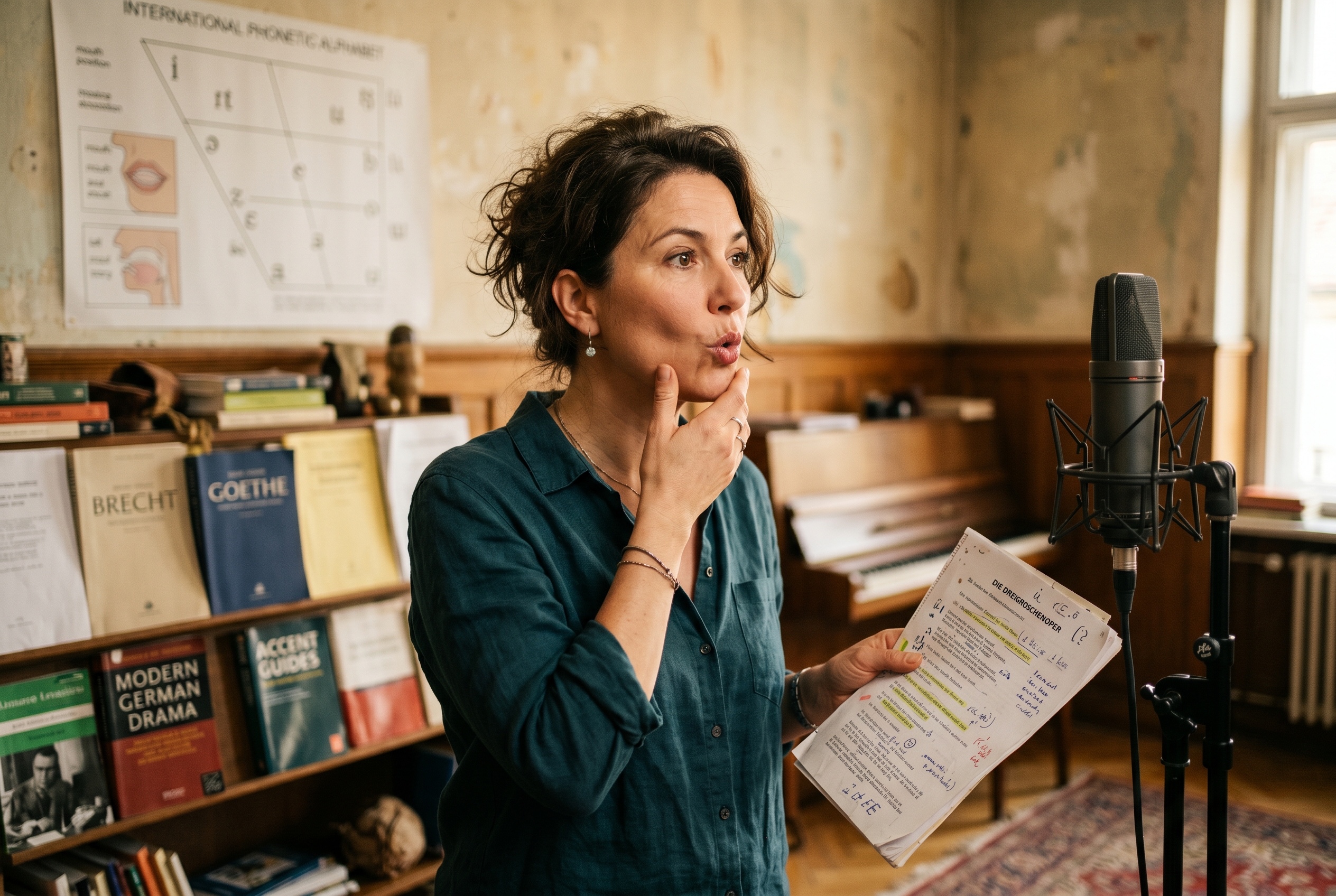
Personally vetted German accent coaches. Targeted accent work for actors taking on German roles, voice-over artists, and fluent non-natives who want a more native-sounding Hochdeutsch (or a specific regional flavor).
Your instructors
German Accent tutors for private lessons & classes
Strommen has been doing dialect and accent coaching since 2006, originally for actors working on Hollywood productions, later expanding to fluent non-native speakers and regional-neutralization work. Several of our German accent coaches have on-set credits with film and TV actors preparing German-character roles; others come from theatre, voice-over, or Goethe-Institut-trained Hochdeutsch coaching backgrounds. Every tutor below was met and vetted by us. No marketplace. No automated profile-creation. Real coaches with real backgrounds in German dialect and accent work.
Filter by location, age, or price. Then book a 30-minute free trial.
Below are the Strommen tutors who specialize in German accent coaching. Photos, ratings, and rates are real. Click any card to read their bio and book a free 30-minute trial.
I want to learn…
Every tutor, personally met. — founder-vetted since 2006, in Los Angeles and online worldwide.
Get a personalized plan
Pick your language — a language advisor will match you with the right tutor and map out your path.

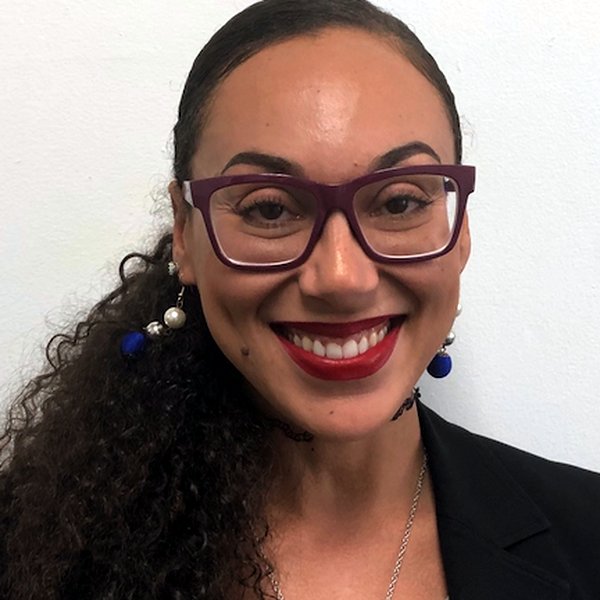


MBA and AS in Recording Arts · DALI, DELF, First Cert, SIZ Computer Science, Pro Tools, Dante
Multi-Culti Polyglot Linguist and Sound Engineer
Personally vetted · Strommen’s note
Vanessa speaks seven languages, has a sound-engineering background, and has spent two decades teaching. Her lessons range from accent coaching to art for kids.
Specialties
Also speaks: ASL American Sign Language, Chinese, Physics
MBA and AS in Recording Arts · DALI, DELF, First Cert, SIZ Computer Science, Pro Tools, Dante
Multi-Culti Polyglot Linguist and Sound Engineer
Specialties
I also speak: ASL American Sign Language, Chinese, Physics
Personally vetted · Strommen’s note
Vanessa speaks seven languages, has a sound-engineering background, and has spent two decades teaching. Her lessons range from accent coaching to art for kids.

Phonologie — sound & region
5 things that distinguish a real German accent from a Hollywood one
These are the phonological details that separate a working actor's German accent from the cartoon version. Screenshot to share with anyone prepping for a German-character role.
-
01
The uvular R (not the rolled R)
Standard German R is [ʁ], a soft uvular sound made at the back of the throat (similar to French). The alveolar trill exists only in Bavarian, Austrian, and parts of Swiss German. An English-speaking actor over-rolling the R for a generic "German" accent reads as Bavarian-farmer caricature, not Berlin or Hamburg standard. At end of syllables, the R vocalizes to a schwa-like vowel: Vater sounds like "Fah-tuh."
e.g. Vater, Bruder, Mutter. Final R drops to a vowel, not a trill.
-
02
Umlauts ä, ö, ü
The three umlauted vowels have no direct English equivalent. ä is close to English "e" in "bed." ö and ü are front-rounded vowels. Round your lips for "oo" but say "ee": that's ü. Round your lips for "oh" but say "eh": that's ö. Most English speakers substitute the nearest English vowel and the result is unmistakably non-native. Drilling these in isolation, then in minimal pairs (schon/schön, Bruder/Brüder), is the fastest path to native-sounding vowels.
e.g. schön (beautiful) vs. schon (already), same consonants, different vowel quality.
-
03
Final-devoicing (Auslautverhärtung)
Voiced consonants at the end of a syllable become voiceless. Tag sounds like "Tahk," Lied like "Leet," Bund like "Boont," halb like "halp." This rule applies consistently across Standard German and is one of the single easiest fixes for a foreign accent: just devoice your final consonants and your German immediately sounds more native. The rule is so reliable that German linguistics textbooks teach it as one of the language's defining phonological features.
e.g. Guten Tag → "Goo-ten Tahk" (not "Tahg").
-
04
Bavarian, Austrian, and the regional markers
Bairisch (Bavarian/Austrian German) keeps the rolled R, drops or softens many word endings, uses Servus and Grüß Gott instead of Hallo and Guten Tag, and has distinct intonation contours. For any role set in Munich, Vienna, Salzburg, or rural Bavaria, this is the target, not generic Hochdeutsch with a stronger R. The classic shibboleth: Oachkatzlschwoaf (squirrel's tail in Bavarian). If you can say it convincingly, you have the dialect.
e.g. Servus, grüß di! (Bavarian/Austrian hello) instead of Hallo, guten Tag.
-
05
Hochdeutsch vs. Plattdeutsch vs. Schweizerdeutsch
Hochdeutsch is the Goethe-Institut and broadcast-news standard, the safest default for film and TV. Plattdeutsch (Low German) is the historical northern dialect substrate, still audible in Hamburg and coastal accents, with features closer to Dutch. Schweizerdeutsch is functionally a separate dialect group: mutually intelligible with Standard German only with effort, its own consonant inventory (the Swiss ch-, as in Chuchichäschtli), and its own prosody. An actor or fluent speaker has to pick a target. "German accent" is not one accent. Strommen's Hochdeutsch specialists and Swiss German tutors cover those branches.
e.g. Standard "Wie geht's?" vs. Swiss "Wie gohts?" vs. Bavarian "Wie geht's da?"
About German Accent
Hochdeutsch, regional, or character — get the right one
The single most common mistake in English-language film and TV German accents: the over-rolled, growled R. The cartoon Schwarzenegger. Bond villain German. It's a Hollywood shorthand that real native speakers of Standard German never produce, because the standard German R is uvular (made at the back of the throat, like a soft French R), not an alveolar trill. The rolled R does exist in German, but only in Bavarian, Austrian, and parts of Swiss German, and even there it lives alongside the uvular variant. An actor doing a generic "German accent" with a rolled R is signaling "southern German farmer in a 1950s war film," not "Hamburg banker" or "Berlin scientist." Pick the wrong R and the casting director hears it immediately.
German accent coaching is a specific discipline distinct from teaching German as a language. The students who land here typically fall into three groups. Actors and voice-over artists need a German accent for a specific role or audition, and the precision of the accent is the entire deliverable. Fluent non-native German speakers want their accent to soften toward Hochdeutsch so their German sounds less obviously foreign in professional or social contexts. Regional-accent native German speakers (a Bavarian moving into national broadcast, a Swabian preparing for theatre work, a Saxon wanting to neutralize for film) want their regional markers softened toward the broadcast-neutral standard. Each goal demands different lessons.
What lessons actually cover. The phonology of German is well-documented in the linguistics literature (Wiese's The Phonology of German is the standard reference), and accent coaches lean on the same diagnostic tools used by speech-language pathologists and dialect coaches in theatre. The work organizes around five layers. The R is layer one and the highest-impact change for most English-speaking actors: trading the English R for the German uvular [ʁ], a soft back-of-throat sound that vocalizes (drops to a schwa-like vowel) at the end of syllables, so "Vater" sounds closer to "Fah-tuh" than "Fah-ter." The umlauted vowels ä, ö, ü are layer two: ö and ü especially have no direct English equivalent and require front-rounded-vowel production (round your lips for "oo" but say "ee" — that's ü). English speakers default to substituting closest English vowels and the result is unmistakably non-German. Layer three is final-devoicing: voiced consonants at the end of a syllable become voiceless. "Tag" becomes "Tahk," "Lied" becomes "Leet," "Bund" becomes "Boont." This rule is consistent across Standard German and is one of the easiest single fixes to make a learner sound more native. Layer four is the consonant cluster work. German allows clusters English doesn't (the initial pf- in Pferd, the kn- in Knie pronounced fully) and forbids assimilations English uses freely. Layer five is prosody: word stress (German is mostly first-syllable stressed with predictable exceptions for prefixed verbs), sentence rhythm (less stress-timed than English, with more even syllable weight), and intonation patterns that differ from English in question-formation and emphasis.
For actors, the framing shifts from "reduce my accent" to "acquire a specific target." The standard reference is Hochdeutsch: the Goethe-Institut taught form, the broadcast-news standard, what's printed in Duden. It's the safest default for film and TV unless the role specifies regional. From Hochdeutsch you can branch in three directions. Bavarian and Austrian German (Bairisch) keeps the rolled R, drops or softens many endings, uses different vocabulary (Servus, Grüß Gott, Pfiat di), and has distinct intonation contours. It's essential for any role set in Munich, Vienna, Salzburg, or rural Bavaria. Swiss German (Schweizerdeutsch) is less an accent than a separate dialect group, mutually intelligible with Standard German only with effort, with its own consonant inventory (the famous Swiss ch- as in "Chuchichäschtli") and prosody. Northern Plattdeutsch (Low German, historically spoken from Hamburg up through the coastal regions) sounds closer to Dutch than to Hochdeutsch in some features and largely survives now as a dialect substrate in northern accents. For period work, pre-war upper-class Berlin German has its own markers, as does GDR-era East German, as does the Hochdeutsch-with-Yiddish-borrowing of pre-war Vienna. Actors prepping for a specific period role need region-and-era-specific coaching, not generic "German accent."
For fluent non-natives wanting to sound less foreign, the diagnostic work is the highest-leverage part. Native English speakers transferring into German typically substitute the English R for the German R, flatten the umlauts, voice final consonants, and carry English sentence intonation onto German sentences. Each of those is a single identifiable pattern and each responds to targeted drill. Romance-language speakers carry different substitution patterns (Spanish and Italian speakers often roll the R correctly but in the wrong contexts, French speakers tend to nasalize where German doesn't, Portuguese speakers struggle with the umlauts in different ways than English speakers do). Slavic-language speakers tend to handle the umlauts more naturally but transfer their L-quality and word-final assimilation patterns. Asian-language speakers face their own patterns. Mandarin speakers especially work on the final-devoicing rule (which feels intuitive once explained) and on the umlauts. The pattern is identified at the trial and the lesson plan is built around your specific transfer.
A few mechanics that distinguish real accent coaching from generic German lessons. Recording is non-negotiable. Lesson-over-lesson audio comparison is how progress is measured and how blind spots get identified (yours and the coach's). IPA literacy: the International Phonetic Alphabet is the precision tool that lets coach and student talk about specific sounds without ambiguity. Your coach doesn't need to make you learn IPA in full, but they should be using it to label what you're producing and what you should be producing instead. Shadowing: listening to native audio and repeating in real time. For Hochdeutsch, the gold standard sources are Tagesschau and Deutsche Welle newscasts. For Bavarian, Bayerischer Rundfunk and Austrian ORF. For Swiss, SRF. Pick voices in your target dialect and listen daily, ideally with shadowing built into the homework. And realistic expectations: native-speaker indistinguishability is rare and resource-intensive for any accent; the practical goal for most students (sound clear, sound correctly German, stop having the accent be the thing the role or the meeting is about) is reachable in 3-6 months of weekly focused work.
Voice-over and ADR work is a particular case worth flagging. The microphone is unforgiving in ways that a stage or set is not. Final-devoicing inconsistencies, vowel-substitution slips on umlauts, and rolled-R bleed-through that an audience might forgive in a wide shot become glaringly obvious in a clean voice-over booth take. Voice actors working German lines also have to handle the prosodic difference between scripted German and conversational German: scripted German on the page reads slower and more even than how Germans actually deliver lines, and the gap between "correctly read" and "convincingly performed" is where most takes get re-recorded. Our coaches who specialize in voice-over work train on booth audio, take-to-take consistency, and the rhythm of delivering scripted German lines as if they were thought up in the moment.
For anyone who wants the underlying linguistics in book form, the standard academic reference is Richard Wiese's The Phonology of German (Oxford University Press), which lays out the formal phonological system the diagnostic tools above are built on. The Goethe-Institut's accent and pronunciation materials are the standard pedagogical reference for Hochdeutsch. Most students don't need to read either, but the coaches do, and the existence of a real phonological literature is what separates targeted accent work from "just talk to a native speaker."
The Strommen German Accent roster includes native German speakers with theatre coaching backgrounds, dialect coaches with on-set film and TV credits working with actors on German-character roles, and Hochdeutsch specialists trained at the Goethe-Institut. Some coaches focus on the broadcast-neutral standard for corporate and fluent-speaker work; others specialize in regional dialects for character work in film and theatre. Strommen has been doing dialect work for actors since 2006 out of our Hollywood roots. Accent coaching has always been one of our core services, and the German accent specifically is one we get asked about often (war films, period dramas, prestige TV, video-game voice work). Each tutor's bio specifies their background and the kinds of students they fit best. For the broader German curriculum (grammar, vocabulary, conversation, business German), our German course page or the German dialect coaching specialty cover those routes. Students working between languages often pair this with the English course page for crossover ESL or accent work in the other direction. Lessons calibrate to your actual goal: a two-week audition sprint for an actor reads differently from a six-month accent-reduction arc for a fluent professional. Record your sessions. Listen to native audio daily in your target variant. Bring the script or the recording you're working from to your trial. The full tutor list is one click away.
What you'll cover
Lessons & classes tailored to German Accent
Sound-level diagnostics + targeted drill
Identify the specific sounds your current accent uses non-German patterns for: typically the R (alveolar instead of uvular), the umlauts ä/ö/ü, final consonants (voiced instead of devoiced), and the consonant clusters German allows but English avoids. Drill each in isolation, then in minimal pairs, then in scripted sentences, then in spontaneous speech. IPA-based diagnostics so the work is precise.
Hochdeutsch as default, regional on request
Most lessons target the Hochdeutsch broadcast-neutral standard taught by the Goethe-Institut — the safest default for film, TV, voice-over, and corporate work. For actors with regional roles, the work shifts to Bavarian, Austrian, Swiss German, or a specific historical or period variant. Both directions use the same diagnostic tools; the target sound bank changes.
Word stress, sentence prosody, intonation
Word stress (German is mostly first-syllable stressed with predictable exceptions for prefixed verbs and loanwords), sentence rhythm (less stress-timed than English, more even syllable weight), and the intonation contours of statements vs. questions vs. emphasis. The prosodic layer is what makes a phonetically correct German still sound non-native; lessons treat it as primary, not finish work.
Industry specialty: actors, voice-over, fluent-speaker neutralization
For actors: scene work in target dialect with on-set-experienced coaches, audio references from native broadcasters and films. For voice-over artists: recording-quality clean takes, ADR-style precision. For fluent non-native speakers: targeted softening toward Hochdeutsch. For native regional-accent Germans: neutralization toward broadcast-standard. Each path uses different references and homework.
FAQ
About German Accent lessons & classes
I'm an actor with a German-speaking role coming up. Can you prep me for an audition or a shoot?
Yes, this is one of our most-requested accent specialties. Several of our coaches have direct on-set film and TV dialect credits working with English-speaking actors on German-character roles. Audition prep is typically a 2-4 week sprint focused on the specific lines, the target dialect (Hochdeutsch, Bavarian, Austrian, or period-specific), and recording-based feedback so you hit the take. Shoot prep is similar but longer, often with on-set support available.
Is the rolled R always wrong for a German accent?
No, but it's wrong for the standard. Hochdeutsch uses a uvular R [ʁ] made at the back of the throat, similar to French. The alveolar trill (rolled R) is correct for Bavarian, Austrian, and parts of Swiss German. So a rolled R signals regional, not standard. Generic "German accent" in English-language films usually overuses the rolled R because it reads as more obviously foreign to English-speaking audiences, but a working actor wants to pick the right R for the specific role, not the cartoon default.
What's the difference between German accent coaching and German lessons?
Coverage. German lessons cover grammar, vocabulary, reading, writing, and broad fluency. Accent coaching assumes those are already solid and focuses entirely on the sound layer: phoneme production, stress, intonation, connected speech. Most fluent non-native German speakers don't need more German; they need targeted accent work, which is a specialized skill set. Several of our accent coaches don't teach beginner German at all; they only do accent and dialect.
How long until I sound less foreign in German?
Audible progress within 3-4 weeks of weekly lessons plus daily practice. Noticeable progress to native speakers within 2-3 months. Significant accent shift in 6 months. The biggest variables are how much daily practice you put in, how distant your starting accent is from your target, and whether you record yourself for the lesson-over-lesson feedback loop. Students who skip the recording practice progress more slowly.
I want a specific regional dialect (Bavarian, Austrian, Swiss). Can you match me?
Yes. Our roster includes Hochdeutsch specialists, Bavarian-and-Austrian-fluent coaches, and Swiss German specialists. The match is made at the trial: tell us the target dialect (or the role you're prepping for) and we pair you with a coach native to or experienced in that variant. For Swiss German specifically, see our dedicated Swiss German tutors page; for the Saxon dialect, our Saechsisch tutors page.
Can lessons be remote, or does accent work need to be in-person?
Remote works well for accent coaching. Recordings are easy to capture and share, headphone audio often beats live room audio for hearing fine sound distinctions, and you can do lessons from anywhere. Strommen runs most German accent lessons via video with in-person available in Los Angeles for actors who prefer face-to-face. The work itself is equally effective in both formats.
What does the trial cover?
30 minutes, free, with the coach you select. The coach will ask you to speak German for a few minutes (introduce yourself, read a short passage, run lines if you're prepping a role) so they can diagnose your current sound patterns. They'll identify the 3-5 highest-impact areas to work on first, propose a curriculum, and you decide whether to continue. Most students continue with the coach they trialed.
Ready for German Accent lessons or classes?
Book a free 30-minute trial with one of our personally vetted tutors. Private lessons or small-group classes — your choice.