



Personally vetted instructors
Cambridge ESOL tutors, lessons & classes
Hello there What Cambridge examiners use to open the speaking test before they ever say your name.
Personally vetted Cambridge English prep tutors. Lessons calibrated to the Cambridge English Scale and the four-paper rubric Cambridge Assessment English actually scores against, from A2 Key (KET) through C2 Proficiency (CPE).
Your instructors
Cambridge ESOL tutors for private lessons & classes
Strommen has prepped Cambridge English candidates since the FCE started appearing on American CVs and university applications in serious numbers. Most students arrive with a target exam date, a target level (usually B2 First for university or C1 Advanced for professional immigration), and an honest sense of one weaker paper. Every tutor below was met and vetted by us in person or via thorough video interview. No marketplace. No automated profile-creation. Real teachers with real Cambridge examiner experience.
Filter by location, age, or price. Then book a 30-minute free trial.
Below are the Strommen tutors who prep students for the Cambridge English suite. Photos, ratings, and rates are real. Click any card to read their bio and book a free 30-minute trial.
I want to learn…
Every tutor, personally met. — founder-vetted since 2006, in Los Angeles and online worldwide.
Get a personalized plan
Pick your language — a language advisor will match you with the right tutor and map out your path.

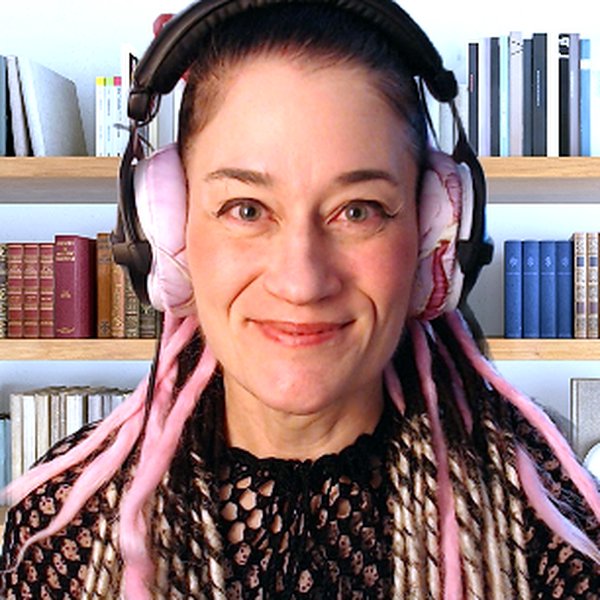

PhD (in progress), Educational Technology – Walden University, Winter 2026PhD, Public Policy & Administration – Walden University, Nov 2019M.S., Education (eLearning & Online Teaching) – University of Wisconsin-Stout, Aug 2019M.A., Political Science &...
Clear American English, Taught with Insight, Bridging Languages. Building Confidence!
Personally vetted · Strommen’s note
PhD-trained, Marshelle teaches English through psycholinguistics and Multiple Intelligences theory. Aviation English and speech therapy are both on the list.
Specialties
Also speaks: German, Russian
PhD (in progress), Educational Technology – Walden University, Winter 2026PhD, Public Policy & Administration – Walden University, Nov 2019M.S., Education (eLearning & Online Teaching) – University of Wisconsin-Stout, Aug 2019M.A., Political Science &...
Clear American English, Taught with Insight, Bridging Languages. Building Confidence!
Specialties
I also speak: German, Russian
Personally vetted · Strommen’s note
PhD-trained, Marshelle teaches English through psycholinguistics and Multiple Intelligences theory. Aviation English and speech therapy are both on the list.

University diploma, department of foreign languages, teacher of English and German languages
Hi there! You're welcome to my entertaining, interactive and productive English lessons on-line!
Specialties
University diploma, department of foreign languages, teacher of English and German languages
Hi there! You're welcome to my entertaining, interactive and productive English lessons on-line!
Specialties

Strategy — Cambridge exam playbook
5 Cambridge English moves candidates wish they'd learned earlier
These aren't textbook tips. They're the rubric-aware habits that separate candidates who pass on the first sitting from those who retake. Screenshot the infographic, then book a tutor to drill the rest.
-
01
The paired Speaking test isn't a one-on-one interview
You sit across from another candidate, not just two examiners. Part 3 is a collaborative discussion graded on Interactive Communication: turn-taking, building on your partner's points, reaching agreement together. Steamrolling the partner actively costs points. Rehearse the dynamic before the test or it ambushes you.
e.g. Part 3: "What do you think?" "That's a good point, and I'd add..." "So shall we agree that...?"
-
02
Key-word transformations reward technique
Rewrite a sentence using a specific keyword without changing the meaning, hitting a precise word count (usually 2 to 5 words for the transformation). Contractions count as one word. Every word matters. The technique is learnable and improves rapidly with focused drilling, so don't leave it for the final week.
e.g. "He started learning English five years ago." Keyword: BEEN. → "He HAS BEEN LEARNING English for five years."
-
03
The Cambridge Scale catches you on the way down
Score below the FCE pass threshold (160 on the scale) and you still receive a B1 Preliminary certificate. Score below CAE (180) and you still get an FCE. The safety net is unique among proficiency exams, but the certificate one level down is still a real result you can use, which is why Cambridge prep rewards aiming one level above your comfort zone rather than playing it safe.
e.g. FCE candidate scores 158 → certificate at B1 Preliminary level, not nothing.
-
04
Listening at C1 and C2 isn't only American or only British
The audio papers at higher levels include voices from across the English-speaking world: Scottish, Irish, Welsh, Australian, South African, Indian, plus mixed-accent panel discussions. Candidates whose listening practice has been entirely one accent get caught flat-footed. Diversify your listening diet from the second week of prep.
e.g. BBC World Service > only-American podcasts for ear training at C1 and above.
-
05
Drill the real timer from week one
Every past Cambridge paper is free on cambridgeenglish.org with answer keys and audio. Don't save the mocks for the final month. Sit one full timed paper in your second week of prep so you feel the time pressure on Reading and Use of English (the paper that runs people out of clock most often). Repeat monthly. Timer-aware practice from the start is the biggest predictor of a first-sit pass.
e.g. Reading and Use of English: 75 to 90 minutes, no extensions, no pauses on the Listening.
About Cambridge ESOL
Cambridge English, paper by paper
The Cambridge English Qualifications are a family of CEFR-aligned proficiency exams administered worldwide by Cambridge Assessment English (the body formerly trading as "Cambridge ESOL," still the everyday name in test centers and on candidate transcripts). Five core levels cover the CEFR ladder for general English: A2 Key (KET) at A2, B1 Preliminary (PET) at B1, B2 First (FCE) at B2, C1 Advanced (CAE) at C1, and C2 Proficiency (CPE) at C2. Each is its own diploma, its own registration, its own four-paper battery, and one selling point that the IELTS and TOEFL camps cannot match: the certificate is valid for life. There is no two-year expiration date and no re-sit clock running in the background of your career. The diploma you earn at 22 is the diploma you can hand to an immigration officer or a university admissions office at 52. For the broader English program our tutors teach, start at our main English page.
All five levels share the same paper structure since the 2015 reorganization: Reading and Use of English combined as one paper, then Writing, Listening, and Speaking as three separate papers. Reading and Use of English typically runs around 75 to 90 minutes depending on level, mixing multiple-choice cloze, open cloze, word formation, key-word transformations, and longer reading texts with comprehension questions. Writing asks for two pieces (a compulsory essay first, then a choice of letter, report, review, article, or proposal at the higher levels). Listening runs roughly 40 minutes with four parts at progressively native speeds. The Speaking test runs 14 minutes at B2, around 15 at C1, and around 16 at C2, conducted face-to-face with two candidates and two examiners. One examiner runs the conversation (the interlocutor), the other scores silently (the assessor). The paired-candidate format is the part most students underestimate before their first sitting, and it deserves its own paragraph below.
Scoring lives on the Cambridge English Scale, a unified 100 to 230-point scale that spans every level. Each paper produces a scale score, the four scores average to a composite, and the composite maps to a grade band: Pass with Distinction (Grade A), Pass with Merit (Grade B), Pass (Grade C), or Level Below (which still earns a certificate at the lower CEFR level). The pass threshold for B2 First sits at 160 on the scale, C1 Advanced at 180, C2 Proficiency at 200. Score above the band and you climb into Grade B or Grade A; score below and you receive a certificate one CEFR level down, which is why an FCE candidate who underperforms still walks away with a B1 Preliminary certificate rather than nothing. That safety-net design is unusual among proficiency exams and is part of why universities trust the result: the scale doesn't bin candidates into pass-or-fail; it places them precisely.
The paired speaking test is what most candidates need to rehearse most. You sit at a small table across from another candidate, with two examiners on the opposite side. Part 1 is a short introductory interview, each candidate answering personal questions individually. Part 2 is the long turn: you receive two photos, speak about them for one minute (or two at higher levels) while your partner listens, then comment briefly on what your partner said when their turn comes. Part 3 is the collaborative task: you and your partner receive a prompt with visual stimuli and must discuss it together for about two minutes, then reach a decision in another minute. Part 4 is examiner-led discussion building on Part 3's topic. The rubric scores you individually on Grammar and Vocabulary, Discourse Management, Pronunciation, and Interactive Communication, with Global Achievement averaged across the test. American candidates frequently treat Part 3 like a presentation and steamroll their partner, which actively costs points under Interactive Communication. The rubric rewards turn-taking, building on the partner's contributions, asking for opinions, and reaching agreement together. Lessons rehearse the dynamic explicitly because it isn't intuitive.
What each level actually asks for. A2 Key (KET) confirms survival-level English: short personal exchanges, simple notes, basic emails, comprehension of straightforward signs and announcements. B1 Preliminary (PET) raises the bar to everyday interactions, with longer reading texts, structured writing tasks, and conversational speaking at a comfortable pace. B2 First (FCE) is the most-sat Cambridge exam globally and the standard entry threshold for most UK and Irish universities. The Writing paper at B2 demands a structured essay plus one task from a menu of formats (review, report, letter, article), each scored against Content, Communicative Achievement, Organisation, and Language. The Reading and Use of English paper introduces the key-word transformations that many candidates find brutal on first encounter: rewrite a given sentence using a specific keyword without changing the meaning, hitting a precise word count. C1 Advanced (CAE) is the workhorse for selective UK universities, professional immigration to anglophone countries, and accelerated graduate programs. Writing asks for an essay plus a more demanding choice of formats; Reading and Use of English compresses harder text into the same time budget; the Listening paper plays at full native pace with the kind of background noise and idiomatic register found in real broadcast media. C2 Proficiency (CPE) sits at near-native level and is typically pursued by candidates building toward English-medium academic careers, professional translation work, or specific roles where C2 is named explicitly. The Writing paper at C2 asks for a summary-and-discussion task built on two source texts plus an essay or article in a tight time window. The Reading paper expects you to follow argument across long-form texts. The Speaking test pushes interactive sophistication to native-collaborator standard.
How our tutors prep candidates. Most lessons start with a placement diagnostic against a recent Cambridge English sample paper at the target level. Cambridge publishes free past papers and sample tests on cambridgeenglish.org, and the official Cambridge English Profile corpus lets tutors anchor common candidate errors at each level. The diagnostic produces a per-paper score and surfaces the weakest paper, which for American candidates is most often the Writing (specifically the structured essay) or the Listening at higher levels where the audio runs at full broadcast pace. From there, lessons rebalance toward the weak paper while keeping the strong skills sharp. Writing is drilled with timed essays and structured-format tasks (reviews, reports, articles, proposals) each graded against the official four-criterion rubric, with rewrite cycles to lock in the corrections. Key-word transformations get their own targeted drilling because the technique is testable and improves rapidly with practice. Reading uses Cambridge sample papers and tutor-supplied authentic texts (newspaper editorials, magazine features, academic abstracts) calibrated to level. Listening practice pulls from BBC Radio 4, NPR, podcasts at native pace, and the Cambridge Listening archive. Speaking rehearses the paired format with the tutor playing both partner and examiner so candidates feel the turn-taking dynamic before exam day. The closer to the exam, the more lessons shift to full timed mock papers under the real clock. A reasonable prep arc is 3 to 4 months from solid B1 to B2 First at one or two lessons a week with consistent self-study, 5 to 6 months from B2 to C1 Advanced, and 6 to 9 months from C1 to C2 Proficiency. There is no shortcut around writing a lot of structured English prose and getting it graded against the rubric.
American candidates share a fairly predictable set of stumble points. The paired Speaking test is the first one: arriving expecting a one-on-one interview and being thrown by the partner format, often into a competitive register that costs Interactive Communication points. Key-word transformations are the second: the technique looks simple until you have eight of them under timer pressure and discover that every word counts and the contraction rules matter. Register slips creep in on the Writing paper, where the rubric expects sustained appropriate register through the whole essay and many American candidates default to a casual style that suits American magazines but reads as too informal for a formal review or report. The British-English bias in the source material catches some candidates off guard, though both American and British spellings and vocabulary are accepted as long as the candidate is internally consistent. The Listening paper at C1 and C2 runs at full native pace with regional accents from across the English-speaking world, and candidates whose listening practice has been mostly American podcasts can be surprised by the Scottish, Irish, Australian, or South African voices that appear without warning. For background on the bigger picture, our blog post on English proficiency tests compared covers how Cambridge sits alongside IELTS, TOEFL, and Trinity ISE.
Between lessons, immersion options are good. For Listening at B2 and above, BBC Radio 4 (especially In Our Time, More or Less, and the news bulletins) gives you sustained native-pace British English with the kind of register Cambridge favors. NPR's Up First and All Things Considered work for sustained American English. For C1 and C2, the BBC World Service and the long-form journalism podcasts (The Daily, Today in Focus, The Rest is History) drill the vocabulary range and idiomatic density the higher Cambridge levels expect. For Reading, The Guardian, The Telegraph, The Times, The Economist, and the New York Times produce the structured argumentative prose that mirrors Cambridge Reading texts almost exactly. For Writing, the best practice is to write timed pieces on the topic prompts in real Cambridge sample papers, then have a tutor grade them against the rubric. Our list of 3,000 most common English words is a vocabulary floor for B1 and B2 candidates; C1 and C2 candidates need a larger bank including academic and idiomatic vocabulary. If you're unsure which CEFR level matches your current English, our CEFR levels explained post walks through what each level means in practice.
The Strommen Cambridge English roster includes native English teachers from the UK and US trained in Cambridge prep, plus longtime ESL specialists with CELTA or DELTA credentials and direct Cambridge examiner experience. Several of our tutors have worked as Cambridge speaking examiners or as oral examiners-in-training, which means they can rehearse the paired Speaking format with the same calibration the real exam uses. Each tutor's bio specifies which levels they prep, their accent and teaching background, and what kind of candidate they fit best (school-age FCE for Schools, adult B2 First for university admission, working professional C1 Advanced for immigration or career advancement, C2 Proficiency for academic and translation careers). For broader English foundations alongside Cambridge prep, our conversational English, Business English, and British English specialty pages cover related programs.
Lessons are one-on-one and calibrated to your exam date, target level, and weakest paper. A B2 First candidate four months out is on a different curriculum from a C1 Advanced candidate prepping for a UK Tier 2 visa, and both differ again from a C2 Proficiency candidate building toward an English-medium master's. The trial is free, the tutor diagnoses where you actually stand, and from there you decide whether to continue. Candidates who pass on the first sitting tend to share two habits: they drill Cambridge sample papers under the real timer from week one rather than waiting until the final month, and they get their Writing graded by someone who knows the four-criterion rubric inside out. The lifetime validity of the diploma makes the prep one of the highest-leverage uses of structured tutoring hours available in adult English learning. Browse the tutor list, find a bio that matches your situation, and book the trial.
What you'll cover
Lessons & classes tailored to Cambridge ESOL
Diagnostic + Cambridge rubric alignment
Your first lesson is usually a diagnostic against a recent Cambridge sample paper at your target level. The tutor scores all four papers (Reading and Use of English, Writing, Listening, Speaking) on the official Cambridge English Scale and the four-criterion Writing rubric (Content, Communicative Achievement, Organisation, Language), then identifies your weakest paper. Subsequent lessons rebalance toward that weak paper while keeping the strong skills sharp.
Writing drills with rubric grading
The Writing paper is where most B2 First and C1 Advanced candidates lose points. Lessons drill the compulsory essay structure plus the optional formats (review, report, article, letter, proposal at the higher levels), with timed pieces each week graded against Content, Communicative Achievement, Organisation, and Language. Rewrite cycles lock in the corrections. Register calibration runs in parallel because the rubric scores formal-versus-informal register expectations explicitly.
Use of English: key-word transformations and cloze
Reading and Use of English combines comprehension with the testable techniques that improve rapidly with drilling: multiple-choice cloze, open cloze, word formation, key-word transformations. These reward focused practice because the patterns repeat across sittings. Lessons drill the techniques in 20-minute blocks alongside reading comprehension, building speed and accuracy under the real exam clock so the paper feels tractable instead of frantic on test day.
Paired Speaking + Listening at native pace
Speaking practice rehearses the paired format with the tutor playing both partner and examiner, drilling Parts 1 through 4 with a focus on Interactive Communication and the collaborative task in Part 3. Listening practice uses BBC Radio 4, NPR, and the Cambridge Listening archive at exam-appropriate speed and accent diversity. Close to exam date, lessons shift to full timed mock papers using past Cambridge papers from the official archive. The single biggest predictor of first-sit pass: timer-aware practice from week one.
FAQ
About Cambridge ESOL lessons & classes
What's the difference between Cambridge English and IELTS?
Both exams are run by the same governing body (Cambridge Assessment English co-owns IELTS with the British Council and IDP), but they're different products with different purposes. Cambridge English Qualifications are a ladder of separate diplomas (A2 Key through C2 Proficiency), each valid for life. IELTS is a single test that produces a band score from 0 to 9, valid for two years. Universities and immigration services tend to ask for one or the other (or accept either), so check the specific requirement of the institution you're applying to before deciding. Cambridge is more common for UK and Irish university admission from school-age candidates; IELTS is more common for adult immigration and short-term applications. If lifetime validity matters and the institution accepts Cambridge, the Cambridge route is usually the better long-term investment.
Which Cambridge level do I need for a UK university?
Most UK universities accept B2 First (FCE) at Grade B or higher for undergraduate admission, with selective programs and competitive courses preferring C1 Advanced (CAE). Russell Group universities often name CAE explicitly. Postgraduate programs typically require C1 Advanced or higher. Always check the specific institution's English language requirements, since some courses (law, medicine, English literature) ask for higher scores than the general university minimum. Programs taught entirely in English at non-UK universities increasingly accept Cambridge English Qualifications too, with C1 Advanced being the common threshold.
How long is a Cambridge English certificate valid?
For life. There is no expiration date on a Cambridge English certificate. The diploma you earn at 22 is the same diploma you can present at 52 to an immigration officer, a university admissions office, or a professional licensing board. This is the major structural difference between Cambridge English and IELTS or TOEFL, which both expire after two years. For candidates who want a permanent credential rather than one that needs re-sitting on a rolling schedule, Cambridge is usually the right choice when the receiving institution accepts it.
Can I take the computer-based test or paper-based?
Both. Cambridge offers computer-based versions of B2 First, C1 Advanced, and C2 Proficiency at most major test centers worldwide, with paper-based sessions still running alongside. The exam content is identical between formats, and the pass thresholds are the same. Computer-based sittings tend to have more frequent dates throughout the year and faster results turnaround (about two weeks versus four to six for paper-based). Some candidates prefer paper for the Writing paper specifically, since composing a structured essay by hand can feel more natural; others prefer the editing freedom of typing. Choose the format that matches how you actually work.
How is the speaking test conducted with a partner?
You sit at a small table across from another candidate (matched roughly to your level), with two examiners on the opposite side. One examiner runs the test (the interlocutor), the other scores silently (the assessor). Part 1 is an individual interview, Part 2 is a long turn where you speak about photos for one or two minutes while your partner listens, Part 3 is a collaborative discussion where you and your partner must work together to reach a decision, and Part 4 is examiner-led discussion. You are scored individually on Grammar and Vocabulary, Discourse Management, Pronunciation, and Interactive Communication. The paired format means turn-taking and building on your partner's points actually count toward your score, so don't treat Part 3 like a solo presentation.
What's the difference between FCE for Schools and standard FCE?
Same exam, same level, same diploma. The For Schools version uses topics and contexts calibrated for school-age candidates (typically 13 to 17): school life, hobbies, family, future plans, technology use among teenagers. The standard B2 First uses adult-oriented topics. The format, scoring, and certificate are identical. Choose For Schools if the candidate is in that age range and the topics will feel more natural; choose standard B2 First for working adults or older university applicants. Both versions appear on the certificate as B2 First, so there's no career disadvantage to either.
How long does it take to prep from B1 to B2 First?
A reasonable arc is 3 to 4 months at one or two lessons per week with consistent self-study, assuming you start at a solid B1 level on a recent diagnostic. Candidates who start at a weaker B1 (often the case when the B1 was reached primarily through school rather than active immersion) usually need 5 to 6 months. The Writing paper is the gating skill: the structured essay requires deliberate practice with rubric-aware grading, and there's no shortcut around writing a lot of timed pieces and getting them corrected. Listening at full speed also takes weeks of consistent native-pace audio exposure. If your exam date is closer than 3 months, consider sitting B2 First as a placement marker rather than expecting a pass, then re-sit once you've closed the gap.
Is Cambridge English accepted for US universities?
Some US universities accept Cambridge English Qualifications, particularly C1 Advanced and C2 Proficiency, but TOEFL iBT and IELTS Academic remain the more common requirements in US admissions. Always check the specific institution's accepted-exam list before registering. Cambridge is more widely accepted across the UK, Ireland, Australia, New Zealand, Canada, and the EU, and the lifetime validity is a meaningful advantage when the receiving institution accepts it. For candidates whose primary goal is US university admission, TOEFL or IELTS is usually the safer default; for candidates targeting the UK, Ireland, or EU, or who want a permanent credential, Cambridge is the stronger choice.
Ready for Cambridge ESOL lessons or classes?
Book a free 30-minute trial with one of our personally vetted tutors. Private lessons or small-group classes — your choice.