



Personally vetted instructors
Conversational Chinese tutors, lessons & classes
你吃了吗? What Mandarin speakers actually say instead of "hi."
Personally vetted Conversational Chinese tutors. Lessons built around the spoken Mandarin people actually use, not the version that lives in textbooks.

Your instructors
Conversational Chinese tutors for private lessons & classes
Strommen has been teaching Chinese in LA since 2006, and conversational practice has always been what intermediate students come back asking for. Reading comprehension and grammar can be self-studied; the reflex of speaking in real time cannot. There is no marketplace model behind this page and no profiles assembled by software. The tutors below were vetted by Strommen directly, and their bios tell you who they are in their own words.
Filter by location, age, or price. Then book a 30-minute free trial.
Below are the Strommen tutors who specialize in Conversational Chinese. Photos, ratings, and rates are real. Click any card to read their bio and book a free 30-minute trial.
I want to learn…
Every tutor, personally met. — founder-vetted since 2006, in Los Angeles and online worldwide.
Get a personalized plan
Pick your language — a language advisor will match you with the right tutor and map out your path.

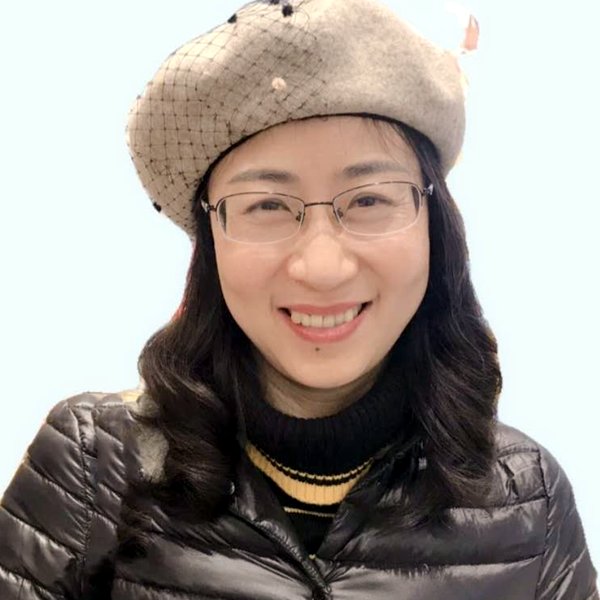
Masters degree
Expert University Teaching with a Friendly Touch: Professional, Engaging, Effective . #1 Mandarin Tutor at Strommen working with Corporate Clients, Kids + Individuals.
Personally vetted · Strommen’s note
Before joining Strommen, Linna spent twenty-five years teaching Chinese language and literature at a university in China.
Specialties
Masters degree
Expert University Teaching with a Friendly Touch: Professional, Engaging, Effective . #1 Mandarin Tutor at Strommen working with Corporate Clients, Kids + Individuals.
Specialties
Personally vetted · Strommen’s note
Before joining Strommen, Linna spent twenty-five years teaching Chinese language and literature at a university in China.


Masters in education
Looking forward to sharing Chinese language and culture with you.
Personally vetted · Strommen’s note
Simone's Chinese lessons stay interactive by design, heavy on student practice time, light on lecture.
Specialties
Masters in education
Looking forward to sharing Chinese language and culture with you.
Specialties
Personally vetted · Strommen’s note
Simone's Chinese lessons stay interactive by design, heavy on student practice time, light on lecture.
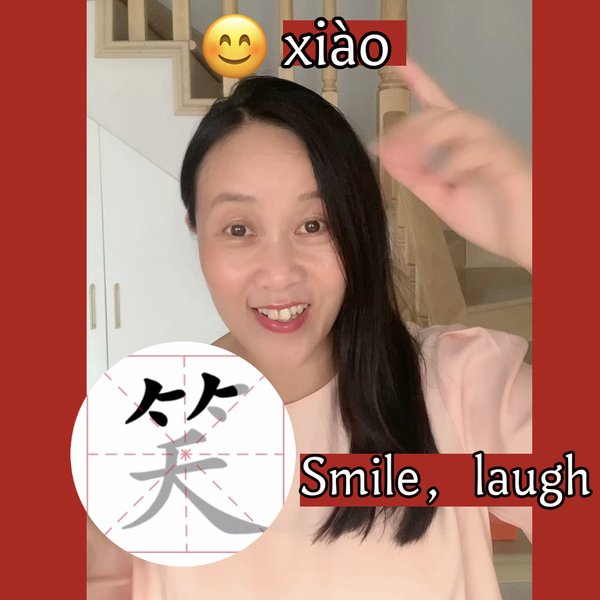
• BA major in History & Cultural comparison •
Practical & Interactive Chinese Classes From an Experienced Trainer
Personally vetted · Strommen’s note
Cathy went from Whitman College exchange instructor to Shanghai corporate Chinese trainer, and she teaches practical, business-ready Mandarin now.
Specialties
• BA major in History & Cultural comparison •
Practical & Interactive Chinese Classes From an Experienced Trainer
Specialties
Personally vetted · Strommen’s note
Cathy went from Whitman College exchange instructor to Shanghai corporate Chinese trainer, and she teaches practical, business-ready Mandarin now.
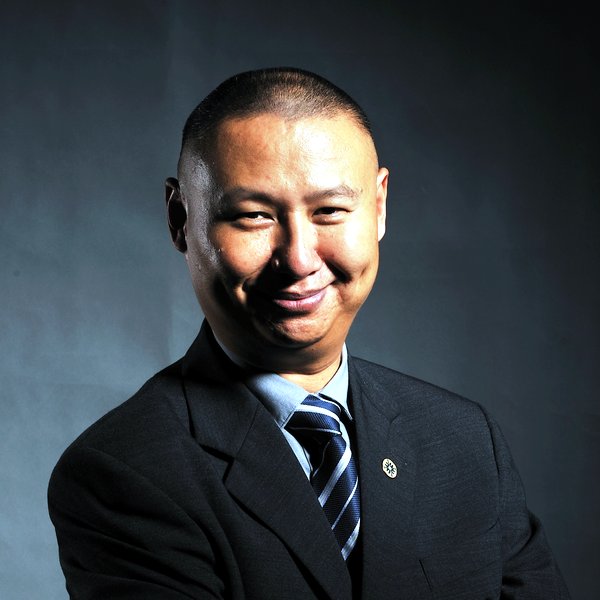
Master of Science
Learn the language, live the culture
Personally vetted · Strommen’s note
Bill's whole premise is that language and culture can't really be separated. His lessons are built around both together.
Specialties
Master of Science
Learn the language, live the culture
Specialties
Personally vetted · Strommen’s note
Bill's whole premise is that language and culture can't really be separated. His lessons are built around both together.

Top Chinese tutor at Strommen 10+ years exerience in person on the weekends!
Personally vetted · Strommen’s note
With us since 2011, Xi teaches Chinese in person on weekends only, a niche slot that's stayed booked the whole time.
Specialties
Top Chinese tutor at Strommen 10+ years exerience in person on the weekends!
Specialties
Personally vetted · Strommen’s note
With us since 2011, Xi teaches Chinese in person on weekends only, a niche slot that's stayed booked the whole time.

Bachelor's degree
Native Chinese Tutor in Tianjin with C1 English level
Personally vetted · Strommen’s note
A native Chinese speaker in Tianjin with C1 English herself, Xin opens every lesson by asking flatly what's been giving the student trouble.
Specialties
Bachelor's degree
Native Chinese Tutor in Tianjin with C1 English level
Specialties
Personally vetted · Strommen’s note
A native Chinese speaker in Tianjin with C1 English herself, Xin opens every lesson by asking flatly what's been giving the student trouble.


Bachelor’s degree
Making Chinese learning fun and easy.
Personally vetted · Strommen’s note
Wenlong opens every Chinese lesson with a four-skills check, listening, speaking, reading, writing, before deciding where to focus.
Specialties
Also speaks: English, German
Bachelor’s degree
Making Chinese learning fun and easy.
Specialties
I also speak: English, German
Personally vetted · Strommen’s note
Wenlong opens every Chinese lesson with a four-skills check, listening, speaking, reading, writing, before deciding where to focus.


Master
🏆Certified Pro(10Y+) | 🚀Fix Your Speaking Fast (HSK & Business Expert) | 🗣️Real Life Conversation | 💬Fluency & Pronunciation
Personally vetted · Strommen’s note
Before Strommen, Misty taught Chinese to students from more than thirty countries. Now she curates a plan instead of a textbook.
Specialties
Also speaks: English, Korean
Master
🏆Certified Pro(10Y+) | 🚀Fix Your Speaking Fast (HSK & Business Expert) | 🗣️Real Life Conversation | 💬Fluency & Pronunciation
Specialties
I also speak: English, Korean
Personally vetted · Strommen’s note
Before Strommen, Misty taught Chinese to students from more than thirty countries. Now she curates a plan instead of a textbook.

Specialization (5 years) at Blagoveshchensk State Pedagogical University Major - Chinese language teacher with an additional specialty as an English language teacher.Postgraduate studies at the Moscow State University of Management, Faculty of Philoso...
Chinese language, Mandarin, Chinese tutor, Mandarin tutor,
Specialties
Specialization (5 years) at Blagoveshchensk State Pedagogical University Major - Chinese language teacher with an additional specialty as an English language teacher.Postgraduate studies at the Moscow State University of Management, Faculty of Philoso...
Chinese language, Mandarin, Chinese tutor, Mandarin tutor,
Specialties

bachelor
Korean teacher fluent in Chinese and English
Specialties
bachelor
Korean teacher fluent in Chinese and English
Specialties

口语 — slang & spoken Mandarin
5 ways to sound like you actually speak conversational Mandarin
None of these show up in a course syllabus, yet you will hear all five in the first ten minutes of any real Mandarin conversation. Screenshot them, then book a tutor to learn how they actually get used.
-
01
哎呀 (āi yā)
An all-purpose exclamation of surprise, mild dismay, frustration, or sudden recognition. Roughly "oh!" or "yikes!" The slightly more pained variant 哎哟 (āi yō) tends to come from older speakers. Watch any Mandarin drama and you will hear it every few minutes.
e.g. 哎呀,我忘了带钥匙!(Āi yā, wǒ wàng le dài yàoshi! — "Oh no, I forgot to bring my keys!")
-
02
牛 (niú)
"Awesome" or "impressive." Literally "ox." 牛 on its own is the clean, everyday version and is perfectly fine in casual speech. The stronger forms (牛逼, and the polite-internet workaround 牛批) are crude and reserved for close friends or online, so American learners who pick them up from slang clips should hold off until they know the room.
e.g. 这个翻译太牛了!(Zhège fānyì tài niú le! — "This translation is amazing!")
-
03
厉害 (lìhai)
"Impressive," "skilled," or "formidable." It carries a slight edge: calling someone 厉害 means they are not just good but a little intimidating in their ability. Safe in nearly any context, and the natural compliment when a friend pulls something off.
e.g. 你的中文真厉害!(Nǐ de Zhōngwén zhēn lìhai! — "Your Chinese is really impressive!")
-
04
哈哈 (hā hā)
The laugh that runs Chinese texting. 哈哈 is genuine, friendly laughter. The catch is 呵呵 (hē hē), which looks like a laugh but reads as cold or passive-aggressive to most Mandarin speakers under 40, the rough equivalent of a flat "k." Stick with 哈哈 unless you specifically mean to sound distant.
e.g. 你说的太对了,哈哈!(Nǐ shuō de tài duì le, hā hā! — "What you said is so right, lol!")
-
05
真的假的 (zhēn de jiǎ de)
"For real?" or "Are you serious?" The polite, peer-level way to register surprise or mild disbelief. It pairs naturally with 不会吧 (bù huì ba, "no way"), and having a ready reaction like this is half of what makes a conversation feel like a conversation.
e.g. — 我中了彩票!— 真的假的?(Wǒ zhòng le cǎi piào! — Zhēn de jiǎ de? — "I won the lottery!" — "For real?")
About Conversational Chinese
The gap between textbook Mandarin and the real thing
Most people who reach an intermediate level in Mandarin can describe their weekend in tidy, grammatical sentences and still freeze when a native speaker greets them with 你吃了吗 (nǐ chī le ma, "have you eaten?"). It is not a real question about food. It is a warm, phatic hello, and the expected answer is a quick 吃了 (chī le, "I ate") or 还没 (hái méi, "not yet") followed by small talk. Anyone who launches into a detailed account of lunch has missed the move entirely. That gap, between the Mandarin a course teaches and the Mandarin a friend speaks, is the whole reason Conversational Chinese is its own specialty.
Textbook Mandarin is not wrong. It is just incomplete. Courses teach 你好 (nǐ hǎo) as the universal hello, and it is correct, but among friends in Mainland casual speech it can sound a little stiff and bookish. Native speakers greet each other with a question, a name and a nod, or one of the lighter openers a textbook rarely drills. Conversational lessons close that distance: how to react in real time, how to soften, how to sound like someone who has spent time around Mandarin speakers rather than around flashcards.
The spoken layer has its own vocabulary. There is the everyday filler that carries no dictionary weight but holds a conversation together. There are the reaction words a native speaker reaches for a dozen times an hour. There is the texting register, where the same string of characters can read as warm or frosty depending on which laugh you pick. None of this is exotic. It is just the part of the language that gets skipped when the goal is passing a written test rather than holding a conversation.
Tone matters even more once speech speeds up. Mandarin is tonal, and the four tones plus the neutral tone are part of each word, not decoration on top of it. 妈 (mā, mother) and 马 (mǎ, horse) are spelled the same and mean different things. In connected speech the tones also shift: two third tones in a row turn the first into a second tone, so 你好 is written nǐ hǎo but pronounced ní hǎo. Tone sandhi like that is not optional, and skipping it is one of the most audible markers of a non-native speaker. Conversational practice with a tutor is where these patterns stop being rules on a page and start being automatic.
There is also a register question that textbooks underplay. Mandarin shifts depending on who you are speaking to, how well you know them, and where the conversation is happening. The respectful 您 (nín) for a client or an elder, the casual 你 (nǐ) for a peer, the lighter slang reserved for close friends only. A learner who uses the same register with everyone sounds either oddly formal or oddly familiar. Our tutors teach the social calibration alongside the words, because in real conversation the two are inseparable.
Our Conversational Chinese tutors are native and near-native Mandarin speakers, and they share one habit worth knowing about. In a trial lesson they tend to start by simply talking with you, in Mandarin, about something ordinary, and listening for where the fluent textbook sentences run out and the hesitation begins. That is the seam they work on. Whether you want to chat comfortably with Mandarin-speaking family, hold your own at a work dinner, or follow a Mandarin drama without leaning on subtitles, the lessons build forward from your actual spoken level, not from chapter one.
What you'll cover
Lessons & classes tailored to Conversational Chinese
What the spoken-Mandarin textbooks skip
The everyday layer that holds real conversation together: reaction words like 哎呀 and 真的假的, casual praise like 牛 and 厉害, the phatic greetings such as 你吃了吗 that aren't really questions. We teach when each one fits, who you can use it with, and which slang to leave alone until you know your audience. If you want a vocabulary base to build on between lessons, our list of the top 100 basic Chinese words is a solid starting point.
Tones and tone sandhi in fast speech
Tones are part of each word, not decoration. 妈 (mother) and 马 (horse) differ only by tone. In connected speech tones also shift: two third tones in a row turn the first into a second tone, so 你好 is pronounced ní hǎo. Lessons include listening drills with real Mandarin audio, direct pronunciation feedback, and shadowing so the tones become automatic rather than something you stop to think about mid-sentence.
Register: who you're talking to changes how you talk
Mandarin shifts with the relationship. The respectful 您 for a client or an elder, the casual 你 for a peer, the lighter slang for close friends only. Picking the wrong register makes you sound oddly formal or oddly familiar. We teach the social calibration alongside the words: how to soften a request, how to read whether a setting wants formality or ease, how to move between registers without it sounding abrupt.
Real-time reflexes and listening
Conversation is a reflex, not a recitation. Lessons are built around unscripted talk on topics you pick, so you practice reacting, asking follow-ups, and recovering when you miss a word, all at conversational speed. We pull listening material from Mandarin dramas, podcasts, and interviews so your ear adjusts to natural pace and the digital register, where, as covered in how Chinese handles gender-neutral pronouns online, written casual Mandarin has quirks of its own.
FAQ
About Conversational Chinese lessons & classes
What's the difference between Conversational Chinese and a regular Chinese course?
A regular course usually moves through grammar, characters, reading, and writing on a set sequence. Conversational Chinese lessons concentrate on the spoken language: real-time listening, reaction speed, register, pronunciation, and the everyday vocabulary that textbooks underplay. Most students who choose this specialty already have some grammar foundation and want to close the gap between writing correct sentences and actually holding a conversation. If you are starting from zero, our Chinese for beginners tutors are the better first stop.
I can read and write some Chinese but freeze when I have to speak. Can this help?
That is the exact situation Conversational Chinese is built for, and it is extremely common. Reading and writing can be self-studied; the reflex of speaking in real time cannot. Lessons put you in unscripted conversation from the start, at a level your tutor calibrates to during the free trial, so the freezing has somewhere to go. Most students notice the hesitation shrinking within the first month or two of regular practice.
Are your tutors native Mandarin speakers?
Most are native speakers, born and raised in Mandarin-speaking households. A few are near-native bilinguals, fully fluent and culturally calibrated. Each tutor's bio specifies their background and where they have taught. For conversational practice, what matters most is a tutor with clear, natural tones and the patience to let you talk, and every tutor below was vetted in person for exactly that.
Can I take Conversational Chinese lessons online or only in person in LA?
Both. Many of our Conversational Chinese tutors teach online via Zoom or Jitsi and are available globally. Several also teach in person around Los Angeles. The booking widget on each tutor's profile shows their available formats, and you can also filter the list above by location.
Do you teach Simplified or Traditional characters?
Conversational lessons center on the spoken language, so the character system matters less here than it does for reading-focused study. Most students learn Simplified, which is standard in Mainland China and most international Mandarin teaching. If your goal is conversation with family or contacts in Taiwan or Hong Kong, tell your tutor and they will lean that way. Note that Hong Kong's everyday spoken language is Cantonese, not Mandarin, so a student focused there may want our Cantonese classes in Los Angeles instead.
What does a Conversational Chinese lesson actually look like?
Lessons are one-on-one and built around talking. A typical hour might open with unscripted conversation in Mandarin on a topic you chose, pause to work a pronunciation or tone point that came up, add the spoken vocabulary or register note that fits, then practice it back in conversation. No two students get the same lesson. The tutor plans around where your spoken Mandarin actually is.
How long until I can hold a real conversation?
It depends on your starting level, the time you put in between lessons, and how much you immerse outside class. A student who already has intermediate grammar and just needs spoken fluency often feels a real shift within 3 to 6 months at one or two lessons a week. Mandarin is a demanding language for English speakers, and tones take consistent practice, so your tutor sets concrete weekly goals at the trial and adjusts from there. Tones in particular reward daily contact over weekend cramming.
Will Conversational Chinese help me with the HSK exam?
Indirectly. Strong spoken Mandarin makes the HSK listening section easier and builds vocabulary that helps across the board, but the HSK is a structured exam with its own reading and writing tasks. If a specific HSK level is your goal, our HSK tutors prep directly for the exam format. Many students do both: conversational practice for everyday fluency, HSK prep for the test.
Ready for Conversational Chinese lessons or classes?
Book a free 30-minute trial with one of our personally vetted tutors. Private lessons or small-group classes — your choice.