



Personally vetted instructors
Chinese for Beginners tutors, lessons & classes
你好 nǐ hǎo The first thing every Chinese textbook teaches you to say.
Personally vetted Chinese tutors who teach the language from zero. Lessons built around your first words, your first tones, and your first characters, at a pace that actually holds.

Your instructors
Chinese for Beginners tutors for private lessons & classes
Strommen has been teaching languages since 2006, and we have always preferred to vet teachers ourselves rather than run an open marketplace. Every tutor below was met and approved by us, and every bio is a real account of a real teacher's background. For a beginner that matters, because the tutor you choose installs the habits, good or bad, that you carry for years.
Filter by location, age, or price, then book a 30-minute free trial to see who you click with.
Below are the Strommen tutors who teach beginner-level Chinese. Photos, ratings, and rates are real. Click any card to read a bio and book a free 30-minute trial.
I want to learn…
Every tutor, personally met. — founder-vetted since 2006, in Los Angeles and online worldwide.
Get a personalized plan
Pick your language — a language advisor will match you with the right tutor and map out your path.

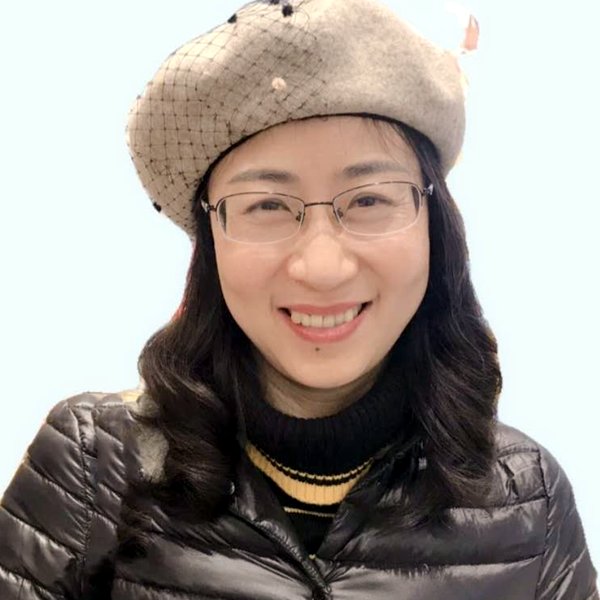
Masters degree
Expert University Teaching with a Friendly Touch: Professional, Engaging, Effective . #1 Mandarin Tutor at Strommen working with Corporate Clients, Kids + Individuals.
Personally vetted · Strommen’s note
Before joining Strommen, Linna spent twenty-five years teaching Chinese language and literature at a university in China.
Specialties
Masters degree
Expert University Teaching with a Friendly Touch: Professional, Engaging, Effective . #1 Mandarin Tutor at Strommen working with Corporate Clients, Kids + Individuals.
Specialties
Personally vetted · Strommen’s note
Before joining Strommen, Linna spent twenty-five years teaching Chinese language and literature at a university in China.
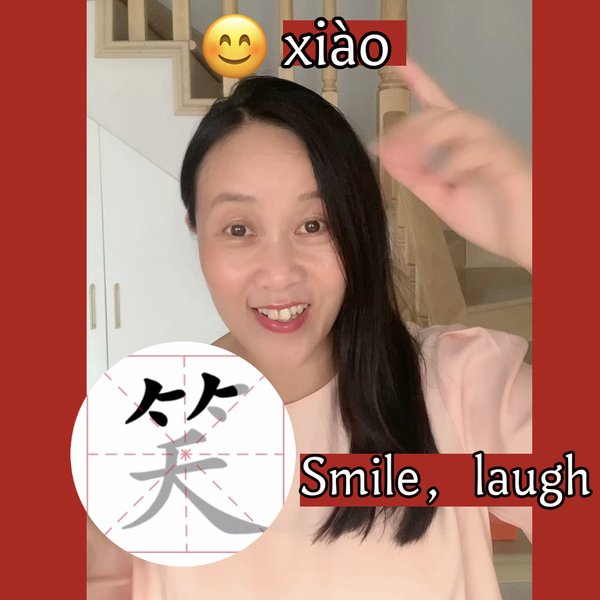
• BA major in History & Cultural comparison • · 1)中国教育部颁发的对外汉语教师资格证 ◐ Certificate for teaching Chinese as a foreign language Issue No. 2003240029 By The Ministry of Education of China ◐ 在线中文教学技能证书 2)Online Chinese Teaching Skills Certificate (No: AP-A003-A0007)
Practical & Interactive Chinese Classes From an Experienced Trainer
Personally vetted · Strommen’s note
Cathy went from Whitman College exchange instructor to Shanghai corporate Chinese trainer, and she teaches practical, business-ready Mandarin now.
Specialties
• BA major in History & Cultural comparison • · 1)中国教育部颁发的对外汉语教师资格证 ◐ Certificate for teaching Chinese as a foreign language Issue No. 2003240029 By The Ministry of Education of China ◐ 在线中文教学技能证书 2)Online Chinese Teaching Skills Certificate (No: AP-A003-A0007)
Practical & Interactive Chinese Classes From an Experienced Trainer
Specialties
Personally vetted · Strommen’s note
Cathy went from Whitman College exchange instructor to Shanghai corporate Chinese trainer, and she teaches practical, business-ready Mandarin now.


Masters in education
Looking forward to sharing Chinese language and culture with you.
Personally vetted · Strommen’s note
Simone's Chinese lessons stay interactive by design, heavy on student practice time, light on lecture.
Specialties
Masters in education
Looking forward to sharing Chinese language and culture with you.
Specialties
Personally vetted · Strommen’s note
Simone's Chinese lessons stay interactive by design, heavy on student practice time, light on lecture.
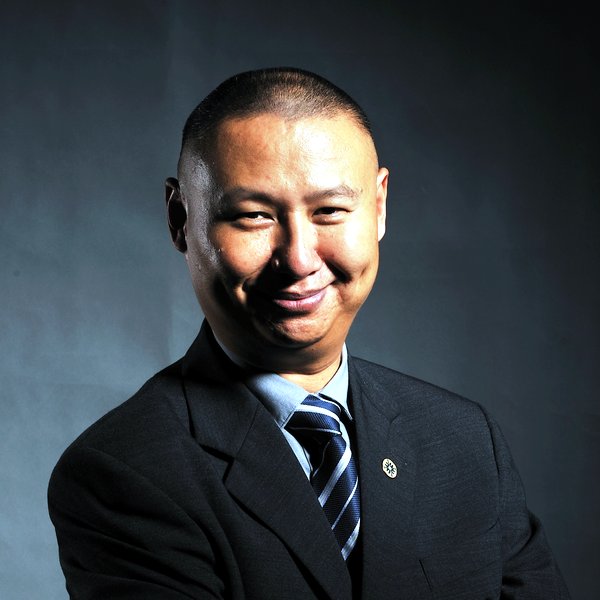
Master of Science · TEFL (120-hour Premier) Certificate
Learn the language, live the culture
Personally vetted · Strommen’s note
Bill's whole premise is that language and culture can't really be separated. His lessons are built around both together.
Specialties
Master of Science · TEFL (120-hour Premier) Certificate
Learn the language, live the culture
Specialties
Personally vetted · Strommen’s note
Bill's whole premise is that language and culture can't really be separated. His lessons are built around both together.
Top Chinese tutor at Strommen 10+ years exerience in person on the weekends!
Personally vetted · Strommen’s note
With us since 2011, Xi teaches Chinese in person on weekends only, a niche slot that's stayed booked the whole time.
Specialties
Top Chinese tutor at Strommen 10+ years exerience in person on the weekends!
Specialties
Personally vetted · Strommen’s note
With us since 2011, Xi teaches Chinese in person on weekends only, a niche slot that's stayed booked the whole time.

Bachelor's degree · CELT-P (Certificate in English Language Teaching – Primary)
Native Chinese Tutor in Tianjin with C1 English level
Personally vetted · Strommen’s note
A native Chinese speaker in Tianjin with C1 English herself, Xin opens every lesson by asking flatly what's been giving the student trouble.
Specialties
Bachelor's degree · CELT-P (Certificate in English Language Teaching – Primary)
Native Chinese Tutor in Tianjin with C1 English level
Specialties
Personally vetted · Strommen’s note
A native Chinese speaker in Tianjin with C1 English herself, Xin opens every lesson by asking flatly what's been giving the student trouble.


Bachelor’s degree · Certificate for Teaching Chinese as a Foreign Language
Making Chinese learning fun and easy.
Personally vetted · Strommen’s note
Wenlong opens every Chinese lesson with a four-skills check, listening, speaking, reading, writing, before deciding where to focus.
Specialties
Also speaks: English, German
Bachelor’s degree · Certificate for Teaching Chinese as a Foreign Language
Making Chinese learning fun and easy.
Specialties
I also speak: English, German
Personally vetted · Strommen’s note
Wenlong opens every Chinese lesson with a four-skills check, listening, speaking, reading, writing, before deciding where to focus.



Bachelor's degree · Chinese learning, Certified Korean language teacher
Light, Learning, Growth your languages.
Personally vetted · Strommen’s note
Jihoon starts with pronunciation basics, tongue position included, before moving into grammar. He teaches Chinese and Korean both, out of Bogotá.
Specialties
Also speaks: Japanese
Bachelor's degree · Chinese learning, Certified Korean language teacher
Light, Learning, Growth your languages.
Specialties
I also speak: Japanese
Personally vetted · Strommen’s note
Jihoon starts with pronunciation basics, tongue position included, before moving into grammar. He teaches Chinese and Korean both, out of Bogotá.


BA (Hons) in Bilingual Studies. · TCSOL and TEFL.
Bridging cultures through language, story, and authentic communication.
Specialties
Also speaks: Japanese, Spanish
BA (Hons) in Bilingual Studies. · TCSOL and TEFL.
Bridging cultures through language, story, and authentic communication.
Specialties
I also speak: Japanese, Spanish

bachelor
Korean teacher fluent in Chinese and English
Specialties
bachelor
Korean teacher fluent in Chinese and English
Specialties

Specialization (5 years) at Blagoveshchensk State Pedagogical University Major - Chinese language teacher with an additional specialty as an English language teacher.Postgraduate studies at the Moscow State University of Management, Faculty of Philoso... · 1) Diploma from Blagoveshchensk State Pedagogical University, majoring in Chinese language teacher with an additional specialty as an English language teacher. 2) Certificate of advanced training issued by Moscow State Linguistic University, awarded f...
Chinese language, Mandarin, Chinese tutor, Mandarin tutor,
Specialties
Specialization (5 years) at Blagoveshchensk State Pedagogical University Major - Chinese language teacher with an additional specialty as an English language teacher.Postgraduate studies at the Moscow State University of Management, Faculty of Philoso... · 1) Diploma from Blagoveshchensk State Pedagogical University, majoring in Chinese language teacher with an additional specialty as an English language teacher. 2) Certificate of advanced training issued by Moscow State Linguistic University, awarded f...
Chinese language, Mandarin, Chinese tutor, Mandarin tutor,
Specialties

Master
🏆Certified Pro(10Y+) | 🚀Fix Your Speaking Fast (HSK & Business Expert) | 🗣️Real Life Conversation | 💬Fluency & Pronunciation
Personally vetted · Strommen’s note
Before Strommen, Misty taught Chinese to students from more than thirty countries. Now she curates a plan instead of a textbook.
Specialties
Also speaks: English, Korean
Master
🏆Certified Pro(10Y+) | 🚀Fix Your Speaking Fast (HSK & Business Expert) | 🗣️Real Life Conversation | 💬Fluency & Pronunciation
Specialties
I also speak: English, Korean
Personally vetted · Strommen’s note
Before Strommen, Misty taught Chinese to students from more than thirty countries. Now she curates a plan instead of a textbook.

入门 — first words & first sounds
5 phrases that carry a Chinese beginner further than the textbook
These are not advanced expressions. They are the small, high-frequency phrases native speakers actually use, and a beginner who picks them up early sounds far more natural than the textbook alone allows. Save the list and book a tutor to learn the rest.
-
01
加油 (jiā yóu)
Literally "add oil." The all-purpose Mandarin cheer of encouragement: "go," "you can do it," "keep going." You will hear it at sports events, before exams, and from a tutor watching a student push through a hard sentence. Casual and appropriate almost anywhere.
e.g. 加油,你一定可以的!(Jiā yóu, nǐ yídìng kěyǐ de! — "Go for it, you can definitely do this!")
-
02
没事 (méi shì)
Literally "no matter." The standard polite brush-off when someone apologizes or thanks you: "it's fine," "no big deal." Doubling it, 没事没事, softens it even further, which is how it usually comes out in real speech.
e.g. — 不好意思!(Bù hǎo yìsi! — "Sorry!") — 没事没事。(Méi shì méi shì. — "It's fine, no worries.")
-
03
不好意思 (bù hǎo yìsi)
A lighter, far more frequent "excuse me" or "sorry" than 对不起 (duìbuqǐ), which is reserved for genuine apologies. Use it to get someone's attention, squeeze past on a crowded subway, or ask a stranger a question. Saying 对不起 over a spilled glass of water sounds excessive; 不好意思 fits.
e.g. 不好意思,请问厕所在哪里?(Bù hǎo yìsi, qǐngwèn cèsuǒ zài nǎlǐ? — "Excuse me, where's the bathroom?")
-
04
慢慢来 (màn man lái)
Literally "slow slow come." A warm, reassuring "take it slow, no rush." It is what a tutor says to a struggling student and what a Chinese host says to a guest unfamiliar with the customs. It also happens to be the right mindset for the first months of learning the language.
e.g. 别紧张,慢慢来。(Bié jǐnzhāng, màn man lái. — "Don't be nervous, take it slow.")
-
05
哈哈 (hā hā)
The friendly written laugh, essential for texting in Chinese. 哈哈 reads as genuine laughter. Worth knowing what to avoid, too: 呵呵 (hē hē) technically means a laugh but, among Mandarin internet users, lands as cold or passive-aggressive. Stick with 哈哈.
e.g. 你说的太对了,哈哈!(Nǐ shuō de tài duì le, hā hā! — "What you said is so right, ha!")
About Chinese for Beginners
Starting Chinese from zero
Most people who decide to learn Chinese arrive with the same picture in their head: a wall of characters, four tones that all sound alike, and a sense that the whole thing is reserved for people who started as children. The first weeks of lessons are largely about taking that picture apart. Chinese has no verb conjugations, no grammatical gender, no plurals, and no tenses to memorize. What it asks of a beginner is different from what French or Spanish asks, and a good tutor spends the first month making sure you understand that difference rather than fighting it.
The early arc of learning Chinese tends to run through three stages, and a beginner tutor's job is to move you cleanly through each. Sound comes first. Mandarin is tonal, which means pitch is part of the word, not decoration on top of it. The syllable "ma" said four different ways gives you four different words: mother, hemp, horse, scold. Pinyin, the romanization system used to write those sounds, is its own small hurdle, because the letters do not behave like English letters. The q in qī (seven) is nothing like an English q, and a student who reads pinyin as if it were English spends months unlearning the habit. Tutors who teach beginners well drill sound from the first lesson, because tones added later almost never stick.
The second stage is the shift from pinyin to characters. Students who try to stay in pinyin alone tend to hit a ceiling fast, somewhere around basic survival vocabulary, because real Chinese is written in characters and the brain holds the language better once sound and character are linked. The good news is that characters are not random. Most are built from a meaning component and a sound component, and once you learn the high-frequency radicals, the three water drops, the person on the left side, the mouth, the system starts to feel less like memorization and more like reading. A first-year student who learns the top fifty or so radicals has done the single highest-leverage thing available to a beginner.
The third stage is rhythm: stringing words into real sentences, dropping the pronoun when context makes it obvious, and using the small particles that carry so much of spoken Mandarin. This is where conversation starts to feel possible rather than rehearsed.
There is one honest thing worth saying up front. The Foreign Service Institute rates Mandarin a Category IV language, the same tier as Arabic, Japanese, and Korean, meaning it takes roughly three to four times the hours of a language like Spanish to reach working proficiency. That number scares some people off. It should not. It simply means the timeline is real, and a student who plans for the real timeline tends to stay with the language, while the student who expected Spanish-pace progress quietly gives up around month three. The point of a beginner tutor is partly to set that expectation honestly and partly to make the hours feel shorter than they are.
Our beginner Chinese tutors include native speakers from across the Mandarin-speaking world, plus longtime bilinguals who have taught the language from scratch for years. They start where you are, whether that is genuine zero or a few words picked up from a phone app, and they build a foundation that holds the weight of everything you add later. The phrase a Chinese host says to a nervous newcomer, 慢慢来, take it slow, is also the right principle for the first hundred hours.
What you'll cover
Lessons & classes tailored to Chinese for Beginners
Tones and pinyin from lesson one
Mandarin is tonal: the four tones plus the neutral tone change the meaning of a syllable, not just its color. Beginner lessons drill tones from the start, because students who internalize them early progress far faster than students who try to add them later. Pinyin gets the same early focus, with attention to the sounds English speakers consistently misread, the q, x, j, zh, ch, and sh consonants that look familiar and behave nothing like their English counterparts. Listening drills, shadowing, and direct pronunciation feedback build an ear before bad habits set.
Characters and radicals, introduced early
Lessons bring in characters within the first few sessions rather than leaving you stranded in pinyin. The approach is structural: roughly 80 to 90 percent of modern characters are phono-semantic compounds built from a meaning radical and a sound component, so learning the high-frequency radicals turns character study into pattern recognition. We teach stroke order, the most useful first radicals, and a steady, manageable pace of new characters. Our blog post on the most common basic Chinese radicals is a good companion between lessons.
Survival vocabulary and first sentences
Beginners need a working set of phrases fast: greetings, thank-yous, asking names, asking prices, ordering food, finding a bathroom. We build that survival vocabulary and then move into sentence structure, which in Mandarin means topic-comment patterns, measure words, and the aspect particles 了, 过, and 着 that do the work English does with verb tenses. The top 100 basic Chinese words list gives students a head start on what to drill.
Simplified characters and a realistic plan
Beginner lessons default to Simplified characters, the standard used in mainland China, Singapore, and most international Chinese teaching, and the system the HSK exam uses. Your tutor sets concrete weekly goals at the trial lesson and adjusts as your real pace becomes clear. Many students supplement lessons with graded listening, beginner-friendly films, and slow-Chinese podcasts. If a path toward certification or fluency emerges, your tutor can point you toward HSK exam preparation or conversational Chinese when the foundation is solid.
FAQ
About Chinese for Beginners lessons & classes
Is Chinese as hard to learn as people say?
It is genuinely a long road, and it helps to be honest about that. The Foreign Service Institute rates Mandarin a Category IV language, roughly three to four times the hours of Spanish or French to reach working proficiency. But the difficulty is front-loaded and specific. Chinese grammar is actually simpler than most European languages: no verb conjugation, no gender, no plurals, no tenses. The real work is tones, pinyin, and characters. A tutor who sets an honest timeline and breaks the work into manageable weekly goals makes a daunting language feel routine.
Do I have to learn Chinese characters, or can I just use pinyin?
You can start in pinyin, and most beginners do for the first lessons, but staying in pinyin alone hits a ceiling fast. Real Chinese is written in characters, and the brain holds the language better once sound and character are linked. The good news is that characters are not random. Most are built from a meaning component and a sound component, so learning the high-frequency radicals turns character study into pattern recognition rather than rote memorization. Our tutors introduce characters early, within the first few lessons, at a pace you can keep up with.
Should I learn Simplified or Traditional characters?
For most beginners, Simplified. Simplified characters are standard in mainland China, Singapore, and most international Chinese teaching, and the HSK exam is Simplified-only. Traditional characters remain standard in Taiwan, Hong Kong, and many older diaspora communities. The two systems share roughly 70 percent of high-frequency characters, so a learner who masters one can read the other with some effort. If your goals point specifically toward Taiwan, Hong Kong, or calligraphy, tell your tutor at the trial and they will start you on Traditional instead.
Are your tutors native Chinese speakers?
Most are native speakers from across the Mandarin-speaking world. A few are longtime bilinguals who have taught beginner Chinese from scratch for years and know exactly where English speakers stumble. Each tutor's bio specifies their background and teaching experience. For a beginner the tutor's own pronunciation matters a great deal, since you absorb whatever model you hear, so a clean native or near-native accent is something we screen for.
Can I take beginner Chinese lessons online, or only in person?
Both. Many of our Chinese tutors teach online via Zoom or Jitsi and are available worldwide. Several also teach in person around Los Angeles. The booking widget on each tutor's profile shows their available formats and times, so you can pick whatever fits your schedule.
How long until I can hold a basic conversation in Chinese?
It depends on your starting point, how much time you put in between lessons, and what you mean by conversation. A motivated adult studying five to seven hours a week, lessons plus self-study, can usually handle simple everyday exchanges within a few months and reach the rough equivalent of HSK 1 to 2 in that window. Comfortable, flowing conversation takes longer. Your tutor sets concrete goals at the trial lesson and adjusts from there. Honest expectations beat magical ones.
What does a beginner Chinese lesson actually look like?
Lessons are one-on-one and built around you. A typical hour might mix tone and pronunciation drilling, a handful of new characters with stroke order, a block of survival vocabulary or sentence patterns, and short conversation practice using what you just learned. Early on, more time goes to sound and characters; as you build a base, more goes to speaking. No two students follow the identical plan, because the trial lesson is where your tutor figures out where you actually are.
I tried a language app and it did not stick. Will lessons be different?
Apps are useful for vocabulary drilling, but they cannot hear your tones, correct your pinyin, or notice that you have quietly stopped distinguishing q from ch. For a tonal language that gap matters more than for most. A tutor catches and fixes pronunciation problems in week one, before they harden into habits, and keeps you accountable to a real plan. Many of our beginner students use an app alongside lessons, the app for repetition and the tutor for everything the app cannot do.
Ready for Chinese for Beginners lessons or classes?
Book a free 30-minute trial with one of our personally vetted tutors. Private lessons or small-group classes — your choice.