



Personally vetted instructors
AP Spanish tutors, lessons & classes
¡Buenos días! How an AP-grader expects you to open a formal email.
Personally vetted AP Spanish tutors. Lessons calibrated to the College Board's AP Spanish Language and Culture exam — interpretive listening, persuasive essay, cultural comparison, and the formal register that separates a 5 from a 3.
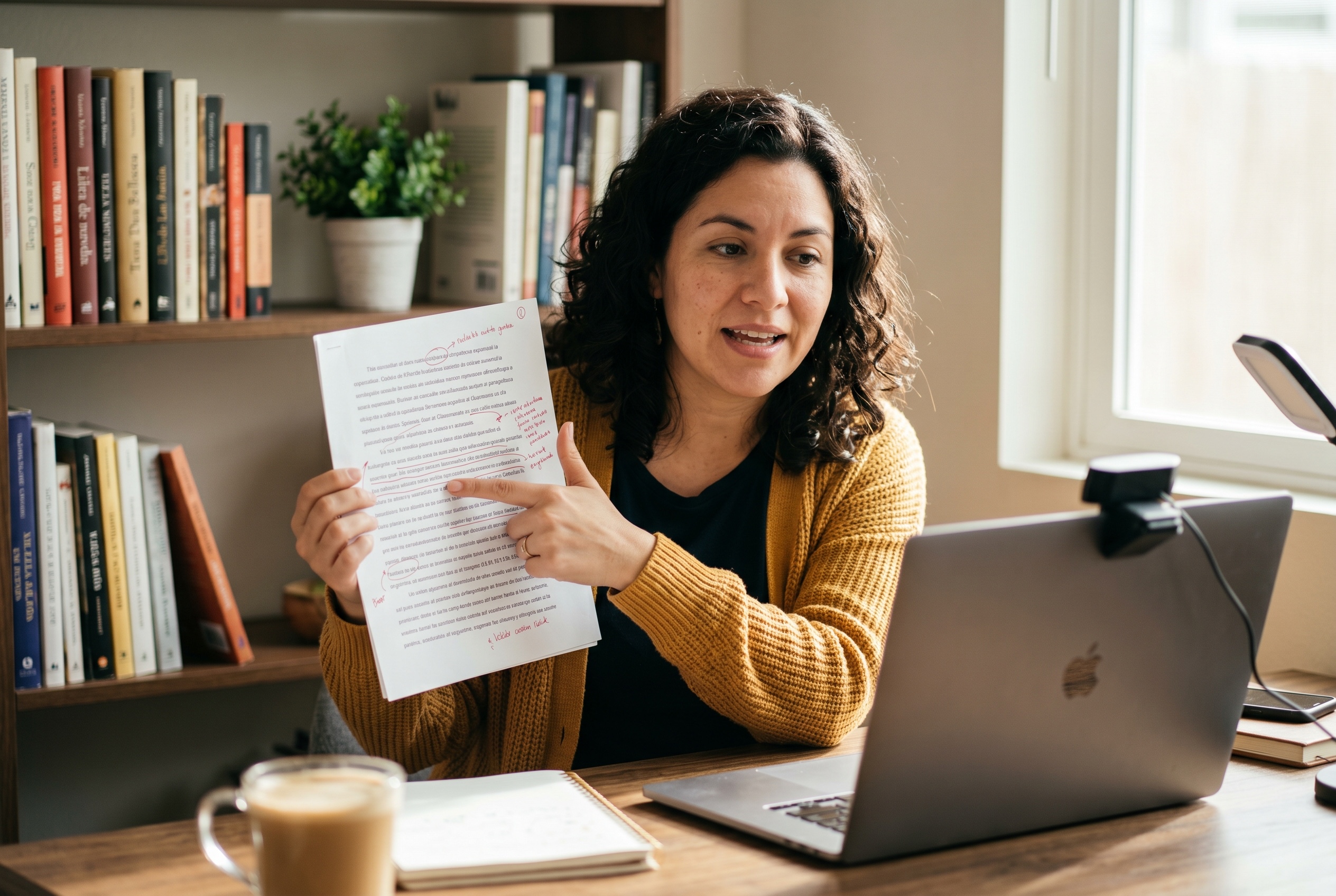
Your instructors
AP Spanish tutors for private lessons & classes
Strommen has been prepping students for AP exams, IB exams, and college Spanish placement for years. AP Spanish is a recurring request from LA-area private and public high school families, from heritage speakers shooting for the AP Lit exam, and from adult learners working toward CLEP-style college credit. Every tutor below was met and vetted by us in person or via thorough video interview. No marketplace. No automated profile-creation. Real teachers with real AP experience, which you can read about in their bios.
Filter by location, age, or price. Then book a 30-minute free trial.
Below are the Strommen tutors who prep students for the AP Spanish exams. Photos, ratings, and rates are real. Click any card to read their bio and book a free 30-minute trial.
I want to learn…
Every tutor, personally met. — founder-vetted since 2006, in Los Angeles and online worldwide.
Get a personalized plan
Pick your language — a language advisor will match you with the right tutor and map out your path.

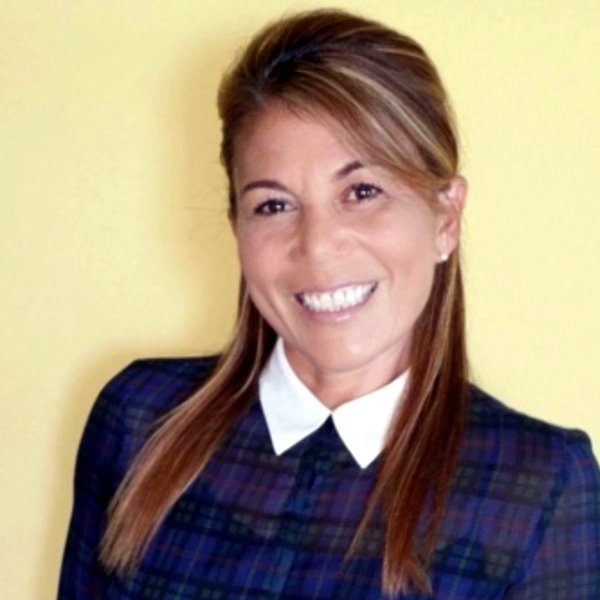
Masters of Arts in Spanish and Linguistics, Currently, a Fourth-year PhD student in Hispanic Studies. · Spanish Interpreter Translator Certificate from Southern California School of Interpretation.
Speak Spanish with Confidence, Step by Step
Personally vetted · Strommen’s note
Elizabeth has taught Spanish for eighteen years, and her whole approach comes down to one rule: let students make mistakes and keep talking anyway.
Specialties
Masters of Arts in Spanish and Linguistics, Currently, a Fourth-year PhD student in Hispanic Studies. · Spanish Interpreter Translator Certificate from Southern California School of Interpretation.
Speak Spanish with Confidence, Step by Step
Specialties
Personally vetted · Strommen’s note
Elizabeth has taught Spanish for eighteen years, and her whole approach comes down to one rule: let students make mistakes and keep talking anyway.
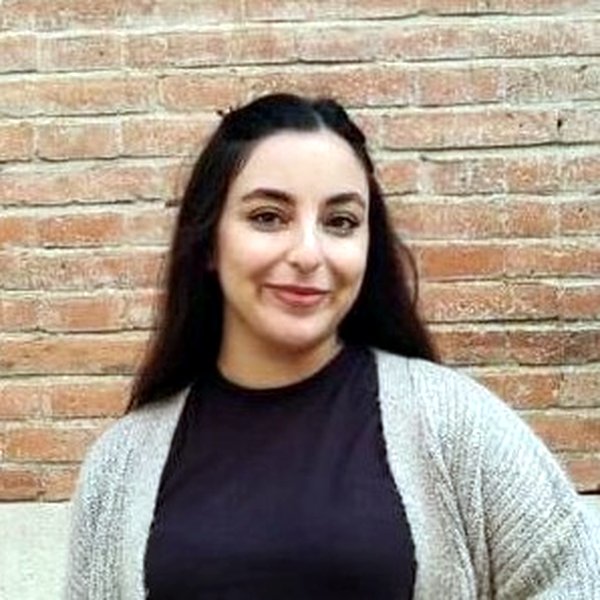


Bachelors degree in business Masters in logistics · TEFL Translation
Certified French & Spanish Language Coach | Business, Exams, & Conversational Mastery
Personally vetted · Strommen’s note
A Berlitz-trained language consultant, marielyne teaches English, French, and Spanish, built for business communication and exam prep specifically.
Specialties
Bachelors degree in business Masters in logistics · TEFL Translation
Certified French & Spanish Language Coach | Business, Exams, & Conversational Mastery
Specialties
Personally vetted · Strommen’s note
A Berlitz-trained language consultant, marielyne teaches English, French, and Spanish, built for business communication and exam prep specifically.

Master’s degree in Linguistics Bachelor’s degree in Modern Languages Linguist · Certificate in Teaching Spanish as a Foreign Language (Pedagogy and Didactics)
Friendly and experienced Spanish teacher for international learners.
Personally vetted · Strommen’s note
Real-life context and culture drive Ruth's Spanish lessons out of Bogotá, more than grammar in isolation. She covers both AP Spanish and Latin American Spanish.
Specialties
Also speaks: English, French
Master’s degree in Linguistics Bachelor’s degree in Modern Languages Linguist · Certificate in Teaching Spanish as a Foreign Language (Pedagogy and Didactics)
Friendly and experienced Spanish teacher for international learners.
Specialties
I also speak: English, French
Personally vetted · Strommen’s note
Real-life context and culture drive Ruth's Spanish lessons out of Bogotá, more than grammar in isolation. She covers both AP Spanish and Latin American Spanish.

Registro formal — exam Spanish
5 formal-register phrases that move a 3 toward a 5
These aren't textbook expressions in the conversational sense. They're the connectors and framing phrases AP graders look for in the persuasive essay and the cultural comparison. Screenshot the infographic, then book a tutor to drill the rest.
-
01
Cabe destacar que
"It's worth pointing out that." A formal-register opener for introducing an important claim in the persuasive essay. Signals to the reader (and the AP grader) that the next sentence carries weight. Use it once or twice per essay, not five times. Paired with the conditional or subjunctive, it reads as confident and academic.
e.g. Cabe destacar que, según el artículo, la migración ha aumentado significativamente.
-
02
Por otro lado
"On the other hand." The standard transition for moving between sources or perspectives in the persuasive essay. The persuasive task asks for synthesis across three sources, and graders look for explicit transition phrases that flag a shift in viewpoint. Alternatives: en cambio, sin embargo, no obstante. Rotate them across an essay to avoid repetition.
e.g. Por otro lado, el audio sugiere lo contrario: los jóvenes prefieren quedarse.
-
03
En cuanto a
"As for / regarding." Sets up a topic shift inside a paragraph or between paragraphs. Useful in the cultural comparison when moving from one community to the other. More elegant than sobre or acerca de. Pairs naturally with subjunctive in the dependent clause.
e.g. En cuanto a la educación en México, el acceso varía mucho según la región.
-
04
A diferencia de
"Unlike / in contrast to." The phrase the cultural comparison rubric is specifically looking for. The task asks for explicit comparison between the student's community and a Spanish-speaking community, and a diferencia de is the cleanest way to signal that the comparison is happening. Without an explicit contrast phrase, graders cap the response at a 3.
e.g. A diferencia de mi comunidad en California, en Buenos Aires se cena muy tarde.
-
05
Estoy a su disposición
"I remain at your disposal." Standard formal closing for the interpersonal email task. The email rubric expects a formal greeting (Estimado/a) and a formal closing; student emails that close with nos vemos or un abrazo lose register points even if the body is perfect. Pair with Atentamente or Cordialmente as the sign-off.
e.g. Quedo a su disposición para cualquier aclaración. Atentamente, [name].
About AP Spanish
Built around the rubric
AP Spanish is the College Board's Advanced Placement track for high school students who want college credit, college placement, or a transcript line that signals real Spanish proficiency. There are actually two AP Spanish exams. The first, AP Spanish Language and Culture, is the one most students take and the one this page primarily covers. The second, AP Spanish Literature and Culture, is a separate exam built around the Spanish-language literary canon from Spain and Latin America, typically taken by advanced heritage speakers or students on an AP Lit track. Both are scored on the standard 1-to-5 scale, administered in May, and graded by trained College Board readers. A 4 or 5 is accepted by most US colleges for course credit, placement out of introductory Spanish, or both. Some scholarship programs (state-level Seal of Biliteracy, university merit awards) also weight AP Spanish scores directly.
The Language and Culture exam tests proficiency across all four skills (listening, reading, writing, speaking) at roughly upper-intermediate level on the CEFR scale (a strong 4 or 5 maps to B2). Section I is multiple choice, split between interpretive reading (printed texts, charts, articles) and interpretive listening (audio sources, often paired with a related reading). Section II is the free-response section, where most of the rubric-sensitive scoring happens. There are four free-response tasks: an interpersonal email reply written in 15 minutes, a persuasive essay synthesizing three sources (one print, one audio, one chart or table), a five-exchange simulated conversation recorded on the spot, and a two-minute cultural comparison in which the student compares a community in the United States to a community in a Spanish-speaking country on a given theme. Every free-response task gets scored against a published rubric with five thematic threads weaving through the entire course: Global Challenges, Science and Technology, Contemporary Life, Personal and Public Identities, Families and Communities, and Beauty and Aesthetics.
The format is in transition. The College Board has moved most AP exams to digital delivery in Bluebook, but AP Spanish Language and Culture is staying on paper for the 2025 and 2026 administrations and moves to a redesigned digital Bluebook format starting with the May 2027 exam (the 2026-27 school year). For now, the multiple-choice and written free-response sections are completed on paper, and the spoken responses are recorded on a device the school provides. We build mocks against the current paper-and-recorder format and will fold the digital Bluebook simulation in once the College Board publishes the revised exam specs ahead of the 2026-27 launch.
Scoring is rubric-mechanical, not impressionistic. The persuasive essay is scored on a 0-5 scale across task completion (did the student integrate all three sources?), topic development (depth, organization, cohesion), and language use (vocabulary range, grammatical control, sociolinguistic register). The cultural comparison rubric specifically penalizes responses that talk about the student's own community without explicitly comparing it to a Spanish-speaking community. The interpersonal email rubric requires a formal greeting and closing, a response to every question asked in the prompt, and at least one follow-up question of the student's own. A student who writes beautiful conversational Spanish but skips the formal register, omits the explicit cultural comparison, or fails to integrate all three sources in the persuasive essay will land at a 3 even with strong language skills. Prep that ignores the rubric loses points the student didn't need to lose. Our lessons start with a diagnostic: a mock essay and a mock conversation, scored against the actual rubric, so the student sees exactly where they're leaving points on the table.
Heritage Spanish speakers and non-heritage learners arrive at AP Spanish with different gaps. Students who grew up speaking Spanish at home (Mexican-American, Cuban-American, Puerto Rican, Salvadoran, and dozens of other heritage backgrounds) typically have strong listening, conversational fluency, and intuitive grammar in their family's dialect. What trips them up on the AP is the written form: accent marks (the difference between sí and si, más and mas, cómo and como), formal register vocabulary that doesn't come up at the kitchen table, orthographic conventions like the upside-down opening punctuation, and the persuasive-essay register that expects connectors like cabe destacar que, por otro lado, and en cuanto a. The cultural comparison can also be tricky for heritage students who treat their own community as the default and forget that the rubric specifically asks for a structured cross-cultural comparison. Non-heritage learners arrive from the opposite direction: usually three or four years of high school Spanish, strong reading and writing in textbook register, weaker spontaneous listening and speaking. Their challenge is filling in the conversational fluency and the cultural depth in the year or so they have before May. Both paths work; the prep just looks different.
A handful of avoidable mistakes show up in the AP graders' notes every year. Slipping into colloquial register in the persuasive essay is the most common: a student writes a beautiful argumentative paragraph and then drops in onda, chido, la neta, or tipo, and the language-use score drops a band. Missing the explicit cultural comparison structure is the next trap; the rubric wants "in my community... in contrast, in [Spanish-speaking community]... this difference reflects...", and responses that wander into description without comparison get capped. Accent-mark omissions across an essay add up faster than students expect, especially on high-frequency words like está, también, más, qué. Failing to integrate all three sources in the persuasive essay is the structural error that most reliably caps a 4 at a 3. Every source needs to be cited, and the student's own argument needs to engage with all of them rather than leaning on one. And speaking responses that pause too long, restart sentences mid-flow, or run short of the two-minute target lose fluency points that drills can fix in weeks.
Our AP Spanish roster includes native Spanish-speaking teachers from across the Spanish-speaking world (Spain, Mexico, Argentina, Colombia, Peru, and beyond), heritage Spanish tutors who've walked the AP heritage-speaker path themselves and know exactly what the rubric rewards, and former AP Spanish classroom teachers who taught the College Board curriculum at private and public high schools in California. Several have years of classroom AP experience and have prepared students for the free-response sections against the official rubric, so they know what a 5 reads like versus a 4. Each tutor's bio specifies their background, their AP experience, and the student profile they fit best. You can match yourself to a heritage tutor if you grew up speaking Spanish at home, to a former classroom AP teacher if your school's class is weak and you want a parallel curriculum, or to a native-speaker tutor with conversational depth if your weakest section is spoken Spanish. For broader Spanish foundations, our Spanish course page shows the family of related programs and our 1,000 most common Spanish words list is a useful supplement between lessons.
Lessons calibrate to your actual exam date and your weakest section. A student who's taking the AP in May and has eight months runs a different curriculum than a student who's three weeks out and cramming for a final mock. Both look different from a heritage student who already speaks Spanish daily but has never written a persuasive essay in the language. The trial is free. Bring your most recent AP practice test, a piece of your own writing, or just the date on your calendar, and the tutor will assess where you are, what's costing you points, and how many weeks of weekly lessons it takes to move the score. For comparison context across Spanish dialects, our Mexican Spanish and Castilian Spanish pages cover the two reference varieties most often heard on the AP audio sources, and our full tutor list is the place to filter by location, age, and price. Rubric-aware prep with an experienced AP tutor is what reliably separates a 4 from a 5.
What you'll cover
Lessons & classes tailored to AP Spanish
The four free-response tasks
Interpersonal email reply (15 minutes, formal register, every prompt question answered, follow-up question included). Persuasive essay (three-source synthesis, explicit citation of each source, structured argument). Simulated conversation (five recorded exchanges, no preview of prompts). Cultural comparison (two minutes, structured comparison, explicit contrast phrases). Each task gets its own drill cycle with rubric-based feedback from a tutor who's scored the real thing.
Interpretive listening and reading
Section I is half the exam and the section most students underprep. Lessons include timed practice with authentic Spanish-language news, podcasts, articles, and charts at the difficulty band the College Board actually uses, plus the multiple-choice strategy specific to the AP (eliminating distractors, recognizing which answers are inference vs. literal). Our blog post on improving Spanish reading comprehension is a useful supplement between sessions.
Formal register and accent-mark accuracy
Conditional and subjunctive moods, formal connectors (cabe destacar que, por otro lado, en cuanto a, a diferencia de), email salutations and closings, and the orthographic conventions that heritage speakers especially need to drill: written accents, opening punctuation, capitalization rules. We rebuild the writing register from the ground up if needed and track accent-mark errors as a measurable metric across mock essays.
Mock exams scored against the real rubric
Full timed mock exams in the current paper-and-recorder format the College Board uses through the 2026 administration (digital Bluebook from May 2027 onward), scored against the published rubric (task completion, topic development, language use). Tutors with years of AP classroom experience know what a 5 reads like, what tips a 4 into a 5, and what reliably caps a strong student at a 3. We also prep for the AP Spanish Literature and Culture exam for students on the Lit-track, with a different curriculum and a separate roster.
FAQ
About AP Spanish lessons & classes
What's the difference between AP Spanish Language and AP Spanish Literature?
Two separate College Board exams, both scored 1-5, both administered in May. AP Spanish Language and Culture is the broader exam taken by most students. It tests proficiency across listening, reading, writing, and speaking at roughly upper-intermediate (B1/B2 CEFR) level, organized around six cultural themes. AP Spanish Literature and Culture is focused on the Spanish-language literary canon from Spain and Latin America (Cervantes, Lorca, Borges, García Márquez, and a defined reading list), typically taken by advanced heritage speakers or students on a school's AP Lit track. Most colleges accept either for credit, but the curricula and prep are entirely different. Lessons can target one or the other; tell your tutor at the trial which exam you're preparing for.
What AP Spanish score do I need for college credit?
It varies by college, but a 4 or 5 is accepted by most US colleges for credit or placement out of introductory Spanish. Some highly selective schools require a 5 for credit; others award credit at a 3. Some schools award credit only for placement (skipping Spanish 101) without granting course units. The College Board's AP Credit Policy database is the canonical source; search by the specific colleges on your application list. Your AP Spanish score also feeds into the California Seal of Biliteracy at most public high schools, and counts toward scholarship eligibility at some state-level merit programs.
I'm a heritage Spanish speaker. Do I really need prep for AP Spanish?
Yes, almost always. Heritage speakers have strong listening, conversational fluency, and intuitive grammar in their family's dialect, which gets them through Section I and the conversational task comfortably. Where heritage students consistently lose points is the written register: accent marks, formal-register vocabulary, the persuasive essay structure, and the explicit cultural comparison the rubric requires. A 5 isn't automatic for heritage speakers; we've worked with very fluent students who scored a 3 the first time around because they wrote conversational Spanish on the essay. Prep that's calibrated to the rubric typically lifts heritage students from a 3 or 4 to a 5 in 8-12 weeks of focused weekly lessons.
I've had three years of high school Spanish but I'm not heritage. Can I get a 5?
Realistically achievable with focused prep, and we've gotten plenty of non-heritage students there. The challenge is different: your reading and writing are usually solid, but your spontaneous listening, speaking fluency, and cultural depth need building. Expect 6-9 months of weekly lessons to move from a typical end-of-Spanish-3 level to AP-ready. The students who land a 5 are usually the ones who add real Spanish-language input between lessons (podcasts, TV, music) rather than relying on lesson hours alone. Your tutor will set a weekly listening and reading diet on top of the formal lesson work.
Is the AP Spanish exam now digital?
Not yet. AP Spanish Language and Culture stays on paper for the 2025 and 2026 administrations: multiple choice and writing on paper, speaking recorded on a device the school provides. The College Board has announced a transition to a redesigned digital Bluebook format starting with the May 2027 exam (the 2026-27 school year), with a course-project component added to the speaking section. AP Spanish Literature follows on its own timeline. Our mocks match the current paper-and-recorder format and will fold in the digital Bluebook simulation once the revised exam specs are published ahead of the 2026-27 launch.
Are your AP Spanish tutors actual AP readers?
Most of the AP-experienced tutors on our roster are former AP Spanish classroom teachers who have drilled the College Board curriculum and the official free-response rubric with their own students for years and know what separates a 5 from a 4 from a 3. The College Board's "AP reader" panel (the trained graders who score free-response sections at the annual June reading session) is a separate credential; if reader credentials matter for your match, ask your tutor directly in the trial and they'll tell you straight. Each tutor's bio specifies their AP background: classroom teacher, heritage student who scored a 5, or some combination.
Can I take AP Spanish lessons online or only in person?
Both. Most of our AP Spanish tutors teach online via Zoom or Jitsi, which works well for the digital-exam prep workflow (the student practices on the same device they'll use on test day). Several also teach in person around Los Angeles for students who prefer that format. The booking widget on each tutor's profile shows their available formats.
What does an AP Spanish lesson actually look like?
Depends on your weakest section. A typical hour might include 15 minutes of timed interpretive practice (a reading passage or audio clip with multiple-choice questions), 25 minutes on one of the four free-response tasks with live rubric feedback, 15 minutes of formal-register vocabulary or grammar work that came up in the writing, and 5 minutes setting the next week's between-lesson assignment. Closer to exam day, lessons shift toward full timed mock exams scored against the rubric. Your tutor plans the curriculum around your exam date and your current diagnostic. For broader Spanish exam context, our blog post on Spanish language exams covers DELE, SIELE, AP, and related certifications.
Ready for AP Spanish lessons or classes?
Book a free 30-minute trial with one of our personally vetted tutors. Private lessons or small-group classes — your choice.