



Personally vetted instructors
Japanese for Beginners tutors, lessons & classes
こんにちは konnichiwa The neutral daytime hello every Japanese learner meets on day one.
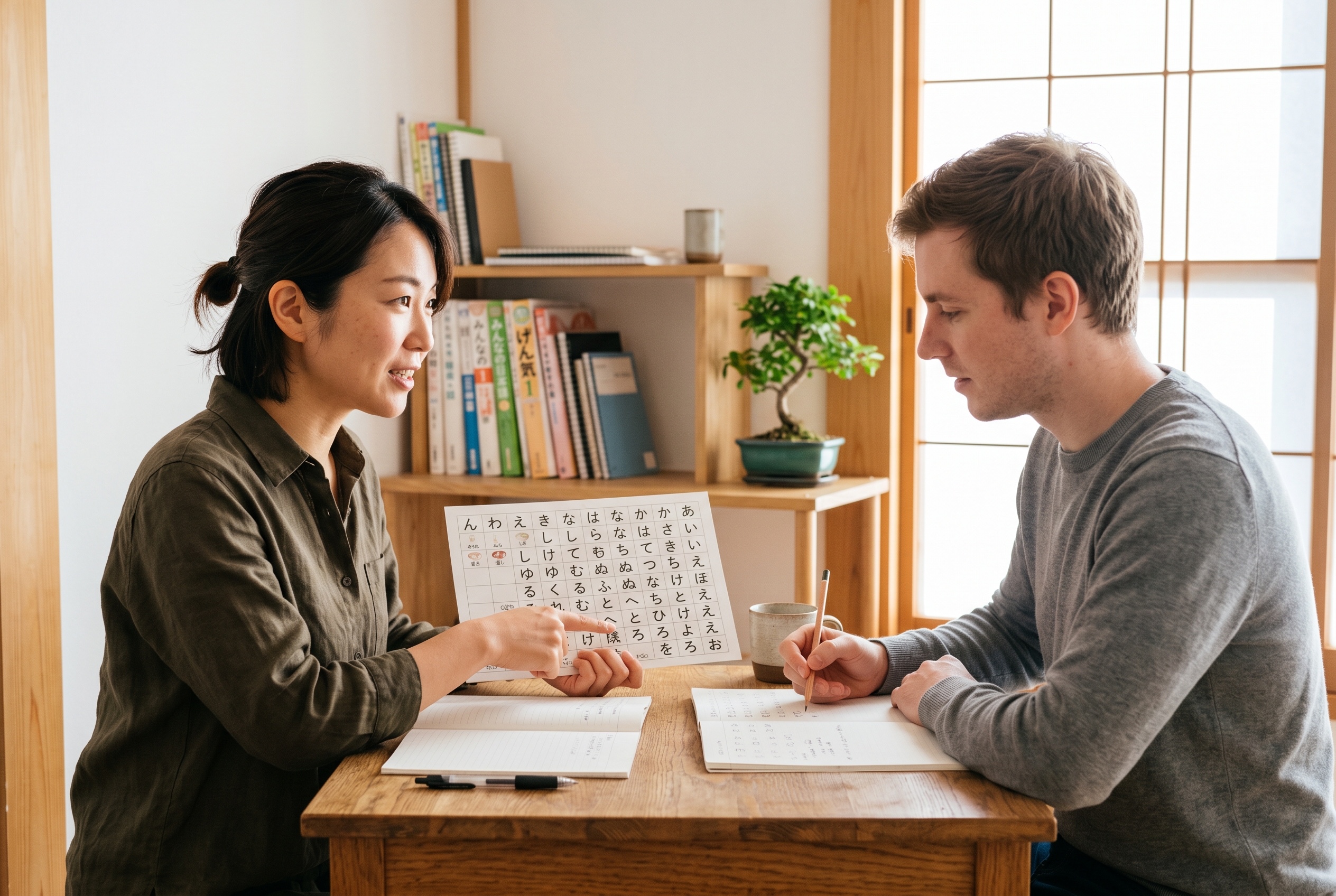
Personally vetted Japanese tutors who teach the language from zero. Lessons built around your first syllabary, your first phrases, and your first real sentences, at a pace that holds.
Your instructors
Japanese for Beginners tutors for private lessons & classes
Strommen has been teaching languages since 2006, and we have always preferred to vet teachers ourselves rather than run an open marketplace. Every tutor below was met and approved by us, and every bio is a real account of a real teacher's background. For a beginner that matters, because the tutor you choose installs the habits, good or bad, that you carry for years.
The Japanese beginner roster is small on purpose. We would rather show you three tutors we know well than a wall of profiles we cannot vouch for. Filter by location, age, or price, then book a 30-minute free trial to see who you click with.
Below are the Strommen tutors who teach beginner-level Japanese. Photos, ratings, and rates are real. Click any card to read a bio and book a free 30-minute trial.
I want to learn…
Every tutor, personally met. — founder-vetted since 2006, in Los Angeles and online worldwide.
Get a personalized plan
Pick your language — a language advisor will match you with the right tutor and map out your path.

Masters In Linguistics from Cal State Long Beach
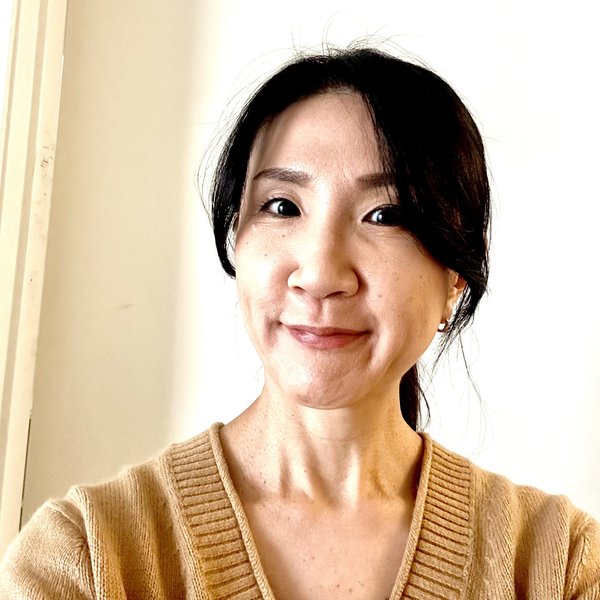
Japanese Tutor Eriko - Masters in Linguistics years of experience with Kids and Adults
Personally vetted · Strommen’s note
With us since 2015 and a linguistics master's in hand, Eriko teaches Tokyo-standard Japanese to kids and adults with the same care.
Specialties
Masters In Linguistics from Cal State Long Beach
Japanese Tutor Eriko - Masters in Linguistics years of experience with Kids and Adults
Specialties
Personally vetted · Strommen’s note
With us since 2015 and a linguistics master's in hand, Eriko teaches Tokyo-standard Japanese to kids and adults with the same care.



High school degree
Japanese Tutor in Tokyo
Personally vetted · Strommen’s note
One of Elisa's students held a ten-minute conversation entirely in Japanese after three months; another passed the JLPT. Tokyo-based, Kansai-ben included.
Specialties
Also speaks: English, History, Kids, Music, Other, Spanish, Yoga
High school degree
Japanese Tutor in Tokyo
Specialties
I also speak: English, History, Kids, Music, Other, Spanish, Yoga
Personally vetted · Strommen’s note
One of Elisa's students held a ten-minute conversation entirely in Japanese after three months; another passed the JLPT. Tokyo-based, Kansai-ben included.



Linguistic high school diploma · JLPT N1, 日本漢字能力検定一級, Cambridge C2 proficiency
Stop memorising, start understanding!
Personally vetted · Strommen’s note
Veronika taught Japanese on other platforms for five-plus years before Strommen. Her pitch is structure over memorization, JLPT prep included.
Specialties
Also speaks: English, German, Italian, Spanish
Linguistic high school diploma · JLPT N1, 日本漢字能力検定一級, Cambridge C2 proficiency
Stop memorising, start understanding!
Specialties
I also speak: English, German, Italian, Spanish
Personally vetted · Strommen’s note
Veronika taught Japanese on other platforms for five-plus years before Strommen. Her pitch is structure over memorization, JLPT prep included.

入門 nyuumon — first words & first sounds
5 first essentials that carry a Japanese beginner further than the textbook
These are not advanced expressions. They are the small, high-frequency phrases and the foundational script knowledge native speakers take for granted, and a beginner who picks them up early sounds far more natural than the textbook alone allows. Save the list and book a tutor to learn the rest.
-
01
こんにちは konnichiwa
The standard daytime hello, neutral in formality, safe with strangers, colleagues, shopkeepers, and teachers. Mornings call for ohayoo gozaimasu and evenings for konbanwa, but konnichiwa carries the broad middle of the day and is the first greeting every learner should drill until it comes out without thought.
e.g. こんにちは、はじめまして。Konnichiwa, hajimemashite. ("Hello, nice to meet you.")
-
02
すみません sumimasen
Easily the most useful word in the language for a beginner. It works as "excuse me" to get someone's attention, as a light "sorry" for small inconveniences, and even as "thank you" for a favor that put someone out. Use it to flag a server, squeeze past on a crowded train, or open a question with a stranger.
e.g. すみません、メニューをお願いします。Sumimasen, menyuu o onegai shimasu. ("Excuse me, the menu please.")
-
03
ありがとう arigatō / ありがとうございます arigatō gozaimasu
Casual thanks and polite thanks, respectively. The longer gozaimasu form is the safer default for adult beginners in almost any setting: shops, restaurants, the dentist, your tutor. The casual arigatō is for friends and family. Saying the casual form to a stranger reads as undertrained politeness, the kind of slip a tutor catches early.
e.g. ありがとうございます、助かりました。Arigatō gozaimasu, tasukarimashita. ("Thank you, that helped a lot.")
-
04
はい hai / いいえ iie
Yes and no, with one cultural footnote. Japanese speakers use hai more loosely than English uses yes: it can simply mean "I hear you," not "I agree." Real disagreement is usually expressed indirectly, through hedges like chotto ("it's a little...") rather than a flat iie. A beginner who learns that hai is not always a green light avoids a lot of early miscommunication.
e.g. はい、わかります。Hai, wakarimasu. ("Yes, I understand.")
-
05
ひらがな hiragana, カタカナ katakana, 漢字 kanji
The three scripts of written Japanese, and the order to learn them in. Hiragana (46 characters, syllabary, native words and grammar) first. Katakana (46 characters, syllabary, loanwords and foreign names) second. Kanji (Chinese-derived characters, roughly 2,000 in adult use, around 100 for an N5 beginner) third and gradually, in context, with the words they belong to. Skip hiragana and the whole language fights you.
e.g. わたしは アメリカじん です。Watashi wa amerika-jin desu. ("I am American." Hiragana grammar, katakana for the country, no kanji yet.)
About Japanese for Beginners
Starting Japanese from zero
Most people who decide to learn Japanese arrive with the same picture in their head: three writing systems, a politeness layer that nobody explained, and a sense that the whole thing is reserved for people who started at fifteen. The first weeks of lessons are largely about taking that picture apart. Japanese has no grammatical gender, no plurals, and a sound system gentler than English on the mouth. What it asks of a beginner is different from what Spanish or French asks, and a good tutor spends the first month making sure you understand that difference rather than fighting it.
The early arc of learning Japanese runs through a sequence of small wins, and a beginner tutor's job is to move you cleanly through each. Script comes first, and specifically hiragana. Hiragana is the 46-character syllabary used to write native Japanese words and the grammatical glue of every sentence. Learning it in the first two weeks is the single highest-leverage move available to a beginner; students who try to stay in romaji past that point develop reading habits they later have to undo. Katakana, the parallel 46-character syllabary, comes next. Katakana writes loanwords and foreign names, and an adult beginner ends up reading it the day they walk into a Japanese cafe or a bookstore. Both syllabaries are entirely phonetic, which means once you know them you can pronounce any word in front of you, even if you do not yet know what it means.
Pronunciation is the second early focus. Japanese has five clear vowels, a small set of consonants, and a syllable rhythm flatter and more even than English. Tutors who teach beginners well drill that rhythm from the first lesson, because the textbook habit of reading Japanese with English stress patterns is hard to walk back later. The good news is that the sound inventory is genuinely small. There are no tones to memorize, no rolled r, no consonant clusters that twist the tongue.
First phrases come third, and they are deliberately small and useful: greetings, polite acknowledgments, a way to apologize, a way to ask a price, a way to thank someone properly. The phrase a Japanese host says when handing you something with both hands, doozo, is also a window into the language's social grammar, where verbs of giving and receiving carry information English would handle with body language alone.
Particles arrive fourth, and they are the moment Japanese grammar starts to feel like a real system rather than a list of phrases. Particles are short markers that follow nouns and tell you what role the noun plays in the sentence. The subject marker ga, the topic marker wa, the direct-object marker o, the location marker ni, the destination marker e. Most beginner confusion in Japanese is particle confusion, and once a student can tell wa from ga in a real sentence the rest of the grammar opens up. Our blog post on 15 essential Japanese particles is the companion most beginners save and return to.
Kanji, the Chinese-derived logographic characters that share the page with hiragana and katakana in adult Japanese, are the fifth piece and the one beginners worry about most. Worth saying plainly: an educated Japanese adult reads roughly 2,000 kanji, the joyo set established by the Japanese government, and an N5-level beginner is expected to know about 100. Lessons introduce them gradually and in context, paired with the words and radicals they belong to, rather than as flashcards in a vacuum. The 100-most-commonly-used set already covers a surprising chunk of everyday reading.
One honest thing worth saying up front. The US Foreign Service Institute rates Japanese a Category IV language, the same tier as Mandarin, Arabic, and Korean, meaning it takes roughly three to four times the hours of Spanish to reach working proficiency. That number scares some people off. It should not. It simply means the timeline is real, and a student who plans for the real timeline tends to stay with the language, while the student who expected Spanish-pace progress quietly gives up around month three. The point of a beginner tutor is partly to set that expectation honestly and partly to make the hours feel shorter than they are.
The canonical adult textbooks, Genki by Banno and colleagues and Minna no Nihongo, both assume a tutor or classroom at the elbow; both work well alongside Strommen lessons, and your tutor will pick a primary text at the trial or recommend a custom path. The proficiency framework most beginners eventually meet is the JLPT, the Japanese-Language Proficiency Test administered by the Japan Foundation and Japan Educational Exchanges and Services, with levels from N5 (beginner) up to N1. Most beginner students do not need to test for two or three years; the framework is mentioned here so the road ahead has a name.
Our beginner Japanese tutors are native speakers from across Japan, plus longtime bilinguals who have taught the language from scratch for years. They start where you are, whether that is genuine zero or a few words picked up from anime, a phone app, or an old college class, and they build a foundation that holds the weight of everything you add later. The phrase a Japanese teacher says to a nervous adult beginner, ganbatte, do your best, is also the right tone for the first hundred hours.
What you'll cover
Lessons & classes tailored to Japanese for Beginners
Hiragana, katakana, and pronunciation from lesson one
Beginner lessons start with hiragana, because the entire grammar of Japanese is written in it and every textbook above absolute-beginner assumes you read it. Katakana follows within the first few weeks, since loanword vocabulary is a fast win for English-speaking adults. Pronunciation gets the same early focus, with attention to the vowels and the even syllable rhythm that English speakers consistently flatten. Listening drills, shadowing, and direct correction build an ear before bad habits set.
Particles, sentence patterns, and the first 100 words
Once script is in place, lessons move into the small set of particles that carry Japanese grammar: wa, ga, o, ni, e, de, to, mo. We pair each with simple sentence patterns so the rule and the example land together rather than as separate things to memorize. Survival vocabulary builds in parallel: greetings, numbers, time expressions, food, transit, work. Our top 100 basic Japanese words list is the companion most beginners drill between lessons.
Kanji introduced gradually and in context
Kanji come in slowly and only in service of words you already use. The N5 set of roughly 100 characters covers a surprising amount of beginner reading, and the joyo set of around 2,000 is the long-term target an educated adult eventually meets. Lessons teach stroke order, the most useful first radicals, and the on'yomi and kun'yomi readings that beginners often find unintuitive. The 100 most commonly used kanji list gives a useful preview of what the first year actually looks like.
Politeness levels and a realistic plan
Japanese carries politeness in the verbs themselves rather than only in tone, and a beginner who learns the polite -masu form first sounds appropriate in every adult setting from day one. Casual speech comes later, once the polite forms are automatic. Your tutor sets concrete weekly goals at the trial lesson and adjusts as your real pace becomes clear. Many students supplement lessons with the canonical Genki or Minna no Nihongo textbooks, with NHK Easy News once they can read kana, and with the JLPT framework as a long-term yardstick. When the foundation is solid, paths open toward conversational Japanese or exam-focused JLPT preparation.
FAQ
About Japanese for Beginners lessons & classes
Is Japanese as hard to learn as people say?
It is a long road, and it helps to be honest about that. The US Foreign Service Institute rates Japanese a Category IV language, roughly three to four times the hours of Spanish or French to reach working proficiency. The difficulty is front-loaded and specific. Japanese grammar is gentler than most European languages in some ways: no gender, no plurals, no subject-verb agreement, a small sound inventory. The real work is the three writing systems and the politeness layer. A tutor who sets an honest timeline and breaks the work into manageable weekly goals makes a daunting language feel routine.
Do I have to learn all three writing systems?
Eventually yes, but not all at once. Hiragana comes first because the grammar of every Japanese sentence is written in it. Katakana follows because loanwords and foreign names appear constantly. Kanji come in gradually, paired with the words they belong to. Most beginners are reading basic hiragana sentences within two to three weeks and katakana within another two, which is a real and motivating early win. Skipping hiragana to stay in romaji is the most common beginner shortcut, and it costs you months of bad reading habits later.
How many kanji do I actually need to know?
Less than the internet makes it sound. An educated Japanese adult reads about 2,000 kanji (the joyo set defined by the Japanese government), but a beginner aiming at JLPT N5 needs only around 100, and JLPT N4 around 300. Lessons introduce kanji slowly and only paired with vocabulary you already use, so the characters land in context rather than as flashcards in a vacuum. By the time you reach 300 you will recognize whole road signs, menus, and headlines.
Should I learn polite Japanese or casual Japanese first?
Polite first, almost without exception. The polite -masu verb forms are the appropriate register for adult beginners in nearly every real-world setting: shops, restaurants, work, your tutor, anyone you meet for the first time. Casual speech is faster and shorter, which makes it tempting, but using casual forms with the wrong person reads as untrained rather than informal. Once polite forms are automatic, your tutor introduces casual speech for friends, family, and the kind of conversations you hear in anime.
Are your tutors native Japanese speakers?
Most are native speakers from across Japan, and a few are longtime bilinguals who have taught beginner Japanese from scratch for years and know exactly where English speakers stumble. Each tutor's bio specifies their background and teaching experience. For a beginner the tutor's own pronunciation matters a great deal, because you absorb whatever model you hear, so a clean native or near-native accent is something we screen for.
Can I take beginner Japanese lessons online, or only in person?
Both. Most of our Japanese tutors teach online via Zoom or Jitsi and are available worldwide. Some also teach in person around Los Angeles. The booking widget on each tutor's profile shows their available formats and times, so you can pick whatever fits your schedule. If you would prefer a small-group format, our Japanese classes page covers that option.
What textbook will my tutor use?
Usually Genki I (Banno et al.) or Minna no Nihongo, the two canonical adult-beginner texts, both of which assume a tutor or classroom at the elbow. Your tutor will pick one at the trial lesson based on your goals, or build a custom path that draws from both plus NHK Easy News, listening podcasts, and graded readers as you progress. The Japan Foundation also publishes high-quality free resources your tutor can layer in.
How long until I can hold a basic conversation in Japanese?
It depends on your starting point, the time you put in between lessons, and what you mean by conversation. A motivated adult studying five to seven hours a week, lessons plus self-study, can usually handle simple everyday exchanges within a few months and reach the rough territory of JLPT N5 in six to nine. Comfortable, flowing conversation takes longer. Your tutor sets concrete goals at the trial lesson and adjusts from there. Honest expectations beat magical ones.
Ready for Japanese for Beginners lessons or classes?
Book a free 30-minute trial with one of our personally vetted tutors. Private lessons or small-group classes — your choice.