



Personally vetted instructors
Japanese for Travel tutors, lessons & classes
すみません The one word every traveler should land in Japan knowing how to use.
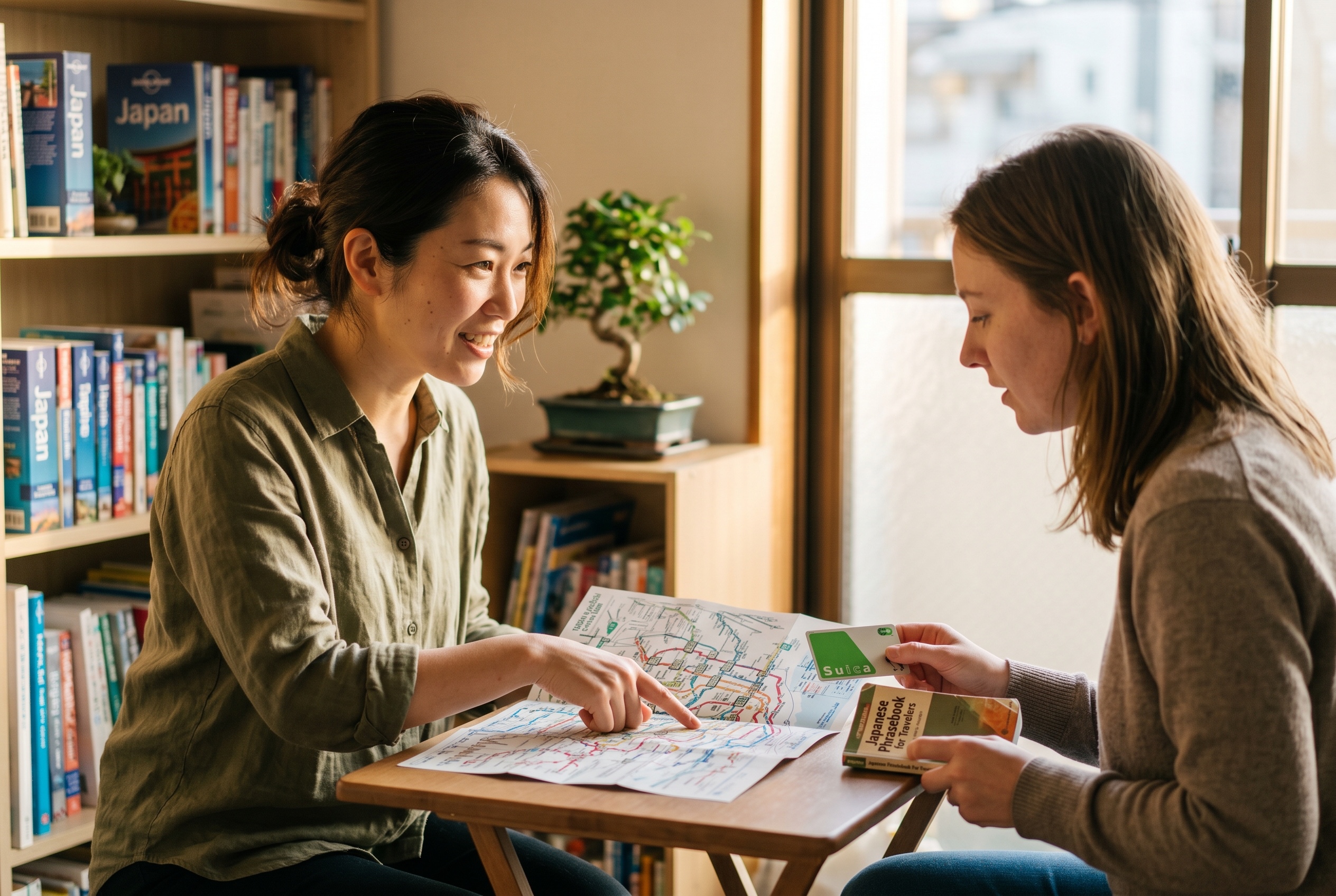
Personally vetted tutors who teach travel Japanese the way it actually gets used: stations, restaurants, ryokan, convenience stores, and the small phrases that turn a tourist visit into a confident one.
Your instructors
Japanese for Travel tutors for private lessons & classes
Strommen has been teaching languages since 2006, and we vet every teacher ourselves rather than running an open marketplace. The travel Japanese roster pairs well with a tight timeline; tutors are used to building eight to twelve-week sprints around a specific upcoming trip.
Filter by location, age, or price, then book a 30-minute free trial. Bring your itinerary, the dates, and any specific scenarios you are nervous about; the trial is the start of the plan.
Below are the Strommen tutors who specialize in travel-focused Japanese. Photos, ratings, and rates are real. Click any card to read a bio and book a free 30-minute trial.
I want to learn…
Every tutor, personally met. — founder-vetted since 2006, in Los Angeles and online worldwide.
Get a personalized plan
Pick your language — a language advisor will match you with the right tutor and map out your path.

Masters In Linguistics from Cal State Long Beach
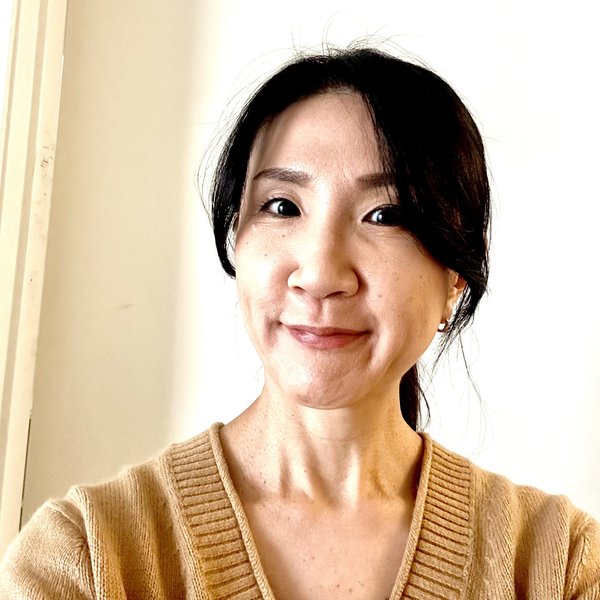
Japanese Tutor Eriko - Masters in Linguistics years of experience with Kids and Adults
Personally vetted · Strommen’s note
With us since 2015 and a linguistics master's in hand, Eriko teaches Tokyo-standard Japanese to kids and adults with the same care.
Specialties
Masters In Linguistics from Cal State Long Beach
Japanese Tutor Eriko - Masters in Linguistics years of experience with Kids and Adults
Specialties
Personally vetted · Strommen’s note
With us since 2015 and a linguistics master's in hand, Eriko teaches Tokyo-standard Japanese to kids and adults with the same care.



High school degree
Japanese Tutor in Tokyo
Personally vetted · Strommen’s note
One of Elisa's students held a ten-minute conversation entirely in Japanese after three months; another passed the JLPT. Tokyo-based, Kansai-ben included.
Specialties
Also speaks: English, History, Kids, Music, Other, Spanish, Yoga
High school degree
Japanese Tutor in Tokyo
Specialties
I also speak: English, History, Kids, Music, Other, Spanish, Yoga
Personally vetted · Strommen’s note
One of Elisa's students held a ten-minute conversation entirely in Japanese after three months; another passed the JLPT. Tokyo-based, Kansai-ben included.



Linguistic high school diploma · JLPT N1, 日本漢字能力検定一級, Cambridge C2 proficiency
Stop memorising, start understanding!
Personally vetted · Strommen’s note
Veronika taught Japanese on other platforms for five-plus years before Strommen. Her pitch is structure over memorization, JLPT prep included.
Specialties
Also speaks: English, German, Italian, Spanish
Linguistic high school diploma · JLPT N1, 日本漢字能力検定一級, Cambridge C2 proficiency
Stop memorising, start understanding!
Specialties
I also speak: English, German, Italian, Spanish
Personally vetted · Strommen’s note
Veronika taught Japanese on other platforms for five-plus years before Strommen. Her pitch is structure over memorization, JLPT prep included.

A patient japanese tutor who learns with you, not just teaches you. Beginner-friendly lessons using structure materials and clear explanations with step-by-step support.
Personally vetted · Strommen’s note
Sapporo-based, Hinako teaches beginner-friendly Japanese with original materials and a fixed structure: icebreaker, vocab review, grammar, every lesson.
Specialties
Also speaks: English
A patient japanese tutor who learns with you, not just teaches you. Beginner-friendly lessons using structure materials and clear explanations with step-by-step support.
Specialties
I also speak: English
Personally vetted · Strommen’s note
Sapporo-based, Hinako teaches beginner-friendly Japanese with original materials and a fixed structure: icebreaker, vocab review, grammar, every lesson.

旅行 ryokō — Japan on the ground
5 things every traveler to Japan should know before landing
These are not optional cultural curiosities. They are the small, high-frequency moves that come up within the first hour of a Tokyo arrival, and the ones that turn a tourist visit into a confident one. Save the list and book a tutor to practice them.
-
01
駅 eki and 駅前 ekimae
Station is eki; the area immediately in front of a station is ekimae, and most Japanese cities organize themselves around these zones. Restaurants, shops, hotels, and meeting points cluster at ekimae for the major stations. Knowing the word lets you ask for or follow directions phrased as "five minutes from Shibuya eki, near the ekimae crossing," which is how most Japanese addresses get spoken aloud.
e.g. 渋谷駅前で待ち合わせしましょう。Shibuya-eki-mae de machiawase shimashō. ("Let's meet at Shibuya station front.")
-
02
Suica / Pasmo IC card
The contactless IC card system that replaced paper tickets a generation ago and now handles trains, buses, vending machines, and most convenience stores in Tokyo and well beyond. Suica is JR's card, Pasmo is most private rail lines'; the two are interoperable and either works almost anywhere. Buy one at a station counter on arrival, top it up at a machine, tap through gates without breaking stride. Cash is fine without one, but the IC card is the local default.
e.g. スイカ をください。Suica o kudasai. ("One Suica card please." Counter sells them at most JR stations.)
-
03
千円 sen-en and the big-number register
Yen prices scale up faster than dollar equivalents and travelers freeze the first time they hear sen-happyaku-en (eighteen hundred yen) said fast at a noodle counter. A meal might be sen-en (one thousand yen), a coffee gohyaku-en (five hundred yen), a mid-range ryokan night nijū-man-en (two hundred thousand yen, which is about two hundred dollars). The numbers themselves are not hard; the spoken register at native speed is what needs practice.
e.g. 千八百円になります。Sen-happyaku-en ni narimasu. ("That will be eighteen hundred yen.")
-
04
コンビニ konbini interaction script
The Japanese convenience store is one of the genuine wonders of a trip, and the interactions are scripted enough to master in one lesson. The clerk asks if you want a bag (fukuro wa daijōbu desu ka), whether to heat the items (atatamemasu ka), whether you want chopsticks (ohashi wa otsukai ni narimasu ka), and offers a receipt. Polite yes or polite no plus arigatō gozaimasu on the way out covers the whole encounter.
e.g. Clerk: 袋はどうしますか。Customer: 袋は大丈夫です、ありがとうございます。Fukuro wa daijōbu desu, arigatō gozaimasu.
-
05
旅館 ryokan and the futon surprise
Traditional Japanese inn etiquette: shoes off at the entrance, slippers on, separate slippers for the bathroom, the futon laid out in the evening by staff while you are at dinner and put away in the morning. The yukata robe in the room is for wear inside the ryokan, including down to the bath, with the left side always folding over the right (the opposite signals a funeral). A small misstep is forgivable, easily avoided with a tutor brief.
e.g. 夕食の後、お布団をご用意します。Yūshoku no ato, ofuton o goyōi shimasu. (Staff: "After dinner, we will lay out your futon.")
About Japanese for Travel
Travel Japanese that actually gets used in Tokyo, Kyoto, and Osaka
Travel Japanese is its own pragmatic curriculum, and a learner with eight weeks before a Tokyo trip is not the same student as someone aiming at long-term fluency. A travel-focused tutor spends very little time on grammar tables and a great deal of time on the actual scripts a traveler encounters: ordering at a restaurant, buying a JR ticket, asking for a recommendation, navigating a train transfer, checking into a ryokan, paying at a convenience store. Done well, eight to twelve weeks of focused travel lessons covers more useful ground for a two-week trip than a year of general-purpose study.
The most important early lesson is honestly the smallest. Sumimasen is the most-used word in a traveler's Japanese vocabulary and the one that opens almost every real-world interaction. It works as excuse-me when getting attention from a server or a passerby, as a light sorry when squeezing past someone on a crowded train, and as thank you for a favor that put someone out. A traveler who lands knowing how and when to use sumimasen has already cleared the highest social hurdle. Tutors drill it in the first lesson, often with role plays that put the learner in the moment of needing it three different ways inside two minutes.
Reading kanji is the question travelers ask most often, and the honest answer is that most kanji-essential signage now has English subtitles, especially in Tokyo, Kyoto, Osaka, and any tourist-trafficked area. The Tokyo Metro, the JR Yamanote Line, Shinkansen stations, major restaurants, and most temples post English alongside Japanese. What still gets travelers stuck without some Japanese is the small stuff: a hand-lettered menu at a noodle counter, a paper sign about the futon laying schedule at a ryokan, a price tag at a depachika food hall, a button on a fully Japanese ticket machine. A travel-focused tutor teaches the dozen or so high-frequency station and food kanji (出口 exit, 入口 entrance, 大人 adult, 子供 child, 円 yen, 駅 station, 名 name, 男 men, 女 women) and skips the rest, on the theory that the long tail belongs to longer programs.
Station Japanese is its own small dialect. Eki is station; ekimae is the area in front of a station, which most Japanese cities organize themselves around. Train station vocabulary covers the basics every traveler needs: kippu (ticket), katamichi (one-way), ofuku (round trip), hashiru (to run, also which platform a train runs on), nori-kae (transfer). The IC card system, including Suica in the Tokyo region and Pasmo on most private lines, replaced paper tickets a generation ago and is now the dominant payment method for trains, buses, vending machines, and most convenience stores. A tutor teaches you to ask for a Suica at the JR counter, to top it up at a kiosk, and to tap through gates without breaking stride.
Restaurant Japanese is the second most-rehearsed category. Itadakimasu before eating, gochisousama deshita after, are the cultural bookends every meal expects from a polite diner regardless of whether they understood the menu. Asking for the menu, requesting recommendations, ordering by pointing at the picture and using the counter word for the item (hitotsu for one of most things, ippon for cylindrical items like beer bottles, ippai for cups), asking for the check (okaikei o onegai shimasu) all become reflex with a few lessons of practice. Tipping does not exist in Japanese restaurants; the equivalent gesture is the small bow and the gochisousama deshita on the way out. Tutors flag this explicitly because a confused traveler trying to tip is a small but real disruption to the staff.
Money register matters more in travel Japanese than learners expect. Japanese still uses cash for many small interactions despite IC card and credit card adoption, and prices are spoken in numbers that scale up faster than English equivalents. A meal might cost senhappyaku-en (eighteen hundred yen), a coffee five-hundred-en, a ryokan night nijuuman-en (two-hundred-thousand yen) which sounds astronomical and is actually about two hundred US dollars at a mid-range rate. The big numbers themselves are not hard once practiced, but the senhappyaku register at a small counter where the server speaks fast and assumes you know is a real comprehension test. Lessons drill numbers up to ichioku (one hundred million) with audio at native speed.
Konbini Japanese deserves its own small section because the convenience store is one of the genuine wonders of a trip to Japan and the interactions are scripted enough that a learner can master them in a single lesson. The clerk asks if you want a bag (fukuro wa daijoubu desu ka), whether you want the items heated (atatamemasu ka), whether you want chopsticks or a spoon (ohashi wa otsukai ni narimasu ka), and offers a receipt (reshiito wa goriyou desu ka). The honest answer to most of these is a polite yes or a polite no, with arigatou gozaimasu on the way out. A traveler who handles a konbini visit without fumbling looks competent at a level disproportionate to the actual Japanese involved.
Ryokan and traditional accommodation come with a small set of expectations that pleasantly surprise most first-time visitors. Shoes come off at the entrance and slippers replace them; a separate pair of slippers handles the bathroom; the futon is laid out in the evening by staff while you are at dinner and put away in the morning, a practice that catches more than one Western guest off guard the first time. The yukata robe provided in the room is for wear inside the ryokan, including down to the in-house bath, and the left side of the robe always folds over the right (the opposite signals a funeral). Tutors brief travelers on these rituals because a small misstep is forgivable but easily avoided.
A candid note on Tokyo, Kyoto, and Osaka regional differences. Tokyo standard Japanese is what every textbook teaches and what national TV broadcasts in, and it is well understood everywhere. Kyoto preserves a softer, more indirect register that even Tokyo natives sometimes find subtle. Osaka has a famously direct and humorous Kansai dialect (Kansai-ben), with different verb endings, intonation, and signature words like ookini for thank you and akan for not good. A traveler does not need to learn Kansai-ben to be understood in Osaka; the locals speak standard Japanese to outsiders without thinking. But knowing a phrase or two of Osaka style produces visible delight at restaurants and bars and is a small unlock the textbook will not give you.
Our travel Japanese tutors include native speakers from across Japan, plus longtime bilinguals who have guided foreign travelers through trips and know exactly which phrases come up on day one of a Tokyo arrival. Lessons calibrate to your itinerary: an eight-day Tokyo-Kyoto loop, a two-week Hokkaido road trip, a business-plus-leisure trip with a weekend in Osaka. Bring your itinerary to the trial; a good tutor builds the lesson plan around it.
What you'll cover
Lessons & classes tailored to Japanese for Travel
Station, train, and transit Japanese
Lessons cover the small dialect of station Japanese: kippu (ticket), katamichi (one-way), ofuku (round trip), nori-kae (transfer), and the IC card system (Suica, Pasmo) that handles most daily transit and payments. Tutors drill the high-frequency station kanji (出口 exit, 入口 entrance, 駅 station, 名 name) and skip the long tail. Most travelers leave with the muscle memory to tap through gates, transfer at a major hub, and buy a Shinkansen ticket without help.
Restaurant, menu, and food vocabulary
Restaurant Japanese is rehearsable: itadakimasu before, gochisōsama deshita after, ordering by pointing at the picture and using the right counter word (hitotsu, ippon, ippai), asking for the check with okaikei o onegai shimasu. Tutors flag the no-tipping convention explicitly because it is the single most common American confusion. Our blog dialogue on ordering at a ramen shop is a useful between-lesson companion.
Ryokan, hotel, and accommodation etiquette
Traditional ryokan come with a small set of expectations that surprise most first-time visitors: shoes off at the entrance, slipper changes, the futon laid out by staff in the evening, yukata robes worn inside, the left side folding over the right. Tutors brief travelers on these rituals because a small misstep is forgivable but easily avoided. Hotel Japanese covers the standard check-in script, asking for a late checkout, requesting a taxi at the front desk.
Regional differences and a real itinerary plan
Tokyo standard Japanese is what every textbook teaches and is understood everywhere. Kyoto preserves a softer, more indirect register. Osaka has the famously direct Kansai-ben (ookini for thank you, akan for not good), and a phrase or two produces visible delight at local restaurants. Tutors calibrate lessons to your actual itinerary, whether that is a Tokyo-Kyoto loop, a Hokkaido road trip, or a business-plus-leisure week. For deeper study after the trip, paths open toward conversational Japanese or Japanese for beginners. See also our Japanese classes page for small-group options.
FAQ
About Japanese for Travel lessons & classes
Do I need to learn kanji to navigate Tokyo?
Not for major signage. The Tokyo Metro, the JR Yamanote Line, the Shinkansen, and most major restaurants and temples post English alongside Japanese. What still gets travelers stuck without some Japanese is the small stuff: hand-lettered menus, paper signs at ryokan, fully Japanese ticket machines, price tags at a depachika food hall. A travel tutor teaches the dozen or so high-frequency station and food kanji and skips the rest.
How polite do I need to be at a restaurant?
Polite but not formal. Japanese restaurant service runs on a steady politeness that the customer matches with a default desu/masu register, the cultural bookends of itadakimasu before eating and gochisōsama deshita after, and arigatō gozaimasu on the way out. Tipping does not exist; the small bow and the gochisōsama deshita are the equivalent. Trying to tip is a small but real disruption to the staff.
What's the right amount to bow?
Less than the internet suggests. For a traveler, a small head-nod bow handles most situations: greetings, thanks, apologies, leaving a shop. Deeper bows (waist bows of 15 to 30 degrees) are appropriate for first business introductions, formal apologies, and meeting older or senior figures. The waist-bow at 45 degrees and the very deep saikeirei are rare and ceremonial. A tutor demonstrates the range and the contexts, and most travelers settle on a comfortable small bow within a lesson or two.
How long before my trip should I start lessons?
Eight to twelve weeks of focused lessons covers most travel needs for a two-week trip, assuming one or two lessons a week plus a small amount of self-study between. A four-week sprint is possible for an absolute essentials build (greetings, restaurant, station, numbers) and still pays off. Less than three weeks tends to leave the learner with phrases rather than the confidence to use them, though even that beats arriving with nothing.
Will I be able to read menus?
Picture menus and English menus are common in tourist-trafficked restaurants in Tokyo, Kyoto, and Osaka, so the immediate answer for major cities is mostly yes. Smaller restaurants, izakaya, ramen counters, and depachika basement food halls often have only Japanese menus. Lessons teach the dozen most common food kanji (魚 fish, 肉 meat, 鳥 chicken, 野菜 vegetable, 麺 noodles) plus the menu vocabulary for the kinds of restaurants on your itinerary.
What's the deal with the IC card (Suica / Pasmo) and do I really need one?
You can travel in Japan with cash and a credit card, but the IC card is the local default and makes daily transit and convenience-store purchases dramatically smoother. Suica is sold at JR station counters, Pasmo at private rail station counters; the two are interoperable and either works almost anywhere. Top it up at a station machine with cash. The card replaces buying individual tickets and pays at most convenience stores, vending machines, and many small shops.
How is Osaka or Kyoto Japanese different from what I'll learn?
Tokyo standard Japanese is what every textbook teaches and what national TV broadcasts in, and it is universally understood. Kyoto preserves a softer, more indirect register that even Tokyo natives sometimes find subtle. Osaka has Kansai-ben, with different verb endings and intonation and signature words like ookini for thank you and akan for not good. Locals speak standard Japanese to outsiders without thinking, so you do not need Kansai-ben to be understood, but a phrase or two produces visible delight at restaurants and bars.
Can I take travel Japanese lessons online?
Yes. Most of our travel Japanese tutors teach online via Zoom or Jitsi worldwide. Several also teach in person around Los Angeles. The booking widget on each tutor profile shows their available formats and times. Online lessons work especially well for travel prep because the tutor can share their screen to walk through your actual itinerary, hotel confirmations, and restaurant reservations.
Ready for Japanese for Travel lessons or classes?
Book a free 30-minute trial with one of our personally vetted tutors. Private lessons or small-group classes — your choice.