



Personally vetted instructors
IELTS tutors, lessons & classes
Right, let's begin. What the examiner says when the Speaking test recorder switches on.
Personally vetted IELTS prep tutors. Lessons calibrated to the band-descriptor rubric the British Council, IDP, and Cambridge Assessment English actually score against, for Academic and General Training candidates from 5.5 toward 7+ and beyond.
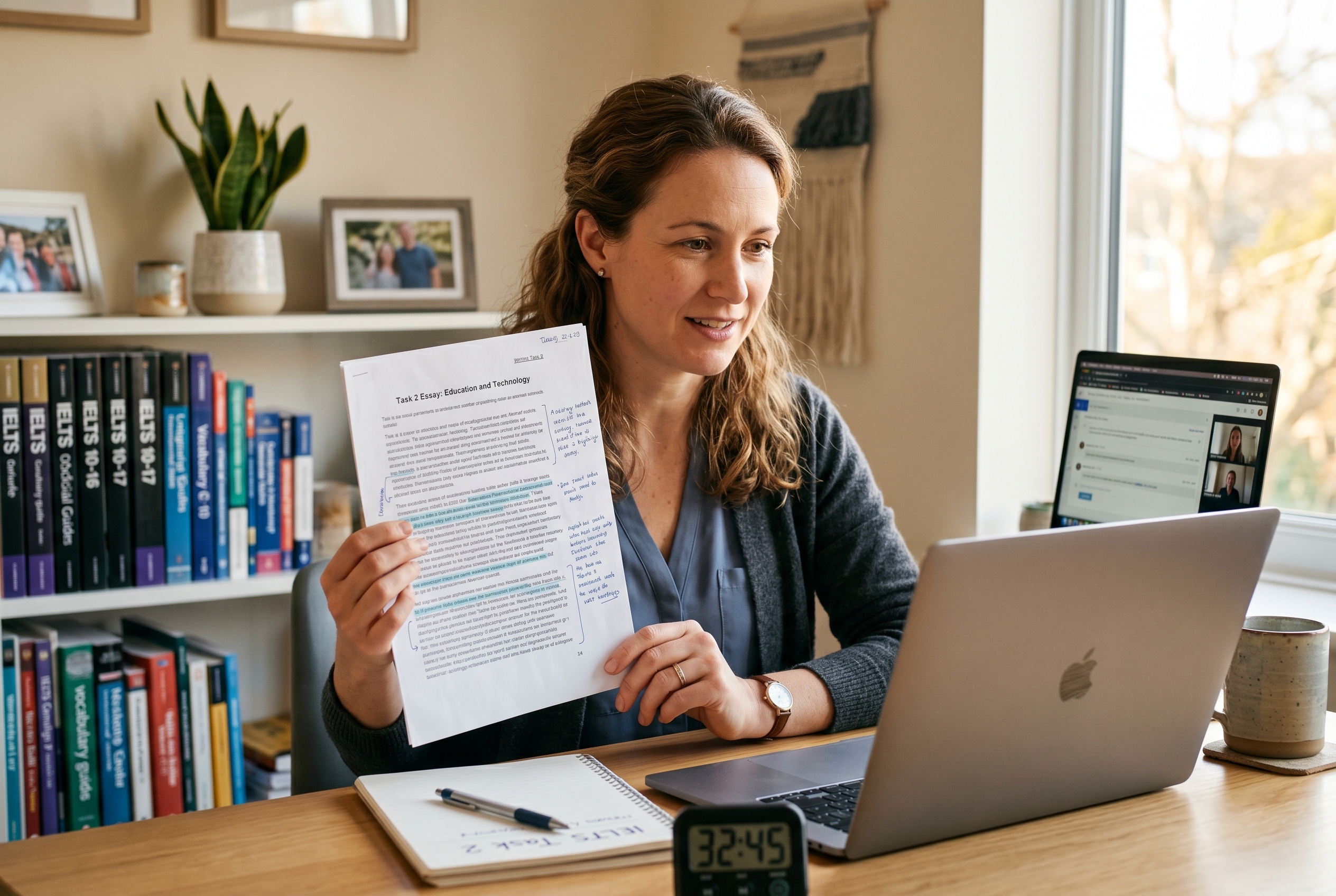
Your instructors
IELTS tutors for private lessons & classes
Strommen has been prepping IELTS candidates since the test started showing up routinely on US-bound and Commonwealth-bound applications. Most students arrive with a target band (often 7.0 across the board for skilled migration, 6.5 overall for university admission), a fixed test date driven by a visa or admissions deadline, and an honest sense of which section is dragging the average down. Every tutor below was met and vetted by us in person or via thorough video interview. No marketplace. No automated profile-creation. Real teachers with real IELTS rubric experience.
Filter by location, age, or price. Then book a 30-minute free trial.
Below are the Strommen tutors who prep students for the IELTS. Photos, ratings, and rates are real. Click any card to read their bio and book a free 30-minute trial.
I want to learn…
Every tutor, personally met. — founder-vetted since 2006, in Los Angeles and online worldwide.
Get a personalized plan
Pick your language — a language advisor will match you with the right tutor and map out your path.




Bachelor of Arts (Teacher certificate from Zurich teachers College)
Trilingual German, ESL and French teacher with years of experience.
Personally vetted · Strommen’s note
Thirza teaches trilingual German, French, and ESL out of Zurich, with IELTS, TestDaF, and Goethe prep all part of the toolkit.
Specialties
Bachelor of Arts (Teacher certificate from Zurich teachers College)
Trilingual German, ESL and French teacher with years of experience.
Specialties
Personally vetted · Strommen’s note
Thirza teaches trilingual German, French, and ESL out of Zurich, with IELTS, TestDaF, and Goethe prep all part of the toolkit.


Bachelor's
Damon, the ESL teacher
Personally vetted · Strommen’s note
Damon treats every student like someone he's building a long relationship with. He teaches Chinese, English, and Russian out of Bangkok.
Specialties
Bachelor's
Damon, the ESL teacher
Specialties
Personally vetted · Strommen’s note
Damon treats every student like someone he's building a long relationship with. He teaches Chinese, English, and Russian out of Bangkok.
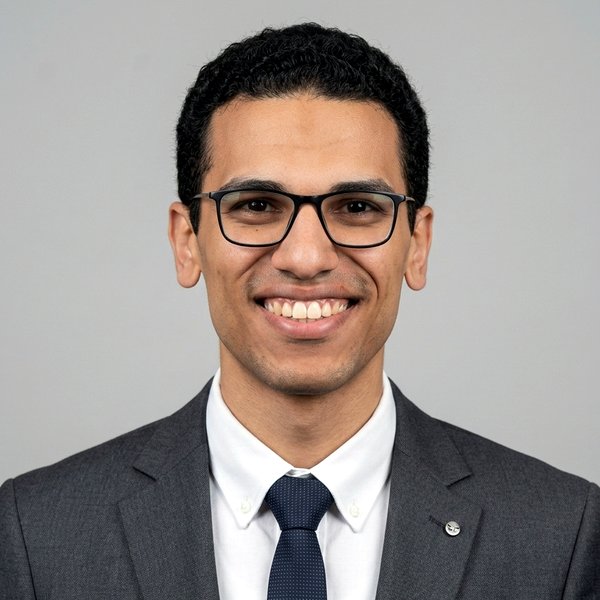


Bachelor of Education (B.Ed.) and pursuing a degree in Aerospace Engineering.
English, German, and Arabic classes
Personally vetted · Strommen’s note
Arabic, English, and German sit alongside AP Calculus and AP Physics on Omar's schedule, a genuinely rare tutor who crosses from language straight into STEM.
Specialties
Also speaks: French, Italian, Spanish
Bachelor of Education (B.Ed.) and pursuing a degree in Aerospace Engineering.
English, German, and Arabic classes
Specialties
I also speak: French, Italian, Spanish
Personally vetted · Strommen’s note
Arabic, English, and German sit alongside AP Calculus and AP Physics on Omar's schedule, a genuinely rare tutor who crosses from language straight into STEM.

IELTS strategy — exam playbook
5 IELTS realities candidates wish they'd been told earlier
These aren't textbook tips. They're the rubric-aware habits that separate first-sitting passers from candidates who retake. Screenshot the infographic, then book a tutor to drill the rest.
-
01
Your score expires in two years
An IELTS score is valid for exactly two years from the test date. Cambridge English (B2 First, C1 Advanced) is a lifetime credential; IELTS is not. For visa pathways that take 18 months to process, candidates routinely have to sit IELTS twice. Build the expiry date into your immigration timeline before you book the first sitting, not after.
e.g. Test date 24 May 2026 → score expires 24 May 2028.
-
02
Academic or General Training, not both
Academic IELTS is for university admission and professional registration. General Training IELTS is for migration and work in English-speaking countries. The Reading and Writing sections differ between them; Listening and Speaking are identical. Verify which paper your destination institution or visa stream actually accepts before you register, because a General Training score will not satisfy a university and an Academic score is not the right format for most skilled-migrant visas.
e.g. UK skilled-worker visa → General Training. US master's program → Academic.
-
03
Writing Task 2 and Speaking Part 3 reward the same skill
Both are discursive, both expect a clear position with developed reasoning, and both score the same kinds of vocabulary and grammar criteria. The difference is medium. Task 2 gives you 40 minutes and a pen; Speaking Part 3 gives you 4-5 minutes of unscripted answers under examiner pressure. Candidates who only practice the written version end up sitting a band lower in Speaking than in Writing. Drill the two in parallel.
e.g. Task 2 prompt: "Some people think..." → Speaking Part 3: "Do you think...?"
-
04
The band 7 plateau is real
Moving from 5.5 to 6.5 takes most candidates a few months. Moving from 6.5 to 7.0 in Writing or Speaking, the threshold for Australian skilled migration, Canadian CLB 9, and UK nursing registration, often takes another six to twelve. The gap is rarely vocabulary. It is precision and consistency: the band 7 descriptor expects "frequent error-free sentences" and a "wide range" of structures used flexibly. Self-assessment almost never works at this band.
e.g. Ten complex sentences with 1-2 minor errors = band 7. The same ten with 5-6 minor errors = band 6.5.
-
05
Speaking is recorded, one-on-one with the examiner
Unlike Cambridge English Speaking, which pairs you with another candidate, IELTS Speaking is a solo interview face-to-face with a single certified examiner, recorded for quality assurance and re-marking. There is no partner to share airtime or feed off. Some candidates find this lonelier and harder, especially in Part 2 (the 1-2 minute monologue). Rehearse the format you will actually sit, not the one you have heard about.
e.g. Part 2: prep 1 minute → speak 1-2 minutes solo on a cue card. No partner, no pauses.
About IELTS
IELTS, band by band
The IELTS (International English Language Testing System) is the most widely used high-stakes English proficiency exam on the planet, co-owned by the British Council, IDP IELTS Australia, and Cambridge Assessment English. It is the credential of choice for university admission in the UK, Australia, New Zealand, and Canada, the standard English requirement for skilled-migrant visas across the Commonwealth, and the test that most consular and licensing bodies will recognize when proof of English is on the file. Scores come back as a 0-to-9 band per skill plus an overall band, and a score is valid for two years from the test date, which is the single most important logistical fact about IELTS prep: if your visa timeline slips, you sit again. Students looking for the broader English program our tutors teach can start at our main ESL page.
There are two main test formats and the choice between them is the first real decision in any prep arc. IELTS Academic is for university admission and professional registration in English-speaking countries. The Reading section uses long-form academic-style passages and the Writing section asks for a graph or chart description in Task 1 and a discursive essay in Task 2. IELTS General Training is for migration and work, the form most candidates pursuing UK, Australian, Canadian, or New Zealand visas will sit. The Reading section uses workplace and everyday texts, and Writing Task 1 is a letter rather than a chart description. Listening and Speaking are identical across both formats. There is also IELTS for UKVI (an Academic or General Training paper administered at Home Office-approved centres for UK visa purposes, also classified as a Secure English Language Test) and IELTS Life Skills (A1 or B1 only, just speaking and listening, used for spouse and family visa categories where the threshold is conversational competence rather than academic English). Picking the wrong format is an expensive mistake — verify which paper your destination institution or visa stream actually accepts before you register.
Each format runs four sections in a fixed order on test day. Listening takes about 30 minutes (40 questions across four recordings, played once, with 10 extra minutes on paper to transfer answers). Reading runs 60 minutes (40 questions across three passages, no extra transfer time). Writing runs 60 minutes for two tasks (a recommended 20 minutes on Task 1 and 40 on Task 2). Speaking is a separate booking, roughly 11-14 minutes, conducted face-to-face with a certified examiner and recorded for moderation. Each section is band-scored 0 to 9 in half-band increments, and the overall band is the average across the four section bands. Universities and visa streams set their own minimums, often as both an overall floor and a per-skill floor (typical: 7.0 overall with no skill below 6.5), so a strong reading score will not always rescue a weak writing band. Serious prep starts with a diagnostic that surfaces the weaker skills, not a uniform sweep.
A closer look at the two production sections, because this is where most candidates lose points. Writing Task 2 is a 250-word discursive essay built around a single prompt: agree/disagree, discuss both views, problem-solution, advantages-and-disadvantages, two-part question. The band descriptors score four equally weighted criteria: Task Response, Coherence and Cohesion, Lexical Resource, and Grammatical Range and Accuracy. Most American and international candidates who plateau at band 6 or 6.5 are losing points on Task Response (failing to answer every part of a multi-part prompt) and Coherence (paragraphs without a clear topic sentence, missing or misused linking phrases). The fix is structural rather than vocabulary-driven. Speaking Part 3 is the discursive follow-up to the Part 2 long-turn, where the examiner asks open-ended opinion and analysis questions tied to the Part 2 topic. The skills are similar to Writing Task 2 but the medium is unforgiving: there is no draft, no revision, no time to think. Candidates who can write a band 7 essay can sit in a band 6 Speaking band because they have never practiced spontaneous discursive English aloud. Both production sections are trainable, and both need their own rehearsal cadence.
The band 7 plateau is a real phenomenon and worth naming directly. Many migration streams (Australian skilled migration, Canadian Express Entry CLB 9, certain UK professional registration boards including nursing) require a 7.0 in every section, and candidates who can move comfortably from 5.5 to 6.5 in a few months often spend another six to twelve months stuck just under the 7.0 line in Writing or Speaking. The gap from 6.5 to 7.0 is rarely a vocabulary or grammar deficit. It is usually a precision and consistency issue: the band 7 descriptor expects "a wide range of vocabulary used with flexibility and precision," "a wide range of complex structures," and "frequent error-free sentences." The candidate who writes ten complex sentences with one or two minor errors hits band 7; the candidate who writes ten complex sentences with five or six minor errors stays at 6.5. Closing the gap takes deliberate, rubric-aware practice and honest feedback from someone who can score the way an examiner scores. Self-assessment almost never works at this band because the errors that drop a 7 to a 6.5 are exactly the ones the writer can no longer see.
The Speaking test format itself catches some candidates off guard, especially those coming from a Cambridge English (B2 First / C1 Advanced) background where Speaking is a paired test with another candidate. IELTS Speaking is one-on-one with a single examiner, recorded, in three parts: Part 1 is a short personal interview (4-5 minutes), Part 2 is the long turn (a 1-minute prep then 1-2 minutes of monologue from a cue card), Part 3 is the discursive follow-up (4-5 minutes). The recording is for quality assurance and re-marking, not for the examiner's benefit. Band consistency across attempts is a known frustration: an examiner is human, and a candidate sitting on a borderline 6.5/7.0 may walk away with different bands on different days even with identical English. The honest framing for prep is that consistent band 7 performance requires sitting comfortably inside the band 7 descriptor range, not on its border, so that examiner variability and test-day nerves do not push you down a half-band.
The Computer-Based IELTS deserves a brief mention. The exam content is identical to paper-based IELTS — same four sections, same band scoring, same scripts. The differences are ergonomic: typing instead of handwriting (a real advantage for candidates whose handwriting under exam pressure is slow or messy), an on-screen highlighter and notes tool for Reading, and a count-up timer rather than a clock on the wall. Results return in 3-5 days for computer-based versus 13 days for paper. The Speaking test is identical in both modes (always face-to-face with an examiner). Which mode is easier depends on the candidate: strong typists often gain real time on the Writing section, while candidates who prefer pen-and-paper annotation on Reading sometimes prefer paper. Try a full timed mock in your chosen mode at least a month out.
How our tutors prep candidates. The first lesson is almost always a diagnostic against an official past paper from the British Council or IDP archives. The tutor scores all four sections against the public band descriptors and surfaces the gap to your target. From there the curriculum rebalances toward the weak sections while keeping the strong ones sharp. Writing Task 1 and Task 2 are drilled with timed essays on real prompts, graded against the four-criterion rubric, with rewrite cycles focused on the specific descriptor gaps the candidate keeps hitting. Speaking is rehearsed as full mock interviews recorded and reviewed: structure, fluency, vocabulary precision, grammatical control, pronunciation under load. Listening uses authentic past papers played at exam speed, no pausing, with answer transfer practiced on the real answer sheet. Reading is drilled under the 60-minute clock from week one because candidates routinely miss the third passage from running out of time, not from misunderstanding the text. A realistic prep arc looks like 3 to 6 months for a 5.5-to-7.0 jump at one or two lessons per week with consistent self-study, longer when the target is 7.5 or higher in every section. Lessons should also build the habit of recording your own speaking practice between sessions and listening back; the gap between how you sound to yourself in the moment and how you sound on the recording is a faster diagnostic than any rubric.
Between lessons, immerse with English-language audio at near-native pace. For Listening, the official IELTS YouTube channels (British Council and IDP) post real past test recordings with band descriptors; drill these first. Beyond the test corpus: BBC Radio 4 podcasts for British accent exposure, ABC Radio National for Australian, CBC podcasts for Canadian, NPR for American. The Speaking test accepts any standard variety of English, but examiners worldwide are trained on a broad accent set, so train your ear on the variety you are weakest at, not the one you are most comfortable with. For Reading practice, The Guardian, BBC News features, and The Economist build the academic-register vocabulary and sentence patterns Reading passages draw from. For Writing, the British Council's official IELTS practice materials include band-7 and band-9 sample essays with examiner comments. Read them, then write the same prompt under the clock, then compare. For broader study habits, our Business English and Conversational English specialty pages cover the fluency foundations IELTS prep sits on top of.
The Strommen IELTS roster includes native English tutors trained on the IELTS band descriptors and the official examiner criteria, several with direct examiner or examiner-training backgrounds, alongside long-serving ESL specialists with formal CELTA or DELTA credentials and years of working with skilled-migrant and university-bound candidates from across Asia, Latin America, the Middle East, and Europe. Each tutor's bio specifies their teaching background, the IELTS bands and modules they work with most, and the candidate profile they fit best (academic university-bound, skilled-migration adults, healthcare candidates targeting nursing or medical registration bands, plateau-breakers stuck just under 7.0). Match yourself to a tutor whose target accent matches the variety you most need to listen to, whose teaching style fits how you learn under pressure, and whose schedule overlaps with yours. For learners pursuing a different English certification, our TOEFL and Cambridge English pages cover the sibling exams. Lessons are one-on-one and calibrated to your exam date, target band, and weakest section. The trial is free. Bring your target band, your test date, and your best guess at the section that worries you most, and you will leave with a per-skill diagnostic and an honest read on your timeline.
What you'll cover
Lessons & classes tailored to IELTS
Diagnostic + band-descriptor alignment
Your first lesson is usually a full diagnostic against an official past paper at your target band. The tutor scores all four sections (Listening, Reading, Writing, Speaking) on the public band descriptors and identifies the gap between your current bands and your target. Subsequent lessons rebalance toward the weak sections while keeping the strong ones sharp, with weekly band-targeted progress checks.
Writing Task 1 and Task 2 drills
Writing is where most candidates plateau, especially at the band 7 threshold. Lessons drill the structural moves of Task 2 (clear position, developed paragraphs, explicit linking, on-topic conclusion) and the format-specific moves of Task 1 (chart description for Academic, letter conventions for General Training). Real timed essays each week, graded against Task Response, Coherence and Cohesion, Lexical Resource, and Grammatical Range and Accuracy, with rewrite cycles targeting the specific descriptor gaps.
Speaking practice (Parts 1, 2, 3) under exam conditions
Recorded mock Speaking tests with full examiner-style questioning, scored on Fluency and Coherence, Lexical Resource, Grammatical Range and Accuracy, and Pronunciation. Particular focus on Part 2 long-turn structure and Part 3 discursive follow-up, where most candidates lose bands. Playback review covers fillers, hesitation patterns, vocabulary precision, and the prosody gaps that drag Pronunciation scores. Pronunciation refinement runs in parallel for candidates targeting band 7+ in Speaking.
Listening, Reading, and full timed mocks
Authentic IELTS past papers under real exam conditions, no pausing. Listening drills cover all four recording types (social conversation, monologue, academic discussion, academic lecture) with answer-transfer practice on the real answer sheet. Reading drills are run under the 60-minute clock from week one because timing, not comprehension, is what causes candidates to miss the third passage. Close to test date, lessons shift to full timed mock papers with band reports, repeating monthly until the score comes back inside the target range.
FAQ
About IELTS lessons & classes
Should I take Academic or General Training?
Academic if your goal is university admission or professional registration in an English-speaking country (medicine, nursing, engineering, accounting in most cases). General Training if your goal is migration or work, including skilled-worker visas for the UK, Australia, Canada, and New Zealand. The Reading and Writing sections are different; Listening and Speaking are identical. Some institutions will accept either, but most are specific. Always confirm the required format with your destination university, employer, or immigration authority before you register, because sitting the wrong format means sitting again.
What's the difference between IELTS and IELTS UKVI?
IELTS for UKVI is the same exam (Academic or General Training) but administered at UK Home Office-approved test centres under a Secure English Language Test (SELT) classification. The content is identical and the band scores are reported identically. The difference is that UKVI is required for most UK visa categories that need English evidence: skilled worker, student under degree level, family visas at the higher tiers, and a few others. There is also a separate IELTS Life Skills test at A1 or B1 only, with just Speaking and Listening, used for spouse and family visas where the requirement is conversational competence. Verify the exact test name your visa category requires on gov.uk before you register, because the standard IELTS booking is not the same product as IELTS for UKVI.
How is the Speaking test recorded?
The IELTS Speaking test is a one-on-one face-to-face interview with a single certified examiner, recorded for quality assurance and possible re-marking. There is no partner candidate. The format runs in three parts across 11-14 minutes: a personal interview, a long turn from a cue card after one minute of prep, and a discursive follow-up tied to the long-turn topic. This is different from Cambridge English exams (B2 First, C1 Advanced), where Speaking is paired with another candidate and partly conversational. If you are coming from a Cambridge background, rehearse the solo format specifically, because the absence of a partner changes the dynamic of Part 2 in particular.
Why does my Speaking band feel inconsistent across attempts?
Two honest reasons. First, examiner variability: examiners are calibrated against the same descriptors, but on a borderline performance (the half-band line between 6.5 and 7.0) different examiners can land on different sides. Second, test-day nerves and content luck: a Part 2 cue card on a topic you have rehearsed will produce a stronger long turn than one you have never thought about, and adrenaline affects fluency and pronunciation differently from day to day. The fix is not to chase the borderline band. It is to build comfortable, consistent performance inside the band 7 descriptor range, so that variability does not push you down. Recording your own practice and listening back is the fastest way to spot what changes under pressure.
What's a good band for Canadian immigration?
Express Entry uses the Canadian Language Benchmark (CLB) system, and IELTS bands map directly to CLB levels. CLB 7 (roughly IELTS 6.0 in each section) is the standard floor for the Federal Skilled Worker stream and earns base CRS points. CLB 9 (roughly IELTS 7.0 in Listening, 7.0 Reading, 7.0 Writing, 7.0 Speaking) earns substantially higher CRS points and is the practical threshold for competitive Express Entry profiles in most rounds. CLB 10 (IELTS 8.0+ across the board) is where the top-tier language points sit. The mapping is per-skill, so a 7.5 average with a 6.0 in Writing will count as the lower CLB benchmark, not the average. Confirm current per-stream and per-program requirements on the IRCC website, since the points and thresholds are adjusted periodically.
How long are IELTS scores valid?
Two years from the test date. This is a hard, stated policy from the IELTS partners and is one of the most important logistical facts about IELTS prep. Cambridge English certificates (B2 First, C1 Advanced, C2 Proficiency) are lifetime credentials by contrast, and TOEFL is also a two-year validity. For visa pathways that take 12 to 24 months to process, candidates often need to sit IELTS a second time mid-application, which is one reason serious candidates aim for a band higher than the strict minimum: a 7.0 with comfort is more robust to a second sitting than a 6.5 scraped on the first try.
Is the computer-based IELTS easier than the paper test?
The content is identical: same scripts, same Listening recordings, same Reading passages, same Writing prompts, same band descriptors. The differences are ergonomic and logistical. Typing the Writing section instead of handwriting is a real advantage for fast typists, especially on Task 2 where revising a paragraph is much faster on screen. The on-screen highlighter and notes tool in Reading is useful for some annotation styles. Results return in 3-5 days for computer-based versus 13 days for paper, which matters when a visa or admissions deadline is tight. The Speaking test is identical in both modes (always face-to-face with an examiner). Try a full mock in your chosen mode at least a month before test day to confirm you are comfortable with the format.
How long should I prep from a 5.5 to a 7.0?
Honest answer: 3 to 6 months of focused weekly work with consistent self-study between lessons, sometimes longer depending on which section is weakest and how much daily English exposure you can build. The 5.5-to-6.5 range usually moves faster (a couple of months) because the gains are mainly about timing, test-taking strategy, and filling vocabulary gaps. The 6.5-to-7.0 jump is the slower one because the band 7 descriptor expects precision and consistency that take real rewrites and recorded speaking practice to build. Candidates who try to compress this into 4-6 weeks of cramming typically end up sitting twice.
Ready for IELTS lessons or classes?
Book a free 30-minute trial with one of our personally vetted tutors. Private lessons or small-group classes — your choice.