



Personally vetted instructors
Arbreshe tutors, lessons & classes
Falem An Arbëresh greeting still common in Italo-Albanian villages, where the older communities also use "Mirëdita" and the simple Italian "Salve."
Personally vetted Arbëresh (Italo-Albanian) tutors for heritage learners reconnecting with their ancestral language, plus comparative linguists, anthropologists, and Albanian-language students who want to see Tosk Albanian in its archaic, southern-Italian form.
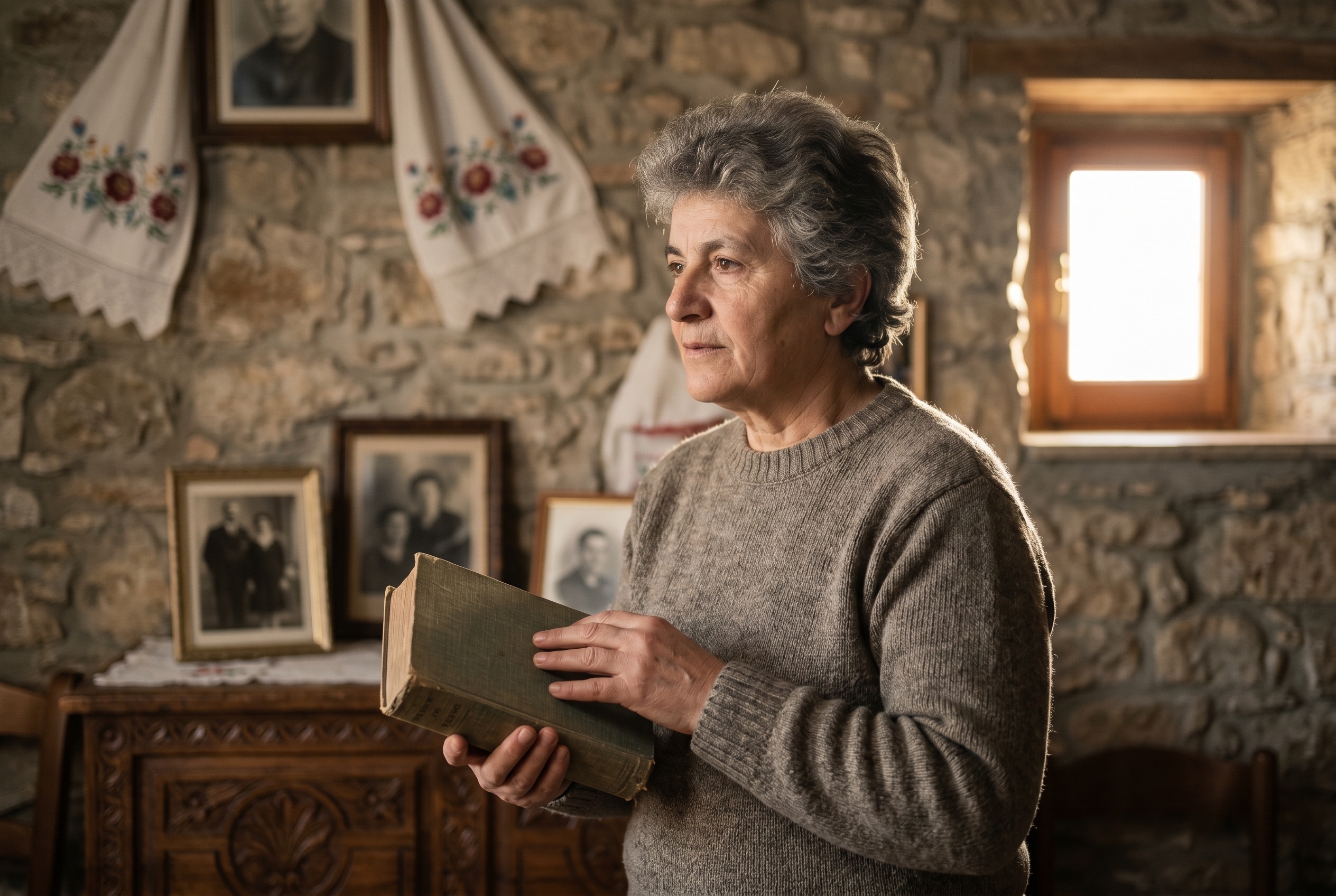
Your instructors
Arbreshe tutors for private lessons & classes
Arbëresh is a small specialty by design. Endangered languages don't have large teacher pools, and we'd rather match you carefully to one of a few qualified tutors than scale-recruit. Several of our Arbëresh tutors come from specific Calabrian or Sicilian villages and bring direct family connection to the dialect they teach; others are credentialed Italo-Albanian academics with linguistic or literary backgrounds. Every tutor below was met and vetted by us in person or via thorough video interview. No marketplace. No automated profile-creation.
Filter by location, age, or price. Then book a 30-minute free trial.
Below are the Strommen tutors who teach Arbëresh. Photos, ratings, and rates are real. Click any card to read their bio and book a free 30-minute trial.
I want to learn…
Every tutor, personally met. — founder-vetted since 2006, in Los Angeles and online worldwide.
Get a personalized plan
Pick your language — a language advisor will match you with the right tutor and map out your path.

Law Master's degree
Italian Language Teacher with Law Degree
Personally vetted · Strommen’s note
Law degree behind her, Monica teaches Italian, Arbreshe dialect included, with a deliberately solid, structured approach.
Specialties
Law Master's degree
Italian Language Teacher with Law Degree
Specialties
Personally vetted · Strommen’s note
Law degree behind her, Monica teaches Italian, Arbreshe dialect included, with a deliberately solid, structured approach.

EDUCATION * MA in Global Economy, Cooperation, and Innovation | University of Calabria | 110/110 Cum Laude * MA in Sociology and Social Research | University of Calabria (Ongoing) * University Master (Level 1) in Labor Consulting & Corporate Law | Pega...
Native italian coach high level : italian language, business, sociology and cultural mastery
Personally vetted · Strommen’s note
A licensed labor consultant with degrees in economics and law, Maria teaches high-level business Italian plus four rare southern dialects.
Specialties
Also speaks: English
EDUCATION * MA in Global Economy, Cooperation, and Innovation | University of Calabria | 110/110 Cum Laude * MA in Sociology and Social Research | University of Calabria (Ongoing) * University Master (Level 1) in Labor Consulting & Corporate Law | Pega...
Native italian coach high level : italian language, business, sociology and cultural mastery
Specialties
I also speak: English
Personally vetted · Strommen’s note
A licensed labor consultant with degrees in economics and law, Maria teaches high-level business Italian plus four rare southern dialects.

Vatra — heritage language & community
5 things every heritage learner should know about Arbëresh
These aren't textbook curiosities — they're the cultural reference points every Arbëresh tutor returns to when working with a heritage learner. Screenshot to share with your family.
-
01
Gjaku ynë i shprishur
"Our scattered blood." The 19th-century motif of the Italo-Albanian diaspora, popularized through the work of Girolamo De Rada and still used by Arbëresh writers and community organizations today. If you ever see this phrase on a community publication, monument, or church, it's signalling Italo-Albanian identity specifically.
e.g. Gjaku ynë i shprishur, popull Arbëresh.
-
02
Moj e bukura Moré
"O beautiful Morea." The most famous Arbëresh folk lament, sung across the villages in many variants, about the lost Albanian homeland (Morea is the historical name for the Peloponnese, on the migration route west). For Italo-Albanian communities it functions as a kind of shared anthem of memory. Many Arbëresh lessons include working through the lyrics.
e.g. Moj e bukura Moré, qysh të lashë e më nuk të pashë.
-
03
Skënderbeu
Gjergj Kastrioti Skënderbeu, known as Skanderbeg, the 15th-century Albanian noble whose resistance to Ottoman conquest, and whose death in 1468, sparked the migration that founded the Arbëresh villages. Every Italo-Albanian town has some monument, square, church icon, or street named for him; understanding the figure is foundational cultural literacy for the community.
e.g. Skënderbeu është ati i kombit arbëresh.
-
04
Ritti bizantin
The Byzantine rite. Most Arbëreshë are Italo-Albanian Catholics following the Byzantine Greek liturgical tradition while remaining in full communion with Rome: icons rather than statues, sung liturgy, ornate vestments, married parish priests in many cases, the eastern calendar of feast days. The Eparchies of Lungro (Calabria) and Piana degli Albanesi (Sicily) anchor the church.
e.g. Famiglia jonë ndjek ritin bizantin.
-
05
Hora e Arbëreshëvet
The Arbëresh name for Piana degli Albanesi, the cultural and ecclesiastical capital of Sicilian Italo-Albania and seat of the Sicilian eparchy. Knowing the Arbëresh name for your family village (and the surrounding ones) is part of recovering the community map: Lungro is Ungra, San Demetrio Corone is Shën Mitri, Civita is Çifti, and so on.
e.g. Familja ime është nga Hora e Arbëreshëvet.
About Arbreshe
Arbëresh, the language of Italo-Albania
Arbëresh is the heritage language of the Arbëreshë, the Italo-Albanian communities of southern Italy whose ancestors crossed the Adriatic between roughly 1448 and the late 1700s, settling in mountain villages across Calabria, Sicily, Apulia, Basilicata, Molise, Abruzzo, and Campania. The largest waves followed the death of Gjergj Kastrioti, known to history as Skanderbeg, the Albanian noble who led a quarter-century of resistance to Ottoman conquest between 1444 and 1468. After Skanderbeg's death, large numbers of Albanian families fled west into Italian-held territory, founded their own villages, kept their own Byzantine Christian rite, and held onto a southern Tosk Albanian that has, in many respects, stayed closer to its 15th-century form than the modern Albanian (gjuha shqipe) spoken in Tirana today. UNESCO classifies Arbëresh as a definitely endangered language. Italian Law 482 of 1999, which recognizes Italy's twelve historic linguistic minorities, gives Arbëresh co-official status in the municipalities where it is still spoken.
The language is its own thing, not an Italian dialect. Arbëresh is a southern Tosk Albanian variant that diverged from mainland Albanian during the long centuries when the two communities had almost no contact. Modern Albanian has gone through 20th-century standardization (Tirana standard, established in 1972, drew heavily on southern Tosk varieties) and has absorbed Turkish, Slavic, Greek, and modern international vocabulary that Arbëresh never encountered. Arbëresh in turn absorbed Italian and the surrounding regional languages of southern Italy (Calabrese in the Calabrian villages, Siciliano in the Sicilian ones, Pugliese in the Apulian), so the lexicon carries a heavy Romance overlay grafted onto an Albanian grammatical core. Several archaic Albanian forms that have been lost in standard Albanian have been preserved in Arbëresh, including specific dative-case constructions and older subjunctive patterns. Linguists working on the history of Albanian come to Italo-Albania for exactly this reason: it offers a window onto the language as it was before mainland standardization.
Geographically the surviving Arbëresh-speaking villages cluster across roughly fifty municipalities. In Calabria, the densest concentration is in Cosenza province, where towns like Lungro (Arbëresh: Ungra), San Demetrio Corone (Shën Mitri), Civita (Çifti), and Frascineto preserve daily community use. In Sicily, the historic center is Piana degli Albanesi (Hora e Arbëreshëvet) in the Palermo hinterland, along with Contessa Entellina and Mezzojuso. Smaller pockets persist in Molise (Portocannone, Ururi), Basilicata (San Costantino Albanese, San Paolo Albanese), Apulia (Casalvecchio di Puglia, Chieuti), and a few isolated villages in Abruzzo and Campania. Across all of these, the rough estimate is around 100,000 people with some active connection to the language, ranging from full daily speakers to passive heritage understanding.
The Byzantine Catholic dimension is inseparable from the language. Most Arbëreshë belong to the Italo-Albanian Catholic Church, an Eastern Catholic church in full communion with Rome but following the Byzantine Greek rite: icons, ornate vestments, sung liturgy, married priests in many parishes, the eastern liturgical calendar. The church has two eparchies: the Eparchy of Lungro for the Calabrian and continental Italian Arbëreshë, and the Eparchy of Piana degli Albanesi for the Sicilian Arbëreshë, plus the Italo-Albanian monastery at Grottaferrata outside Rome. Liturgical Arbëresh sits alongside Greek and a small amount of Old Church Slavonic in the sung liturgy. For heritage learners with religious context in their family, lessons usually weave in liturgical readings and the cultural calendar of feast days, processions, and the Easter celebrations that are central to Italo-Albanian community life.
Arbëresh literature is the other anchor of the language. The 18th and 19th centuries produced a small but serious literary tradition. Jul Variboba, a Calabrian Italo-Albanian priest writing in the mid-1700s, produced Gjella e Shën Mëris Virgjër (the Life of the Virgin Mary), considered the first substantial published work of Albanian-language poetry from any community. Girolamo De Rada, born in San Demetrio Corone in 1814, became the central figure of 19th-century Arbëresh literature and a leading voice of the broader Albanian national-revival movement of the period. His Canti di Milosao remains a foundational text. The phrase gjaku ynë i shprishur, "our scattered blood," became the motif for the entire Italo-Albanian diaspora consciousness across the 19th and 20th centuries. The folk song Moj e bukura Moré ("O beautiful Morea"), a lament for the lost Albanian homeland sung in many variants across the villages, is the closest thing the community has to a shared anthem. For heritage learners, working through De Rada and Variboba in the original is often a meaningful part of the curriculum, alongside contemporary Arbëresh writers and the Italian-language scholarship of the Calabrian and Palermo university departments.
Who actually studies Arbëresh with us. Italo-Albanian heritage learners are the largest group, often second- or third-generation Italian-Americans tracing family back to specific Calabrian or Sicilian villages and wanting to reclaim something their grandparents spoke. Comparative linguists working on the history of Albanian or on contact phenomena between Albanian and southern Romance varieties make up a steady second strand. Anthropologists, ethnomusicologists, and folklore scholars doing fieldwork in Italo-Albanian communities use lessons to build enough working competence to interview elders and read primary sources. A smaller group: Albanian-language students who have studied modern Tirana standard and want to see Tosk in its older form, and theology students drawn to the Byzantine Catholic tradition. Strommen has built its Arbëresh roster around this profile, with several tutors who themselves come from Calabrian or Sicilian Arbëresh families. Lessons run alongside our regional Italian work, and many students take Arbëresh together with Calabrese or Siciliano coaching when the family village is in a region where the older generation spoke both languages daily.
A few honest tutor observations on what surprises heritage learners coming back to Arbëresh. The mutual intelligibility with modern Albanian is real but uneven. A Tirana-standard speaker and a Lungro native will understand each other on most everyday topics, but specific vocabulary diverges (Arbëresh has Italianisms where modern Albanian has Turkisms or modern coinings), and the Arbëresh phonology preserves features the modern standard has lost. Heritage learners arriving with some family Arbëresh often have what linguists call a "frozen" lexicon: the words their grandparents used at home, often kitchen and family vocabulary, sometimes religious vocabulary, without the broader register a speaker raised in the village would have. Filling in the rest of the language around that frozen core is one of the most common lesson trajectories. Village-to-village variation is also genuine. Calabrian Arbëresh and Sicilian Arbëresh are not identical, and even within Calabria, Lungro Arbëresh and Civita Arbëresh have distinct features. Tutors calibrate to the specific village or region you are connected to. And one more thing: written Arbëresh has historically used several different orthographic conventions, some borrowing from Italian spelling, some adapting modern Albanian. We default to the modern Albanian orthography used in most contemporary Arbëresh publishing, while flagging older spellings when reading historical texts.
Between lessons, immersion takes some hunting. The Italo-Albanian Catholic eparchies publish in Arbëresh (the journals Lajme from Lungro and Biesa from Piana, among others). The University of Calabria and the University of Palermo run active Albanian-studies programs producing contemporary scholarship in Italian. The standard reference dictionary is Emanuele Giordano's Fjalor i Arbëreshvet t'Italisë (1963, revised editions since), which any serious learner should own. Recorded Arbëresh is harder to find than recorded modern Albanian, but Italian state broadcaster RAI Calabria and regional Sicilian broadcasters have produced documentary footage on the villages, and the Italo-Albanian feast-day liturgies have been recorded extensively for Byzantine-rite study. Several villages run summer schools (the Lungro and Piana programs are the best known) and serve as immersion opportunities for heritage learners willing to travel. For a broader sense of Italy's minority-language landscape, our guide to Italy's regional languages and dialects places Arbëresh alongside the dozen-plus other historic linguistic minorities recognized under Law 482.
The Strommen Arbëresh roster is small by design. Arbëresh is endangered, the global pool of qualified teachers is in the low hundreds at most, and we vet every tutor personally. They are heritage native speakers from the Calabrian or Sicilian villages, Italo-Albanian academics with linguistic or literary credentials, and a smaller number of trained language teachers who have done extended fieldwork or family research in the Arbëresh communities. Each tutor's bio specifies their home village or regional connection, dialect variant, and which student profile they fit best (heritage learner, comparative linguist, anthropology fieldworker, theological student). Pricing reflects experience and the rarity of qualified teachers. Lessons are one-on-one, your tutor plans the curriculum around your specific goals and connection to the language, and the trial is free. Strommen also teaches the surrounding regional Italian varieties (Calabrese, Siciliano, and the rest of the Italian dialect family) through our Italian dialect coach roster, which pairs naturally with Arbëresh work for heritage learners whose family villages were bilingual. For broader Italian context, see also our Italian language program and the full tutor directory. Bring your family story, your village name, your inherited words. Let's see what we can rebuild.
What you'll cover
Lessons & classes tailored to Arbreshe
Arbëresh foundations for heritage learners
Phonology, basic grammar, the noun and verb systems, the dative-case retention and other archaic Tosk features. Calibration to either Calabrian or Sicilian Arbëresh from the start, since the two are not identical. Modern Albanian orthography is taught as the working written standard, with older spellings flagged when reading historical texts.
Vocabulary recovery around an inherited core
Heritage learners often arrive with a "frozen" lexicon, the kitchen, family, and church words their grandparents used, without the rest of the language around it. Lessons work outward from that inherited core, filling in everyday vocabulary, register variation, and the Italian/Calabrese/Siciliano contact layer that defines the lived Arbëresh lexicon.
Literary and liturgical Arbëresh
Reading Jul Variboba, Girolamo De Rada, and contemporary Arbëresh poets in the original. Byzantine-rite liturgical texts for students with religious or theological interest. Folk-song lyrics, especially the corpus around Moj e bukura Moré. Bridges naturally to comparative work with modern Albanian and with the medieval Albanian textual tradition.
Village-specific dialect and family-history work
For learners with a known family village, lessons can target the specific Arbëresh variant of that town (Lungro vs Civita vs Frascineto vs Piana) and integrate genealogical, photographic, or oral-history material the family already has. Several of our tutors come from these villages themselves and can identify regional features in your inherited speech.
FAQ
About Arbreshe lessons & classes
Is Arbëresh a dialect of Italian?
No. Arbëresh is a southern Tosk variant of Albanian, brought to southern Italy by Albanian refugees in the 15th to 18th centuries. It has absorbed heavy Italian and regional-Italian vocabulary, and it is co-official with Italian in many municipalities under Italy's Law 482 of 1999, but grammatically and historically it belongs to the Albanian branch of Indo-European, not the Romance branch. The page lives under our Italian category because of where Arbëresh is spoken, not because of what it is linguistically.
How different is Arbëresh from modern Albanian?
They are mutually intelligible at a working level, especially for southern Tosk speakers. Tirana-standard Albanian and Arbëresh diverge in lexicon (Arbëresh has Italianisms where modern Albanian has Turkisms or 20th-century coinings), in phonology (Arbëresh preserves some older sound patterns), and in a few grammatical features (certain archaic dative and subjunctive constructions). A Tirana speaker and a Lungro speaker can converse on everyday topics; reading 19th-century Arbëresh literature is a different exercise.
Where is Arbëresh still spoken?
Roughly fifty municipalities across Calabria, Sicily, Apulia, Basilicata, Molise, Abruzzo, and Campania. The densest active-use clusters are in Cosenza province in Calabria (Lungro, San Demetrio Corone, Civita, Frascineto, Acquaformosa, and others) and in the Palermo hinterland in Sicily (Piana degli Albanesi, Contessa Entellina, Mezzojuso). The total speaker estimate is around 100,000 with some degree of competence, of whom a much smaller number use Arbëresh daily as a primary language.
I have Italo-Albanian family roots but never spoke any Arbëresh. Can I still learn?
Yes, and this is the most common student profile we see. Most heritage learners arrive with some inherited words from grandparents, a family village name, perhaps a wedding or funeral phrase, and otherwise no working Arbëresh. The starting point is the same as for any new language, but the curriculum can be calibrated to your specific village dialect, and the family vocabulary you already carry often turns out to be a useful entry point once the tutor identifies which Arbëresh variant it comes from.
Does learning Arbëresh help me with modern Albanian?
Yes, substantially. Arbëresh is close enough to standard Albanian that a competent Arbëresh speaker can follow modern Albanian conversation and reading with some adjustment, and vice versa. Some students do Arbëresh first for heritage reasons and then add modern Albanian later for travel or business; others learn modern Albanian and pick up Arbëresh as a comparative exercise. The two complement each other naturally.
What is the Italo-Albanian Catholic Church and how does it relate to the language?
It is an Eastern Catholic church, in full communion with Rome, that follows the Byzantine Greek liturgical rite. Most Arbëreshë belong to it. Liturgy is sung in a mix of Greek, Arbëresh, and a small amount of Old Church Slavonic, depending on the parish. The two eparchies (Lungro for Calabria and continental Italy, Piana degli Albanesi for Sicily) plus the Italo-Albanian monastery at Grottaferrata are the main ecclesiastical centers. For heritage learners with religious context in their family, the liturgy is often woven into lessons alongside secular reading.
Are your tutors based in Italy or in the US?
Both. Several of our Arbëresh tutors live in the Italo-Albanian villages of Calabria and Sicily and teach via video. A smaller number are Italo-Albanian Americans or Canadians with credentialed academic or community backgrounds, available for in-person lessons in their home cities and via video elsewhere. Time-zone-wise, Italy-based tutors teach late afternoon Italian hours that map to morning US hours; US-based tutors offer evening flexibility.
What does the trial include?
30 minutes, free, with the tutor you select. If you know your family village, tell us; the tutor will calibrate to the right Arbëresh variant from the first session. Bring any inherited words, family documents, photos with captions, or recordings if you have them; they often anchor the work. The tutor will propose a study plan and you decide whether to continue. Most Arbëresh students settle into a weekly cadence with their trial tutor.
Ready for Arbreshe lessons or classes?
Book a free 30-minute trial with one of our personally vetted tutors. Private lessons or small-group classes — your choice.