



Personally vetted instructors
Guatemalan Spanish tutors, lessons & classes
Qué onda, vos The casual way Guatemala actually says "hi."
Personally vetted Guatemalan Spanish tutors. Lessons that respect the way Spanish is actually spoken in Guatemala City, Antigua, Quetzaltenango, the Mayan highlands, and the Guatemalan-American communities of Los Angeles, Houston, and New York.
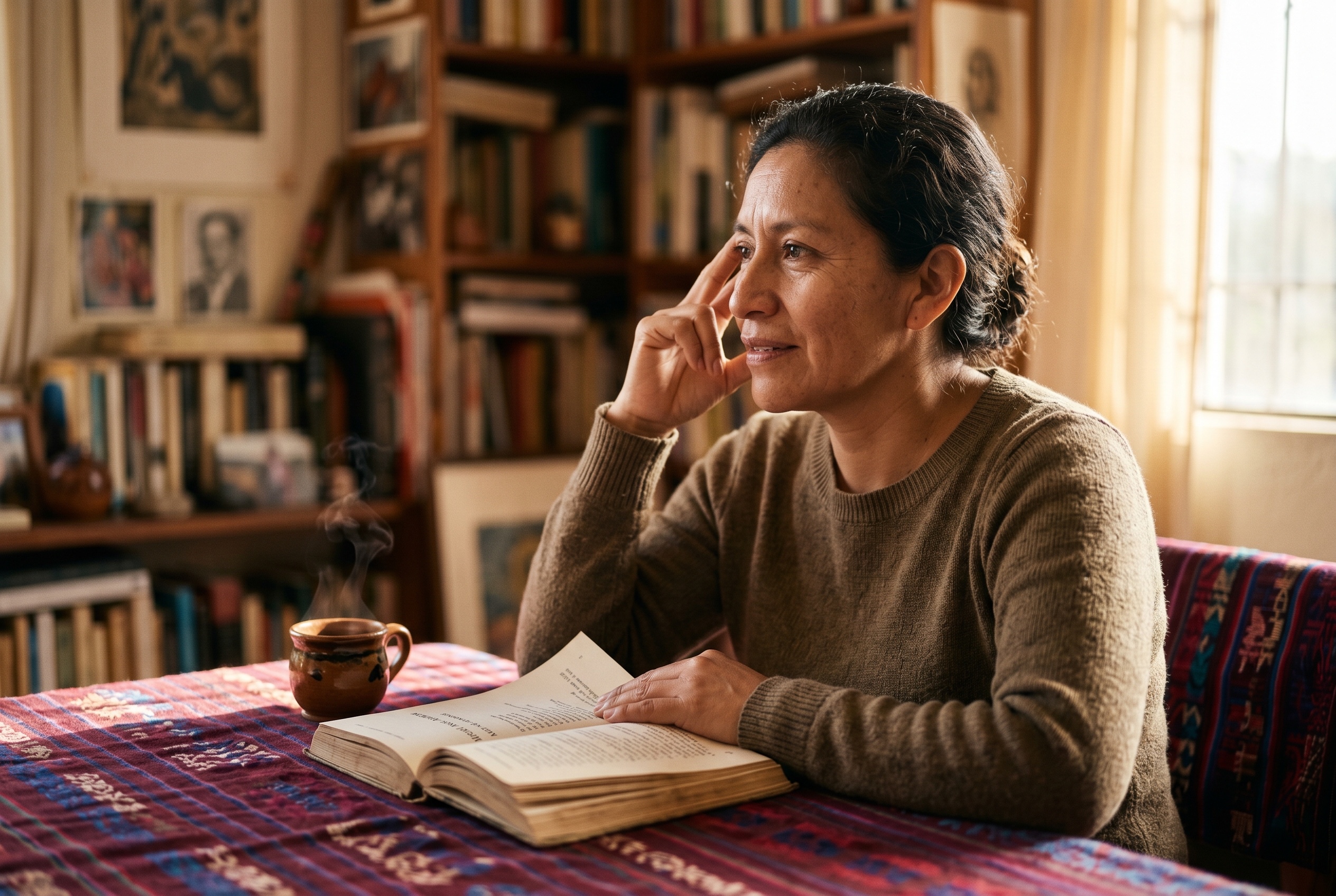
Your instructors
Guatemalan Spanish tutors for private lessons & classes
Strommen has been teaching Spanish in this city since 2006. Los Angeles has the largest Guatemalan community outside Guatemala itself, concentrated in Pico-Union and Westlake, and Guatemalan Spanish demand at Strommen has come from heritage students reconnecting with family, adoptive parents preparing for trips to their child's birth country, NGO and public-health workers, and a steady stream of travelers heading to Antigua, Tikal, and Lake Atitlán. Every tutor below was met and vetted by us in person or via thorough video interview. No marketplace. No automated profile-creation. Real teachers with real backgrounds, which you can read about in their bios.
Filter by location, age, or price. Then book a 30-minute free trial.
Below are the Strommen tutors who specialize in Guatemalan Spanish. Photos, ratings, and rates are real. Click any card to read their bio and book a free 30-minute trial.
I want to learn…
Every tutor, personally met. — founder-vetted since 2006, in Los Angeles and online worldwide.
Get a personalized plan
Pick your language — a language advisor will match you with the right tutor and map out your path.

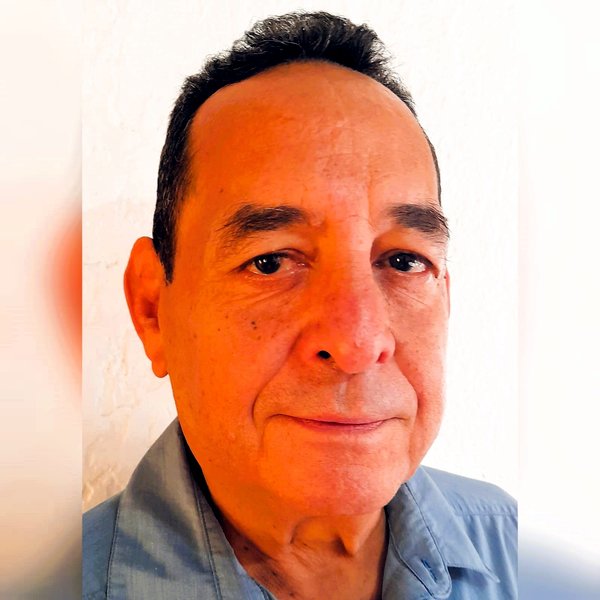
Bachelor in Commerce and Business Administration
Spanish teacher online
Personally vetted · Strommen’s note
Manuel has taught Spanish for thirty-four years, with regional range covering Honduras, El Salvador, Guatemala, Nicaragua, Costa Rica, and Panama specifically.
Specialties
Bachelor in Commerce and Business Administration
Spanish teacher online
Specialties
Personally vetted · Strommen’s note
Manuel has taught Spanish for thirty-four years, with regional range covering Honduras, El Salvador, Guatemala, Nicaragua, Costa Rica, and Panama specifically.

Qué onda vos — culture & slang
5 ways to sound like you actually speak Guatemalan Spanish
These are the everyday words and habits that mark a speaker as someone who has spent time in Guatemala, not just studied Spanish. Screenshot the infographic, then book a tutor for the rest.
-
01
Qué onda, vos
The standard Guatemalan casual greeting between people on vos terms. "What's up?" Pairs the universally Spanish qué onda with the country's Central American voseo. Buenos días covers the formal version. Used between friends, family, and anyone you'd address informally. Almost never with strangers in a professional setting.
e.g. Qué onda, vos, ¿cómo te fue en el trabajo?
-
02
Chapín / chapina
The Guatemalan self-identity word. Used the way Hondurans use catracho or Nicaraguans use pinolero. Origin is contested: possibly from colonial-era footwear, possibly from a Quichean root. Worn with pride. The most identifiably Guatemalan term in the lexicon.
e.g. Soy chapín de Quetzaltenango, mero altiplano.
-
03
Patojo / ishto
Two Guatemalan words for kid or child. Patojo is the lowland-and-capital word, used universally. Ishto comes from a K'iche' Mayan root and is more common in highland speech. Both are heard constantly. Using both shows you've spent time in different parts of the country.
e.g. El patojo está jugando con su hermana en el patio.
-
04
Pepián / boquitas
Two essential Guatemalan food words. Pepián is the national dish, a thick spiced stew with toasted seeds and chiles, traceable to pre-Columbian Mayan cuisine. Boquitas are the universal Guatemalan word for appetizers, what other Spanish-speaking countries might call tapas or antojitos.
e.g. Para la cena, pepián con boquitas antes.
-
05
Vos sos / vení / mirá
Standard Guatemalan informal voseo conjugation. Replaces tú across nearly all informal contexts. Vos sos for "you are." Commands stress the final syllable: vení (come), mirá (look), decí (say). Using tú in Guatemala marks you immediately as a non-native speaker.
e.g. Vení, mirá lo que te traje, vos.
About Guatemalan Spanish
More than a Mayan-inflected accent
Guatemalan Spanish sits at one of the most linguistically dense intersections in the Spanish-speaking world. Twenty-one Mayan languages are still actively spoken in the country, including K'iche', Kaqchikel, Mam, Q'eqchi', and Tz'utujil, with around 40 percent of the population identifying as indigenous. The Spanish that grew up next to those languages carries a substrate vocabulary, a particular rhythm, and a cultural fabric that no other Central American Spanish has in the same density. Add to that a voseo system in informal speech, a conservative phonology that holds final s where its neighbors aspirate, and the historical anchor of Antigua as a colonial linguistic center, and you have a dialect with more depth than its size suggests.
The country has around 17 million speakers in Guatemala, plus roughly 1.5 million Guatemalan-Americans concentrated in Los Angeles (the largest Guatemalan community outside Guatemala), Houston, New York, and Washington DC. Among Central American Spanish dialects, Guatemalan is the most conservative phonologically and the richest in Mayan substrate vocabulary. Mutually intelligible with every other Spanish variety, of course, but a Guatemalan speaker is identifiable to a trained ear within a sentence by the combination of clear final s, the gentle highland rhythm, and the substrate words that signal where the speaker grew up.
Voseo dominates informal speech across Guatemala, with the Central American conjugation pattern: vos sos, vos tenés, vos querés, vos sabés. Commands stress the final syllable: vení, decí, mirá. Unlike Costa Rica, Guatemala does not use ustedeo widely, so the vos/usted divide tracks more closely with informal/formal register the way it does in Nicaragua, Honduras, and El Salvador. Tú is recognized from media but used almost nowhere in real speech. Bilingual indigenous communities sometimes carry distinctive register patterns: in some Mayan-speaking households, Spanish usted serves where indigenous-language honorific forms would have served, producing usage patterns that classroom Spanish does not predict. Lessons that ignore the indigenous-Spanish bilingual reality miss part of what makes Guatemalan Spanish what it is.
The Mayan substrate is where Guatemalan vocabulary diverges most visibly. Some words have spread to general Latin American Spanish (aguacate, chocolate, tomate all came through Spanish from Nahuatl or related Mesoamerican sources). Others remain distinctively Guatemalan. Ishto means kid, from a K'iche' root, used widely in highland speech. Patojo also means kid or child, the lowland-and-capital equivalent. Shulo means dirty, from a Mayan root, appearing in casual speech across the country. Cuate means friend or buddy, shared with Mexican Spanish but with Guatemalan-specific register. Chapín is the Guatemalan self-referential national identity word, comparable to Honduran catracho or Nicaraguan pinolero; the origin traces to the colonial-era footwear or possibly to the Quichean root chapinaki, depending which etymologist you ask. A la gran works as an all-purpose exclamation. Boquitas are appetizers or small plates, the universal word for what other countries might call tapas or antojitos. Our 1,000 most common Spanish words list covers the foundation; Guatemalan vocabulary sits on top of that.
Food vocabulary in Guatemala carries cultural weight that translation often misses. Pepián is the national dish, a thick spiced stew with toasted seeds and chiles that traces directly to pre-Columbian Mayan cuisine and remains the central dish at family celebrations. Kak'ik is the Q'eqchi' Mayan turkey soup specific to the Alta Verapaz region. Fiambre appears on November 1 for All Saints' Day, a single elaborate cold dish containing dozens of ingredients, with regional variations that families argue about. Atol in various forms (de elote, de plátano, blanco) carries Mayan history in every preparation. Learners who treat Guatemalan food vocabulary as just nouns miss the cultural calendar attached to each one.
Antigua, Tikal, and Lake Atitlán are the touristic anchors that shape one slice of how learners encounter Guatemalan Spanish. Antigua functions as a Spanish-immersion capital, with dozens of language schools running short-term programs for North American and European students. The Spanish you hear at an Antigua Spanish school is calibrated for outsiders and tends to be more conservative and slower than what you hear in Guatemala City or in indigenous-majority highland towns. Tikal and the Petén region pull tourist Spanish toward archaeological vocabulary. Lake Atitlán, ringed by villages where K'iche', Kaqchikel, and Tz'utujil are still daily languages, exposes learners to Spanish-Mayan bilingualism in its everyday form. None of these contexts produces "complete" Guatemalan Spanish on its own; the dialect lives in the conversation between them.
Migration history shapes Guatemalan-American Spanish in Los Angeles in distinctive ways. The largest wave of Guatemalan immigration to the US came during and after the civil war that lasted from 1960 to 1996, with refugees concentrating heavily in the Pico-Union and Westlake neighborhoods of Los Angeles, plus smaller communities in Houston, Postville (Iowa), and parts of the East Coast. LA's Guatemalan community has produced its own Spanish register, often code-switching with English in second-generation speakers and carrying highland Mayan-Spanish bilingualism from first-generation parents. Heritage-speaker Spanish from Guatemalan-American backgrounds is one of the most common starting points for these lessons; the curriculum looks different from from-scratch beginner Spanish.
The Strommen Guatemalan Spanish roster includes native speakers from Guatemala City, Antigua, the western highlands around Quetzaltenango, and longtime US-based Guatemalan-Americans. Each tutor's bio specifies background, regional origin, and which student profiles they fit best. If your goal involves Mayan-Spanish bilingualism or the highland indigenous communities specifically, we'll route you to the tutor with the most relevant range. For broader Central American context, our Honduran Spanish, Salvadoran Spanish, and Nicaraguan Spanish specialty pages cover the neighbors.
A few honest tutor observations on what trips up learners with Guatemalan Spanish. Underestimating the indigenous-language presence is the most common one. Learners who treat Guatemala as a monolingual Spanish country miss the bilingual reality and the substrate vocabulary that shapes everyday speech, especially outside the capital. Voseo retraining for students coming from Mexican Spanish is the next universal hurdle. The conservative phonology surprises learners coming from Caribbean Spanish; the clear final s in Guatemala feels almost foreign after months of Cuban or Dominican Spanish immersion. Treating patojo and ishto as interchangeable misses the highland/lowland register distinction. And there is the question of which Mayan substrate words a non-Mayan-speaking learner should adopt actively; the answer depends on context and is worth talking through with a tutor before deploying words you do not yet have a feel for.
Between lessons, immerse with Guatemalan-made media. The Nobel-winning literary canon runs through Miguel Ángel Asturias's Hombres de maíz and El Señor Presidente, plus Rigoberta Menchú's testimonial Me llamo Rigoberta Menchú y así me nació la conciencia for the indigenous voice. Contemporary fiction includes Eduardo Halfon and Rodrigo Rey Rosa. Films from Jayro Bustamante (Ixcanul, La Llorona, Temblores) won international recognition and present contemporary Guatemalan Spanish in its full indigenous-and-urban range. Ixcanul in particular includes substantial Kaqchikel-Maya dialogue alongside Spanish, showing the bilingual reality directly. Music from Ricardo Arjona reaches a continent-wide audience; for Mayan-rooted music, look to Sara Curruchich (Kaqchikel) and the broader contemporary indigenous music scene.
Lessons calibrate to your goal. Travel Spanish for an Antigua or Tikal trip is one curriculum, heritage-speaker reconnection with grandparents in Quetzaltenango is another, NGO and public-health Spanish for highland fieldwork is a third, and adoption-related Spanish for families connecting with their child's birth country is a fourth distinctive starting point that comes up regularly. Existing Spanish counts. Most students arrive with school, family, or travel Spanish; lessons rebuild voseo, drill the conservative phonology, and load up Guatemalan-specific vocabulary including selected Mayan substrate words. Each lesson is one-on-one, the trial is free. For a head-start before lessons begin, our 5 most common embarrassing mistakes in Spanish covers errors learners make across all dialects, and the broader Spanish course page shows the family of related programs. Or just browse the full tutor list and book a trial.
What you'll cover
Lessons & classes tailored to Guatemalan Spanish
Central American voseo and the vos/usted divide
Vos rather than tú for informal second-person singular, with the Central American conjugation pattern: vos sos, vos tenés, vos querés, vos sabés. Commands stress the final syllable: vení, decí, mirá. Unlike Costa Rica, Guatemala does not use ustedeo widely; the vos/usted divide tracks informal/formal register cleanly. Lessons drill voseo across present, command, and subjunctive forms.
Mayan substrate vocabulary
Twenty-one Mayan languages are still actively spoken in Guatemala, and the Spanish that grew up next to them carries a substrate vocabulary unique to the country. Ishto, shulo, patojo, food words like kak'ik and atol, plant and place names from K'iche', Kaqchikel, and Q'eqchi'. Lessons cover the substrate vocabulary in cultural context, including which words a non-Mayan-speaking learner can comfortably use and which carry weight that requires more cultural fluency.
Highland vs lowland register and Antigua immersion-school Spanish
Guatemalan Spanish varies by region. Guatemala City and lowland areas speak one register; the western highlands around Quetzaltenango speak another, with more Mayan substrate and slower rhythm. Antigua, with its dense network of Spanish-immersion schools, has produced its own learner-oriented Spanish that is calibrated for outsiders. Lessons cover whichever register your goal requires.
Conservative phonology and clear final s
Guatemalan Spanish leans conservative phonologically, with clear final s in most contexts (unlike Caribbean Spanish, which aspirates aggressively). The pace is moderate, the rhythm gentle, the intonation distinct from Mexican or Caribbean varieties. Lessons include ear-training drills with audio from across the country (highland, lowland, capital) so you learn to parse the regional differences as well as produce the standard register.
FAQ
About Guatemalan Spanish lessons & classes
How is Guatemalan Spanish different from Mexican or other Central American varieties?
Guatemalan Spanish leans more conservative phonologically than Mexican (clearer final s, no aspiration), uses voseo where Mexican uses tú, and carries a deeper Mayan substrate vocabulary than any other Central American variety. Among Central American neighbors: Honduran centers on catracho and baleada, Nicaraguan on dale pues and idiay, Salvadoran on vaya pues and pupusas. Guatemalan centers on chapín, pepián, the patojo-ishto split, and Mayan-language-influenced highland speech.
What about the Mayan languages? Should I learn one of them too?
Depends on the goal. If you're traveling to Antigua, Tikal, or Guatemala City for short trips, Spanish covers everything you need. If your goal involves long-term work in highland Mayan-speaking communities (NGO fieldwork, public health, missionary work, adoption-related travel), some familiarity with the relevant Mayan language (K'iche' in much of the western highlands, Kaqchikel in Sololá and surrounding areas, Q'eqchi' in Alta Verapaz) opens doors that Spanish alone does not. We can recommend Mayan-language resources separately; lessons themselves cover Guatemalan Spanish, including the substrate vocabulary and bilingual register patterns.
I'm an adoptive parent preparing for a trip to my child's birth country. What kind of Spanish do I need?
Adoption-related Spanish for Guatemala is one of our regular starting points. Lessons calibrate to the specific situations you're preparing for: meetings with social services, family-reunion conversations if applicable, basic medical and educational vocabulary, and the cultural context that makes the trip meaningful for both you and your child. We can match you to a tutor with experience in this specific use case if your tutor of choice doesn't have it themselves.
Is Antigua Spanish "real" Guatemalan Spanish?
It's calibrated for outsiders. Antigua has dozens of Spanish-immersion schools running short-term programs for North American and European students, and the Spanish you hear from teachers there is slower, clearer, and more conservative than what Guatemalans use among themselves in Guatemala City or in highland indigenous-majority towns. That makes Antigua a great starting point but a partial picture. Lessons supplement immersion-school experience with the full register range you'll encounter in real Guatemalan contexts.
Are your tutors native Guatemalans?
Most are. Our roster includes native speakers from Guatemala City, Antigua, the western highlands around Quetzaltenango, and longtime US-based Guatemalan-Americans, particularly from the large Los Angeles community in Pico-Union and Westlake. Each tutor's bio specifies regional background and which student profiles fit best.
Can I take lessons online or only in person?
Both. Most of our Guatemalan Spanish tutors teach online via Zoom or Jitsi, available globally. Some teach in person around Los Angeles, where the Guatemalan-American community is the largest in the United States. The booking widget on each tutor's profile shows their available formats and locations.
I'm a heritage speaker. My family is from Guatemala. Where do I start?
Heritage-speaker Spanish from Guatemalan-American backgrounds is one of the most common starting points for these lessons. You arrive with passive comprehension, embedded vocabulary, pronunciation instincts, and a specific reason to be here. The first lesson maps what you already have, identifies gaps (often: voseo conjugation, written Spanish, formal register, Mayan substrate vocabulary that the home didn't transmit), and builds from there. Your existing Spanish is a head start.
Ready for Guatemalan Spanish lessons or classes?
Book a free 30-minute trial with one of our personally vetted tutors. Private lessons or small-group classes — your choice.