



Personally vetted instructors
El Salvadorian Spanish tutors, lessons & classes
Pues qué onda vos The casual way El Salvador actually says "hi."
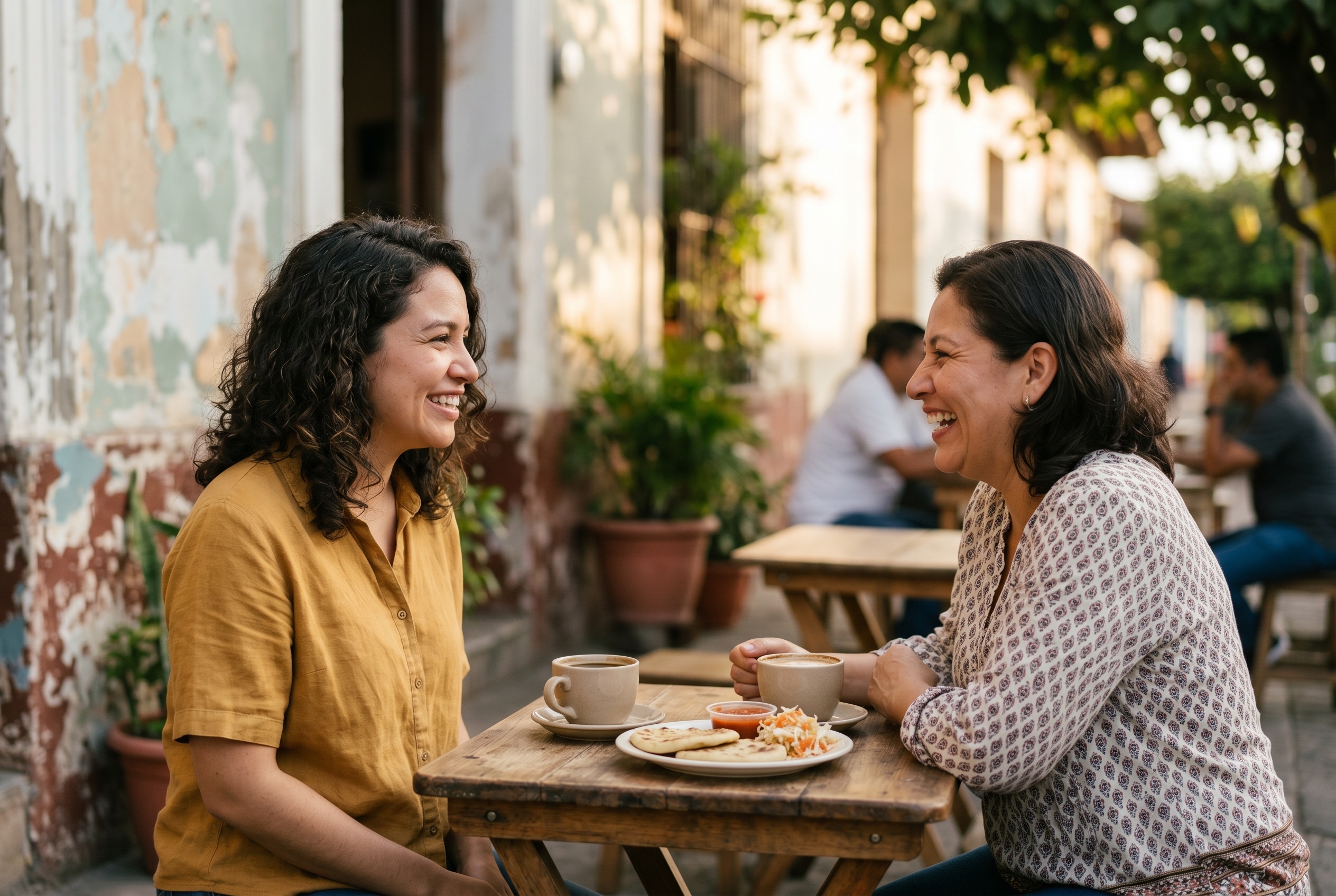
Personally vetted Salvadoran Spanish tutors. Lessons that respect the way Spanish is actually spoken in San Salvador, Santa Ana, San Miguel, and the largest Salvadoran community outside El Salvador itself, right here in Los Angeles.
Your instructors
El Salvadorian Spanish tutors for private lessons & classes
Strommen has been teaching Spanish in Los Angeles since 2006, and Salvadoran Spanish is one of our most consistent demand sources. The LA Salvadoran community is the second-largest in the world after San Salvador itself, and our Salvadoran Spanish students include heritage speakers reconnecting with family, non-Salvadoran partners of Salvadoran-American family members, community-facing professionals (teachers, nurses, social workers, attorneys) whose work centers in the Pico-Union, Westlake, and Koreatown neighborhoods, and a steady stream of travelers heading to El Salvador. Every tutor below was met and vetted by us in person or via thorough video interview. No marketplace. No automated profile-creation. Real teachers with real backgrounds, which you can read about in their bios.
Filter by location, age, or price. Then book a 30-minute free trial.
Below are the Strommen tutors who specialize in Salvadoran Spanish. Photos, ratings, and rates are real. Click any card to read their bio and book a free 30-minute trial.
I want to learn…
Every tutor, personally met. — founder-vetted since 2006, in Los Angeles and online worldwide.
Get a personalized plan
Pick your language — a language advisor will match you with the right tutor and map out your path.

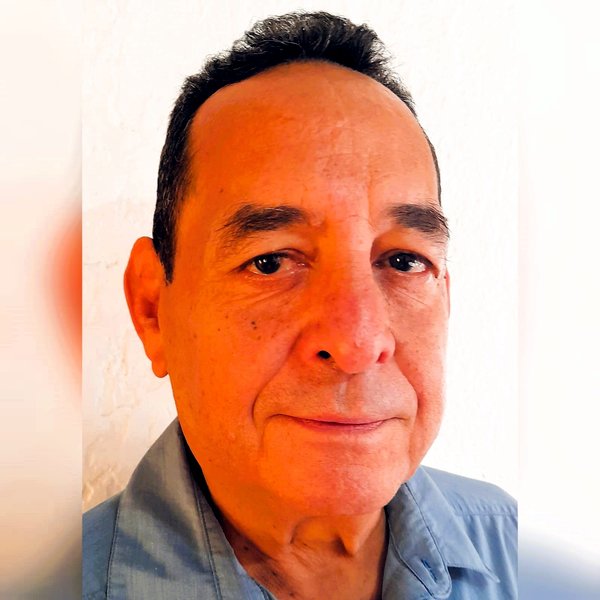
Bachelor in Commerce and Business Administration · YES
Spanish teacher online
Personally vetted · Strommen’s note
Manuel has taught Spanish for thirty-four years, with regional range covering Honduras, El Salvador, Guatemala, Nicaragua, Costa Rica, and Panama specifically.
Specialties
Bachelor in Commerce and Business Administration · YES
Spanish teacher online
Specialties
Personally vetted · Strommen’s note
Manuel has taught Spanish for thirty-four years, with regional range covering Honduras, El Salvador, Guatemala, Nicaragua, Costa Rica, and Panama specifically.

Vaya pues — culture & slang
5 ways to sound like you actually speak Salvadoran Spanish
These are the everyday words and habits that mark a speaker as someone who knows El Salvador, whether the island or the LA community. Screenshot the infographic, then book a tutor for the rest.
-
01
Vaya pues
The signature Salvadoran sign-off. "Alright then," "okay," "sure." Closes plans, ends conversations, transitions between topics. Shared with Honduran Spanish but deployed with particular Salvadoran rhythm and frequency. Heard several times in any Salvadoran conversation. The single most identifiably Salvadoran discourse marker.
e.g. Nos vemos el sábado en la pupuseria, vaya pues.
-
02
Cipote / bicho
Two universal Salvadoran words for kid or young person. Cipote is the standard word, used across all registers. Bicho is more casual and sometimes carries a slightly edgier tone. Both are heard constantly in any Salvadoran conversation about children or young people. Generic Spanish skips both.
e.g. Los cipotes salen a las tres de la escuela.
-
03
Guanaco / guanaca
The Salvadoran self-identity word. Used the way Hondurans use catracho or Guatemalans use chapín. Origin connects to the guanaco (the Andean camelid) via a long path involving 19th-century Central American history. Worn with affection and pride. The most identifiably Salvadoran national-identity term.
e.g. Soy guanaco de pura cepa, de San Miguel.
-
04
Pupusa / chero
Two Salvadoran daily-life essentials. Pupusa is the national dish (thick corn or rice tortilla stuffed before grilling), and the vocabulary around fillings, salsas, and pupuseria etiquette is its own sub-domain. Chero/chera means friend or buddy, used between people on vos terms.
e.g. Vamos por pupusas con los cheros el viernes.
-
05
Vos sos / vení / mirá
Standard Salvadoran informal voseo conjugation. Replaces tú across nearly all informal contexts. Vos sos for "you are." Commands stress the final syllable: vení (come), mirá (look), decí (say). Using tú in El Salvador or in the LA Salvadoran community marks you immediately as a non-native speaker.
e.g. Vení, vos, mirá lo que te traje del mercado.
About El Salvadorian Spanish
More than the LA-diaspora dialect
Los Angeles is the second-largest Salvadoran city in the world. Only San Salvador itself has more Salvadorans, and the gap has been narrowing for four decades. Roughly 350,000 Salvadorans and Salvadoran-Americans live in LA County, concentrated in the Pico-Union, Westlake, Koreatown, and South LA neighborhoods, with substantial communities in the San Fernando Valley and the southeast cities. That makes Salvadoran Spanish one of the most consequential immigrant Spanish varieties in the United States, and the most consequential one in Strommen's home city. The lessons on this page are not a niche curriculum; for many LA students, learning Salvadoran Spanish is learning the Spanish spoken by their next-door neighbors, their kids' classmates' families, their coworkers, and their in-laws.
El Salvador is the smallest country in Central America by area and the most densely populated. Around 6.4 million speakers on the ground plus roughly 2.3 million Salvadorans in the United States, concentrated in Los Angeles, Houston, the DC metro area, New York, and Boston. Among Central American Spanish dialects, Salvadoran sits closest to Honduran and Nicaraguan in core features (voseo, certain phonological patterns, shared vocabulary) but maintains its own distinct lexicon, sign-off phrases, and cultural anchors. The Spanish you hear from a Salvadoran in LA carries layers the island Salvadoran Spanish does not: the long civil war that drove the first major migration wave from 1980 onward, the LA-coded slang that developed in the diaspora, the transnational feedback loop where words travel back to El Salvador from LA as readily as the other direction.
Voseo dominates informal speech across El Salvador, with the Central American conjugation pattern: vos sos, vos tenés, vos querés, vos sabés. Commands stress the final syllable: vení, decí, mirá. Tú is recognized from media but used almost nowhere in real speech. Usted holds for formal contexts. The vos/usted divide tracks informal/formal register cleanly (no Costa Rican-style ustedeo), but Salvadorans also use usted in some rural and family-respect contexts that surprise outsiders. Voseo retraining for learners coming from Mexican Spanish is the universal first hurdle, usually a few weeks of focused work until the conjugations come automatically.
The vocabulary fingerprint is what makes Salvadoran Spanish identifiable to a trained ear. Vaya pues is the signature Salvadoran sign-off, deployed at the end of conversations, plans, and phone calls. "Alright then," "okay," "sure." Shared with Honduran Spanish but with subtle differences in rhythm and frequency. Cipote means kid, the universal Salvadoran word for child or young person. Bicho also means kid or young person, sometimes with a slightly edgier register. Chero/chera is the Salvadoran word for friend or buddy, comparable to Mexican cuate or Argentine che in function. Mara means a group of people or a crew, with complex registers depending on context (the word also entered English-language press through references to specific Salvadoran-American gang names, but the everyday vocabulary use is broader and older). Guanaco/guanaca is the Salvadoran self-referential national identity word, comparable to Honduran catracho or Guatemalan chapín. Chivo means cool or great. Pisto means money, shared with Honduran Spanish. Our 1,000 most common Spanish words list covers the foundation; Salvadoran vocabulary sits on top of that.
The pupusa is the cultural anchor at the center of Salvadoran identity, vocabulary, and weekly rhythm. A thick corn (or rice) tortilla stuffed before grilling with cheese, beans, loroco, chicharrón, or various combinations, served with curtido (pickled cabbage slaw) and salsa, the pupusa is the national dish, the national craft, and the national social event. Pupuserias anchor every Salvadoran neighborhood in El Salvador and in LA. The vocabulary around pupusas (the different fillings, the regional variations, the etiquette of how to eat one) is a complete sub-domain of Salvadoran Spanish. "¿Vamos por pupusas?" is a complete weekend plan in any Salvadoran community.
The LA diaspora has shaped Salvadoran Spanish in ways that make this page particular. Forty years of dense Spanish-English contact in Los Angeles produced code-switching patterns, English-influenced vocabulary (el truck, la jálale from "to pull," parquear, watchear), and a heritage-speaker register specific to second and third-generation LA Salvadorans that doesn't exist in the same form on the island. Words travel in both directions. Slang that started in LA Salvadoran communities has made its way back to El Salvador via family visits, music, and social media. Cumbia and Salvadoran-American music (artists like Crooked Stilo, San Fernando Valley-based regional Mexican-Salvadoran crossover) anchor a continuing cultural conversation. Heritage-speaker Spanish from LA Salvadoran families is one of the most common starting points for these lessons, and the curriculum reflects that.
Phonology in El Salvador leans moderately toward s-aspiration in casual speech but holds the s more clearly than Caribbean varieties. Estás tends toward etáh or etás rather than the fully dropped Caribbean etá. The pace is moderate, the rhythm distinctive, with a particular Salvadoran intonation that LA-based learners often recognize from neighbors and coworkers before they can articulate what they're hearing. The d between vowels weakens but doesn't always disappear: cansado often holds as cansado in careful speech, cansao in casual. Final n velarizes toward the back of the mouth. Compared to Caribbean Spanish, Salvadoran is slower and clearer; compared to Mexican Spanish, it carries the voseo conjugation and the country-specific vocabulary that immediately identifies the speaker as Central American.
The civil war that lasted from 1979 to 1992 shaped Salvadoran Spanish vocabulary and cultural references in ways that surface in literature, news, and family conversation. References to the war years carry weight in casual conversation that learners need to handle with awareness. Roque Dalton's poetry, especially Las historias prohibidas del Pulgarcito, is the literary anchor for the era. Manlio Argueta's Un día en la vida remains foundational. Contemporary writers (Horacio Castellanos Moya, Claudia Hernández) carry the tradition forward. Music from Los Hermanos Flores and the broader nostalgic cumbia tradition anchors one register; reggae and contemporary urban music anchor another.
The Strommen Salvadoran Spanish roster includes native speakers from across El Salvador and LA-based Salvadoran-American teachers who carry both the island register and the diaspora register fluently. Each tutor's bio specifies background, regional origin, and which student profiles fit best. Several of our Salvadoran-American tutors live in or near the Pico-Union, Westlake, and Koreatown corridors of LA, which means in-person lessons are realistic for students based in central Los Angeles. For broader Central American context, our Honduran Spanish, Guatemalan Spanish, and Nicaraguan Spanish specialty pages cover the immediate neighbors.
A few honest tutor observations on what trips up learners with Salvadoran Spanish. Voseo retraining is the most universal hurdle for students coming from Mexican Spanish. Underestimating the breadth of LA Salvadoran vocabulary is the next surprise; words that students think are universal Mexican turn out to be specifically Salvadoran when they hear neighbors deploy them. The register on mara varies wildly depending on context and company, and learners often try to use the word without enough cultural fluency to know which context they're in. Treating diaspora Salvadoran Spanish as a deficient form of island Salvadoran Spanish misses the point; LA Salvadoran Spanish is real Salvadoran Spanish, calibrated to LA life. And there's the simple matter of pupusa-related vocabulary, which is more elaborate than most learners expect and forms a real test of cultural fluency.
Between lessons, immerse with Salvadoran-made media. Roque Dalton's poetry remains the foundational literary text; Pobrecito poeta que era yo is a strong entry point. Manlio Argueta's Un día en la vida reads quickly and captures rural Salvadoran Spanish at a specific historical moment. Horacio Castellanos Moya's El asco presents urban contemporary Salvadoran Spanish in concentrated form. Films from the contemporary scene (Voces inocentes for the war-era story in everyday Salvadoran Spanish; La Pa and other recent work) cover different periods. Music from Los Hermanos Flores anchors the nostalgic cumbia tradition. Contemporary cumbia and the LA-based Salvadoran-American music scene carry the diaspora register. Salvadoran fútbol broadcasts and sports radio capture the rapid casual register fastest.
Lessons calibrate to your goal. Travel Spanish for an El Salvador trip is one curriculum, heritage-speaker reconnection with LA Salvadoran-American family is another (and the most common at Strommen), in-laws Spanish for non-Salvadoran partners of Salvadoran-American family members is a third, and professional Spanish for community-facing work in LA's Salvadoran neighborhoods is a fourth. Existing Spanish counts. Most students arrive with school, family, or LA-exposure Spanish; lessons rebuild voseo, drill the Salvadoran-specific phonology and vocabulary, and cover the cultural fluency needed for both island and diaspora registers. Each lesson is one-on-one, the trial is free. For a head-start before lessons begin, our 5 most common embarrassing mistakes in Spanish covers errors learners make across all dialects, and the broader Spanish course page shows the family of related programs. Or just browse the full tutor list and book a trial.
What you'll cover
Lessons & classes tailored to El Salvadorian Spanish
Central American voseo and Salvadoran register
Vos rather than tú for informal second-person singular, with the Central American conjugation pattern: vos sos, vos tenés, vos querés, vos sabés. Commands stress the final syllable: vení, decí, mirá. The vos/usted divide tracks informal/formal register cleanly. Lessons drill voseo across present, command, and subjunctive forms until production sounds natural, and cover the rural and family-respect usted register that surprises outsiders.
Salvadoran vocabulary and cultural anchors
Vaya pues, cipote, bicho, guanaco, chero, mara, pisto, chivo. The everyday Salvadoran lexicon plus the cultural anchors it carries: the pupusa as national dish and weekly social event, the civil-war historical references that surface in literature and family conversation, the Roque Dalton and Manlio Argueta literary tradition. Vocabulary works in cultural context, not isolation.
Island vs LA-diaspora Salvadoran Spanish
Forty years of dense Spanish-English contact in Los Angeles produced code-switching patterns, English-influenced vocabulary, and a heritage-speaker register specific to second and third-generation LA Salvadorans. Words travel in both directions between LA and El Salvador via family visits, music, and social media. Both registers are legitimate Salvadoran Spanish. Lessons cover the differences and let you calibrate to whichever variety your goal requires.
Moderate phonology and Salvadoran intonation
Salvadoran Spanish leans moderately toward s-aspiration in casual speech but holds the s more clearly than Caribbean varieties. The pace is moderate, the rhythm distinctive, with a particular Salvadoran intonation that LA-based learners often recognize before they can articulate it. Lessons include ear-training drills with audio from both island and LA-diaspora sources so you learn to recognize and produce the Salvadoran sound.
FAQ
About El Salvadorian Spanish lessons & classes
Why are there so many Salvadorans in Los Angeles?
LA is the second-largest Salvadoran city in the world after San Salvador itself, anchored by waves of migration that began during the 1979 to 1992 civil war and continued afterward through family reunification, economic factors, and the establishment of dense Salvadoran community infrastructure in Pico-Union, Westlake, Koreatown, and the San Fernando Valley. Roughly 350,000 Salvadorans and Salvadoran-Americans live in LA County. For many LA students, learning Salvadoran Spanish is learning the Spanish spoken by their neighbors, classmates' families, coworkers, and in-laws.
How is Salvadoran Spanish different from Honduran or Mexican?
Honduran Spanish shares voseo and many features with Salvadoran but uses catracho, baleada, and the Tegucigalpa-vs-San Pedro Sula accent split as anchors. Mexican Spanish drops voseo entirely and uses tú with crisper s-pronunciation; cuate and güey replace the Salvadoran chero and vos. Salvadoran has its own fingerprint: vaya pues, cipote, guanaco, the pupusa-anchored cultural references, and an enormous LA-diaspora register that doesn't have a Mexican equivalent.
What about the LA-diaspora Salvadoran Spanish?
Forty years of dense Spanish-English contact in LA produced its own register, with code-switching patterns, English-influenced vocabulary (el truck, parquear, watchear), and a heritage-speaker variety specific to second and third-generation LA Salvadorans. Words travel in both directions between LA and El Salvador via family, music, and social media. Both registers are real Salvadoran Spanish. We can match you to a tutor in either tradition depending on your goal.
I'm a heritage speaker. My family is Salvadoran-American. Where do I start?
Heritage-speaker Spanish from LA Salvadoran families is one of the most common starting points for these lessons. You arrive with passive comprehension, embedded vocabulary, pronunciation instincts, and a specific reason to be here. The first lesson maps what you already have, identifies gaps (often: voseo conjugation, written Spanish, formal register, island vocabulary the home didn't transmit), and builds from there. Your existing Spanish is a head start, and the LA Salvadoran register you grew up with is real Salvadoran Spanish.
I'm not Salvadoran, but my partner's family is. What kind of Spanish do I need?
In-laws Spanish is one of our most rewarding starting points and one we see often. The goal is to participate in family conversations, follow stories told over Sunday meals, and reach a level where the family relaxes around you because you're following along. Lessons calibrate to the specific family situation: which regions of El Salvador the family is from, which generation speaks which way, what topics come up at the dinner table. We've helped a lot of in-laws-Spanish students get to the point where the family stops switching to English when they enter the room. That's the goal.
I already speak Mexican Spanish. How long does it take to switch?
Most students transitioning from Mexican Spanish need six to ten weeks at one or two lessons a week to feel at home with Salvadoran voseo and the country-specific vocabulary. Voseo retraining is the biggest mechanical adjustment. Vocabulary like vaya pues, cipote, chero, and the pupusa-related lexicon accumulates over the longer term.
Are your tutors native Salvadorans?
Many are. Our roster includes native speakers from across El Salvador (San Salvador, Santa Ana, San Miguel, and rural areas) and LA-based Salvadoran-Americans who carry both the island register and the diaspora register fluently. Several live in or near the Pico-Union, Westlake, and Koreatown corridors, which means in-person lessons are realistic for central LA students. Each tutor's bio specifies background and which student profiles fit best.
Ready for El Salvadorian Spanish lessons or classes?
Book a free 30-minute trial with one of our personally vetted tutors. Private lessons or small-group classes — your choice.