



Personally vetted instructors
Nicaraguan Spanish tutors, lessons & classes
Adiós What Nicaraguans actually say when they pass you on the street.
Personally vetted Nicaraguan Spanish tutors. Lessons that respect the way Spanish is actually spoken in Managua, Granada, León, the Atlantic coast around Bluefields, and the Nicaraguan communities of Miami, Houston, and Los Angeles.
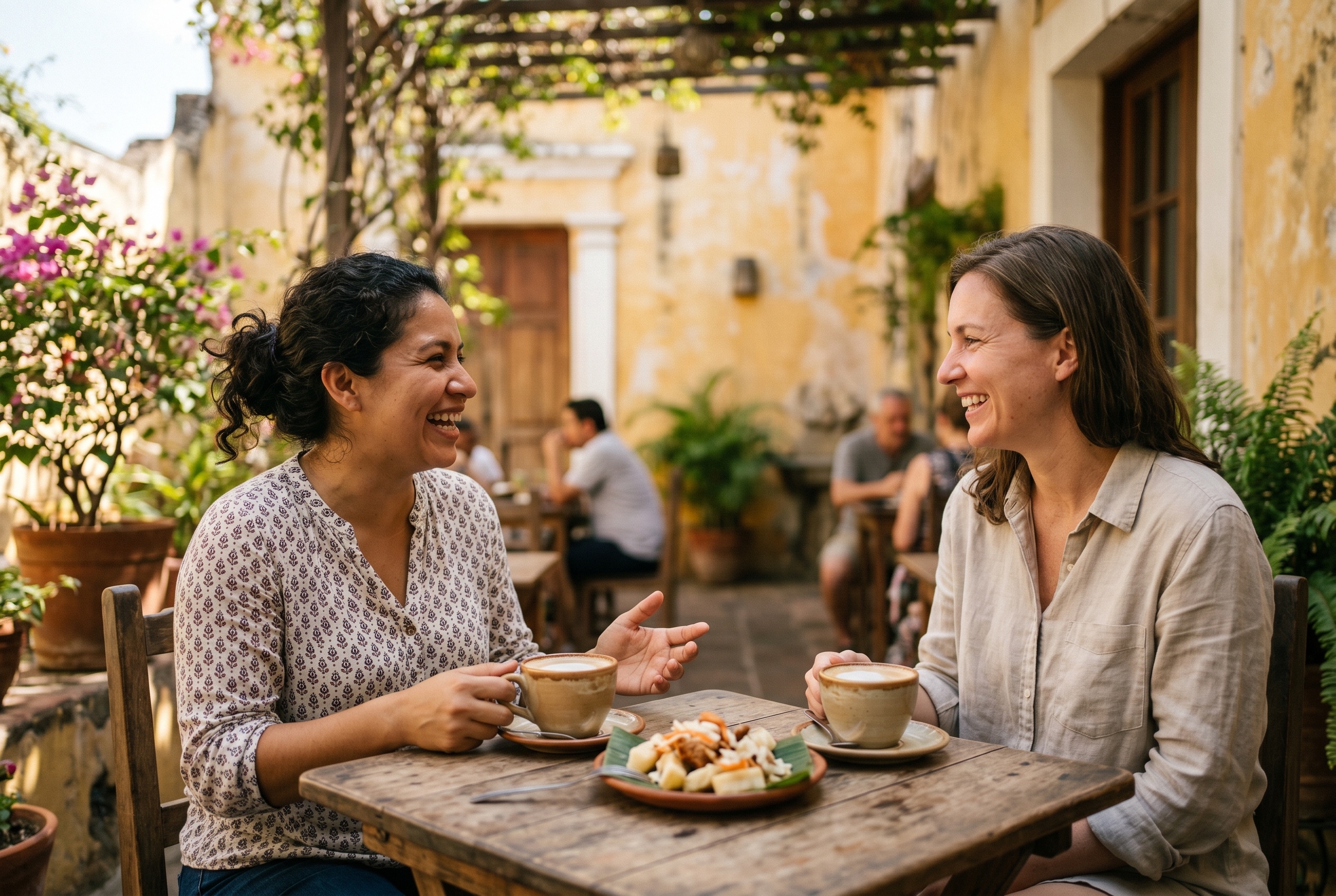
Your instructors
Nicaraguan Spanish tutors for private lessons & classes
Strommen has been teaching Spanish in this city since 2006. Nicaraguan Spanish demand comes mostly from heritage students with family ties to Managua, León, or the Atlantic coast, plus NGO and public-health workers preparing for fieldwork, journalists, and a steady stream of travelers drawn by Granada, Ometepe, and the Corn Islands. Every tutor below was met and vetted by us in person or via thorough video interview. No marketplace. No automated profile-creation. Real teachers with real backgrounds, which you can read about in their bios.
Filter by location, age, or price. Then book a 30-minute free trial.
Below are the Strommen tutors who specialize in Nicaraguan Spanish. Photos, ratings, and rates are real. Click any card to read their bio and book a free 30-minute trial.
I want to learn…
Every tutor, personally met. — founder-vetted since 2006, in Los Angeles and online worldwide.
Get a personalized plan
Pick your language — a language advisor will match you with the right tutor and map out your path.

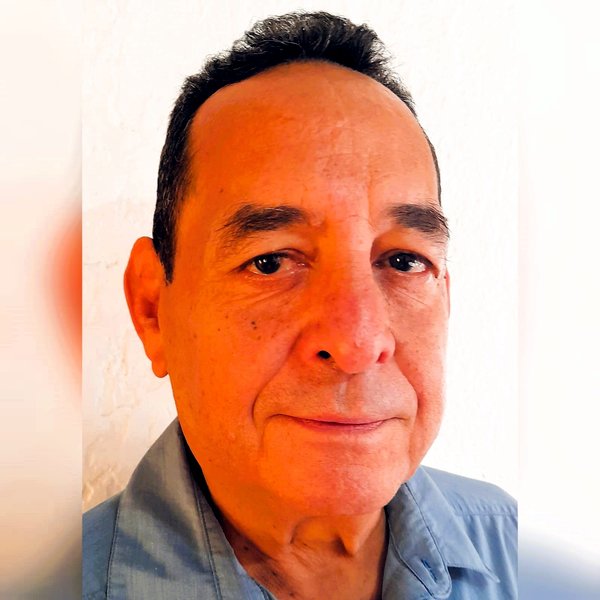
Bachelor in Commerce and Business Administration
Spanish teacher online
Personally vetted · Strommen’s note
Manuel has taught Spanish for thirty-four years, with regional range covering Honduras, El Salvador, Guatemala, Nicaragua, Costa Rica, and Panama specifically.
Specialties
Bachelor in Commerce and Business Administration
Spanish teacher online
Specialties
Personally vetted · Strommen’s note
Manuel has taught Spanish for thirty-four years, with regional range covering Honduras, El Salvador, Guatemala, Nicaragua, Costa Rica, and Panama specifically.

Dale pues — culture & slang
5 ways to sound like you actually speak Nicaraguan Spanish
These are the everyday words and habits that mark a speaker as someone who has actually spent time in Nicaragua, not just studied Spanish in school. Screenshot the infographic, then book a tutor for the rest.
-
01
Adiós
Used as a greeting in passing, especially between neighbors or in small towns. Not "goodbye" in this context. A soft acknowledgment that means roughly "hi as you go." Distinctly Nicaraguan habit, mostly unknown elsewhere in the Spanish-speaking world.
e.g. Adiós, doña Marta, ¿cómo amaneció?
-
02
Dale pues
All-purpose Nicaraguan sign-off and affirmation. "Okay then," "alright," "sure thing," depending on tone. Closes plans, agrees to favors, ends phone calls. Heard several times in any Nicaraguan conversation. Comparable to but distinct from Salvadoran vaya pues.
e.g. Nos vemos el sábado entonces, dale pues.
-
03
Vos sos
Standard Nicaraguan informal "you are." Voseo replaces tú in everyday speech. Vos conjugations follow the Central American pattern: vos tenés, vos querés, vos sabés. Commands stress the final syllable: vení, mirá. Using tú in Nicaragua marks you as a non-native speaker.
e.g. Vos sos pinolero de corazón, ¿verdad?
-
04
Chele / chigüín / maje
Three of the most-used Nicaraguan everyday nouns. Chele means a blond or fair-skinned person, usually affectionate. Chigüín, from a Nahuatl root, means kid or child. Maje is the universal "dude," comparable to Mexican güey but unmistakably Central American.
e.g. El chele compró un nacatamal para los chigüines.
-
05
Idiay
Discourse marker meaning roughly "and so / well then / what now." Bridges turns in conversation, expresses mild surprise, or invites the other speaker to continue. Pronounced in one rapid breath. The single most Nicaraguan-coded filler word, used several times per conversation.
e.g. Idiay, ¿vamos al lago o qué?
About Nicaraguan Spanish
More than another Central American accent
Walk down a street in Managua or León and notice what happens when neighbors pass each other. They say adiós. Not goodbye, hello. The same word that closes a conversation in every other Spanish-speaking country opens one in Nicaragua, a quiet wave-as-you-go-by greeting that nobody warns you about in beginner Spanish. It is the first sign that this dialect has its own rules. There are dozens more.
Nicaraguan Spanish is spoken by roughly 6.7 million people in the country plus around 250,000 Nicaraguan-Americans concentrated in Miami, Houston, Los Angeles, and the San Francisco Bay Area. Among Central American Spanish dialects it sits closest to Honduran and Salvadoran in core features but differs in important ways: a more pronounced s-aspiration on the Pacific side, a distinct voseo system, vocabulary borrowings from Nahuatl and from the Atlantic-coast English-creole communities, and a political-cultural vocabulary that traces back to the 1979 Sandinista revolution and the decade that followed. Generic Spanish courses do not teach any of this. Lessons that match the dialect do.
Voseo is the grammatical headline feature. Like Argentinian Spanish, Nicaraguan Spanish uses vos rather than tú for the informal second-person singular, but the conjugation pattern follows the Central American model rather than the Argentine one. Vos sos for "you are," vos tenés for "you have," vos querés for "you want." In commands the stress moves to the final syllable: vení, decí, mirá. The tú form is recognized and understood in Nicaragua but used almost nowhere in real speech; learners who arrive having drilled tú conjugations for years usually need a few weeks of voseo retraining before they sound native. Usted remains in formal contexts and, in some Nicaraguan rural usage, even between family members in ways that surprise outsiders.
Phonology pulls Nicaraguan Spanish toward the Caribbean even though most of the country sits on the Pacific. Syllable-final s aspirates or drops in casual speech, the way it does in Cuban and Dominican Spanish: los amigos sounds closer to loh amigoh, estás tends toward etá. The aspiration is less aggressive than in Dominican speech but more consistent than in Mexican or Castilian. Final n velarizes toward the back of the mouth. The pace in Managua and Granada is fast in casual conversation, slower in the colonial cities of León and Granada when older speakers hold the floor. On the Atlantic coast around Bluefields, Puerto Cabezas, and the Corn Islands, Spanish coexists with English-based Creole and indigenous Miskito, and the local Spanish carries a Caribbean rhythm and English-loanword vocabulary that the Pacific side does not.
Vocabulary is where Nicaraguan Spanish announces itself most clearly. Dale pues is the universal Nicaraguan affirmation and sign-off, comparable to but distinct from the Salvadoran vaya pues. Chele describes a blond or fair-skinned person, often a foreigner, and is more affectionate than judgmental in most contexts. Tuani means cool or good, borrowed indirectly from English via Atlantic-coast contact. Chigüín means kid or child, from a Nahuatl root, and is heard constantly. Maje functions as the all-purpose "dude" or "guy," similar to Mexican güey but unmistakably Central American in register. Vigorón and nacatamal are the national-dish words you will hear inside a week of arriving. Idiay works as a discourse marker meaning roughly "and so / well then / what now," used several times per conversation. Pinolero is what Nicaraguans call themselves, after pinol, the toasted-corn drink that doubles as a national identity marker. Our 1,000 most common Spanish words list covers the foundation; Nicaraguan vocabulary sits on top of that, not inside it.
The Sandinista era left a vocabulary footprint that still shapes how Nicaraguans talk about politics, work, and history. Frente refers to the Frente Sandinista de Liberación Nacional, the political party that led the 1979 revolution and remains in government. Compañero and compañera stayed as forms of address in left-leaning contexts longer than in most Latin American countries. The mountain-vs-city divide between the rural campesinos of the north and the urban Managua professional class shows up in vocabulary and accent both. Even for learners with no interest in Nicaraguan politics, the era's terminology surfaces in news, music, literature, and family conversations from anyone over forty.
The Atlantic-coast variety is its own subject. The eastern half of Nicaragua, sometimes called the Caribbean Coast, is culturally and linguistically distinct from the Pacific. English-based Creole is spoken alongside Spanish, indigenous Miskito remains a community language, and the Spanish that locals speak carries English loanwords (guachimán from "watchman," cleaner as a noun, weekend in casual use) plus Caribbean phonological features that Pacific-side Nicaraguan Spanish does not share. Bluefields, Puerto Cabezas, Pearl Lagoon, and the Corn Islands all have their own registers. If your goal involves the Atlantic coast specifically (NGO work, family ties, music research into the Garifuna and Creole communities), we match you to a tutor who knows the variety; the Pacific-side curriculum will not cover it.
The Strommen Nicaraguan Spanish roster includes native speakers from across the Pacific side and longtime bilinguals based in the United States. Each tutor's bio specifies background, where they grew up speaking Spanish, and which student profiles they fit best. You can match to a Managua-resident tutor for current island-side immersion, a US-based Nicaraguan-American for the diaspora register, or any of our broader Central American Spanish specialists if your goal is regional rather than country-specific. For a wider lens, our Honduran Spanish, Salvadoran Spanish, and Costa Rican Spanish specialty pages cover the immediate neighbors, and the conversational Spanish roster handles pan-regional needs.
A few honest tutor observations on what trips up learners with Nicaraguan Spanish. The adiós-as-greeting habit catches almost everyone the first time; students hear it and assume the speaker is leaving when they are actually arriving or just passing through. Voseo is the next adjustment, since learners with Mexican Spanish backgrounds bring full tú-conjugation muscle memory and have to retrain over a few weeks of lessons. Register on usted is its own thing in Nicaragua: locals use it in some family contexts that learners coded as informal, and the social calibration takes practice. There is also the temptation to treat Atlantic-coast Spanish as a curiosity rather than a real register; treat it as Nicaraguan Spanish in its own right and the country opens up. And one more thing worth flagging: the s-aspiration is more variable in Nicaragua than in Cuba or the Dominican Republic, so learners trying to copy a single "Caribbean" pronunciation pattern end up sounding off. Listen first, then produce.
Between lessons, immerse with Nicaraguan-made media. Sergio Ramírez and Gioconda Belli for the literary canon, especially Ramírez's Castigo Divino and Belli's El país bajo mi piel. Carlos Mejía Godoy and Luis Enrique Mejía Godoy for the song tradition that came out of the revolution era. The films of Mercedes Moncada Rodríguez (El Inmortal) and Florence Jaugey (La Yuma) for contemporary Nicaraguan cinema. For news, La Prensa and Confidencial in the diaspora press carry the political register. Music from the Atlantic coast (Dimensión Costeña, Soul Vibrations) shows what eastern Nicaraguan Spanish sounds like in song.
Lessons calibrate to your actual goal. A heritage student reconnecting with grandparents in León is a different curriculum from an NGO worker preparing for fieldwork in the RAAN, which is different again from a literature student reading Belli in the original. Existing Spanish counts. Most students arrive with school or family Spanish in some form; lessons rebuild voseo where needed, drill the s-aspiration ear, and load up the country-specific vocabulary. Each lesson is one-on-one, the trial is free, and the goal is to get you sounding like someone who has actually been to Nicaragua rather than someone who studied generic Spanish in college. For a head-start before lessons begin, our 5 most common embarrassing mistakes in Spanish covers errors learners make across all dialects, and the broader Spanish course page shows the family of related programs. Or just browse the full tutor list and book a trial.
What you'll cover
Lessons & classes tailored to Nicaraguan Spanish
Central American voseo conjugation
Vos rather than tú for informal second-person singular, with the Central American conjugation pattern: vos sos, vos tenés, vos querés, vos sabés. Commands stress the final syllable: vení, decí, mirá. The grammar is straightforward once drilled, but learners arriving with Mexican or Castilian Spanish bring tú muscle memory that takes a few weeks to retrain. Lessons drill voseo across present, command, and subjunctive forms until production sounds natural.
Nicaraguan vocabulary and discourse markers
Dale pues, idiay, chele, chigüín, maje, tuani, pinolero, vigorón, nacatamal, gallo pinto. The everyday Nicaraguan vocabulary that generic Spanish courses skip. Plus the country-specific discourse markers (idiay, fíjese que, vaya) that mark a speaker as Nicaraguan rather than from elsewhere in Central America. We teach when each fits, who you can say it to, and which register it lives in.
Pacific phonology and Atlantic-coast variety
Pacific-side Nicaraguan Spanish features moderate s-aspiration, velarized final n's, and weakened consonants between vowels, sliding toward the Caribbean register without going as far as Cuban or Dominican speech. The Atlantic coast (Bluefields, Puerto Cabezas, Corn Islands) is its own register, with English-Creole and Miskito contact producing loanwords (guachimán, cleaner) and Caribbean rhythm that Pacific Nicaraguan Spanish does not share. Lessons cover whichever variety fits your goal.
Sandinista-era vocabulary and cultural references
The 1979 revolution and the decade that followed left a vocabulary footprint that still surfaces in news, music, literature, and family conversations. Frente for the FSLN, compañero in left-leaning contexts, the song tradition of the Mejía Godoy brothers, and the literary canon from Sergio Ramírez and Gioconda Belli. Lessons cover the cultural references directly so you can follow Nicaraguan news, music, and conversation about the country's recent past.
FAQ
About Nicaraguan Spanish lessons & classes
How is Nicaraguan Spanish different from Mexican, Honduran, or Salvadoran?
All Central American Spanish dialects are mutually intelligible and share core features: voseo, certain Nahuatl-derived vocabulary, moderate s-aspiration. The audible differences sit in vocabulary and rhythm. Nicaraguan uses dale pues, idiay, chigüín, and the country-specific adiós-as-greeting. Honduran shares much of the voseo pattern but uses catracho as a national-pride term and the baleada as a culinary anchor. Salvadoran uses vaya pues and cipote with its own register. Mexican Spanish drops voseo entirely and uses tú with crisper s-pronunciation.
What is the Atlantic coast / Caribbean coast variety?
The eastern half of Nicaragua (Bluefields, Puerto Cabezas, the Corn Islands, Pearl Lagoon) is culturally and linguistically distinct from the Pacific side. English-based Creole is spoken alongside Spanish, indigenous Miskito remains a community language, and the local Spanish carries English loanwords plus Caribbean phonology. If your goal involves the Atlantic coast specifically, we match you to a tutor who knows the variety. For Pacific-side goals (Managua, León, Granada, Masaya), the standard Nicaraguan curriculum applies.
I already speak Mexican Spanish. How long does it take to switch?
Most students transitioning from Mexican Spanish need six to ten weeks at one or two lessons a week to feel at home with Nicaraguan voseo and the country-specific vocabulary. Voseo conjugation is the biggest mechanical adjustment. The ear training for s-aspiration is faster, since Nicaraguan aspiration is less aggressive than Dominican or Cuban. Vocabulary accumulates over the longer term as you encounter new contexts.
Are your tutors native Nicaraguans?
Most are. Our roster includes native speakers from across the Pacific side (Managua, León, Granada, Masaya) and longtime US-based Nicaraguan-Americans who teach the diaspora register. Each tutor's bio specifies where they're from and what they teach. If your goal involves the Atlantic coast specifically, we'll tell you directly whether the current roster covers it or whether we need to recruit further.
Can I take lessons online or only in person?
Both. Most of our Nicaraguan Spanish tutors teach online via Zoom or Jitsi, available globally. Some teach in person around Los Angeles. The booking widget on each tutor's profile shows their available formats and locations.
I'm a heritage speaker. My family is from Nicaragua. Where do I start?
Heritage-speaker Spanish is one of the most common starting points for Nicaraguan Spanish lessons. You arrive with passive comprehension, embedded vocabulary, pronunciation instincts, and a specific reason to be here. The first lesson typically maps what you already have, identifies gaps (often: voseo conjugation, written Spanish, formal register, vocabulary outside the home domain), and builds from there. Your existing Spanish is a head start, not a liability.
What does a typical lesson look like?
Lessons are one-on-one and built around your goals. A typical hour might include fifteen minutes of conversation in Spanish on a topic you chose, fifteen minutes targeted on voseo conjugation or a Nicaraguan phrase that came up, fifteen minutes on country-specific vocabulary or cultural context, and fifteen minutes of practice using what you learned. Your tutor plans the lesson around your week.
Ready for Nicaraguan Spanish lessons or classes?
Book a free 30-minute trial with one of our personally vetted tutors. Private lessons or small-group classes — your choice.