



Personally vetted instructors
Eastern Armenian tutors, lessons & classes
Բարեւ ձեզ Barev dzez. The everyday hello in Yerevan, said the way Eastern Armenian actually says it.
Personally vetted Eastern Armenian tutors. Lessons calibrated to the Armenian spoken in Yerevan, across the Republic of Armenia, and in the Russian-speaking and post-Soviet diaspora, not a blended pan-Armenian register.

Your instructors
Eastern Armenian tutors for private lessons & classes
Strommen has been placing Armenian tutors out of Los Angeles for years, and the steady ask has been for tutors who teach one standard cleanly rather than blending them. Strommen is a curated practice, not an open marketplace. Every teacher below was met and vetted by us.
Filter by location, age, or price. Then book a free 30-minute trial and tell the tutor whether your family roots, your travel plans, or your work pull you toward the Eastern standard specifically.
Below are the Strommen tutors who specialize in Eastern Armenian. Photos, ratings, and rates are real. Click any card to read a tutor's bio and book a free 30-minute trial.
I want to learn…
Every tutor, personally met. — founder-vetted since 2006, in Los Angeles and online worldwide.
Get a personalized plan
Pick your language — a language advisor will match you with the right tutor and map out your path.

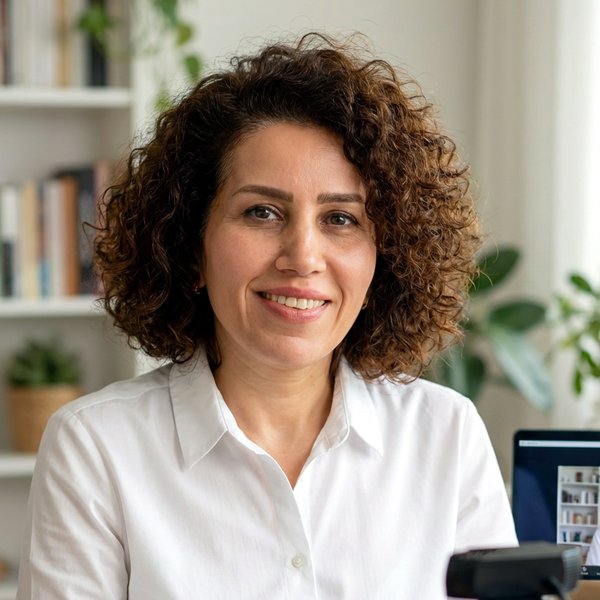

Bachelor & Master in Linguistics and Pedagogy · I am certified in Philology and Pedagogy through the Yerevan State Linguistic University after V. Brusov
Speak Armenian, Embrace Tradition
Personally vetted · Strommen’s note
Yerevan-based, Lusine has spent sixteen years teaching Eastern Armenian and Russian both, genuinely rare to find in the same native speaker.
Specialties
Also speaks: English
Bachelor & Master in Linguistics and Pedagogy · I am certified in Philology and Pedagogy through the Yerevan State Linguistic University after V. Brusov
Speak Armenian, Embrace Tradition
Specialties
I also speak: English
Personally vetted · Strommen’s note
Yerevan-based, Lusine has spent sixteen years teaching Eastern Armenian and Russian both, genuinely rare to find in the same native speaker.
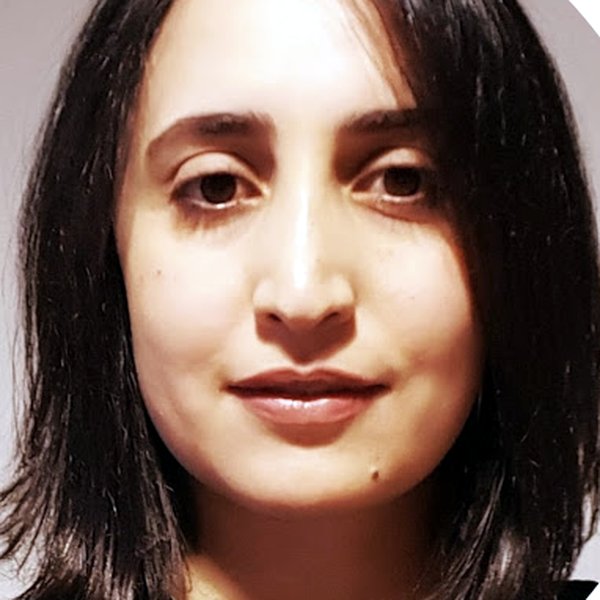

MA in Linguistics · CELI B2TEFL
Languages are my passion—let me make them yours too!
Specialties
MA in Linguistics · CELI B2TEFL
Languages are my passion—let me make them yours too!
Specialties

Արեւելահայերեն — culture & language
5 features that mark Eastern Armenian on the page and in the room
These are the distinguishing features a Yerevan tutor will name in your first lesson. Save the list. Then book a tutor to drill the ones that matter for your goal.
-
01
The three-way stop contrast
Eastern Armenian preserves the Classical Armenian three-way distinction in stop consonants: voiced (b, d, g), voiceless aspirated (p, t, k), and voiceless unaspirated. Western collapses this into a two-way system. The clearest practical consequence is that a name a Yerevan speaker writes and pronounces with a clear b can sound and be transliterated with a p in Western-Armenian materials. Drilling the contrast trains a learner's ear toward the Eastern sound on day one.
e.g. Bedros (Eastern voicing) and Petros (Western reflex): same name, two standards.
-
02
Reformed orthography
The Republic of Armenia adopted a reformed spelling system in 1922 under Soviet language policy. Yerevan and the Republic write in reformed orthography. The Diaspora and the Armenian community of Iran retained classical. A reader picking up an Eastern Armenian book published in Yerevan and a Western Armenian book published in Beirut sees real spelling differences for the same words.
e.g. Words ending in classical -եան appear in Eastern reformed as -յան on Yerevan title pages.
-
03
The analytic present tense
Eastern Armenian forms the present indicative using a participial form of the verb plus an auxiliary, an analytic construction that gives Eastern sentences their characteristic two-piece shape in the verb slot. The pattern is fully regular once a learner sees it, and recognizing it is one of the first things that lets a student read newspaper Armenian without stalling on every clause.
e.g. Ես գրում եմ (Yes grum em): "I am writing," literally "I writing am."
-
04
The evidential mood
Eastern Armenian verbs mark whether the speaker witnessed an event directly or learned about it from someone else. The witnessed past and the inferred or reported past use different forms. English carries no equivalent, so adult learners encounter the category at a delay and tend to underuse the inferred form. Storytelling in Eastern Armenian, especially family stories about events the narrator did not see, depends on getting this right.
e.g. A direct memory uses one past form; a story told by a grandparent about something earlier uses the inferred form.
-
05
Yerevan, Gyumri, and the wider Republic
Eastern Armenian inside the Republic is not monolithic. Yerevan speech is the de facto standard. Gyumri carries its own warm and rhythmic regional flavor, and Armenian audiences hear it as immediately distinctive. Artsakh Armenian, Iranian Armenian (with a noticeable Persian-influenced vocabulary in some domains), and the Eastern Armenian of the Russian-speaking diaspora each carry their own markers. Tutors calibrate listening drills toward the variety the student is most likely to encounter.
e.g. A Glendale-raised heritage learner from a Tehran-Armenian family and one from a Yerevan family meet the same standard from two angles.
About Eastern Armenian
The Armenian spoken in Yerevan
Eastern Armenian is one of two standardized forms of Armenian and the one used by roughly three million speakers in the Republic of Armenia, by the Armenian community of Iran, and across the post-Soviet diaspora from Moscow and Rostov to the wider former USSR. Western Armenian is the other, and the two are distinct enough in pronunciation, grammar, and orthographic conventions that a tutor and a student need to settle which one is on the table before the first lesson begins. Most Los Angeles families with roots in the Republic of Armenia, Tehran, or the Russian-speaking diaspora speak Eastern. Most LA families with roots in pre-1915 Anatolia, Lebanon, Syria, or the older Beirut and Aleppo communities speak Western. Picking the right standard at the trial is not a small thing; it shapes everything that follows.
The Armenian alphabet is the same for both standards, a thirty-eight-letter script designed by the monk Mesrop Mashtots around the year 405. That alone is one of the more remarkable cultural facts a learner runs into in the first month of study. The script is unique to Armenian, used for nothing else on earth, and the literary tradition that grew up around it begins with the fifth-century History of the Armenians by Movses Khorenatsi and runs without interruption through Grigor Narekatsi's tenth-century Book of Lamentations and onward to the present. The script is the through-line. Where the two standards diverge is in the sound values assigned to certain letters, in classical orthography versus reformed orthography, and in some grammar.
The pronunciation differences between the two standards are the first thing a learner hears. Eastern preserves a three-way distinction in the stop consonants: voiced (b, d, g), voiceless aspirated (p, t, k), and voiceless unaspirated (the latter inherited from Classical Armenian and now lost in Western). Western collapses this into a two-way contrast and shifts what Eastern hears as voiced stops into aspirated ones. Concretely, a word a Yerevan speaker pronounces with a clear b at the start may be heard with a p from a Beirut or Aleppo speaker of Western. The classic example is the name Bedros versus Petros, the same name in the same alphabet handled differently by each standard. A learner who sets out aiming at Eastern and reads materials prepared for Western will be quietly thrown off by the sound-letter mappings until a tutor names the system.
Orthography is the other dividing line. The Republic of Armenia adopted a reformed spelling system in 1922 under Soviet language policy, simplifying some of the classical conventions, and that reformed orthography is now the standard in Yerevan and across the Republic. Western Armenian, the Diaspora, and the Armenian community of Iran retained classical orthography. The difference is real on the page: the same word can look meaningfully different in the two systems even though the underlying language is one. Tutors of Eastern Armenian generally teach reformed orthography by default, with classical introduced where it will come up in older texts, in liturgical reading, or in correspondence with Western-Armenian-speaking relatives.
Grammar in Eastern Armenian asks more of an English-speaking adult than the conversational ear initially suggests. There are seven cases, several declension patterns, an evidential mood (the Eastern Armenian verb system marks whether the speaker witnessed an action directly or learned of it secondhand), and the present indicative uses an analytic construction with the auxiliary verb that differs structurally from Western. The future tense, the conditional, and the subjunctive each have their own forms, and verbal aspect is grammatical rather than lexical. A tutor sequences these so the highest-frequency patterns settle in as reflexes during the first months of study, and the rarer constructions arrive over the longer arc. Pretending the case system can be skipped is the move that produces a student who can greet a relative and then go silent.
Most students who come to Eastern Armenian tutoring at Strommen fall into a few recognizable groups. Heritage speakers from Glendale, East Hollywood, and the rest of the Los Angeles Armenian community whose families speak Eastern at home and who understand more than they can produce. Adoptees and partners of Armenian speakers preparing for in-law family gatherings. Travelers planning trips to Yerevan, Gyumri, or Artsakh. Researchers, journalists, and aid workers heading into the South Caucasus for work. Music fans who got to the language through Komitas, through Sayat-Nova, or through the contemporary Yerevan jazz and folk scenes. Each of these has a different starting point and a different goal, and a working tutor calibrates the lesson plan to the student in front of them.
A few honest tutor observations on where Anglophone learners typically stall. The cases come up first; English speakers are unused to making a noun change form depending on what role it plays in the sentence, and the locative and the ablative tend to be the last two to feel natural. The aspirated-unaspirated stop contrast in Eastern is the next, since most English speakers do not consciously distinguish the two and have to train their ear before they can produce them. The evidential mood comes up later and is one of the parts of Armenian that simply does not map onto English. The script learns faster than students expect, usually within two to four weeks of daily practice, because the letter-to-sound correspondence is highly regular once a learner gets past the initial unfamiliarity. And one observation that is a pleasure rather than a trap: Armenian rewards a learner who reads, because the literary tradition is deep, continuous, and accessible from the intermediate level upward.
The Strommen Eastern Armenian tutors are native speakers from Yerevan and the wider Republic, heritage speakers raised in the Los Angeles Eastern-Armenian community, and a few tutors fluent across both standards who can show a student where Eastern and Western diverge as the lessons go. Bios on each tutor's profile name where they are from, which orthography they default to in writing, and what kind of student they have moved the furthest. You can book a 30-minute free trial from any profile, and the wider Strommen tutor directory shows the broader roster if you want to compare before choosing.
What you'll cover
Lessons & classes tailored to Eastern Armenian
Reformed orthography and the Eastern reading layer
Lessons teach reading and writing in the Yerevan reformed orthography that the Republic of Armenia adopted in 1922, with classical orthography introduced where it will come up in older texts, in liturgical reading, or in correspondence with Western-Armenian relatives. The thirty-eight-letter Mesropian script is highly regular in letter-to-sound mapping and most adult students read fluently within several weeks of daily practice.
The Eastern sound system, stop contrast first
Eastern Armenian's three-way stop contrast (voiced, voiceless aspirated, voiceless unaspirated) is one of the first things a Yerevan tutor will drill, because it is the contrast that distinguishes the Eastern standard from Western on the surface and the one that adult English-speaking learners have to train their ear toward before they can produce reliably. Lessons combine direct drill with listening practice on real Yerevan audio.
Cases, the analytic present, and the evidential mood
The seven-case nominal system, the analytic present construction with the auxiliary, the evidential past that distinguishes witnessed from inferred events, and the future and conditional forms each get sequenced over the first months so the highest-frequency patterns become reflexes and the rarer constructions settle in across the longer arc. The grammar pays off slowly and is non-negotiable for anyone who wants to read or speak past the greeting stage.
Yerevan, the South Caucasus, and the Eastern diaspora
Beyond the language, lessons fold in the cultural context a learner runs into early: Yerevan hospitality, the small-cup Armenian coffee that ends a meal, the role of Armenian Apostolic feast days in family life, the wedding and naming rituals heritage students often meet first, the contemporary Yerevan music and film scene. A learner with the grammar but without the social cues sounds correct and foreign at the same time. Our blog overview of the languages of Los Angeles gives useful context on the LA Armenian community for heritage learners.
FAQ
About Eastern Armenian lessons & classes
What is the difference between Eastern and Western Armenian?
They are two standardized forms of one language, both written in the Mesropian alphabet but distinct in pronunciation, in orthography, and in some grammar. Eastern is spoken in the Republic of Armenia, in Iran, and across the post-Soviet diaspora. Western is the heritage standard for descendants of pre-1915 Anatolian Armenians, and now anchors the diaspora in Lebanon, Syria, France, and historically in the United States East Coast. Eastern uses reformed orthography (1922) and preserves a three-way stop contrast. Western uses classical orthography and a two-way stop contrast. Most LA families with roots in the Republic or Iran speak Eastern; LA families from older diaspora communities tend to speak Western. The right choice depends on whom you want to talk with.
Is the alphabet the same for both?
Yes. The thirty-eight-letter Armenian alphabet designed by Mesrop Mashtots around the year 405 is shared. The differences are in how some letters are pronounced (the stop contrast above), in spelling conventions, and in grammar. A reader who learns the alphabet for Eastern can read a Western text and recognize most of it, with adjustments. Tutors who teach Eastern will usually flag the conventions to expect if you later encounter Western materials at home.
How hard is the grammar?
Honestly demanding. Seven cases, an evidential mood, an analytic present construction, and verbal aspect are real work for an English speaker. Most committed adult students reach conversational comfort within nine to fifteen months at one or two lessons a week with steady self-study between. The reward is that the grammar is highly regular once the patterns settle in, and reading Armenian, where Eastern Armenian's literary tradition is deep, becomes accessible at the intermediate level.
I am a heritage speaker who understands more than I speak. Is this the right specialty?
Often, yes. Heritage learners usually carry a vocabulary base from family contexts and a strong ear for cadence, and what is missing is active speaking, modern register, and confidence in unfamiliar situations. A tutor builds on the listening you already have rather than starting from beginner one, which is much faster than restarting from zero. Many heritage students become functional in conversation within a few months of regular practice. Tell the tutor at the trial what your family speaks at home.
Are your Eastern Armenian tutors native speakers?
Most are native speakers from Yerevan and the wider Republic, with several heritage tutors raised in the Los Angeles Eastern Armenian community and a few tutors fluent across both standards. Each tutor's bio specifies background, which standard they teach, which orthography they default to, and which kinds of students they have worked with most. You can match yourself to a Yerevan-grounded tutor for travel or research goals, to an LA heritage tutor for family-reconnection goals, or to a dual-standard tutor if you want exposure to both.
Can I take Eastern Armenian lessons online or only in person?
Both. Most of our Eastern Armenian tutors teach online via Zoom or Jitsi and work with students worldwide. Several also teach in person around Los Angeles, particularly in the Glendale, East Hollywood, and Pasadena areas where the community concentrates. The booking widget on each tutor's profile shows the available formats and live availability.
Will my Eastern Armenian help me speak with Western-Armenian-speaking relatives?
Largely yes, with calibration. The two standards are mutually intelligible in most everyday conversation; you will be understood and you will understand, with some friction on the sound differences and on vocabulary items that diverge. Many heritage students learn one standard at a tutor's pace and pick up the other passively from family contexts over time. If your family speaks Western and your goal is Western, a Western Armenian tutor is the closer fit; tell us at the trial.
What does a typical Eastern Armenian lesson look like?
Lessons are one-on-one and built around your goal. A session might open with guided conversation in Armenian on a topic you chose, move into targeted work on a case ending or a verb form that surfaced, drill the pronunciation contrast that catches your ear, and close with reading from a Yerevan source (a news piece, a poem, a short story) at your level. No two students get the same plan.
Ready for Eastern Armenian lessons or classes?
Book a free 30-minute trial with one of our personally vetted tutors. Private lessons or small-group classes — your choice.