



Personally vetted instructors
Business German tutors, lessons & classes
Guten Morgen The standard formal opener in any German workplace before 11 a.m.
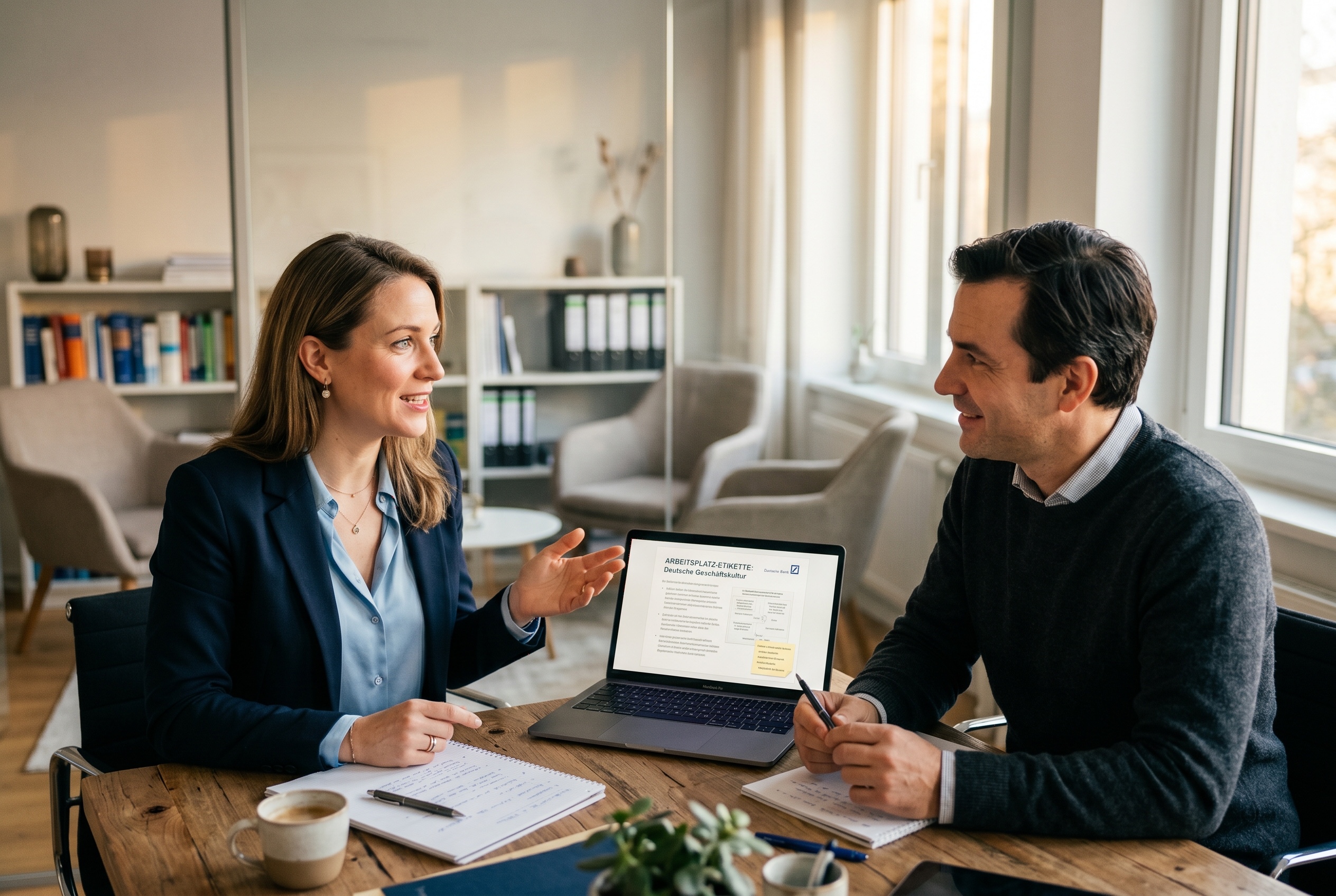
Personally vetted Business German tutors. Lessons calibrated to how German professionals actually negotiate, present, draft contracts, run meetings, and operate across Frankfurt finance, the Mittelstand manufacturing belt, Berlin tech, and the formality protocols that govern German workplace culture.
Your instructors
Business German tutors for private lessons & classes
Strommen has been teaching German since 2006. Business German is a real demand here: pre-deal preparation for executives heading to Frankfurt or Munich negotiations, contract reading for attorneys and finance professionals working German and cross-border M&A files, presentation prep for engineers and operators pitching German firms, Mittelstand protocol for American buyers working multi-generation family-business acquisitions, Goethe certification prep for HR-required proof of proficiency, and long-running monthly maintenance for executives whose German counterparts insist on conducting business in German. Every tutor below was met and vetted by us in person or via thorough video interview. No marketplace. No automated profile-creation. Real teachers with real backgrounds in German business culture.
Filter by location, age, or price. Then book a 30-minute free trial.
Below are the Strommen tutors who specialize in Business German. Photos, ratings, and rates are real. Click any card to read their bio and book a free 30-minute trial.
I want to learn…
Every tutor, personally met. — founder-vetted since 2006, in Los Angeles and online worldwide.
Get a personalized plan
Pick your language — a language advisor will match you with the right tutor and map out your path.




Bachelor of Business Administration (specialized in International Relations) · DELF Examiner, DALF C2, Goethe Zertifikat C1/B2, DELE B1
Join me on your language learning adventure!
Personally vetted · Strommen’s note
Bangalore-based, Yvanka teaches French and German after years at Alliance Française. She started, unusually, as an English teacher in France.
Specialties
Also speaks: English, Italian, Spanish
Bachelor of Business Administration (specialized in International Relations) · DELF Examiner, DALF C2, Goethe Zertifikat C1/B2, DELE B1
Join me on your language learning adventure!
Specialties
I also speak: English, Italian, Spanish
Personally vetted · Strommen’s note
Bangalore-based, Yvanka teaches French and German after years at Alliance Française. She started, unusually, as an English teacher in France.
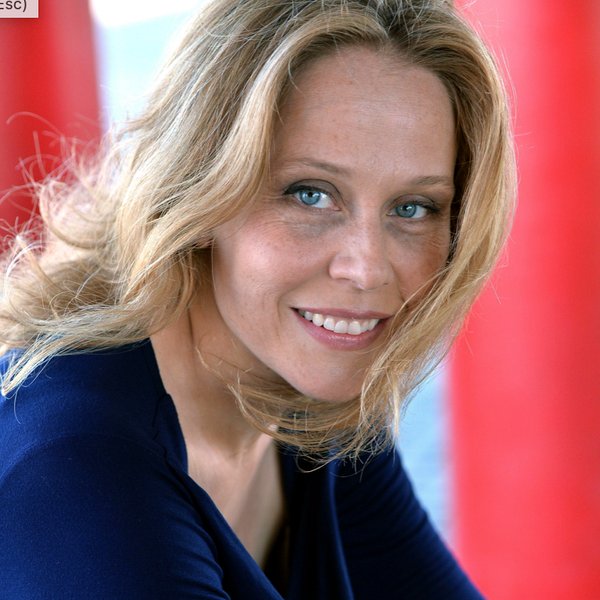
Diplom-Schauspielerin (BA in drama/acting) Germany
Dedicated German language tutor with over 15 years of expertise in teaching students of all ages. Proficient in preparing students for major German language certifications, SAT and AP German
Personally vetted · Strommen’s note
Fifteen-plus years teaching German, SAT and AP German certification prep included, and Patricia still keeps the structure interactive, not rigid.
Specialties
Also speaks: English
Diplom-Schauspielerin (BA in drama/acting) Germany
Dedicated German language tutor with over 15 years of expertise in teaching students of all ages. Proficient in preparing students for major German language certifications, SAT and AP German
Specialties
I also speak: English
Personally vetted · Strommen’s note
Fifteen-plus years teaching German, SAT and AP German certification prep included, and Patricia still keeps the structure interactive, not rigid.

Bachelor of Arts (Teacher certificate from Zurich teachers College) · TESOL, teachers License as a primary educator
Trilingual German, ESL and French teacher with years of experience.
Personally vetted · Strommen’s note
Thirza teaches trilingual German, French, and ESL out of Zurich, with IELTS, TestDaF, and Goethe prep all part of the toolkit.
Specialties
Bachelor of Arts (Teacher certificate from Zurich teachers College) · TESOL, teachers License as a primary educator
Trilingual German, ESL and French teacher with years of experience.
Specialties
Personally vetted · Strommen’s note
Thirza teaches trilingual German, French, and ESL out of Zurich, with IELTS, TestDaF, and Goethe prep all part of the toolkit.
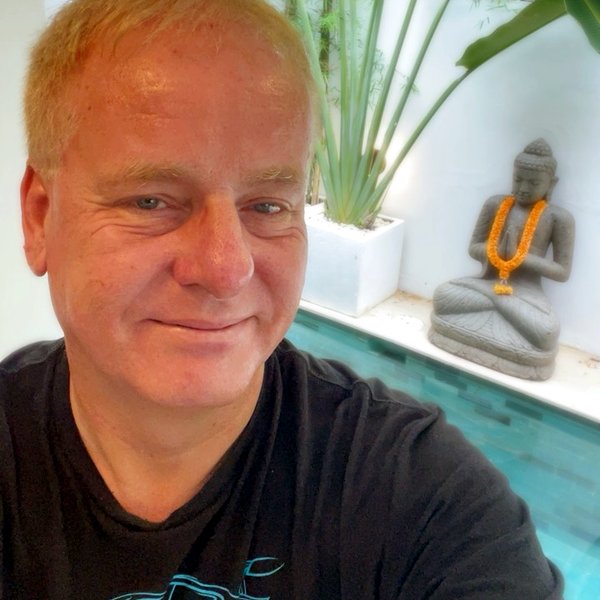
B.A. (MIT)
Native trilingual
Personally vetted · Strommen’s note
Trilingual since age seven and raised between Mexico City and Düsseldorf, Klaus coaches Spanish and German dialects the way he learned them: by talking.
Specialties
B.A. (MIT)
Native trilingual
Specialties
Personally vetted · Strommen’s note
Trilingual since age seven and raised between Mexico City and Düsseldorf, Klaus coaches Spanish and German dialects the way he learned them: by talking.
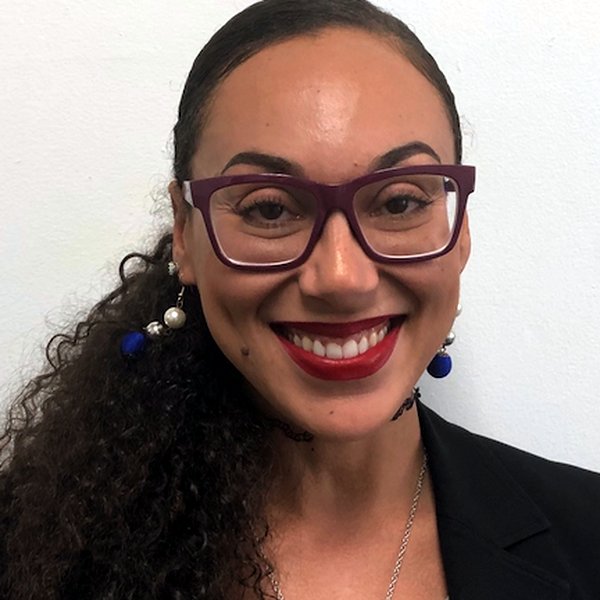


MBA and AS in Recording Arts · DALI, DELF, First Cert, SIZ Computer Science, Pro Tools, Dante
Multi-Culti Polyglot Linguist and Sound Engineer
Personally vetted · Strommen’s note
Vanessa speaks seven languages, has a sound-engineering background, and has spent two decades teaching. Her lessons range from accent coaching to art for kids.
Specialties
Also speaks: ASL American Sign Language, Chinese, Physics
MBA and AS in Recording Arts · DALI, DELF, First Cert, SIZ Computer Science, Pro Tools, Dante
Multi-Culti Polyglot Linguist and Sound Engineer
Specialties
I also speak: ASL American Sign Language, Chinese, Physics
Personally vetted · Strommen’s note
Vanessa speaks seven languages, has a sound-engineering background, and has spent two decades teaching. Her lessons range from accent coaching to art for kids.
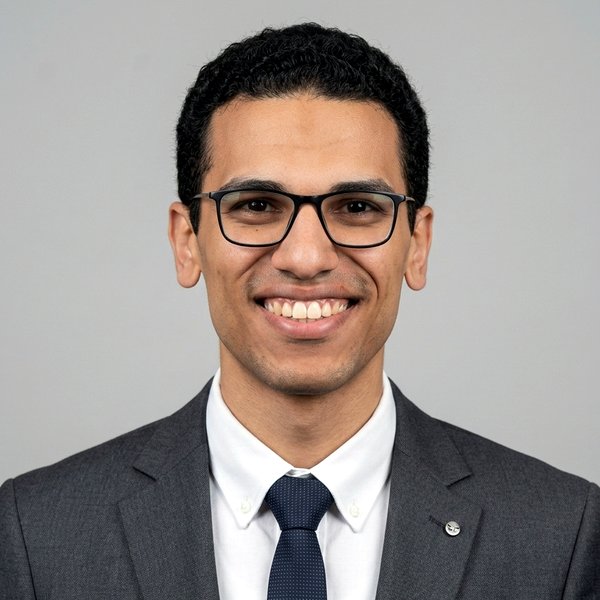

Bachelor of Education (B.Ed.) and pursuing a degree in Aerospace Engineering. · I have a TEFL certification | Certifications in Adobe Graphic Design (Level 1 & 2) for interactive presentations and educational materials.
English, German, and Arabic classes
Personally vetted · Strommen’s note
Arabic, English, and German sit alongside AP Calculus and AP Physics on Omar's schedule, a genuinely rare tutor who crosses from language straight into STEM.
Specialties
Also speaks: French, Italian, Spanish
Bachelor of Education (B.Ed.) and pursuing a degree in Aerospace Engineering. · I have a TEFL certification | Certifications in Adobe Graphic Design (Level 1 & 2) for interactive presentations and educational materials.
English, German, and Arabic classes
Specialties
I also speak: French, Italian, Spanish
Personally vetted · Strommen’s note
Arabic, English, and German sit alongside AP Calculus and AP Physics on Omar's schedule, a genuinely rare tutor who crosses from language straight into STEM.

M.A Oxford foreign languages and literature BSN University of Oklahoma.Working part time towards MSN · RN license for California
language learners unite!
Personally vetted · Strommen’s note
Miriam teaches English, French, German, and some Latin, adapting by age: constructivist methods for adults, inquiry-based learning for kids.
Specialties
M.A Oxford foreign languages and literature BSN University of Oklahoma.Working part time towards MSN · RN license for California
language learners unite!
Specialties
Personally vetted · Strommen’s note
Miriam teaches English, French, German, and some Latin, adapting by age: constructivist methods for adults, inquiry-based learning for kids.

Bachelor English and Psychology · TEFL, Oxford Aviation Train-the-Trainer Certificate
Your cheat code for German
Specialties
Bachelor English and Psychology · TEFL, Oxford Aviation Train-the-Trainer Certificate
Your cheat code for German
Specialties
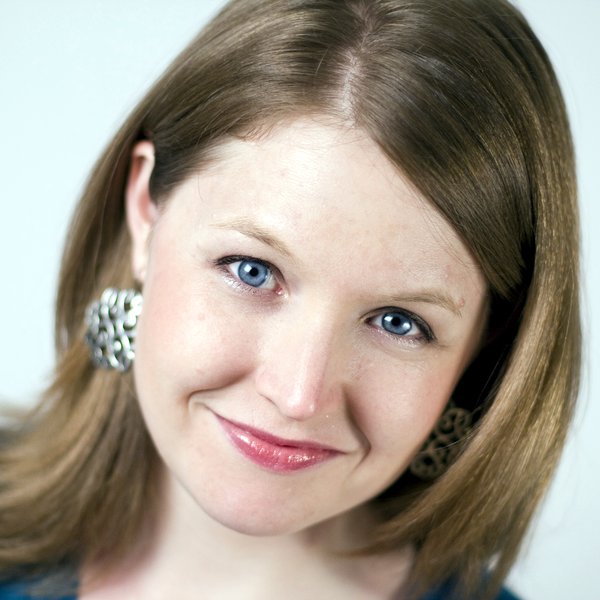
B.M. in Vocal Performance, Augsburg College, Minneapolis, MNM.M. in Classical Voice, Manhattan School of Music, New York, NY · CELTA Certification, Teaching English as a Foreign Language to Adults, University of Cambridge/Hamburg School of English, Hamburg, GermanyDaF Unterrichten, teaching German as a Foreign Language, Goethe-Institut, München, GermanyGoethe-Zertifikat C2 Gro...
Your anchor on the stormy seas of German learning.™
Personally vetted · Strommen’s note
Nicole calls herself, trademark and all, 'your anchor on the stormy seas of German learning.' Sixteen years teaching, Goethe exam prep included.
Specialties
B.M. in Vocal Performance, Augsburg College, Minneapolis, MNM.M. in Classical Voice, Manhattan School of Music, New York, NY · CELTA Certification, Teaching English as a Foreign Language to Adults, University of Cambridge/Hamburg School of English, Hamburg, GermanyDaF Unterrichten, teaching German as a Foreign Language, Goethe-Institut, München, GermanyGoethe-Zertifikat C2 Gro...
Your anchor on the stormy seas of German learning.™
Specialties
Personally vetted · Strommen’s note
Nicole calls herself, trademark and all, 'your anchor on the stormy seas of German learning.' Sixteen years teaching, Goethe exam prep included.

Geschäftskultur — workplace & register
5 workplace norms that mark you as someone who actually does business in Germany
These aren't textbook phrases. They are the everyday workplace codes that distinguish an executive who has worked inside a German firm from one who has only studied German. Screenshot the infographic, then book a tutor to learn the rest.
-
01
Sie und Herr/Frau Nachname
German business defaults to Sie plus the last name plus the professional title (Herr Doktor Schmidt, Frau Direktorin Müller) for years between counterparts. The switch to Du is a real moment, almost always initiated by the senior party with an explicit wollen wir uns duzen?, often with a handshake. Initiating Du upward without invitation reads as American-presumptuous, even at Berlin tech firms that have moved toward universal Du internally.
e.g. Guten Tag, Herr Doktor Schmidt. Schön, Sie kennenzulernen.
-
02
Pünktlichkeit
Punctuality as a load-bearing professional norm, not a stereotype joke. Meetings start when they say they start; arriving 5 minutes late requires a brief apology, 15 minutes late without warning damages the relationship. Meetings also end when they say they end. The American habit of running over without warning reads as disrespect for everyone's calendar. Same logic applies to email response: deadlines are real, not aspirational.
e.g. Die Sitzung beginnt um 10 Uhr pünktlich, das heißt 09:55 sind alle da.
-
03
Der Betriebsrat
The legally mandated works council that gives German employees codetermination rights at the firm level. Has no clean American equivalent. Any HR matter affecting a meaningful number of employees has to involve the Betriebsrat. Larger firms also have Mitbestimmung at the supervisory board level: workers hold seats on the Aufsichtsrat alongside shareholders. For American operators managing German employees or working German M&A, getting this structure right matters more than most negotiation tactics.
e.g. Diese Entscheidung müssen wir mit dem Betriebsrat besprechen.
-
04
Sehr geehrte / Mit freundlichen Grüßen
The standard formal email salutation and closing. Sehr geehrte Frau Dr. Müller or Sehr geehrter Herr Schmidt opens a first-contact business email. Mit freundlichen Grüßen closes the safe professional default. Warmer variants (Beste Grüße, Herzliche Grüße) come once the relationship is established. Skipping the formal salutation for a casual Hallo in first contact reads as cold. The closing is the second highest-impact register signal in German business writing.
e.g. Sehr geehrte Frau Müller, vielen Dank für Ihre Nachricht. Mit freundlichen Grüßen, John Smith.
-
05
Aktennotiz
The meeting memo that follows substantive German business meetings. Documents what was decided, what's owed, by when, and by whom. Often written by the most junior person in the room and circulated within 24 hours. The discipline is real and reflects the German workplace value of decisions being traceable in writing. American executives often skip this step and learn later that their German counterparts are operating off a different memory of what was agreed.
e.g. Ich schicke euch die Aktennotiz mit den nächsten Schritten bis morgen.
About Business German
Sie, Pünktlichkeit, and the Mittelstand
Business German is its own register, and the distance between conversational German and the working German of a Frankfurt boardroom, a Berlin tech standup, a Munich engineering review, or a Mittelstand factory floor in Baden-Württemberg is wider than American executives expect. Germany is the world's third-largest economy, the EU's largest, and the structural backbone of European industrial supply chains. Add Austria and German Switzerland and you have a roughly 100-million-speaker market with one of the densest concentrations of medium-sized industrial firms, family-owned manufacturers, financial institutions, and engineering consultancies in the world. For executives, attorneys, engineers, and operators working with German counterparts, the cost of misreading the workplace register is paid in trust and access, not in grammar marks. Lessons in this specialty focus on the register you need to read a contract in German, present in front of a German leadership team, write professional correspondence that doesn't read as translated, and navigate the workplace culture that governs how German business actually gets done.
The formal pronoun first. German business runs on Sie as the default, paired with the last name and a professional title. Switching to Du with a colleague is a real social event, typically initiated by the more senior party with an explicit invitation (wollen wir uns duzen?), often accompanied by a handshake. Some Berlin-tech and creative-industry workplaces have moved toward universal Du, the way some American workplaces moved toward first names; even in those, you start meetings with new external counterparts on Sie and let the other side propose the switch. Misjudging the register reads as either too cold (defaulting to Du when you don't have standing to) or too distant (sticking with Sie after a peer has clearly invited Du). Titles are forms of address, not optional ornaments: Herr Doktor, Frau Professorin, Herr Direktor, Frau Ingenieur all carry weight in introductions and first emails, and dropping them prematurely reads as American-presumptuous.
German written business correspondence is more structured than English equivalents on every axis. The salutation matters: Sehr geehrte Frau Dr. Müller or Sehr geehrter Herr Schmidt opens a formal first-contact email. Liebe Frau Müller warms it once the relationship is established. The closing is Mit freundlichen Grüßen (the safe professional default), Beste Grüße (slightly less formal, established relationship), Herzliche Grüße (warmer, internal team or known counterpart), or Hochachtungsvoll (extremely formal, often legal). The body uses more elaborate constructions than English business writing typically does. What an American writes as thanks, looking forward appears in German as Vielen Dank im Voraus. Ich verbleibe in Erwartung Ihrer Rückmeldung mit freundlichen Grüßen. Conditional and subjunctive II constructions (würden Sie, könnten Sie, wäre es möglich, hätten Sie) carry the politeness load that English handles with could and would, and using bare indicative everywhere sounds blunt.
The regional layer is real and shapes business culture significantly. Frankfurt is the financial capital, home to the Deutsche Bundesbank, Deutsche Bank, Commerzbank, the European Central Bank, and the German stock exchange. The register is formal, English-fluent, and aligned with international banking and finance conventions. Munich and Bavaria more broadly are the manufacturing and automotive heart (BMW, Siemens, Audi nearby in Ingolstadt), plus insurance (Munich Re, Allianz). Stuttgart and Baden-Württemberg are engineering and automotive (Daimler, Porsche, Bosch, plus thousands of mid-cap engineering firms). Berlin is the political capital, the startup and tech hub, and the creative-industry center. Hamburg is the trade and shipping hub, plus media (Axel Springer, Spiegel). The Ruhr region (Essen, Dortmund, Duisburg) is industrial and chemical-sector dense. Vienna covers Austrian finance and international institutions (OPEC, OSCE). Zurich is Swiss banking and finance (UBS, Credit Suisse legacy, Swiss Re). Each ecosystem has its own register conventions, pace, and norms; lessons calibrate to the region you actually do business in.
The Mittelstand is the layer most American operators miss. The German economy is structurally anchored by the Mittelstand: roughly 3.5 million small and medium-sized firms, many family-owned across two or three generations, often specialized in narrow industrial niches where they hold global market leadership. The Hidden Champions phenomenon documented by Hermann Simon (world-leading firms in pumps, valves, machine tools, specialty chemicals, packaging machinery, optical instruments) is largely a Mittelstand phenomenon. These firms operate with longer time horizons than American public companies, value supplier and customer relationships across decades, and make decisions through a flow that doesn't match the American org chart. The Geschäftsführer (managing director) may or may not be the actual decision-maker; the family principals often are, and they may not be visible in your meeting. Long-term trust matters more than quarterly metrics. A Mittelstand firm that takes three months to return your first proposal will close a follow-up in two weeks once you're in their circle. Reading that ecosystem accurately is half the work of operating in German B2B; the language is the other half.
German workplace vocabulary is its own lexicon. Umsatz is revenue, Gewinn is profit, Verlust is loss, Bilanz is the balance sheet, Geschäftsbericht is the annual report. Steuer is tax; Mehrwertsteuer (often abbreviated MwSt or USt) is VAT. Vorstand is the executive board, Aufsichtsrat is the supervisory board (the dual-board structure that distinguishes German corporate governance from American single-board structure), and the difference between them matters in any deal that touches German governance. Kurzarbeit is the state-subsidized reduced-hours scheme that German employers used heavily during 2008 and 2020 and that has no clean American equivalent. Betriebsrat is the legally mandated works council that gives German employees codetermination rights at the firm level. Tarifvertrag is the sector-level collective bargaining agreement that covers most German workers and that operates very differently from American firm-level union contracts. Mitbestimmung is codetermination, the principle that workers have legal representation at the supervisory board level in larger German firms. None of this vocabulary appears in tourist or conversational German; all of it shows up in your first month of German professional work.
Few things matter more in German business culture than punctuality. Pünktlichkeit is not a stereotype joke; it's a load-bearing professional norm. Meetings start when they say they start. Arriving 5 minutes late requires a brief apology; arriving 15 minutes late without warning genuinely damages the relationship. The corollary is that meetings also end when they say they end; the American habit of running over without warning reads as disrespect for everyone's calendar. Agendas are followed. Decisions reached in meetings are typically followed up in writing. Aktennotiz (meeting memo) or Protokoll (formal minutes) is the standard closing step on serious meetings, and the documentation discipline is real. Email response expectations vary: same-day responses are normal within a workday, multi-day delays are common for non-urgent matters, but a deadline is a deadline. The German workplace also takes the work-life boundary seriously: emails after 7 p.m. or on weekends are uncommon and unwelcome in most environments, August is largely a vacation month, and Christmas-through-New-Year is a quiet zone.
A few specific habits American executives trip up on more often than any others. The handshake on entry to a meeting and on exit is universal in German business. Dropping it reads as cold. Direct disagreement in meetings is professional engagement, not personal attack; soft-pedaling concerns in the American style is often read as either evasive or as agreement, and your counterparts will operate on what you said rather than what you implied. The agenda is the agenda; introducing new topics at the end of a meeting reads as poor preparation. Title and formality protocols are real (Herr Doktor, Frau Doktor for anyone with a PhD, even outside the medical field), and dropping titles prematurely reads as American casualness in a context that hasn't earned it yet. Germans appreciate detailed, fact-based, structurally clear presentations; the American sales-pitch style with high charisma and light content reads as substanceless. Decision-making takes longer in German firms than in American firms because more stakeholders are consulted; rushing the process reads as either pushy or as not understanding how German governance works.
Between lessons, immerse with German business media. Handelsblatt is the canonical business daily, the WSJ equivalent. Frankfurter Allgemeine Zeitung (FAZ) and Süddeutsche Zeitung cover business inside broader news; both are exceptionally well-written and standard reading across the German professional class. Wirtschaftswoche for the weekly business magazine. Manager Magazin for the monthly. Capital, Brand Eins, and Impulse for additional business depth. Podcasts: OMR (Online Marketing Rockstars) for digital and startup, Handelsblatt Today for daily business briefings, Doppelgänger Tech Talk for tech and finance. Authors worth reading in the original: Hermann Simon on the Mittelstand and Hidden Champions, Sahra Wagenknecht on industrial-policy debates, Reinhard K. Sprenger on management. For broader Germany context, our Hochdeutsch, Conversational German, and German Grammar specialty pages cover related programs, and the German course page shows the full family.
The Strommen Business German roster covers the regional ecosystems our students actually work in. Frankfurt-based teachers familiar with banking, finance, and capital markets register. Munich and Stuttgart teachers covering manufacturing, automotive, and engineering. Berlin teachers for tech, startups, and the creative industries. Hamburg teachers for trade, shipping, and media. Vienna teachers for the Austrian and CEE-facing register. Zurich teachers for Swiss banking and pharma. Several of our Business German tutors come from non-teaching professional backgrounds: corporate finance, German contract law, engineering management, the automotive sector, the German tech scene. Each tutor's bio names where they're from, their professional background, and which student profile they fit best (executive coaching, contract reading, presentation prep, Mittelstand protocol, Goethe certification). Pricing reflects experience. For students whose work spans Frankfurt and Berlin, or finance and engineering, we can pair you with two tutors on alternating weeks.
Lessons calibrate to your actual goal. Pre-deal German for an upcoming negotiation with a Munich engineering firm is a different curriculum from monthly maintenance for an executive whose German colleagues insist on German at meetings, which is different again from Goethe-Zertifikat C1 preparation for HR-required proficiency proof, and different again from Mittelstand protocol for an American operator working a family-business acquisition in Baden-Württemberg. We don't run a generic Business German course. Each lesson is one-on-one, your tutor plans it around your week and your region, and the trial is free. Tell us the German business you actually need to navigate. The curriculum follows from there.
What you'll cover
Lessons & classes tailored to Business German
Formal register, Sie, and the German business email
The Sie form as default, subjunctive II constructions (würden Sie, könnten Sie, wäre es möglich) for politeness, formal email salutations (Sehr geehrte, Sehr geehrter) and closings (Mit freundlichen Grüßen, Beste Grüße, Hochachtungsvoll), and the structured written register that distinguishes Business German from conversational German. Drills include real German business correspondence (first contact, follow-up, negotiation, escalation, internal team) read and rewritten until the register sounds like a native German professional. Common gaps we close: bare-indicative blunt phrasing, missing the Sie/Du switch, weak closings, and translated American idioms.
Finance, legal, contract vocabulary, and German labor culture
Umsatz, Gewinn, Verlust, Bilanz, Geschäftsbericht, Mehrwertsteuer, Vorstand, Aufsichtsrat, Geschäftsführer, Kurzarbeit, Betriebsrat, Tarifvertrag, Mitbestimmung. Industry-specific vocabulary calibrated to your sector (banking, automotive, engineering, chemicals, tech, pharma) with real German source documents. German labor law vocabulary for anyone managing German staff: the works council protocol, the codetermination structure, the sector-level collective bargaining framework, the Kurzarbeit scheme. Plus the dual-board governance structure that distinguishes German corporate governance from American single-board firms.
Meeting dynamics, Mittelstand protocol, and presentation prep
How German business meetings actually run: punctual start, structured agenda, direct disagreement as professional engagement, decisions documented in writing, and the handshake protocol on entry and exit. Presentation German: slide language, transition phrases, fielding Q&A, handling direct challenge with composure. Mittelstand protocol for American operators working family-business deals: reading who actually holds decision authority, the role of the family principal, the long arc of trust-building, and the supplier-relationship discipline that distinguishes Mittelstand firms from American mid-caps.
Regional register, certifications, and deal German
Frankfurt finance register, Munich and Stuttgart engineering register, Berlin tech and startup register, Hamburg trade and media register, Vienna Austrian register, Zurich Swiss banking register. Goethe-Zertifikat B2, C1, and C2 preparation, plus TestDaF and DSH for academic German required by German universities for international hires. Sessions cover the four exam modules (Lesen, Hören, Schreiben, Sprechen) plus exam-specific strategy and mock exams. Pre-deal German for upcoming negotiations: sector vocabulary, counterpart-specific prep, cultural calibration for the team you'll face.
FAQ
About Business German lessons & classes
Should I learn Frankfurt or Berlin business German?
Whichever matches the German business you actually need to navigate. Frankfurt finance runs on formal register, English-fluent counterparts, and international-banking conventions. Berlin tech runs on more casual register, often universal Du internally, English mixed liberally into German, and startup-culture norms closer to American expectations. Munich and Stuttgart engineering sit closer to the traditional formal end. The grammar is the same; the cultural reading differs meaningfully. If your counterparts span regions, we can pair you with a tutor for the primary region and a second on alternating weeks. The trial surfaces which calibration fits your specific role.
How do I handle the Sie-to-Du transition with German colleagues?
Default to Sie in any first contact with new German counterparts, regardless of how casual their workplace appears. Wait for the more senior party to initiate the switch with an explicit wollen wir uns duzen?, often paired with a handshake. Accept the switch when offered and don't reciprocate it back the other direction. Initiating Du upward without invitation reads as American-presumptuous in a way Germans notice. The exception: some Berlin-tech and creative-industry firms have moved to universal Du internally, and you'll sometimes get a casual ich bin Anna on first introduction that signals the firm is operating on first names; even then, external counterparts start on Sie.
How does the German Mittelstand differ from American mid-caps?
Structurally and culturally, in ways that affect every deal. The Mittelstand is roughly 3.5 million small and medium-sized firms, many family-owned across two or three generations, often specialized in narrow industrial niches where they hold global market leadership (the Hidden Champions phenomenon Hermann Simon documented). They operate with longer time horizons than American public companies, value supplier and customer relationships across decades, and decide through a flow that doesn't match the org chart. The Geschäftsführer may not be the actual decision-maker; the family principal often is, and may not be visible. Long-term trust matters more than quarterly metrics. Trust builds slowly and then converts to fast execution. We rehearse the protocol explicitly with tutors who have worked inside Mittelstand firms.
I already speak conversational German. How quickly can I cover Business German?
If you're solid at B1+ conversational level, expect 8 to 12 weeks of focused weekly lessons (60 to 90 minutes each) to feel competent reading German business correspondence, presenting in front of a German team, and handling a first negotiation in German. Faster if your goal is narrow (just contract reading, one upcoming deal), slower if you're starting closer to A2. Plateau-level conversational German speakers tend to gain the most. The language is already in place; what's missing is register, regional calibration, sector vocabulary depth, and the cultural codes that turn fluent German into convincing Business German.
Do you prep Goethe certifications for HR-required proficiency?
Yes. Goethe-Zertifikat B2, C1, and C2 are the certifications most German HR departments recognize for international hires. Some firms accept TestDaF (the academic German exam) or telc (a parallel certification). Sessions cover the four exam modules (reading, listening, writing, speaking) plus exam-specific strategy and mock practice. Mock exams in real-time conditions before your test date. Several of our tutors hold Goethe teaching credentials and have specifically prepped students for these exams. Lead time matters: serious certification prep usually takes 3 to 6 months at one or two weekly lessons depending on your starting level.
Can lessons be calibrated to my specific industry?
Yes, and they should be. Business German varies meaningfully by sector. Banking and finance German draws heavily on Handelsblatt and English loanwords, with an international register. Automotive and engineering German is denser and more technical, with sector-specific terminology around Konstruktion, Fertigung, Qualitätsmanagement. Legal German is grounded in BGB civil-code tradition and carries its own vocabulary distinct from common-law English. Tech German mixes liberal English vocabulary into German syntax, particularly in Berlin. Pharma and chemicals German has its own regulatory vocabulary. Tell your tutor your industry in the first lesson and they build the curriculum from real German source documents in your field.
Are tutors based in Germany or in the United States?
Both. Our roster includes native German teachers based in Frankfurt, Munich, Stuttgart, Berlin, Hamburg, Vienna, and Zurich, all teaching via video. Plus longtime German-American bilinguals based in the US who can teach in person across Los Angeles, New York, and other major cities, or via video everywhere. Time-zone-wise, Germany-based tutors typically have late-afternoon and evening availability that maps to US morning lessons; US-based tutors offer flexibility for end-of-business-day US lessons. For students whose schedule is unpredictable, we maintain backup tutors who can absorb canceled or rescheduled sessions.
What does the trial actually cover?
30 minutes, free, with the tutor you select. Bring your real goal: a negotiation in Munich in eight weeks, reading German contracts you currently feel lost in, preparing for a Mittelstand acquisition in Baden-Württemberg, a Frankfurt colleague who just switched to German at meetings. The tutor assesses your current level, maps a curriculum focused on the three to five highest-impact areas for your specific situation, and you decide whether to continue. Most students continue with the trial tutor. Switching is easy if not, and we'll match you to a better fit.
Ready for Business German lessons or classes?
Book a free 30-minute trial with one of our personally vetted tutors. Private lessons or small-group classes — your choice.