



Personally vetted instructors
ÖSD German Test Preparation tutors, lessons & classes
Grüß Gott The standard Austrian formal greeting you'll hear from the Prüfer the morning of your ÖSD sitting in Vienna or Salzburg.
Personally vetted ÖSD prep tutors. Lessons calibrated to the only German proficiency exam that explicitly recognizes Austrian Standard German alongside the German and Swiss varieties, with the credential accepted across the DACH region for university admission, residency, and Austrian naturalization.

Your instructors
ÖSD German Test Preparation tutors for private lessons & classes
Strommen has prepped ÖSD candidates across the variant range: Integrationsprüfung A2 and B1 for Austrian residency and naturalization, ÖSD Zertifikat B2 and C1 for Austrian university admission, and ÖSD at C1 and C2 for candidates choosing the pluricentric rubric over Goethe. Most candidates arrive with a target sitting date, a named Austrian institutional requirement, and the variant the institution asks for. Every tutor below was met and vetted by us in person or via thorough video interview. No marketplace. No automated profile-creation. Real teachers with real ÖSD-Zentrale rubric experience and Austrian-resident teaching backgrounds.
Filter by location, age, or price. Then book a 30-minute free trial.
Below are the Strommen tutors who prep students for the ÖSD. Photos, ratings, and rates are real. Click any card to read their bio and book a free 30-minute trial.
I want to learn…
Every tutor, personally met. — founder-vetted since 2006, in Los Angeles and online worldwide.
Get a personalized plan
Pick your language — a language advisor will match you with the right tutor and map out your path.

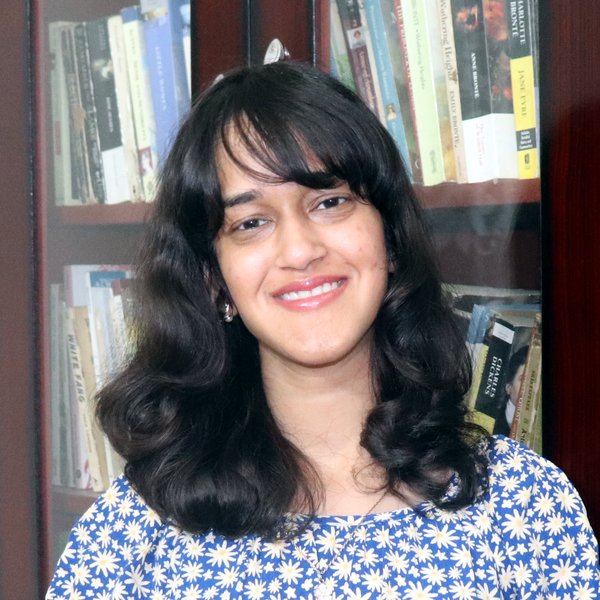


Bachelor of Business Administration (specialized in International Relations) · DELF Examiner, DALF C2, Goethe Zertifikat C1/B2, DELE B1
Join me on your language learning adventure!
Personally vetted · Strommen’s note
Bangalore-based, Yvanka teaches French and German after years at Alliance Française. She started, unusually, as an English teacher in France.
Specialties
Also speaks: English, Italian, Spanish
Bachelor of Business Administration (specialized in International Relations) · DELF Examiner, DALF C2, Goethe Zertifikat C1/B2, DELE B1
Join me on your language learning adventure!
Specialties
I also speak: English, Italian, Spanish
Personally vetted · Strommen’s note
Bangalore-based, Yvanka teaches French and German after years at Alliance Française. She started, unusually, as an English teacher in France.

Bachelor of Arts (Teacher certificate from Zurich teachers College) · TESOL, teachers License as a primary educator
Trilingual German, ESL and French teacher with years of experience.
Personally vetted · Strommen’s note
Thirza teaches trilingual German, French, and ESL out of Zurich, with IELTS, TestDaF, and Goethe prep all part of the toolkit.
Specialties
Bachelor of Arts (Teacher certificate from Zurich teachers College) · TESOL, teachers License as a primary educator
Trilingual German, ESL and French teacher with years of experience.
Specialties
Personally vetted · Strommen’s note
Thirza teaches trilingual German, French, and ESL out of Zurich, with IELTS, TestDaF, and Goethe prep all part of the toolkit.

Master German with Emanuel: Published Author Fluent in German, French, and English with a Rich Cultural Background
Personally vetted · Strommen’s note
Emanuel is a published author fluent in three languages, and he's been teaching German with us since 2011.
Specialties
Master German with Emanuel: Published Author Fluent in German, French, and English with a Rich Cultural Background
Specialties
Personally vetted · Strommen’s note
Emanuel is a published author fluent in three languages, and he's been teaching German with us since 2011.
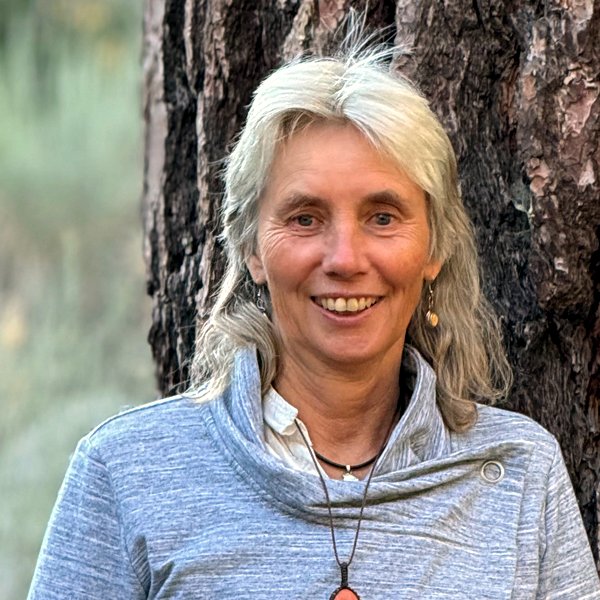

PhD, BSc
PHD with Degree in Swedish and German Linguistics - Arctic researcher, PHD in Biology offering fun and interactive Swedish and German lessons
Personally vetted · Strommen’s note
Carola is a PhD biologist and Arctic researcher with a separate degree in Swedish and German linguistics. She brings that same field rigor into lessons.
Specialties
PhD, BSc
PHD with Degree in Swedish and German Linguistics - Arctic researcher, PHD in Biology offering fun and interactive Swedish and German lessons
Specialties
Personally vetted · Strommen’s note
Carola is a PhD biologist and Arctic researcher with a separate degree in Swedish and German linguistics. She brings that same field rigor into lessons.

I am currently in my sixth semester of my Philosophy & Theater, Film, Media science Bachelor
German and Spanish Native Speaker
Personally vetted · Strommen’s note
A native German and Spanish speaker based in Vienna, Sophie mixes grammar, readings, and conversation deliberately, to keep lessons from repeating.
Specialties
I am currently in my sixth semester of my Philosophy & Theater, Film, Media science Bachelor
German and Spanish Native Speaker
Specialties
Personally vetted · Strommen’s note
A native German and Spanish speaker based in Vienna, Sophie mixes grammar, readings, and conversation deliberately, to keep lessons from repeating.

Österreichisches Deutsch — Austrian essentials
5 Austrian-German moves ÖSD candidates lock in early
These aren't textbook tips. They're the Austrian-anchored vocabulary and rubric facts that decide whether your ÖSD pass reflects the credential's pluricentric promise. Screenshot the infographic, then book a tutor to drill the rest.
-
01
Jänner, heuer, Marille, Sackerl, Paradeiser
ÖSD reading and listening prompts use Austrian vocabulary that German textbooks generally don't teach: Jänner (January, instead of Januar), heuer (this year, instead of dieses Jahr), Marille (apricot, instead of Aprikose), Sackerl (small bag, instead of Tüte), Paradeiser (tomato, instead of Tomate), Spital (hospital, instead of Krankenhaus). The vocabulary doesn't change meaning but slows reading speed if you've never seen it.
e.g. Heuer im Jänner war es besonders kalt. Bringst du bitte ein Sackerl Marillen mit?
-
02
Pluricentric German is rubric policy, not tolerance
ÖSD explicitly recognizes Austrian Standard German, Swiss Standard German, and German Standard German as equally valid productions. Writing Jänner instead of Januar, choosing the perfect tense where a German textbook would prescribe simple past, or saying Sessel for Stuhl costs zero points. Candidates moving over from Goethe prep sometimes over-correct away from Austrian forms; on ÖSD, the Austrian forms are the credential's distinguishing feature.
e.g. Ich bin gestern in die Stadt gegangen (perfect) is fully accepted on ÖSD where a German textbook might prefer Ich ging gestern in die Stadt (simple past).
-
03
Integrationsprüfung adds the civic-orientation module
ÖSD Integrationsprüfung A2 and B1 are the canonical Austrian-residency exams, and they include a Werte- und Orientierungsmodul (values and orientation module) on top of the four language modules. The civic component tests Austrian constitutional principles, gender-equality framework, religious freedom, and Austrian institutions. A candidate who drills only the language modules will fail the civic module regardless of how strong the German is.
e.g. Welche staatlichen Werte sind in der österreichischen Verfassung verankert? Beispiele: Gleichberechtigung, Religionsfreiheit, Demokratie.
-
04
Modules certify independently from B1 up
From ÖSD Zertifikat B1 onward, the four modules (Leseverstehen, Hörverstehen, Schreiben, Sprechen) are independently certifiable. You can retake one module on a later date without re-sitting the modules you already passed, then combine the four passes into the full diploma. That makes the weak module the first thing to drill, not the last. Same logic as the Goethe modular structure.
e.g. Pass Lesen + Hören + Sprechen on the spring sitting, retake Schreiben in fall, walk away with the full B2.
-
05
Switch to ORF listening for the final months of prep
Austrian intonation, vowel realizations, and ORF cadence differ from Tagesschau cadence in subtle ways that matter for Hörverstehen. Candidates who drilled exclusively on Deutsche Welle and German German broadcast need a deliberate Austrian-listening switchover in the final months of prep. ORF's ZIB (Zeit im Bild) evening news is the gold-standard B2-and-above listening benchmark.
e.g. ORF Sendungen wie ZIB 2, Im Zentrum oder Report sind Pflichtlektüre fürs Hörverstehen-Training auf B2-Niveau und höher.
About ÖSD German Test Preparation
ÖSD, with Austrian German recognized
The Österreichisches Sprachdiplom Deutsch (ÖSD) is the official Austrian German-language proficiency exam, administered by the ÖSD-Zentrale in Vienna. The credential is the canonical language proof for Austrian residency, the Austrian permanent settlement permit (Niederlassungsbewilligung), Austrian naturalization, and admission to Austrian universities. Beyond Austria, the ÖSD is broadly accepted across the German-speaking region: German universities accept it alongside the Goethe-Zertifikat and TestDaF for admission purposes, Swiss institutions recognize it for general German proficiency, and German employers and authorities treat it on par with Goethe at equivalent CEFR levels. Where ÖSD genuinely stands apart from every other major German credential is its written policy on pluricentric German: the rubric explicitly recognizes Austrian Standard German, Swiss Standard German, and German Standard German as equally valid productions. A candidate who writes Jänner instead of Januar, says heuer instead of dieses Jahr, or uses the perfect tense where a German textbook would use the simple past loses no points on ÖSD. On Goethe or TestDaF, regional variants get treated case-by-case depending on the grader. For candidates with Austrian heritage, an Austrian destination, or a teacher who learned German in Vienna or Salzburg rather than Berlin, that policy difference is the reason ÖSD exists.
The exam family covers the full CEFR ladder. Each level is its own graded exam with its own fee, registration, and four-skill battery. The standard adult tracks: ÖSD Zertifikat A1, ÖSD Zertifikat A2, ÖSD Zertifikat B1, ÖSD Zertifikat B2, ÖSD Zertifikat C1, and ÖSD Zertifikat C2. Beyond the standard tracks, ÖSD publishes integration-aligned and youth variants. ÖSD Integrationsprüfung A2 and ÖSD Integrationsprüfung B1 are the canonical exams for the Austrian integration agreement (Integrationsvereinbarung) and are required at specific milestones in the Austrian residency-and-naturalization pathway, with both a language module and a Austrian-civic-orientation component (Werte- und Orientierungsmodul). ÖSD Zertifikat Deutsch Österreich B1 and ÖSD Zertifikat Deutsch Österreich B2 are Austrian-context-anchored versions of the standard B1 and B2 exams. ÖSD KID A1 and ÖSD KID A2 serve school-age candidates roughly 10-14. The ÖSD-Zentrale in Vienna also runs ÖSD Zertifikat C1 Jugendliche for younger C1 candidates with age-appropriate prompts. Selecting the right variant matters: for the Austrian residency pathway specifically, the Integrationsprüfung variant is the credential the Austrian authorities (specifically the Magistrat, the Bezirkshauptmannschaft, or the relevant Austrian Integration Fund office) name, and the standard ÖSD Zertifikat at the same CEFR level does not automatically substitute.
The four-skill structure at each level. Leseverstehen presents notices, articles, and longer texts with comprehension formats including matching, multiple choice, and short answer. Text difficulty scales with level, and the texts often draw on distinctly Austrian source material at higher levels: Austrian newspapers (Der Standard, Die Presse, Kleine Zeitung), Austrian regulatory and civic texts, and Austrian-context feature pieces. Hörverstehen covers dialogues, interviews, and broadcast segments, with audio drawn from Austrian sources at higher levels (ORF radio, ORF television, podcast excerpts from Austrian producers). The Austrian intonation, the slightly different vowel quality, and the Austrian vocabulary in the audio prompts are the reason candidates who learned exclusively German German sometimes find ÖSD Hörverstehen tougher than the equivalent Goethe level. Schreiben at A1 is a guided form-fill plus a short personal note; at A2 a slightly longer personal message; at B1 a personal-or-semi-formal text of roughly 80 words; at B2 a structured opinion piece around 150 words; at C1 an extended argumentative piece around 250 words; at C2 a longer essay at full academic register. Sprechen at A1 and A2 is a candidate-with-examiner interaction; from B1 up, ÖSD uses a paired-candidate format in which two candidates work through structured tasks together (introductions, planning, presenting and discussing a topic, sometimes a brief debate at C1 and C2). The examiner observes and scores both candidates independently. From B1 up, the ÖSD-Zertifikat modules are independently certifiable: candidates can sit, retake, and pass each module separately, and combine four module passes at the same level into the full diploma. That modular structure mirrors the Goethe-Zertifikat from B1 up and changes the prep calculus the same way: the weakest module becomes the first thing to drill, not the last.
Scoring follows a per-module-out-of-100 structure at most levels, with a pass threshold of 60 points per module and the full diploma requiring all four modules to clear that threshold. Above the floor, scores translate into descriptors on the diploma: roughly 60-79 is bestanden (passed), 80-89 is gut bestanden (passed well), and 90-100 is sehr gut bestanden (passed very well). The Austrian Integration Fund and selective Austrian institutions sometimes ask for gut bestanden rather than the bare pass, particularly for sensitive caseworker review of naturalization applications. Once you pass an ÖSD-Zertifikat, the diploma is valid for life with no expiration date, though Austrian authorities and some institutions ask for diplomas issued within the last two years for naturalization and residency-renewal contexts.
How our tutors prep candidates. The first lesson opens with two questions: which institution requires the credential (Austrian Magistrat, Austrian university, German university accepting ÖSD, Austrian employer, Austrian Integration Fund), and which exact ÖSD variant does that institution name? Once the variant is locked, the diagnostic uses a past ÖSD Modellsatz from osd.at for that specific variant, and the tutor scores all four modules against the official rubric. From there the prep rebalances toward the weakest module while keeping the strong modules sharp. Speaking practice rehearses the paired-candidate format specifically — the tutor plays the partner role, the candidate practices both halves (presenter and reactor), and the recording is reviewed for register, pacing, Austrian-vs-German register choices (whether to lean into Austrian particles like halt and eh or hold a more neutral pluricentric register), and the recovery move when the partner's turn goes somewhere unexpected. Listening drills lean heavily on Austrian audio sources: ORF news at native pace, Austrian podcasts, ORF-produced documentaries. American candidates who learned German exclusively from German German content often need a deliberate Austrian-listening adaptation period before the Hörverstehen drills feel natural. Reading practice draws on Austrian newspapers and feature work at levels B2 and above, with selected longer-form pieces from Der Standard and Die Presse the closest analogue to what the actual paper draws from. Writing drills happen at the real word count and real timer, with structured grading and rewrite cycles on the same prompt until it clears the level. For the Integrationsprüfung candidates, lessons add the Werte- und Orientierungsmodul civic-orientation content: Austrian constitutional principles, gender-equality framework, religious freedom framework, Austrian institutions, and the everyday civic vocabulary that the module's questions actually draw from.
American and other adult candidates run into a recognizable set of ÖSD-specific traps. Trap one is the Austrian-vocabulary blind spot. Months of German lessons that taught Januar, dieses Jahr, Aprikose, Tüte, Tomate, Schrank, Krankenhaus leave the candidate unprepared for ÖSD reading passages that say Jänner, heuer, Marille, Sackerl, Paradeiser, Kasten, Spital. The vocabulary doesn't change the meaning of the passage but it slows reading speed enough to cost time on the Lesen module. Trap two is the Austrian-listening adaptation. The Austrian intonation pattern is slightly different from German German, the vowel realizations carry an Austrian color even in neutral broadcast register, and the ORF news cadence is not the Tagesschau cadence. Candidates who drilled exclusively on Deutsche Welle and Tagesschau need a deliberate switchover to ORF and Austrian podcasts in the final months of prep. Trap three is the paired speaking format for candidates who rehearsed only solo. Same trap as on telc and Goethe from B1 up: the partner steers the conversation somewhere unexpected and the candidate freezes. Drill with a tutor playing the partner from week one of speaking prep. Trap four is the Integrationsprüfung's civic-orientation module, which is genuinely separate content from the language module: a candidate who drilled German-language B1 without the Werte- und Orientierungsmodul preparation will fail the civic section regardless of how good the language is. And one more thing that catches candidates moving over from Goethe prep: ÖSD rubric philosophy on pluricentric German genuinely is different. A perfect tense where a German textbook would use simple past is fine on ÖSD, Jänner for Januar is fine on ÖSD, the choice of Sessel for Stuhl is fine on ÖSD. Candidates trained to write "Berlin German" sometimes over-correct away from Austrian forms they actually know. Don't. The Austrian forms are the credential's distinguishing feature. Our blog post on German gender and case rules is a useful between-lessons reference for writing accuracy, and the pronunciation guide supports the speaking-section drilling, though Austrian-pronunciation specifics get layered on top of the base German foundations.
Between lessons, lean into Austrian-anchored German media. For listening, ORF (the Austrian public broadcaster) runs free streaming of news and current-affairs programming at native Austrian pace. ZIB (the ORF evening news) is the gold-standard listening benchmark for B2 and above. For podcasts, Der Standard publishes Inside Austria and Thema des Tages; Die Presse runs several political analysis podcasts; Radio FM4 hosts long-form Austrian cultural content. For reading, the three major Austrian quality papers (Der Standard, Die Presse, Kleine Zeitung) sit at the right register and use the Austrian vocabulary the exam expects. The ÖSD-Zentrale publishes free Modellsätze for every variant at osd.at; drill them under the real timer. For Integrationsprüfung candidates, the Austrian Integration Fund (ÖIF) publishes free Werte- und Orientierungsmodul practice materials and a written curriculum that aligns directly with the module questions. Our 1,000 most common German words list is a vocabulary floor for A2 and B1 candidates; B2 and above need to layer in the Austrian-specific vocabulary alongside the base German bank. The CEFR levels explained post walks through what each level means in practice.
The Strommen ÖSD roster includes Vienna-based tutors who graduated through the Austrian education system and bring Austrian Standard German as their native register, Salzburg and Graz-based tutors with strong regional Austrian background and ÖSD-Zentrale rubric familiarity, German-Austrian bilingual tutors who can teach pluricentric register switching for candidates undecided between ÖSD and Goethe, and US-based tutors who have specifically prepped American candidates through the Integrationsprüfung A2 and B1 for Austrian residency cases. Each tutor's bio says where they're from, which ÖSD variants they consistently prep, and which student profile they fit best (Austrian-heritage candidate prepping B2 for university admission, working professional prepping Integrationsprüfung B1 for Austrian naturalization, German-resident candidate considering ÖSD over Goethe for the pluricentric rubric, or a candidate whose target Austrian university has named ÖSD specifically). For broader German foundations alongside ÖSD prep, our Hochdeutsch (standard German) and general German specialty pages cover related programs.
Lessons are one-on-one and calibrated to your exact variant, your sitting date, and your weakest module. An Integrationsprüfung B1 candidate four months out from an Austrian residency renewal is on a different curriculum from an ÖSD Zertifikat C1 candidate prepping for admission to the Universität Wien, and both are different again from an ÖSD Zertifikat B2 candidate sitting the exam in the US for German university admission on the strength of the pluricentric-recognition rubric. The trial is free, the tutor diagnoses where you actually stand against an official Modellsatz for your variant, and from there you decide whether to continue. Browse the tutor list, find a bio that matches your situation, and book the trial.
What you'll cover
Lessons & classes tailored to ÖSD German Test Preparation
Variant identification + Modellsatz diagnostic
Your first lesson opens with two questions: which institution requires the credential, and which exact ÖSD variant does that institution name? Once the variant is locked, the tutor runs a diagnostic against an official Modellsatz from osd.at for that variant and scores all four modules against the relevant rubric. For Integrationsprüfung candidates, the diagnostic also samples the Werte- und Orientierungsmodul to gauge civic-orientation readiness. Subsequent lessons rebalance toward the weakest module while keeping the strong ones sharp.
Austrian vocabulary, register, and pluricentric writing
Lessons build the Austrian-vocabulary layer that German-German lessons usually skip (Jänner, heuer, Marille, Sackerl, Paradeiser, Spital, Kasten, Sessel, Topfen), the Austrian register conventions in formal writing, and the perfect-tense preference in spoken and informal written German that the ÖSD rubric recognizes. Writing drills happen at the real word count and real timer, with structured grading and rewrite cycles on the same prompt until it clears the level. Our German gender and case rules post supports the case-marking work between lessons.
Paired Sprechen format from B1 up
From B1 onward, ÖSD Sprechen is paired. Lessons rehearse both presenter and reactor roles with the tutor playing the partner, recorded for playback review on register, pacing, Austrian-vs-neutral particle choices (whether to lean into halt, eh, na ja or hold a more neutral pluricentric register), and recovery from an unexpected partner turn. C1 candidates rehearse the brief debate format that some C1 sittings include. Pronunciation foundations in our German pronunciation guide, layered with Austrian-pronunciation specifics.
Integrationsprüfung Werte- und Orientierungsmodul
For Integrationsprüfung A2 and B1 candidates, lessons cover the civic-orientation content the module actually tests: Austrian constitutional principles, gender-equality framework, religious freedom, separation of church and state, basic Austrian institutions, everyday civic vocabulary, and the values context the questions draw from. The Austrian Integration Fund (ÖIF) publishes free practice materials we work from. This module is independent of language skill, and a strong-German candidate who skips civic prep will fail the module.
FAQ
About ÖSD German Test Preparation lessons & classes
Is ÖSD accepted outside Austria?
Yes, broadly. German universities accept ÖSD alongside the Goethe-Zertifikat and TestDaF for admission purposes at most institutions and most programs; Swiss universities and Swiss employers recognize ÖSD for general German proficiency; German employers and German authorities (including the Federal Office for Migration and Refugees, BAMF) treat ÖSD on par with Goethe at equivalent CEFR levels for most general-purpose credentialing. For German residency and naturalization specifically, German authorities sometimes prefer Goethe or telc by name; verify with the BAMF office or consular office what they will accept. For Austrian residency, naturalization, and university admission, ÖSD is the canonical credential and is preferred over the alternatives.
Does ÖSD test specifically Austrian German?
The rubric explicitly recognizes Austrian Standard German, Swiss Standard German, and German Standard German as equally valid productions, which makes ÖSD the only major German exam with a written pluricentric policy. In practice, reading and listening prompts at higher levels draw on Austrian sources (Austrian newspapers, ORF audio) and use Austrian vocabulary that German textbooks generally don't teach (Jänner, heuer, Marille, Sackerl, Paradeiser). On the production side (writing and speaking), candidates can write in any of the three standard varieties without penalty. Austrian forms are not required, but they are explicitly welcomed; candidates with German-German training don't need to switch their production style, just to recognize Austrian vocabulary on the receptive side.
Which ÖSD variant do I need for Austrian residency or citizenship?
For Austrian residency renewal milestones tied to the integration agreement (Integrationsvereinbarung), the credential is the ÖSD Integrationsprüfung A2, with both a language module and a values-and-orientation module. For Austrian naturalization (citizenship), the standard requirement is B1 demonstrated via the ÖSD Integrationsprüfung B1, again with the civic-orientation module attached. The standard ÖSD Zertifikat at the same CEFR level does not automatically substitute for the Integrationsprüfung, because the civic-orientation module is a distinct requirement in the residency pathway. Always confirm the exact variant your local Austrian Magistrat or Bezirkshauptmannschaft names before registering.
What's the difference between ÖSD Zertifikat and ÖSD Integrationsprüfung?
The standard ÖSD Zertifikat (A1 through C2) is a four-skill language exam testing reading, listening, writing, and speaking. The ÖSD Integrationsprüfung (offered at A2 and B1) is the residency-pathway variant: it includes the same four language modules plus the Werte- und Orientierungsmodul, a separate module on Austrian constitutional values, civic institutions, gender equality, and religious freedom. The Integrationsprüfung is what the Austrian Integration Fund and the Austrian residency authorities recognize for integration-agreement milestones. The standard Zertifikat at the same level is recognized for general-purpose German proficiency (university admission, employment) but not automatically substituted for the Integrationsprüfung in residency contexts.
Can I sit and pass one module at a time?
Yes, from ÖSD Zertifikat B1 onward. The four modules (Leseverstehen, Hörverstehen, Schreiben, Sprechen) are independently certifiable. You can sit only the modules you need, retake a single weak module after a fail, and combine four module passes at the same level into the full diploma. That mirrors the Goethe modular structure from B1 up and gives candidates a meaningful prep-strategy advantage: focus all effort on the binding module instead of bringing four to passing standard simultaneously. At A1 and A2 the modules are bundled and sit as one combined session, so the single-module-retake option starts at B1.
Is the ÖSD-Zertifikat valid for life?
Yes. Once you pass an ÖSD-Zertifikat at a given level, the diploma is valid for life with no expiration date. Some Austrian institutions, particularly the Austrian Integration Fund for naturalization caseworker review and certain Austrian university programs, may ask for a diploma issued within the last two years even though the credential itself does not expire. That's an institutional preference rather than an ÖSD-Zentrale policy. If you sat the exam more than two years before applying somewhere selective, ask the institution whether they'll accept the older diploma before assuming you need to retake.
Where do I actually sit the ÖSD exam?
The ÖSD-Zentrale in Vienna licenses a global network of authorized exam centers. The densest coverage is across Austria (Vienna, Salzburg, Graz, Innsbruck, Linz), with significant presence in Germany, Switzerland, and across Europe. Outside Europe, ÖSD centers exist in many major cities globally, often co-located with Austrian Cultural Forums (Österreichische Kulturforen) or Austrian-affiliated language institutes. In the United States, ÖSD coverage is sparser than Goethe; sittings often run through partner institutions on a quarterly schedule rather than the Goethe-Institut's monthly cadence. Identify your nearest ÖSD center early, because session frequency at smaller centers can be the practical bottleneck for candidates working back from an Austrian admission or residency deadline. The current center list lives at osd.at.
How long does ÖSD prep take?
Depends on your starting level, target level, and variant. An A2-to-B1 jump targeting Integrationsprüfung B1 typically takes three to four months at one or two weekly lessons plus consistent daily exposure, with an additional several weeks for the Werte- und Orientierungsmodul civic-orientation prep. B1-to-B2 usually takes four to six months because the formal-register writing genuinely takes longer to build. Candidates moving over from Goethe prep at the same CEFR level usually need an additional several weeks for the Austrian-listening adaptation and the Austrian-vocabulary layer. C1 and C2 candidates jumping from solid B2 typically need six to nine months, with the writing development as the gating step.
Ready for ÖSD German Test Preparation lessons or classes?
Book a free 30-minute trial with one of our personally vetted tutors. Private lessons or small-group classes — your choice.