



Personally vetted instructors
TestDaF German Test Preparation tutors, lessons & classes
Guten Morgen What you'll hear from the proctor on test morning at your TestDaF center.
Personally vetted TestDaF prep tutors. Lessons calibrated to the four-section TDN scoring system the TestDaF-Institut actually grades against, with the credential German universities accept for direct undergraduate and graduate admission.

Your instructors
TestDaF German Test Preparation tutors for private lessons & classes
Strommen has prepped TestDaF candidates targeting German Bachelor's, Master's, and doctoral admission for years. Most students arrive with a target university, a target TDN profile (usually 4×TDN 4, sometimes TDN 5 in one or two sections for selective programs), a sitting date already booked, and an honest sense of which section is the binding constraint. Every tutor below was met and vetted by us in person or via thorough video interview. No marketplace. No automated profile-creation. Real teachers with real TestDaF rubric experience.
Filter by location, age, or price. Then book a 30-minute free trial.
Below are the Strommen tutors who prep students for TestDaF. Photos, ratings, and rates are real. Click any card to read their bio and book a free 30-minute trial.
I want to learn…
Every tutor, personally met. — founder-vetted since 2006, in Los Angeles and online worldwide.
Get a personalized plan
Pick your language — a language advisor will match you with the right tutor and map out your path.

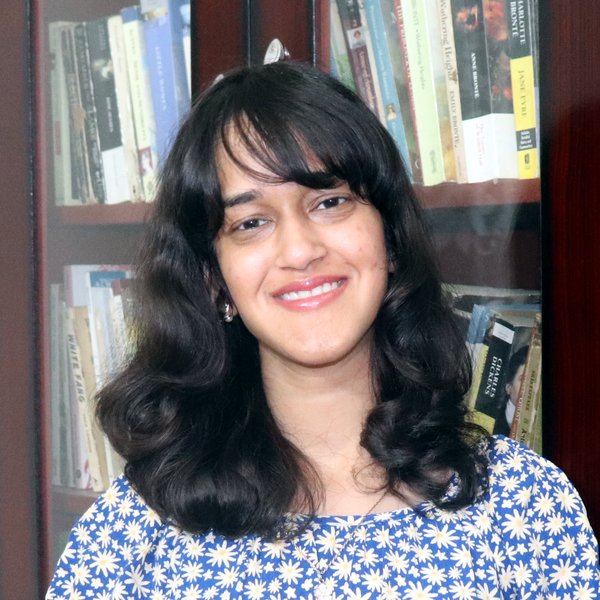


Bachelor of Business Administration (specialized in International Relations) · DELF Examiner, DALF C2, Goethe Zertifikat C1/B2, DELE B1
Join me on your language learning adventure!
Personally vetted · Strommen’s note
Bangalore-based, Yvanka teaches French and German after years at Alliance Française. She started, unusually, as an English teacher in France.
Specialties
Also speaks: English, Italian, Spanish
Bachelor of Business Administration (specialized in International Relations) · DELF Examiner, DALF C2, Goethe Zertifikat C1/B2, DELE B1
Join me on your language learning adventure!
Specialties
I also speak: English, Italian, Spanish
Personally vetted · Strommen’s note
Bangalore-based, Yvanka teaches French and German after years at Alliance Française. She started, unusually, as an English teacher in France.
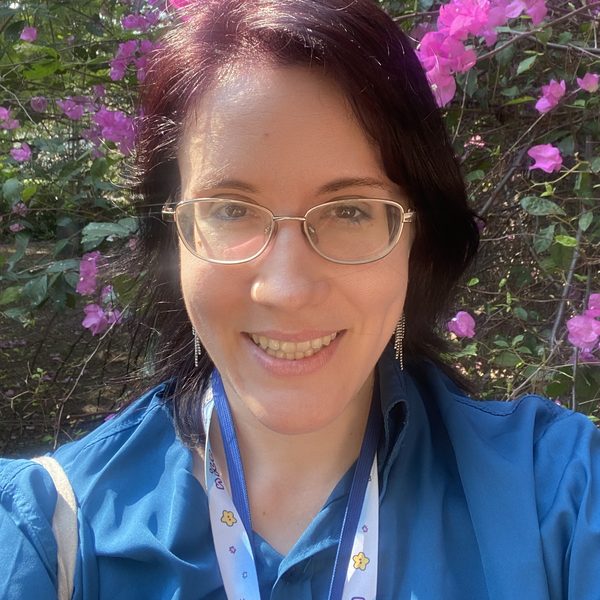
Bachelor of Arts (Teacher certificate from Zurich teachers College) · TESOL, teachers License as a primary educator
Trilingual German, ESL and French teacher with years of experience.
Personally vetted · Strommen’s note
Thirza teaches trilingual German, French, and ESL out of Zurich, with IELTS, TestDaF, and Goethe prep all part of the toolkit.
Specialties
Bachelor of Arts (Teacher certificate from Zurich teachers College) · TESOL, teachers License as a primary educator
Trilingual German, ESL and French teacher with years of experience.
Specialties
Personally vetted · Strommen’s note
Thirza teaches trilingual German, French, and ESL out of Zurich, with IELTS, TestDaF, and Goethe prep all part of the toolkit.
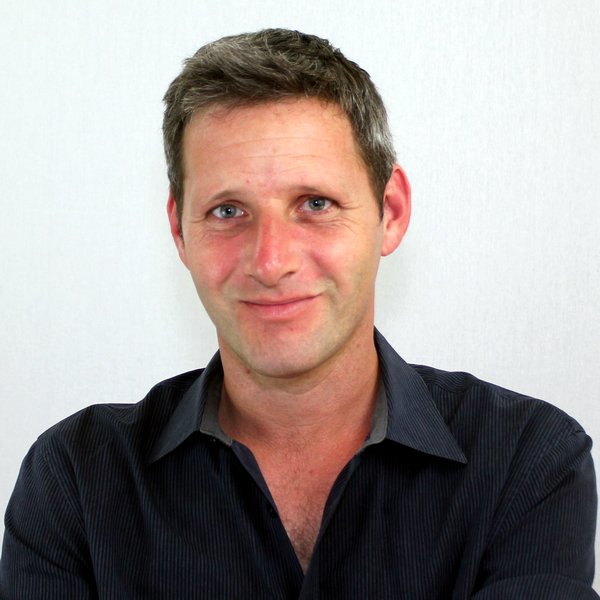
Master German with Emanuel: Published Author Fluent in German, French, and English with a Rich Cultural Background
Personally vetted · Strommen’s note
Emanuel is a published author fluent in three languages, and he's been teaching German with us since 2011.
Specialties
Master German with Emanuel: Published Author Fluent in German, French, and English with a Rich Cultural Background
Specialties
Personally vetted · Strommen’s note
Emanuel is a published author fluent in three languages, and he's been teaching German with us since 2011.
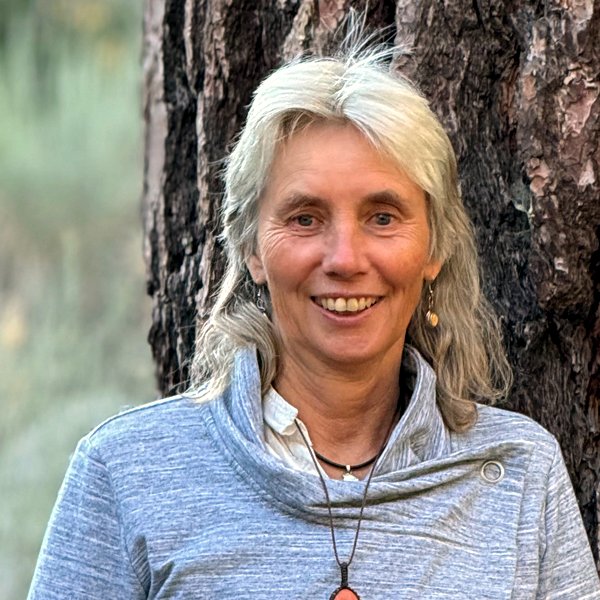

PhD, BSc
PHD with Degree in Swedish and German Linguistics - Arctic researcher, PHD in Biology offering fun and interactive Swedish and German lessons
Personally vetted · Strommen’s note
Carola is a PhD biologist and Arctic researcher with a separate degree in Swedish and German linguistics. She brings that same field rigor into lessons.
Specialties
PhD, BSc
PHD with Degree in Swedish and German Linguistics - Arctic researcher, PHD in Biology offering fun and interactive Swedish and German lessons
Specialties
Personally vetted · Strommen’s note
Carola is a PhD biologist and Arctic researcher with a separate degree in Swedish and German linguistics. She brings that same field rigor into lessons.

I am currently in my sixth semester of my Philosophy & Theater, Film, Media science Bachelor
German and Spanish Native Speaker
Personally vetted · Strommen’s note
A native German and Spanish speaker based in Vienna, Sophie mixes grammar, readings, and conversation deliberately, to keep lessons from repeating.
Specialties
I am currently in my sixth semester of my Philosophy & Theater, Film, Media science Bachelor
German and Spanish Native Speaker
Specialties
Personally vetted · Strommen’s note
A native German and Spanish speaker based in Vienna, Sophie mixes grammar, readings, and conversation deliberately, to keep lessons from repeating.

Bachelor English and Psychology · TEFL, Oxford Aviation Train-the-Trainer Certificate
Your cheat code for German
Specialties
Bachelor English and Psychology · TEFL, Oxford Aviation Train-the-Trainer Certificate
Your cheat code for German
Specialties

Hörsaal-Vokabular — academic essentials
5 TestDaF habits TDN-5 candidates build early
These aren't vocabulary lists. They're the rubric-aware exam habits that separate candidates who clear 4×TDN 4 on the first sitting from those who book a second session. Screenshot the infographic, then book a tutor to drill the rest.
-
01
Sections score independently on TDN 3/4/5
TestDaF reports four separate section scores (Leseverstehen, Hörverstehen, Schriftlicher Ausdruck, Mündlicher Ausdruck), each in TDN 3, TDN 4, or TDN 5, with no overall composite. A TDN 5 in reading cannot rescue a TDN 3 in writing. Admissions officers read the profile across all four, so the binding section is the prep priority from week one.
e.g. 4×TDN 4 is the typical university floor; TDN 5 in one or two sections is what selective programs (medicine, law) ask for.
-
02
Speak into the headset, not into a person
Mündlicher Ausdruck is recorded into a microphone in seven prompts, graded later by TestDaF-Institut staff. There is no examiner facial expression to pace against. Candidates who rehearsed only face-to-face conversation freeze on the prompts and underfill the speaking window. Rehearse with a phone-mic or Zoom recording from week one, then review the playback with your tutor.
e.g. Sie haben jetzt 90 Sekunden zur Vorbereitung. Danach hören Sie einen Signalton. Sprechen Sie nach dem Ton.
-
03
Drill the chart-description micro-lexicon
Every Schriftlicher Ausdruck essay opens with a statistical chart and asks you to describe it before you argue. The expected vocabulary (die Grafik zeigt, steigt um, nimmt zu, im Vergleich zu, auffällig ist, während, im Gegensatz dazu) is its own register. Candidates who improvise it lose Wortschatz points in the opening paragraph. Drill it as a fixed phrase bank.
e.g. Die Grafik zeigt die Entwicklung von 2010 bis 2020. Auffällig ist, dass die Zahl der Studierenden um 23 Prozent gestiegen ist.
-
04
Single-play listening on two of three passages
Hörverstehen plays two of its three passages only once. Candidates trained on textbook audio (always replayable, always slow) lose composure when a key detail flies past. Note-taking technique under single-play conditions has to be drilled deliberately: short keyword abbreviations, no full sentences, predicted-detail listening rather than reactive listening.
e.g. Hörtext 2: eine wissenschaftliche Diskussion. Sie hören den Text einmal. Notieren Sie die wichtigsten Punkte beim Hören.
-
05
Sit a full Modellsatz under real exam clock by week three
The TestDaF-Institut publishes past Modellsätze free at testdaf.de. Don't save them for the final month. Sit a full mock under real timer conditions (no pauses, no dictionary, headset on for the speaking) by your third week of prep so the time pressure on Lesen and the single-play Hören becomes familiar. Repeat monthly. Timer-aware practice from week one is the single biggest predictor of first-sit success.
e.g. Echte Bedingungen: echte Uhr, kein Wörterbuch, kein Anhalten der Aufnahme, Kopfhörer auf für den Mündlichen Teil.
About TestDaF German Test Preparation
TestDaF, section by section
TestDaF (Test Deutsch als Fremdsprache) is the academic-track German proficiency exam administered by the TestDaF-Institut at g.a.s.t. e.V. in Bochum, accepted by every accredited German university as proof of German-language readiness for degree study. Where the Goethe-Zertifikat sweeps the full CEFR ladder from A1 to C2 and the Austrian ÖSD serves residency and citizenship pathways across the DACH region, TestDaF was purpose-built for one population: international students who need to prove they can sit in a German lecture hall, follow a Vorlesung at native pace, take usable notes, write a structured argumentative essay, and discuss complex topics in seminar without losing the thread. The credential is also accepted for academic-staff appointments and for some German research-track work visas, but its center of gravity is university admission, full stop.
The exam runs as a single sitting of roughly 3 hours 10 minutes plus check-in and breaks, and it tests four sections back-to-back in fixed order: Leseverstehen (reading, three texts, 60 minutes), Hörverstehen (listening, three audio passages, around 40 minutes), Schriftlicher Ausdruck (writing, one extended argumentative task, 60 minutes), and Mündlicher Ausdruck (speaking, seven tasks delivered into a headset and recorded, around 35 minutes). The speaking section is the part most candidates underestimate. Unlike Goethe, there is no human examiner sitting across from you. You speak into a microphone, the audio is sent to TestDaF-Institut graders in Germany, and your recording is scored against a calibrated rubric. That changes the prep substantially: candidates who rehearsed only face-to-face conversation often freeze when the only feedback is silence and a beep.
Scoring uses the TestDaF-eigene Niveaustufen (TDN), a custom three-band scale that maps roughly onto the upper end of CEFR. Each of the four sections receives an independent TDN score: TDN 3, TDN 4, or TDN 5, with TDN 5 the ceiling. Performances below TDN 3 are recorded as "unter TDN 3" and don't carry a numeric grade. The standard German university expectation is TDN 4 in all four sections (occasionally noted as 4×TDN 4 in admission documents), which corresponds roughly to a strong B2 to lower C1 in CEFR terms. Selective programs (medicine, law, some engineering departments) ask for TDN 5 in one or more sections. Crucially, the four section scores are reported separately and the full diploma never bundles into a single composite. That's the central fact for prep strategy: a TDN 5 on reading cannot offset a TDN 3 on writing. The weakest section is the binding constraint, and admissions officers read your TDN profile across all four when deciding whether to admit.
Unlike the modular Goethe from B1 up, TestDaF sections cannot be retaken independently within the standard format. If you sit the paper-based TestDaF and one section falls below your target TDN, the standard path is to register and sit the full exam again on a later session date, paying the full fee. There is, however, a newer digital format (digitaler TestDaF) introduced in recent years, which runs the same four sections on screen rather than on paper and offers more frequent sitting dates. Both versions carry equivalent recognition; check which format your nearest test center offers and what its session calendar looks like, because the test-date scarcity often becomes the practical bottleneck for candidates on a tight admission timeline. Sessions run roughly six times per year across the global TestDaF center network, with deadlines about six weeks before each session.
What each section actually demands. Leseverstehen presents three texts of rising difficulty: a short journalistic piece, a longer popular-academic article, and a dense academic passage drawn from the kind of textbook or journal a German undergraduate would actually read. Question types include matching, true-false-not-in-text, multiple choice, and short-answer. The hardest question is usually the "nicht im Text" distinction, which catches candidates who answered from background knowledge rather than from what the passage actually said. Hörverstehen covers three passages at native pace: a casual everyday dialogue (note-taking allowed), an information-dense interview or expert talk (transcript-style detail recall), and a formal lecture excerpt at full academic pace. Audio plays only once for two of the three passages, and that single-listen constraint is the surprise that costs unprepared candidates real points. Schriftlicher Ausdruck asks for one structured 350-word essay built from a statistical chart plus a thesis prompt, where the candidate must describe the data, present a position, weigh counterarguments, and conclude — all under formal academic register and tight argumentative structure. Mündlicher Ausdruck runs seven recorded prompts spanning everyday interaction, describing a graph aloud, presenting a position with reasoning, comparing options, and giving a one-minute monologue on an academic topic. Each task has a preparation window measured in seconds and a strict speaking window after the beep.
How our tutors prep candidates. The first lesson is almost always a full diagnostic against a past TestDaF Modellsatz, available free from the TestDaF-Institut. The tutor scores all four sections against the official TDN rubric and identifies the binding section, almost always Schreiben or one half of Sprechen for American candidates who learned German in a classroom. From there, prep rebalances toward the binding section while keeping the strong sections sharp. Writing drills happen at the real word count and real timer, with structured grading against the four TestDaF rubric dimensions (Gesamteindruck, Aufgabenbewältigung, Kohärenz und Kohäsion, Wortschatz und Strukturen) and rewrite cycles on the same prompt until the essay clears TDN 4 reliably. Speaking practice uses the actual recorded-headset format from week one. Candidates rehearse into a phone-mic setup or a Zoom recording, then review the playback with the tutor for register, pacing, modal-particle naturalness, and the recovery move when you lose the prompt halfway through. Listening builds from Deutsche Welle's Langsam gesprochene Nachrichten for early prep up to Tagesschau, ARD Audiothek, and lecture excerpts from the German university free-courseware archives (HOOU, Tübingen, Berlin Lecture Series) at full native pace closer to the exam date. Reading practice draws on Die Zeit, Der Spiegel feature articles, and an early diet of the popular-academic texts the actual paper draws from. A reasonable prep arc for a candidate sitting at solid B2 aiming for 4×TDN 4 is three to four months of weekly lessons plus consistent daily exposure; candidates pushing from low B2 toward the same target usually need five to six months because the writing development is the rate-limiting step.
American candidates run into a recognizable set of TestDaF traps, and surfacing them in the diagnostic shortens the prep arc. Trap one is the headset speaking format. Talking into silence is genuinely harder than talking to a human, and the absence of nods or eye contact strips the cues most learners use to pace themselves. Without rehearsal under recording conditions, candidates either rush and underfill the speaking window or freeze and leave dead air, both of which cost TDN points. Trap two is the connector layer in Schriftlicher Ausdruck. A 350-word argumentative essay without einerseits / andererseits, darüber hinaus, im Gegensatz dazu, folglich, dennoch reads as a list of points rather than a structured argument, and Kohärenz und Kohäsion scores down accordingly. Trap three is the chart-description register that opens the essay. The expected vocabulary (steigt um, nimmt zu, im Vergleich zu, die Grafik zeigt, auffällig ist) is its own micro-lexicon, and candidates who improvise it lose points in the opening paragraph that they can't recover later. Trap four is the single-play listening on two of the three passages. Candidates trained on textbook audio (always replayable, always slow) lose composure when a key detail flies past once and doesn't return. Note-taking technique under single-play conditions has to be drilled deliberately. And one more thing that surprises candidates: case marking on adjectives in argumentative writing. Nominative and accusative get locked in by mid-B2 for most American students, but dative and genitive endings under time pressure are where Wortschatz und Strukturen scores quietly bleed away. Our blog post on German gender and case rules is a useful between-lessons reference for that work; the pronunciation guide supports the speaking-section drilling.
Between lessons, lean into authentic German academic media. Deutsche Welle runs free leveled news; the Langsam gesprochene Nachrichten bulletins are a good entry, the standard DW news a fair middle, and Tagesschau the gold standard for native-pace listening. ARD Audiothek hosts long-form podcasts, radio documentaries, and lecture series free of charge — sample Wissenschaft im Brennpunkt, IQ - Wissenschaft und Forschung, and the various ARD-hosted university lecture archives. For reading, Die Zeit's feature section and Der Spiegel's longform are the closest commercial analogue to TestDaF's middle and hard reading passages. The Goethe-Institut's free Modellsatz archive and the TestDaF-Institut's own past papers are the single most valuable practice resource — drill the actual question types under the real timer. Our 1,000 most common German words list is a floor for B1/B2 vocabulary; TestDaF candidates will need a larger bank including the academic register the rubric scores. If you're not sure where your current German sits, the CEFR levels explained post is a useful frame.
The Strommen TestDaF roster includes Germany-based tutors who have graded TestDaF mock papers for years, US-based tutors who have walked American candidates through the headset-speaking format specifically, native German university lecturers who know the academic register the rubric rewards from the inside, and longtime Goethe-Institut examiners who cross-prep candidates moving between Goethe and TestDaF as a strategic admissions hedge. Each tutor's bio says where they're from, what TDN bands they consistently prep candidates to, and which student profile they fit best (Bachelor's-admission B2 candidate, Master's-admission TDN-5-target candidate, PhD-research-track candidate working on dissertation German alongside exam prep). Match yourself to a Germany-resident tutor for full immersive audio exposure and current rubric familiarity, or to a US-based tutor for the experience of someone who's specifically drilled the headset format with American mouths. For broader German foundations alongside TestDaF prep, our Hochdeutsch (standard German) and general German specialty pages cover related programs.
Lessons are one-on-one and calibrated to your sitting date, your target university's TDN profile, and your binding section. A candidate three months out from a March sitting with a 4×TDN 4 target is on a different curriculum from one six months out aiming for a TDN 5 in Hörverstehen for a medicine program. The trial is free, the tutor diagnoses where you actually stand against an official Modellsatz, and from there you decide whether to continue. Browse the tutor list, find a bio that matches your situation, and book the trial.
What you'll cover
Lessons & classes tailored to TestDaF German Test Preparation
Diagnostic + TDN rubric alignment
Your first lesson is usually a full diagnostic against a past TestDaF Modellsatz from the TestDaF-Institut. The tutor scores all four sections (Leseverstehen, Hörverstehen, Schriftlicher Ausdruck, Mündlicher Ausdruck) against the official TDN rubric (Gesamteindruck, Aufgabenbewältigung, Kohärenz und Kohäsion, Wortschatz und Strukturen) and identifies your binding section. Subsequent lessons rebalance toward that section while keeping the strong sections at TDN 4 or above.
Schriftlicher Ausdruck (the gating section for most candidates)
Writing is where most American TestDaF candidates lose the TDN 4 floor. Lessons drill the chart-description opening register, structured argumentation (thesis, weighed counterargument, synthesis), the connector layer (einerseits, andererseits, darüber hinaus, folglich, dennoch), case-marking discipline on articles and adjectives, and word order in subordinate clauses. Real timed 350-word essays graded against the rubric, with rewrite cycles. Our blog post on German gender and case rules supports this work between lessons.
Mündlicher Ausdruck (the recorded headset format)
Speaking practice uses the actual headset-and-microphone format from week one. Candidates rehearse the seven prompt types (everyday interaction, chart description, position with reasoning, comparison, academic monologue) into a phone-mic or Zoom recording, then review the playback with the tutor for register, pacing, modal-particle naturalness (doch, mal, halt, schon), and the recovery move when you lose the prompt halfway through. Sustained Sie register throughout. Our German pronunciation guide covers the foundations.
Hörverstehen, Leseverstehen, and full mock exams
Authentic German academic media (Deutsche Welle Langsam gesprochene Nachrichten for early prep, Tagesschau and ARD Audiothek lecture archives at full native pace closer to the exam date). Real exam-style reading from Die Zeit feature pieces, Der Spiegel longform, and popular-academic textbook excerpts. Single-play listening drilled specifically. Close to test date, lessons shift to full timed Modellsätze under real headset conditions. The single biggest predictor of first-sit TDN 4: timer-aware practice from week three.
FAQ
About TestDaF German Test Preparation lessons & classes
What's the difference between TestDaF and DSH?
Both certify academic German at the level a German university expects, but the format and acceptance differ. TestDaF is a standardized national exam administered globally by the TestDaF-Institut, scored on the TDN scale, and recognized by every accredited German university. DSH (Deutsche Sprachprüfung für den Hochschulzugang) is administered by individual universities themselves, scored on a DSH-1/DSH-2/DSH-3 scale (DSH-2 is the standard admission floor), and only the university that issued your DSH automatically accepts it; other universities decide case by case. Practically, candidates abroad usually take TestDaF because it's available at certified centers worldwide; candidates already in Germany on a language-school visa often take DSH at their target university.
What TDN score do I actually need?
The standard German university expectation for direct degree admission is 4×TDN 4, meaning TDN 4 or higher in all four sections. Selective programs ask for more: medicine, law, some engineering departments commonly require TDN 5 in Schriftlicher Ausdruck and Mündlicher Ausdruck, and certain combined Bachelor/Master tracks ask for 4×TDN 5. The exact requirement varies program by program, so verify with the admissions office at your target university before registering. Anything below TDN 3 doesn't carry a numeric grade and won't satisfy a university requirement.
Can I retake just one section if I miss the TDN on a section?
Not within the standard format. Unlike the modular Goethe-Zertifikat from B1 up, TestDaF does not offer per-section retakes. If one section falls below your target TDN, you register and sit the full four-section exam again on a later session date and pay the full fee. The digital TestDaF (digitaler TestDaF) follows the same four-section retake structure. This is the main strategic argument for treating the binding section as the prep priority from week one rather than splitting effort evenly across all four.
How often is TestDaF offered, and where?
Sessions run roughly six times per year across the global TestDaF center network. The TestDaF-Institut maintains certified test centers in over 100 countries, including major US cities (consult testdaf.de for the current center list). Registration deadlines are typically four to six weeks before each session, and test-date scarcity at popular centers often becomes the practical bottleneck for candidates working backward from a university admission deadline. Register early and identify a backup session before locking your prep schedule.
Is the digital TestDaF (digitaler TestDaF) equivalent to the paper version?
Yes, for admission purposes. The digital TestDaF runs the same four sections on screen rather than on paper, offers more frequent sitting dates, and carries the same recognition from German universities as the paper exam. Speaking is still recorded into a headset and graded centrally. Some candidates prefer digital for the typing speed advantage on the writing section; others prefer paper for the familiarity of handwriting under time pressure. Check which format your nearest test center offers and choose based on session availability and personal preference.
How long does TestDaF prep take?
Depends on your current level relative to your target TDN profile. A solid B2 candidate aiming for 4×TDN 4 usually needs three to four months at one or two weekly lessons plus consistent daily German exposure. A low B2 candidate aiming for the same target typically needs five to six months because the writing development is the rate-limiting step. Candidates pushing for TDN 5 in one or more sections usually need an additional one to two months on top. There's no shortcut around writing many structured 350-word essays, getting them graded against the rubric, and rewriting under feedback.
Will TestDaF help with a German residency or work visa?
TestDaF is recognized for academic and academic-staff visa contexts and for some research-track work visas, but its center of gravity is university admission. For a German residency permit pathway or naturalization, the Goethe-Zertifikat (or the Austrian ÖSD) is the standard credential the German Federal Office for Migration and Refugees (BAMF) names by name. If your goal mixes academic admission with a residency pathway, ask the consulate or BAMF office whether they'll accept TestDaF for the residency portion or whether you'll need a Goethe diploma in parallel.
Can I take TestDaF prep lessons online?
Yes, and most candidates do. The TestDaF-prep workflow is well suited to video: timed essay drills with shared screens, recorded speaking practice with playback against the headset format, sample paper review with annotated notes. Most of our TestDaF tutors prep students entirely online via Zoom or Jitsi. Several also offer in-person lessons for candidates who prefer face-to-face work. The booking widget on each tutor's profile shows available formats and locations.
Ready for TestDaF German Test Preparation lessons or classes?
Book a free 30-minute trial with one of our personally vetted tutors. Private lessons or small-group classes — your choice.