



Personally vetted instructors
Business Portuguese tutors, lessons & classes
Bom dia The formal Portuguese "good morning" that opens any business interaction.
Personally vetted Portuguese tutors for working professionals. Lessons calibrated to the São Paulo boardroom, the Lisbon startup floor, or the cross-Atlantic Zoom call where your team is half-Brazilian and half-Portuguese.

Your instructors
Business Portuguese tutors for private lessons & classes
Strommen has Portuguese tutors with real corporate backgrounds in Brazil and Portugal. Business lessons calibrate to your industry, your counterparts, and the specific high-stakes situations you most need to handle confidently. Every tutor below was met and vetted by us in person or via thorough video interview. No marketplace. No automated profile-creation.
Filter by location, age, or price. Then book a 30-minute free trial.
Below are the Strommen tutors who specialize in business Portuguese. Photos, ratings, and rates are real. Click any card to read their bio and book a free 30-minute trial.
I want to learn…
Every tutor, personally met. — founder-vetted since 2006, in Los Angeles and online worldwide.
Get a personalized plan
Pick your language — a language advisor will match you with the right tutor and map out your path.

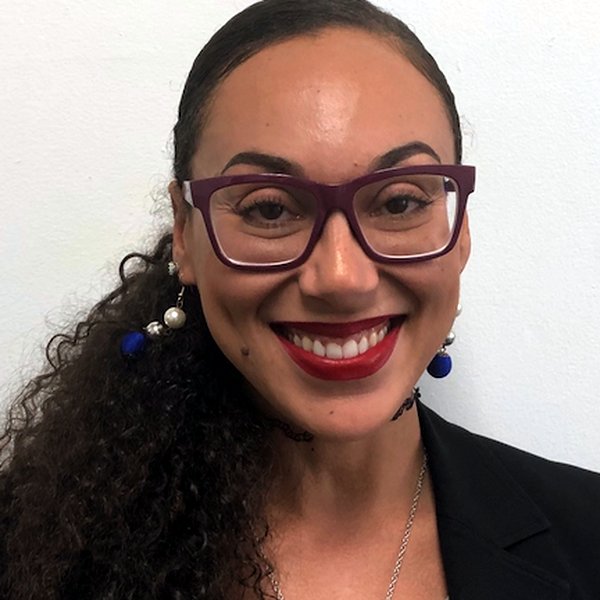


MBA and AS in Recording Arts · DALI, DELF, First Cert, SIZ Computer Science, Pro Tools, Dante
Multi-Culti Polyglot Linguist and Sound Engineer
Personally vetted · Strommen’s note
Vanessa speaks seven languages, has a sound-engineering background, and has spent two decades teaching. Her lessons range from accent coaching to art for kids.
Specialties
Also speaks: ASL American Sign Language, Chinese, Physics
MBA and AS in Recording Arts · DALI, DELF, First Cert, SIZ Computer Science, Pro Tools, Dante
Multi-Culti Polyglot Linguist and Sound Engineer
Specialties
I also speak: ASL American Sign Language, Chinese, Physics
Personally vetted · Strommen’s note
Vanessa speaks seven languages, has a sound-engineering background, and has spent two decades teaching. Her lessons range from accent coaching to art for kids.

A Bachelors in Management and Administration Secretariat certified by ISCAC (Higher Institute of Accounting and Administration of Coimbra) · A Pedagogical Skills Certificate certified by Alamedas Office Braga
Learn European Portuguese with a professional Tutor living in Portugal
Specialties
A Bachelors in Management and Administration Secretariat certified by ISCAC (Higher Institute of Accounting and Administration of Coimbra) · A Pedagogical Skills Certificate certified by Alamedas Office Braga
Learn European Portuguese with a professional Tutor living in Portugal
Specialties

No trabalho — workplace essentials
5 things that mark you as a competent operator in Brazilian or Portuguese business
These are the professional fluency markers that separate a working executive from a tourist. Save the infographic for reference before your next São Paulo or Lisbon call.
-
01
Relationships before transactions
Brazilian business culture famously runs on personal connection. First meetings often begin with extended small talk: family, weekend, soccer, weather, the trip in, the host city. Skipping past it to dive straight into the deck reads as rude and signals foreign business instincts. Portuguese workplaces are more reserved on first contact but still expect a warm preamble. Build the connection first; the substance follows more easily afterward.
e.g. Como foi a viagem? Está gostando de São Paulo? Conhece o restaurante aqui em baixo?
-
02
O jeito brasileiro
The famous Brazilian way of getting things done when the official channel doesn't. Creative, flexible, relationship-mediated problem-solving. Not corruption, not cutting corners; rather the cultural habit of finding a workable path through systems that don't always run smoothly. Foreign executives who recognize and respect o jeito rather than resisting it earn far more goodwill than those who insist on rigid process.
e.g. Não tem problema, a gente dá um jeito. (No problem, we'll find a way.)
-
03
São Paulo as financial center
Brazil's financial gravity sits in São Paulo. Avenida Paulista (the Wall Street equivalent), Faria Lima (the venture capital district), Vila Olímpia (the tech hub) are the geographic shorthand any business counterpart will use. Knowing these names signals that you've done your homework. Rio carries media and energy, Belo Horizonte mining, Curitiba and Porto Alegre industrials. Each city has its own business culture.
e.g. Vamos fechar a reunião na Faria Lima? Tem cliente nosso ali perto.
-
04
Lisbon as European tech hub
Lisbon has been one of Europe's fastest-growing tech ecosystems for the past decade, anchored by Web Summit since 2016 and supported by Portuguese tax incentives for tech founders and remote workers. The business Portuguese here works in two layers: the formal European register of established Portuguese companies, and the code-switched, English-inflected startup register of the international tech scene. Lessons match the layer that fits your work.
e.g. Vou estar em Lisboa para a Web Summit em novembro.
-
05
O senhor / a senhora in formal contexts
Brazilian professional culture uses o senhor / a senhora for clear hierarchy (junior to senior, vendor to client, service provider to customer) and você for peer-to-peer professional address. Portuguese professional culture keeps o senhor / a senhora as the default formal address in business until invited to switch. Email salutations follow accordingly. Get the register right and you avoid the second-most-common professional misstep for foreign executives.
e.g. Prezado Senhor Silva, segue em anexo a proposta solicitada.
About Business Portuguese
Working Portuguese, not academic Portuguese
Business Portuguese is the highest-stakes register most professionals ever work in. A misjudged greeting in a São Paulo finance meeting, a too-casual contraction in a Lisbon legal email, an attempt at humor that doesn't translate in a Brazilian team standup. None of these are catastrophic, but each one signals to colleagues and counterparties that you haven't bothered to learn the rules of the room. The business Portuguese curriculum exists to close that gap quickly for working professionals who don't have years to spare on general fluency.
The variety choice matters more in business contexts than almost anywhere else. Brazilian Portuguese is the dominant variety for US companies expanding into Latin America, given that São Paulo is the financial capital of South America and Brazil is the seventh-largest economy in the world. European Portuguese is the right choice for professionals working with Lisbon's rapidly growing tech ecosystem, Portuguese law firms, EU institutions where Portugal has representation, or PALOP-country counterparts (Angola, Mozambique, Cape Verde, Guinea-Bissau, São Tomé) where European Portuguese is the official register. Many multinational teams have both. A multinational with offices in São Paulo and Lisbon means lessons that explicitly address when to switch register, which vocabulary differs by country, and which conversational habits work in one room but flag you as foreign in the other.
The most-cited cultural distinction between Brazilian and Portuguese business norms is the famous relationship-first orientation of Brazilian professional culture versus the more transactional, process-oriented approach common in Portuguese workplaces. Brazilian business runs on warmth, personal connection, and what's sometimes called o jeito brasileiro — the creative, flexible, relationship-mediated way of solving problems that gets things done when the official channel doesn't. First meetings often start with extended personal conversation before anything substantive begins. Lunches matter. Coffee invitations matter. A São Paulo executive who likes you personally will open doors that no formal pitch deck could. Portuguese business culture is somewhat more reserved on first contact, with closer adherence to scheduled agendas, more formal address (o senhor / a senhora persisting longer than the Brazilian shift to você), and a quieter relational rhythm. Neither culture is more or less professional; they're differently calibrated, and confident operators learn to switch.
The formal-versus-informal pronoun question shows up immediately in business contexts. In Brazil, você is the standard professional address in most corporate environments, with o senhor / a senhora reserved for clear hierarchy (a junior addressing a senior, a vendor addressing an established client, a service provider addressing a customer). Many Brazilian workplaces move quickly to first-name-and-você familiarity even across hierarchical lines. In Portugal, the default formal address in business is o senhor / a senhora with the family name (o senhor Silva, a senhora Costa), and the shift to first name and você typically happens only when invited explicitly. Email salutations differ accordingly: a Brazilian business email often opens with Olá, [first name] or Bom dia, [first name]; a Portuguese email more commonly opens with Caro [Senhor Family Name] or Prezado [Senhor Family Name] until the relationship is established.
São Paulo deserves its own paragraph for any business professional working with Brazil. The city is the financial center of South America, home to Brazil's stock exchange (B3), the largest concentration of multinational headquarters in Latin America, and the country's most internationally-oriented business culture. Paulistano business Portuguese carries the city's distinctive sharper consonants and faster pace, the immigrant-influenced lexicon (Italian, Japanese, Lebanese, and Portuguese waves shaped the vocabulary), and a competitive, hours-long workday rhythm. Avenida Paulista is the Wall Street of Brazil. Faria Lima is the venture capital district. Vila Olímpia houses much of the tech sector. Knowing the geographic and cultural shorthand signals to São Paulo counterparts that you've done your homework. Rio de Janeiro carries Brazil's media and energy sectors; Belo Horizonte its mining concentration; Curitiba and Porto Alegre their industrial bases.
Lisbon deserves the same paragraph from the European side. The city has been one of the fastest-growing tech ecosystems in Europe for the past decade, drawing venture capital, founders, and talent from across the continent. Web Summit moved to Lisbon in 2016 and turned the city into an annual fixture for global tech. The Portuguese government's tax incentives for non-habitual residents and tech founders, combined with the lower cost of living relative to other European capitals, attracted a substantial international tech and finance population. Lisbon business Portuguese accordingly works in two layers: the formal European Portuguese of established Portuguese companies (banks, law firms, consultancies), and the more code-switched, English-inflected register of the international tech scene. Lessons calibrate to which layer matches your work.
Key business vocabulary that varies between the two countries: reunião for meeting works in both, though Portuguese speakers often use encontro for less formal sessions. Proposta for proposal is shared. Orçamento for budget or quote is shared. Contrato, cláusula, fatura, nota fiscal, balanço for the standard contractual and financial terms work across both varieties, with Brazil using nota fiscal for the receipt-invoice and Portugal using fatura more broadly. Brazilian business slang for getting things done includes tocar o projeto ("run the project"), dar match (anglicism for "align"), fechar negócio ("close a deal"), botar pra rodar ("get it rolling"). Portuguese business idiom leans more conservative, with phrases like levar a cabo ("carry out") and concretizar ("realize" as in finalize) appearing more frequently.
A few honest tutor observations on what trips up American professionals learning Brazilian Portuguese for work. Email register is the first wall. American email instinct toward direct, transactional brevity reads as cold and slightly rude in Brazilian professional contexts, where even short emails open with a warm greeting and a personal note. The instinct toward over-familiarity is the second trap; Americans who learn casual conversational Portuguese first sometimes carry the casualness into contexts where Brazilian colleagues would still use o senhor, especially with external clients or senior executives. Third comes the universal-meeting-language conflict: many multinational teams default to English for meetings even when most participants are Portuguese-speaking, which means professionals can be technically operating in Portuguese without ever practicing meeting-level Portuguese. The fix is to deliberately ask for Portuguese in lower-stakes meetings until the muscle builds. Then the false-friend trap from Spanish in finance vocabulary catches Spanish-speaking executives almost universally: exitoso in Spanish means successful, but in Portuguese the word is bem-sucedido; oficina in Spanish means office, but Portuguese oficina means workshop or garage. One more, and the easiest first-month win for any executive: learn the polite preamble. A Brazilian business email that opens with Bom dia, [name]. Tudo bem? Espero que esteja tudo bem por aí. reads as warm and human; a cold-open business email reads as foreign and slightly off.
The Strommen business Portuguese roster includes native Brazilian teachers with corporate backgrounds in São Paulo finance, Rio energy, and the Northeast hospitality industry, plus native Portuguese teachers from Lisbon's tech and legal sectors. Several tutors have worked as in-house language trainers at multinationals in Brazil and Portugal. Each tutor's bio specifies their professional background and the industry contexts they're calibrated to. For complementary tracks, our Conversational Portuguese roster covers everyday speaking practice, Portuguese for Beginners handles foundations for absolute beginners, and the Portuguese course page shows the full family. Tell your tutor what industry you're in, which counterparts you work with, and what specific situations you most want to handle confidently. The trial answers the question of fit; the curriculum after that is built around your actual professional context. Browse the full tutor list to compare backgrounds.
What you'll cover
Lessons & classes tailored to Business Portuguese
Email and written business Portuguese
Salutations, polite preambles, structured request language, and the specific phrases that read as professionally warm rather than American-direct. Brazilian email norms differ from Portuguese norms; lessons cover both with explicit markers for which fits where. Practical drills on real email types: introductions, follow-ups, proposals, contract negotiations, declining politely, escalating without burning the relationship.
Meeting Portuguese, including the social opening
Brazilian meetings often open with five to fifteen minutes of personal conversation before any substantive agenda; Portuguese meetings open more briefly but still warmly. Lessons drill the small-talk preamble that gets your team comfortable, the transition phrases that signal you're moving to business, and the meeting-flow vocabulary (raising a point, agreeing, disagreeing politely, asking for clarification, summarizing, closing) that lets you actually participate rather than just listen.
Industry-specific vocabulary
Finance vocabulary calibrated to your sector. Tech, legal, energy, consulting, healthcare, retail, hospitality each have their own Portuguese terminology, and the right vocabulary set comes from your actual professional context rather than from a generic business textbook. Tell your tutor your industry and the curriculum builds from there. We've taught Portuguese to executives in mining, oil and gas, agribusiness, financial services, tech, and entertainment.
Cross-cultural professional norms
The Brazilian-versus-Portuguese cultural distinction explicitly addressed: when relationship-first matters, when transactional brevity is appropriate, how to read a São Paulo counterpart's signals differently from a Lisbon counterpart's, how to navigate a multinational team where both registers coexist. Cultural fluency is a force multiplier in business; lessons treat it as core curriculum rather than a footnote.
FAQ
About Business Portuguese lessons & classes
Should I learn Brazilian Portuguese or European Portuguese for business?
Match the market. Brazilian Portuguese for US-based professionals working with Brazil, which is the seventh-largest economy in the world and the dominant Lusophone business market. European Portuguese for professionals working with Lisbon's tech ecosystem, established Portuguese companies, EU institutions, or PALOP counterparts (Angola, Mozambique, Cape Verde). Many multinationals have both; in that case, your tutor can introduce both with explicit markers for which register fits which room. Avoid trying to learn both equally as your first business Portuguese; pick a primary and absorb the other through exposure.
How long until I can run a meeting in Portuguese?
From an intermediate starting point (B1 conversational), 3 to 6 months of weekly business-focused lessons typically gets professionals to confident meeting-level Portuguese. From an absolute beginner starting point, expect 12 to 18 months to comparable business confidence. Faster timelines are possible with intensive programs (multiple lessons per week, daily exposure, immersive work travel). The biggest accelerator is being willing to use imperfect Portuguese in real meetings rather than waiting for fluency.
Can my company sponsor lessons for our team?
Yes. Strommen has worked with corporate clients including Riot Games, AFP-USA, and others on team-based language training. Group rates, structured curricula across teams, and progress reporting are all available. Tell us about your team size, your business context, and your timeline, and we'll structure a program that fits. Initial scoping conversations are free.
What's the difference between Brazilian and Portuguese business culture in practice?
Brazilian business culture is famously relationship-first: first meetings include extended personal small talk, lunches and coffees carry real professional weight, and warmth opens doors that pure transactional efficiency doesn't. Portuguese business culture is more reserved on first contact, more agenda-driven in meetings, and slower to move from formal to first-name address. Neither is more or less professional. Both reward operators who understand the local rhythm rather than imposing American directness wherever they go.
How does the formal-versus-informal pronoun choice work in business?
In Brazil, você is the standard professional address in most corporate environments, with o senhor / a senhora reserved for clear hierarchy. Many Brazilian workplaces shift quickly to first-name-and-você familiarity. In Portugal, o senhor / a senhora with the family name is the default formal address in business, and the shift to você or first name happens only when explicitly invited. Email salutations follow accordingly: Brazilian emails open more casually, Portuguese emails keep the formal opener longer.
What if I need to navigate both Brazilian and Portuguese counterparts on the same team?
Common in multinationals. Lessons cover both with explicit markers. The key skill is register-switching: same business situation, different presentation depending on whether your São Paulo counterpart or your Lisbon counterpart is in the room. Your tutor will drill the parallel phrases and brief you on the cultural signals that tell you which register the room expects. Most executives reach confident register-switching within 6 to 9 months of consistent business-focused lessons.
Are lessons online or in person?
Both. Most business Portuguese students take lessons online via Zoom or Jitsi, which fits busy professional schedules and lets you book tutors based anywhere in the world. In-person lessons in Los Angeles are available for several tutors on the roster. The booking widget on each tutor's profile shows their available formats.
Ready for Business Portuguese lessons or classes?
Book a free 30-minute trial with one of our personally vetted tutors. Private lessons or small-group classes — your choice.