



Personally vetted instructors
Conversational Portuguese tutors, lessons & classes
Oi, tudo bem? The casual Brazilian "hi" you actually want to learn first.
Personally vetted Portuguese tutors who specialize in everyday conversation. Lessons that get you talking like a Brazilian or a Lisbonite at a dinner table, not like a textbook character ordering coffee.
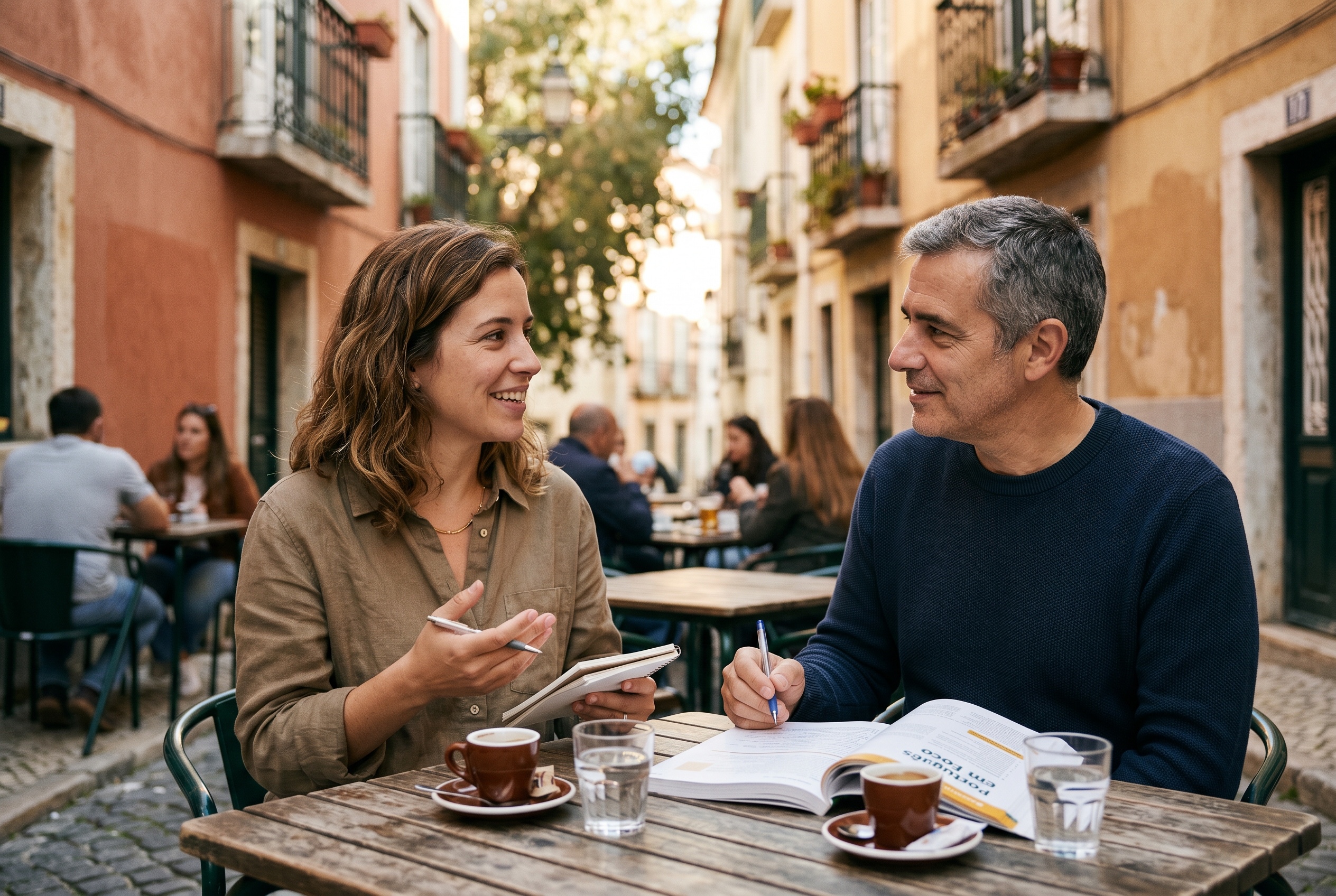
Your instructors
Conversational Portuguese tutors for private lessons & classes
Strommen has been teaching Portuguese since 2006, and conversational lessons have always been the most-requested format. Every tutor below was met and vetted by us in person or via thorough video interview. No marketplace. No automated profile-creation. Real teachers who genuinely enjoy a good conversation in their own language.
Filter by location, age, or price. Then book a 30-minute free trial.
Below are the Strommen tutors who specialize in conversational Portuguese. Photos, ratings, and rates are real. Click any card to read their bio and book a free 30-minute trial.
I want to learn…
Every tutor, personally met. — founder-vetted since 2006, in Los Angeles and online worldwide.
Get a personalized plan
Pick your language — a language advisor will match you with the right tutor and map out your path.


Technical degree in Biotechnology from IFRJ, Rio de Janeiro, Brazil.
From Rio to You: Pedro teaches with roots in Literature, Linguistics, and love of Learning
Personally vetted · Strommen’s note
Rio-rooted, Pedro teaches Portuguese and Spanish with a literature-and-linguistics background, conversational first, grammar rules second.
Specialties
Technical degree in Biotechnology from IFRJ, Rio de Janeiro, Brazil.
From Rio to You: Pedro teaches with roots in Literature, Linguistics, and love of Learning
Specialties
Personally vetted · Strommen’s note
Rio-rooted, Pedro teaches Portuguese and Spanish with a literature-and-linguistics background, conversational first, grammar rules second.
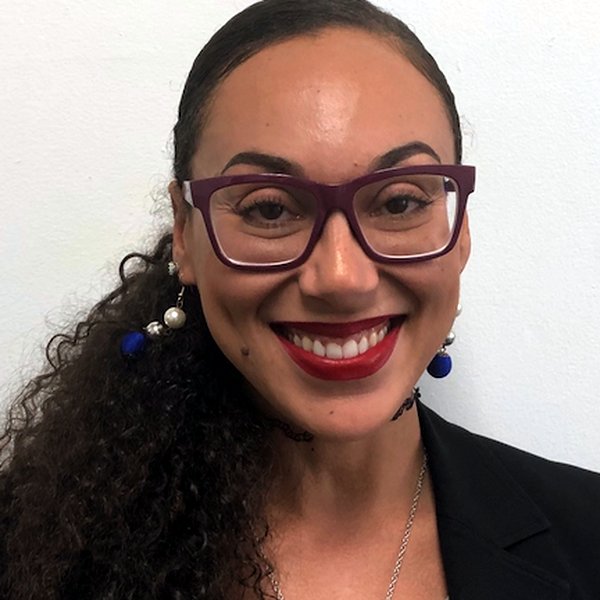


MBA and AS in Recording Arts · DALI, DELF, First Cert, SIZ Computer Science, Pro Tools, Dante
Multi-Culti Polyglot Linguist and Sound Engineer
Personally vetted · Strommen’s note
Vanessa speaks seven languages, has a sound-engineering background, and has spent two decades teaching. Her lessons range from accent coaching to art for kids.
Specialties
Also speaks: ASL American Sign Language, Chinese, Physics
MBA and AS in Recording Arts · DALI, DELF, First Cert, SIZ Computer Science, Pro Tools, Dante
Multi-Culti Polyglot Linguist and Sound Engineer
Specialties
I also speak: ASL American Sign Language, Chinese, Physics
Personally vetted · Strommen’s note
Vanessa speaks seven languages, has a sound-engineering background, and has spent two decades teaching. Her lessons range from accent coaching to art for kids.

LETRAS - Tradutor e Intérprete (Portuguese and English)
Your voice in Portuguese starts here.
Personally vetted · Strommen’s note
Brazilian Portuguese is Milton's subject, out of São José do Rio Preto, and the whole approach changes based on what each student actually needs.
Specialties
LETRAS - Tradutor e Intérprete (Portuguese and English)
Your voice in Portuguese starts here.
Specialties
Personally vetted · Strommen’s note
Brazilian Portuguese is Milton's subject, out of São José do Rio Preto, and the whole approach changes based on what each student actually needs.

BA in Architecture
Portuguese Teacher
Specialties
BA in Architecture
Portuguese Teacher
Specialties
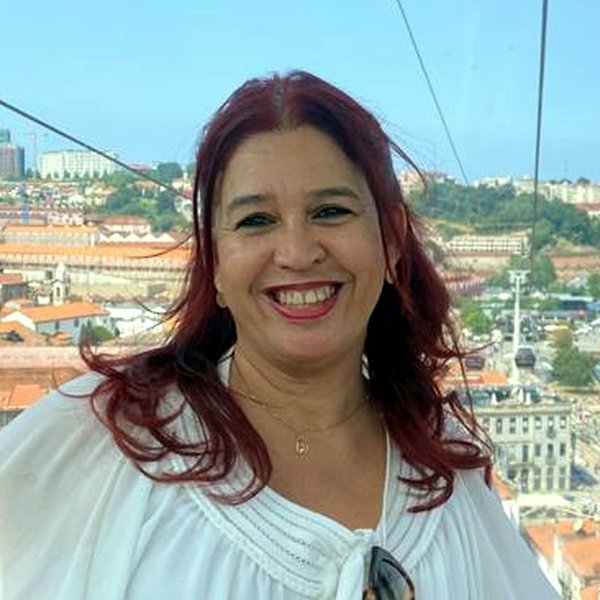

-Training Language Teachers Master’s Degree International University of Valencia – Spain -Phd. Teaching Language and Literature Basque Country University- Spain –Degree in Spanish language – UFPE · DELE Examiner level A,1A2, B1, B2
Spanish and hapiness
Specialties
-Training Language Teachers Master’s Degree International University of Valencia – Spain -Phd. Teaching Language and Literature Basque Country University- Spain –Degree in Spanish language – UFPE · DELE Examiner level A,1A2, B1, B2
Spanish and hapiness
Specialties

Associate of Arts
US expat living in Brazil teaching English all over the world
Personally vetted · Strommen’s note
A US expat based in Brazil, Ben teaches English worldwide and Portuguese on the side, conversational first, grammar only where it actually matters.
Specialties
Associate of Arts
US expat living in Brazil teaching English all over the world
Specialties
Personally vetted · Strommen’s note
A US expat based in Brazil, Ben teaches English worldwide and Portuguese on the side, conversational first, grammar only where it actually matters.

Native Brazilian tutor making Portuguese relevant and engaging
Personally vetted · Strommen’s note
A Dubai-based native Brazilian, Gabriella makes Portuguese lessons feel relevant to daily life instead of another grammar drill.
Specialties
Native Brazilian tutor making Portuguese relevant and engaging
Specialties
Personally vetted · Strommen’s note
A Dubai-based native Brazilian, Gabriella makes Portuguese lessons feel relevant to daily life instead of another grammar drill.

Né — conversational markers
5 things that mark you as a real Portuguese speaker, not a textbook one
These are the conversational tells. Use them and Brazilians or Portuguese people relax into a real exchange. Screenshot the infographic and bring it to your trial.
-
01
Tudo bem?
The universal Brazilian greeting-and-response, all in one. Literally "all good?" but it functions as "hi, how are you?" Reply is usually tudo bem back, or tudo, or beleza. European Portuguese version is tá bem? with a softer rhythm. Either way, drop the textbook como está for casual contexts.
e.g. Oi! Tudo bem? Tudo, e você?
-
02
Né?
The universal Brazilian tag question, contraction of não é? ("isn't it?"). Drops into the end of almost any statement to invite agreement: tá frio hoje, né? Like English "right?" but used more frequently. Pure conversational fingerprint, completely absent from formal writing.
e.g. Esse restaurante é ótimo, né? Concordo.
-
03
Diminutive -inho / -inha
Brazilian Portuguese loves warmth through smallness. A coffee is um cafezinho, a quick chat is um bate-papinho, "close by" is pertinho. Adding the diminutive softens almost any noun and signals affection or casualness. European Portuguese uses diminutives too but less reflexively than Brazilians do.
e.g. Vamos tomar um cafezinho rapidinho?
-
04
Saudade
The famous untranslatable Portuguese word. A fond, melancholic missing of someone or something, with the quiet awareness it may not return. Both Brazilians and Portuguese use it constantly: que saudade, saudades de você, matar a saudade. Conversational Portuguese circles back to it more than any other single word.
e.g. Que saudade da minha avó. Vou ligar pra ela hoje.
-
05
Drop the eu
The easiest conversational upgrade for English speakers. Textbooks teach eu falo, eu como, eu vou; native speakers usually just say falo, como, vou, since the verb ending already marks the subject. Dropping eu in conversation makes you sound instantly less foreign. Keep it for emphasis only.
e.g. Vou pra praia amanhã, e você?
About Conversational Portuguese
Talking, not parsing
Conversational Portuguese is a different course from textbook Portuguese, and a different course again from literary Portuguese. The textbook spends weeks on the future subjunctive before you can order a coffee. The conversational track flips that priority. You learn the chunks of speech Brazilians and Portuguese actually use every day, in the rhythm they actually use them, and you learn them through speaking rather than through filling in conjugation tables.
Most students who ask for conversational Portuguese have a Brazilian context in mind. Brazilian Portuguese is the variety spoken by roughly 215 million people across Brazil and most of the Lusophone diaspora in the United States, which is why we default toward it on this track. That said, European Portuguese is fully available on this roster. If your context is Lisbon, Porto, the Azores, or an Angolan or Mozambican family connection, your tutor adjusts the variety accordingly and the curriculum stays conversational either way. The two standards are mutually intelligible in writing and noticeably different in conversation, and conversational lessons treat them as the distinct projects they are.
What a conversational lesson actually looks like. The hour usually opens with five or ten minutes of warm-up chat in Portuguese about your week, what you watched, what you ate, where you went. The tutor catches the phrases you reach for in English and gives you the Portuguese version on the spot, then has you use it three times in the next ten minutes so it sticks. New vocabulary gets introduced through topic, not through lists: today we are talking about the weekend, here are eight verbs that come up around weekends, here is the slang version of each, here is when each fits. Grammar appears only when a specific point keeps coming up, and gets explained in two minutes rather than twenty. The closing fifteen minutes are usually a role-play or a structured open conversation where you use what you just learned. Homework, if any, is listening-focused: a song lyric, a YouTube clip, a podcast episode tagged to whatever came up.
The conversational register is its own thing. In Brazilian Portuguese it runs on contractions that beginners rarely encounter in textbooks: tá for está, pra for para, cê for você, num for não em, tô for estou. Filler words anchor the rhythm: né (the universal tag question, "right?"), tipo (the Portuguese version of "like"), tá ligado (Carioca "you know what I mean"). Affectionate diminutives soften almost everything: cafezinho, pertinho, obrigadinho, tchauzinho. The universal greeting-response tudo bem? doubles as hello and how-are-you in one move; beleza? works the same way in younger Carioca speech. European Portuguese conversation runs on different anchors: tá bem? as the casual check-in, pá as the all-purpose filler ("man," "dude"), fixe for cool (where Brazilians say legal), obrigadinho appearing far less often and obrigado/obrigada staying more standard.
The one untranslatable Portuguese word every conversational student eventually meets is saudade. It names a specific kind of longing — a fond, melancholic missing of someone or something or someplace, with the implicit knowledge that it may not return. Brazilians and Portuguese both use it constantly. Que saudade after running into an old friend; saudades de você at the end of a phone call with family; matar a saudade for satisfying a longing by reuniting. No English equivalent fully covers it. Conversational lessons fold it in naturally, because Portuguese conversation circles back to it constantly.
A few honest tutor observations on what trips up American students at the conversational level. Speed is the first wall. Spoken Brazilian and spoken European Portuguese both run faster than most learners expect, with contractions and elisions that flatten textbook word boundaries. The fix is daily listening at native pace, even if you only catch half. Translation paralysis is the second. Students rehearse a sentence in their head in English, translate it word by word, and lose the conversational rhythm by the time they speak. Conversational tutors break this habit by teaching you to grab the chunks you already know and stay in motion rather than waiting for the perfect sentence. The third stumble is the false-friend trap from Spanish: esquisito means strange in Portuguese, not refined; embaraçada means embarrassed, not pregnant; polvo means octopus, not dust. Spanish speakers gain enormous conversational mileage from cognate density, then trip on the words that look identical but mean something else. One more thing, and the easiest first-month win: ditch the textbook habit of starting every sentence with eu ("I"). Portuguese drops subject pronouns far more freely than English, especially in conversation, and dropping the eu instantly makes you sound more native.
For between-lesson immersion, conversational Portuguese rewards consistent input more than any other intervention. Brazilian podcasts at moderate pace: Café Brasil, Mamilos, Não Inviabilize. Portuguese podcasts from Lisbon: Fumaça, É Apenas Fumaça, Extremamente Desagradável. Brazilian YouTube for accessible everyday Portuguese: Porta dos Fundos sketches, Greg News, food and travel channels. Telenovela snippets on Globoplay carry conversational Portuguese at native speed. Music, as always, is the easiest sustained input: João Gilberto, Caetano Veloso, Marisa Monte, Anitta, Liniker on the Brazilian side; Carminho, Mariza, Salvador Sobral, Capitão Fausto on the Portuguese side. The blog's podcast guide has tested recommendations and the essential phrases post is a solid conversational primer.
The Strommen conversational Portuguese roster includes native Brazilians from Rio, São Paulo, Belo Horizonte, Salvador, and elsewhere, native Portuguese speakers from Lisbon, Porto, and the Azores, and longtime bilinguals who teach the spoken register from inside the United States. Conversational specialists are different from grammar specialists, and we identify each tutor's strength clearly. If your goal is fluency at speaking speed rather than grammatical perfection on paper, this is the right roster. For complementary tracks our Portuguese for Beginners roster covers zero-to-A1 foundations, Portuguese Grammar covers structural deep work, and Brazilian Portuguese and European Portuguese handle the variety-specific deep dives. The Portuguese course page covers the full family.
Book a free 30-minute trial with the tutor whose conversational rhythm you most want to imitate. Browse the full tutor list if you want to see the broader Strommen roster first. Either way, the trial answers the question faster than any FAQ can: does this voice click with you, do these lessons feel like real conversation, and will you actually keep showing up.
What you'll cover
Lessons & classes tailored to Conversational Portuguese
Speaking from the first lesson
Conversational Portuguese students speak Portuguese in the first ten minutes of the first lesson, however haltingly. The tutor models, you imitate, and the active vocabulary grows from there. Grammar is introduced when it solves a specific problem, not as a parallel track. Most students hit comfortable conversational floor within 3 to 5 months of weekly lessons plus daily listening, faster if they already speak Spanish or another Romance language.
Brazilian or European, your call
Most students arrive wanting Brazilian Portuguese, given the size of the Brazilian diaspora and the cultural footprint of Brazilian music and film. The roster includes native Portuguese speakers from Lisbon, Porto, and the Azores for students whose context is Europe. Lessons stay variety-specific so you don't end up with a confused hybrid accent. Your tutor matches the variety to your destination, your family, or your media diet.
Filler words, contractions, and conversational rhythm
Né, tipo, tá ligado, cê, tô, tá, pra, pô: the everyday Brazilian conversational anchors. Pá, fixe, tá bem, está-se bem on the European side. Lessons drill these explicitly, since they're rarely in textbooks and they're the single biggest factor in sounding like a real Portuguese speaker rather than a translated one.
Topic-led vocabulary, not list memorization
Conversational lessons build vocabulary around topics: weekends, work, food, family, travel, music, current events, your specific hobbies. You learn the verbs and nouns that come up in actual conversations on those topics, then use them in role-play and open chat the same hour. Topic-led acquisition sticks; list memorization rarely does.
FAQ
About Conversational Portuguese lessons & classes
Will I learn Brazilian Portuguese or European Portuguese?
Your choice. Most students go Brazilian, given the demographic weight and cultural reach. The roster includes native European Portuguese speakers from Lisbon, Porto, and the Azores for students whose context is Europe. Either way, lessons stay variety-specific so you don't pick up a confused hybrid. If you're undecided, we recommend picking the variety that matches your most immediate goal (the trip you're planning, the family you'll see, the show you want to follow) and absorbing the other variety passively through listening over time.
How fast will I actually be able to hold a conversation?
From zero, weekly hour-long lessons plus 20 to 30 minutes of daily exposure (podcasts, music, short videos) typically produces functional A2 conversation within 4 to 6 months. For Spanish speakers the timeline compresses substantially, with comfortable conversational floor often arriving in 2 to 3 months. Watching a telenovela without subtitles or holding a fast-paced group conversation in a Brazilian household takes longer (12 months and up), but daily-life chat at speaking pace is achievable within the first year for almost any consistent learner.
I already speak Spanish. How much does that help?
A lot for reading and vocabulary, less than people expect for speaking. Cognate density is high, so written Portuguese is roughly 60 percent transparent on first read for a Spanish speaker. The challenge is pronunciation: Spanish habits will pull your vowel system the wrong direction, especially with nasal vowels and the open-versus-closed vowel distinction. False friends bite regularly: esquisito, embaraçada, polvo, oficina. Lessons calibrate to your starting point, so a Spanish-speaking learner spends the early hours on pronunciation drills and false-friend mapping rather than starting from zero.
Can I take conversational lessons online or only in person?
Both. Most of our conversational Portuguese tutors teach online via Zoom or Jitsi, available globally. Several also teach in person around Los Angeles. Conversational lessons work especially well online, since the focus is voice rather than whiteboard work. The booking widget on each tutor's profile shows their available formats.
Do I need to know any Portuguese already to take a conversational lesson?
No, but absolute beginners are typically better served by our Portuguese for Beginners roster for the first month or two. Once you have basic introductions, the present tense of ser and estar, and a working 100-word vocabulary, the conversational track makes the most sense. If you're not sure where you fall, book a trial and the tutor will tell you honestly within ten minutes.
What if I'm specifically nervous about speaking?
Common, and the conversational track is designed for it. The first lesson stays low-stakes: simple introductions, slow pace, the tutor doing most of the talking and you echoing. Confidence builds through repetition of small wins rather than through any kind of pressure to perform. By lesson four or five most students have stopped freezing and started enjoying the speaking part. Tutors who teach this track are selected for warmth, not just credentials.
Will I get formal grammar instruction too?
Some, when it solves a problem that came up in conversation. The conversational track is not a grammar-first course; if you want structural deep work, our Portuguese Grammar roster is the right fit. Most students do a primarily conversational program with grammar woven in as needed, and that combination produces fluent speakers faster than either approach alone.
Ready for Conversational Portuguese lessons or classes?
Book a free 30-minute trial with one of our personally vetted tutors. Private lessons or small-group classes — your choice.