



Personally vetted instructors
Spanish for Beginners tutors, lessons & classes
Hola The universal Spanish "hello," understood in every country that speaks the language.
Personally vetted Spanish tutors who teach the language from zero. Lessons that start with the sounds and the everyday phrases, then build into real grammar and real conversation at a pace that holds.
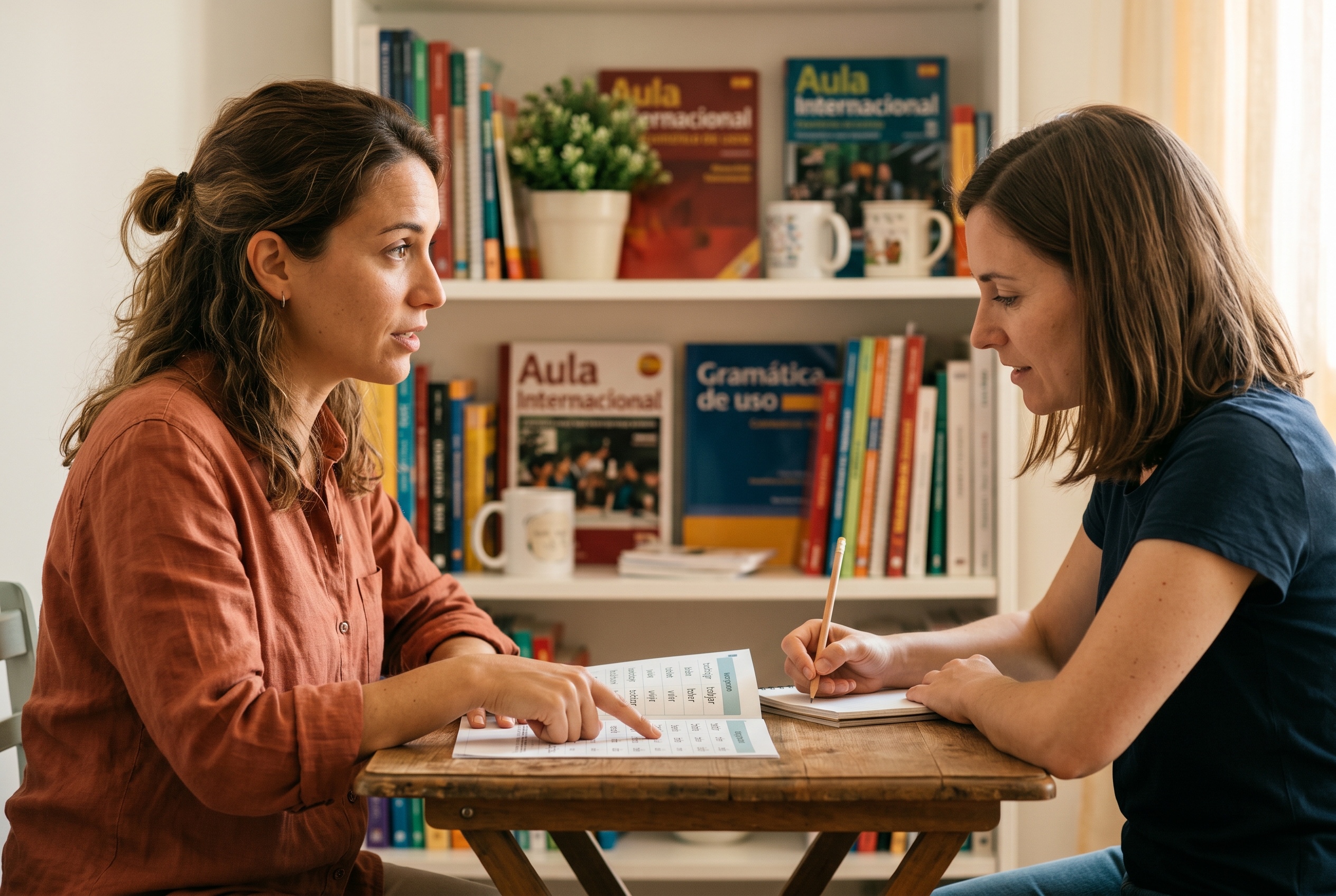
Your instructors
Spanish for Beginners tutors for private lessons & classes
Strommen has been teaching Spanish in Los Angeles since 2006, and Spanish for absolute beginners has always been one of our largest and steadiest streams. We vet teachers ourselves rather than running an open marketplace. Every tutor below was met and approved by us, and every bio is a real account of a real teacher's background.
For a beginner the choice of tutor matters more than people realize, because the first tutor installs the habits, good or bad, that you carry for years. Filter by location, age, or price, read the bios, then book a 30-minute free trial with whoever feels right. The full Strommen tutor directory is one click away if you want to browse beyond the Spanish list.
Below are the Strommen tutors who specialize in teaching Spanish to absolute beginners. Photos, ratings, and rates are real. Click any card to read a bio and book a free 30-minute trial.
I want to learn…
Every tutor, personally met. — founder-vetted since 2006, in Los Angeles and online worldwide.
Get a personalized plan
Pick your language — a language advisor will match you with the right tutor and map out your path.

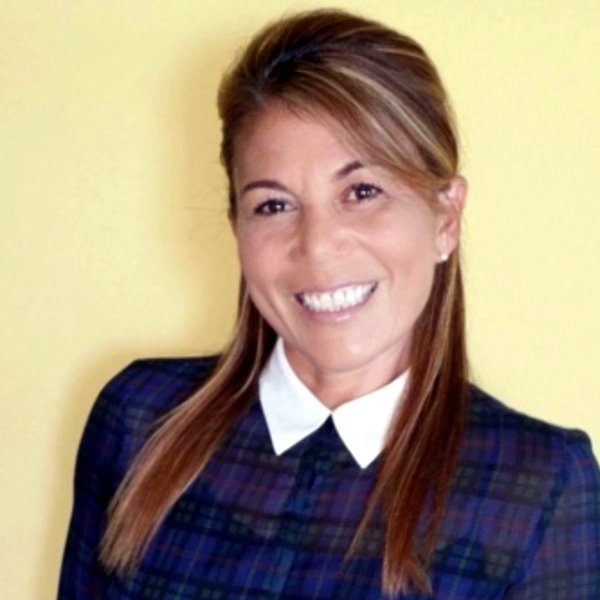
Masters of Arts in Spanish and Linguistics, Currently, a Fourth-year PhD student in Hispanic Studies. · Spanish Interpreter Translator Certificate from Southern California School of Interpretation.
Speak Spanish with Confidence, Step by Step
Personally vetted · Strommen’s note
Elizabeth has taught Spanish for eighteen years, and her whole approach comes down to one rule: let students make mistakes and keep talking anyway.
Specialties
Masters of Arts in Spanish and Linguistics, Currently, a Fourth-year PhD student in Hispanic Studies. · Spanish Interpreter Translator Certificate from Southern California School of Interpretation.
Speak Spanish with Confidence, Step by Step
Specialties
Personally vetted · Strommen’s note
Elizabeth has taught Spanish for eighteen years, and her whole approach comes down to one rule: let students make mistakes and keep talking anyway.
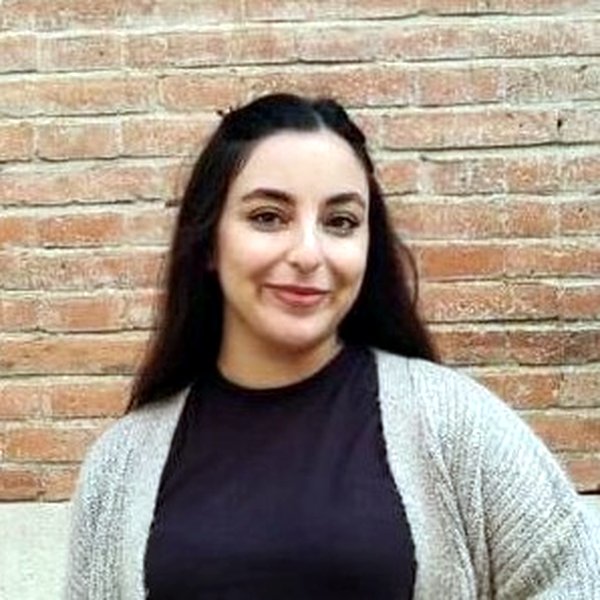


Bachelors degree in business Masters in logistics · TEFL Translation
Certified French & Spanish Language Coach | Business, Exams, & Conversational Mastery
Personally vetted · Strommen’s note
A Berlitz-trained language consultant, marielyne teaches English, French, and Spanish, built for business communication and exam prep specifically.
Specialties
Bachelors degree in business Masters in logistics · TEFL Translation
Certified French & Spanish Language Coach | Business, Exams, & Conversational Mastery
Specialties
Personally vetted · Strommen’s note
A Berlitz-trained language consultant, marielyne teaches English, French, and Spanish, built for business communication and exam prep specifically.

Primeros pasos — first words & culture
5 phrases that carry a Spanish beginner further than the textbook
These are not advanced expressions. They are the small, high-frequency phrases native speakers actually use, and a beginner who picks them up early sounds far more natural than the textbook alone allows. Save the list, then book a tutor to learn the rest.
-
01
Hola / Adiós
The universal Spanish hello and goodbye, understood everywhere from Madrid to Buenos Aires to Los Angeles. Hola can stand on its own or pair with ¿qué tal? or ¿cómo estás? for a slightly fuller greeting. Adiós is the standard farewell; hasta luego ("see you later") is the softer everyday version most native speakers actually reach for.
e.g. Hola, ¿qué tal? ... Bueno, hasta luego. ("Hi, how's it going? ... Alright, see you later.")
-
02
Por favor / Gracias
Please and thank you, the courtesies that do the heaviest social work in any language. The standard reply to gracias is de nada ("you're welcome") or, increasingly common in Spain, nada ("no problem"). In Mexico you will also hear no hay de qué. All three are correct; pick up whichever your tutor's region uses.
e.g. Un café, por favor. ... Gracias. ... De nada. ("A coffee, please. ... Thanks. ... You're welcome.")
-
03
No entiendo
"I don't understand," arguably the single most useful phrase a Spanish beginner can carry. Often paired with ¿puede repetir, por favor? ("can you repeat, please?") or más despacio, por favor ("more slowly, please"). Saying these three lines in Spanish keeps a real Spanish conversation alive instead of collapsing it back to English.
e.g. Lo siento, no entiendo. ¿Puede repetir más despacio, por favor? ("Sorry, I don't understand. Could you repeat more slowly, please?")
-
04
Me llamo...
"My name is..." Literally "I call myself." The standard self-introduction every beginner learns in week one, paired naturally with ¿y tú? ("and you?") to bounce the question back. The more formal version ¿cómo se llama usted? trades tú for usted when meeting older people or in professional settings.
e.g. Hola, me llamo Sara. ¿Y tú, cómo te llamas? ("Hi, my name is Sara. And you, what's your name?")
-
05
Tú vs. usted
The single most important sociolinguistic choice in Spanish, and the one English does not have. Tú is informal you, used with friends, peers, kids, and family. Usted is formal you, used with strangers, elders, and in professional contexts. The line moves by country: Spain leans more tú, Colombia leans more usted, Mexico sits in between. Get the choice wrong and a native speaker notices instantly. A tutor calibrates this from the first lesson.
e.g. ¿Cómo estás? (to a friend) vs. ¿Cómo está usted? (to a new colleague)
About Spanish for Beginners
Where a Spanish beginner actually starts
Spanish has a reputation for being the easy one, and the reputation is half-earned. The sound system is mostly regular, the alphabet is the one you already use, and a motivated adult can hold simple conversation within a few months. None of that is propaganda. What the reputation hides is that Spanish, like every language taught to adults, has a real arc, and beginners who skip the arc tend to plateau hard at month four with a phrasebook in their head and no way to make it into sentences.
The arc that a good beginner tutor walks you through has a shape worth knowing in advance. Sounds come first. Spanish vowels are pure, only five of them, and they do not glide the way English vowels do. Mastering that one habit early, saying a clean Spanish /a/ instead of the English /æ/, fixes about a third of what makes adult learners sound foreign. The five vowels, plus the rolled and tapped r, the soft j, and the regional split over the s, z, and c sounds, are the foundation. The Real Academia Española sets the orthographic and phonetic standard for the language across all of its varieties, which is why a tutor anywhere in the Spanish-speaking world can teach you a clean foundation that travels.
Then come the essential phrases: greetings, courtesies, asking names and prices and directions, the small pieces that let you survive a first trip or a first conversation with family. Our blog post on greetings and how to say goodbye covers the territory most beginners learn in week one. This is also where a tutor introduces the first sociolinguistic split, the tú-versus-usted register choice, which English does not have and which beginners need to start hearing early.
From there, present-tense verbs. Spanish verbs conjugate by person, so a beginner has to internalize six forms per verb across three regular endings, -ar, -er, -ir, plus a handful of irregular high-frequency verbs you cannot avoid: ser, estar, tener, haber, ir, hacer, decir. Most Spanish-for-beginners curricula get students reading and producing the present tense within the first two months. The 30 most common regular verbs list is the single highest-leverage thing to drill in this stretch.
The big intermediate hinge, the one that separates beginners from early-intermediates, is ser versus estar. English uses one verb for "to be." Spanish uses two, and the choice carries meaning. Es aburrido means he is boring; está aburrido means he is bored. A good tutor introduces this in month two or three and then keeps circling back, because it does not stick on first exposure.
Past tenses arrive next, usually the preterite first and the imperfect a few weeks later, and a beginner discovers that Spanish, like Italian and French, makes a distinction English does not: completed action versus ongoing or habitual action. Comí means I ate (and finished). Comía means I was eating, or I used to eat. The pair takes practice, and the practice is largely listening and producing in context rather than memorizing rules.
The subjunctive sits at the far edge of the beginner horizon, and most teachers introduce it lightly toward the end of the first year. It is not as terrifying as it gets made out to be, but it is the moment Spanish stops feeling like English-with-different-words and starts feeling like its own system. Beginners who reach it have done real work.
One practical note. The Instituto Cervantes, the official Spanish-government body for promotion of the language abroad, certifies adult Spanish proficiency through the DELE exam series, anchored to the Common European Framework of Reference. DELE A1, the first level, certifies basic survival communication and is a useful target for beginners who want a concrete milestone roughly six to nine months in. We mention it not because every beginner needs a certificate, but because it is a clean way to measure where you actually are against an internationally recognized standard. Students who later want that path can move into our DELE preparation stream.
A second note. Spanish is one language with many spoken varieties. The linguist John Lipski's work on Latin American Spanish maps roughly twenty regional zones, each with their own pronunciation patterns and vocabulary, plus the Peninsular Spanish of Spain itself with its distinct ceceo and its use of vosotros. A beginner does not need to pick a variety on day one, and most teachers start you with a neutral, broadly intelligible Spanish before steering toward Mexican, Caribbean, Argentinian, Castilian, or whatever fits your reason for learning. If you already know where you are headed, our Mexican Spanish and Castilian Spanish streams take it from there.
The research on adult second-language learning, particularly Bill VanPatten's work on input processing, makes a useful point for beginners: comprehensible input, language you hear and read at just past your current level, is what actually moves the needle. Drills and grammar explanations have their place, but the hours that count most are the ones spent listening to and reading Spanish you can almost understand. A tutor's real job, beyond explaining grammar, is curating that input for you and giving you a chance to produce in a safe room before you produce in a noisy one.
Our beginner Spanish tutors include native speakers from across the Spanish-speaking world, plus longtime bilinguals who have taught the language from zero for years. The free 30-minute trial is the concrete starting point: you book it from any tutor's profile below, the tutor logs into Zoom or Jitsi at your scheduled time, and the half hour produces three specific things. A short conversation in whatever Spanish you already have, so the tutor can hear where you actually are. A diagnostic on the gaps that matter (sounds, register, verb forms). And a written weekly plan for the next month, including how many hours of self-study to pair with each lesson. If it clicks, you book the first paid lesson. If it does not, no charge, no follow-up pressure.
What you'll cover
Lessons & classes tailored to Spanish for Beginners
Sounds and the five Spanish vowels
Spanish has only five vowel sounds and they are pure, which means they do not glide the way English vowels do. Lessons drill those vowels from the start, because a clean Spanish /a/, /e/, /i/, /o/, /u/ is the single biggest correction an English-speaking adult needs. Tutors also work on the rolled and tapped r, the soft j, the s versus z versus c regional split, and the stress rules that determine where the accent mark goes. Listening drills, shadowing, and real-time pronunciation feedback set an ear that the rest of the language hangs on. Our Spanish tongue twisters piece is a useful between-lesson drill.
Essential survival phrases and the tú-usted choice
Beginners need a working set of phrases fast: greetings, thank-yous, introductions, asking prices and directions, ordering food, asking for help. Lessons build that survival vocabulary alongside the tú-versus-usted register choice, which English does not have and which Spanish marks on the verb itself. Your tutor calibrates the register to the variety you are learning, since the line between tú and usted moves by country. Many students supplement with our 100 most common Spanish words list between sessions.
Present tense and the high-frequency irregular verbs
Spanish verbs conjugate by person, so a beginner has to internalize six forms per verb across the three regular endings (-ar, -er, -ir) plus a handful of irregular workhorses that show up in nearly every sentence: ser, estar, tener, haber, ir, hacer, decir. Lessons work through these in a manageable sequence, paired with the 30 most common regular verbs and the standard reflexive constructions like me llamo and me gusta that beginners need from day one. Our reflexive verbs guide is the A1-level companion.
Ser vs. estar, past tenses, and a realistic plan
The two-verbs-for-to-be problem (ser versus estar) is the first big hinge a beginner has to cross, and it gets revisited across many lessons rather than solved in one. Past tenses arrive next, preterite first and imperfect a few weeks later, with the completed-versus-ongoing distinction that English does not mark. Your tutor sets concrete weekly goals at the trial lesson and adjusts as your real pace becomes clear. If a path toward fluency or certification emerges, your tutor can point you toward conversational Spanish or DELE preparation when the foundation is solid.
FAQ
About Spanish for Beginners lessons & classes
Is Spanish really one of the easier languages to learn?
Relatively, yes, and the U.S. Foreign Service Institute rates Spanish in its easiest category for English speakers, roughly 600 to 750 classroom hours to reach professional working proficiency. That is genuinely fewer hours than Mandarin or Arabic. But "easier" does not mean "easy." Spanish still asks adult learners to internalize verb conjugation, two verbs for "to be," the tú-usted register split, and a sound system that does not match English. A good tutor sets honest expectations at the trial and breaks the work into weekly goals that compound.
Which variety of Spanish should I learn first?
For most absolute beginners, the answer is whichever neutral Spanish your tutor speaks natively. The differences across varieties (Mexican, Caribbean, Castilian, Argentinian, etc.) are real but mostly do not matter at the beginner stage, because all varieties share the same core grammar and the same high-frequency vocabulary. Pick your variety later, once you can hold a basic conversation, based on where you are traveling, who you are talking with, or what films and music you love. Our Mexican Spanish and Castilian Spanish streams are the two largest at Strommen, and your tutor can guide you when the moment comes.
Do I really need to learn ser vs. estar, or can I just use one?
You need both. English uses one verb for "to be" and Spanish uses two, and the choice carries meaning. Es aburrido means he is boring (a permanent quality); está aburrido means he is bored (a current state). Using ser when you mean estar can change the meaning of what you said, sometimes embarrassingly. A tutor introduces the rule early, around month two or three, and keeps circling back, because the distinction takes practice. Our ser-versus-estar guide is a useful between-lesson reference.
How long until I can hold a basic conversation in Spanish?
It depends on your hours, your starting point, and what you do between lessons. A motivated adult studying five to seven hours a week, lessons plus self-study, can usually handle simple everyday exchanges within three to four months and reach roughly DELE A1 in that window. Comfortable, flowing conversation takes longer, often six to twelve months. Your tutor sets concrete goals at the trial and adjusts from there. Honest expectations beat magical ones, and consistency between lessons matters more than the lesson length itself.
I took Spanish in high school. Should I start over?
No, almost never. Whatever you retained from high school Spanish is scaffolding, not dead weight, even if it feels rusty. Most students who come back to Spanish after years away find that the first few lessons reactivate a surprising amount, and the trial lesson is largely about diagnosing what you still have. From there your tutor builds forward, fixing the specific gaps the school version left rather than relearning the alphabet. Our most common Spanish mistakes list is a useful self-check on what to fix first.
Are your tutors native Spanish speakers?
Most are native speakers from across the Spanish-speaking world, including Mexico, Spain, Argentina, Colombia, Peru, and several other countries. A few are longtime bilinguals who have taught beginner Spanish from scratch for years. Each tutor's bio specifies where they are from and which variety they speak natively. For a beginner the tutor's own pronunciation matters a great deal, since you absorb whatever model you hear, so a clean native or near-native accent is something we screen for closely.
Can I take beginner Spanish lessons online, or only in person?
Both. Many of our Spanish tutors teach online via Zoom or Jitsi and are available to students worldwide. Several also teach in person around Los Angeles. The booking widget on each tutor's profile shows their available formats and times. Many beginners start online and switch to in-person later, or mix the two depending on the week.
What does a beginner Spanish lesson actually look like?
Lessons are one-on-one and built around you. A typical hour might mix a short conversation in Spanish at your level, a focused grammar or pronunciation point, a block of new vocabulary or a verb pattern, and short practice using what you just learned. Early on, more time goes to sounds and survival phrases; as you build a base, more goes to verbs, sentence structure, and unscripted speaking. No two students follow an identical plan, because the trial lesson is where your tutor figures out where you actually are.
Ready for Spanish for Beginners lessons or classes?
Book a free 30-minute trial with one of our personally vetted tutors. Private lessons or small-group classes — your choice.