



Personally vetted instructors
Venezuelan Spanish tutors, lessons & classes
¿Qué más pana? The way Caracas actually says "hi."
Personally vetted Venezuelan Spanish tutors. Lessons that respect the way Spanish is actually spoken in Caracas, Maracaibo, Valencia, Mérida, and across the global Venezuelan diaspora.
Your instructors
Venezuelan Spanish tutors for private lessons & classes
Strommen has been teaching Spanish in this city since 2006. Venezuelan Spanish has always been a real demand here: family-connection Spanish for second-generation Venezuelan-Americans, professional Spanish for teams working with the Venezuelan diaspora across three continents, travel Spanish for Mérida or coastal trips, and conversational Spanish for the long-form Venezuelan television and film canon. Every tutor below was met and vetted by us in person or via thorough video interview. No marketplace. No automated profile-creation. Real teachers with real backgrounds, which you can read about in their bios.
Filter by location, age, or price. Then book a 30-minute free trial.
Below are the Strommen tutors who specialize in Venezuelan Spanish. Photos, ratings, and rates are real. Click any card to read their bio and book a free 30-minute trial.
I want to learn…
Every tutor, personally met. — founder-vetted since 2006, in Los Angeles and online worldwide.
Get a personalized plan
Pick your language — a language advisor will match you with the right tutor and map out your path.

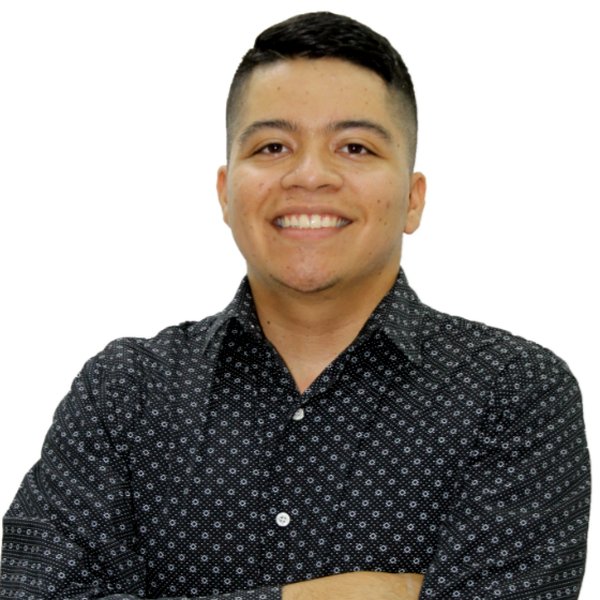


I have a degree in Modern Languages in English and French with a minor in business. · I am an English, French and Spanish tutor with more than seven years of experience both in person and online. I have a degree in Modern Languages in English and French with a minor in business.
Master Languages with Daniel: C2 English, DELF B2 French, and Native Spanish Tutor!
Personally vetted · Strommen’s note
Daniel is C2-certified in English, holds a DELF B2 in French, and is a native Spanish speaker. He teaches all three with real fluency benchmarks behind each one.
Specialties
Also speaks: Business & Management, Dialect Coaching, International Business, Public, Tests, Translation
I have a degree in Modern Languages in English and French with a minor in business. · I am an English, French and Spanish tutor with more than seven years of experience both in person and online. I have a degree in Modern Languages in English and French with a minor in business.
Master Languages with Daniel: C2 English, DELF B2 French, and Native Spanish Tutor!
Specialties
I also speak: Business & Management, Dialect Coaching, International Business, Public, Tests, Translation
Personally vetted · Strommen’s note
Daniel is C2-certified in English, holds a DELF B2 in French, and is a native Spanish speaker. He teaches all three with real fluency benchmarks behind each one.
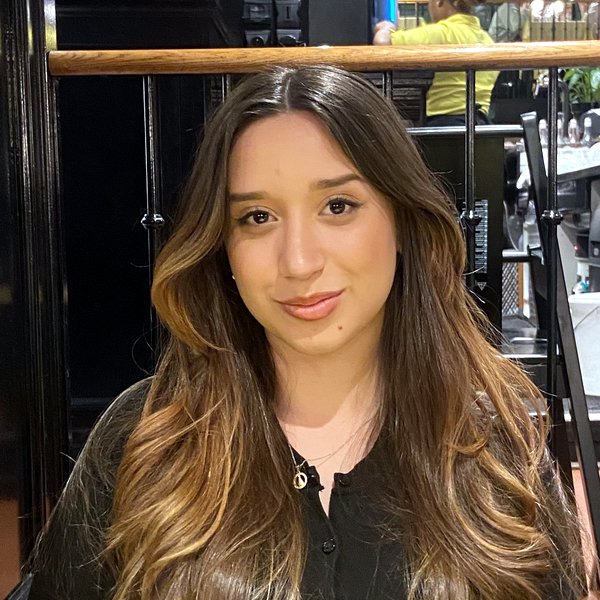
I have a business degree
Build confidence in French and Spanish, tailored to you!
Personally vetted · Strommen’s note
Caracas-born, Sandra teaches French and Spanish both, keeping lessons relaxed and practical, built around travel, work, or just fun.
Specialties
I have a business degree
Build confidence in French and Spanish, tailored to you!
Specialties
Personally vetted · Strommen’s note
Caracas-born, Sandra teaches French and Spanish both, keeping lessons relaxed and practical, built around travel, work, or just fun.
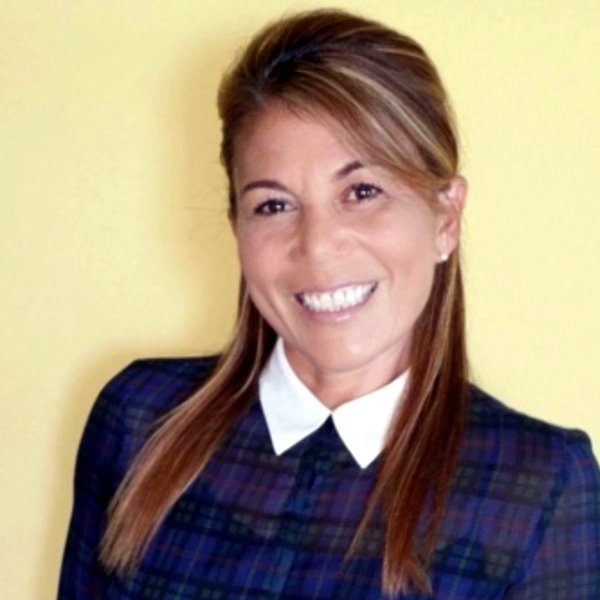
Masters of Arts in Spanish and Linguistics, Currently, a Fourth-year PhD student in Hispanic Studies. · Spanish Interpreter Translator Certificate from Southern California School of Interpretation.
Speak Spanish with Confidence, Step by Step
Personally vetted · Strommen’s note
Elizabeth has taught Spanish for eighteen years, and her whole approach comes down to one rule: let students make mistakes and keep talking anyway.
Specialties
Masters of Arts in Spanish and Linguistics, Currently, a Fourth-year PhD student in Hispanic Studies. · Spanish Interpreter Translator Certificate from Southern California School of Interpretation.
Speak Spanish with Confidence, Step by Step
Specialties
Personally vetted · Strommen’s note
Elizabeth has taught Spanish for eighteen years, and her whole approach comes down to one rule: let students make mistakes and keep talking anyway.
I am Bachelor in Arts, specialist in Spanish literature and linguistics
Dynamic Conversational Classes Tailored to Your Learning Journey with Arelys!
Personally vetted · Strommen’s note
Caracas-born, Arelys teaches Venezuelan Spanish through the culture that shapes it: literature, music, and art woven into every lesson.
Specialties
I am Bachelor in Arts, specialist in Spanish literature and linguistics
Dynamic Conversational Classes Tailored to Your Learning Journey with Arelys!
Specialties
Personally vetted · Strommen’s note
Caracas-born, Arelys teaches Venezuelan Spanish through the culture that shapes it: literature, music, and art woven into every lesson.

Bachelor of Arts with a master's degree in literature and its teaching. Diploma in higher education. · Examiner for the Diploma in Spanish as a Foreign Language. Instituto Cervantes
Spanish teacher, tutor, communicative skills, speaking, literature
Personally vetted · Strommen’s note
Marlon leans on literature as much as grammar out of Santiago, with real communication situations built into every lesson instead of just vocab drills.
Specialties
Also speaks: English
Bachelor of Arts with a master's degree in literature and its teaching. Diploma in higher education. · Examiner for the Diploma in Spanish as a Foreign Language. Instituto Cervantes
Spanish teacher, tutor, communicative skills, speaking, literature
Specialties
I also speak: English
Personally vetted · Strommen’s note
Marlon leans on literature as much as grammar out of Santiago, with real communication situations built into every lesson instead of just vocab drills.

Associate Degree in Modern Languages - English Focus (T.S.U. en Idiomas Modernos) - Currently Enrolled / In Progress. · Preply Language Teaching Certificate: How to teach a language (Methodology) EF SET English Certificate (B1 Intermediate)
Dynamic Spanish Tutor & Modern Languages student. Master Spanish through real-world tasks and cultural immersion!
Specialties
Also speaks: English, Portuguese
Associate Degree in Modern Languages - English Focus (T.S.U. en Idiomas Modernos) - Currently Enrolled / In Progress. · Preply Language Teaching Certificate: How to teach a language (Methodology) EF SET English Certificate (B1 Intermediate)
Dynamic Spanish Tutor & Modern Languages student. Master Spanish through real-world tasks and cultural immersion!
Specialties
I also speak: English, Portuguese

Jerga venezolana — culture & slang
5 ways to sound like you actually speak Venezuelan Spanish
These aren't textbook expressions. They're the everyday words that separate tourists from people who've actually spent time in Caracas, Maracaibo, or any Venezuelan community in the diaspora. Screenshot the infographic, then book a tutor to learn the rest.
-
01
Pana
The Venezuelan "friend" or "buddy." Used across all of Venezuela between people on tú (or vos) terms, and now embedded in diaspora speech from Miami to Madrid to Buenos Aires. The most distinctively Venezuelan filler word in casual conversation. Pairs naturally with chévere.
e.g. ¿Qué más pana? ¿Cómo va todo?
-
02
Chévere
Cool, awesome, fine. Shared across the Caribbean and parts of Colombia, but lives at especially high frequency in Venezuelan speech, used as a one-word answer to almost any positive question. Universal across generations and regions inside the country.
e.g. El concierto estuvo chévere, pana.
-
03
Vos sos (Maracucho)
Maracaibo and the rest of Zulia state use voseo, the same vos conjugation associated with Argentina, while the rest of Venezuela uses tú eres. A Maracucho saying vos sos is signaling regional identity as much as grammar. Worth knowing if you'll be on the western coast.
e.g. Vos sos el pana de Maracaibo, ¿verdad?
-
04
Arepa
The daily Venezuelan corn cake, eaten at every meal with regional fillings: reina pepiada (chicken and avocado), pelúa (shredded beef and cheese), dominó (black beans and white cheese). The cultural anchor of Venezuelan food identity. Distinct from Colombian arepas in corn-flour type and preparation, a difference Venezuelans defend with conviction.
e.g. Vamos por una arepa reina pepiada antes de la reunión.
-
05
Vaina
The multi-purpose Venezuelan noun: thing, situation, problem, object, mess. Somewhere between Mexican chingadera and English "thing," lives across all registers from casual to mildly profane, with the exact meaning carried by tone. Once you start hearing it, you hear it everywhere.
e.g. Esa vaina está bien arrecha.
About Venezuelan Spanish
More than pana and chévere
Picture an American student who studied a year of Spanish in Salamanca arriving in Caracas for the first time. They expect the careful Castilian s's, the vosotros, the deliberate pace they trained their ear on. Within five minutes of stepping off the plane they hear no s's at the ends of words, a string of panas and chamos they've never seen in a textbook, and a cadence closer to Havana than to Madrid. This is the gap that brings most students to a Venezuelan Spanish tutor. Generic Spanish courses don't prepare you for what Venezuelans actually sound like, and the Spain-Spanish you may have learned in school is, by the time you land, a foreign accent in its own right.
Roughly 28 million people inside Venezuela speak the dialect natively, and an estimated 7 to 8 million more carry it across the diaspora that began in 2014, the largest displacement crisis in the Western Hemisphere's recent history. Venezuelan communities of real size now exist in Colombia, Peru, Chile, Argentina, Spain, the United States (especially Miami, Houston, and the Northeast), Panama, and the Dominican Republic. That diaspora is one reason this dialect matters more than its country-size population suggests. The other reason is sound. Venezuelan Spanish sits at a particular intersection: Caribbean enough to share s-aspiration and rapid pace with Cuban and Puerto Rican Spanish, Andean enough in its highland varieties to share clarity and crispness with Colombian and Ecuadorian Spanish. The Asociación Venezolana de la Lengua, the country's national language academy and a corresponding institution of the Real Academia Española, documents and codifies this hybrid identity in its lexicographical work. John Lipski's Latin American Spanish, the standard reference in the field, places Venezuelan firmly inside the Caribbean basin but flags the Andean regions of Mérida, Táchira, and Trujillo as an internal counterweight with distinct phonology.
The country contains at least three main dialect zones worth knowing about. Caracas Spanish, the urban speech of the capital, is the variety most international listeners think of as "Venezuelan." It carries s-aspiration (estás becomes etá, los amigos becomes loh amigoh), weakened consonants between vowels, a fast connected pace, and a sing-song intonation shared across the Caribbean. Chamo and chama for guy and girl, pana for friend, chévere for cool, vaina as the all-purpose noun for thing or situation. This is also the dialect heard in most Venezuelan telenovelas, news broadcasts, and the soap-opera exports that once made Venezuelan television a regional force. Maracucho Spanish, the speech of Maracaibo and the rest of Zulia state on the western coast, is a famous internal anomaly: it preserves voseo, the second-person vos conjugation otherwise associated with Argentina, Uruguay, and Central America. A Maracucho says vos sos, vos tenés, vos hacés, where a Caraqueño says tú eres, tú tienes, tú haces. The two cities are roughly 700 kilometers apart and the grammatical line between them is sharp. Maracucho speech also has a distinctive intonation locals describe as more clipped and percussive than the rest of the country, and its own lexicon (verga as a multipurpose interjection that's offensive elsewhere and casual here, mollejúo for huge). Andean Venezuelan Spanish, the highland speech of Mérida, San Cristóbal, and Trujillo, is the third major variety. It is slower, clearer, more conservative phonetically (s's stay intact more often), and influenced by neighboring Colombian Andean Spanish. The university town of Mérida, home to the Universidad de Los Andes, is the cultural anchor of this register. For students transitioning from Mexican or Castilian Spanish, knowing which of these three zones you're targeting matters more than any single vocabulary list.
Venezuelan vocabulary is its own world even when the grammar is standard. Pana is the most quintessentially Venezuelan filler, equivalent to "dude" or "friend," used between people on tú (or vos) terms across all of the country and now embedded in diaspora speech worldwide. Chamo and chama mean guy and girl, used affectionately or neutrally depending on tone. Chévere means cool, awesome, fine, used as a one-word answer to almost any positive question; it is shared across the Caribbean but lives at especially high frequency in Venezuelan speech. Vaina is the multi-purpose Venezuelan noun: thing, situation, problem, object, mess, depending on context, somewhere between Mexican chingadera and English "thing." Burda means "a lot" or "very," as in está burda de bueno ("it's super good"). Bochinche means gossip or noisy commotion. Cotufas means popcorn (where Mexicans say palomitas and Argentines say pochoclo). Arrecho can mean angry, impressive, or excellent depending on tone, a regional ambiguity that surprises learners. Echarle pichón means to put in effort or hustle. Está bien arrecho can be a compliment or a complaint. Daily-life vocabulary diverges from other Spanish varieties too: arepa is the daily bread, eaten at breakfast, lunch, dinner, and after parties, with regional fillings (reina pepiada with chicken and avocado, pelúa with shredded beef and cheese, dominó with black beans and white cheese). For broad Spanish foundations our 1,000 most common Spanish words list is a useful supplement.
Cultural codes shape the dialect as much as grammar. The arepa is not just food; it is identity. Conversations about which region makes the best arepa (Caracas, the Andes, the llanos), which fillings are canonical, and how the corn flour itself differs from Colombian arepas occupy enormous space in Venezuelan small talk. Venezuelan baseball is a national obsession, and the winter league rosters have populated Major League Baseball with names like Luis Aparicio, Andrés Galarraga, Miguel Cabrera, José Altuve, Salvador Pérez, and Ronald Acuña Jr. Salsa, joropo (the national folk genre, from the llanos plains), and reggaeton dominate the music landscape, with figures like Oscar D'León and Simón Díaz anchoring tradition and Danny Ocean and Rawayana representing the contemporary diaspora-pop sound. The literary inheritance from Rómulo Gallegos (Doña Bárbara) and the modern voices of Alberto Barrera Tyszka, Karina Sainz Borgo, and Rodrigo Blanco Calderón continue to define Venezuelan prose, with the displacement experience of the past decade reshaping what the contemporary canon sounds like.
The Venezuelan diaspora has produced a sociolinguistic phenomenon worth flagging directly. Venezuelan Spanish since 2014 exists in two parallel forms in a way comparable to but distinct from the island-vs-Miami Cuban split. In-country Venezuelan Spanish has continued evolving with new economic-crisis vocabulary (bachaquero for resellers, cola for the lines that became a daily fact of life), absorption of more rapid speech patterns under stress conditions, and a generation of younger speakers raised partly through international media. Diaspora Venezuelan Spanish, especially in the large Bogotá, Lima, and Madrid communities, interacts with the local Spanish around it and develops contact features: a Caracas-born teenager who arrived in Bogotá at age eight may now speak with rolo intonation while preserving Venezuelan vocabulary, a hybrid identity that's becoming common. Researchers documenting the diaspora linguistically (the work of Laura Álvarez López and others on Venezuelan migration to South America, and Andrew Lynch's work on Spanish in Miami extended to recent Venezuelan arrivals) have noted that this second-generation contact Spanish is genuinely new, neither purely Venezuelan nor fully local. For students of Venezuelan Spanish, the practical implication is that your tutor's exact background matters: a tutor in Caracas, a tutor in Bogotá who left Venezuela in 2017, and a tutor in Miami who left in the 1990s will each give you a slightly different version of the dialect, all legitimate.
A few specific things American students tend to get wrong with Venezuelan Spanish, observed by the tutors who do these corrections weekly. The trap that surprises learners most is the arrecho ambiguity: depending on tone and region, the same word can mean angry, impressive, excellent, or sexually charged, and reading the tone takes practice that a phrase book cannot give you. Overpronouncing s's is the next common one. Saying estás with crisp final s in Caracas marks you instantly as a non-Venezuelan; the aspirated etá is what sounds local. Using tú in Maracaibo when locals are using vos sos is the third trap, and assuming all of Venezuela uses voseo (it doesn't, only Zulia) is the opposite trap. Treating chévere as exotic slang rather than the everyday word it is comes up too; intermediate students sometimes over-deploy it as a marker of authenticity, and Venezuelans notice. And then there is the politics around diaspora tutors. Some students arrive assuming a Caracas-resident tutor offers more "authentic" Venezuelan Spanish than a Lima-based or Madrid-based Venezuelan teacher who left in 2018. The honest answer is that both are real Venezuelan Spanish in different stages of evolution, and the right tutor for you depends on which Venezuela your goal connects to.
Between lessons, immerse with Venezuelan-made media. The 2015 film Desde allá, the Caracas-set drama that won the Golden Lion at Venice, is the canonical entry point to contemporary Venezuelan Spanish. Pelo malo (2013), also Caracas-set, is another strong choice. The documentaries of Carlos Hernández Padrón and the historical Romero Sosa film catalogs offer windows into earlier registers. For music, the recommended diet covers Oscar D'León (salsa), Simón Díaz (folk and joropo), Aldemaro Romero (orchestral), Danny Ocean and Rawayana (contemporary pop), and Servando y Florentino for that distinctly Caracas teen-pop sound that defined the early 2000s. For reading, Karina Sainz Borgo's La hija de la española is the most translated contemporary Venezuelan novel of the diaspora generation; Rodrigo Blanco Calderón's The Night won the Mario Vargas Llosa prize. Alberto Barrera Tyszka is essential for newsroom-register Venezuelan prose. Gabriel García Márquez wrote some of his best journalism for Venezuelan papers in the 1950s if you want to see Caracas Spanish from a different angle. The principle holds: pick something you would watch, listen to, or read in English anyway, and do it in Venezuelan Spanish instead.
The Strommen Venezuelan Spanish roster reflects the diaspora reality of the dialect. The roster includes native Venezuelans currently inside the country, teachers who left in the past decade and now teach from Colombia, Spain, the United States, or other diaspora cities, and longtime bilinguals raised across two Spanish-speaking countries. Each tutor's bio says where they are from, where they currently teach, and which student profile they fit best. You can match yourself to a Caracas-resident teacher for in-country cadence and current slang, a Maracucho teacher for the Zulia voseo variety, an Andean Mérida teacher for the slower highland register, or a Miami-based or Madrid-based diaspora teacher for the contact variety that increasingly defines how Venezuelan Spanish exists in the world. For other dialect comparisons, our Mexican Spanish, Colombian Spanish, Cuban Spanish, and Castellano (Spain) specialty pages cover four other major Spanish varieties side by side with this one.
Lessons calibrate to your actual goal. Travel Spanish for a Mérida or Caracas trip is a different curriculum from family-connection Spanish for second-generation Venezuelan-Americans, which is different again from professional Spanish for working with a Venezuelan team that may now be distributed across three countries. We do not run a generic Spanish course. Each lesson is one-on-one, the tutor plans it around your week, and the trial is free. Existing Spanish is a head start, not a liability. The most common adjustments for students arriving with Mexican or Castilian Spanish are ear training for s-aspiration and the rapid connected speech of Caracas, picking up Venezuelan-specific vocabulary (pana, chamo, vaina, burda, arrecho), and learning to read which regional variety a particular Venezuelan speaker is using. One tutor habit worth naming: most of our Venezuelan teachers spend the first ten minutes of a lesson catching up about what the student watched, listened to, or read in Venezuelan Spanish that week, then teach against that material. It works because the corrections land on something the student actually cares about rather than on a textbook drill. For a head start before lessons begin, our 5 most common embarrassing mistakes in Spanish covers errors learners make across all dialects, the broader Spanish course page shows the family of related programs, and our piece on South American Spanish dialects sets Venezuelan inside its regional family. Or just browse the full tutor list and book a trial.
What you'll cover
Lessons & classes tailored to Venezuelan Spanish
Venezuelan regional accents
Caracas urban Spanish (the Caribbean-style variety most international listeners think of as "Venezuelan," with s-aspiration and rapid pace), Maracucho speech of Zulia state (preserves voseo with vos sos, vos tenés, has its own intonation and lexicon), and Andean Venezuelan Spanish of Mérida, San Cristóbal, and Trujillo (slower, clearer, conservative phonetically, closer to Colombian Andean speech). Lessons can match you to any of these or teach a Caracas-baseline neutral Venezuelan. Shadowing exercises with regional audio help your ear adjust to whichever variety you're targeting.
Caribbean phonology and rapid speech
S-aspiration (estás becomes etá, los amigos becomes loh amigoh) shared with Cuban and Puerto Rican Spanish, weakened intervocalic consonants, fast connected speech that takes practiced ears to parse. Lessons include ear-training with real Venezuelan audio (Caracas news, telenovelas, films, music) so you can follow connected speech, plus pronunciation work so you can produce the aspiration without losing intelligibility.
Venezuelan vocabulary and slang
Pana, chamo, chama, chévere, vaina, burda, arrecho, bochinche, cotufas, echarle pichón. Discourse markers Venezuelans use that other Spanish speakers don't. Daily-life vocabulary that diverges from other Latin American Spanish: cotufas for popcorn, arepa as daily bread, the regional fillings (reina pepiada, pelúa, dominó). We teach when each fits, who you can say it to, and how to read the room. Plus the arrecho ambiguity (angry, impressive, excellent, sexual depending on tone) that trips up almost every intermediate student.
Diaspora Spanish and contact varieties
Since 2014, roughly 7 to 8 million Venezuelans have settled outside the country, mostly across South America, the United States, and Spain. The result is two parallel forms of Venezuelan Spanish: in-country speech evolving under crisis conditions, and diaspora speech developing contact features with local Spanish (a Caracas-born teenager in Bogotá now speaks with rolo intonation and Venezuelan vocabulary). Lessons address both and let you choose which variety matches the Venezuela your goal actually connects to.
FAQ
About Venezuelan Spanish lessons & classes
How is Venezuelan Spanish different from Mexican, Colombian, or Castilian Spanish?
All four are mutually intelligible, but the differences are immediate. Venezuelan Spanish sits in the Caribbean family alongside Cuban and Puerto Rican: aspirated s's, rapid pace, weakened consonants between vowels, a sing-song cadence. Mexican is slower and crisper. Colombian (especially Bogotá) tends toward measured pace and clear pronunciation. Castilian uses vosotros and distinción with the soft /θ/ sound. If you're transitioning from one of those, expect the first few weeks to focus on ear training and Venezuelan-specific vocabulary like pana, chamo, and vaina.
Why does Maracaibo use vos when the rest of Venezuela uses tú?
Maracucho voseo is a regional pocket that traces back to early colonial settlement patterns and remained stable while the rest of Venezuela shifted toward tuteo. The state of Zulia preserves vos sos, vos tenés, vos hacés, similar in conjugation to Argentinian voseo but with distinctly Maracucho intonation and lexicon. The grammatical line is sharp: Caracas uses tú, Maracaibo uses vos, and locals identify each other instantly. If your goal touches the western coast, learn voseo. If your goal is Caracas or anywhere else, tú is the default.
Is the Venezuelan diaspora a real factor in choosing a tutor?
Yes, and it's part of what makes Venezuelan Spanish unusual right now. Roughly 7 to 8 million Venezuelans have settled outside the country since 2014, mostly in Colombia, Peru, Chile, Spain, the United States, and Panama. A tutor in Caracas, a tutor in Bogotá who arrived in 2017, and a tutor in Miami who arrived in the 1990s will each give you a different version of the dialect. None is more legitimate than the others. The right choice depends on which Venezuela your goal connects to: in-country travel, family ties, a specific diaspora city, or a more general business context.
Are your tutors native Venezuelans?
Most are native Venezuelans, born and raised in Caracas, Maracaibo, Mérida, Valencia, or other regions. Several are now based outside the country as part of the recent diaspora, teaching from Colombia, Spain, the United States, or other diaspora cities. We also have longtime bilinguals fully fluent in Venezuelan Spanish who grew up between Venezuela and another Spanish-speaking country. Each tutor's bio specifies where they're from and where they've taught.
Can I take Venezuelan Spanish lessons online or only in person?
Both. Most of our Venezuelan Spanish tutors teach online via Zoom or Jitsi, available globally. Several also teach in person around Los Angeles. The booking widget on each tutor's profile shows their available formats and locations.
I already speak some Spanish. Should I start over?
No. Existing Spanish is a head start, not a liability. Most students begin with a 30-minute free trial where the tutor calibrates to where you actually are. From there you build toward the Venezuelan register: ear training for the s-aspiration and rapid Caracas cadence, Venezuelan-specific vocabulary, and the regional distinction between Caracas, Maracucho, and Andean speech. You don't relearn the language. You adjust the texture.
What does a Venezuelan Spanish lesson actually look like?
Lessons are one-on-one and built around your goals. A typical hour might include 15 minutes of conversation in Spanish on a topic you chose, 15 minutes targeted on a Caribbean pronunciation pattern or Venezuelan slang phrase that came up, 15 minutes on Venezuela-specific vocabulary or cultural context, and 15 minutes of practice using what you learned. Your tutor plans around you. No two students get the same lesson.
How fast can I expect to progress?
Honest answer: depends on the time you put in between lessons, your starting level, and your specific goal. For students arriving with intermediate Mexican or Castilian Spanish, transitioning to Venezuelan takes most students 6 to 10 weeks at one or two lessons a week. From-scratch beginners reach travel-conversational comfort in three to six months at the same pace. Comfort watching Desde allá or reading Karina Sainz Borgo without a dictionary takes longer, twelve months and up.
Ready for Venezuelan Spanish lessons or classes?
Book a free 30-minute trial with one of our personally vetted tutors. Private lessons or small-group classes — your choice.