



Personally vetted instructors
Conversational Cantonese tutors, lessons & classes
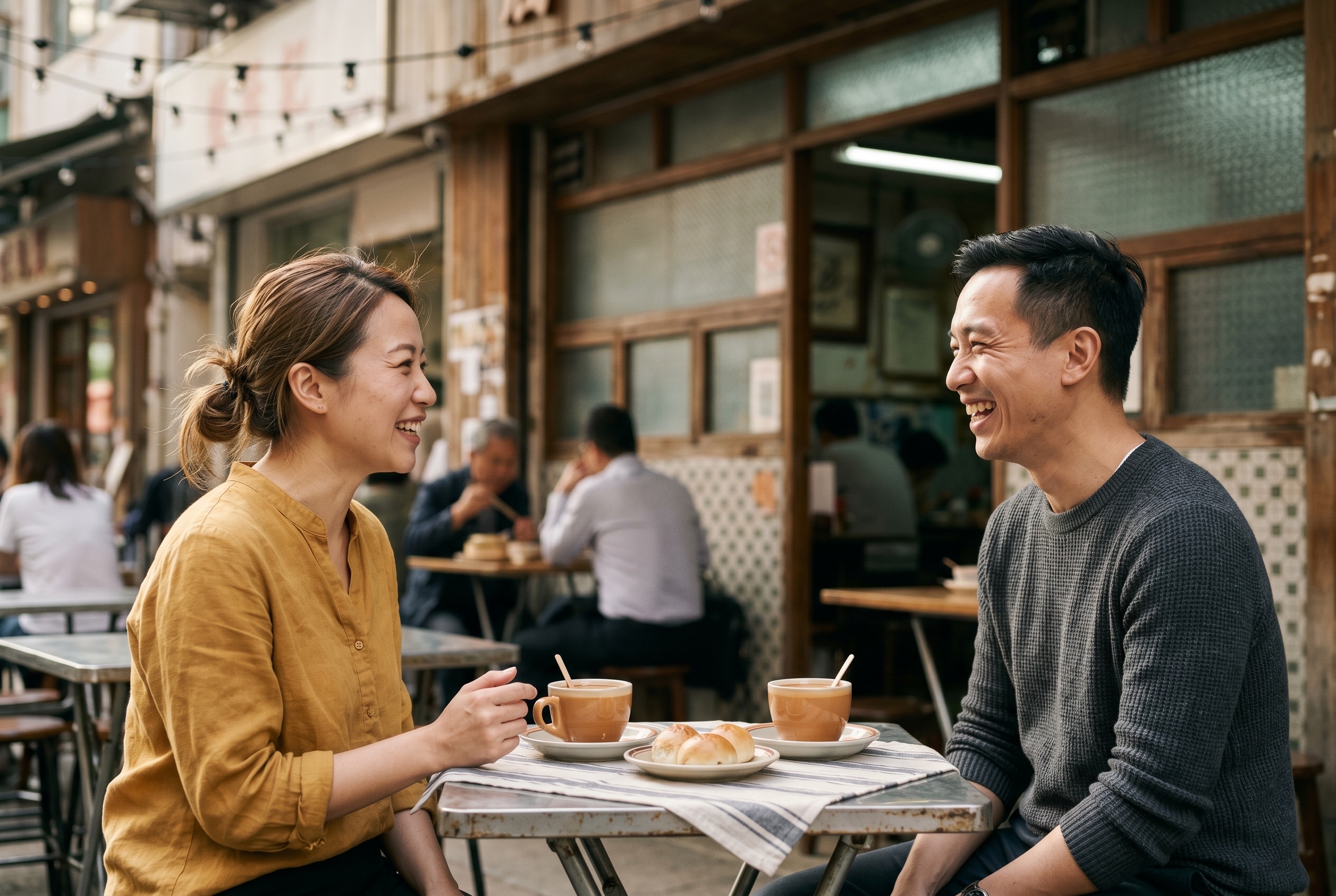
食咗飯未? Sik6 jor2 faan6 mei6? "Have you eaten yet?" The everyday Cantonese greeting, far warmer than the textbook nei5 hou2.
Personally vetted Conversational Cantonese tutors. Lessons grounded in the Cantonese people actually speak in Hong Kong, Guangzhou, Macau, and across the global Cantonese diaspora, with full attention to the tones and to the spoken language that lives almost nowhere on the printed page.
Your instructors
Conversational Cantonese tutors for private lessons & classes
Strommen has placed Cantonese tutors for years, and the steady ask has always been conversational fluency, especially among heritage learners reactivating dormant family language. Strommen is a curated practice rather than an open marketplace, so every teacher below was met and vetted by us. Bios are the tutors' own.
Filter by location, age, or price. Then book a free 30-minute trial and tell the tutor whether you are starting fresh, reactivating heritage Cantonese, or transitioning from Mandarin.
Below are the Strommen tutors who specialize in Conversational Cantonese. Photos, ratings, and rates are real. Click any card to read a bio and book a free 30-minute trial.
I want to learn…
Every tutor, personally met. — founder-vetted since 2006, in Los Angeles and online worldwide.
Get a personalized plan
Pick your language — a language advisor will match you with the right tutor and map out your path.

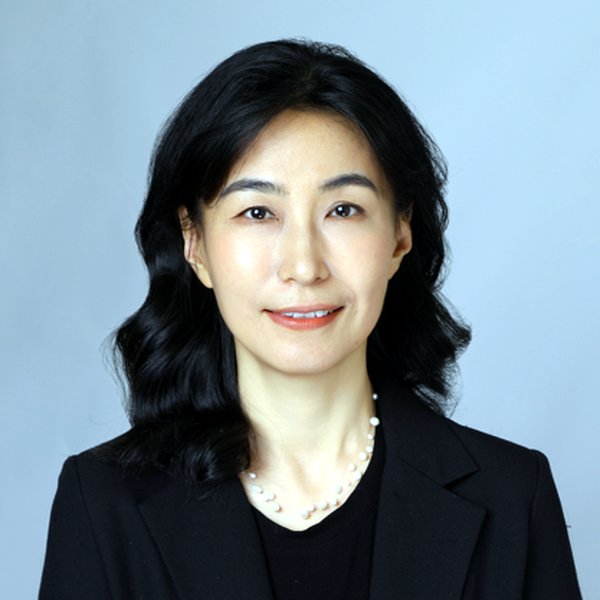
Bachelor's degree in Economics. · Cambridge Business English Certificate
Master Chinese with a Former Senior Diplomatic Mission Manager: 25 Years of High-Level Strategic Communication
Personally vetted · Strommen’s note
Before this, Ying spent twenty-five years as a senior diplomatic mission manager. She runs Chinese lessons like a project plan: milestones, roadmap, real scenarios.
Specialties
Bachelor's degree in Economics. · Cambridge Business English Certificate
Master Chinese with a Former Senior Diplomatic Mission Manager: 25 Years of High-Level Strategic Communication
Specialties
Personally vetted · Strommen’s note
Before this, Ying spent twenty-five years as a senior diplomatic mission manager. She runs Chinese lessons like a project plan: milestones, roadmap, real scenarios.
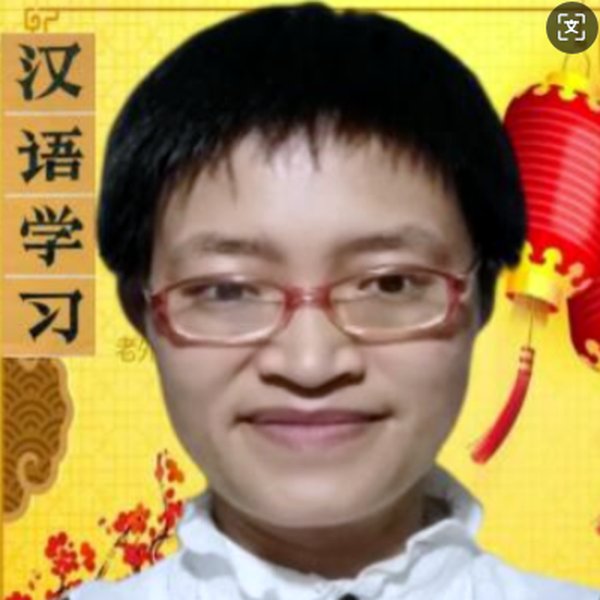
Human Resources and Education · Qualifications:※ Sun Yat-sen University in China with a bachelor's degree certificates.※Chinese National Putonghua Level 1 B certificates.※China National Primary School Chinese Teacher Qualification Certificate.※National Public English Level 3 Oral Exa...
Experienced native Chinese (Mandarin)/Cantonese tutor
Personally vetted · Strommen’s note
A native Cantonese and Mandarin speaker, Kate teaches both and keeps every class lively, tailored to the student's own goals and personality.
Specialties
Human Resources and Education · Qualifications:※ Sun Yat-sen University in China with a bachelor's degree certificates.※Chinese National Putonghua Level 1 B certificates.※China National Primary School Chinese Teacher Qualification Certificate.※National Public English Level 3 Oral Exa...
Experienced native Chinese (Mandarin)/Cantonese tutor
Specialties
Personally vetted · Strommen’s note
A native Cantonese and Mandarin speaker, Kate teaches both and keeps every class lively, tailored to the student's own goals and personality.


BA (Hons) in Bilingual Studies. · TCSOL and TEFL.
Bridging cultures through language, story, and authentic communication.
Specialties
Also speaks: Japanese, Spanish
BA (Hons) in Bilingual Studies. · TCSOL and TEFL.
Bridging cultures through language, story, and authentic communication.
Specialties
I also speak: Japanese, Spanish


Bachelor of Arts (BA) in Global and Development Studies – Jagiellonian University of Krakow, Poland (Graduated, 2020–2023)Master of Science (MSc) in European Urban Studies – Bauhaus-Universität Weimar, Germany (Expected completion in September 2026) · CityMinds Summer School Certificate – EIT Urban Mobility, Thessaloniki, Greece (July 2025)Erasmus+ Academic Exchange Program – Goethe Universität Frankfurt, Germany (Focus on Social and Political Sciences, 2022–2023)
Multilingual tutor making Cantonese, Mandarin, and English practical and engaging
Specialties
Also speaks: English, German
Bachelor of Arts (BA) in Global and Development Studies – Jagiellonian University of Krakow, Poland (Graduated, 2020–2023)Master of Science (MSc) in European Urban Studies – Bauhaus-Universität Weimar, Germany (Expected completion in September 2026) · CityMinds Summer School Certificate – EIT Urban Mobility, Thessaloniki, Greece (July 2025)Erasmus+ Academic Exchange Program – Goethe Universität Frankfurt, Germany (Focus on Social and Political Sciences, 2022–2023)
Multilingual tutor making Cantonese, Mandarin, and English practical and engaging
Specialties
I also speak: English, German

口語 — daily Cantonese
5 things that mark Cantonese you actually hear
These are not vocabulary items. They are the cues that separate someone who has been around Cantonese speakers from one who has only worked through a course. Save the list. Then book a tutor to drill them in real dialogue.
-
01
食咗飯未? (sik6 jor2 faan6 mei6)
"Have you eaten yet?" The everyday Cantonese greeting between friends and family. It is not a real question about food, it is a warm phatic hello, and the expected answer is a brief 食咗 (I ate) or 仲未 (not yet) followed by small talk. The textbook hello 你好 (nei5 hou2) is fine but reads as slightly stiff among people who know each other. Retiring 你好 with friends and reaching for 食咗飯未 is the single fastest sign that a learner has been around Cantonese.
e.g. Walking into a friend's flat in Hong Kong: 食咗飯未? 食咗喇, 你呢? (Have you eaten? I ate, you?)
-
02
Six tones (or nine, depending how you count)
Cantonese has six tones in its standard analysis (high level, high rising, mid level, low falling, low rising, low level), often counted as nine when the three checked-syllable tones (short syllables ending in p, t, or k) are listed separately. The same syllable carries six different meanings depending on the tone. The tone work is genuinely demanding for English-speaking learners and is what separates intelligible Cantonese from gibberish.
e.g. Si in different tones: si1 (poem), si2 (history), si3 (to try), si4 (time), si5 (city), si6 (is).
-
03
Sentence-final particles (啦, 啊, 喎, 咩, 嘅)
Small particles at the end of a sentence that carry the speaker's stance and emotional color. 啦 la1 softens, 啊 a3 adds friendly emphasis, 喎 wo3 marks new information, 咩 me1 turns a statement into a slightly surprised question, 嘅 ge3 emphasizes or marks the possessive. Cantonese without particles sounds flat and translated; adding them naturally is the largest single jump from textbook Cantonese to natural speech.
e.g. 好啦 (hou2 la1, okay then) vs 好啊 (hou2 a3, sure, okay) vs 好喎 (hou2 wo3, oh, that's good actually): three different shades of "good."
-
04
唔該 vs 多謝
Two different thank-yous that English-speakers reflexively merge. 唔該 (m4 goi1) is the general thank-you and excuse-me, used to flag a request, to thank someone for a service, and to politely move past someone. 多謝 (do1 ze6) is the heavier thank-you reserved for receiving a gift, a favor, or something the giver did not have to give. Using 多謝 when 唔該 fits sounds excessive; using 唔該 when 多謝 fits reads as ungrateful.
e.g. Receiving a coffee from a server: 唔該. Receiving a birthday present from a friend: 多謝.
-
05
Two written registers
Cantonese has two written layers. Formal written Cantonese is essentially Standard Chinese read in Cantonese pronunciation and appears in newspapers, contracts, and most professional contexts. Colloquial written Cantonese uses characters that exist only in Cantonese (係, 嘅, 唔, 咗, 喺, 嚟) and appears in casual texting, social media, comic books, and informal print. A learner needs both because the two serve different purposes.
e.g. Standard Chinese version: 我不知道. Colloquial Cantonese version of the same sentence: 我唔知 (ngo5 m4 zi1), I don't know.
About Conversational Cantonese
Cantonese is its own language, not a Mandarin dialect
The first thing a conversational Cantonese student usually has to unlearn is the idea that Cantonese and Mandarin are the same language with different accents. They are not. Cantonese and Mandarin share a writing system in their formal-written register and a great deal of cultural history, but as spoken languages they are mutually unintelligible. A Cantonese speaker from Hong Kong and a Mandarin speaker from Beijing cannot have a casual conversation in their respective tongues; one of them has to switch. Linguists treat the two as separate languages within the broader Chinese language family, even though both are commonly described as Chinese dialects in everyday English. The grammar overlaps significantly. The pronunciation is wildly different. The vocabulary differs in many everyday words. The tone system is its own beast. A student arriving with Mandarin from a beginner course is in for a much bigger transition than they expected, and a student starting from zero benefits from knowing upfront that Cantonese is its own study.
The tones are the heart of spoken Cantonese, and they ask more of a learner than Mandarin tones do. Cantonese has six tones in its standard analysis, sometimes counted as nine when the three checked-syllable tones (short syllables ending in p, t, or k) are listed separately. The six are: high level, high rising, mid level, low falling, low rising, and low level. The same syllable carries six different meanings depending on which tone it takes, and connected speech does not give you the visual diacritic-marked help that Vietnamese does or the relative simplicity of Mandarin's four tones. The classic illustration is the syllable si, which means "poem," "history," "to try," "city/poetry-particle," "time," and "is" depending on tone. Working tutors drill the tones from day one through minimal pairs and shadowing on real audio because skipping the tone work is what produces learners who say words that are technically correct in romanization and meaningless to native speakers.
The written question is the second piece of context every learner has to settle. Cantonese has two layers in its writing. Formal written Cantonese, the version that appears in newspapers, government documents, business contracts, and most professional contexts, is essentially written Standard Chinese (the same form Mandarin speakers use) read aloud in Cantonese pronunciation. A literate Cantonese speaker reading a Hong Kong newspaper aloud is producing Cantonese sound for Mandarin-style sentences. Colloquial written Cantonese, the version used in casual texting, social media, comic books, advertising, and informal print, includes characters that exist only in Cantonese (係 for is, 嘅 for the possessive particle, 唔 for not, 咗 for the perfective marker, 喺 for the location particle, 嚟 for to come) and reads close to how people actually speak. The two registers serve different purposes, and lessons cover both because a learner who only studies formal written Cantonese cannot read a friend's texts, and a learner who only studies colloquial written Cantonese cannot read a menu in a slightly formal restaurant.
The colloquial spoken layer is what conversational lessons actually live in. Greetings tell the story immediately. The textbook hello 你好 (nei5 hou2) is fine, but no one greets a friend or a family member with it in casual Cantonese. The everyday greeting is 食咗飯未 (sik6 jor2 faan6 mei6), "have you eaten yet?" which is not really a question about food, it is a warm phatic hello, and the expected answer is a brief 食咗 (sik6 jor2, "I ate") or 仲未 (zung6 mei6, "not yet") followed by small talk. A student who launches into a detailed account of lunch has missed the move. Other everyday greetings include 早晨 (zou2 san4) for good morning and a simple 喂 (wai2) when answering the phone. Conversational tutors retire 你好 in the first lesson the same way Swahili tutors retire jambo.
The slang and the sentence-final particles are what mark fluent Cantonese versus translated-from-Mandarin Cantonese. Particles like 啦 la1, 啊 a3, 喎 wo3, 咩 me1, and 嘅 ge3 carry the speaker's stance and the emotional color of the sentence, and getting them right is the largest single jump from textbook Cantonese to natural-sounding speech. 加油 (gaa1 jau4, literally "add oil") is the universal Cantonese encouragement, equivalent to "come on" or "you got this," and Hong Kong protest culture brought the phrase into international recognition. 快啲啦 (faai3 di1 la1, "hurry up") is the everyday "come on already." 好彩 (hou2 coi2) means "fortunately" or "luckily." 唔該 (m4 goi1) is the general thank-you-and-excuse-me-all-purpose-politeness word; 多謝 (do1 ze6) is the heavier thank-you specifically for receiving a gift or a favor. A learner who deploys these naturally reads as someone who has spent time around the language; one who reaches for Mandarin-pattern equivalents reads as translated.
The cultural register that surrounds spoken Cantonese is the dim sum table, the slow Cantonese tea-house morning, the noisy Hong Kong restaurant where the waiter is rushed and the table is full. Polite forms here are different from Mandarin politeness. Cantonese speakers will use the address terms 阿叔 (a3 suk1, uncle) and 阿姨 (a3 ji1, aunt) the same way Mandarin speakers use 叔叔 and 阿姨, extending family terms into ordinary social space; the older neighbor is uncle, the older woman at the dai pai dong is aunt. The Cantonese opera and Cantopop tradition runs deep, from the golden age of Hong Kong cinema in the 1980s and 1990s through Wong Kar-wai's films to the current generation. Many adult students arrive at the language through that cultural inheritance, and a tutor working with them often uses film and music clips as part of the lesson plan.
Most students who reach this page fall into a few groups. Heritage Cantonese-speakers in the United States, Canada, the United Kingdom, and Australia whose comprehension is strong from family contexts and whose production is rusty. The Cantonese diaspora is among the largest of any Chinese-speaking community outside the mainland, and heritage learners are the single largest cohort here. Partners of Cantonese-speakers preparing for in-law family contexts. Adoptees from Hong Kong reconnecting with the language as adults. Travelers planning long stays in Hong Kong, Macau, or Guangzhou. Business travelers heading to Hong Kong for work. Adult learners drawn to the language by Cantonese cinema and music. Researchers and journalists with Hong Kong-focused assignments. Each of these has a different starting point, and a working tutor adjusts the plan accordingly.
Our Conversational Cantonese tutors are native and heritage speakers, several from Hong Kong, several from Guangzhou and the wider Pearl River Delta, and several Cantonese-American or Cantonese-Canadian teachers in the diaspora who have spent years working with both adult-beginner learners and heritage students. They calibrate at the trial, build a lesson plan around your actual goal, and update the plan as you progress. Bios on each tutor's profile tell you where they are from and which kinds of students they have moved the furthest. The full Strommen tutor directory shows the wider roster if you want to compare options first.
What you'll cover
Lessons & classes tailored to Conversational Cantonese
Tones as foundation, drilled from day one
Cantonese tones are the foundation of intelligible speech and the place where beginner students are most tempted to cut corners. Lessons drill the six tones (and the three checked-syllable variants where relevant) through minimal pairs and shadowing on real Cantonese audio from day one. Students who give the tone work serious early attention reach intelligibility much faster than students who delay the work. A working tutor names tone errors gently and constantly because skipping the correction is what produces learners who stay unintelligible to native speakers.
Colloquial spoken Cantonese, not translated Mandarin
Cantonese is its own language, not a Mandarin variant, and lessons treat it that way. Students learn the colloquial vocabulary that has no direct Mandarin equivalent (係, 嘅, 唔, 咗, 喺, 嚟), the sentence-final particles that carry stance and feeling, the everyday greetings that Mandarin speakers would not recognize. Students who already speak Mandarin get help leveraging what transfers (much of the formal-written vocabulary, some grammatical structures) without assuming the spoken languages overlap further than they actually do.
Both written registers, calibrated to your goal
Lessons cover both the formal written Cantonese (Standard Chinese read in Cantonese pronunciation, for newspapers, contracts, and professional contexts) and the colloquial written Cantonese (for texting, social media, comic books, informal print). Students focused on speaking with family run early lessons heavier on colloquial; students preparing for professional Hong Kong contexts get both registers. A tutor calibrates the script work to your actual goal.
Hong Kong culture, cinema, and the social register
Cantonese culture lives inside Cantonese speech in concrete ways. The dim sum table, the long Cantonese tea-house morning, the rushed dai pai dong dinner, the family terms (阿叔, 阿姨) extended into ordinary social space, the Cantonese cinema and Cantopop heritage that runs from the 1980s through the present. Lessons fold these in alongside grammar because the cultural setting is part of the language. Students drawn to the language by Wong Kar-wai or by Hong Kong action cinema get tutors who use film clips as part of the lesson plan. For broader context between lessons, our blog post on Cantonese vs Mandarin covers the practical choice (blog post not yet published).
FAQ
About Conversational Cantonese lessons & classes
Is Cantonese the same language as Mandarin?
No. Cantonese and Mandarin share a writing system in their formal-written register and a great deal of cultural and historical overlap, but as spoken languages they are mutually unintelligible. A Cantonese speaker from Hong Kong and a Mandarin speaker from Beijing cannot have a casual conversation in their respective tongues. The grammar overlaps significantly, the pronunciation is wildly different, the vocabulary differs in many everyday words, and the tone systems are different (Cantonese has six tones, Mandarin has four). Studying one does not give you the other.
I already speak some Mandarin. Will that help me learn Cantonese?
It helps and it can also get in the way. The shared character system means a Mandarin speaker can read formal written Cantonese with some adjustment, and the shared cultural and grammatical inheritance means many concepts and structures transfer. The pronunciation, the tones, the colloquial vocabulary, and the sentence-final particles are all different and have to be learned fresh. A working tutor leans on what transfers while actively unlearning the Mandarin habits that do not work in Cantonese.
How hard is Cantonese for an English speaker?
Honestly demanding. The six-tone system is more complex than Mandarin's four, the colloquial spoken language is different from anything in a beginner Chinese course, and there is a significant amount of vocabulary that exists only in Cantonese. The grammar is relatively learner-friendly (no verb conjugations, no plurals, no grammatical gender, no articles, no cases) and the rewards are substantial: the Cantonese-speaking world includes Hong Kong, Macau, Guangzhou, and a large global diaspora. Most committed adult students reach conversational comfort in twelve to eighteen months at one or two lessons a week with steady self-study in between.
I am a heritage Cantonese speaker who understands but barely speaks. Is this the right specialty?
Almost always yes. Heritage learners arrive with a strong listening foundation, real vocabulary from family contexts, intuitive feel for tones that comes back quickly once practice resumes, and an instinct for the cultural register. What is missing is active speaking confidence and modern register beyond the household. A conversational tutor builds on the foundation you already have rather than restarting from beginner one. The Cantonese-speaking diaspora is among the largest in the world, and heritage learners are the single largest cohort on this page.
Are your Conversational Cantonese tutors native speakers?
Most are native speakers, several from Hong Kong, several from Guangzhou and the wider Pearl River Delta, and several Cantonese-American or Cantonese-Canadian teachers in the diaspora who have spent years working with both adult-beginner learners and heritage students. Each tutor's bio specifies background, where they are from, and which kinds of students they have worked with most. For heritage learners specifically, several tutors specialize in reactivating dormant family Cantonese.
Can I take Conversational Cantonese lessons online?
Yes. Most of our Conversational Cantonese tutors teach online via Zoom or Jitsi and work with students worldwide, which suits this specialty well since the lesson is mostly speaking and listening. A few also teach in person in Los Angeles and other cities with substantial Cantonese-speaking communities. The booking widget on each tutor profile shows the available formats and live availability.
What does a typical Conversational Cantonese lesson look like?
Lessons are one-on-one and built around your goal. A session might open with guided conversation in Cantonese on a topic you chose, pause for targeted tone work or a sentence-final-particle issue that surfaced, add a piece of cultural context when relevant, then close with listening practice on real Cantonese audio (Hong Kong news, Cantopop, film clips, vlogs). No two students get the same plan. The tutor tracks what you actually want to be able to say and works backward from it.
Will my Cantonese work in Hong Kong, Macau, and Guangzhou?
Yes. The Cantonese spoken across Hong Kong, Macau, and Guangzhou is mutually intelligible with small regional variations. Hong Kong Cantonese has the most international influence (more English loanwords, more code-switching with English, distinctive media presence) and is the variety most international learners encounter first. Guangzhou Cantonese is closer to the mainland standard and uses slightly different colloquial vocabulary in some areas. Macau Cantonese is essentially the same as Hong Kong Cantonese for practical purposes. A tutor names which variety they themselves speak and adjusts the listening work toward where you are headed.
Ready for Conversational Cantonese lessons or classes?
Book a free 30-minute trial with one of our personally vetted tutors. Private lessons or small-group classes — your choice.