



Personally vetted instructors
Chinese Literature tutors, lessons & classes
早上好 zǎoshang hǎo The morning greeting, the way a reading session usually starts.
Personally vetted Chinese literature tutors. Lessons that move from graded readers to Tang poetry and the classical novels, at a pace built around the books you actually want to read.
Your instructors
Chinese Literature tutors for private lessons & classes
Strommen has been teaching Chinese since 2006, and literature students tend to want something a directory cannot give them: a teacher who has actually read the books and can talk about them. We do not run a marketplace and we do not auto-generate listings. Each tutor below was met and vetted by us in person, and the bio you read is their own description of how they teach.
Filter by location, age, or price, then book a 30-minute free trial.
Below are the Strommen tutors who specialize in Chinese literature. Photos, ratings, and rates are real. Click any card to read their background and book a free 30-minute trial.
I want to learn…
Every tutor, personally met. — founder-vetted since 2006, in Los Angeles and online worldwide.
Get a personalized plan
Pick your language — a language advisor will match you with the right tutor and map out your path.

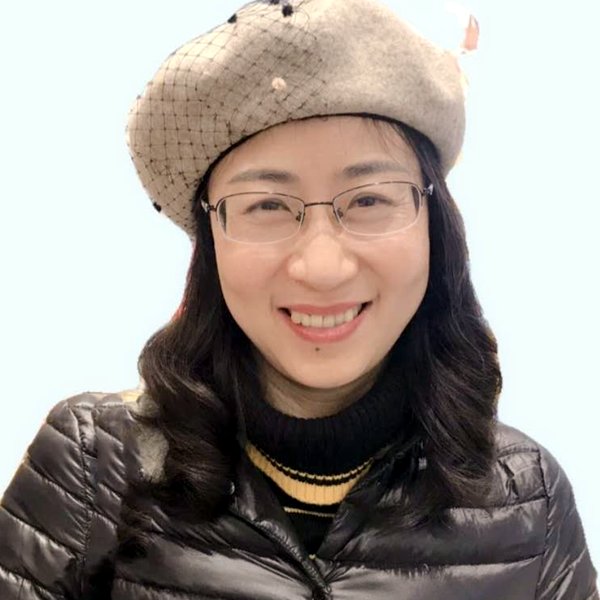
Masters degree
Expert University Teaching with a Friendly Touch: Professional, Engaging, Effective . #1 Mandarin Tutor at Strommen working with Corporate Clients, Kids + Individuals.
Personally vetted · Strommen’s note
Before joining Strommen, Linna spent twenty-five years teaching Chinese language and literature at a university in China.
Specialties
Masters degree
Expert University Teaching with a Friendly Touch: Professional, Engaging, Effective . #1 Mandarin Tutor at Strommen working with Corporate Clients, Kids + Individuals.
Specialties
Personally vetted · Strommen’s note
Before joining Strommen, Linna spent twenty-five years teaching Chinese language and literature at a university in China.
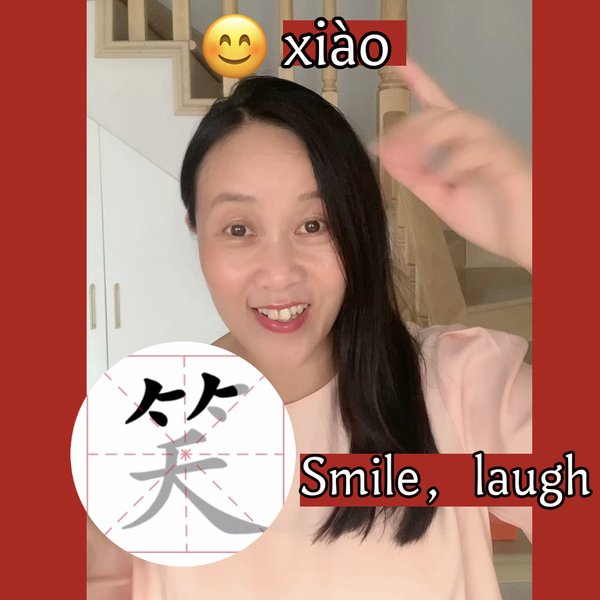
• BA major in History & Cultural comparison • · 1)中国教育部颁发的对外汉语教师资格证 ◐ Certificate for teaching Chinese as a foreign language Issue No. 2003240029 By The Ministry of Education of China ◐ 在线中文教学技能证书 2)Online Chinese Teaching Skills Certificate (No: AP-A003-A0007)
Practical & Interactive Chinese Classes From an Experienced Trainer
Personally vetted · Strommen’s note
Cathy went from Whitman College exchange instructor to Shanghai corporate Chinese trainer, and she teaches practical, business-ready Mandarin now.
Specialties
• BA major in History & Cultural comparison • · 1)中国教育部颁发的对外汉语教师资格证 ◐ Certificate for teaching Chinese as a foreign language Issue No. 2003240029 By The Ministry of Education of China ◐ 在线中文教学技能证书 2)Online Chinese Teaching Skills Certificate (No: AP-A003-A0007)
Practical & Interactive Chinese Classes From an Experienced Trainer
Specialties
Personally vetted · Strommen’s note
Cathy went from Whitman College exchange instructor to Shanghai corporate Chinese trainer, and she teaches practical, business-ready Mandarin now.
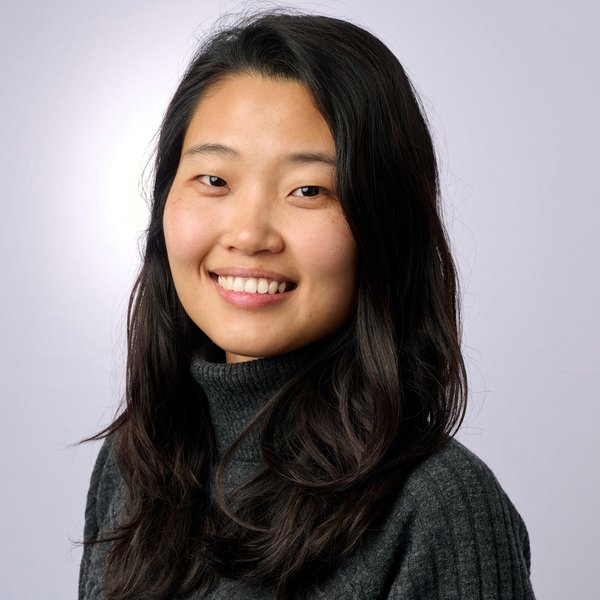

Masters in education
Looking forward to sharing Chinese language and culture with you.
Personally vetted · Strommen’s note
Simone's Chinese lessons stay interactive by design, heavy on student practice time, light on lecture.
Specialties
Masters in education
Looking forward to sharing Chinese language and culture with you.
Specialties
Personally vetted · Strommen’s note
Simone's Chinese lessons stay interactive by design, heavy on student practice time, light on lecture.
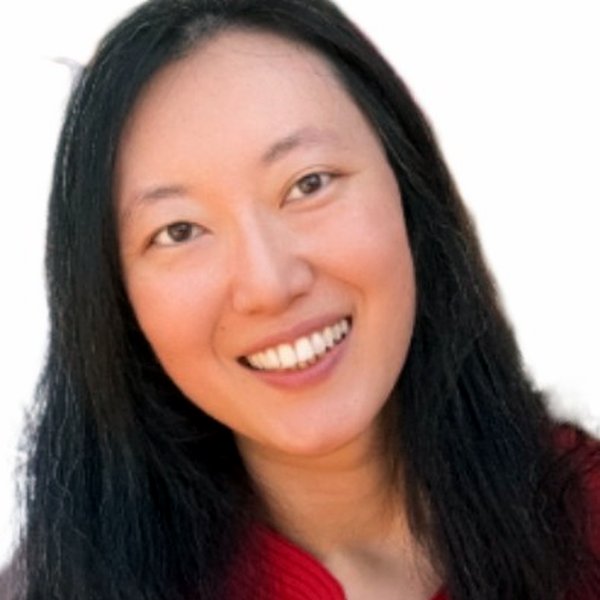
Bachelor's degree · CELT-P (Certificate in English Language Teaching – Primary)
Native Chinese Tutor in Tianjin with C1 English level
Personally vetted · Strommen’s note
A native Chinese speaker in Tianjin with C1 English herself, Xin opens every lesson by asking flatly what's been giving the student trouble.
Specialties
Bachelor's degree · CELT-P (Certificate in English Language Teaching – Primary)
Native Chinese Tutor in Tianjin with C1 English level
Specialties
Personally vetted · Strommen’s note
A native Chinese speaker in Tianjin with C1 English herself, Xin opens every lesson by asking flatly what's been giving the student trouble.
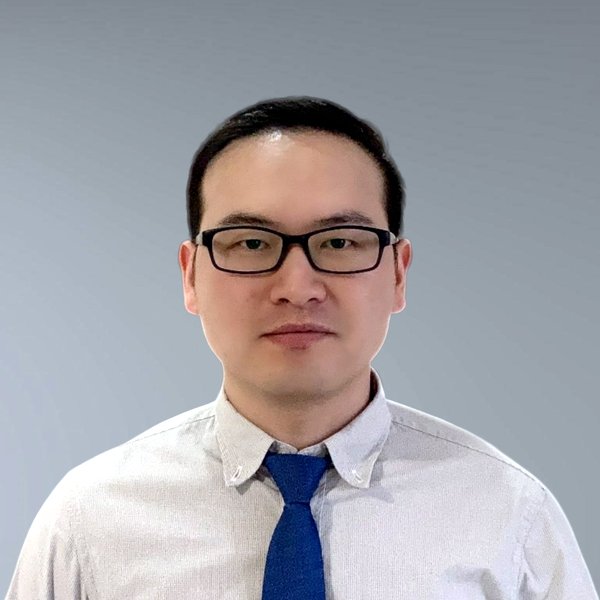

Bachelor’s degree · Certificate for Teaching Chinese as a Foreign Language
Making Chinese learning fun and easy.
Personally vetted · Strommen’s note
Wenlong opens every Chinese lesson with a four-skills check, listening, speaking, reading, writing, before deciding where to focus.
Specialties
Also speaks: English, German
Bachelor’s degree · Certificate for Teaching Chinese as a Foreign Language
Making Chinese learning fun and easy.
Specialties
I also speak: English, German
Personally vetted · Strommen’s note
Wenlong opens every Chinese lesson with a four-skills check, listening, speaking, reading, writing, before deciding where to focus.


Master
🏆Certified Pro(10Y+) | 🚀Fix Your Speaking Fast (HSK & Business Expert) | 🗣️Real Life Conversation | 💬Fluency & Pronunciation
Personally vetted · Strommen’s note
Before Strommen, Misty taught Chinese to students from more than thirty countries. Now she curates a plan instead of a textbook.
Specialties
Also speaks: English, Korean
Master
🏆Certified Pro(10Y+) | 🚀Fix Your Speaking Fast (HSK & Business Expert) | 🗣️Real Life Conversation | 💬Fluency & Pronunciation
Specialties
I also speak: English, Korean
Personally vetted · Strommen’s note
Before Strommen, Misty taught Chinese to students from more than thirty countries. Now she curates a plan instead of a textbook.

成语 — idioms & classical roots
5 classical 成语 every literature student meets
成语 are four-character idioms, most of them drawn from classical texts and historical anecdotes. Knowing the story behind one is half of reading the literature it comes from. Save this, then book a tutor to learn the rest.
-
01
未雨绸缪 wèi yǔ chóumóu
"Bind the thatch before the rain comes." To prepare ahead of trouble. The image traces back to the Book of Songs, the oldest anthology of Chinese poetry, and it shows how often 成语 are compressed lines of classical verse.
e.g. 他做事总是未雨绸缪,从不临时抱佛脚。
-
02
精益求精 jīng yì qiú jīng
"Refine the already refined." To keep improving something that is already good. It comes from the Analects, and it describes the right attitude toward close reading: a passage you think you understand usually has another layer.
e.g. 翻译这首唐诗,她精益求精,改了十几遍。
-
03
入乡随俗 rù xiāng suí sú
"Enter a village, follow its customs." The Chinese "when in Rome." Reading a novel set in a particular place and period asks the same of you: meet the text on its own terms before judging it.
e.g. 读《边城》要入乡随俗,先理解湘西的风土人情。
-
04
一言为定 yī yán wéi dìng
"One word, and it is settled." Used to seal a promise. It carries an old-fashioned weight, the sense of a spoken word as binding, which is exactly the world the classical novels move in.
e.g. 下周开始读《西游记》,一言为定。
-
05
百年大计 bǎinián dàjì
"A hundred-year plan." A project measured in generations rather than seasons. It is a fair description of what working through the four great classical novels feels like, and of why students grow into Dream of the Red Chamber rather than rushing it.
e.g. 学好古典文学是百年大计,不能急于求成。
About Chinese Literature
A canon, not a curriculum
Chinese literature is not one shelf. It runs from the four classical novels of the Ming and Qing dynasties through the golden age of Tang poetry, into the vernacular revolution of the early twentieth century, and out to a contemporary scene that has produced a Nobel laureate and a Hugo winner in the same generation. That range is the appeal and also the problem: a beginner who picks up Dream of the Red Chamber unannotated will close it within a chapter. A tutor's job is to help you find your way in without drowning, and to choose the entry point that matches the reader you actually are right now.
The four great classical novels are the foundation, the 四大名著 that every educated Chinese reader knows. Romance of the Three Kingdoms, attributed to Luo Guanzhong in the fourteenth century, is the historical epic that still shapes how Chinese readers think about strategy and loyalty; Moss Roberts produced the most accessible English translation. Water Margin, attributed to Shi Nai'an, tells the story of 108 outlaw heroes and a morally ambiguous rebellion against a corrupt Song government, and exists in major English versions by Pearl S. Buck and Sidney Shapiro. Journey to the West, attributed to Wu Cheng'en in the sixteenth century, is the mythological pilgrimage of the Tang monk Xuanzang and the Monkey King, adapted everywhere from opera stages to anime; Anthony C. Yu's complete translation is the scholarly standard, while Arthur Waley's abridged Monkey is the popular entry point. And Dream of the Red Chamber, written by Cao Xueqin in the eighteenth century, is often called the greatest Chinese novel, an aristocratic family's slow decline told with psychological depth that rewards months of close reading; the David Hawkes and John Minford five-volume Penguin edition is the standard English text. For students starting out, Journey to the West is the most accessible because its episodic structure breaks cleanly into modular lessons. Dream of the Red Chamber is the deepest reward, the book you grow into.
Tang poetry is the other pillar. The Tang dynasty, roughly 618 to 907, is treated as the high-water mark of Chinese verse. Three poets anchor any introduction. Li Bai, the wine-and-moonlight romantic, wrote Quiet Night Thoughts, whose opening line about moonlight on the floor every Chinese child memorizes in elementary school, and the great drinking poem Bring in the Wine. Du Fu, his friend and contemporary, is the Confucian poet of war and refugees; Spring View and the Song of My Thatched Hut Wrecked by the Autumn Wind are core texts. Wang Wei is the Buddhist painter whose poems read like landscapes, and Autumn Evening in the Mountains is the usual way in. The anthology Three Hundred Tang Poems, compiled by Sun Zhu in 1763, is the household reference and a sensible scope for an advanced learner to work through over time.
Modern Chinese literature begins with a deliberate break. Lu Xun wrote Diary of a Madman in 1918 in 白话, vernacular Mandarin, at a time when classical Chinese was still the literary standard, and it is widely considered the first modern Chinese short story. His satirical novella The True Story of Ah Q is required reading for anyone studying the late Qing collapse and the cultural self-deception Lu Xun diagnosed in it. Lao She gave Beijing its voice in Rickshaw Boy, the grinding-down of a rickshaw puller by the city, and in the play Teahouse, three acts spanning fifty years of history seen through one Beijing teahouse. Shen Congwen wrote the elegiac Border Town, the lyrical short novel of West Hunan. The contemporary scene carries that line forward. Mo Yan, the 2012 Nobel laureate, brought magical realism to Shandong rural life in Red Sorghum. Yu Hua's spare, controlled To Live follows one peasant family through a century of upheaval. Yan Lianke is the satirist whose books, including Serve the People! and Dream of Ding Village, were banned in mainland China. And Liu Cixin's Three-Body Problem trilogy won the first Chinese-language Hugo Award and, with screen adaptations from Tencent and Netflix, became the most globally read Chinese fiction of the past decade.
Reading any of this in the original is a real skill, separate from conversational fluency, and treating the two as the same thing is the most common reason literature students stall. A reader can hold a fluent conversation and still find a Tang quatrain opaque, because classical verse compresses allusion and grammar in ways spoken Mandarin never does. A workable progression starts with adapted graded readers around late HSK 5, such as the Mandarin Companion series. It moves to contemporary short stories by Yu Hua or Mo Yan at solid HSK 6, where To Live is short and direct enough to be many students' first full novel. From there it goes to Tang poetry with parallel translation, and eventually to Dream of the Red Chamber unannotated. Classical Chinese, the literary language called 文言文, sits beyond even that. It is close to a different language and requires its own explicit study, not just more vocabulary. A good tutor maps that path to where you actually are instead of assigning a syllabus and hoping.
The thing that surprises most English-speaking readers is that the hardest part of a Chinese sentence is often invisible. A four-character phrase looks like four words; it is frequently a whole story compressed, a 成语 carrying a historical anecdote behind it, and a reader who does not know the source reads the line and still misses it. That is why our tutors treat 成语 as literature in their own right, not as vocabulary to memorize. Two grammar habits do quieter damage. Mandarin marks completed and ongoing action with the particles 了, 过, and 着 rather than conjugating verbs for tense, so a reader trained to hunt for English tense will misread when a passage is actually happening. And Chinese routinely fronts the topic before it says anything about it, which leaves a reader parsing strict subject-verb-object stranded mid-sentence. Both are felt problems, and both ease once a tutor names them out loud. Reading every character as its own word is a related slip, since modern written Mandarin is heavily disyllabic and the meaning often lives in the pair. One more, and it is a pleasure rather than a trap: several of these writers reached English first, so comparing a translator's choices against the original is among the most rewarding things an advanced lesson can do.
Our Chinese literature tutors come from a mix of backgrounds. Native speakers educated in mainland China and Taiwan, several with graduate training in literature, and longtime bilingual teachers who have guided students through these texts for years. They calibrate to your goal, whether that is a heritage-language reconnection, an academic reading list, a single novel you have always meant to finish, or the poems behind the songs you already love. Different goals, different reading plans.
What you'll cover
Lessons & classes tailored to Chinese Literature
The four great classical novels
Romance of the Three Kingdoms, Water Margin, Journey to the West, and Dream of the Red Chamber, taught at the depth you choose. Some students read selected chapters in the original Chinese; others work through a strong English translation alongside discussion of language and historical context. Lessons cover the recurring idioms and cultural references these books seeded into the language, and the modular episodic structure of Journey to the West makes it a natural place to begin. If you want the building blocks first, our post on the most common Chinese radicals is a useful starting point.
Tang poetry and classical verse
Li Bai, Du Fu, and Wang Wei anchor an introduction to the golden age of Chinese poetry. Lessons walk through individual poems line by line, covering tonal patterns, parallelism, and the compressed allusions that reward a slow reading. Three Hundred Tang Poems, the standard household anthology, gives a sensible long-term scope. We pair classical text with parallel translation so you build reading confidence without losing the music of the original.
Modern and contemporary fiction
From Lu Xun's vernacular revolution through Lao She, Shen Congwen, and the contemporary generation of Mo Yan, Yu Hua, Yan Lianke, and Liu Cixin. Yu Hua's To Live is short and direct enough to be many students' first full novel in the original. Lessons move between close reading, historical context, and the question of how a book gets translated, since several of these writers are widely read in English first.
Reading-level progression
Reading literature in the original is its own skill, distinct from conversation. We map a realistic path: adapted graded readers around late HSK 5, contemporary short stories at solid HSK 6, Tang poetry with parallel translation beyond that, and eventually unannotated classics. Classical Chinese, the literary language 文言文, is treated as a separate track for students who want it. Your tutor sets the entry point at the trial lesson based on where your reading actually is, not where a syllabus assumes it should be.
FAQ
About Chinese Literature lessons & classes
Do I need to be fluent in Mandarin before studying Chinese literature?
Not fluent, but you do need a reading foundation. Most literature students are at an intermediate level or higher, roughly HSK 4 and up, when they start. If you are earlier than that, a tutor can blend literature with reading-skill building, often using adapted graded readers so you are working with real stories from the start. The trial lesson is where the tutor figures out the right entry point for you.
Can we read in English translation, or does it have to be original Chinese?
Either, and many students do both. Reading a strong English translation alongside discussion of language, history, and context is a legitimate way to study Chinese literature, especially for the long classical novels. Other students read selected chapters in the original and use translation as support. Your tutor builds the lesson around the balance that fits your level and your goal.
Which of the four great classical novels should I start with?
Journey to the West is usually the best first choice. Its episodic structure breaks cleanly into modular lessons, the fantasy elements keep it engaging, and the language is approachable. Dream of the Red Chamber is the deepest of the four and the one most students grow into over months of close reading. Romance of the Three Kingdoms suits readers drawn to history and strategy, and Water Margin appeals to readers who like morally complicated heroes.
Can I focus only on Tang poetry, or only on contemporary fiction?
Yes. Lessons are one-on-one and built around what you want to read. Some students spend a full course of study on Tang poetry, working through Li Bai, Du Fu, and Wang Wei. Others read only contemporary novels by writers like Yu Hua or Liu Cixin. Your tutor shapes the reading list to your interest rather than running you through a fixed survey.
Are your tutors actually trained in literature?
Several have graduate training in Chinese literature, and all of them are serious readers who can discuss these texts with real depth. Each tutor's bio specifies their education and background. We are a small vetted roster, not a marketplace, so we can tell you who has the academic background for an advanced reading list and who is the better fit for a heritage learner returning to the canon.
What does a Chinese literature lesson actually look like?
A typical hour mixes close reading of an assigned passage, discussion of historical and cultural context, attention to specific language points such as idioms or classical grammar, and time to talk through your own response to the text. No two students get the same lesson, since the reading list is yours. Your tutor sets concrete reading goals at the trial and adjusts based on what is working.
How long does it take to read a classical Chinese novel in the original?
It depends on your starting level and how much time you give it between lessons. A contemporary short novel like To Live is achievable for a solid HSK 6 reader within a few months. The long classical novels are a longer commitment, often a year or more of regular sessions, which is why many students read selected chapters rather than the whole work. Your tutor sets a realistic pace at the trial lesson.
Can I take Chinese literature lessons online or only in person?
Both. Many of our Chinese literature tutors teach online via Zoom or Jitsi and are available worldwide. Several also teach in person. The booking widget on each tutor's profile shows their available formats, and you can browse the full roster on our tutors page or read more about studying the language on our Chinese classes page.
Ready for Chinese Literature lessons or classes?
Book a free 30-minute trial with one of our personally vetted tutors. Private lessons or small-group classes — your choice.