



Personally vetted instructors
Simplified Chinese tutors, lessons & classes
你好 Nǐ hǎo, the standard Mandarin hello written in simplified characters.
Personally vetted simplified Chinese (简体字) tutors. Lessons focused on the writing system used across mainland China, with the character forms, the stroke order, and the reading and writing fluency that HSK prep, business work, and university admission in the PRC actually require.
Your instructors
Simplified Chinese tutors for private lessons & classes
Strommen runs a curated Chinese roster with several tutors who specifically teach simplified character work for HSK prep, university-track adult learners, and business Mandarin contexts. Every tutor below was met and vetted by us. Bios, photos, and rates are real.
Filter by location, age, or price, then book a 30-minute free trial.
Below are the Strommen tutors who specialize in simplified Chinese writing and reading. Photos, ratings, and rates are real. Click any card to read their bio and book a free 30-minute trial.
I want to learn…
Every tutor, personally met. — founder-vetted since 2006, in Los Angeles and online worldwide.
Get a personalized plan
Pick your language — a language advisor will match you with the right tutor and map out your path.

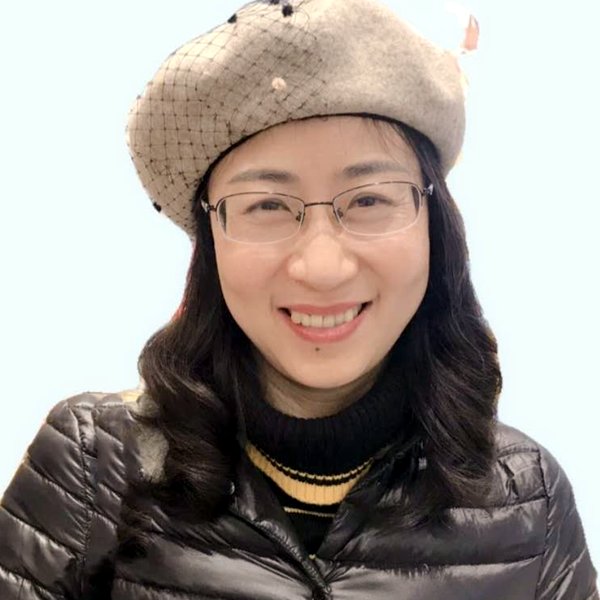
Masters degree
Expert University Teaching with a Friendly Touch: Professional, Engaging, Effective . #1 Mandarin Tutor at Strommen working with Corporate Clients, Kids + Individuals.
Personally vetted · Strommen’s note
Before joining Strommen, Linna spent twenty-five years teaching Chinese language and literature at a university in China.
Specialties
Masters degree
Expert University Teaching with a Friendly Touch: Professional, Engaging, Effective . #1 Mandarin Tutor at Strommen working with Corporate Clients, Kids + Individuals.
Specialties
Personally vetted · Strommen’s note
Before joining Strommen, Linna spent twenty-five years teaching Chinese language and literature at a university in China.


Masters in education
Looking forward to sharing Chinese language and culture with you.
Personally vetted · Strommen’s note
Simone's Chinese lessons stay interactive by design, heavy on student practice time, light on lecture.
Specialties
Masters in education
Looking forward to sharing Chinese language and culture with you.
Specialties
Personally vetted · Strommen’s note
Simone's Chinese lessons stay interactive by design, heavy on student practice time, light on lecture.
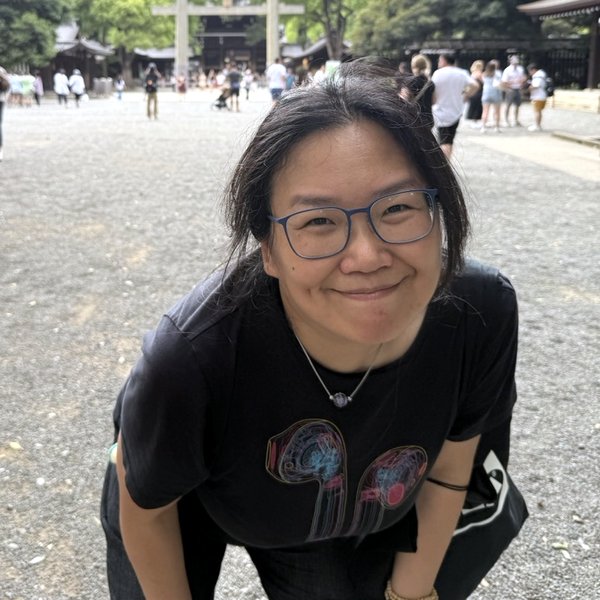
MFA · Mandarin teaching cert
UCLA Mandarin teacher from Taiwan with 25-year experiences plus professional skills in Animation, Film & TV
Personally vetted · Strommen’s note
Daisy is a UCLA Mandarin instructor from Taiwan with twenty-five years in the classroom and a side career in animation and film. She also coaches actors' dialects.
Specialties
MFA · Mandarin teaching cert
UCLA Mandarin teacher from Taiwan with 25-year experiences plus professional skills in Animation, Film & TV
Specialties
Personally vetted · Strommen’s note
Daisy is a UCLA Mandarin instructor from Taiwan with twenty-five years in the classroom and a side career in animation and film. She also coaches actors' dialects.



B.A. in Asian Studies (Minor in Humanities); M.A. in Teaching English as a Second Language (TESL) pending (May 2027) · Certificate in Teaching English as a Second Language (TESL)
Graduate student w/ 30 years of English (ESL) teaching & tutoring experience, fluent in Mandarin
Personally vetted · Strommen’s note
Robert has thirty years of ESL teaching experience and is fluent in Mandarin. Now a graduate student himself, he brings that full arc to English lessons.
Specialties
Also speaks: Armenian, French, Korean, Macedonian, Spanish
B.A. in Asian Studies (Minor in Humanities); M.A. in Teaching English as a Second Language (TESL) pending (May 2027) · Certificate in Teaching English as a Second Language (TESL)
Graduate student w/ 30 years of English (ESL) teaching & tutoring experience, fluent in Mandarin
Specialties
I also speak: Armenian, French, Korean, Macedonian, Spanish
Personally vetted · Strommen’s note
Robert has thirty years of ESL teaching experience and is fluent in Mandarin. Now a graduate student himself, he brings that full arc to English lessons.

Master
🏆Certified Pro(10Y+) | 🚀Fix Your Speaking Fast (HSK & Business Expert) | 🗣️Real Life Conversation | 💬Fluency & Pronunciation
Personally vetted · Strommen’s note
Before Strommen, Misty taught Chinese to students from more than thirty countries. Now she curates a plan instead of a textbook.
Specialties
Also speaks: English, Korean
Master
🏆Certified Pro(10Y+) | 🚀Fix Your Speaking Fast (HSK & Business Expert) | 🗣️Real Life Conversation | 💬Fluency & Pronunciation
Specialties
I also speak: English, Korean
Personally vetted · Strommen’s note
Before Strommen, Misty taught Chinese to students from more than thirty countries. Now she curates a plan instead of a textbook.

Bachelor of Arts (BA) in Global and Development Studies – Jagiellonian University of Krakow, Poland (Graduated, 2020–2023)Master of Science (MSc) in European Urban Studies – Bauhaus-Universität Weimar, Germany (Expected completion in September 2026) · CityMinds Summer School Certificate – EIT Urban Mobility, Thessaloniki, Greece (July 2025)Erasmus+ Academic Exchange Program – Goethe Universität Frankfurt, Germany (Focus on Social and Political Sciences, 2022–2023)
Multilingual tutor making Cantonese, Mandarin, and English practical and engaging
Specialties
TSANG T
Personally vettedBachelor of Arts (BA) in Global and Development Studies – Jagiellonian University of Krakow, Poland (Graduated, 2020–2023)Master of Science (MSc) in European Urban Studies – Bauhaus-Universität Weimar, Germany (Expected completion in September 2026) · CityMinds Summer School Certificate – EIT Urban Mobility, Thessaloniki, Greece (July 2025)Erasmus+ Academic Exchange Program – Goethe Universität Frankfurt, Germany (Focus on Social and Political Sciences, 2022–2023)
Multilingual tutor making Cantonese, Mandarin, and English practical and engaging
Specialties

简体字 — mainland China script
5 things to know about learning simplified Chinese
These are the foundational pieces of simplified Chinese pedagogy that shape how serious adult learners actually develop. Save the list for the trial.
-
01
Simplified vs traditional is a script choice, not a language choice
Both simplified and traditional characters write the same Mandarin (or Cantonese) language. The choice between them is about which writing system the target context uses: simplified in mainland China and Singapore; traditional in Taiwan, Hong Kong, and most overseas Chinese communities that established conventions before the 1950s reforms. The spoken language is the same; the visual writing differs.
e.g. Same word 学 (simplified) and 學 (traditional), both pronounced xué, both meaning to learn.
-
02
Learn characters by component, not as pictures
Chinese characters are built from a limited set of components (radicals plus phonetic elements). A learner who can recognize and produce the components can usually predict a new character after brief introduction. The traditional 214 Kangxi radicals plus high-frequency phonetic components account for the structural skeleton of nearly all characters. Treating characters as isolated visual pictures plateaus around the 500-character mark; the component approach scales.
e.g. Component 木 (tree) → 林 (two trees, forest), 森 (three trees, forest), 树 (tree with radical), 校 (school), 板 (plank).
-
03
Pinyin tone marks are not optional
Pinyin includes diacritical marks for the four tones (ā, á, ǎ, à) plus the neutral tone. Skipping the tone marks during early reading produces learners who can recognize characters but cannot pronounce them correctly. The fix is to drill characters with tone-mark annotations from the start and only drop the annotations once the tones are reflexive.
e.g. Mā (mother), má (hemp), mǎ (horse), mà (to scold), ma (neutral, question particle). Five different words from one syllable.
-
04
HSK is the standard credentialing path
The Hanyu Shuiping Kaoshi (HSK) is the mainland China Mandarin proficiency exam, recognized worldwide. HSK tests use simplified characters exclusively. The exam has six (and now nine, in HSK 3.0) levels aligned to CEFR-like bands. Learners targeting mainland China universities typically aim at HSK 4 or higher. HSK 5 and 6 are the levels for serious academic and professional Mandarin work.
-
05
Digital input has changed handwriting priority
Most Chinese writing today happens through pinyin input methods on phones and computers: the learner types pinyin and selects the correct character from a list. Active hand-writing skill has become less essential for everyday use and more of a deliberate study choice. Tutors working with adult professionals often emphasize reading speed and digital input fluency over hand-writing; tutors working with kids or with learners pursuing classical study still emphasize hand-writing as a discipline.
e.g. Type "xiexie" on a phone, see the character 谢谢, select it. The actual hand-writing of the character may rarely happen.
About Simplified Chinese
Simplified Chinese, the script of mainland China
Simplified Chinese (简体字, jiǎntǐzì) is the writing system used in mainland China, Singapore, and most international Mandarin-language education programs since the People's Republic of China's character simplification reforms of the 1950s and 1960s. The simplification project, developed by the Committee for Reforming the Chinese Written Language, reduced the stroke count of approximately 2,200 commonly used characters and standardized a set of simplified replacements for thousands of traditional forms. The simplified system was adopted across mainland China starting in 1956 and is now the standard there, in Singapore (where simplified replaced traditional in the 1970s), and in the international Mandarin-as-a-second-language teaching world that follows the PRC standard. Traditional Chinese characters (繁體字, fántǐzì) remain the standard in Taiwan, Hong Kong, Macau, and most overseas Chinese communities that established their writing conventions before the simplification reforms.
For foreign learners of Mandarin, the simplified vs traditional choice usually follows the learner's target context. Learners aiming at mainland China university admission (study abroad in Beijing, Shanghai, Guangzhou, or other PRC cities), business work with PRC counterparts, HSK examination prep, or any context where the PRC is the primary target, learn simplified characters. Learners aiming at Taiwan university admission, Hong Kong work, heritage connection to families from Hong Kong or pre-1949 mainland China, or contexts where traditional characters are the relevant standard, learn traditional characters. Many serious Mandarin learners eventually develop literacy in both systems, since the visual translation between simplified and traditional is more forgiving in one direction than the other: traditional-character readers usually read simplified with relative ease (the simplification process generally moved from complex to less complex forms), while simplified-only readers find traditional characters substantially harder to recognize cold.
The character simplification was not arbitrary or systematic across all characters. About a quarter of commonly used characters were simplified, while the rest remained unchanged. The simplification methods varied: some characters had components removed (學 became 学, with the lower component simplified); some had components replaced with simpler variants (語 became 语, with the speech radical simplified); some adopted historically attested variant forms that had existed alongside the formal characters for centuries; some were created as new simplified forms with reduced strokes. A small number of characters were merged, where one simplified form represents multiple distinct traditional characters (the simplified character 后 represents both the traditional 后, meaning queen or empress, and 後, meaning after or behind), which is one of the few cases where information is lost in simplification and where traditional readers occasionally find simplified text ambiguous.
The pinyin Romanization system is taught alongside simplified characters in PRC and international Mandarin-as-a-second-language education. Pinyin uses the Latin alphabet to represent Mandarin sounds, with diacritical marks for the four tones (ā, á, ǎ, à) plus the neutral tone. Pinyin is the universal romanization standard for Mandarin worldwide, used in dictionaries, language textbooks, computer input methods, and the PRC's official Romanization of place names and personal names. Taiwan uses a different romanization system historically (Wade-Giles and the older Tongyong Pinyin, plus the bopomofo phonetic system written in non-Latin symbols for elementary education), though Taiwan has moved toward Hanyu Pinyin for international purposes in recent years. Foreign learners studying simplified Chinese typically learn pinyin from the first lesson; traditional Chinese learners may encounter bopomofo if they study through Taiwan-oriented materials.
The HSK examination prep relationship is the most common practical context for serious simplified Chinese study. The Hanyu Shuiping Kaoshi (汉语水平考试) is the mainland China Mandarin proficiency exam, administered by Hanban (the Chinese Ministry of Education's overseas language promotion office) and recognized worldwide for Mandarin credentialing. HSK tests use simplified characters exclusively, and HSK prep is the largest single driver of formal simplified Chinese study for international learners. The exam has six (and now nine, in the HSK 3.0 framework) levels aligned to CEFR-like proficiency bands. Learners targeting mainland China universities typically aim at HSK 4 or higher; HSK 5 and 6 are the levels for serious academic and professional work in Mandarin. Our broader Chinese tutoring roster handles HSK prep alongside the Conversational and Intensive Chinese pages.
The writing-and-reading split matters in simplified Chinese pedagogy. Most foreign learners develop reading literacy faster than writing literacy. Reading recognition can build through pinyin-annotated texts, graded readers, and immersion in simplified Chinese media. Writing literacy requires producing the characters by hand or on screen, with stroke order, component recognition, and the physical practice that grounds the visual memory. In the digital age, where most Chinese writing happens through pinyin input methods on phones and computers (the learner types pinyin and selects the correct character from a list), the active hand-writing skill has become less essential for everyday use and more of a deliberate study choice. Tutors with kid-pedagogy backgrounds often emphasize hand-writing more for developing learners; tutors working with adult professionals often emphasize reading speed and digital input fluency over hand-writing.
The component approach to learning characters is the methodology most simplified Chinese tutors use. Chinese characters are built from a limited set of components (radicals and other sub-character elements), and a learner who can recognize and produce the components can usually produce a new character after a brief introduction rather than needing to memorize each character from scratch. The most common 214 radicals (the traditional Kangxi radical system) plus the high-frequency phonetic components account for the structural skeleton of nearly all Chinese characters. Modern simplified Chinese pedagogy teaches characters in component groups rather than as isolated forms, so a learner who has the component 木 (tree) can quickly add 林 (forest, two trees), 森 (forest, three trees), 树 (tree, with the simplified speech radical), 板 (plank), 校 (school), and dozens of others. Our blog post on most common Chinese radicals is the foundation reference most students bookmark.
For learners who already know traditional Chinese (heritage learners from Taiwan or Hong Kong families, or learners who started with traditional characters and want to add simplified for mainland work), the path to simplified character literacy is relatively short: typically 3-6 months of focused study to develop comfortable simplified reading, since the simplification patterns are largely predictable. Stroke order in simplified characters generally follows the same rules as traditional, so handwriting transfers well. For learners who only know simplified and want to add traditional (often for actor work, classical literature study, or work with Taiwan, Hong Kong, or older mainland archives), the path is longer because the traditional character forms have to be learned without the visual scaffolding the simplified forms provide. Our Traditional Chinese and Traditional Chinese Character pages cover the alternative tracks.
A few honest observations from tutors on what trips up adult learners working on simplified Chinese. Skipping pinyin tone marks in early reading is the most common pattern, because the tone marks feel like extra effort when the learner is focused on recognizing characters. Skipping the tone marks produces learners who can read characters but cannot pronounce them correctly, which becomes a problem when they try to speak. The fix is to drill characters with tone-mark annotations from the start and only drop the annotations once the tones are internalized. Treating characters as pictures rather than structured forms is another pattern; learners who try to memorize each character as a unique visual image plateau around the 500-character mark. The fix is the component approach, which makes new characters predictable once the structure is internalized. Underestimating the productive-vs-receptive gap is the third pattern; reading recognition develops faster than writing production, and learners who do not actively produce characters (either by hand or by typing through pinyin input) leave a significant gap between what they can recognize and what they can actually use.
Between lessons, the right materials matter. The HSK Standard Course textbook series (Beijing Language and Culture University Press) is the standard PRC-aligned curriculum, with simplified characters and HSK-aligned vocabulary across the six (now nine) levels. The Integrated Chinese textbook series (Cheng & Tsui) is the standard US college Mandarin curriculum, with simplified characters as the default. Graded reader series like Mandarin Companion's adapted classics provide simplified-character reading practice calibrated to specific vocabulary levels. The People's Daily (人民日报) and Xinhua News provide simplified-character news reading at advanced levels. Pleco is the universal Mandarin dictionary app, supporting both simplified and traditional with full pinyin and tone annotations. For broader Chinese study see our Conversational Chinese and Intensive Chinese pages.
The Strommen simplified Chinese roster includes native speakers from Beijing, Shanghai, Guangzhou, Chengdu, and other mainland Chinese cities, plus longtime US-based teachers with deep simplified-character pedagogy experience. Several have backgrounds in HSK prep, Chinese-as-a-second-language teaching at major US universities, or business Mandarin training for corporate clients. Each tutor's bio specifies their background and which learner profile they fit best (HSK prep, business Mandarin, university-track adult learner, professional context preparation). Match yourself to the tutor whose background and teaching style fits your goal. Browse the tutor list, find a bio that matches your situation, and book the free trial.
What you'll cover
Lessons & classes tailored to Simplified Chinese
The simplified character system
Coverage of the simplified character forms across the high-frequency vocabulary range. The simplification patterns (component reduction, variant adoption, new simplified forms) explained as a learnable system rather than as memorization. The merged characters where one simplified form represents multiple traditional characters (后 for both queen and after). The cases where simplified differs from traditional and the cases where they are the same (most basic characters were not simplified).
Pinyin and tone work
Pinyin Romanization with full tone-mark annotation from the start. Tone drilling on minimal pairs (mā, má, mǎ, mà, ma) and on tone sandhi (the changes in tone produced by adjacent tones, especially the third-tone sandhi where two consecutive third tones become second-then-third). The relationship between pinyin and character recognition built deliberately so the learner produces correct pronunciation alongside character literacy.
Component-based character learning
Characters taught in component groups rather than as isolated forms. The traditional 214 Kangxi radicals plus high-frequency phonetic components as the structural skeleton. New characters introduced through their component decomposition so the learner can predict pronunciation and meaning. Our most common Chinese radicals guide is the foundation reference. The 100 most commonly used kanji list covers high-frequency character overlap.
HSK prep, business Mandarin, and university-track work
For HSK candidates, structured prep aligned to the level the learner is targeting. For business Mandarin, the professional vocabulary and idiomatic expressions for workplace contexts in mainland China. For university-track adult learners, the academic register and the reading speed needed for university-level Chinese-language coursework. For traditional-character work as an additional layer see our Traditional Chinese and Traditional Chinese Character pages.
FAQ
About Simplified Chinese lessons & classes
Should I learn simplified or traditional Chinese?
Depends on your target context. Simplified for mainland China university admission, mainland business work, HSK prep, Singapore-related work, or any context where the PRC standard is the relevant target. Traditional for Taiwan, Hong Kong, Macau, heritage connection to families from those regions or pre-1949 mainland China, classical Chinese literature, or actor work in roles set in those contexts. Many serious Mandarin learners eventually develop literacy in both systems.
Is simplified Chinese easier to learn than traditional?
Slightly, for character recognition, because simplified characters have fewer strokes on average. The difference is less dramatic than learners often expect, because only about a quarter of high-frequency characters were actually simplified; the rest are identical in both systems. Learning simplified does not save time on grammar, vocabulary, pronunciation, or listening; the savings is only in the visual complexity of about 2,200 characters. For most adult learners the choice of system should be driven by target context rather than ease.
How long does it take to develop simplified Chinese literacy?
Reading literacy at conversational level (around HSK 3 to 4) typically takes 12-18 months of weekly lessons plus consistent self-study from zero. Higher-level reading (HSK 5 to 6, comfortable with news articles and basic literature) typically takes 2-3 years of cumulative study. Writing literacy (active production of characters by hand) develops more slowly than reading and depends on how much hand-writing practice the learner does. Digital input fluency develops alongside reading and does not require dedicated hand-writing practice.
Do I need to learn handwriting if I can type in pinyin?
Depends on your goals. Most everyday Chinese writing today happens through pinyin input methods on phones and computers, and full hand-writing fluency is no longer essential for adult professional contexts. For HSK exam writing sections (especially HSK 5 and 6), hand-writing is required. For classical study, calligraphy, or pedagogical work with kids, hand-writing is essential. For pure everyday adult use, digital input fluency is sufficient. Tutors calibrate the hand-writing emphasis to the learner's goal.
What's the relationship between simplified Chinese and HSK?
HSK uses simplified characters exclusively. All HSK exam materials, answer sheets, and reference texts are in simplified characters. Learners targeting HSK credentialing must develop simplified character literacy. Taiwan's TOCFL exam uses traditional characters exclusively; learners targeting TOCFL must develop traditional character literacy. The two are separate exams for separate credentialing contexts.
Can I learn both simplified and traditional?
Yes, and many serious learners do. The path is asymmetric: traditional-character readers usually develop simplified reading literacy in 3-6 months of focused work because the simplification patterns are largely predictable. Simplified-only readers learning traditional take longer because traditional forms have to be learned without the visual scaffolding the simplified forms provide. Most learners start with one system and add the other once they reach an intermediate level in the first.
Can simplified Chinese lessons be online?
Yes. Most of our simplified Chinese tutors teach online via Zoom or Jitsi worldwide. The work translates cleanly to video: character recognition with shared screens, pinyin tone drilling with audio, writing practice through screen-share or a shared whiteboard. Several tutors also teach in person around Los Angeles.
What's the difference between this page and the broader Chinese tutoring pages?
This page focuses specifically on simplified character literacy as a skill: the writing system, the character set, the component approach, the pinyin and tone work. The broader Conversational Chinese page covers spoken Mandarin fluency, the Intensive Chinese page covers accelerated study, and the Chinese for Beginners page covers the foundational entry track. Pick the framing that matches what you want to develop.
Ready for Simplified Chinese lessons or classes?
Book a free 30-minute trial with one of our personally vetted tutors. Private lessons or small-group classes — your choice.