



Personally vetted instructors
French Grammar tutors, lessons & classes
Reprenons "Let's pick it up again" — the working register of a French grammar tutor easing you back in.
Personally vetted French Grammar tutors. Lessons for students who already speak some French and want the structural foundation to finally feel solid — gendered articles, the three verb groups, the subjunctive, agreement rules, pronoun placement, and every other piece of French grammar that classroom courses skim past.
Your instructors
French Grammar tutors for private lessons & classes
Strommen has French tutors who specialize in grammar instruction — the structural pillar that most conversational French courses skim past and most intermediate plateaus eventually come back to. Every tutor below was met and vetted by us in person or via thorough video interview. No marketplace. No automated profile-creation. Real teachers with real backgrounds in French grammar pedagogy.
Filter by location, age, or price. Then book a 30-minute free trial.
Below are the Strommen tutors who specialize in French grammar instruction. Photos, ratings, and rates are real. Click any card to read their bio and book a free 30-minute trial.
I want to learn…
Every tutor, personally met. — founder-vetted since 2006, in Los Angeles and online worldwide.
Get a personalized plan
Pick your language — a language advisor will match you with the right tutor and map out your path.

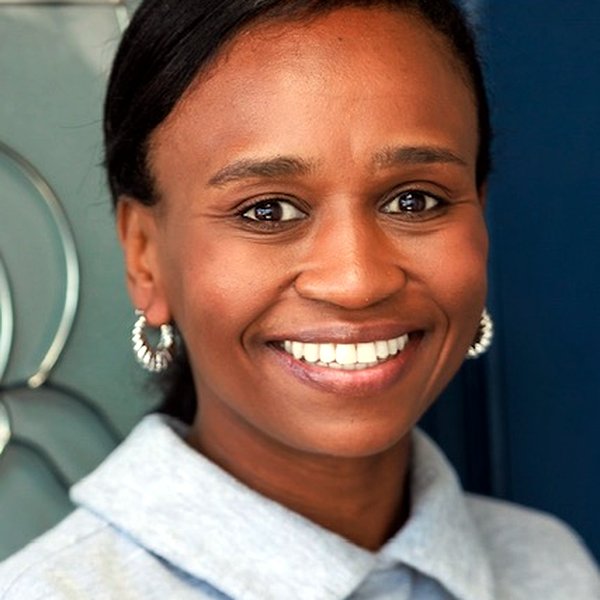


B.A. in IT and Languages
Native Parisian French Teacher
Personally vetted · Strommen’s note
Parisian-born with a background in IT and languages, Sadigatou keeps travel French and business French as cleanly separate tracks.
Specialties
Also speaks: Chinese, English, Spanish
B.A. in IT and Languages
Native Parisian French Teacher
Specialties
I also speak: Chinese, English, Spanish
Personally vetted · Strommen’s note
Parisian-born with a background in IT and languages, Sadigatou keeps travel French and business French as cleanly separate tracks.

Bachelor of Fine Arts, Master of Fine Arts and Research
French and English teacher with University level teaching Experience - Top Rated Instructor
Personally vetted · Strommen’s note
Erin teaches French and English with university-level credentials, and her specialties stretch from accent work to art history to college prep.
Specialties
Bachelor of Fine Arts, Master of Fine Arts and Research
French and English teacher with University level teaching Experience - Top Rated Instructor
Specialties
Personally vetted · Strommen’s note
Erin teaches French and English with university-level credentials, and her specialties stretch from accent work to art history to college prep.
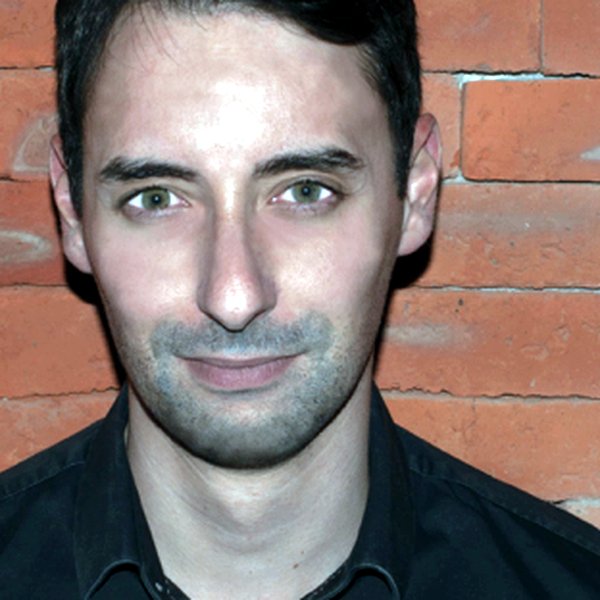
Master's Degree In Business Administration. Private Pilote LicenceI have studied in France/Argentina/Mexico · Master's Degree In Business Administration. Private Pilote LicenceI have studied in France/Argentina/Mexico
Achieve Fluency with a Parisian Tutor: Rigorous Training and Fun Lessons!
Personally vetted · Strommen’s note
MBA-trained, Othman teaches Parisian French with real rigor. Lessons stay structured without losing the fun.
Specialties
Master's Degree In Business Administration. Private Pilote LicenceI have studied in France/Argentina/Mexico · Master's Degree In Business Administration. Private Pilote LicenceI have studied in France/Argentina/Mexico
Achieve Fluency with a Parisian Tutor: Rigorous Training and Fun Lessons!
Specialties
Personally vetted · Strommen’s note
MBA-trained, Othman teaches Parisian French with real rigor. Lessons stay structured without losing the fun.

Bachelor degree · French literature / philosophy and foreign lanaguages
Bonjour! Experienced French tutor offering dynamic lessons tailored to your needs. Let's unlock French fluency together
Personally vetted · Strommen’s note
Twenty years into teaching French, Stephanie still runs lessons a la carte: fast, simple, built around exactly what you need.
Specialties
Bachelor degree · French literature / philosophy and foreign lanaguages
Bonjour! Experienced French tutor offering dynamic lessons tailored to your needs. Let's unlock French fluency together
Specialties
Personally vetted · Strommen’s note
Twenty years into teaching French, Stephanie still runs lessons a la carte: fast, simple, built around exactly what you need.

Masters of Fine Art, Bachelor in Foreign Language and Literature. · Over 2,000 hours of one‑on‑one teaching experience. Published literary translator, with work reviewed in Kirkus Reviews, Times Literary Supplement, Art Book D.A.P., and multiple international journals.
Master English, French & Italian with a Published Literary Translator
Personally vetted · Strommen’s note
A published literary translator, Colombina teaches English, French, and Italian, plus SAT prep, college essay coaching, and learning-disability support.
Specialties
Masters of Fine Art, Bachelor in Foreign Language and Literature. · Over 2,000 hours of one‑on‑one teaching experience. Published literary translator, with work reviewed in Kirkus Reviews, Times Literary Supplement, Art Book D.A.P., and multiple international journals.
Master English, French & Italian with a Published Literary Translator
Specialties
Personally vetted · Strommen’s note
A published literary translator, Colombina teaches English, French, and Italian, plus SAT prep, college essay coaching, and learning-disability support.

I have a degree in Modern Languages in English and French with a minor in business. · I am an English, French and Spanish tutor with more than seven years of experience both in person and online. I have a degree in Modern Languages in English and French with a minor in business.
Master Languages with Daniel: C2 English, DELF B2 French, and Native Spanish Tutor!
Personally vetted · Strommen’s note
Daniel is C2-certified in English, holds a DELF B2 in French, and is a native Spanish speaker. He teaches all three with real fluency benchmarks behind each one.
Specialties
Also speaks: Business & Management, Dialect Coaching, International Business, Public, Tests, Translation
I have a degree in Modern Languages in English and French with a minor in business. · I am an English, French and Spanish tutor with more than seven years of experience both in person and online. I have a degree in Modern Languages in English and French with a minor in business.
Master Languages with Daniel: C2 English, DELF B2 French, and Native Spanish Tutor!
Specialties
I also speak: Business & Management, Dialect Coaching, International Business, Public, Tests, Translation
Personally vetted · Strommen’s note
Daniel is C2-certified in English, holds a DELF B2 in French, and is a native Spanish speaker. He teaches all three with real fluency benchmarks behind each one.

I have a business degree
Build confidence in French and Spanish, tailored to you!
Personally vetted · Strommen’s note
Caracas-born, Sandra teaches French and Spanish both, keeping lessons relaxed and practical, built around travel, work, or just fun.
Specialties
I have a business degree
Build confidence in French and Spanish, tailored to you!
Specialties
Personally vetted · Strommen’s note
Caracas-born, Sandra teaches French and Spanish both, keeping lessons relaxed and practical, built around travel, work, or just fun.

Licence LEA Anglais Allemand · Licence LEA Anglais Allemand
Enjoy French !
Personally vetted · Strommen’s note
Isabelle has spent ten-plus years teaching French to everyone from opera singers to corporate teams. Her approach is built on making grammar understood, not just memorized.
Specialties
Licence LEA Anglais Allemand · Licence LEA Anglais Allemand
Enjoy French !
Specialties
Personally vetted · Strommen’s note
Isabelle has spent ten-plus years teaching French to everyone from opera singers to corporate teams. Her approach is built on making grammar understood, not just memorized.

Bachelor's Degree in History, Panthéon-Sorbonne University, Paris- Bachelor's Degree in Information and Communication Sciences, Sorbonne Nouvelle University, Paris- Master's Degree in Cultural Journalism, Sorbonne Nouvelle University, Paris.
French Tutor in Paris!
Personally vetted · Strommen’s note
Paris-based and thoroughly conversation-driven, Nima keeps French lessons lively enough that staying focused for the full hour isn't a struggle.
Specialties
Bachelor's Degree in History, Panthéon-Sorbonne University, Paris- Bachelor's Degree in Information and Communication Sciences, Sorbonne Nouvelle University, Paris- Master's Degree in Cultural Journalism, Sorbonne Nouvelle University, Paris.
French Tutor in Paris!
Specialties
Personally vetted · Strommen’s note
Paris-based and thoroughly conversation-driven, Nima keeps French lessons lively enough that staying focused for the full hour isn't a struggle.

BA in Linguistics & Spanish · TEFL, Writing Certification UCLA
Linguistics and Spanish major who has lived in Latin America, Spain and France. Tutors Spanish and English as well as basic to Intermediate French.
Personally vetted · Strommen’s note
A linguistics and Spanish major who's actually lived in Latin America, Spain, and France, Jeremy teaches Spanish, French, and ESL with real range.
Specialties
BA in Linguistics & Spanish · TEFL, Writing Certification UCLA
Linguistics and Spanish major who has lived in Latin America, Spain and France. Tutors Spanish and English as well as basic to Intermediate French.
Specialties
Personally vetted · Strommen’s note
A linguistics and Spanish major who's actually lived in Latin America, Spain, and France, Jeremy teaches Spanish, French, and ESL with real range.
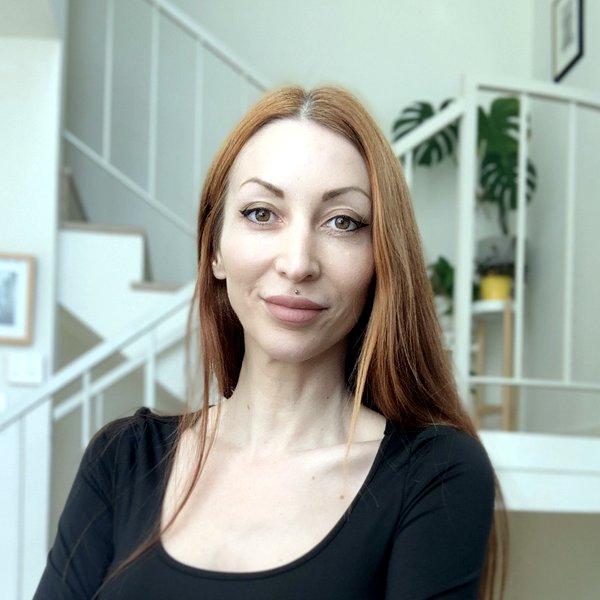
Foreign Languages bachelor degree (3 years university degree in France)
University of Bordeaux graduate teaching French in Hollywood
Personally vetted · Strommen’s note
University of Bordeaux-trained and teaching out of Hollywood, Marie mixes grammar and reading, then keeps it loose enough to not feel like homework.
Specialties
Also speaks: English
Foreign Languages bachelor degree (3 years university degree in France)
University of Bordeaux graduate teaching French in Hollywood
Specialties
I also speak: English
Personally vetted · Strommen’s note
University of Bordeaux-trained and teaching out of Hollywood, Marie mixes grammar and reading, then keeps it loose enough to not feel like homework.


M.A Oxford foreign languages and literature BSN University of Oklahoma.Working part time towards MSN · RN license for California
language learners unite!
Personally vetted · Strommen’s note
Miriam teaches English, French, German, and some Latin, adapting by age: constructivist methods for adults, inquiry-based learning for kids.
Specialties
M.A Oxford foreign languages and literature BSN University of Oklahoma.Working part time towards MSN · RN license for California
language learners unite!
Specialties
Personally vetted · Strommen’s note
Miriam teaches English, French, German, and some Latin, adapting by age: constructivist methods for adults, inquiry-based learning for kids.

La grammaire — structure essentials
5 grammar pillars French intermediate students keep coming back to
These are the structural points where most French plateaus live. Master them and the rest of the language has somewhere stable to sit.
-
01
Les trois groupes de verbes
French organizes its verbs into three groups. Group 1 (-er endings like parler, aimer) is regular and covers about 90 percent of all French verbs. Group 2 (-ir verbs that conjugate like finir, choisir) is regular and follows a second pattern. Group 3 is the irregular catchall: être, avoir, aller, faire, all the -re verbs, and the -ir verbs that don't follow the finir pattern. Once you know which group a verb belongs to, the conjugation cascades from there.
e.g. Parler (G1: je parle), finir (G2: je finis), prendre (G3: je prends).
-
02
Le subjonctif
The subjunctive mood, used after specific triggers: conjunctions like bien que, pour que, avant que; verbs of emotion (je suis content que), doubt (je doute que), or necessity (il faut que). English has nearly lost the subjunctive, which is why American speakers struggle with it for years. French uses it constantly, and missing it is one of the loudest intermediate-French tells.
e.g. Il faut que tu viennes. (subjunctive) — Je sais que tu viens. (indicative)
-
03
L'accord du participe passé
The notorious past participle agreement rule. With être, the participle always agrees with the subject. With avoir, the participle agrees only when the direct object precedes the verb (the COD antéposé). Reflexive verbs add their own twist. Most native speakers handle the easy cases on autopilot and rely on context for the edge cases; intermediate learners trip on it constantly. Lessons drill the rule until it's automatic.
e.g. Les fleurs que j'ai achetées ("achetées" agrees with "fleurs" because the COD precedes).
-
04
Les pronoms COD et COI
Direct object pronouns (me, te, le, la, nous, vous, les) and indirect object pronouns (me, te, lui, nous, vous, leur) have different forms and different placement rules. Stack them in a single sentence and they follow a fixed order (me te le lui y en). The placement around negation and in compound tenses adds layers. Mastering this is half the gap between halting French and fluent French.
e.g. Je le lui ai donné. ("I gave it to him" — direct object "le" + indirect object "lui")
-
05
Les 5 indices du genre
Five loose patterns that predict noun gender. Nouns ending in -tion, -sion, -ie, -ette tend feminine. Nouns ending in -age, -isme, -ment, -eau tend masculine. The patterns cover about 80 percent of cases, which is exactly why the remaining 20 percent has to be memorized word by word. Drill articles together with vocabulary from day one and the gender becomes part of how you store each noun.
e.g. La nation, la révolution (-tion = feminine). Le voyage, le couchage (-age = masculine).
About French Grammar
French grammar that finally clicks
French grammar is the structural skeleton most learners try to bypass and most plateaus eventually come back to. Conversational fluency can carry you a long way without mastering the conditional, the subjunctive, the participle agreements, or the pronoun-placement rules that turn intermediate French into advanced French. At some point — usually somewhere between B1 and B2 — the patches stop holding. The student notices that their writing is full of small errors French speakers immediately spot, that they avoid certain constructions because they don't trust themselves, that complex sentences fall apart mid-clause. French Grammar lessons are for students at exactly that moment: solid enough to speak, frustrated enough to want the structure underneath finally to make sense.
The foundation is gendered nouns. Every French noun carries a grammatical gender (masculine or feminine), and a substantial part of French grammar cascades from that single fact. The article in front (le, la, un, une, du, de la) signals the gender. Adjectives agree with the noun's gender and number (un grand livre becomes une grande table becomes de grands livres becomes de grandes tables). Past participles agree under certain conditions (the famous accord du participe passé). Pronouns reflect gender in some forms. Get the gender wrong and the cascade collapses. Useful patterns exist: nouns ending in -tion, -sion, -ie, -ette, -eur (for emotions and qualities, like la douleur) tend feminine; nouns ending in -age, -isme, -ment, -eau, -eur (for instruments and machines, like le moteur) tend masculine. The patterns cover roughly 80 percent of cases, which is exactly why the remaining 20 percent has to be learned individually. Lessons drill articles together with vocabulary from day one and revisit gender systematically at every level above A2.
The second pillar is the verb system, organized around the three groups. The first group (-er verbs like parler, aimer, regarder) covers roughly 90 percent of French verbs, all following the same regular pattern across present, imperfect, future, conditional, present subjunctive, past participle, and present participle. The second group (-ir verbs that conjugate like finir, choisir, réussir) follows a second regular pattern. The third group is the irregular catchall: être, avoir, aller, faire, pouvoir, vouloir, devoir, savoir, venir, prendre, plus the -ir verbs that don't conjugate like finir (the partir, sortir, dormir, servir, sentir family), plus the -re verbs (vendre, attendre, répondre, mettre, écrire, lire). The full system runs to seven main tenses in active use plus a half-dozen more in literary or formal contexts. Lessons work through the system tense by tense, with reading and writing exercises that surface the gaps your speech has been quietly papering over.
The third pillar is the agreement system. French is one of the most agreement-heavy major Romance languages. Adjectives agree with nouns. Past participles in compound tenses follow specific agreement rules depending on whether they use être or avoir, and the avoir case has the famous accord du participe passé avec le COD antéposé rule (the past participle agrees with the direct object only when the direct object precedes the verb). Reflexive verbs follow their own agreement rules. The subjunctive triggers specific conjugations. The negation system requires precise placement of ne and pas, jamais, rien, personne, with the second negative element shifting depending on what is being negated. Most intermediate French speakers handle the easy agreement cases on autopilot and fall apart on the edge cases. Grammar lessons drill the edge cases until they become automatic.
The fourth pillar is the mood system. French has four moods in active use: indicative (factual), conditional (hypothetical), subjunctive (subjective or uncertain), and imperative (commands). The subjunctive is the one that trips up American English speakers most consistently because English has nearly lost it. French uses the present subjunctive after specific triggers: certain conjunctions (bien que, quoique, pour que, afin que, avant que, jusqu'à ce que), certain verbs of emotion (je suis content que, j'ai peur que), certain verbs of doubt or possibility (je doute que, il est possible que), certain superlatives, and impersonal expressions (il faut que, il est important que). The triggers are learnable; the harder work is making the subjunctive forms automatic in speech rather than something you have to consciously construct. Lessons drill the high-frequency triggers in conversation until the subjunctive arrives without thinking. The literary tenses (imperfect subjunctive, pluperfect subjunctive, past anterior) appear in Modiano and Proust and almost nowhere in spoken French; lessons cover them for reading recognition rather than active use.
The fifth pillar is the pronoun system. French has direct object pronouns (me, te, le, la, nous, vous, les), indirect object pronouns (me, te, lui, nous, vous, leur), the adverbial pronouns y and en, reflexive pronouns, stressed pronouns (moi, toi, lui, elle, nous, vous, eux, elles), and relative pronouns (qui, que, dont, où, lequel). Each set follows its own placement rules. Multiple pronouns in a single clause stack in a specific order (me te le lui y en, in that sequence). Negation wraps around the pronoun-verb cluster. Compound tenses change participle agreement based on which pronoun is present. The full system takes most intermediate students months to internalize and is the difference between halting French and fluent French. Grammar lessons drill pronoun substitution exercises systematically: take a sentence with full noun phrases, replace each with the appropriate pronoun, position them correctly, conjugate everything in agreement.
For students preparing for certifications, French Grammar lessons map well onto the DELF and DALF exam structure. The DELF B1 and B2 expect competent handling of the indicative tenses, basic conditional, and high-frequency subjunctive. The DALF C1 expects full mood system command including the literary tenses for reading, complex pronoun placement, and the agreement rules at all levels. The DALF C2 expects native-level command including the most formal written register. Our DELF specialty page covers the certification-specific prep, with French Grammar lessons as the structural foundation. Students prepping for the Quebec TEFAQ, TEFAQ-style provincial credentials, or the academic TEF/TCF can use grammar lessons as the language-skills foundation while specific test-prep covers the exam mechanics.
Between lessons, the canonical French grammar references are worth knowing about. The Bescherelle series is the French equivalent of a comprehensive English grammar reference, with separate volumes for verbs (L'art de conjuguer), grammar (La grammaire pour tous), and spelling. The free online Larousse French grammar reference is excellent for quick lookups. Lawless French (English-language) is the most accessible online French grammar resource for English speakers. Le Bon Usage by Maurice Grevisse is the authoritative French grammar reference, the equivalent of Quirk's Comprehensive Grammar of the English Language, used by French teachers, editors, and translators. For practice exercises, Le nouveau Bescherelle: l'art d'écrire and the Grammaire progressive du français (CLE International) series at A1, A2, B1, B2, C1 levels offer structured practice with answer keys. Pair grammar reference with our French pronunciation primer for the delivery side, and the French podcast roundup for listening reps.
The Strommen French Grammar roster includes native French teachers with formal teacher-training backgrounds (the French CAPES for secondary teaching, university linguistics degrees, FLE certifications for teaching French as a foreign language), francophone tutors from Belgium, Switzerland, Quebec, and francophone Africa, and longtime French-American bilinguals with deep grammar-instruction experience. Grammar teaching is a specialty inside French teaching: not every excellent conversational French teacher is also an excellent grammar teacher, because explaining the structure of French to a non-native speaker requires explicit knowledge of rules that native speakers often use without conscious awareness. The tutors on this list have that explicit knowledge. Each tutor's bio specifies their teaching background and which student profile they fit best (DELF/DALF prep, university coursework support, professional writing improvement, plateau-breaking for intermediate speakers). Pricing reflects experience. For related French specialties, our Parisian French, Business French, Conversational French, and French classes pages cover the broader family.
Lessons calibrate to your specific gap. A returning B1 student whose plateau is the subjunctive needs different lessons from a DALF C1 candidate working on literary-tense recognition for reading Proust. Both look different from a university student whose grammar coursework moved too fast through the participle-agreement rules. Each lesson is one-on-one, your tutor identifies your specific gaps in the trial, and the curriculum follows the gaps rather than a generic syllabus. The trial is free. Browse the full tutor list, pick a tutor whose bio matches your situation, and book a 30-minute session. Grammar is the slowest part of French to internalize and the fastest part of French to stop plateauing on once you have a tutor catching the specific edge cases your conversational practice has been quietly skipping.
What you'll cover
Lessons & classes tailored to French Grammar
The full verb system, tense by tense
Working through the seven main French tenses (present, passé composé, imperfect, pluperfect, simple future, future perfect, conditional) plus the four moods (indicative, conditional, subjunctive, imperative) with reading and writing exercises that surface the gaps your spoken French has been quietly papering over. Special focus on the passé composé versus imperfect distinction, the subjunctive, and the conditional, which are the three intermediate-French sticking points.
Agreement rules in writing and speech
Adjective agreement with gender and number, past participle agreement under être and avoir, reflexive verb agreement, the accord du participe passé avec le COD antéposé. Lessons drill the agreement system through writing exercises (essays, summaries, translations) where the gaps appear in black and white, then carry the awareness back into speech where the agreement has to happen in real time.
Pronoun placement and substitution
The full pronoun system: direct object, indirect object, adverbial (y and en), reflexive, stressed, and relative pronouns. Placement around the verb, stacking order when multiple pronouns appear in one clause, behavior in compound tenses, behavior with negation, behavior in the imperative. Drilled through substitution exercises until the placement becomes automatic.
DELF/DALF prep and academic writing
Certification-specific grammar focus for students preparing for DELF B1, B2, DALF C1, or DALF C2. Academic French writing for students taking French university coursework. Mock essays, mock writing tasks, and feedback against the official rubrics. Coordinates with our DELF test prep specialty for the exam-mechanics side.
FAQ
About French Grammar lessons & classes
I can speak French but my grammar is full of holes. Will grammar lessons fix that?
Yes, and this is the most common profile we see. Conversational fluency papers over a lot of grammar gaps for years; eventually the gaps catch up, usually around the B1-to-B2 transition. Grammar lessons systematically surface the gaps (through writing exercises, targeted speaking drills, and explicit instruction) and drill the rules until they become automatic in real-time speech. Most students notice meaningful improvement inside the first two months and substantial improvement inside six.
How long until I can use the subjunctive without thinking?
Depends on your starting point. If you already recognize subjunctive forms but have to construct them deliberately, expect two to four months of focused drilling to make the high-frequency triggers automatic in speech. If the subjunctive is genuinely new to you, expect six to nine months at weekly lessons plus daily exposure. The subjunctive is one of the longest-running internalization projects in French grammar precisely because English has nearly lost it; the linguistic muscle has to be built from scratch.
Do I need grammar lessons if I'm only studying French for travel or casual conversation?
Probably not. For travel and casual conversational French, lessons focused on vocabulary, pronunciation, and high-frequency phrases give you the most return per hour. Grammar lessons make sense once you've hit a plateau where you can speak but feel structurally shaky, or once you're preparing for a certification, university coursework, or professional writing in French. Our French for Travel and Conversational French specialty pages cover the casual end.
Can you help me prepare for DELF or DALF certifications?
Yes. DELF B1 and B2 grammar prep maps onto the indicative tenses, basic conditional, and high-frequency subjunctive. DALF C1 expects full mood system command including literary tenses for reading recognition, complex pronoun placement, and agreement rules at all levels. DALF C2 expects native-level command including the most formal written register. Lessons coordinate with our DELF test prep specialty for the exam-mechanics side.
What's the difference between a grammar tutor and a conversational French tutor?
Different teaching skill, different lesson structure. A conversational French tutor runs lessons in French from minute one, drills speaking and listening, and explains grammar only when a specific gap surfaces in conversation. A grammar tutor leads with explicit instruction in the rules, uses writing exercises and targeted drills to surface gaps, and only converts the grammar work back into speech once the rule is solid. Many students benefit from both, sometimes from two different tutors on alternating weeks during a plateau-breaking phase.
How fast can I see real improvement?
Depends on the specific gap. Mechanical errors (subject-verb agreement, basic article use) can clean up in weeks. The harder structural gaps (subjunctive use, participle agreement, pronoun placement) take months. The hardest (literary tenses, formal written register, native-level instinct on the edge cases) take years. Most students see substantial improvement inside two to three months at weekly lessons. The students who progress fastest do focused written homework between lessons and surface the gaps actively rather than waiting for the tutor to find them.
What does a typical French grammar lesson look like?
A typical hour might include 10 minutes of warm-up conversation in French (often around a grammar point that surfaced during the week), 20 minutes of explicit instruction on a specific rule (using example sentences and contrasts), 15 minutes of targeted exercises in real time (substitution, transformation, error correction), and 15 minutes of guided speaking or writing where the rule has to be applied under light pressure. Homework typically includes a short written exercise plus reading or listening for further exposure to the structure being studied.
Ready for French Grammar lessons or classes?
Book a free 30-minute trial with one of our personally vetted tutors. Private lessons or small-group classes — your choice.