



Personally vetted instructors
Business Arabic tutors, lessons & classes
تحياتي Taḥiyyātī, the way an Arabic email actually signs off.
Personally vetted Business Arabic tutors. Lessons built for the written register of contracts and email and the spoken register of meetings, calls, and hospitality across the Gulf, the Levant, Egypt, and the Maghreb.
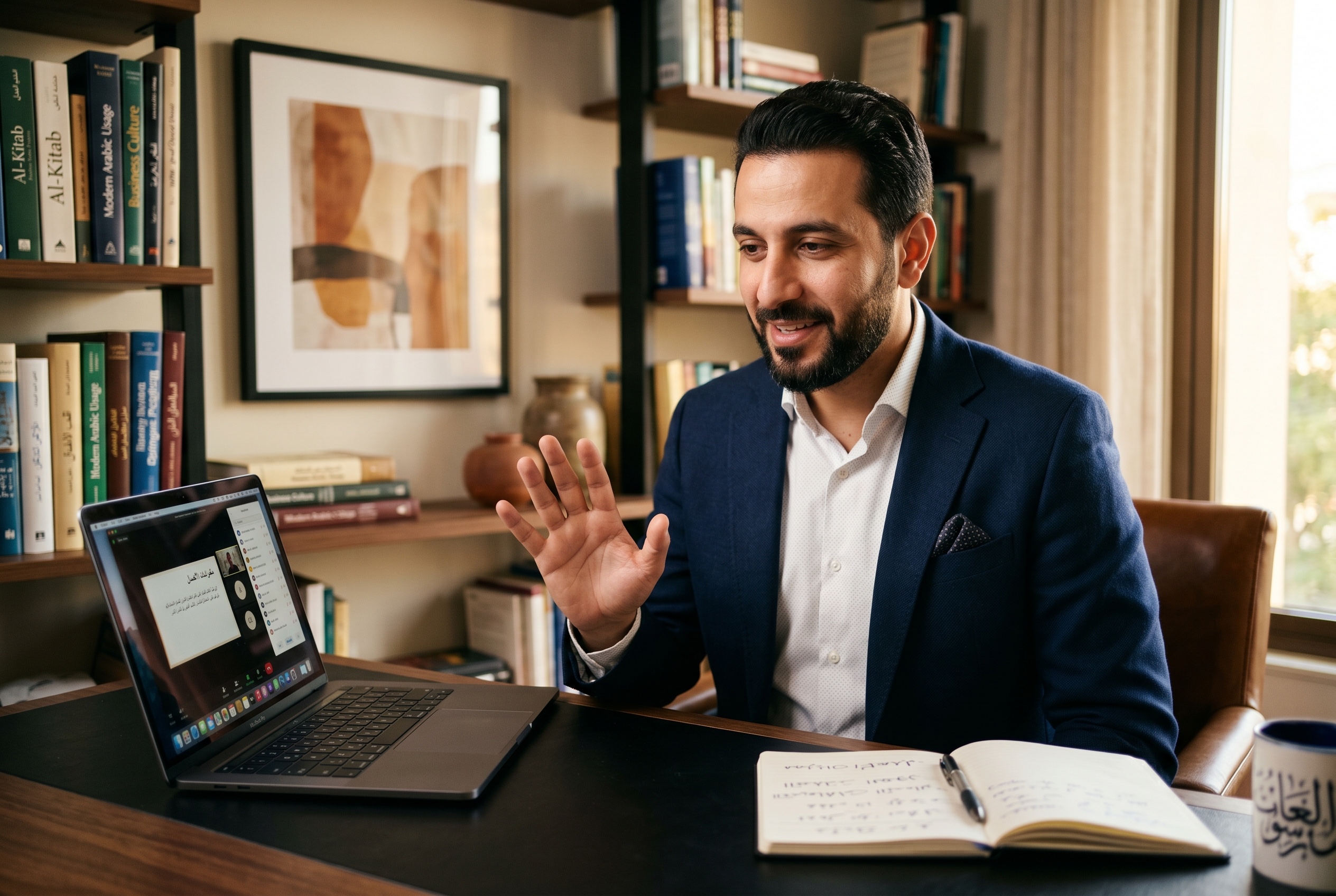
Your instructors
Business Arabic tutors for private lessons & classes
Strommen is a curated, founder-vetted language school, not a marketplace. Every tutor below was met and vetted by us, and Business Arabic is a specialty we staff carefully because it asks for genuine professional fluency on top of native command. The teachers here know the MSA conventions of formal correspondence and the spoken dialect of real meetings.
Filter by location, availability, or rate. Then book a 30-minute free trial and tell the tutor exactly which market and which register you need.
Below are the Strommen tutors who specialize in Business Arabic. Photos, ratings, and rates are real. Click any card to read their bio and book a free 30-minute trial.
I want to learn…
Every tutor, personally met. — founder-vetted since 2006, in Los Angeles and online worldwide.
Get a personalized plan
Pick your language — a language advisor will match you with the right tutor and map out your path.

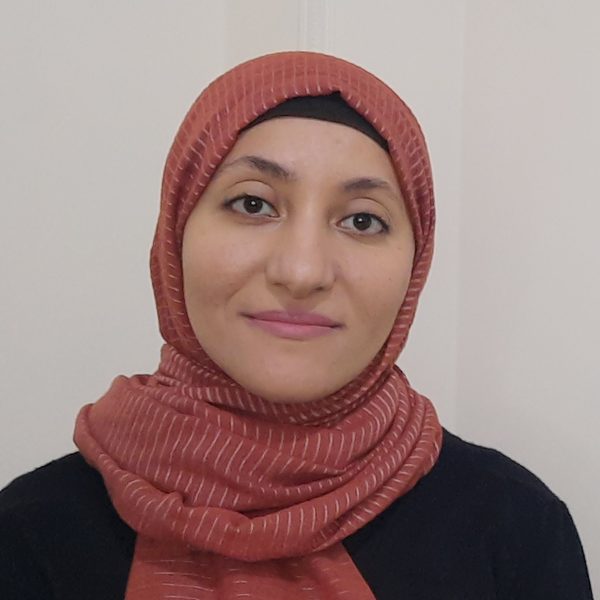
A master degree in Education in Teaching Arabic language to non Arabic speakers
Arabic language teacher (Modern standard, and Egyptian Arabic)
Personally vetted · Strommen’s note
Somaia teaches both Modern Standard and Egyptian Arabic, useful if you need the textbook version and the way people actually talk.
Specialties
A master degree in Education in Teaching Arabic language to non Arabic speakers
Arabic language teacher (Modern standard, and Egyptian Arabic)
Specialties
Personally vetted · Strommen’s note
Somaia teaches both Modern Standard and Egyptian Arabic, useful if you need the textbook version and the way people actually talk.
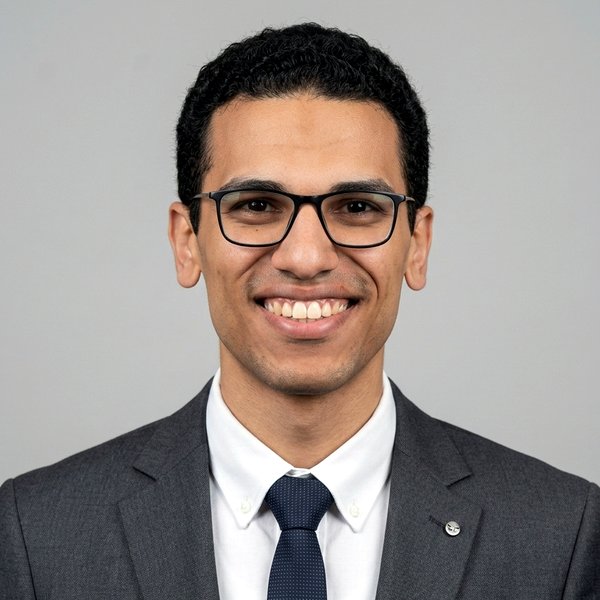


Bachelor of Education (B.Ed.) and pursuing a degree in Aerospace Engineering. · I have a TEFL certification | Certifications in Adobe Graphic Design (Level 1 & 2) for interactive presentations and educational materials.
English, German, and Arabic classes
Personally vetted · Strommen’s note
Arabic, English, and German sit alongside AP Calculus and AP Physics on Omar's schedule, a genuinely rare tutor who crosses from language straight into STEM.
Specialties
Also speaks: French, Italian, Spanish
Bachelor of Education (B.Ed.) and pursuing a degree in Aerospace Engineering. · I have a TEFL certification | Certifications in Adobe Graphic Design (Level 1 & 2) for interactive presentations and educational materials.
English, German, and Arabic classes
Specialties
I also speak: French, Italian, Spanish
Personally vetted · Strommen’s note
Arabic, English, and German sit alongside AP Calculus and AP Physics on Omar's schedule, a genuinely rare tutor who crosses from language straight into STEM.
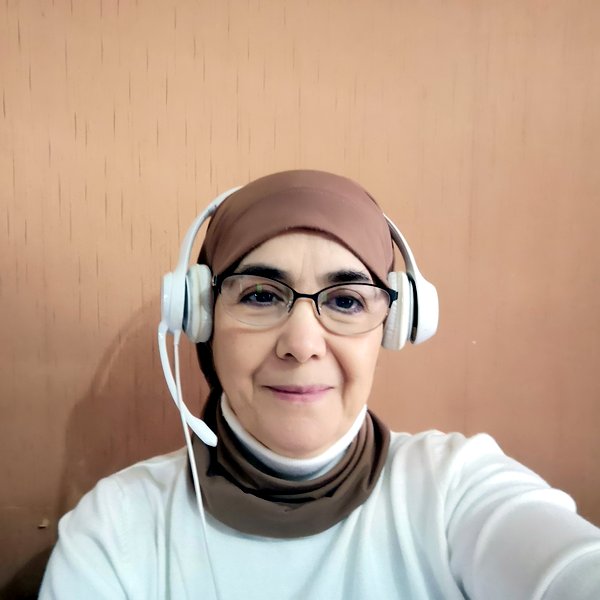
University Degree
Helping students learn with clarity, confidence, and motivation
Personally vetted · Strommen’s note
Quebec-based, Rahma teaches Arabic and French together, four Maghreb dialects covered, Algerian through Libyan.
Specialties
Also speaks: English
University Degree
Helping students learn with clarity, confidence, and motivation
Specialties
I also speak: English
Personally vetted · Strommen’s note
Quebec-based, Rahma teaches Arabic and French together, four Maghreb dialects covered, Algerian through Libyan.
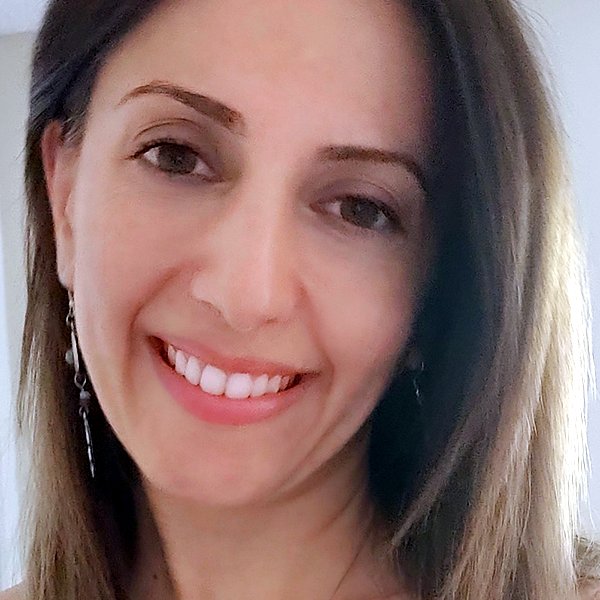

BA and MA in Arabic Studies, PhD in Philology (Arabic & Hebrew Studies)
Polyglot tutor with 15 years’ experience in Armenian, Arabic, Hebrew, and Russian
Personally vetted · Strommen’s note
Alvina holds a BA and MA in Arabic Studies and has spent fifteen years teaching Arabic, Hebrew, Russian, and Armenian, genuinely rare range in one tutor.
Specialties
BA and MA in Arabic Studies, PhD in Philology (Arabic & Hebrew Studies)
Polyglot tutor with 15 years’ experience in Armenian, Arabic, Hebrew, and Russian
Specialties
Personally vetted · Strommen’s note
Alvina holds a BA and MA in Arabic Studies and has spent fifteen years teaching Arabic, Hebrew, Russian, and Armenian, genuinely rare range in one tutor.

Bachelor degree in french studiesMaster's degree in french studies · DALF C2
Online certified french tutor delf/DALF/ TEF/TCF Preparation
Personally vetted · Strommen’s note
Hela has taught French and Arabic for thirteen years, DELF, DALF, TEF, and TCF certification prep included, plus four different Maghreb Arabic dialects.
Specialties
Bachelor degree in french studiesMaster's degree in french studies · DALF C2
Online certified french tutor delf/DALF/ TEF/TCF Preparation
Specialties
Personally vetted · Strommen’s note
Hela has taught French and Arabic for thirteen years, DELF, DALF, TEF, and TCF certification prep included, plus four different Maghreb Arabic dialects.
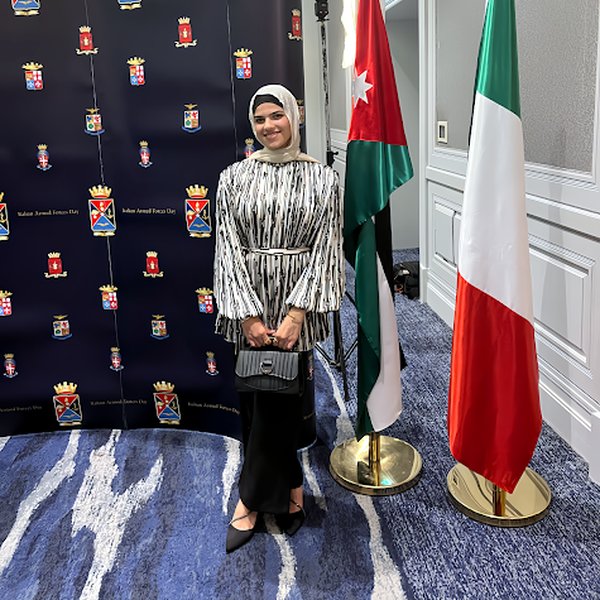
Bachelor’s Degree in Arabic Language and Literature, University of Jordan · Certificate in Teaching Arabic to Children – Jannah Way Canadian Institute.Certificate of Teaching Excellence (5+ Years of Experience) – Intensive Arabic Language Center for Foreigners, Amman.
Your Gateway to Fluent Arabic: Fusha and Jordanian Dialect for All Levels
Specialties
Also speaks: English
Bachelor’s Degree in Arabic Language and Literature, University of Jordan · Certificate in Teaching Arabic to Children – Jannah Way Canadian Institute.Certificate of Teaching Excellence (5+ Years of Experience) – Intensive Arabic Language Center for Foreigners, Amman.
Your Gateway to Fluent Arabic: Fusha and Jordanian Dialect for All Levels
Specialties
I also speak: English

الأعمال — register & cultural codes
5 expressions that signal you understand Arab business culture
These are the courtesy and culture formulas that mark a foreign professional as someone who has done the homework. Worth saving before your next meeting or email.
-
01
شكراً جزيلاً (shukran jazīlan)
"Many thanks." The MSA-leaning formal thank-you, equally at home in an email and a meeting. Where a plain shukran is everyday courtesy, shukran jazīlan carries the weight you want after a counterpart has done something substantial for you.
e.g. Closing a call after a counterpart agrees to revise terms: شكراً جزيلاً على وقتكم.
-
02
ألف شكر (alf shukr)
Literally "a thousand thanks." Warm and pan-Arab, understood from the Gulf to the Maghreb. It reads as genuine appreciation rather than formal protocol, useful when you want to sound personally grateful without slipping out of professional register.
e.g. Thanking a host after a long meeting and hospitality: ألف شكر على كرمكم.
-
03
يعطيك العافية (yaʿṭīk il-ʿāfiya)
"May God give you strength." A Levantine warm-thanks said to someone who has done you a service or worked hard on your behalf. In Beirut or Amman, saying this to a colleague who stayed late on a proposal lands far better than a flat shukran.
e.g. To a Levantine colleague who finished a report under deadline: يعطيك العافية على الشغل.
-
04
إن شاء الله (in shāʾ Allāh)
"God willing." A future-tense humility marker, pan-Arab and used by speakers of any or no faith. In business it softens any commitment about the future. Read it as good-faith intent rather than a hedge, and use it yourself when you confirm a deadline or a next meeting.
e.g. Confirming a follow-up: نراكم الأسبوع القادم إن شاء الله.
-
05
بسم الله (bismi-llāh)
"In the name of God." Said before starting a task, opening a meeting, or beginning a meal. Even secular speakers use it as a "here goes" marker. Hearing it open a meeting tells you the relationship-building has ended and the agenda has begun.
e.g. A host opening the working session after coffee: بسم الله، نبدأ.
About Business Arabic
Two registers, one working day
Business Arabic is really two languages working side by side. The written side runs on Modern Standard Arabic, the pan-Arab standard called al-fuṣḥā. Every contract, report, slide deck, government letter, banking document, and formal press release is in MSA, and the conventions are stable enough to learn deliberately. A formal letter opens with a salutation, moves through the phrase taḥiyya ṭayyiba wa-baʿd ("a good greeting, and now to the matter"), runs the body in verb-initial MSA grammar, and closes with a fixed formula of respect. The spoken side is regional. Meetings, calls, and the long stretch of relationship-building before the agenda happen in a dialect, and which dialect depends entirely on where your counterpart sits.
That split is the whole reason a Business Arabic tutor matters more here than in most languages. A learner who only drills MSA can read a Saudi tender document and write a clean reply, then sit silent in the meeting that follows because MSA at a Riyadh conference table lands like a written press release read aloud word for word: technically correct, audibly off. A learner who only picked up a dialect can hold the room and lose the paper trail. Strommen's Business Arabic tutors work both registers in parallel, calibrated to the specific market you operate in.
The written conventions reward deliberate study because they are genuinely fixed. An MSA business letter opens either with the formal religious salutation, as-salāmu ʿalaykum wa-raḥmatu-llāhi wa-barakātuh, or with a secular formal form built around al-muḥtaram, "the respected," attached to the recipient's name. The body runs in full formal grammar, and the close is its own small genre: wa-tafaḍḍalū bi-qabūl fāʾiq al-iḥtirām, "kindly accept the highest respect," for the most formal register, or the lighter maʿa taḥiyyātī, "with my regards," for routine correspondence. Official letters often carry the date in both the Hijri and Gregorian calendars. None of this is guesswork once a tutor has walked you through it, and getting it right signals competence before the recipient has read a word of your actual message.
Honorifics carry more weight in Arabic professional life than their English equivalents. As-sayyid and as-sayyida are the standard "Mr." and "Mrs.," always paired with a name. Ad-duktūr covers physicians and PhD holders alike, and a university lecturer is ad-duktūr by default. Al-ustādh, literally "professor," extends as a courteous form of address to teachers, writers, lawyers, and educated professionals generally, used especially freely in Egypt. Al-muhandis, "engineer," is a title in its own right, so a software engineer is addressed as al-muhandis followed by the name. In the Gulf, ash-shaykh now functions broadly as a title for high-status men. Using the wrong title, or skipping one, reads as carelessness in a culture where address is part of respect.
The regional differences are not cosmetic. Gulf business norms lean formal at the first meeting and warm thereafter. Arabic coffee and dates, questions about family, a hand placed on the heart in greeting, all of it precedes the agenda, and walking straight into transactional content reads as rushed and disrespectful. Hospitality is part of the negotiation rather than a preamble to it, so the first meeting is often largely relationship-building. In the Levant the pleasantries compress faster, and finance, tech, and creative industries in Beirut and Amman lean heavily on English. Maghreb business runs bilingual: written Arabic in MSA, but French threaded through spoken meetings and correspondence in Algeria, Tunisia, and Morocco, where bilingual French-Arabic documents are the professional default. Even the working week varies. Saudi Arabia and several Gulf states keep a Friday-Saturday weekend, while the UAE moved to Saturday-Sunday in 2022, recently enough that older reference materials still list the old schedule, so it is worth confirming directly when you schedule a meeting.
The non-verbal codes matter as much as the vocabulary. The right hand handles business cards, food, and gifts, since the left is culturally marked. Offers of hospitality often follow a refusal-and-insistence ritual, where a first "no thank you" is politeness and the host expects to insist, so a foreign visitor who takes the first refusal at face value can quietly cause offense. Eye-contact norms shift between conservative Gulf settings and urban Levantine, Egyptian, and Maghreb contexts, which is why a good tutor coaches you to read the counterpart rather than memorize a single rule.
Then there is Islamic finance, which runs parallel to conventional banking and is central to Gulf commerce. Terms like murābaḥa (cost-plus financing), muḍāraba (profit-sharing partnership), ṣukūk (asset-backed certificates), takāful (mutual-guarantee insurance), and the underlying distinction between ḥalāl and ḥarām are not optional vocabulary for anyone working in or near Gulf banking. They describe contract structures, not just etiquette, and the whole architecture exists to avoid ribā, interest, which Islamic finance forbids.
Our Business Arabic tutors are native speakers and longtime professionals who have worked inside Arab business environments, not only studied the language. They calibrate to your actual situation. Negotiating supply contracts in the Gulf, managing a Cairo team, handling Maghreb correspondence, or preparing for a posting all call for different lessons. Each tutor's bio lists their background and the markets they know best, so you can match the page to the desk you actually sit at.
What you'll cover
Lessons & classes tailored to Business Arabic
MSA for written professional Arabic
The full conventions of Arabic business correspondence in Modern Standard Arabic: the salutation, the taḥiyya ṭayyiba wa-baʿd transition, verb-initial sentence structure in the body, and the fixed formulas of respect that close a formal letter. We cover contracts, reports, proposals, and email, plus honorifics and titles, which carry more weight than American English equivalents. A university lecturer is ad-duktūr by default, and al-ustādh signals intellectual respect to any educated professional. If you want a vocabulary base between lessons, the 1,000 most common Arabic words is a solid frequency reference.
Spoken dialect for meetings and calls
MSA does not carry a live business conversation. We pair the written register with the spoken dialect of your market, whether that is Gulf Arabic for a Riyadh or Dubai posting, Egyptian for a Cairo team, or Levantine for Beirut and Amman. Lessons cover the surface-level greeting exchanges, the family and health questions, and the hospitality rituals that precede the agenda, alongside the negotiation vocabulary itself. Students choosing a dialect for the first time often start with our conversational Arabic lessons to settle the which-dialect question.
Islamic finance vocabulary
Anyone working in or near Gulf banking needs the vocabulary of Islamic finance, which describes contract structures rather than etiquette. We cover murābaḥa (cost-plus financing), muḍāraba (profit-sharing partnership), mushāraka (equity partnership), ijāra (Islamic-compliant leasing), ṣukūk (asset-backed certificates), and takāful (mutual-guarantee insurance), along with the underlying ribā prohibition and the ḥalāl and ḥarām distinction that shapes the whole system. Lessons connect each term to the deal structure it names, so the vocabulary is usable rather than memorized.
Regional business norms and etiquette
Language is only part of a meeting. We coach the non-verbal codes that vary by region: the hand-on-heart greeting, the right-hand rule for business cards, food, and gifts, the refusal-and-insistence ritual around hospitality, and eye-contact norms that shift between conservative Gulf settings and urban Levantine or Maghreb contexts. We also cover practical scheduling, including the Friday-Saturday and Saturday-Sunday weekend split across the region. For the bigger picture of how the varieties relate, our guide to Arabic dialects is worth a read.
FAQ
About Business Arabic lessons & classes
Should I learn Modern Standard Arabic or a dialect for business?
Both, and that is the honest answer rather than a sales one. Written business Arabic is Modern Standard Arabic across the whole region: contracts, email, reports, formal correspondence. Spoken business happens in a regional dialect. A learner with only MSA can read and write professionally but sounds stilted in a meeting, the register pitched several notches above the room. A learner with only a dialect can hold a conversation but cannot handle the paper trail. Our Business Arabic tutors teach both in parallel and weight them toward the market you work in.
Which dialect should I learn for business?
It depends on where your counterparts sit. For a Gulf posting, Gulf Arabic. For a Cairo team, Egyptian, which also happens to be the most widely understood spoken Arabic. For Beirut or Amman, Levantine. For Algeria, Tunisia, or Morocco, Maghrebi Arabic, and there French plays a real role in spoken meetings. Your tutor will help you pick at the trial lesson based on your actual situation. If you are still deciding, our conversational Arabic page walks through the question in more depth.
Are your Business Arabic tutors native speakers with professional experience?
Yes. Our Business Arabic tutors are native Arabic speakers who have worked inside Arab business environments, not only studied the language. Each tutor's bio lists their background and the markets they know best, whether Gulf, Levantine, Egyptian, or Maghreb. You can match a tutor to your specific region and industry rather than taking a generic business course.
Do I need to know Islamic finance terms?
If you work in or near Gulf banking, yes. Terms like murābaḥa, ṣukūk, takāful, and the ḥalāl and ḥarām distinction describe actual contract structures, not just cultural etiquette. The Islamic finance system runs parallel to conventional banking and is central to Gulf commerce. Lessons connect each term to the deal structure it names. If your work does not touch finance, your tutor will weight lessons toward the vocabulary your role actually uses.
Can I take Business Arabic lessons online or only in person?
Both. Many of our Business Arabic tutors teach online via Zoom or Jitsi and are available worldwide, which matters for professionals working across time zones. Several also teach in person. The booking widget on each tutor's profile shows their available formats and times. You can browse the full roster on the tutors page.
I already speak some Arabic. Can lessons focus only on the business register?
Yes. If you have a conversational or intermediate base, a Business Arabic tutor can concentrate on what you are missing: the MSA conventions of formal correspondence, honorifics and titles, negotiation vocabulary, Islamic finance terms, and regional business etiquette. Most students start with a 30-minute free trial so the tutor can gauge your level and build a plan around the gaps rather than starting over.
How is Business Arabic different from general Arabic lessons?
General Arabic lessons build the alphabet, the root system, core grammar, and everyday conversation. Business Arabic assumes you need a working register: formal MSA correspondence, the spoken dialect of meetings, professional honorifics, sector vocabulary, and the cultural codes around hospitality and negotiation. Many students build a base with general Arabic lessons first, then move into the business register, while others with an existing base start straight into Business Arabic.
What does a Business Arabic lesson actually look like?
Lessons are one-on-one and built around your goals. A typical session might pair drafting or reviewing a formal MSA email with spoken practice in your target dialect, then a focused stretch on negotiation vocabulary, Islamic finance terms, or a cultural-etiquette point relevant to an upcoming meeting. No two students get the same lesson. Your tutor sets concrete goals at the trial and adjusts based on what your work demands.
Ready for Business Arabic lessons or classes?
Book a free 30-minute trial with one of our personally vetted tutors. Private lessons or small-group classes — your choice.