



Personally vetted instructors
Traditional Chinese Character tutors, lessons & classes
寫字 Xiě zì, write characters: what a traditional character tutor says at the start of a hand-writing practice session.
Personally vetted traditional Chinese character (繁體字) tutors. Lessons focused on character-by-character literacy work in the traditional script: the components, the stroke order, the etymology, and the reading and writing fluency that anchors serious work in Taiwan, Hong Kong, classical Chinese, or calligraphy.
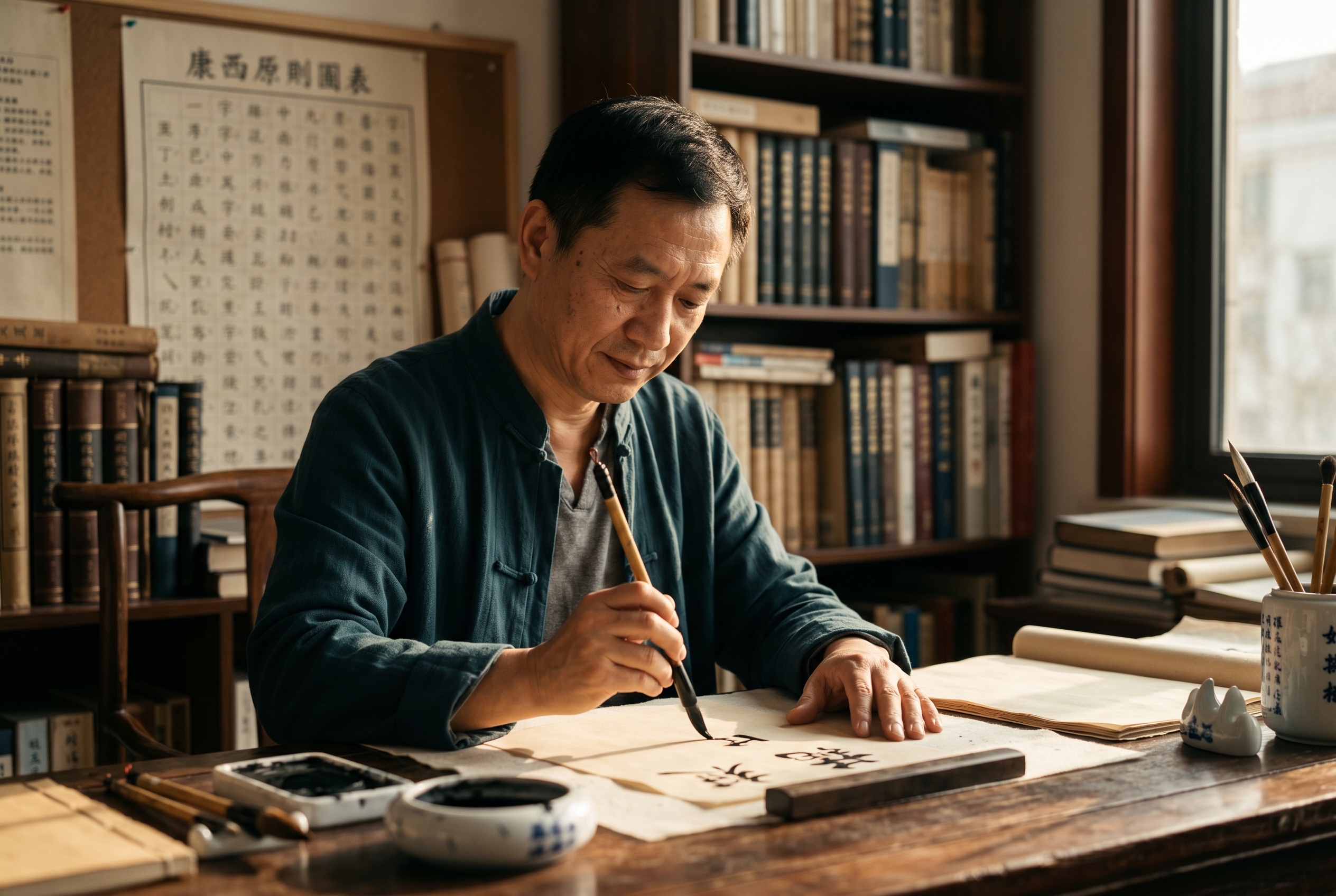
Your instructors
Traditional Chinese Character tutors for private lessons & classes
Strommen runs a curated Chinese roster with several tutors who specifically focus on character-by-character traditional Chinese literacy work, distinct from broader conversational or spoken language tutoring. Every tutor below was met and vetted by us. Bios, photos, and rates are real.
Filter by location, age, or price, then book a 30-minute free trial.
Below are the Strommen tutors who specialize in traditional Chinese character work. Photos, ratings, and rates are real. Click any card to read their bio and book a free 30-minute trial.
I want to learn…
Every tutor, personally met. — founder-vetted since 2006, in Los Angeles and online worldwide.
Get a personalized plan
Pick your language — a language advisor will match you with the right tutor and map out your path.

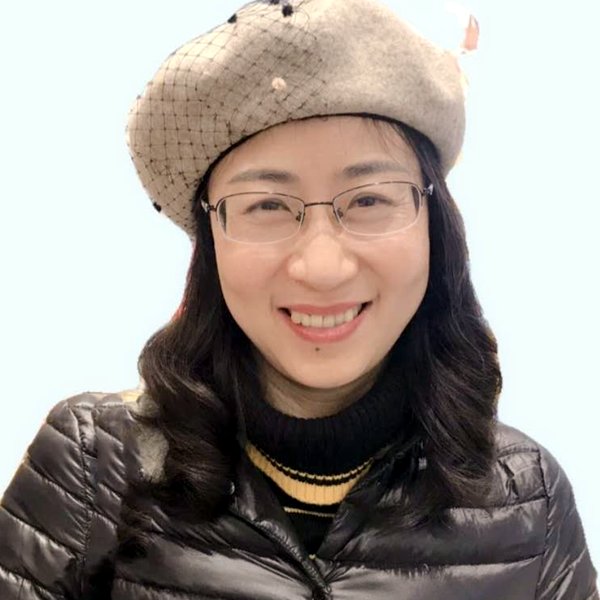
Masters degree
Expert University Teaching with a Friendly Touch: Professional, Engaging, Effective . #1 Mandarin Tutor at Strommen working with Corporate Clients, Kids + Individuals.
Personally vetted · Strommen’s note
Before joining Strommen, Linna spent twenty-five years teaching Chinese language and literature at a university in China.
Specialties
Masters degree
Expert University Teaching with a Friendly Touch: Professional, Engaging, Effective . #1 Mandarin Tutor at Strommen working with Corporate Clients, Kids + Individuals.
Specialties
Personally vetted · Strommen’s note
Before joining Strommen, Linna spent twenty-five years teaching Chinese language and literature at a university in China.
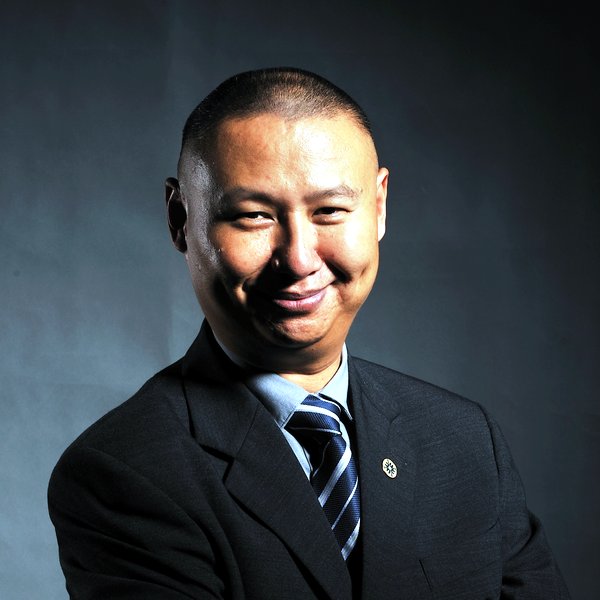

Master of Science · TEFL (120-hour Premier) Certificate
Learn the language, live the culture
Personally vetted · Strommen’s note
Bill's whole premise is that language and culture can't really be separated. His lessons are built around both together.
Specialties
Master of Science · TEFL (120-hour Premier) Certificate
Learn the language, live the culture
Specialties
Personally vetted · Strommen’s note
Bill's whole premise is that language and culture can't really be separated. His lessons are built around both together.

Teacher Permit, Bachelor Degree
Chinese Teacher with 17 Years Experience and Attention to Detail.
Personally vetted · Strommen’s note
Seventeen years teaching Chinese, with a specialty in AP and SAT II prep, and Xue still rewrites her own material rather than teach straight from the page.
Specialties
Teacher Permit, Bachelor Degree
Chinese Teacher with 17 Years Experience and Attention to Detail.
Specialties
Personally vetted · Strommen’s note
Seventeen years teaching Chinese, with a specialty in AP and SAT II prep, and Xue still rewrites her own material rather than teach straight from the page.
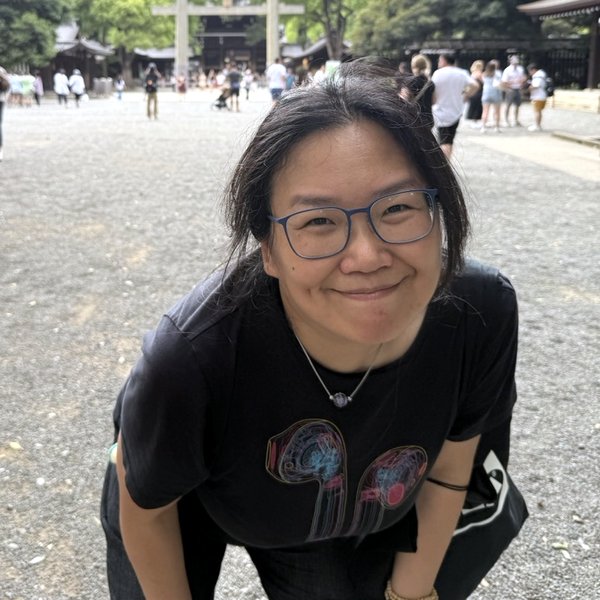
MFA · Mandarin teaching cert
UCLA Mandarin teacher from Taiwan with 25-year experiences plus professional skills in Animation, Film & TV
Personally vetted · Strommen’s note
Daisy is a UCLA Mandarin instructor from Taiwan with twenty-five years in the classroom and a side career in animation and film. She also coaches actors' dialects.
Specialties
MFA · Mandarin teaching cert
UCLA Mandarin teacher from Taiwan with 25-year experiences plus professional skills in Animation, Film & TV
Specialties
Personally vetted · Strommen’s note
Daisy is a UCLA Mandarin instructor from Taiwan with twenty-five years in the classroom and a side career in animation and film. She also coaches actors' dialects.

Bachelor's degree · CELT-P (Certificate in English Language Teaching – Primary)
Native Chinese Tutor in Tianjin with C1 English level
Personally vetted · Strommen’s note
A native Chinese speaker in Tianjin with C1 English herself, Xin opens every lesson by asking flatly what's been giving the student trouble.
Specialties
Bachelor's degree · CELT-P (Certificate in English Language Teaching – Primary)
Native Chinese Tutor in Tianjin with C1 English level
Specialties
Personally vetted · Strommen’s note
A native Chinese speaker in Tianjin with C1 English herself, Xin opens every lesson by asking flatly what's been giving the student trouble.


Bachelor’s degree · Certificate for Teaching Chinese as a Foreign Language
Making Chinese learning fun and easy.
Personally vetted · Strommen’s note
Wenlong opens every Chinese lesson with a four-skills check, listening, speaking, reading, writing, before deciding where to focus.
Specialties
Also speaks: English, German
Bachelor’s degree · Certificate for Teaching Chinese as a Foreign Language
Making Chinese learning fun and easy.
Specialties
I also speak: English, German
Personally vetted · Strommen’s note
Wenlong opens every Chinese lesson with a four-skills check, listening, speaking, reading, writing, before deciding where to focus.


BA (Hons) in Bilingual Studies. · TCSOL and TEFL.
Bridging cultures through language, story, and authentic communication.
Specialties
Also speaks: Japanese, Spanish
BA (Hons) in Bilingual Studies. · TCSOL and TEFL.
Bridging cultures through language, story, and authentic communication.
Specialties
I also speak: Japanese, Spanish

繁體字 — character craft
5 fundamentals of serious traditional character work
These are the foundational pieces of character-by-character traditional Chinese literacy that distinguish serious study from casual exposure. Save the list for the trial.
-
01
Stroke order is real pedagogical infrastructure
Each Chinese character has a specific conventional stroke order (top-to-bottom, left-to-right, horizontal-before-vertical, frame-before-enclosed). The conventions produce the most efficient and visually consistent character production. Stroke order matters for handwriting recognition software, for calligraphy brush flow, and for the muscle memory that makes character production faster over time. Tutors drill stroke order explicitly with each new character.
e.g. Character 木 (tree): horizontal stroke first, then vertical, then left-falling, then right-falling. Conventional order, every time.
-
02
Component decomposition makes characters predictable
Chinese characters are built from a limited set of components (the 214 traditional Kangxi radicals plus high-frequency phonetic components). A learner who recognizes and produces the components can predict new characters after brief introduction rather than memorizing each as an isolated visual form. The component approach scales; the picture-memorization approach plateaus.
e.g. Component 木 (tree) → 林 (two trees, forest), 森 (three trees, dense forest), 樹 (tree with traditional speech radical for tree-name), 板 (plank).
-
03
Etymology is a genuine learning aid
Traditional characters preserve etymological structure that simplified forms often condensed. Traditional 愛 (love) contains 心 (heart); the simplified 爱 removes it. Traditional 學 (to learn) shows components representing teaching activity. For learners interested in linguistic history, the etymology is itself a memory aid: a character whose components make sense visually is easier to remember than a character condensed beyond its structural logic.
e.g. Traditional 龍 (dragon) shows intricate component structure suggesting the mythological creature; simplified 龙 is a silhouette.
-
04
High-frequency characters cover most reading
The top 1,000 characters appear in about 90% of common written Chinese; the top 3,000 cover about 99%. The frequency distribution shapes how serious character study is structured. Tutors work through the high-frequency character set systematically, with stroke order, component decomposition, and reading practice using texts calibrated to the character set the learner has covered.
e.g. TOCFL Band B (B1) vocabulary covers around 2,000 characters; Band C (B2) covers around 5,000.
-
05
Hand-writing matters more for some goals than others
Most Chinese writing today happens through pinyin or bopomofo input methods on phones and computers, and active hand-writing fluency is less essential for everyday adult use. Hand-writing remains essential for classical study, calligraphy, formal handwritten correspondence, and serious literary or scholarly work. Tutors calibrate the hand-writing emphasis to the learner's specific goal rather than treating it as universally required.
e.g. Calligraphy student: extensive hand-writing practice. Adult professional using Mandarin for business email: digital input fluency over hand-writing.
About Traditional Chinese Character
Character-by-character work in the traditional script
Traditional Chinese character work is a focused literacy specialty within the broader traditional Chinese (繁體字, fántǐzì) study landscape. Where the broader Traditional Chinese page covers reading and writing literacy alongside spoken Mandarin or Cantonese work, this page focuses specifically on the character-by-character work: building visual recognition of traditional character forms, internalizing stroke order and component structure, developing hand-writing fluency at a level beyond what casual learners typically reach, and (for advanced learners) the calligraphic and etymological depth that traditional character study can develop. It is the work that anchors serious literacy in Taiwan, Hong Kong, classical Chinese literature, and Chinese calligraphy.
The motivations cluster around specific learner profiles. Heritage learners with Taiwan or Hong Kong family ties who grew up hearing Cantonese or Mandarin at home but never learned the writing system formally, and want to develop traditional character literacy as adults to connect with the written-language dimension of their cultural heritage. Adult learners pursuing TOCFL examination prep who have built spoken Mandarin and pinyin recognition but lack the character literacy the exam requires. Learners studying classical Chinese (文言文 wényánwén) for literary, philosophical, or historical work, who need traditional character literacy as the foundation that enables the deeper classical study. Calligraphy students whose interest in Chinese visual culture leads them into character study as a craft in itself. And actors or voice-over artists preparing for roles requiring traditional character literacy on screen (a calligraphy-writing scene, a teacher-character writing on a board, a period-set scene requiring believable handwriting).
The character system in traditional Chinese has roughly 5,000-8,000 commonly used characters, with the full character set extending into the tens of thousands when historical, technical, and rare characters are included. Functional literacy (the level needed for everyday reading of newspapers, novels, and signage) requires roughly 3,000-4,000 characters; comfortable advanced reading (academic prose, literary fiction, classical excerpts) requires 5,000-6,000. The high-frequency characters account for a disproportionate share of actual reading material: the top 1,000 characters appear in about 90% of common written Chinese, and the top 3,000 cover about 99%. This frequency distribution shapes how serious character study is structured. Tutors typically work through the high-frequency character set systematically, with stroke order practice, component decomposition, etymology where useful, and reading practice using texts calibrated to the character set the learner has covered.
Stroke order is a real and meaningful skill in traditional character work. Each Chinese character has a specific conventional stroke order (top-to-bottom, left-to-right, horizontal-before-vertical, frame-before-enclosed, with consistent rules for the component sub-structures), and the conventions exist because they produce the most efficient and visually consistent character production. Stroke order matters for several practical reasons: handwriting recognition software relies on stroke order for accurate character recognition; calligraphy depends on stroke order for the brush flow; and the muscle memory of consistent stroke order makes character production faster and more accurate over time. Tutors with calligraphy or pedagogy backgrounds drill stroke order explicitly with each new character. The Strommen Chinese Calligraphy page covers the deeper calligraphy track.
The component decomposition approach is the methodology most traditional character tutors use, the same as in simplified character work but with attention to the additional components and structural complexity that traditional characters preserve. The 214 traditional Kangxi radicals plus the high-frequency phonetic components account for the structural skeleton of nearly all traditional characters. A learner who can recognize and produce the components can usually predict a new character after brief introduction, even when the character itself is unfamiliar. Modern traditional character pedagogy teaches characters in component groups so the learner sees the system rather than memorizing isolated forms. Our blog post on most common Chinese radicals is the foundation reference most students bookmark, and the radicals work the same for both traditional and simplified character systems even though specific simplified-to-traditional differences emerge in individual characters.
Etymology is a genuine pedagogical advantage of the traditional character system. Traditional characters preserve the visual structure and component logic that the simplification reforms often condensed. Traditional 愛 (love) contains 心 (heart) at its center, with the components arranged in a way that visually suggests heart-and-friend; the simplified form 爱 removes the heart, and the etymological transparency is lost. Traditional 學 (to learn) shows components representing teaching activity and a child receiving instruction; the simplified 学 condenses the upper components. For learners interested in Chinese cultural and linguistic history, the etymological transparency of traditional characters is itself a learning aid: a character whose components make sense visually is easier to remember than a character that has been condensed beyond its etymological structure. Tutors with classical or philological backgrounds can teach this etymology directly, and learners who engage with it often find character study substantially more interesting than the rote-memorization approach.
For learners coming from simplified Chinese backgrounds (most American Mandarin learners outside of heritage families with Taiwan ties), the transition to traditional character literacy is a focused 3-6 month project for reading recognition and a longer project for writing fluency. Most simplified characters are either identical to their traditional forms (the three-quarters of high-frequency characters that were not simplified by the PRC reforms) or have predictable simplification patterns that make the traditional form recognizable from the simplified. The harder traditional characters are the ones where the simplification was substantial (學 vs 学, 愛 vs 爱, 龍 vs 龙), and these require dedicated study. Tutors with experience teaching the transition can structure the work so the learner builds traditional literacy efficiently on top of existing simplified knowledge.
A few honest observations from tutors on what trips up adult learners working on traditional character literacy specifically. Underestimating the stroke complexity is the most common, particularly for hand-writing work where traditional characters take noticeably longer than simplified equivalents. The fix is realistic pacing on writing assignments and emphasis on reading recognition (where the additional complexity is less of an obstacle). Treating traditional characters as harder simplified is the next pattern; a learner who tries to read traditional characters as if they were just simplified characters with extra strokes misses the etymological logic the traditional forms carry. The fix is treating the traditional system on its own terms, with component analysis and etymology where useful. Skipping hand-writing practice in favor of pure digital input is the third pattern, especially for adult learners who plan to use Chinese mostly through phones and computers. The fix depends on the learner's goal: pure digital use can tolerate weaker hand-writing skills, but classical study, calligraphy, and serious literary work benefit from active hand-writing fluency.
Between lessons, the right materials matter. The Practical Audio-Visual Chinese textbook series (National Taiwan Normal University) is the standard Taiwan university Chinese-as-a-second-language curriculum with traditional characters as the default. The Far East Chinese-English Dictionary (遠東漢英大辭典) is the standard Taiwan-published reference dictionary for traditional characters. The 漢字源 (Hànzì Yuán) and 漢字流 (Hànzì Liú) etymology references trace the historical development of individual characters from oracle bone script through bronze and seal scripts to the modern traditional forms. For writing practice, traditional Chinese practice notebooks (字帖, zìtiè) with grid-paper templates provide structured hand-writing practice. Pleco supports traditional alongside simplified with full annotations. For broader Chinese study see our Traditional Chinese, Simplified Chinese, Conversational Chinese, and Chinese Calligraphy pages.
The Strommen traditional Chinese character roster includes native speakers from Taipei, Tainan, Kaohsiung, Hong Kong, and overseas Chinese communities, plus longtime US-based teachers with deep traditional character pedagogy experience. Several have backgrounds in Chinese calligraphy, classical Chinese instruction, Taiwan university Chinese-as-a-second-language teaching, or character etymology research. Each tutor's bio specifies their background and which learner profile they fit best (TOCFL prep, classical Chinese foundation, heritage learner, calligraphy student, advanced character literacy). Match yourself to the tutor whose background and teaching style fits your goal. Browse the tutor list, find a bio that matches your situation, and book the free trial.
What you'll cover
Lessons & classes tailored to Traditional Chinese Character
Character-by-character literacy work
Focused study of traditional character forms across the high-frequency vocabulary range. Stroke order drilling for each new character. Component decomposition so new characters become predictable rather than requiring fresh memorization. Reading practice with texts calibrated to the character set the learner has covered. The work that turns spoken Mandarin or Cantonese fluency into actual literacy in the traditional script.
Stroke order and writing fluency
Conventional stroke order drilled explicitly with each new character. The rules (top-to-bottom, left-to-right, horizontal-before-vertical, frame-before-enclosed) taught as a system rather than as character-by-character memorization. For learners with calligraphy interest, the connection to calligraphic brush flow. For digital-input-focused learners, the underlying stroke order knowledge that supports handwriting recognition and component-based input methods.
Etymology and component analysis
The structural logic of traditional characters: the 214 Kangxi radicals as the core component set, the high-frequency phonetic components, and the etymological transparency that distinguishes traditional from simplified. For learners interested in classical Chinese, Chinese cultural history, or calligraphy, the etymology is a foundation that opens deeper work. Our Chinese Calligraphy page covers the calligraphic track.
Transition from simplified to traditional
For learners coming from simplified Chinese backgrounds, structured prep for the transition. Three-to-six-month focused arcs for reading recognition, longer for writing fluency. Attention to the characters where simplification was substantial (學 vs 学, 愛 vs 爱, 龍 vs 龙) versus the characters that are identical across both systems. For the broader traditional Chinese literacy track see our Traditional Chinese page; for simplified as the alternative see Simplified Chinese.
FAQ
About Traditional Chinese Character lessons & classes
What's the difference between this page and the Traditional Chinese page?
The Traditional Chinese page covers traditional Chinese literacy broadly, including spoken Mandarin or Cantonese context, TOCFL prep, Taiwan and Hong Kong contexts, and the cultural surround. This page focuses specifically on character-by-character literacy work: stroke order, component decomposition, etymology, and writing fluency at a level beyond what casual learners typically reach. Same roster of tutors at most overlapping bios. Pick whichever framing matches what you want to develop.
Do I need to learn stroke order?
Depends on your goals. For functional reading recognition only, stroke order matters less; you can recognize a character without producing it. For active writing (hand or even pinyin input with handwriting fallback), stroke order matters because it shapes how the character is produced and how handwriting recognition software interprets your writing. For calligraphy, stroke order is foundational and essential. For classical Chinese study, hand-writing competency including stroke order is typically expected. Tutors drill stroke order in proportion to the learner's goals.
How many characters do I need to know for functional traditional Chinese literacy?
Roughly 3,000-4,000 characters for everyday newspaper and novel reading. The top 1,000 characters appear in about 90% of common written Chinese; the top 3,000 cover about 99%. Comfortable advanced reading (academic prose, literary fiction, classical excerpts) requires 5,000-6,000 characters. The full character set extends into the tens of thousands when historical, technical, and rare characters are included, but the high-frequency core is what determines functional literacy.
Should I learn etymology or just memorize characters?
Etymology helps more than learners often expect. Characters whose components make sense visually are easier to remember than characters memorized as isolated images. The component approach (recognizing the 214 Kangxi radicals plus high-frequency phonetic components) is the foundation that makes new characters predictable rather than requiring fresh memorization. Etymology is a layer on top of component analysis that adds cultural and historical depth and often makes the components more memorable. Tutors with classical or philological backgrounds teach etymology directly.
How do I move from simplified character knowledge to traditional?
Structured 3-6 month focused arc for reading recognition. Most simplified characters are either identical to their traditional forms or have predictable simplification patterns that make the traditional form recognizable from the simplified. The harder traditional characters are the ones where simplification was substantial (學 vs 学, 愛 vs 爱). Writing fluency in the new system takes longer because the additional stroke complexity requires sustained hand-writing practice. Tutors with experience teaching the transition can structure the work so the learner builds on existing simplified knowledge efficiently.
Is hand-writing essential or can I just use digital input?
Depends on the goal. Most everyday Chinese writing today happens through pinyin or bopomofo input methods on phones and computers, and active hand-writing fluency is less essential for adult professional contexts. For TOCFL exam writing sections (especially Band C levels), hand-writing is required. For classical study, calligraphy, or formal handwritten correspondence, hand-writing is essential. Pure digital input fluency is sufficient for many adult learners' goals; tutors calibrate accordingly.
Can traditional Chinese character lessons be online?
Yes. Most of our traditional Chinese character tutors teach online via Zoom or Jitsi worldwide. The work translates cleanly to video: character recognition with shared screens, stroke order demonstration through screen-share, writing practice with a shared whiteboard, etymology and component analysis with annotated character images. Several tutors also teach in person around Los Angeles.
How long does it take to develop serious traditional character literacy?
Reading recognition at functional level (around TOCFL Band B Level 1 or 2, roughly 2,000 characters) typically takes 12-18 months of weekly lessons plus consistent self-study from zero. Higher-level reading (Band C, roughly 5,000 characters) typically takes 2-3 years. Writing fluency (active hand-writing production) develops more slowly than reading, particularly for traditional characters which have more strokes than simplified equivalents. For learners with existing simplified character knowledge, the transition timeline is significantly shorter (3-6 months for reading recognition, 9-12 months for writing fluency).
Ready for Traditional Chinese Character lessons or classes?
Book a free 30-minute trial with one of our personally vetted tutors. Private lessons or small-group classes — your choice.