



Personally vetted instructors
Traditional Chinese tutors, lessons & classes
你好 Nǐ hǎo, the standard Mandarin hello written in traditional characters.
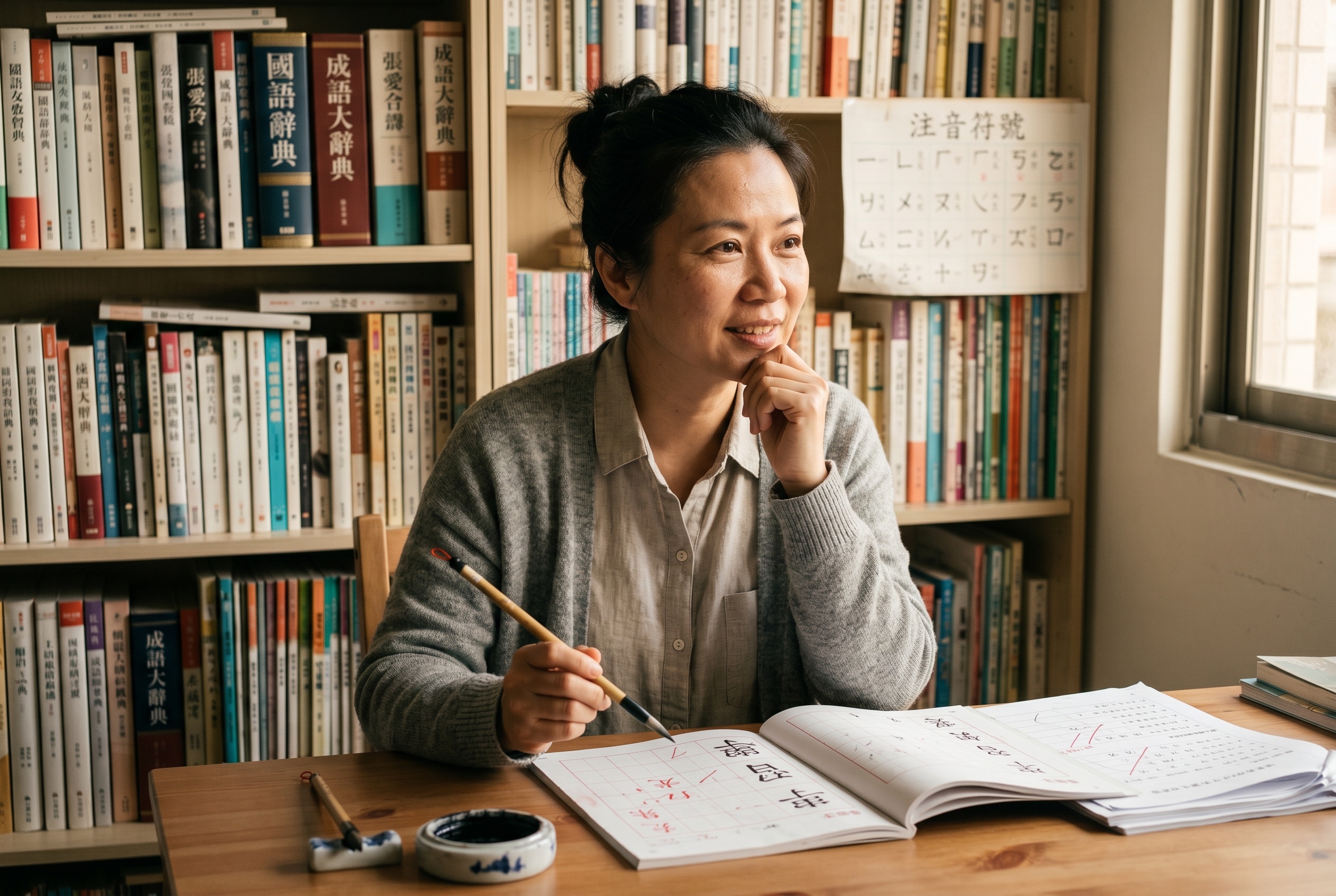
Personally vetted traditional Chinese (繁體字) tutors. Lessons focused on the writing system used in Taiwan, Hong Kong, Macau, and overseas Chinese communities, with the character forms, the cultural register, and the reading fluency that TOCFL prep, classical Chinese study, and Taiwan or Hong Kong work actually require.
Your instructors
Traditional Chinese tutors for private lessons & classes
Strommen runs a curated Chinese roster with several tutors who specifically teach traditional character work for TOCFL prep, Taiwan-track adult learners, Hong Kong contexts, and classical Chinese study. Every tutor below was met and vetted by us. Bios, photos, and rates are real.
Filter by location, age, or price, then book a 30-minute free trial.
Below are the Strommen tutors who specialize in traditional Chinese writing and reading. Photos, ratings, and rates are real. Click any card to read their bio and book a free 30-minute trial.
I want to learn…
Every tutor, personally met. — founder-vetted since 2006, in Los Angeles and online worldwide.
Get a personalized plan
Pick your language — a language advisor will match you with the right tutor and map out your path.

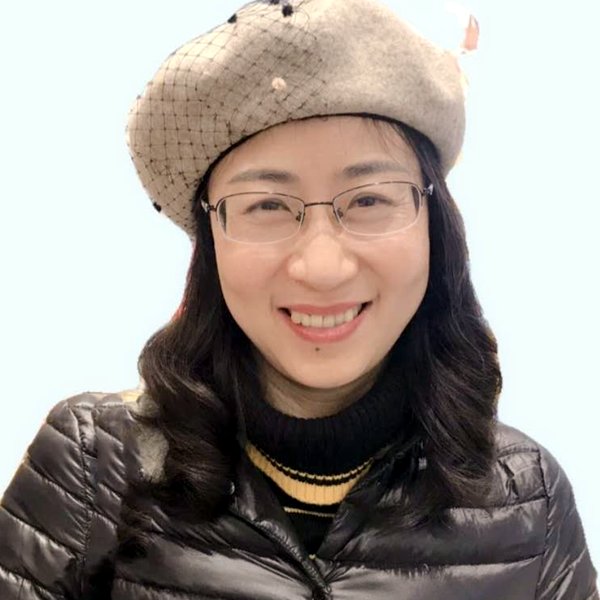
Masters degree
Expert University Teaching with a Friendly Touch: Professional, Engaging, Effective . #1 Mandarin Tutor at Strommen working with Corporate Clients, Kids + Individuals.
Personally vetted · Strommen’s note
Before joining Strommen, Linna spent twenty-five years teaching Chinese language and literature at a university in China.
Specialties
Masters degree
Expert University Teaching with a Friendly Touch: Professional, Engaging, Effective . #1 Mandarin Tutor at Strommen working with Corporate Clients, Kids + Individuals.
Specialties
Personally vetted · Strommen’s note
Before joining Strommen, Linna spent twenty-five years teaching Chinese language and literature at a university in China.


Masters in education
Looking forward to sharing Chinese language and culture with you.
Personally vetted · Strommen’s note
Simone's Chinese lessons stay interactive by design, heavy on student practice time, light on lecture.
Specialties
Masters in education
Looking forward to sharing Chinese language and culture with you.
Specialties
Personally vetted · Strommen’s note
Simone's Chinese lessons stay interactive by design, heavy on student practice time, light on lecture.
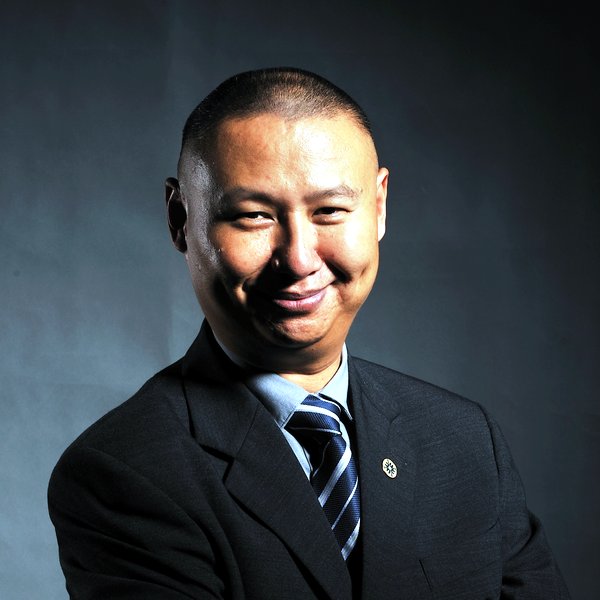
Master of Science · TEFL (120-hour Premier) Certificate
Learn the language, live the culture
Personally vetted · Strommen’s note
Bill's whole premise is that language and culture can't really be separated. His lessons are built around both together.
Specialties
Master of Science · TEFL (120-hour Premier) Certificate
Learn the language, live the culture
Specialties
Personally vetted · Strommen’s note
Bill's whole premise is that language and culture can't really be separated. His lessons are built around both together.

Teacher Permit, Bachelor Degree
Chinese Teacher with 17 Years Experience and Attention to Detail.
Personally vetted · Strommen’s note
Seventeen years teaching Chinese, with a specialty in AP and SAT II prep, and Xue still rewrites her own material rather than teach straight from the page.
Specialties
Teacher Permit, Bachelor Degree
Chinese Teacher with 17 Years Experience and Attention to Detail.
Specialties
Personally vetted · Strommen’s note
Seventeen years teaching Chinese, with a specialty in AP and SAT II prep, and Xue still rewrites her own material rather than teach straight from the page.
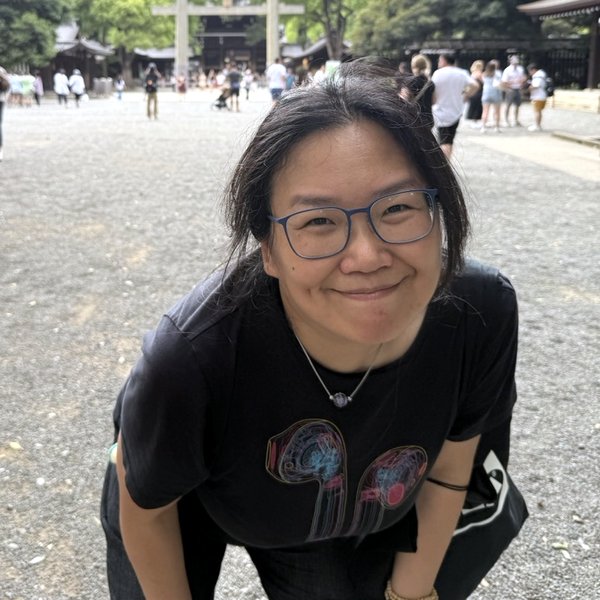
MFA · Mandarin teaching cert
UCLA Mandarin teacher from Taiwan with 25-year experiences plus professional skills in Animation, Film & TV
Personally vetted · Strommen’s note
Daisy is a UCLA Mandarin instructor from Taiwan with twenty-five years in the classroom and a side career in animation and film. She also coaches actors' dialects.
Specialties
MFA · Mandarin teaching cert
UCLA Mandarin teacher from Taiwan with 25-year experiences plus professional skills in Animation, Film & TV
Specialties
Personally vetted · Strommen’s note
Daisy is a UCLA Mandarin instructor from Taiwan with twenty-five years in the classroom and a side career in animation and film. She also coaches actors' dialects.

Bachelor's degree · CELT-P (Certificate in English Language Teaching – Primary)
Native Chinese Tutor in Tianjin with C1 English level
Personally vetted · Strommen’s note
A native Chinese speaker in Tianjin with C1 English herself, Xin opens every lesson by asking flatly what's been giving the student trouble.
Specialties
Bachelor's degree · CELT-P (Certificate in English Language Teaching – Primary)
Native Chinese Tutor in Tianjin with C1 English level
Specialties
Personally vetted · Strommen’s note
A native Chinese speaker in Tianjin with C1 English herself, Xin opens every lesson by asking flatly what's been giving the student trouble.


Bachelor’s degree · Certificate for Teaching Chinese as a Foreign Language
Making Chinese learning fun and easy.
Personally vetted · Strommen’s note
Wenlong opens every Chinese lesson with a four-skills check, listening, speaking, reading, writing, before deciding where to focus.
Specialties
Also speaks: English, German
Bachelor’s degree · Certificate for Teaching Chinese as a Foreign Language
Making Chinese learning fun and easy.
Specialties
I also speak: English, German
Personally vetted · Strommen’s note
Wenlong opens every Chinese lesson with a four-skills check, listening, speaking, reading, writing, before deciding where to focus.


BA (Hons) in Bilingual Studies. · TCSOL and TEFL.
Bridging cultures through language, story, and authentic communication.
Specialties
Also speaks: Japanese, Spanish
BA (Hons) in Bilingual Studies. · TCSOL and TEFL.
Bridging cultures through language, story, and authentic communication.
Specialties
I also speak: Japanese, Spanish

Bachelor of Arts (BA) in Global and Development Studies – Jagiellonian University of Krakow, Poland (Graduated, 2020–2023)Master of Science (MSc) in European Urban Studies – Bauhaus-Universität Weimar, Germany (Expected completion in September 2026) · CityMinds Summer School Certificate – EIT Urban Mobility, Thessaloniki, Greece (July 2025)Erasmus+ Academic Exchange Program – Goethe Universität Frankfurt, Germany (Focus on Social and Political Sciences, 2022–2023)
Multilingual tutor making Cantonese, Mandarin, and English practical and engaging
Specialties
TSANG T
Personally vettedBachelor of Arts (BA) in Global and Development Studies – Jagiellonian University of Krakow, Poland (Graduated, 2020–2023)Master of Science (MSc) in European Urban Studies – Bauhaus-Universität Weimar, Germany (Expected completion in September 2026) · CityMinds Summer School Certificate – EIT Urban Mobility, Thessaloniki, Greece (July 2025)Erasmus+ Academic Exchange Program – Goethe Universität Frankfurt, Germany (Focus on Social and Political Sciences, 2022–2023)
Multilingual tutor making Cantonese, Mandarin, and English practical and engaging
Specialties

繁體字 — Taiwan and Hong Kong script
5 things to know about learning traditional Chinese
These are the foundational pieces of traditional Chinese pedagogy that shape how serious adult learners actually develop. Save the list for the trial.
-
01
Traditional characters preserve etymological structure
Traditional characters retain the component structure and etymological transparency that simplified characters often condensed or removed. Traditional 愛 (love) contains 心 (heart) as a central component; the simplified form 爱 removes it. Traditional 學 (to learn) shows components representing teaching activity; the simplified 学 condenses them. For learners interested in Chinese cultural and literary tradition, the etymological transparency is itself a learning aid.
e.g. Traditional 龍 (dragon) shows intricate components; simplified 龙 is a stripped-down silhouette of the same word.
-
02
Used in Taiwan, Hong Kong, Macau, and overseas Chinese communities
Traditional characters are the standard in Taiwan (with Mandarin pronunciation), Hong Kong and Macau (with Cantonese as the primary spoken language plus Mandarin), and most overseas Chinese communities that established their writing conventions before the mainland simplification reforms of the 1950s and 1960s. Mainland China and Singapore use simplified characters.
e.g. A Hong Kong newspaper and a Taipei newspaper both use traditional characters; a Beijing newspaper uses simplified.
-
03
TOCFL is the standard credentialing path
The Test of Chinese as a Foreign Language (TOCFL), administered by Taiwan's Ministry of Education, uses traditional characters exclusively. TOCFL is the standard credential for non-native Mandarin speakers seeking to study, work, or apply for scholarships in Taiwan. The exam has six levels (Novice-1 through Level 4) plus an Advanced level, aligned to CEFR. Learners targeting Taiwan universities typically aim at Band B Level 2 or Band C Level 3.
-
04
Bopomofo is the Taiwan Romanization-equivalent
Taiwan elementary education uses bopomofo (注音符號), a set of 37 non-Latin symbols representing Mandarin sounds, instead of Hanyu Pinyin. Taiwanese children learn bopomofo first, and it remains the dominant system within Taiwan for indicating pronunciation. Foreign learners using Taiwan materials sometimes learn bopomofo alongside traditional characters; learners using international materials with Hanyu Pinyin can usually skip it.
e.g. Bopomofo ㄋㄧˇ ㄏㄠˇ corresponds to Hanyu Pinyin nǐ hǎo (hello).
-
05
Traditional opens the door to classical Chinese
Classical Chinese (文言文, wényánwén) is the literary language used across Chinese history from the Han dynasty through the early 20th century, the language of Confucian classics, Tang and Song poetry, and the Chinese cultural canon. Classical Chinese requires the traditional character set plus additional vocabulary and grammatical knowledge specific to classical style. For serious students of Chinese literature, history, or philosophy, traditional character literacy is the foundation that enables classical study.
e.g. Tang dynasty poetry, the Analects of Confucius, the Four Great Classical Novels all use traditional characters.
About Traditional Chinese
Traditional Chinese, the script of Taiwan and Hong Kong
Traditional Chinese (繁體字, fántǐzì) is the writing system used in Taiwan, Hong Kong, Macau, and most overseas Chinese communities that established their writing conventions before the People's Republic of China's character simplification reforms of the 1950s and 1960s. The system preserves the character forms that developed across Chinese writing history from the Han dynasty's standardization through the Ming and Qing dynasties, with the visual complexity and etymological structure that simplified characters condensed or replaced. Traditional Chinese is also the script of classical Chinese literature, Buddhist and Daoist religious texts, calligraphy across the East Asian tradition, and most Chinese cultural and historical archives predating the mainland simplification project.
For foreign learners of Mandarin, the choice between traditional and simplified usually follows the learner's target context. Learners aiming at Taiwan university admission (study abroad in Taipei, Tainan, Kaohsiung, or other Taiwan cities), Taiwan scholarship programs (the Taiwan Scholarship, the Huayu Enrichment Scholarship), Hong Kong work in finance, professional services, or media, heritage connection to families from Taiwan, Hong Kong, or pre-1949 mainland China, or TOCFL examination prep, learn traditional characters. Learners aiming at mainland China university admission, PRC business work, or HSK examination prep learn simplified characters. The choice has implications: traditional-character readers usually read simplified with relative ease (the simplification process generally moved from complex to less complex forms), while simplified-only readers find traditional characters substantially harder to recognize cold. Our Simplified Chinese page covers the alternative track.
The character forms preserve etymological structure that simplified characters often lost. Traditional 學 (to learn) shows the components 𦥑 (two hands), 爻 (interlocking sticks, originally representing teaching), 冖 (cover), and 子 (child); the etymology suggests a child being taught with interlocking pieces. The simplified form 学 retains the cover and child but condenses the upper components. Traditional 愛 (to love) contains 心 (heart) as a central component; the simplified form 爱 removes the heart, a change that has produced considerable cultural commentary across the traditional-character world. Traditional 龍 (dragon) is built from intricate components representing the mythological creature; the simplified form 龙 is a stripped-down silhouette. None of this is decorative; for learners interested in Chinese cultural and literary tradition, the etymological transparency of traditional characters is itself a learning aid and a connection to the deeper history of the writing system.
The Taiwan and Hong Kong contexts differ in important ways. Taiwan uses traditional characters with Mandarin pronunciation (Guóyǔ, the Taiwanese standard with slight differences from PRC Putonghua). Hong Kong uses traditional characters with Cantonese as the primary spoken language plus Mandarin as an increasingly important second language; Hong Kong written Chinese is largely identical to Taiwan written Chinese but the spoken context is Cantonese for most everyday use. The Hong Kong traditional character set has a small number of locally-used characters that do not appear in Taiwan (the so-called "HK supplementary characters"), but the core character set is shared. Macau uses traditional characters with both Cantonese and Mandarin. For learners targeting Hong Kong specifically, our Conversational Cantonese page is often the right entry point alongside traditional character study.
The TOCFL examination prep relationship is the most common practical context for serious traditional Chinese study. TOCFL (Test of Chinese as a Foreign Language) is the Taiwan-administered Mandarin proficiency exam, administered by the Steering Committee for the Test of Proficiency-Huayu under the Taiwan Ministry of Education. TOCFL uses traditional characters exclusively and is the standard credential for non-native Mandarin speakers seeking to study, work, or apply for scholarships in Taiwan. The exam has six levels (Novice-1, Novice-2, Level 1, Level 2, Level 3, Level 4) aligned to CEFR bands, plus an Advanced level. Learners targeting Taiwan universities typically aim at Band B Level 2 (B1) or Band C Level 3 (B2). Our TOCFL page covers the exam prep specifically.
The bopomofo (注音符號) phonetic system is the traditional Romanization-equivalent used in Taiwan elementary education and in Taiwanese dictionaries and reference materials. Bopomofo uses a set of 37 non-Latin symbols (based on simplified forms of classical characters) to represent Mandarin sounds, with tone marks added separately. Taiwanese children learn bopomofo in elementary school and continue to use it for indicating pronunciation in dictionaries and in some written contexts. Hanyu Pinyin (the Latin-alphabet system used in mainland China and most international Mandarin education) is increasingly adopted in Taiwan for international purposes, but bopomofo remains the dominant system within Taiwan. For foreign learners using primarily Taiwan-published materials, learning bopomofo alongside traditional characters is sometimes useful; learners using internationally-published materials with Hanyu Pinyin can usually skip bopomofo.
Classical Chinese (文言文, wényánwén) study is a parallel domain that requires traditional character literacy. Classical Chinese is the literary written language used across Chinese history from the Han dynasty through the early 20th century, and it is the language of Confucian classics, Tang and Song dynasty poetry, the Four Great Classical Novels, and most of the Chinese cultural canon. Classical Chinese vocabulary, grammar, and stylistic conventions differ substantially from modern spoken Mandarin or contemporary written Chinese. Reading classical Chinese requires the traditional character set plus the additional vocabulary and grammatical knowledge specific to classical style. For serious students of Chinese literature, history, or philosophy, classical Chinese study is the destination that traditional character literacy enables.
A few honest observations from tutors on what trips up adult learners working on traditional Chinese. Underestimating the stroke complexity is the most common, because traditional characters have more strokes on average than simplified, and hand-writing practice takes proportionally longer. The fix is realistic pacing on hand-writing work plus emphasis on reading recognition (where the additional complexity is less of an obstacle than in writing). Skipping the etymology is another pattern; learners who treat traditional characters as arbitrary visual forms miss the structural logic the characters actually carry, which is one of the genuine pedagogical advantages of the traditional system. The fix is teaching characters with attention to the component etymology so the learner sees the system rather than memorizing isolated forms. Mixing simplified and traditional in writing is the third pattern; learners who have studied both sometimes produce hybrid characters that are not actually correct in either system, which reads as wrong to native readers in both contexts. The fix is consistent commitment to one system within any given writing context.
Between lessons, the right materials matter. The TOCFL Standard Course textbook series is the Taiwan-aligned curriculum, with traditional characters and TOCFL-aligned vocabulary across the levels. The Practical Audio-Visual Chinese textbook series (National Taiwan Normal University, 國立臺灣師範大學) is the standard Taiwan university Chinese-as-a-second-language curriculum. The Far East Chinese-English Dictionary (遠東漢英大辭典) is the standard Taiwan-published reference dictionary for traditional characters. Pleco supports traditional alongside simplified with full pinyin and bopomofo annotations. Taiwan newspapers (United Daily News 聯合報, Liberty Times 自由時報, Apple Daily archive 蘋果日報) provide traditional-character reading practice at advanced levels. For broader Chinese study see our Conversational Chinese and Chinese for Beginners pages.
The Strommen traditional Chinese roster includes native speakers from Taipei, Tainan, Kaohsiung, Hong Kong, and overseas Chinese communities, plus longtime US-based teachers with deep traditional-character pedagogy experience. Several have backgrounds in TOCFL prep, Taiwan university Chinese-as-a-second-language teaching, Hong Kong professional Mandarin training, or classical Chinese instruction. Each tutor's bio specifies their background and which learner profile they fit best (TOCFL prep, Taiwan university preparation, Hong Kong professional context, classical Chinese study, heritage learner). Match yourself to the tutor whose background and teaching style fits your goal. Browse the tutor list, find a bio that matches your situation, and book the free trial.
What you'll cover
Lessons & classes tailored to Traditional Chinese
The traditional character system
Coverage of traditional character forms across the high-frequency vocabulary range. The component structure and etymological transparency that traditional characters preserve. The cases where traditional and simplified differ and the cases where they are the same (most basic characters were never simplified, so the systems share substantial overlap). The Hong Kong supplementary characters for learners targeting Hong Kong specifically.
Pinyin, bopomofo, and tone work
Hanyu Pinyin with full tone-mark annotation for learners using international materials. Bopomofo (注音符號) for learners using Taiwan materials or aiming at TOCFL prep. Tone drilling on minimal pairs and on tone sandhi. The pronunciation work runs the same for both systems; the choice between pinyin and bopomofo is about which annotation system the learner prefers.
TOCFL prep, Taiwan university preparation, and Hong Kong work
For TOCFL candidates, structured prep aligned to the band the learner is targeting (Band B Level 2 for B1, Band C Level 3 for B2, etc.). For Taiwan university preparation, the academic register and reading speed needed for university-level Chinese-language coursework in Taiwan. For Hong Kong professional contexts, the business and finance vocabulary plus the Hong Kong written-Chinese conventions. Our TOCFL page covers exam prep in depth.
Classical Chinese and the cultural canon
For learners interested in classical Chinese literature, history, and philosophy, dedicated work on classical (文言文 wényánwén) vocabulary, grammar, and stylistic conventions. Reading practice with the Confucian classics, Tang and Song poetry, and the Four Great Classical Novels. For learners interested in Cantonese as the spoken language of Hong Kong alongside traditional character literacy, see our Conversational Cantonese page. For simplified Chinese as the alternative system see Simplified Chinese.
FAQ
About Traditional Chinese lessons & classes
Should I learn traditional or simplified Chinese?
Depends on your target context. Traditional for Taiwan university admission, Taiwan scholarship programs, Hong Kong work, heritage connection to families from Taiwan, Hong Kong, or pre-1949 mainland China, classical Chinese study, or contexts where the Republic of China standard is the relevant target. Simplified for mainland China university admission, PRC business work, HSK prep, or Singapore-related work. Many serious Mandarin learners eventually develop literacy in both systems.
How much harder is traditional than simplified?
Less dramatically harder than learners often expect. Only about a quarter of high-frequency characters were simplified by the PRC reforms; the rest are identical in both systems. Traditional characters have more strokes on average, which makes hand-writing proportionally slower, but reading recognition is not dramatically harder once the learner is familiar with the additional component complexity. The TOCFL learning curve is comparable to the HSK learning curve at equivalent levels, with the difference being which character set the learner masters.
How long does it take to develop traditional Chinese literacy?
Reading literacy at conversational level (around TOCFL Band B Level 1 or 2) typically takes 12-18 months of weekly lessons plus consistent self-study from zero. Higher-level reading (TOCFL Band C, comfortable with Taiwan newspapers and basic literature) typically takes 2-3 years of cumulative study. Writing literacy (active production of traditional characters by hand) develops more slowly than reading, particularly because traditional characters have more strokes than simplified equivalents.
Can I read traditional Chinese if I learned simplified?
Often yes, with some effort. Simplified-character readers find that many traditional characters are recognizable from their structural similarity to the simplified forms, especially the characters that were not simplified at all (about three-quarters of high-frequency characters). The traditional forms of the simplified characters require additional study, typically 3-6 months of focused work to develop comfortable reading. The reverse direction (traditional readers reading simplified) is easier and usually requires less dedicated study.
Do I need to learn bopomofo if I'm studying traditional Chinese?
Depends on your materials. Foreign learners using primarily Taiwan-published materials (TOCFL Standard Course, Practical Audio-Visual Chinese, Taiwan-published dictionaries) benefit from learning bopomofo because the materials use it for pronunciation annotation. Learners using internationally-published materials with Hanyu Pinyin can usually skip bopomofo entirely. For TOCFL exam prep, bopomofo is not required (the exam does not test it directly), but Taiwan-published TOCFL prep materials often use it.
What's the relationship between traditional Chinese and classical Chinese?
Traditional Chinese is the modern writing system used in Taiwan, Hong Kong, and Macau, and it is what modern Taiwanese and Hong Kong publications use for contemporary writing in Mandarin or Cantonese. Classical Chinese (文言文 wényánwén) is the literary language used across Chinese history from the Han dynasty through the early 20th century, with grammar and vocabulary substantially different from modern Mandarin. Classical Chinese uses the traditional character set (because it predates the simplification reforms), but reading classical Chinese requires additional study beyond traditional character literacy: the classical grammar, vocabulary, and stylistic conventions.
Can traditional Chinese lessons be online?
Yes. Most of our traditional Chinese tutors teach online via Zoom or Jitsi worldwide. The work translates cleanly to video: character recognition with shared screens, pinyin or bopomofo drilling with audio, writing practice through screen-share or a shared whiteboard. Several tutors also teach in person around Los Angeles.
What's the difference between this page and Traditional Chinese Character?
Same roster of tutors at most overlapping bios; different framing. This page emphasizes the traditional character system as a whole including its cultural and pedagogical context. The Traditional Chinese Character page emphasizes character-by-character literacy work specifically. Pick whichever framing matches what you want to develop. Both connect to TOCFL prep, Taiwan university work, Hong Kong contexts, and classical Chinese study.
Ready for Traditional Chinese lessons or classes?
Book a free 30-minute trial with one of our personally vetted tutors. Private lessons or small-group classes — your choice.