



Personally vetted instructors
Brazilian Portuguese tutors, lessons & classes
Oi, tudo bem? The casual Brazilian "hi."
Personally vetted Brazilian Portuguese tutors. Lessons that respect the way Portuguese is actually spoken in Rio de Janeiro, São Paulo, Salvador, Belo Horizonte, Recife, and across the rest of Brazil.

Your instructors
Brazilian Portuguese tutors for private lessons & classes
Strommen has been teaching Portuguese since 2006. Brazilian Portuguese has always been the variety students actually want here, because Brazilian families, Brazilian colleagues, Brazilian music, and Brazilian film are the everyday context behind most of the demand. Every tutor below was met and vetted by us in person or by thorough video interview. No marketplace. No automated profile-creation. Real teachers with real backgrounds, which you can read about in their bios.
Filter by location, age, or price. Then book a 30-minute free trial.
Below are the Strommen tutors who specialize in Brazilian Portuguese. Photos, ratings, and rates are real. Click any card to read their bio and book a free 30-minute trial.
I want to learn…
Every tutor, personally met. — founder-vetted since 2006, in Los Angeles and online worldwide.
Get a personalized plan
Pick your language — a language advisor will match you with the right tutor and map out your path.

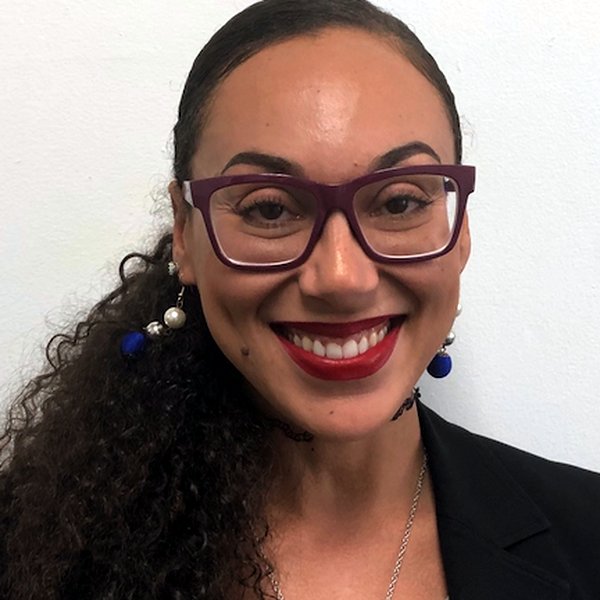


MBA and AS in Recording Arts · DALI, DELF, First Cert, SIZ Computer Science, Pro Tools, Dante
Multi-Culti Polyglot Linguist and Sound Engineer
Personally vetted · Strommen’s note
Vanessa speaks seven languages, has a sound-engineering background, and has spent two decades teaching. Her lessons range from accent coaching to art for kids.
Specialties
Also speaks: ASL American Sign Language, Chinese, Physics
MBA and AS in Recording Arts · DALI, DELF, First Cert, SIZ Computer Science, Pro Tools, Dante
Multi-Culti Polyglot Linguist and Sound Engineer
Specialties
I also speak: ASL American Sign Language, Chinese, Physics
Personally vetted · Strommen’s note
Vanessa speaks seven languages, has a sound-engineering background, and has spent two decades teaching. Her lessons range from accent coaching to art for kids.

LETRAS - Tradutor e Intérprete (Portuguese and English)
Your voice in Portuguese starts here.
Personally vetted · Strommen’s note
Brazilian Portuguese is Milton's subject, out of São José do Rio Preto, and the whole approach changes based on what each student actually needs.
Specialties
LETRAS - Tradutor e Intérprete (Portuguese and English)
Your voice in Portuguese starts here.
Specialties
Personally vetted · Strommen’s note
Brazilian Portuguese is Milton's subject, out of São José do Rio Preto, and the whole approach changes based on what each student actually needs.


Hispanic Philology Bachelor Degree
A gentle way to learn
Personally vetted · Strommen’s note
Woodland Hills-based, Carolina teaches Portuguese and Spanish through the CEFR framework. Seven years in, she still starts absolute beginners at their own level.
Specialties
Also speaks: English
Hispanic Philology Bachelor Degree
A gentle way to learn
Specialties
I also speak: English
Personally vetted · Strommen’s note
Woodland Hills-based, Carolina teaches Portuguese and Spanish through the CEFR framework. Seven years in, she still starts absolute beginners at their own level.


Bachelor's Degree in Portuguese and English Language and LiteraturePostgraduate Certificate in Higher Education Teaching** · 1. American Brazilian Center – English Course Certificate (432 hours), 2007–2011.2. American Brazilian Center – Basic Spanish Course Certificate (20 hours), 2008.3. Cambridge English: First Certificate in English (FCE) – CEFR Level B2, 2014.4. Cambridg...
Passionate language tutor specializing in English, Spanish, and Portuguese. Personalized lessons for every learner, focused on practical communication and real-life fluency.
Specialties
Also speaks: Dutch, Italian
Bachelor's Degree in Portuguese and English Language and LiteraturePostgraduate Certificate in Higher Education Teaching** · 1. American Brazilian Center – English Course Certificate (432 hours), 2007–2011.2. American Brazilian Center – Basic Spanish Course Certificate (20 hours), 2008.3. Cambridge English: First Certificate in English (FCE) – CEFR Level B2, 2014.4. Cambridg...
Passionate language tutor specializing in English, Spanish, and Portuguese. Personalized lessons for every learner, focused on practical communication and real-life fluency.
Specialties
I also speak: Dutch, Italian

Beleza — culture & slang
5 ways to sound like you actually speak Brazilian Portuguese
These aren't textbook phrases. They're the everyday words that separate tourists from people who've spent real time in Rio or São Paulo. Screenshot the infographic, then book a tutor to learn the rest.
-
01
Tudo bem?
The default Brazilian greeting. Literally "all good?" but it functions as "hi, how are you?" all in one. Reply is usually tudo bem back, or tudo, or beleza. Used between strangers, friends, colleagues, and family. Carries no formality risk in either direction.
e.g. Oi, tudo bem? Tudo bem, e você?
-
02
Legal / massa / bacana
"Cool" or "great." Legal is the national default, massa is more Northeastern, bacana reads slightly older or Carioca. All three live in everyday Brazilian speech and pick up regional fingerprints. European Portuguese would say fixe instead, which Brazilians don't use.
e.g. Que legal! Adorei essa ideia.
-
03
Valeu
The casual Brazilian "thanks." Comes from valer ("to be worth"), now functions as a relaxed thank-you between friends and in everyday transactions. Less formal than obrigado / obrigada but used widely enough to be safe in most situations short of a job interview.
e.g. Valeu, cara, te devo uma.
-
04
Cara
Literally "face," used as the all-purpose Brazilian "dude" or "man." Drops into the start of sentences, the middle, or the end, like English "man" in casual speech. Lives between people who'd say você to each other. Mano is the São Paulo variant, meu works in Rio.
e.g. Cara, você não vai acreditar no que aconteceu.
-
05
Estou falando (não estou a falar)
Brazilian Portuguese uses the gerund for the progressive: estou falando, estou comendo, estou indo. European Portuguese builds it with infinitive plus a: estou a falar, estou a comer. This is one of the most immediate giveaways of which variant a speaker learned. Brazilians don't say the European form at all.
e.g. Estou falando com ele agora. Te ligo em cinco minutos.
About Brazilian Portuguese
More than a different accent
Brazilian Portuguese is the variant of Portuguese spoken by roughly 215 million people across Brazil, plus several million more in the diaspora, with heavy concentrations in Massachusetts, Florida, New Jersey, and the Greater Los Angeles area, along with smaller communities in London, Lisbon, Tokyo, and across the Lusophone world. It is not the same language as the Portuguese spoken in Lisbon, Porto, or Madeira, though the two are mutually intelligible in writing. In conversation the gap is wider than most outsiders expect. A Brazilian and a Lisbonite can absolutely understand each other once they slow down and adjust, but the rhythm, the vowel system, the pronouns, the verb forms, and even the everyday vocabulary diverge enough that Brazilian films released in Portugal sometimes carry subtitles. If your goal is Brazil (work, family, travel, the music, the literature, the football, the telenovelas, a samba lyric you want to actually feel), Brazilian Portuguese is its own course, not a footnote to European Portuguese.
The sound first. Brazilian Portuguese is open, sung, and unmistakable within a sentence or two. Vowels are pronounced fully where European Portuguese reduces or swallows them, so menino in Brazil sounds like "meh-NEE-noh," while in Lisbon it compresses toward "mn-NEE-nu." The letters d and t before an i sound palatalize into something close to English "j" and "ch," which is why dia sounds like "jee-ah" in Rio and tia sounds like "chee-ah." The final l at the end of syllables turns into a soft "w," so Brasil is "Bra-ZEEW" and final is "fee-NOW." Carioca speakers from Rio push the letter s at the end of syllables toward a soft "sh" sound; paulistano speakers from São Paulo keep it sharp. Northeastern accents (Bahia, Pernambuco, Ceará) sing the vowels longer and often retain older constructions you won't hear in the South. None of this is in a Lisbon textbook. Our tutors drill the cadence directly with shadowing exercises against real Brazilian audio: telenovelas, MPB recordings, news broadcasts, podcasts, samba lyrics.
Then comes the grammatical layer that separates Brazilian Portuguese from European Portuguese on the page. Brazilians use você for the informal second-person singular almost everywhere south of Bahia, while Portugal keeps the older tu. In the Northeast and parts of the South (Florianópolis, Rio Grande do Sul, Maranhão) tu survives, but typically conjugated like você, so tu vai rather than the textbook tu vais. The pronoun maps onto third-person verb forms across most of Brazil, which simplifies the conjugation and bewilders learners arriving from European-Portuguese textbooks. Object pronouns sit before the verb in Brazil (me dá) where Portugal places them after (dá-me). The gerund is the default progressive form: a Brazilian says estou falando where a Lisbonite says estou a falar. The future subjunctive lives in Brazilian writing more than in casual speech but stays in formal registers. Brazilian Portuguese is also more comfortable than European Portuguese with informal contractions: tá for está, pra for para, cê for você, num for não em. None of this is wrong. It is the actual standard, used in television, in journalism, in literature.
The vocabulary diverges in everyday objects. A bus in Brazil is ônibus, in Portugal autocarro. A juice in Brazil is suco, in Portugal sumo. A cell phone in Brazil is celular, in Portugal telemóvel. The bathroom is banheiro here and casa de banho there. Breakfast: café da manhã versus pequeno-almoço. Layered on top is a slang stratum that's pure Brazilian: legal, massa, bacana, show de bola all mean roughly "cool" but signal different regions and generations; cara is the Brazilian "dude"; valeu is the casual "thanks"; beleza doubles as a greeting and as "all good"; gostoso is the all-purpose positive for food (and, with the wrong tone, for people, so context matters). Music, film, advertising, and broadcast journalism all run on this register. Our blog post on essential Brazilian Portuguese phrases is a useful primer between lessons; for broader Portuguese foundations the 1,000 most common Portuguese words list works as a vocabulary spine.
The written language was largely unified by the Acordo Ortográfico de 1990 (the Portuguese Language Orthographic Agreement), which Brazil ratified in 2008 and which Portugal began implementing in 2009. The agreement standardized spellings across the Lusophone countries (Brazil dropped the trema diacritic, Portugal dropped some silent consonants) and brought the two written standards closer together. The Academia Brasileira de Letras maintains the canonical Brazilian usage, and the Vocabulário Ortográfico da Língua Portuguesa is the official dictionary of record. The spoken languages remain distinct, and lessons treat them as such.
Brazilian culture moves through the language in ways that lessons cover directly. Football is national identity, not a hobby, and the vocabulary that surrounds it (Garrincha, Pelé, Zico, Romário, Ronaldinho, Neymar, the 1970 squad, the 1982 squad, the 2002 World Cup, the 7-1 against Germany in 2014) is conversational currency. Carnival is a real two-week shift in the country's mood, not the tourist version. The samba schools of Rio (Mangueira, Portela, Beija-Flor, Salgueiro) and the trio elétrico tradition of Salvador run on a calendar everyone knows. Bossa nova (Tom Jobim, João Gilberto, Vinicius de Moraes) is the soundtrack of mid-century Rio and still the easiest entry point for foreign ears. MPB (música popular brasileira) extends through Caetano Veloso, Chico Buarque, Gilberto Gil, Elis Regina, Milton Nascimento, Gal Costa, Maria Bethânia; contemporary listeners pick up Anitta, Marília Mendonça's legacy, Liniker, Emicida, Criolo, Marisa Monte. Brazilian cinema (Cidade de Deus, Central do Brasil, Tropa de Elite, Bacurau, Aquarius, the recent I'm Still Here) and Globo's telenovela tradition (Avenida Brasil, O Clone, Vale Tudo) give learners endless real-Portuguese listening. Literature reaches from Machado de Assis through Clarice Lispector, Jorge Amado, Guimarães Rosa, and contemporary voices like Itamar Vieira Junior. The Astrud Gilberto / Stan Getz lesson on the blog is a karaoke-style way in.
Regional variation inside Brazil is enormous. Carioca (Rio) speech sings, pushes the s toward sh, and carries the bossa-nova-era national identity. Paulistano (São Paulo) is faster, more clipped, with the sharp final s and an immigrant-influenced lexicon shaped by waves of Italian, Japanese, Lebanese, and Portuguese arrivals across the twentieth century. Mineiro (Belo Horizonte and Minas Gerais) compresses syllables to a degree that becomes its own dialect: belzonte, cêvai, the famous uai. Nordestino (Bahia, Pernambuco, Ceará, Paraíba) carries strong vowels, preserved older constructions, and an enormous range of internal variation between cities, with the Bahian Portuguese of Salvador recognizable instantly to other Brazilians. Gaúcho speech in Rio Grande do Sul carries Italian and German immigrant influence in the South, plus everyday loanwords from across the Uruguay border. Amazonian Portuguese in Manaus and Belém keeps a relaxed cadence and a vocabulary inflected by Tupi and other indigenous languages. We can match you to a tutor whose region fits your goal, or stay neutral pan-Brazilian if your destination is undecided.
A few honest observations from tutor sessions on what trips up American students learning Brazilian Portuguese. The nasal vowels (the ão in pão, the em in bem) are the most consistent stumble. English doesn't nasalize vowels the same way, and American speakers default to flat versions that sound like vowel-plus-consonant rather than a single nasal phoneme. The open versus closed vowel distinction matters more in Portuguese than in Spanish: avô (grandfather) and avó (grandmother) differ only in the openness of the final vowel, and missing the distinction lands wrong. The r sound shifts depending on position: a syllable-initial r in carioca speech can sound almost like an English h (so Rio sounds like "HEE-oh"), while a flapped middle r stays closer to Spanish. The instinct from Spanish learners to translate word-for-word leads to false friends fast: exquisito in Spanish means refined, but Portuguese esquisito means weird or strange; embarazada in Spanish means pregnant, but Portuguese embaraçada means embarrassed. And the easiest gain a learner can make in their first month: stop translating each word and start absorbing chunks of speech the way Brazilians actually use them. A tutor catches these patterns in real time; an app does not.
For between-lesson immersion, Brazilian film and television are uniquely accessible. Cidade de Deus (City of God, Fernando Meirelles, 2002) is the canonical entry point for favela-era Carioca dialogue. Tropa de Elite (José Padilha, 2007) drops you into police-jargon Rio. Central do Brasil (Walter Salles, 1998) gives you a slower, melancholic register and a road trip through Northeast Brazil. Bacurau (2019) and Aquarius (2016) for contemporary auteur cinema. I'm Still Here (Walter Salles, 2024) for political-history Rio. Globo's streaming archive carries decades of telenovela Portuguese at speaking speed. Music is the easiest sustained input: João Gilberto and Tom Jobim for the bossa-nova foundation, Caetano Veloso and Gilberto Gil for the tropicália generation, Chico Buarque for poetic depth, Marisa Monte for contemporary classicism, Anitta and Liniker for current pop and R&B. For listening practice the podcast guide on our blog has tested recommendations. For reading, Clarice Lispector and Machado de Assis are the canonical names; Jorge Amado for warmth and place; Itamar Vieira Junior for contemporary Northeast voices. The poems post is a gentle way into literary Portuguese.
The Strommen Brazilian Portuguese roster includes native Brazilians teaching from inside the country (Rio, São Paulo, Belo Horizonte, Salvador) and native Brazilians who relocated to the US or to Europe and now teach online and in person. Brazil-based teachers bring the day-to-day cadence of in-country Portuguese, current slang, and a sense of what's actually on television this week. US-based teachers bring classroom experience and patience with the gerund-versus-infinitive structures that English speakers wrestle with. Each tutor's bio specifies where they're from, where they've taught, and which student profile they fit best. Online students worldwide can also book the European Portuguese roster if their goal is Lisbon rather than Rio. The two are genuinely different courses and we treat them that way. For broader regional context, the Portuguese course page covers the family of related programs.
Lessons calibrate to your actual goal. Travel Portuguese for a Rio trip is a different curriculum from professional Portuguese for working with a São Paulo team, which is different again from learning to follow a Globo telenovela without subtitles or read Clarice Lispector at the level of her prose. We don't run a generic Portuguese course. Each lesson is one-on-one, your tutor plans it around your week, and the trial is free. If you already speak Spanish, the cognate density helps the read but the pronunciation drills are non-negotiable. Spanish habits will pull you toward a wrong vowel system for months unless a tutor catches it. Or just browse the full tutor list and book a trial. Find a voice you want to imitate, sit with it weekly, and the dialect lands.
What you'll cover
Lessons & classes tailored to Brazilian Portuguese
The Brazilian accent and cadence
Open vowels, nasalized ão and em, palatalized di and ti, the soft-w at the end of syllables. Lessons include shadowing exercises with real Brazilian audio (telenovelas, MPB, news broadcasts, podcasts, samba) and direct pronunciation feedback so you sound Brazilian rather than textbook-careful. We also drill the regional fingerprints: Carioca s versus paulistano s, mineiro syllable compression, Nordestino vowel openness, so you can pick the regional voice you want to imitate.
Brazilian grammar where it diverges from European
Você as the default informal pronoun (with third-person verbs), the gerund-based progressive (estou falando not estou a falar), object pronoun placement before the verb (me dá), contractions in everyday speech (tá, pra, cê, num). For students arriving with European Portuguese textbooks, this is the central adjustment. We drill it from the first hour until it's automatic.
Brazilian vocabulary and slang
Ônibus, suco, celular, banheiro, café da manhã: the everyday words that differ from European Portuguese. Then the slang layer: legal, massa, bacana, show de bola, cara, mano, valeu, beleza, gostoso, brother. We teach when each word fits, who you can say it to, and how to read the room. Slang varies by region and generation; lessons calibrate to the Brazil you actually want to speak in.
Cultural codes that aren't in the textbook
Football fluency (Pelé, the 1970 squad, the 2002 World Cup, the 7-1, current Seleção names). Carnival as a real two-week shift in the country's mood, not the tourist postcard version. Samba school calendars and trio elétrico tradition. Bossa nova as foundation, MPB as the canon (Caetano, Chico, Gil, Elis, Milton, Marisa), contemporary pop (Anitta, Liniker, Emicida). Telenovela conventions and the references everyone gets. The food regions: Bahian moqueca, Mineiro pão de queijo, Gaúcho churrasco, paulistano feijoada. Lessons cover these so you can actually participate in conversations Brazilians are having.
FAQ
About Brazilian Portuguese lessons & classes
How is Brazilian Portuguese different from European Portuguese?
Mutually intelligible in writing, noticeably different in conversation. The two big differences are pronunciation (Brazil opens vowels and sings them; Portugal compresses and swallows them) and pronouns (Brazil uses você with third-person verbs, Portugal keeps tu with its own conjugations). Grammar also diverges in progressives (estou falando in Brazil, estou a falar in Portugal), object pronoun placement (before the verb in Brazil, after in Portugal), and everyday vocabulary (ônibus versus autocarro, celular versus telemóvel, café da manhã versus pequeno-almoço). If your goal is Brazil, learn Brazilian Portuguese. Coming through European materials means unlearning patterns later. Our European Portuguese tutors roster is separate by design.
Are your tutors native Brazilians?
Most are native Brazilians, born and raised in Rio, São Paulo, Belo Horizonte, Salvador, or other parts of the country. We also have longtime bilinguals who grew up between Brazil and the US, fully fluent in the dialect. Each tutor's bio specifies where they're from and where they've taught. You can match yourself to a Carioca accent, a paulistano accent, a mineiro accent, a Bahian accent, or a more neutral pan-Brazilian Portuguese.
Can I take Brazilian Portuguese lessons online or only in person?
Both. Most of our Brazilian Portuguese tutors teach online via Zoom or Jitsi, available globally. Several also teach in person around Los Angeles. The booking widget on each tutor's profile shows their available formats and locations.
I already speak Spanish. Will that help with Brazilian Portuguese?
Yes and no. The cognate density is high, so you'll recognize maybe 60 percent of written Portuguese on first read. The challenge is pronunciation: Spanish habits will pull your vowel system in the wrong direction, especially with nasal vowels and the open-versus-closed distinction. False friends also catch Spanish speakers regularly (esquisito means strange in Portuguese, not refined; embaraçada means embarrassed, not pregnant). Lessons calibrate to your starting point, so a Spanish-speaking learner spends the first few hours on pronunciation drills and false-friend mapping rather than starting from zero.
What does a Brazilian Portuguese lesson actually look like?
Lessons are one-on-one and built around your goals. A typical hour might include 15 minutes of conversation in Portuguese on a topic you chose, 15 minutes targeted on a pronunciation or grammar point that came up, 15 minutes on Brazilian-specific vocabulary or cultural context, and 15 minutes of practice using what you learned. Your tutor plans around you. No two students get the same lesson.
How fast can I expect to progress?
Depends on the time you put in between lessons, your starting level, and your specific goal. From-scratch beginners reach travel-conversational comfort in 4 to 6 months at one or two lessons a week with self-study in between. For Spanish-speaking learners the timeline compresses: 2 to 3 months to a comfortable conversational floor. Watching a Globo telenovela without subtitles or reading Machado de Assis takes longer, typically 12 months and up of consistent immersion alongside lessons.
Is the written Portuguese the same in Brazil and Portugal?
Largely yes since the Acordo Ortográfico de 1990, which Brazil ratified in 2008 and Portugal phased in from 2009. The agreement standardized spellings across the Lusophone countries. The Academia Brasileira de Letras maintains canonical Brazilian usage. Some vocabulary remains different on the page, and the spoken languages stay distinct, but news articles and books cross borders without translation now in a way they didn't a generation ago.
What if I'm learning for music or film rather than travel?
Plenty of our Brazilian Portuguese students arrive that way. Bossa nova lyrics, MPB poetry, samba, Tropicália, contemporary pop, telenovelas, Brazilian cinema: these are all valid learning anchors and your tutor can build lessons around them. Studying Chico Buarque lyrics line by line, or working through Cidade de Deus scenes one at a time, or learning the João Gilberto songbook the way a singer would, all become legitimate weekly curricula. Pick something you'd watch, listen to, or read in English anyway. Then do it in Portuguese.
Ready for Brazilian Portuguese lessons or classes?
Book a free 30-minute trial with one of our personally vetted tutors. Private lessons or small-group classes — your choice.