



Personally vetted instructors
European Portuguese tutors, lessons & classes
Olá, tudo bem? How Portugal opens a conversation, with that famously clipped final vowel.
Personally vetted tutors of European Portuguese. The Portuguese of Lisbon, Porto, the Algarve, the Azores, and Madeira. Distinct from Brazilian Portuguese in sound, vocabulary, and feel.

Your instructors
European Portuguese tutors for private lessons & classes
Strommen teaches European Portuguese and Brazilian Portuguese as separate specializations because students who want one usually don't want the other. Every European Portuguese tutor below was met and vetted by us. No marketplace. No automated profile-creation. Real Portuguese speakers with documented backgrounds.
Filter by location, age, or price. Then book a 30-minute free trial.
Below are the Strommen tutors who specialize in European Portuguese. Photos, ratings, and rates are real. Click any card to read their bio and book a free 30-minute trial.
I want to learn…
Every tutor, personally met. — founder-vetted since 2006, in Los Angeles and online worldwide.
Get a personalized plan
Pick your language — a language advisor will match you with the right tutor and map out your path.

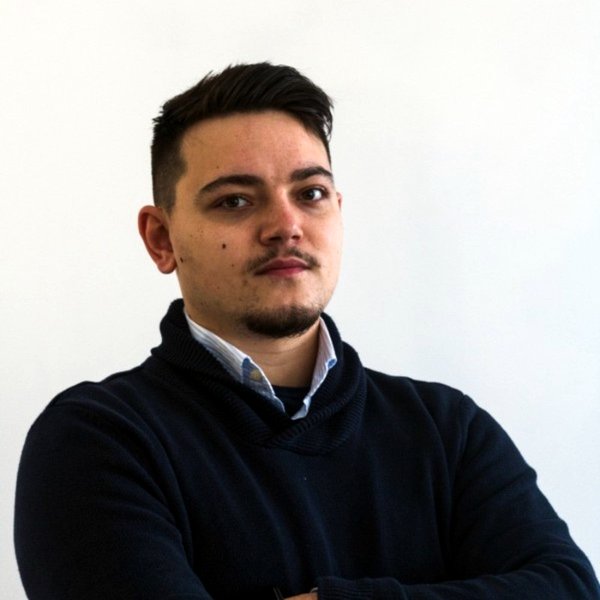
A Bachelors in Management and Administration Secretariat certified by ISCAC (Higher Institute of Accounting and Administration of Coimbra) · A Pedagogical Skills Certificate certified by Alamedas Office Braga
Learn European Portuguese with a professional Tutor living in Portugal
Specialties
A Bachelors in Management and Administration Secretariat certified by ISCAC (Higher Institute of Accounting and Administration of Coimbra) · A Pedagogical Skills Certificate certified by Alamedas Office Braga
Learn European Portuguese with a professional Tutor living in Portugal
Specialties

Saudades de cá — culture & expressions
5 phrases that mark you as someone who knows Portugal
These won't be in a generic Portuguese textbook (or worse, a Brazilian one). They're Portugal-specific, and they're how locals spot someone who's learned the language their way. Screenshot them. Then book a tutor for the rest.
-
01
Fixe
"Cool" or "great." Pronounced like "feesh." The most-used positive adjective in casual European Portuguese. Brazilians say legal. Saying fixe in Lisbon marks you instantly as Portugal-aligned.
e.g. O concerto foi mesmo fixe!
-
02
Pois é
Untranslatable filler that means roughly "yeah, well" or "that's how it is." Used constantly in Portuguese conversation as agreement, acknowledgment, or polite resignation. Land this naturally and you sound Portuguese.
e.g. O trânsito está horrível hoje. Pois é...
-
03
Estou-me a passar
"I'm losing it" / "I can't believe this." The European Portuguese pronoun placement (-me a passar) is the textbook example of how PT-PT differs from PT-BR grammatically.
e.g. Que confusão, estou-me a passar!
-
04
Tens razão
"You're right." Common across all Portuguese, but the Portuguese pronunciation tightens the vowels and clips the end in a way Brazilians don't. Pure Portugal sound.
e.g. Sim, tens razão, vamos por aí.
-
05
Bicas e pastéis
Coffee (bica is the Lisbon word for an espresso) and pastries. The standard mid-morning Portuguese order. Pastéis covers everything from the famous pastel de nata to local regional pastries. Walking into a pastelaria and ordering uma bica is a small but real act of cultural fluency.
e.g. Uma bica e dois pastéis de nata, por favor.
About European Portuguese
Portuguese, but not the Brazilian kind
European Portuguese (português europeu, often abbreviated PT-PT) is the variety spoken in Portugal by roughly 10 million people, plus Portuguese speakers in the Azores, Madeira, and the historic Portuguese-speaking communities of Macau, Goa, and East Timor. It is one of two major standardized forms of Portuguese, the other being Brazilian Portuguese (PT-BR), spoken by over 200 million people in Brazil.
The two are related but meaningfully different. They share a written standard with some divergences (Portugal and Brazil signed an Orthographic Agreement in 1990 that has been partially implemented). Spoken, the gap widens significantly. European Portuguese has a famously closed and clipped sound, with weakly pronounced vowels and consonant clusters that to Brazilian ears can sound "Slavic" or "Eastern European." Brazilian Portuguese has open vowels and a more melodic cadence. Vocabulary diverges in everyday domains: trem (BR) vs. comboio (PT) for train, ônibus (BR) vs. autocarro (PT) for bus, geladeira (BR) vs. frigorífico (PT) for refrigerator. Grammar diverges too, especially in pronoun placement and the use of the gerund vs. infinitive.
For learners, the practical question is which variety you actually need. If you're working in Portugal, moving to Lisbon or Porto, marrying a Portuguese spouse, getting citizenship through ancestry, or want to read Pessoa and Saramago in the original, you want European Portuguese. If your context is Brazilian (family, work, samba, telenovelas), you want Brazilian Portuguese. The two are about 80% mutually intelligible in writing and somewhat less so in fast speech. Switching later is possible but takes adjustment.
Portugal itself has become a major destination for international relocation: golden visa programs, digital nomad visas, retirement, and EU passport pathways through ancestry have all driven significant immigration. Lisbon and Porto are in the middle of a cultural and economic moment. Tech professionals, artists, retirees, and entrepreneurs from across Europe and the Americas have settled in both cities. Many of them come to us wanting European Portuguese specifically, often after a frustrating start with Brazilian-Portuguese apps and resources that don't transfer cleanly.
Our European Portuguese tutors are native speakers from Lisbon, Porto, Coimbra, the Alentejo, the Algarve, the Azores, and Madeira. Most have backgrounds in language teaching, translation, or linguistics. Lessons cover the European Portuguese sound system (which is the steepest part of the learning curve), vocabulary, grammar, and the cultural framework: Portuguese history, the legacy of the empire, the post-1974 democracy, the contemporary cultural and economic moment that has made Portugal a destination again. We can also calibrate to specific certifications (CIPLE, DEPLE, DIPLE, DAPLE, DUPLE) if you're studying for the official Portuguese language exams administered by the Camões Institute.
If you already speak Spanish or another Romance language, you have a head start with grammar and vocabulary but expect to spend serious time on the European Portuguese sound. If you've already studied Brazilian Portuguese, expect a real adjustment, particularly to the closed vowels and the pronoun placement rules. If you're starting from zero, the path is longer but absolutely doable.
What you'll cover
Lessons & classes tailored to European Portuguese
The European Portuguese sound system
Lessons drill the specific features that make European Portuguese sound the way it does: vowel reduction (unstressed vowels weakly pronounced or dropped), the closed vowel system, the consonant clusters, the characteristic open and closed a sounds. Real audio from Portuguese speakers, plus direct feedback so you produce the European sound rather than sliding into Brazilian patterns.
Vocabulary that diverges from Brazilian
Hundreds of everyday words differ between PT-PT and PT-BR. We teach the Portuguese versions: comboio for train, autocarro for bus, frigorífico for refrigerator, casa de banho for bathroom, miúdo for kid, fixe for cool. Each in coherent fields so you build Portugal-aligned vocabulary, not Brazilian.
Grammar specific to European Portuguese
Pronoun placement (proclisis vs. enclisis) is the biggest grammatical difference between European and Brazilian Portuguese. We teach the European rules systematically. Other features include the preferred use of infinitive over gerund (estou a fazer in PT vs. estou fazendo in BR), tu vs. você usage patterns, and the second-person plural vós (mostly literary or dialectal but worth knowing).
CIPLE / DEPLE / DIPLE / DAPLE / DUPLE preparation
For students working toward the official Portuguese-as-foreign-language certifications administered by the Camões Institute, we can structure lessons around the exam at any of the five CEFR levels. Useful if you're pursuing Portuguese citizenship (which requires A2/CIPLE), professional accreditation, or university admission in Portugal.
FAQ
About European Portuguese lessons & classes
How different is European Portuguese from Brazilian Portuguese?
About 80% mutually intelligible in writing, somewhat less in fast speech. The two share a written standard with some divergences. Spoken, they differ significantly in sound, vocabulary, and grammar. A Brazilian and a Portuguese can hold conversations across the difference, but most learners benefit from focusing on one variety rather than mixing both.
I learned some Brazilian Portuguese on Duolingo. Can I switch to European?
Yes, but expect real adjustment. The sound system is the biggest jump. Pronoun placement rules differ. Some everyday vocabulary will need to be relearned. Most students who switch take a few months to fully adjust. Your existing Brazilian Portuguese is a head start, not a wasted effort.
I want Portuguese citizenship. Do I need to pass a Portuguese exam?
Yes, you need to demonstrate A2-level Portuguese, typically via the CIPLE exam or a recognized equivalent. We have tutors who specialize in CIPLE prep. The exam tests reading, writing, listening, and speaking at A2 level. Most motivated students can prepare in 4 to 8 months of regular lessons depending on starting level.
Can I take European Portuguese lessons online or only in person?
Both. Most of our European Portuguese tutors teach online via Zoom or Jitsi, available globally. Several teach in person around Los Angeles, where the Portuguese-American community has historic roots and ongoing immigration. The booking widget shows formats.
How fast can I get conversational?
If you already speak Spanish or another Romance language, conversational comfort takes 4 to 6 months at one or two lessons a week with self-study. From zero with no Romance background, more like 8 to 12 months. Your tutor sets realistic weekly goals at the trial and adjusts based on what's working.
Are there regional varieties within European Portuguese?
Yes. The northern accent (Porto and surroundings) sounds different from Lisbon, which sounds different from the Alentejo, the Algarve, the Azores, and Madeira. Standard European Portuguese is based loosely on the Lisbon-Coimbra educated norm. We can match you to a tutor from the region you care about if you have a specific regional connection.
Is European Portuguese useful outside of Portugal?
Yes, in several places. It's the official form in the Azores, Madeira, and historically in Macau, Goa, and East Timor. Portuguese-speaking African countries (Angola, Mozambique, Cape Verde, Guinea-Bissau, São Tomé) use European Portuguese as the written standard, though their spoken varieties have their own characters. If your context is Lusophone Africa, European Portuguese is the right starting point.
Ready for European Portuguese lessons or classes?
Book a free 30-minute trial with one of our personally vetted tutors. Private lessons or small-group classes — your choice.