



Personally vetted instructors
Fiorentino tutors, lessons & classes
O bah! The classic Florentine throwaway opener, a tonal shrug used the way other cities use "ciao" or "salve." Standard Italian has no direct equivalent.
Personally vetted Fiorentino tutors. Lessons in the living Florentine of contemporary Tuscany — the variety that supplied the base of standard Italian seven centuries ago and continues to diverge from the textbook version every generation since.

Your instructors
Fiorentino tutors for private lessons & classes
Strommen has been teaching Italian since 2006, and Fiorentino sits at an unusual point in our roster: most students arrive already knowing some standard Italian, since the dialect's whole identity is the small but consequential gap between Florence's living speech and the codified standard the rest of Italy learned in school. Every tutor below was met and vetted by us in person or via thorough video interview. No marketplace, no automated profile-creation.
Filter by location, age, or price. Then book a 30-minute free trial.
Below are the Strommen tutors who teach Fiorentino. Photos, ratings, and rates are real. Click any card to read their bio and book a free 30-minute trial.
I want to learn…
Every tutor, personally met. — founder-vetted since 2006, in Los Angeles and online worldwide.
Get a personalized plan
Pick your language — a language advisor will match you with the right tutor and map out your path.



Masters of Fine Art, Bachelor in Foreign Language and Literature. · Over 2,000 hours of one‑on‑one teaching experience. Published literary translator, with work reviewed in Kirkus Reviews, Times Literary Supplement, Art Book D.A.P., and multiple international journals.
Master English, French & Italian with a Published Literary Translator
Personally vetted · Strommen’s note
A published literary translator, Colombina teaches English, French, and Italian, plus SAT prep, college essay coaching, and learning-disability support.
Specialties
Masters of Fine Art, Bachelor in Foreign Language and Literature. · Over 2,000 hours of one‑on‑one teaching experience. Published literary translator, with work reviewed in Kirkus Reviews, Times Literary Supplement, Art Book D.A.P., and multiple international journals.
Master English, French & Italian with a Published Literary Translator
Specialties
Personally vetted · Strommen’s note
A published literary translator, Colombina teaches English, French, and Italian, plus SAT prep, college essay coaching, and learning-disability support.
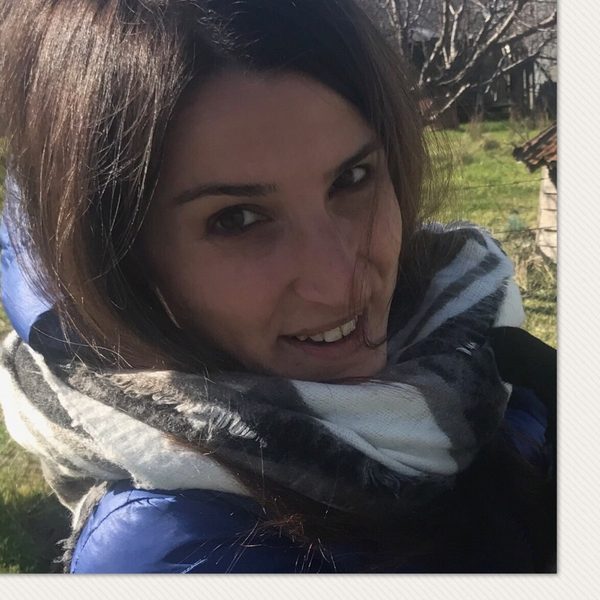
University Master Degree of teaching Italian to ForeignersUniversity bacherloo degree in Foreign Languages and cultures · Master University of Italian teaching
Creative Italian Teacher with Masters in Teaching Italian as a foreign language, from the Tuscan countryside. Turn your Italian journey into a story worth telling!
Specialties
University Master Degree of teaching Italian to ForeignersUniversity bacherloo degree in Foreign Languages and cultures · Master University of Italian teaching
Creative Italian Teacher with Masters in Teaching Italian as a foreign language, from the Tuscan countryside. Turn your Italian journey into a story worth telling!
Specialties


Master Degree · DITALS (Teaching Italian to foreigh people)Neurolanguage Coach (accredited by the International Coach Federation ICF)
Italian, Spanish
Specialties
Master Degree · DITALS (Teaching Italian to foreigh people)Neurolanguage Coach (accredited by the International Coach Federation ICF)
Italian, Spanish
Specialties
Firenze — culture & language
5 things every Fiorentino learner should know
Five anchors a Florentine tutor returns to in the first lessons, because each one reframes what the dialect is and how it relates to the standard Italian most students arrive with. Screenshot to share.
-
01
La gorgia toscana
The aspiration of intervocalic C, T, and P into fricatives. Florentine la hasa for standard la casa, la Hoha-Hola for la Coca-Cola, poho for poco. The single most recognizable Tuscan phonological marker and the one that immediately distinguishes a Florentine from any other Italian speaker. Structural, not casual.
e.g. Vorrei una Hoha-Hola, hon il ghiaccio.
-
02
Icché?
The everyday Florentine word for "what," used where standard Italian reaches for che cosa or cosa. Compact, characteristic, instantly Tuscan. A Florentine asking icché vòi? is asking what you want; the same speaker shifting to che cosa vuoi? has consciously moved into a more formal register.
e.g. Icché tu vòi mangià?
-
03
O bah
The classic Florentine sigh-greeting-conversational-particle. A tonal shrug, the sound of resigned amusement, used the way other cities use boh or vabbè but with a specifically Florentine resonance. There is no clean English or standard Italian equivalent. Tone carries most of the meaning.
e.g. O bah, icché tu vòi che ti dica?
-
04
Lampredotto and the kitchen vocabulary
The Florentine culinary canon is described in its native Tuscan as often as in standard Italian: lampredotto (the city's signature tripe sandwich), peposo, ribollita, panzanella, bistecca alla fiorentina. The local vocabulary around the Tuscan kitchen carries cultural weight that menu translations flatten, and food-anchored lessons are a popular entry point for both heritage learners and travel-focused students.
e.g. Un panino con il lampredotto, e la salsa verde.
-
05
Living Florentine vs codified Italian
Standard Italian descended from 14th-century literary Florentine, but contemporary Florentine has continued evolving for seven centuries while the codified standard held more still. The modern Florentine of 2026 is neither the dictionary Italian nor Dante's Florentine. The gap between living dialect and codified standard is the central pedagogical fact of Florentine coaching.
e.g. Dante wrote a Florentine the Crusca codified; Florentines have kept changing it since.
About Fiorentino
The dialect that became Italian, and kept going
Fiorentino (Florentine) occupies a position no other Italian regional variety holds: the dialect that became the basis of standard Italian. In the 13th and 14th centuries, the Florentine of Dante, Petrarch, and Boccaccio carried such literary prestige that by the time the Accademia della Crusca was founded in Florence in 1583, the codification of Italian as a national literary language had already settled on the Tuscan-Florentine model. Manzoni's mid-19th-century decision to revise I promessi sposi by, in his famous phrase, "rinsing his clothes in the Arno" (rewriting the prose into a refined contemporary Florentine) cemented the relationship between literary Italian and the speech of Florence. Modern standard Italian is essentially codified 14th-century literary Florentine with seven centuries of evolution layered on top. Which means standard Italian today is no longer identical to what Florentines actually speak. Fiorentino has kept moving while the codified standard held more still, and the gap between the two is now the subject of this page.
The most famous feature of contemporary Florentine speech is the gorgia toscana: the aspiration of intervocalic voiceless stops (the C, T, and P sounds) into fricatives. So la casa becomes la hasa with the C reduced to a soft H sound, la Coca-Cola becomes the canonical Florentine joke la Hoha-Hola, and standard Italian poco becomes Florentine poho. The gorgia is the single most recognizable Florentine phonological marker and the one that immediately distinguishes a Florentine from a Roman, Milanese, or Neapolitan speaker on first sentence. Linguistically the gorgia is a substrate feature, debated to derive either from Etruscan or from an internal Tuscan development; either way it is structural to the dialect and not optional. The neighboring Sienese, Pisan, and Aretino Tuscan varieties share the gorgia to varying degrees, with their own additional features, and tutors will calibrate to whichever Tuscan variety you actually need.
The lexical layer where Fiorentino diverges from standard Italian is wider than most learners expect. O bah as the all-purpose Florentine sigh-greeting-conversational-particle. Icché for the standard che cosa or cosa ("what"). Ganzo for "cool" or "impressive," a Florentine word that traveled into the broader Italian colloquial register. Boia as an intensifier in the lower registers. The diminutive system runs hot in Florentine speech, with affectionate and dismissive diminutives layered together in ways the codified standard does not always capture. The food-cultural vocabulary around the Tuscan kitchen (lampredotto, peposo, ribollita, panzanella, the entire bistecca alla fiorentina tradition) lives in Fiorentino as often as in standard Italian. The local university and contemporary urban registers add their own contemporary slang layer on top of the older Florentine stratum. Reference works from Gianfranco Folena, Giovanni Nencioni, and the broader Accademia della Crusca's ongoing lexicographic projects document this variation in scholarly detail.
For students approaching Florentine, the central pedagogical question is what you are actually trying to learn. A traveler in Florence who wants to function past tourist Italian benefits from learning the everyday Florentine vocabulary, the gorgia, and the cadence that makes "speaking Italian like a Florentine" a real if subtle skill. An actor preparing a Tuscan-set role needs script-led phonetic mapping, register calibration, and the dialect-coaching method that our dialect coaching for actors roster handles. A heritage learner with Florentine family roots is usually rebuilding a specific generational register, the Florentine of grandparents and older relatives, which carries vocabulary and idiom contemporary younger Florentines no longer use every day. A literary student reading Dante, Boccaccio, or Manzoni is doing historical-linguistic work that uses the standard Italian foundation to access older Florentine via philological tools. Tell your tutor which you need at the trial, and the curriculum builds from there.
The gorgia toscana deserves its own paragraph because it is the feature that catches the most learners. The aspiration is not a casual matter of mumbling; it is a systematic phonological rule that applies to the voiceless stops in specific positions and not in others. Initial-position consonants and consonants in stressed syllables typically resist the rule, while intervocalic and post-tonic consonants take the fricative. Strong applications of the gorgia produce sentences like "voglio una hoha-hola, hon il ghiaccio" instead of "voglio una Coca-Cola, con il ghiaccio." Lighter applications, common in educated urban Florentine, soften the C, T, and P without fully fricating them. The dialect coaching here is precise: the rule has to be understood structurally, then applied selectively to match the register the speaker is aiming for. Over-application sounds like caricature; under-application strips the dialect of its most identifying marker. Florentine actors and dialect coaches drill this systematically, and the lessons replicate that discipline.
A few honest tutor observations on what tends to trip students up with Florentine. The most common surprise is how different living Florentine actually is from the standard Italian students arrive expecting. The relationship between the two is asymmetric: standard Italian descended from Florentine, but contemporary Florentine has continued to evolve, so the modern Florentine of 2026 is not the dictionary Italian and is not the 14th-century literary Florentine of Dante either. Regional variation inside Tuscany itself is the next surprise. Pisano, Senese, Aretino, and the rural Tuscan varieties all share core Tuscan features but diverge in lexicon, gorgia application, and cadence enough that Florentines hear them as different on first sentence. Beyond that, social-register calibration matters more than learners initially realize: educated urban Florentine sits closer to standard Italian than working-class Florentine, and a learner who absorbs only the harder dialect markers without the register calibration will sound like a tourist trying to perform locality rather than someone who actually lives in the city.
Between lessons the immersion path is well-paved because Florence is one of the most documented cities on earth. The film tradition (Vittorio De Sica's Two Women, Roberto Benigni's La vita è bella and his Tuscan comedy work more broadly, the contemporary Tuscan-set Italian cinema) gives the ear hours of natural Tuscan speech. The Accademia della Crusca's public-facing scholarly work on Florentine and on standard Italian is unusually accessible online and is the standard reference for serious students. Florentine theater and the local university register supply contemporary spoken material. For broader Italian foundations, the 1,000 most common Italian words list is the standard supplement, and the guide to Italy's regional languages places Florentine in the broader Italian linguistic context.
The Strommen Fiorentino roster includes Florence-born native speakers across age and neighborhood backgrounds, Italian-language tutors with formal Tuscan dialectological training, and dialect coaches with experience on Tuscan-set theatrical and film productions. Each tutor's bio specifies background, register specialty, and the student profile they fit best. You can match yourself to a Florence native for deepest grounding, a dialect coach for performance work, or a teacher comfortable bridging standard Italian and Florentine for learners building both at once. For broader Italian programs, the Business Italian and Italian academic writing specialties cover non-dialect needs, and the Italian course page shows the broader family of Italian offerings. Or just browse the full tutor directory and book a trial.
What you'll cover
Lessons & classes tailored to Fiorentino
The gorgia toscana, drilled structurally
The aspiration of intervocalic voiceless stops as a systematic phonological rule, not a casual softening. When to apply it, when to resist it, and how to calibrate strength to register. Targeted drilling with native audio, recorded student feedback, and side-by-side comparison with the speaker's existing standard Italian production. The single most identifiable Tuscan marker, taught as a discipline rather than a stylistic choice.
Lexicon and the Florentine register system
The Florentine vocabulary that diverges from standard Italian: o bah, icché, ganzo, the diminutive and intensifier systems, the contemporary urban slang layer, and the older Florentine stratum that older speakers still produce. Educated urban Florentine versus working-class Florentine versus the harder neighborhood register, with explicit work on which fits which context.
The Tuscan spectrum: Florence, Pisa, Siena, Arezzo
Florentine taught alongside its closest Tuscan siblings: Pisano, Senese, Aretino, and the rural Tuscan varieties. The shared core features (the gorgia in varying strengths, the Tuscan lexicon, the Tuscan cadence) and the city-by-city divergences in vowel quality, vocabulary, and idiom. Lessons commit to one subdialect from the start rather than trying to hold a generic pan-Tuscan register that no actual speaker produces.
Performance work and heritage reconnection
Script-led Florentine coaching for actors preparing Tuscan-set theatrical and film roles, with pairing into the Italian dialect coaching for actors roster as appropriate. Heritage-learner work for students rebuilding the Florentine of grandparents and older relatives, with attention to generational and neighborhood register specifics. Literary work for readers approaching Dante, Boccaccio, or Manzoni through the dialect rather than only through standard Italian.
FAQ
About Fiorentino lessons & classes
Is Fiorentino a dialect of Italian or a separate language?
A regional variety of Italian, in the same family as the standard language and considered the historical base of it. Florentine and standard Italian are mutually intelligible and share a grammar, a literary tradition, and a foundational vocabulary. The differences are at the phonological and lexical level, and they are large enough that an educated Italian speaker without Florentine exposure will catch only part of a fast in-group Florentine conversation, but not different enough to count as a separate language the way Sicilian or Venetian do.
If standard Italian comes from Florentine, can I just learn standard Italian and call it the same thing?
No. Standard Italian is codified 14th-century literary Florentine with seven centuries of evolution layered on top, and contemporary Florentine has continued to diverge from the codified standard the whole time. Studying standard Italian gets you a foundation that maps well onto modern Florentine grammar and core vocabulary, but it will not teach you the gorgia, the Florentine lexicon, the contemporary register system, or the cadence that makes living Florentine its own thing. Most students arrive with standard Italian as the foundation and build Florentine on top.
What is the gorgia toscana, and is it hard to learn?
The gorgia is the aspiration of intervocalic C, T, and P into fricatives, producing the classic Florentine "hoha-hola" for "Coca-Cola." It is a structural phonological rule, not a casual softening, and it requires explicit drilling because English-speaking and Italian-speaking learners alike tend to either under-apply it (sounding non-Florentine) or over-apply it (sounding like caricature). With targeted coaching, most students get the rule clean in a few weeks. Sounding effortless with it takes longer.
Which Tuscan should I learn: Florentine, Pisan, Sienese, something else?
Depends on your reason for studying. Florentine is the prestige variety, the historical base of standard Italian, and the natural choice for most students. Pisan, Sienese, and Aretino are real subdialects with their own profiles and may fit better if you have family roots, a research interest, or a script set in those regions. Tutors teach the variety they speak natively, and if you have a specific tie we will match accordingly.
I am an actor preparing a Tuscan role. Is this the right page?
Either this page or the dedicated Italian dialect coaching for actors page works, depending on whether the work is script-led performance prep or broader Tuscan-dialect study. For role-specific Florentine, with on-set support and audition prep, the dialect coaching page is the right starting point. For broader Florentine study with optional performance elements, this page fits. The rosters overlap; tell us in the trial which you need.
Can I take Fiorentino lessons online or only in person?
Both. Most of our Florentine tutors teach online via Zoom or Jitsi, available globally. Several also teach in person where they are based. The booking widget on each tutor's profile shows their available formats. Online is the default for most students.
What does a Fiorentino lesson actually look like?
One-on-one and built around your goals. A typical hour might include 15 minutes of conversation in Italian calibrated toward Florentine, 15 minutes targeted on the gorgia and other phonological features, 15 minutes on Florentine vocabulary and the register system, and 15 minutes of practice with a Tuscan source (a film clip, a literary passage, a recipe text). No two students get the same lesson. Your tutor sets concrete weekly goals at the trial and we adjust based on what is working.
Ready for Fiorentino lessons or classes?
Book a free 30-minute trial with one of our personally vetted tutors. Private lessons or small-group classes — your choice.