



Personally vetted instructors
French for Beginners tutors, lessons & classes
Bonjour The first French word every beginner learns, and the one French politeness is built on.
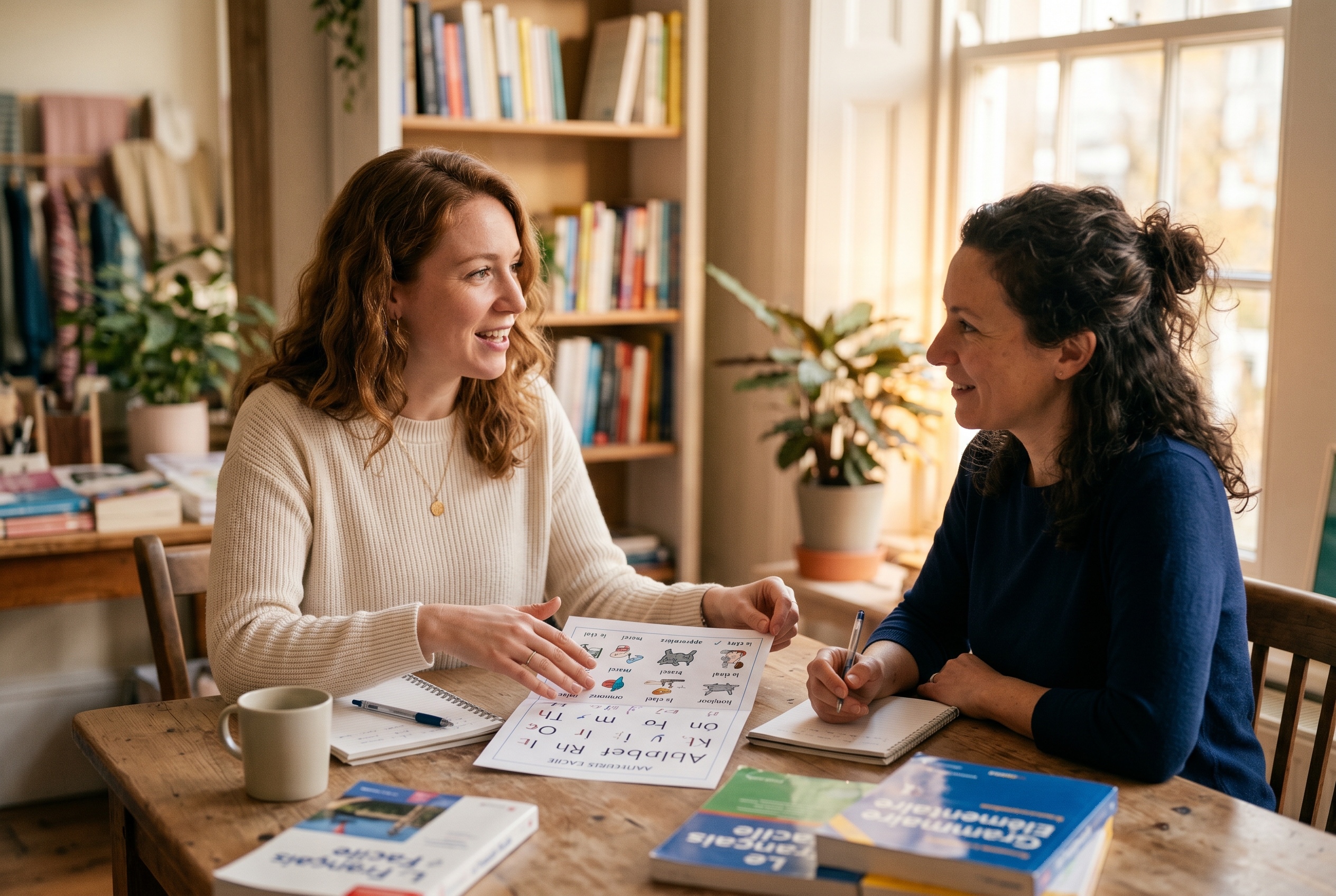
Personally vetted French tutors who specialize in absolute beginners. Patient, methodical, and calibrated to get you from zero to your first real French sentences without the textbook overwhelm.
Your instructors
French for Beginners tutors for private lessons & classes
Strommen has French tutors who specialize in working with absolute beginners — the moment when patience, pronunciation modeling, and steady vocabulary building matter more than anything else. Every tutor below was met and vetted by us in person or via thorough video interview. No marketplace. No automated profile-creation. Real teachers with real backgrounds in adult beginner instruction.
Filter by location, age, or price. Then book a 30-minute free trial.
Below are the Strommen tutors who specialize in teaching French to absolute beginners. Photos, ratings, and rates are real. Click any card to read their bio and book a free 30-minute trial.
I want to learn…
Every tutor, personally met. — founder-vetted since 2006, in Los Angeles and online worldwide.
Get a personalized plan
Pick your language — a language advisor will match you with the right tutor and map out your path.

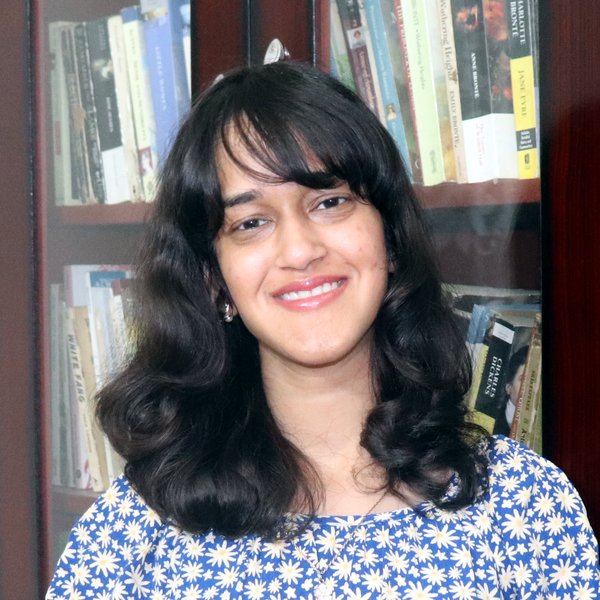


Bachelor of Business Administration (specialized in International Relations) · DELF Examiner, DALF C2, Goethe Zertifikat C1/B2, DELE B1
Join me on your language learning adventure!
Personally vetted · Strommen’s note
Bangalore-based, Yvanka teaches French and German after years at Alliance Française. She started, unusually, as an English teacher in France.
Specialties
Also speaks: English, Italian, Spanish
Bachelor of Business Administration (specialized in International Relations) · DELF Examiner, DALF C2, Goethe Zertifikat C1/B2, DELE B1
Join me on your language learning adventure!
Specialties
I also speak: English, Italian, Spanish
Personally vetted · Strommen’s note
Bangalore-based, Yvanka teaches French and German after years at Alliance Française. She started, unusually, as an English teacher in France.

Bachelor of Fine Arts, Master of Fine Arts and Research
French and English teacher with University level teaching Experience - Top Rated Instructor
Personally vetted · Strommen’s note
Erin teaches French and English with university-level credentials, and her specialties stretch from accent work to art history to college prep.
Specialties
Bachelor of Fine Arts, Master of Fine Arts and Research
French and English teacher with University level teaching Experience - Top Rated Instructor
Specialties
Personally vetted · Strommen’s note
Erin teaches French and English with university-level credentials, and her specialties stretch from accent work to art history to college prep.
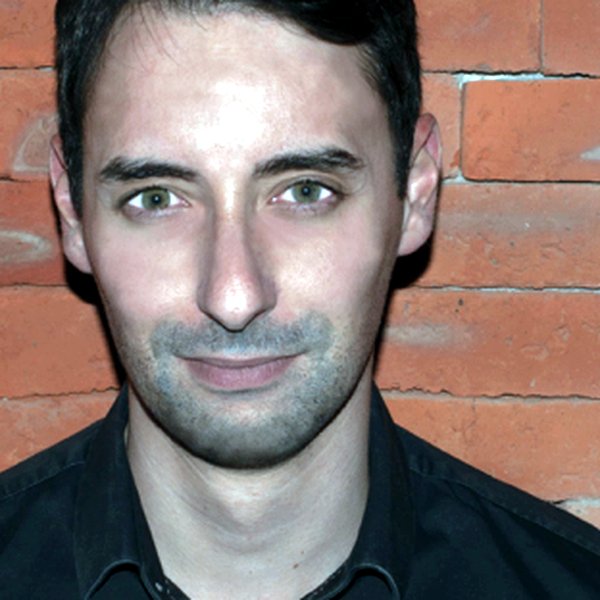
Master's Degree In Business Administration. Private Pilote LicenceI have studied in France/Argentina/Mexico · Master's Degree In Business Administration. Private Pilote LicenceI have studied in France/Argentina/Mexico
Achieve Fluency with a Parisian Tutor: Rigorous Training and Fun Lessons!
Personally vetted · Strommen’s note
MBA-trained, Othman teaches Parisian French with real rigor. Lessons stay structured without losing the fun.
Specialties
Master's Degree In Business Administration. Private Pilote LicenceI have studied in France/Argentina/Mexico · Master's Degree In Business Administration. Private Pilote LicenceI have studied in France/Argentina/Mexico
Achieve Fluency with a Parisian Tutor: Rigorous Training and Fun Lessons!
Specialties
Personally vetted · Strommen’s note
MBA-trained, Othman teaches Parisian French with real rigor. Lessons stay structured without losing the fun.

Bachelor degree · French literature / philosophy and foreign lanaguages
Bonjour! Experienced French tutor offering dynamic lessons tailored to your needs. Let's unlock French fluency together
Personally vetted · Strommen’s note
Twenty years into teaching French, Stephanie still runs lessons a la carte: fast, simple, built around exactly what you need.
Specialties
Bachelor degree · French literature / philosophy and foreign lanaguages
Bonjour! Experienced French tutor offering dynamic lessons tailored to your needs. Let's unlock French fluency together
Specialties
Personally vetted · Strommen’s note
Twenty years into teaching French, Stephanie still runs lessons a la carte: fast, simple, built around exactly what you need.

Masters of Fine Art, Bachelor in Foreign Language and Literature. · Over 2,000 hours of one‑on‑one teaching experience. Published literary translator, with work reviewed in Kirkus Reviews, Times Literary Supplement, Art Book D.A.P., and multiple international journals.
Master English, French & Italian with a Published Literary Translator
Personally vetted · Strommen’s note
A published literary translator, Colombina teaches English, French, and Italian, plus SAT prep, college essay coaching, and learning-disability support.
Specialties
Masters of Fine Art, Bachelor in Foreign Language and Literature. · Over 2,000 hours of one‑on‑one teaching experience. Published literary translator, with work reviewed in Kirkus Reviews, Times Literary Supplement, Art Book D.A.P., and multiple international journals.
Master English, French & Italian with a Published Literary Translator
Specialties
Personally vetted · Strommen’s note
A published literary translator, Colombina teaches English, French, and Italian, plus SAT prep, college essay coaching, and learning-disability support.
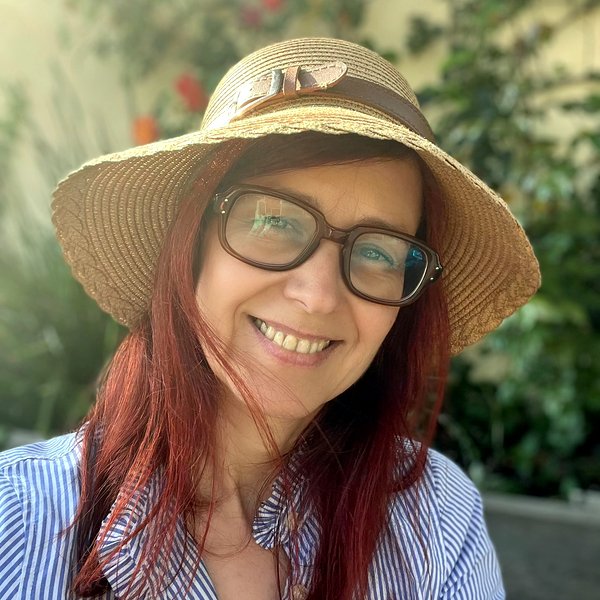
BA in Modern Literature, BA in Music · Orff Music Teaching Certification
French teacher from France. Native speaker with 25+ years of teaching experience and a background in accent coaching, translation and interpretation.
Personally vetted · Strommen’s note
Helene has spent fourteen years working as an accent coach, translator, and French teacher, making formal French sound like the student's own voice.
Specialties
BA in Modern Literature, BA in Music · Orff Music Teaching Certification
French teacher from France. Native speaker with 25+ years of teaching experience and a background in accent coaching, translation and interpretation.
Specialties
Personally vetted · Strommen’s note
Helene has spent fourteen years working as an accent coach, translator, and French teacher, making formal French sound like the student's own voice.

Licence LEA Anglais Allemand · Licence LEA Anglais Allemand
Enjoy French !
Personally vetted · Strommen’s note
Isabelle has spent ten-plus years teaching French to everyone from opera singers to corporate teams. Her approach is built on making grammar understood, not just memorized.
Specialties
Licence LEA Anglais Allemand · Licence LEA Anglais Allemand
Enjoy French !
Specialties
Personally vetted · Strommen’s note
Isabelle has spent ten-plus years teaching French to everyone from opera singers to corporate teams. Her approach is built on making grammar understood, not just memorized.
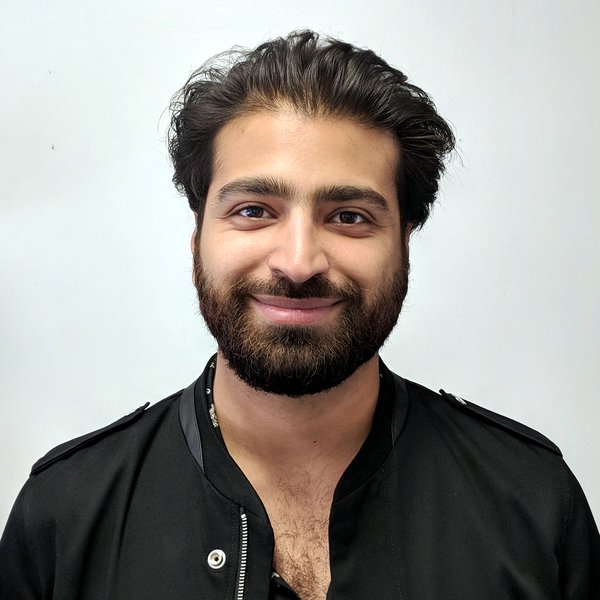
Bachelor's Degree in History, Panthéon-Sorbonne University, Paris- Bachelor's Degree in Information and Communication Sciences, Sorbonne Nouvelle University, Paris- Master's Degree in Cultural Journalism, Sorbonne Nouvelle University, Paris.
French Tutor in Paris!
Personally vetted · Strommen’s note
Paris-based and thoroughly conversation-driven, Nima keeps French lessons lively enough that staying focused for the full hour isn't a struggle.
Specialties
Bachelor's Degree in History, Panthéon-Sorbonne University, Paris- Bachelor's Degree in Information and Communication Sciences, Sorbonne Nouvelle University, Paris- Master's Degree in Cultural Journalism, Sorbonne Nouvelle University, Paris.
French Tutor in Paris!
Specialties
Personally vetted · Strommen’s note
Paris-based and thoroughly conversation-driven, Nima keeps French lessons lively enough that staying focused for the full hour isn't a struggle.
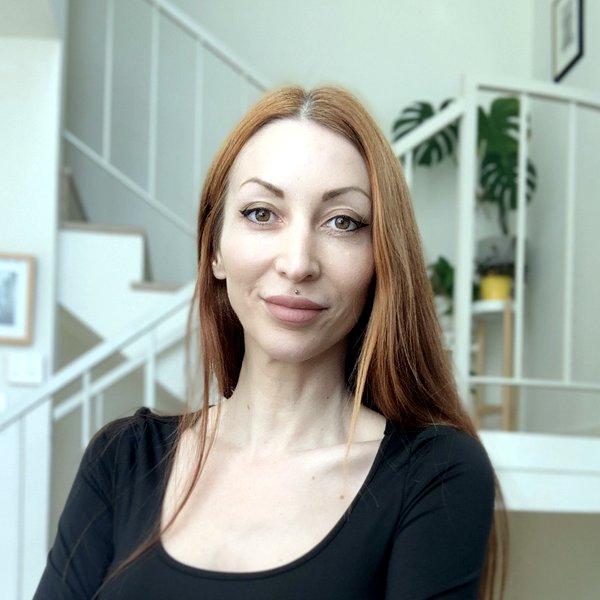
Foreign Languages bachelor degree (3 years university degree in France)
University of Bordeaux graduate teaching French in Hollywood
Personally vetted · Strommen’s note
University of Bordeaux-trained and teaching out of Hollywood, Marie mixes grammar and reading, then keeps it loose enough to not feel like homework.
Specialties
Also speaks: English
Foreign Languages bachelor degree (3 years university degree in France)
University of Bordeaux graduate teaching French in Hollywood
Specialties
I also speak: English
Personally vetted · Strommen’s note
University of Bordeaux-trained and teaching out of Hollywood, Marie mixes grammar and reading, then keeps it loose enough to not feel like homework.
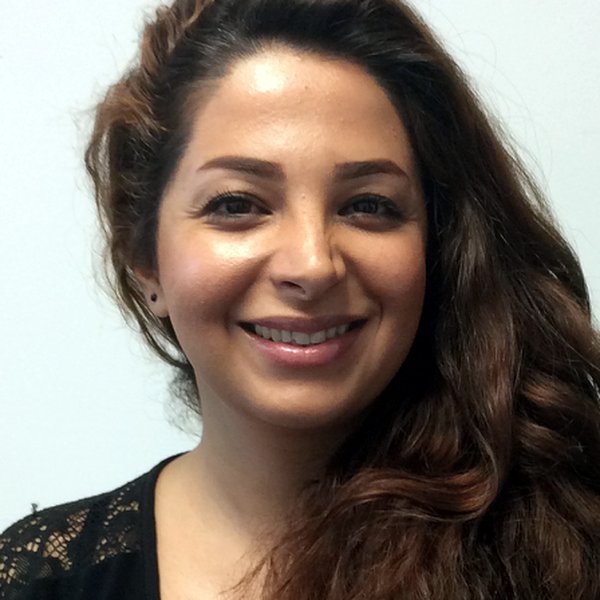

Francais langue seconde university of Montreal (CANADA), Le certificat La traduction de la langue francaise Allameh tabatabaei (IRAN), Le baccalaureat
Learn French and Farsi with an Experienced tutor
Personally vetted · Strommen’s note
Université de Montréal-trained in French as a second language and fluent in Farsi, Maryam built her own interactive life-simulation game for lessons.
Specialties
Francais langue seconde university of Montreal (CANADA), Le certificat La traduction de la langue francaise Allameh tabatabaei (IRAN), Le baccalaureat
Learn French and Farsi with an Experienced tutor
Specialties
Personally vetted · Strommen’s note
Université de Montréal-trained in French as a second language and fluent in Farsi, Maryam built her own interactive life-simulation game for lessons.
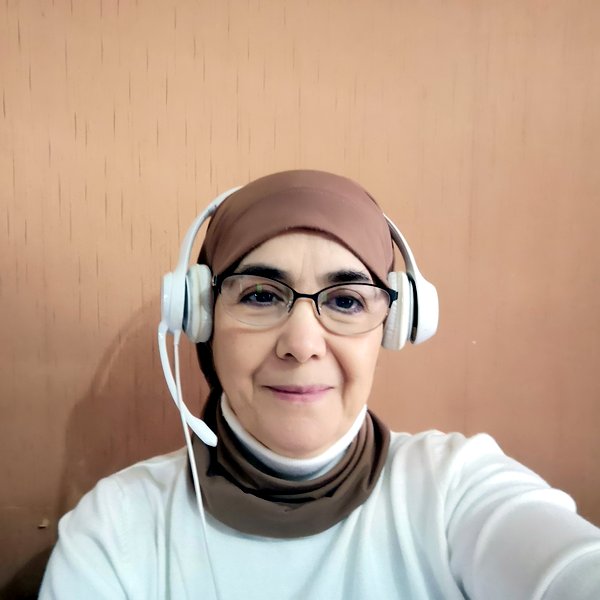

University Degree
Helping students learn with clarity, confidence, and motivation
Personally vetted · Strommen’s note
Quebec-based, Rahma teaches Arabic and French together, four Maghreb dialects covered, Algerian through Libyan.
Specialties
Also speaks: English
University Degree
Helping students learn with clarity, confidence, and motivation
Specialties
I also speak: English
Personally vetted · Strommen’s note
Quebec-based, Rahma teaches Arabic and French together, four Maghreb dialects covered, Algerian through Libyan.
Bachelors degree in business Masters in logistics · TEFL Translation
Certified French & Spanish Language Coach | Business, Exams, & Conversational Mastery
Personally vetted · Strommen’s note
A Berlitz-trained language consultant, marielyne teaches English, French, and Spanish, built for business communication and exam prep specifically.
Specialties
Bachelors degree in business Masters in logistics · TEFL Translation
Certified French & Spanish Language Coach | Business, Exams, & Conversational Mastery
Specialties
Personally vetted · Strommen’s note
A Berlitz-trained language consultant, marielyne teaches English, French, and Spanish, built for business communication and exam prep specifically.

Premiers mots — first foundations
5 French foundations every beginner needs in the first month
These are the building blocks that separate a beginner making real progress from one who's spinning on Duolingo. Screenshot for the trial lesson.
-
01
Le et la
Every French noun is either masculine (le) or feminine (la), and the article is part of the noun, not a separate decision. There are loose patterns (most -tion and -ie nouns are feminine; most -age and -isme nouns are masculine), but many common words have to be memorized. Good tutors teach articles with vocabulary from day one, never in isolation.
e.g. Le livre, la table, le pain, la voiture, le chat.
-
02
Les lettres muettes
Silent letters everywhere. Final consonants of most French words are not pronounced (petit, chat, vous). The final e is almost always silent. Entire syllables drop in casual speech. This is why French spelling and French pronunciation feel like two different systems, and why reading French does not teach you to hear French.
e.g. Petit chat (you say "puh-TEE shah", not "puh-TEET shaht").
-
03
La liaison
French ties consecutive words together when one ends in a usually-silent consonant and the next begins with a vowel. Les amis becomes lesami. Nous avons becomes nousavons. Mon ami becomes monami. This changes the rhythm of spoken French at the word level and is one of the first things a tutor will help you hear.
e.g. Les_amis arrivent_à six_heures.
-
04
Tu ou vous
Use tu with friends, family, children, and anyone you've been invited to switch with. Default to vous with strangers, in shops, with anyone older, and in any first professional contact. The shift to tu is a real social event, not a casual upgrade. As a beginner, default to vous in any first encounter; better slightly more polite than slightly rude.
e.g. Bonjour Madame, vous avez l'heure ? (stranger, <em>vous</em>) — Salut maman, tu as l'heure ? (mother, <em>tu</em>)
-
05
Bonjour, merci, au revoir
The four words of French daily life: bonjour on entering, merci when you receive, au revoir on leaving (even from a shop where you bought nothing), pardon when you need to get past or interrupt. Not optional politeness. Skipping bonjour at the shop reads as actively rude to French speakers. These four words pay off in every interaction afterward.
e.g. « Bonjour ! » « Bonjour Monsieur. » « Une baguette, s'il vous plaît. » « Voilà. » « Merci, au revoir ! »
About French for Beginners
From zero to your first real French sentence
Starting French from zero is a more rewarding project than most American adult learners expect, and a more humbling one. French is a Romance language descended from Vulgar Latin, with substantial cognate overlap with English thanks to centuries of borrowing in both directions. You arrive at lesson one already knowing thousands of French words you didn't realize you knew: restaurant, café, menu, ballet, champagne, boutique, fiancé, déjà vu, rendez-vous, café au lait. Once you start reading, the vocabulary recognition runs even deeper, with thousands more academic and technical terms that English imported wholesale from French during the medieval and Renaissance periods. The cognates are a real motivational bridge for the first month, and a good tutor leans into them rather than pretending you're starting from absolute nothing.
The humbling part is pronunciation. French sounds do not map cleanly onto English. The nasal vowels (vin, vent, vont, un) have no English equivalents and the differences between them are meaningful, not stylistic. The front rounded vowels (tu versus tout, peu versus peux) require a mouth shape American English does not use. The French R sits at the back of the throat and dries to a soft scraping sound, nothing like the Spanish or Italian rolled R that many beginners default to. Silent letters are everywhere: the final consonants of most French words are not pronounced (petit, chat, vous), the final e is almost always silent, and entire syllables drop in casual speech. Liaison rules tie consecutive words together (les amis becomes lesami, nous avons becomes nousavons), changing the rhythm of the language at the word level. A tutor working with you live for an hour catches these immediately. An app cannot.
The second beginner foundation is grammatical gender. Every French noun is either masculine or feminine, and the article in front of it (le, la, un, une) signals which. There are loose patterns that help: most nouns ending in -tion, -ie, or -ette are feminine; most ending in -isme, -age, or -ment are masculine. Many common words still have to be memorized. Le livre (book), la table (table), le pain (bread), la voiture (car). The good news for beginners is that getting the gender wrong rarely blocks comprehension. The bad news is that fluent French eventually requires getting it right because so much else (adjective agreement, past participle agreement, pronoun choice) depends on it. We drill articles with vocabulary from day one rather than introducing them later.
The third foundation is the present tense of the three main verb groups. The -er verbs (parler, aimer, regarder) cover roughly 90 percent of French verbs and follow a predictable pattern. The -ir verbs (finir, choisir, réussir) follow a second pattern. The -re verbs (vendre, attendre, répondre) follow a third. Layered on top are the irregular powerhouses: être (to be), avoir (to have), aller (to go), faire (to do/make), pouvoir (to be able to), vouloir (to want), devoir (to have to), savoir (to know), venir (to come), prendre (to take). These ten verbs alone unlock an enormous percentage of basic French sentences, and lessons frontload them aggressively in the first month. Once être, avoir, aller, and faire are automatic, the rest of the language has somewhere to live.
The fourth foundation is the polite-versus-casual pronoun choice: tu versus vous. French is sharper on this than English, looser than German, and stricter than Italian in some contexts. Use tu with friends, family, children, pets, and anyone you've been explicitly invited to switch with. Default to vous with strangers, in shops, with anyone older, with anyone in a service role, and in any first professional contact. The shift to tu is a real social event, not a casual upgrade, and initiating it yourself can read as presumptuous. We teach beginners to default to vous in any first encounter and switch to tu only when invited. Better slightly more polite than slightly less.
The fifth foundation is the bonjour rule, which is more cultural than grammatical and matters more than beginners expect. Bonjour at the start of every shop, restaurant, hotel, or service interaction is not optional French politeness. Skipping it reads as actively rude, in a way that closes doors instantly. Merci when you receive something. Au revoir on the way out, even from a shop where you bought nothing. Pardon when you need to get past someone or interrupt. These four words are the social oil of French daily life and ignoring them is the single fastest way for a French speaker to register you as a tourist rather than a respectful visitor. The grammar can take years. These four words you can learn in five minutes and they pay off in every interaction afterward.
A beginner French lesson in this specialty typically structures around vocabulary expansion, pronunciation work, and basic conversation. A typical first month covers greetings and farewells, introducing yourself, numbers 0 to 100, days of the week and months, basic family and food vocabulary, the present tense of être, avoir, and several -er verbs, the polite phrases for everyday interactions, and roughly 150 to 200 high-frequency words. By month three, most beginners can hold a basic conversation about themselves, their family, their work, and their day, plus order food, ask directions, and navigate a shop. By month six, conversational ease at A2 level is realistic for committed students with weekly lessons and 20 to 30 minutes of daily exposure to French media. Many beginners also pick up a copy of the 100 most frequently used French words for between-lesson reinforcement.
French is medium-difficulty for English speakers, harder than Spanish or Italian in some specific ways (pronunciation, silent letters, liaison rules), easier than German in others (case system, word order). The Foreign Service Institute places French in Category I, the easiest tier for English speakers, alongside Spanish, Italian, Portuguese, and Romanian, with an estimated 600 to 750 hours to professional working proficiency. This estimate assumes a full-time immersive program, not weekly lessons; for most adult learners working full jobs, the realistic timeline to comfortable conversational French (B2 level) is two to four years of consistent study. The first six months are typically the steepest learning curve, after which the gains compound. Knowing that the early stretch is the hardest helps most beginners push through the inevitable confidence dip around month two.
Between lessons, beginner-friendly resources include the Duolingo French course (fine for warm-up reps, not a substitute for real speaking practice), the Lingoda or Babbel structured course (more substance than Duolingo), the Coffee Break French podcast (genuinely well-paced for beginners), the News in Slow French podcast (perfect for A2 to B1), and short clips from French children's TV (Trotro, T'choupi, Petit Ours Brun) where the visual context fills vocabulary gaps. The Strommen French podcast roundup is the place to start. Disney films dubbed in French are surprisingly useful at the late-beginner stage because the dialogue is simple and you already know the plot. For grammar reference, the website Lawless French is free and excellent. The DELF A1 and A2 are the standard beginner French certifications if you want a measurable goal; our DELF specialty page covers the prep family.
The Strommen French for Beginners roster includes native French teachers from across France (Paris, Lyon, Marseille, Bordeaux, Lille, the Riviera, the southwest), francophone tutors from Belgium, Switzerland, Quebec, and francophone Africa, plus longtime French-American bilinguals based across the United States who specialize in beginner instruction. Beginner-specific teaching is a real skill, separate from advanced teaching: the patience to repeat le and la for the tenth time, the ear for the specific pronunciation point a student is missing, the instinct for when to push vocabulary versus consolidate. Each tutor's bio specifies their background and which student profile they fit best (curious adult, exam-track beginner, family-prep, professional refresher). Pricing reflects experience. For related French specialties as you progress, our Conversational French, Parisian French, and French classes pages cover the broader family.
Lessons calibrate to your specific situation. A leisurely beginner pace for someone curious about French heritage looks different from an accelerated beginner sprint for someone moving to Paris in three months. Both look different from beginner DELF A1 prep for someone working toward a university admission requirement. Each lesson is one-on-one, your tutor plans around your week, and the trial is free. Browse the full tutor list, pick a tutor whose teaching style feels approachable, and book a 30-minute trial. The hardest part of starting French from zero is the part before you book the trial. Once a real teacher is on the other end of the call, the rest is just consistent hours.
What you'll cover
Lessons & classes tailored to French for Beginners
Pronunciation foundations from day one
The nasal vowels (vin, vent, vont, un), the front rounded vowels (tu versus tout), the famous French R at the back of the throat, the silent-letter rules, and the liaison patterns. Lessons include short listening-and-repeat drills with native audio so your ear builds alongside your speaking. Beginner French pronunciation is best learned correctly the first time, not corrected later, which is why we frontload it.
Gender and article work, handled the right way
We teach articles with vocabulary from day one: never livre, always le livre. Patterns where they exist (most -tion, -ie, -ette nouns are feminine; most -age, -isme, -ment nouns are masculine) get explained and drilled. The chunk of words that just have to be memorized gets folded into your active vocabulary through repetition, not flashcards in isolation. Most beginners reach reliable gender instinct by month four to six.
The 10 verbs that unlock everything
Être, avoir, aller, faire, pouvoir, vouloir, devoir, savoir, venir, prendre. The ten irregular powerhouses that show up in the majority of French sentences. Once these are automatic in the present tense, regular -er verbs slot in beside them with very little additional friction. Lessons frontload these aggressively in the first month and build the rest of the verb system on top.
Beginner-friendly between-lesson resources
Your tutor will recommend specific resources calibrated to your level: Duolingo or Babbel for warm-up reps, the Coffee Break French podcast for slow listening, News in Slow French at A2-B1, short French children's TV clips for kid-level immersion, the Lawless French website for free grammar reference. Twenty to thirty minutes of daily exposure outside lessons is the single biggest accelerator for beginners.
FAQ
About French for Beginners lessons & classes
How hard is French for English speakers really?
Medium. The Foreign Service Institute places French in Category I, the easiest tier alongside Spanish, Italian, Portuguese, and Romanian, with an estimated 600 to 750 hours to professional working proficiency. For most adults learning part-time, that translates to two to four years of consistent study for comfortable conversational French. Pronunciation is harder than Spanish; grammar is easier than German. The cognate overlap with English gives you a real motivational head start; the silent-letter rules and the nasal vowels are the steepest early hurdles.
What's the difference between le and la, and when do I use which?
Every French noun is grammatically masculine (uses le) or feminine (uses la). Useful patterns: most nouns ending in -tion, -ie, -ette, -eur (for emotions/qualities) are feminine; most ending in -age, -isme, -ment, -eau are masculine. Beyond the patterns, many common words have to be memorized: le livre, la table, le pain, la voiture. Good tutors drill articles together with vocabulary from your first lesson onward, so the gender becomes part of how you store the word.
How long until I can hold a basic conversation in French?
From zero, weekly hour-long lessons plus 20 to 30 minutes of daily exposure (podcasts, apps, French media) typically produces functional A2 conversation within 6 to 9 months. That means introducing yourself, ordering food, talking about your day, basic small talk. Conversational comfort at B1 (the level where you can hold a real if halting conversation about most everyday topics) usually takes another 6 to 12 months at the same pace. Faster timelines are possible with more intensive schedules; slower timelines are normal for learners with less time.
Should I focus on French from France or also learn Quebec or African French?
For most beginners, the European French taught by default in lessons (Parisian or near-Parisian) is the right starting point because it is what French media, French education, and most teaching materials converge on. Quebec French and African French are mutually intelligible with European French but have distinct pronunciations and some vocabulary differences. If you have a specific reason to learn Quebec or African French (family, work, planned move), tell your tutor and we can match you with a tutor from that region. For broader exposure, our Quebec French specialty page covers the North American variant.
What does a typical beginner French lesson look like?
A first-month lesson runs about an hour and typically includes 10 minutes of warm-up greetings in French (even halting), 15 minutes of new vocabulary with pronunciation drill, 15 minutes of grammar in context (a single point introduced through example sentences, not lectured at a board), 10 minutes of listening practice with a short audio clip, and 10 minutes of structured role-play. Homework is light and primarily listening-focused for the first month, with vocabulary review building over time. No two lesson plans are identical; your tutor calibrates based on what's clicking and what isn't.
Is it better to start with apps like Duolingo first and then take lessons?
Apps are a useful warm-up but not a substitute for a real tutor. Duolingo, Babbel, and similar apps build passive recognition vocabulary well; they are weak at producing real conversational ability, accurate pronunciation, and the social calibration around tu versus vous. Most students who start with apps and then move to lessons find they can read more French than they can speak, and lessons quickly close that gap. The best pattern is to use the app for daily 10-minute reps in addition to (not instead of) weekly lessons.
Do I need to know any other Romance language before starting French?
No. English is more than enough background. Cognates between English and French run into the thousands and become useful from day one. Knowing Spanish or Italian gives you a head start on verb conjugation patterns and gender (both also have masculine and feminine nouns), but it can also create interference (Spanish or Italian vocabulary leaking into French sentences). We've taught French beginners with zero Romance language background and consistent success.
What's the trial lesson like for a complete beginner?
30 minutes, free, with the tutor you select. For absolute beginners, the trial is half assessment and half preview: the tutor will introduce themselves in French and English, gauge what you already know (even passive cognate recognition counts), explain the typical first-month roadmap, and answer your questions about lesson cadence and goals. You'll leave with a sense of whether this specific tutor's approach feels right for you. If not, swap is easy and we'll match you to a better fit.
Ready for French for Beginners lessons or classes?
Book a free 30-minute trial with one of our personally vetted tutors. Private lessons or small-group classes — your choice.