



Personally vetted instructors
Romano tutors, lessons & classes
Aho! The Romanesco hail across a piazza or a kitchen — working-class, friendly, instantly recognizable as Roman.
Personally vetted Romano tutors. Lessons in the Roman variety of Italian — Romanesco phonology, vocabulary, and cadence — for travelers, heritage learners, actors, and Italian speakers who want to actually sound like they're from Rome.
Your instructors
Romano tutors for private lessons & classes
Strommen has been teaching Italian since 2006, with a steady stream of Romano students every year: actors preparing Rome-set roles, heritage learners with Roman family, travelers who want to actually fit in past the obvious tourist Italian, and Italian speakers from other regions who've moved to Rome for work. Every tutor below was met and vetted by us in person or via thorough video interview. No marketplace. No automated profile-creation. Real teachers with real backgrounds, which you can read about in their bios.
Filter by location, age, or price. Then book a 30-minute free trial.
Below are the Strommen tutors who specialize in Romano. Photos, ratings, and rates are real. Click any card to read their bio and book a free 30-minute trial.
I want to learn…
Every tutor, personally met. — founder-vetted since 2006, in Los Angeles and online worldwide.
Get a personalized plan
Pick your language — a language advisor will match you with the right tutor and map out your path.

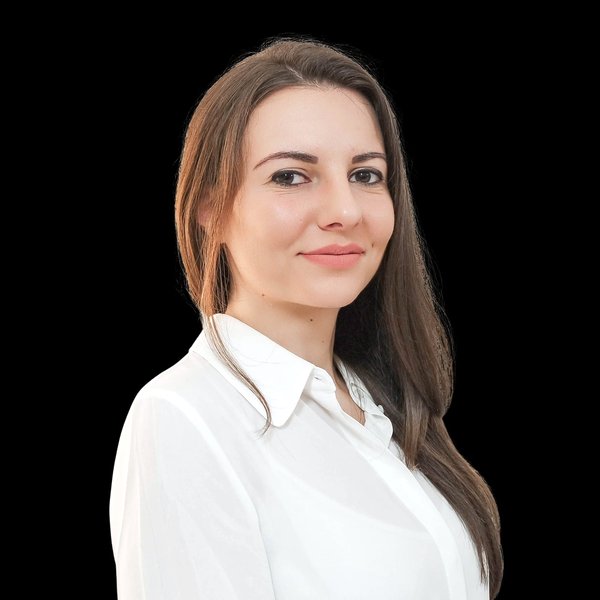


Masters degree in;Lingue, Letterature e Culture Moderne at DAnnunzio University of Pescara, Italy CEDILS at Ca' Foscari University of Venice, Italy · CEDILS at Ca' Foscari University of Venice, Italy - Somministratore CILS
Master Yourself, Master The (Italian) Language!
Personally vetted · Strommen’s note
Martina blends coaching and mentoring into her Italian lessons. The philosophy is to guide a student's own self-learning, not just deliver material.
Specialties
Also speaks: English, Spanish
Masters degree in;Lingue, Letterature e Culture Moderne at DAnnunzio University of Pescara, Italy CEDILS at Ca' Foscari University of Venice, Italy · CEDILS at Ca' Foscari University of Venice, Italy - Somministratore CILS
Master Yourself, Master The (Italian) Language!
Specialties
I also speak: English, Spanish
Personally vetted · Strommen’s note
Martina blends coaching and mentoring into her Italian lessons. The philosophy is to guide a student's own self-learning, not just deliver material.
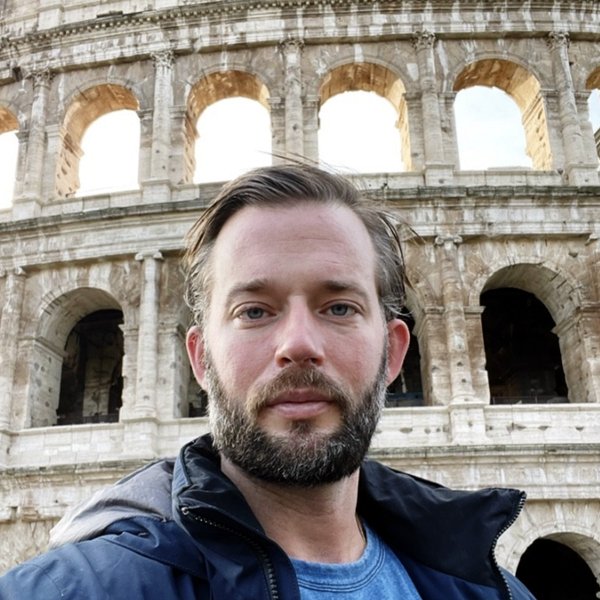


UCLA Bachelor degree
Roman Native Italian Tutor with 20 years Experience, lets speak Italian!
Personally vetted · Strommen’s note
A Rome native who has taught Italian for twenty years, Garrett still takes on a handful of students personally when his schedule allows.
Specialties
Also speaks: French, Japanese, Spanish
UCLA Bachelor degree
Roman Native Italian Tutor with 20 years Experience, lets speak Italian!
Specialties
I also speak: French, Japanese, Spanish
Personally vetted · Strommen’s note
A Rome native who has taught Italian for twenty years, Garrett still takes on a handful of students personally when his schedule allows.
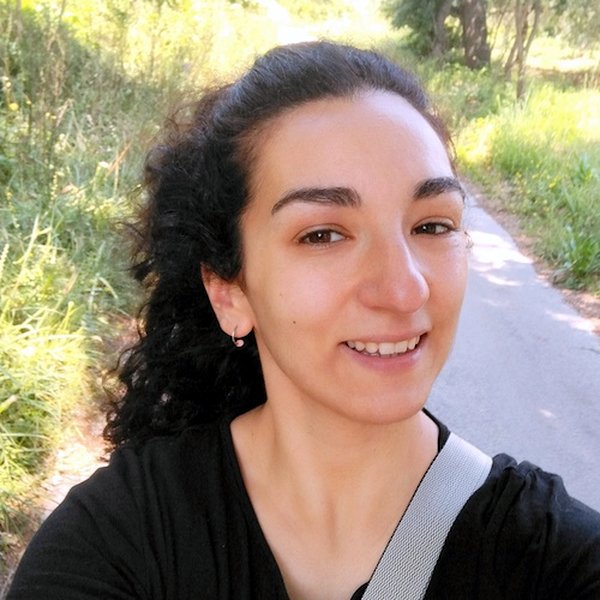
Lingue e culture straniere and insegnamento dell italiano agli stranieri L2 · Teaching Certificate
Masters Degree in Teaching Italian - Local Roman Italian Teacher - Currently living in Rome - Roma3 graduate
Personally vetted · Strommen’s note
Simona holds a Master's in Teaching Italian from Roma Tre and is based in Rome itself. She rebuilds her lesson plan for literally every new student.
Specialties
Lingue e culture straniere and insegnamento dell italiano agli stranieri L2 · Teaching Certificate
Masters Degree in Teaching Italian - Local Roman Italian Teacher - Currently living in Rome - Roma3 graduate
Specialties
Personally vetted · Strommen’s note
Simona holds a Master's in Teaching Italian from Roma Tre and is based in Rome itself. She rebuilds her lesson plan for literally every new student.
TESOL · CILS, CELI
Where every mistake becomes a step toward fluency
Personally vetted · Strommen’s note
Cynthia has taught Italian for twenty-five years, including a semester at the University of South Florida. Her tagline: every mistake is a step toward fluency.
Specialties
TESOL · CILS, CELI
Where every mistake becomes a step toward fluency
Specialties
Personally vetted · Strommen’s note
Cynthia has taught Italian for twenty-five years, including a semester at the University of South Florida. Her tagline: every mistake is a step toward fluency.

Modern languages · Ditals and a master
Certified with 5 years of experience in teaching Italian. I like to organize my Italian lessons according to each student's learning goals. I will be happy to be your Italian teacher and help you to achieve your goal.
Specialties
Modern languages · Ditals and a master
Certified with 5 years of experience in teaching Italian. I like to organize my Italian lessons according to each student's learning goals. I will be happy to be your Italian teacher and help you to achieve your goal.
Specialties

I am a passionate Italian language teacher and tutor with a strong academic background that combines both science and humanities. Although I hold a degree in Biomedical Science, I also completed extensive humanities studies in Italy, where I studied It... · I am member of ATI ( American Association of Italian Teachers) and I partecipate to continuing education event and seminars.
Discover Italian Language and Italian Culture- Italian lessons customized to meet your individual needs, goals, and abilities
Personally vetted · Strommen’s note
Twenty-two years teaching Italian have given Francesca a track for nearly every reason to learn it, from opera-singer diction to CILS B1 citizenship prep.
Specialties
Also speaks: French, Japanese, Spanish
I am a passionate Italian language teacher and tutor with a strong academic background that combines both science and humanities. Although I hold a degree in Biomedical Science, I also completed extensive humanities studies in Italy, where I studied It... · I am member of ATI ( American Association of Italian Teachers) and I partecipate to continuing education event and seminars.
Discover Italian Language and Italian Culture- Italian lessons customized to meet your individual needs, goals, and abilities
Specialties
I also speak: French, Japanese, Spanish
Personally vetted · Strommen’s note
Twenty-two years teaching Italian have given Francesca a track for nearly every reason to learn it, from opera-singer diction to CILS B1 citizenship prep.

Aó — culture & dialect
5 things every Romano learner picks up first
Five features of Romanesco that mark the difference between standard Italian with a Roman accent and actual Romano. Screenshot to share, then book a tutor to drill the rest.
-
01
Daje!
The signature Romanesco exclamation: "come on, let's go." Pure dialect, not a Roman pronunciation of a standard Italian word. Heard everywhere in Rome from kitchens to bar tables to the Curva Sud at the Olimpico. If your Italian sounds Roman without ever saying daje, your Italian doesn't actually sound Roman yet.
e.g. Daje, annamo ar bar a pijà 'n caffè.
-
02
Annamo
The Romanesco of standard Italian andiamo ("let's go"). The phonological shift (loss of intervocalic consonants, vowel reshaping) is characteristic. Used constantly. Pairs with daje as the working everyday departure phrase, far more frequent than the standard form in Rome itself.
e.g. Annamo, che semo in ritardo.
-
03
The -ar / -à infinitive
Romanesco drops the final -e of standard Italian infinitives. Standard fare → fa', andare → annà, mangiare → magnà, parlare → parlà. The shift compounds with the nd-to-nn assimilation in many verbs and is the single most audible Romanesco grammatical marker after the lexicon.
e.g. Che vòi fa'? Stasera vado a magnà fòri.
-
04
Monno for mondo
The Romanesco nd-to-nn assimilation, working across the entire phonological system: mondo → monno, quando → quanno, grande → granne. The rule is general; once your ear catches it, you catch it everywhere in Roman speech. Overdoing it in a professional register reads as caricature, so calibration matters.
e.g. Quanno torno casa, te chiamo. Er monno è piccolo.
-
05
Roman tu, across age and class
Working-class Rome uses tu across age and social-status lines where Milan or Florence would default to Lei. Not rudeness, just the popolari Roman calibration of formality. Knowing when to keep tu, when to switch to Lei, and how Romans themselves shift between the two is a real part of speaking Romano credibly, not a footnote.
e.g. Senti scusa, me sai dì che ora è?
About Romano
Rome's own Italian
Romano (or Romanesco, the academic name; Romanaccio in its harder working-class register) is the Italian of Rome. It sits inside the standard Italian language family, close enough to be intelligible to any educated Italian speaker, but it carries its own phonology, its own lexicon, and its own social weight inside the city. The standard Italian taught in textbooks is Tuscan in origin, codified through Dante and Petrarch and the Florentine literary tradition. Romanesco is what Romans actually speak when they're at home, at the bar, on the bus, at the market in Testaccio or Trastevere, or yelling something across the via from a Vespa. The distance between the two is small but everywhere, and it's a distance Romans use as a social signal-system. Treccani's entry on Romanesco is the standard reference for the linguistic detail; what follows is what a lessons-based, performance-aware introduction to it looks like in practice.
The phonological markers are the first thing learners hear. Romanesco shortens infinitives by dropping the final -e (the standard Italian andare becomes annà, fare becomes fa', mangiare becomes magnà). It assimilates the consonant cluster nd to nn across the board (mondo → monno, quando → quanno, andare → annà, layered on top of the infinitive truncation). It softens the geminate gli toward a yod sound, lengthens stressed vowels in characteristic ways, and the urban Roman cadence has a downward melodic shape on declarative sentences that even Northern Italians can identify across a phone line. None of this is sloppy speech. It is a coherent regional Italian with its own phonological rules and its own internal consistency.
The lexical layer is where Romano declares itself most clearly. Daje is the signature exclamation ("come on, let's go"), heard across the city in every register from football crowds to friends nudging each other out the door. Annamo for the standard andiamo. 'Sto and 'sta as elided versions of questo and questa. Mo for the standard adesso ("now"). Aó as a direct hail, often paired with a name or an exclamation. The blog's guide to Roman slang covers more of these. The literary tradition is older and deeper than most learners realize: Giuseppe Gioachino Belli's mid-19th-century sonnets are the foundational corpus of literary Romanesco, and the language he wrote in is recognizably continuous with how working-class Rome still speaks today. Pasolini's Ragazzi di vita and Una vita violenta took Romanesco into mid-20th-century literary modernism. Trifone's Storia linguistica di Roma is the standard scholarly reference for how the dialect evolved through the city's social history.
Romanesco carries class. The most reliable internal distinction Romans themselves make is between standard Italian with Roman accent (educated Romans speaking at work or with strangers), Romanesco proper (working-class and middle-class Romans at home, with friends, in the neighborhood), and Romanaccio (the harder, more abrasive register of the popolari neighborhoods, often code for class). A learner who shows up speaking pure Romanaccio in a professional setting reads as performing. A learner who can't shift down into any Roman register at all reads as a foreigner or a Milanese in town for the weekend. The skill the better Roman speakers have is mobility across these registers. Add the romano-de-roma versus newcomer distinction (anyone born and raised in Rome versus the substantial population of Italians who moved to Rome for work) and the social map is denser than the textbook suggests. Lessons calibrate to the register your actual life requires.
The cinematic and theatrical canon is the deepest practical resource for any serious Romano learner. Roman comedy from Alberto Sordi (Un americano a Roma, the entire Sordi catalog) through Carlo Verdone (Un sacco bello, Bianco, rosso e Verdone) is built on Romanesco rhythms and Romanesco lexicon, and watching it with subtitles in Italian (not English) is the standard immersion path. Sergio Leone's Rome-set work, Pasolini's Roman trilogy, Ettore Scola's C'eravamo tanto amati, Nanni Moretti's Roman-set films, Sorrentino's La grande bellezza, the Roman crime drama tradition through Romanzo criminale and Suburra, and Zerocalcare's recent animated work all use Romanesco in different registers as a load-bearing element of character and place. For actors and dialect coaches, the Italian dialect coaching for actors roster handles role-specific Romanesco work alongside Sicilian, Neapolitan, and the other regional varieties Strommen coaches.
A few honest tutor observations on what catches Romano learners. The nd-to-nn assimilation feels artificial at first and is the single most identifiable Romanesco marker, so overdoing it sounds like caricature and underdoing it strips the dialect of its phonological core; the balance is what tutors drill. The infinitive truncation has to be applied selectively (educated Roman speech truncates less than working-class speech, and over-truncation in a professional setting is the opposite of the social signal you want). The melodic shape is the layer that takes longest to internalize and is the one that gives away non-natives even after the segmental phonology is clean. The lexicon is enormous and stratified by age, neighborhood, and generation, and a learner who picks up the wrong slang for their age (a thirty-year-old talking like an eighty-year-old, or vice versa) lands wrong. And the use of tu across age and class lines in working-class Rome is a real cultural feature, not a sloppiness — the formal Lei is reserved for narrower contexts in popolari Rome than in Milan or Florence, and learning the Roman calibration on this is part of the work.
Between lessons, the immersion path is well-paved. Watch Sordi and Verdone with Italian subtitles. Read Belli's sonnets in any modern edition (the language is older but the phonological intuitions transfer). For contemporary spoken Romanesco, the Zerocalcare animated series on Netflix is unusually clean as a learning resource because the dialogue is fast, dialect-marked, and subtitled in standard Italian. RAI 3's Roman-set drama runs Romanesco in measured doses. For the city's working-class neighborhoods specifically, Pasolini's prose is the literary baseline. Roman football commentary (in either of the two clubs' traditions) is dense Romanesco at speed. Your tutor will recommend specific material based on which register you're aiming for. The 1,000 most common Italian words list is the standard Italian foundation we'd point any Romano learner at first if the standard layer needs work.
One more thread worth pulling on, because it shapes how Romans use their own dialect. Rome's complicated demographic history matters. Unlike Florence, Milan, or Naples, modern Rome is a city of internal migration: the post-unification capital filled with civil servants from across Italy, the 1950s-60s building boom drew enormous waves of southern Italian workers into the borgate, and the contemporary city continues to absorb Italian speakers from every region. Native Romans (romani de Roma in the dialect itself) hold their Romanesco closely as a marker of authenticity inside a city where most residents weren't born. Italians from Milan, Bologna, or Palermo who've spent twenty years in Rome usually still get clocked as non-Roman the moment they open their mouth, and they know it. For a foreign learner, this is useful context: hitting credible Romano isn't expected, and modest, correctly-calibrated dialect markers land far better than over-performance. The Romans you're talking to know the difference.
The Strommen Romano roster includes Rome-born native speakers across age and neighborhood backgrounds, Italian theater and film actors with dialect training in Romanesco, and a small number of longtime Italian-language teachers who've specialized in Romano coaching for actors, heritage learners, and travelers who want more than tourist Italian. Each tutor's bio specifies background, register specialty, and the student profile they fit best. You can match yourself to a romano-de-roma native for the deepest grounding, a theater-trained coach for performance work, or a teacher comfortable bridging standard Italian and Romanesco for learners building both at once. For broader Italian programs, our Business Italian and Italian academic writing specialties cover non-dialect needs, and our Italian course page shows the family of related offerings. Or just browse the full tutor list and book a trial.
What you'll cover
Lessons & classes tailored to Romano
Romanesco phonology and prosody
The full phonological inventory of Romanesco: the nd-to-nn assimilation, the infinitive truncation, the vowel and stress patterns, the characteristic Roman melodic shape on declaratives and questions. Listening drills with native audio (films, theater, contemporary Roman dramas), shadowing exercises, recorded feedback. The prosodic layer gets explicit attention because it's where non-natives keep getting caught even after the segmental phonology is clean.
Lexicon, register, and the social map of Roman speech
The Romanesco vocabulary stratified by age, neighborhood, and class: the everyday markers (daje, annamo, mo, aó), the harder Romanaccio of the popolari neighborhoods, the educated Roman register that keeps standard Italian as its base, and the formal Italian a Roman uses with strangers and at work. We teach the calibration alongside the words, because using the right Romanesco at the wrong moment is its own kind of mistake.
Cinema, theater, and the literary tradition
Romanesco's cultural canon is unusually deep: Belli's foundational sonnets, Pasolini's Roman prose, the Sordi and Verdone comedy tradition, Sergio Leone's Rome-set work, the contemporary Roman crime drama line through Romanzo criminale and Suburra, Sorrentino's La grande bellezza, Zerocalcare's recent animated work. Lessons can be calibrated around any of these as immersion material, and for actors, role-specific Romano coaching is available through the dialect coaching specialty.
Heritage learners, travelers, and Italian speakers moving to Rome
Three common student profiles, each with different needs. Heritage learners working backward into the Romano of grandparents or older family. Travelers and longer-stay residents who want to function past tourist Italian. Italian speakers from Milan, Florence, Naples, or elsewhere who've moved to Rome for work and want the regional layer rather than just learning to recognize it. Tutors calibrate to the goal and the timeline.
FAQ
About Romano lessons & classes
Is Romano a separate language or a dialect of Italian?
Romanesco sits closer to standard Italian than Neapolitan or Sicilian (both of which are recognized by UNESCO as separate languages). Most linguists classify Romanesco as a regional variety of Italian, in the same family rather than alongside it. Practically that means standard Italian and Romanesco are mutually intelligible, but Romanesco has its own phonology, its own everyday lexicon, and its own social weight inside Rome. Learners who already speak some Italian have a head start; learners coming in fresh usually build standard Italian and Romanesco in parallel.
I already speak some Italian. Do I need to start over to learn Romano?
No. Existing Italian is the foundation. Romano coaching adds the Roman phonological markers (the nd-to-nn assimilation, the infinitive truncation, the melodic shape), the Roman lexicon (daje, annamo, the everyday vocabulary), and the social calibration around register. Most students start with a 30-minute free trial where the tutor hears where you are and proposes the right ratio of standard-Italian reinforcement to Romano-specific work.
What's the difference between Romanesco and Romanaccio?
Romanesco is the general term for Roman Italian. Romanaccio refers more specifically to the harder, more abrasive working-class register, often associated with the popolari neighborhoods (Testaccio, Garbatella, certain pockets of Trastevere historically, the borgate). Native Romans switch between standard Italian, Romanesco, and Romanaccio depending on context, audience, and the social statement they want to make. Lessons will pitch you at the register your actual life requires.
Do I learn Romano for travel or for living in Rome?
Both work as goals. For travel, learning enough Romano to recognize what's being said around you and to break out of obvious tourist Italian when you want to changes how Romans engage with you. For longer-term residence (work, family, study), Romano coaching is the difference between functional Italian and Italian that locates you socially. The lessons calibrate to the timeline. Travel-focused students often run shorter intensive courses; residents typically work longer-arc.
I'm an actor with a Rome-set role. Is this the right page or should I use the dialect coaching specialty?
Either works, but the dedicated Italian dialect coaching for actors page is built specifically for script-led Romanesco work: phonetic mapping, role-specific drilling, on-set support, audition prep. This page is built for the broader Romano-learning audience, including actors who want to build dialect range outside of a specific role. The roster overlaps; the framing is different. Tell us in the trial which you need.
Are your tutors actually from Rome?
Most are Rome-born native speakers, with some Roman heritage learners and Italian theater-trained coaches with Romanesco specialty. Each tutor's bio specifies their background and neighborhood, where relevant. You can match yourself to a romano-de-roma native for the deepest grounding, or to an Italian teacher with Romano specialty if you also want broader standard-Italian work in the same lessons.
Can I take Romano lessons online or only in person?
Both. Many of our Romano tutors teach online via Zoom or Jitsi, available globally. Several also teach in person where they're based. The booking widget on each tutor's profile shows their available formats.
What does a Romano lesson actually look like?
One-on-one and built around your goals. A typical hour might combine recorded listening drills with a Sordi or Verdone clip or a Zerocalcare episode, conversation practice on a topic you chose, targeted work on the phonological markers (the assimilation, the infinitive truncation, the melodic shape), and a vocabulary block keyed to the register you're aiming for. No two students get the same lesson. Your tutor sets concrete weekly goals at the trial and adjusts based on what's working.
Ready for Romano lessons or classes?
Book a free 30-minute trial with one of our personally vetted tutors. Private lessons or small-group classes — your choice.