



Personally vetted instructors
Tokyo Standard Dialect (Hyōjungo) tutors, lessons & classes
おはようございます Ohayō gozaimasu, the formal Tokyo-standard morning greeting Japanese broadcast announcers use to open the day.
Personally vetted Hyōjungo (標準語) tutors. Lessons calibrated to the Tokyo-based national standard Japanese: the pitch accent, the polite register, the prestige broadcast pronunciation, and the careful production work that distinguishes a fluent foreign speaker from a textbook-trained one.

Your instructors
Tokyo Standard Dialect (Hyōjungo) tutors for private lessons & classes
Strommen runs a curated Japanese roster with several tutors who specifically teach advanced Hyōjungo for learners moving beyond intermediate conversational fluency toward broadcast-level precision, professional register, or actor-craft Tokyo standard work. Every tutor below was met and vetted by us. Bios, photos, and rates are real.
Filter by location, age, or price, then book a 30-minute free trial.
Below are the Strommen tutors who specialize in Hyōjungo Tokyo standard Japanese. Photos, ratings, and rates are real. Click any card to read their bio and book a free 30-minute trial.
I want to learn…
Every tutor, personally met. — founder-vetted since 2006, in Los Angeles and online worldwide.
Get a personalized plan
Pick your language — a language advisor will match you with the right tutor and map out your path.




High school degree
Japanese Tutor in Tokyo
Personally vetted · Strommen’s note
One of Elisa's students held a ten-minute conversation entirely in Japanese after three months; another passed the JLPT. Tokyo-based, Kansai-ben included.
Specialties
Also speaks: English, History, Kids, Music, Other, Spanish, Yoga
High school degree
Japanese Tutor in Tokyo
Specialties
I also speak: English, History, Kids, Music, Other, Spanish, Yoga
Personally vetted · Strommen’s note
One of Elisa's students held a ten-minute conversation entirely in Japanese after three months; another passed the JLPT. Tokyo-based, Kansai-ben included.

Masters In Linguistics from Cal State Long Beach
Japanese Tutor Eriko - Masters in Linguistics years of experience with Kids and Adults
Personally vetted · Strommen’s note
With us since 2015 and a linguistics master's in hand, Eriko teaches Tokyo-standard Japanese to kids and adults with the same care.
Specialties
Masters In Linguistics from Cal State Long Beach
Japanese Tutor Eriko - Masters in Linguistics years of experience with Kids and Adults
Specialties
Personally vetted · Strommen’s note
With us since 2015 and a linguistics master's in hand, Eriko teaches Tokyo-standard Japanese to kids and adults with the same care.



Linguistic high school diploma · JLPT N1, 日本漢字能力検定一級, Cambridge C2 proficiency
Stop memorising, start understanding!
Personally vetted · Strommen’s note
Veronika taught Japanese on other platforms for five-plus years before Strommen. Her pitch is structure over memorization, JLPT prep included.
Specialties
Also speaks: English, German, Italian, Spanish
Linguistic high school diploma · JLPT N1, 日本漢字能力検定一級, Cambridge C2 proficiency
Stop memorising, start understanding!
Specialties
I also speak: English, German, Italian, Spanish
Personally vetted · Strommen’s note
Veronika taught Japanese on other platforms for five-plus years before Strommen. Her pitch is structure over memorization, JLPT prep included.

Bachelor of Science in Mathematics
japanese
Personally vetted · Strommen’s note
The Tohoku dialect sits right alongside standard Tokyo Japanese on Kana's schedule, genuinely rare regional range for one tutor.
Specialties
Bachelor of Science in Mathematics
japanese
Specialties
Personally vetted · Strommen’s note
The Tohoku dialect sits right alongside standard Tokyo Japanese on Kana's schedule, genuinely rare regional range for one tutor.
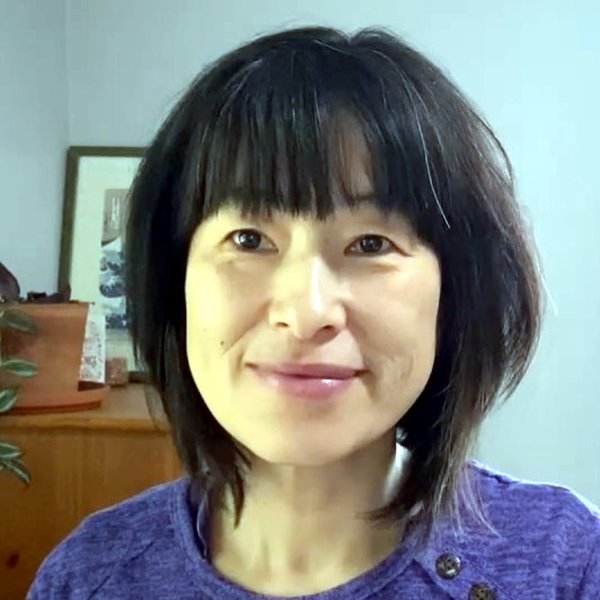
Bachelor in science
Let's learn Japanese with Misen
Personally vetted · Strommen’s note
Every lesson with Misen opens with a quick review of what was covered the week before, Kansai-ben included alongside standard Japanese.
Specialties
Bachelor in science
Let's learn Japanese with Misen
Specialties
Personally vetted · Strommen’s note
Every lesson with Misen opens with a quick review of what was covered the week before, Kansai-ben included alongside standard Japanese.

A patient japanese tutor who learns with you, not just teaches you. Beginner-friendly lessons using structure materials and clear explanations with step-by-step support.
Personally vetted · Strommen’s note
Sapporo-based, Hinako teaches beginner-friendly Japanese with original materials and a fixed structure: icebreaker, vocab review, grammar, every lesson.
Specialties
Also speaks: English
A patient japanese tutor who learns with you, not just teaches you. Beginner-friendly lessons using structure materials and clear explanations with step-by-step support.
Specialties
I also speak: English
Personally vetted · Strommen’s note
Sapporo-based, Hinako teaches beginner-friendly Japanese with original materials and a fixed structure: icebreaker, vocab review, grammar, every lesson.

標準語 — the national standard
5 areas that distinguish advanced Hyōjungo from intermediate Japanese
These are the foundational pieces of polished Tokyo standard Japanese that most intermediate learners have underdeveloped. Save the list for the trial.
-
01
Pitch accent precision
Japanese is a pitch-accent language where the pitch contour of each word carries lexical meaning. 雨 ame (rain) is high-low; 飴 ame (candy) is low-high. Native Tokyo speakers produce the distinctions effortlessly; foreign learners who have not studied pitch accent explicitly often miss them entirely, producing Japanese that sounds prosodically off even when grammar and vocabulary are correct. Pitch accent drilling with reference recordings is the foundational work.
e.g. 雨 ame (rain): high-low. 飴 ame (candy): low-high. Same syllables, different meaning.
-
02
The three register tiers (casual, polite, keigo)
Standard Japanese has three broad register tiers. Casual short form for friends, family, informal contexts. Polite form with -masu and desu for strangers, service settings, the default for adult learners. Full keigo with sonkeigo (respect for the listener) and kenjogo (humility about self) for professional contexts. Most intermediate learners have polite form solid but the casual and keigo levels less developed.
e.g. Casual: "食べる." Polite: "食べます." Keigo: "召し上がる" (sonkeigo) or "いただく" (kenjogo).
-
03
Idiomatic naturalness over translated-from-English
A learner can be grammatically correct, lexically appropriate, and still sound like they are translating from English. The fix is sustained exposure to authentic Hyōjungo across multiple registers (news broadcast, drama, casual conversation, business Japanese) and tutor feedback on naturalness. The formulaic expressions (otsukaresama, yoroshiku onegaishimasu, sumimasen across contexts) are part of natural Japanese in ways no textbook drill alone can produce.
e.g. Yoroshiku onegaishimasu covers a dozen English equivalents depending on context; using it naturally is the work of advanced study.
-
04
Avoiding casual register overuse from anime exposure
Learners who absorbed Japanese primarily through anime and casual media sometimes default to casual short form in contexts where polite form is the right register, producing a tone that reads as untrained rather than informal to Japanese listeners. A Japanese adult in any professional setting expects polite form; casual form from a stranger or in a shop sounds wrong, sometimes off-puttingly so.
e.g. Speaking to a Japanese boss or older colleague: polite form. Anime hero casual form would be a register error.
-
05
Keigo for workplace contexts
Learners who never reach workplace contexts in study often have minimal keigo, which becomes a problem when they enter Japanese professional settings. Sonkeigo (respect for the listener, with verbs like irassharu for iku/kuru and meshiagaru for taberu) and kenjogo (humility about self, with verbs like mairu for iku/kuru and itadaku for taberu) layer on top of teineigo (the polite form). Tutors with broadcast or corporate backgrounds drill keigo systematically.
e.g. Sonkeigo: ご覧になる (you look, respectful). Kenjogo: 拝見する (I look, humble). Teineigo: 見ます (you/I look, polite-neutral).
About Tokyo Standard Dialect (Hyōjungo)
Hyōjungo, the national standard built in Tokyo
Hyōjungo (標準語) is the codified national standard Japanese, based on the speech of the educated middle and upper classes of Tokyo from the late Meiji period (1868-1912) forward. It is the Japanese taught in schools across the country, used in national broadcast media (NHK is the canonical reference), expected in professional and formal settings nationwide, and the variety nearly all foreign learners encounter through textbooks and language schools. Hyōjungo is sometimes called Kyōtsūgo (共通語, common language) when the emphasis is on its function as the shared national variety rather than as a prescribed standard, and the distinction matters: most contemporary Japanese speakers do not speak pure Hyōjungo in daily life but speak their regional variety while understanding and being understood by Hyōjungo. Hyōjungo is the lingua franca, not the everyday speech, for most of Japan.
For foreign learners, Hyōjungo is the right starting point and usually the right end point for most adult learners' Japanese arc. Other Japanese regional varieties (Kansai-ben, Tōhoku-ben, Hakata-ben, Okinawan, and the dozens of other regional dialects) are studied as additional layers on top of Hyōjungo, or as specific projects for learners with specific regional ties or goals. The Strommen Kansai-ben and Tōhoku-ben pages cover those regional dialects. This page is for learners and actors who specifically want to master the Tokyo standard at a level beyond what beginner-and-intermediate Japanese study typically achieves.
The key distinction within Hyōjungo work for serious learners is between conversational competence and broadcast-level precision. Conversational competence in Hyōjungo is the goal of most beginner and intermediate Japanese study: the learner reaches a level where they can hold a conversation, understand most media, and function in Japanese-speaking professional or social contexts. Broadcast-level precision is a different target: the careful pitch accent, the deliberate articulation, the polished polite forms, and the studied vocabulary register that NHK announcers and Japanese-language broadcast professionals develop. The two are related but distinct, and a learner who has reached conversational competence sometimes wants to add the broadcast-level precision as a separate focus, typically for one of three reasons: voice-over and dubbing work, formal presentation skills for business or academic settings, or pure interest in elevating their Japanese to a polished register.
Pitch accent is the foundational skill that most distinguishes broadcast-level Hyōjungo from learner-level Hyōjungo. Japanese is a pitch-accent language where the pitch contour of each word carries lexical meaning. The same syllable string can have different meanings depending on whether it is pronounced high-low, low-high, or with other patterns. The word 雨 ame (rain) is high-low; the word 飴 ame (candy) is low-high. The word 橋 hashi (bridge) is low-high in Tokyo; the word 端 hashi (edge) is also low-high but with different contour rules; the word 箸 hashi (chopsticks) is high-low. Native Tokyo speakers produce these distinctions effortlessly; foreign learners who have not studied pitch accent explicitly often miss them entirely, producing Japanese that is grammatically correct and lexically appropriate but prosodically off. Hyōjungo-focused tutors drill pitch accent with reference recordings (NHK's pitch accent dictionary, the OJAD online dictionary for Japanese accent) and with comparison drills until the patterns become automatic.
The politeness layer in Hyōjungo is the second major area of focused study. Standard Japanese has three broad register tiers: casual short form (used with friends, family, and most informal contexts), polite form with -masu and desu (used with strangers, in service settings, and as the default for adult learners), and full keigo (the honorific system used in professional contexts, layering sonkeigo for respect to the listener and kenjogo for humility about the self on top of teineigo). A learner who has reached intermediate Hyōjungo conversation often has the polite form solid but the casual short form and full keigo less developed. Tutors with broadcast or professional training can fill these gaps systematically: casual short form for natural-sounding everyday speech, keigo for workplace contexts.
The vocabulary and idiomatic range of broadcast-level Hyōjungo extends beyond textbook beginner-and-intermediate vocabulary. The careful use of yamatokotoba (native Japanese vocabulary) rather than Sino-Japanese compounds in spoken contexts. The appropriate level of formality for the situation. The idiomatic expressions that mark a fluent speaker (otsukaresama deshita as a workplace greeting; yoroshiku onegaishimasu for the dozens of contexts it covers; the formulaic apologies and gratitudes). The proverbs and four-character compounds (yojijukugo) that appear in educated speech. The careful avoidance of register mismatches that mark a non-native speaker. All of this is the work of advanced Hyōjungo study, and tutors with broadcast, teaching, or professional backgrounds drill it directly.
For actors approaching Japanese-character roles requiring Hyōjungo, the work is script-led. A Tokyo character in a contemporary professional setting needs broadcast-level polished Hyōjungo. A Tokyo character in a casual family scene needs natural-sounding casual short form. A Tokyo character in a workplace scene needs appropriate keigo register without sounding stilted. The tutor reads the script, identifies the register the part needs across its scenes, and drills the appropriate level. For non-Hyōjungo roles (a Kansai character, a Tōhoku character, a regional dialect), the dedicated dialect pages cover the work; this page is specifically for the Tokyo standard.
A few honest observations from tutors on what trips up adult learners working on advanced Hyōjungo. Underestimating pitch accent is the most common, because pitch accent in Japanese is not taught explicitly in most beginner programs. Many learners reach intermediate level without realizing how much their pitch accent is off, and the realization can come as a surprise when a tutor or native speaker points it out. The fix is targeted pitch accent drilling with reference recordings. Overusing casual short form is another pattern; learners who absorbed Japanese primarily through anime and casual media sometimes default to casual short form in contexts where polite form is the right register, producing a tone that reads as untrained rather than informal. Underdeveloping keigo is the next gap; learners who never reach workplace contexts in their study often have minimal keigo, which becomes a problem when they enter Japanese professional settings. And the broader stylistic gap is in idiomatic naturalness; a learner can be grammatically correct and lexically appropriate while still sounding like they are translating from English. The fix is sustained exposure to authentic Hyōjungo across multiple registers (news broadcast, drama, conversation, business Japanese) and tutor feedback on naturalness.
Between lessons, immersion with authentic Hyōjungo media. NHK News for broadcast-level register at native pace. NHK morning drama (asadora) for natural conversational Hyōjungo across multiple registers. The growing library of Japanese podcasts in Hyōjungo. Japanese literature in audiobook form (Murakami, Yoshimoto, Ogawa) for narrative register. Japanese films across genres for the full range from casual to formal. Tutors send curated playlists calibrated to the learner's level and target register. For learners wanting to add regional dialects on top of Hyōjungo, our Kansai-ben and Tōhoku-ben pages cover those regional varieties as separate study tracks.
The Strommen Hyōjungo roster includes native Tokyo speakers with backgrounds in Japanese broadcast, voice-over work, NHK pedagogy, formal Japanese teaching, and corporate Japanese training. Several have explicit experience preparing foreign learners for Japanese-language professional contexts, JLPT N1 and N2 examination, and Japanese-language voice-over work. Each tutor's bio specifies their background and which learner profile they fit best (intermediate-to-advanced general learner, professional context preparation, voice-over and acting work, JLPT prep). Match yourself to the tutor whose background and teaching style fits your goal. Browse the tutor list, find a bio that matches your situation, and book the free trial.
What you'll cover
Lessons & classes tailored to Tokyo Standard Dialect (Hyōjungo)
Pitch accent and broadcast-level precision
Targeted drilling on the Tokyo pitch accent system with reference recordings (NHK's pitch accent dictionary, the OJAD online dictionary). Comparison drills of minimal pairs (ame for rain vs ame for candy, hashi for bridge vs hashi for chopsticks) until the patterns become automatic. The foundational work for broadcast register and for the prosodic precision that distinguishes fluent foreign speakers from textbook-trained ones.
The three register tiers: casual, polite, keigo
Systematic development of casual short form (for natural-sounding everyday speech), polite form with -masu and desu (the workplace and stranger default), and full keigo with sonkeigo and kenjogo (for professional contexts). Most intermediate learners have one tier solid and others underdeveloped; the tutor identifies the gaps and fills them with context-appropriate practice.
Idiomatic vocabulary and natural production
The formulaic expressions that mark fluent Hyōjungo (otsukaresama, yoroshiku onegaishimasu, sumimasen across contexts). The careful use of yamatokotoba versus Sino-Japanese compounds in spoken contexts. Proverbs and yojijukugo four-character compounds for educated speech. The idiomatic moves that make Japanese sound natural rather than translated.
JLPT prep, professional Japanese, and actor-craft Hyōjungo
For JLPT N2 or N1 candidates, advanced Hyōjungo prep including grammar pattern drilling and reading practice at level. For learners entering Japanese professional contexts, business Japanese, keigo, and the workplace register. For actors approaching Tokyo-character roles, script-led prep with the appropriate register across scenes. For regional dialect work see our Kansai-ben and Tōhoku-ben pages.
FAQ
About Tokyo Standard Dialect (Hyōjungo) lessons & classes
What's the difference between Hyōjungo and Tokyo-ben?
Hyōjungo is the codified national standard, used in education, broadcast media, and formal settings nationwide. Tokyo-ben is the regional dialect of Tokyo itself, with features that diverge from the standard (specific intonation patterns, vocabulary unique to Tokyo working-class speech, the Berlin-equivalent urban register). Most Tokyo speakers in professional contexts use Hyōjungo; in casual contexts among Tokyo residents, Tokyo-ben features may appear. For most foreign learners, Hyōjungo is the relevant target. Tokyo-ben as a regional dialect is a smaller study specialty.
Do I need to study pitch accent explicitly?
For broadcast-level or professionally polished Hyōjungo, yes. For functional conversational Japanese, learners can often get by without explicit pitch accent study, but their Japanese will sound prosodically off to native ears even when grammar and vocabulary are correct. The level of pitch accent precision needed depends on the goal: voice-over work or formal presentation requires it; everyday casual conversation tolerates less precision. Tutors with broadcast backgrounds drill pitch accent directly with reference recordings.
Should I learn keigo or skip it?
Skip it at first; build it later if your context requires it. For most adult learners, the polite -masu form is sufficient for almost every non-professional adult context, including travel, daily conversation, and most service interactions. Keigo with full sonkeigo and kenjogo enters the picture when a learner moves into workplace Japanese or formal customer-facing roles. Many learners never formally study keigo and are perfectly functional adults in Japanese. For workplace-bound learners, keigo is a dedicated study project that typically takes 3-6 months on top of solid polite-form fluency.
Will Hyōjungo work in Osaka or Kyoto?
Yes, fully. Hyōjungo is understood throughout Japan as the national standard, including in Kansai. Kansai speakers will switch to Hyōjungo with foreign visitors, in professional contexts, or in formal settings. The reverse is also true: a foreigner speaking Hyōjungo in Osaka is well-understood and the dialect choice is not a problem. Learners who specifically want to fit into the local Kansai social fabric may want to add Kansai-ben as a deliberate dialect layer; for everyone else, Hyōjungo is sufficient nationwide.
How do I move from intermediate Japanese to truly fluent Hyōjungo?
The work breaks into several layered practices. Sustained exposure to authentic Hyōjungo across multiple registers (news broadcast, drama, casual conversation, business Japanese). Pitch accent drilling with reference recordings until the patterns become automatic. Active drilling of the three register tiers (casual, polite, keigo) so each is accessible in context. Idiomatic vocabulary development through reading and listening. Tutor feedback on naturalness rather than just correctness. The arc from intermediate to broadcast-level Hyōjungo is typically a year or more of dedicated work.
Can Hyōjungo lessons be online?
Yes. Most of our Hyōjungo tutors teach online via Zoom or Jitsi worldwide. The work translates cleanly to video: pitch accent drilling with shared audio, vocabulary and grammar work with screen-share, recorded production practice for the tutor to review. Several tutors also teach in person around Los Angeles.
I'm an actor preparing for a Tokyo-character role. Can a tutor help?
Yes. Several roster tutors have background in Japanese theater, voice-over, or broadcast work and can coach Hyōjungo specifically for performance. The work is script-led: bring the script, identify the register the part needs across its scenes (casual family register, polite professional, keigo workplace), and drill the specific dialogue. For non-Hyōjungo roles requiring regional dialects, see our Kansai-ben and Tōhoku-ben pages.
What's the difference between this page and the Conversational Japanese page?
The Conversational Japanese page covers the broader conversational fluency arc from beginner through advanced for general learners. This page is specifically for learners who want to develop polished Hyōjungo at a level beyond conversational fluency: broadcast-level pitch accent precision, the full politeness layer including keigo, idiomatic naturalness across multiple registers. Pick the framing that matches where you are in your Japanese.
Ready for Tokyo Standard Dialect (Hyōjungo) lessons or classes?
Book a free 30-minute trial with one of our personally vetted tutors. Private lessons or small-group classes — your choice.