



Personally vetted instructors
English for Special Needs Students tutors, lessons & classes
Let's read together. Where most sessions in this specialty begin.
Personally vetted English tutors who adapt the work for students with learning differences. ESL or general English, taught with the pacing, scaffolding, and assistive tech that lets the student actually learn.

Your instructors
English for Special Needs Students tutors for private lessons & classes
Strommen has been teaching English in LA since 2006 and working with special-needs families for nearly as long, because LA's student population is diverse enough that the two specialties were always going to meet. Every tutor below was met and vetted by us in person. No marketplace. Real tutors with real backgrounds, which you can read about in their bios.
Filter by location, age, or price. Then book a 30-minute free trial.
Below are the Strommen tutors who specialize in English for special-needs students. Photos, ratings, and rates are real. Click any card to read their bio and book a free 30-minute trial.
I want to learn…
Every tutor, personally met. — founder-vetted since 2006, in Los Angeles and online worldwide.
Get a personalized plan
Pick your language — a language advisor will match you with the right tutor and map out your path.

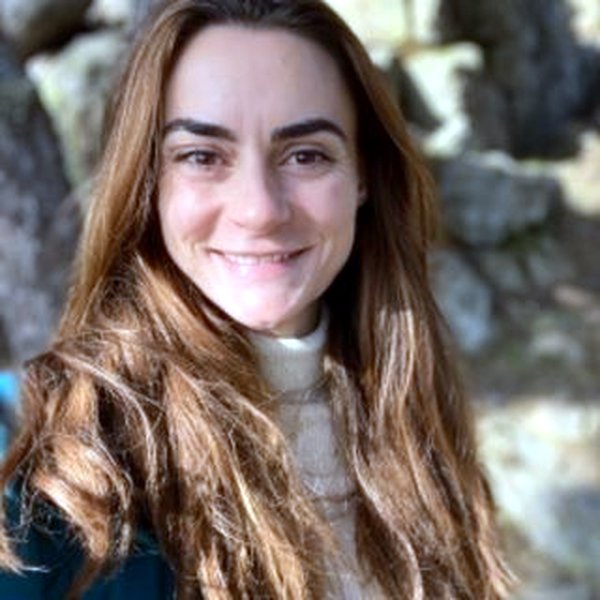
Masters of Fine Art, Bachelor in Foreign Language and Literature. · Over 2,000 hours of one‑on‑one teaching experience. Published literary translator, with work reviewed in Kirkus Reviews, Times Literary Supplement, Art Book D.A.P., and multiple international journals.
Master English, French & Italian with a Published Literary Translator
Personally vetted · Strommen’s note
A published literary translator, Colombina teaches English, French, and Italian, plus SAT prep, college essay coaching, and learning-disability support.
Specialties
Masters of Fine Art, Bachelor in Foreign Language and Literature. · Over 2,000 hours of one‑on‑one teaching experience. Published literary translator, with work reviewed in Kirkus Reviews, Times Literary Supplement, Art Book D.A.P., and multiple international journals.
Master English, French & Italian with a Published Literary Translator
Specialties
Personally vetted · Strommen’s note
A published literary translator, Colombina teaches English, French, and Italian, plus SAT prep, college essay coaching, and learning-disability support.

Adaptations that work
5 ways our tutors adapt English instruction for learning differences
Concrete practices, not abstract principles. These show up in nearly every session because they remove barriers without watering down the work.
-
01
Graduated text complexity
Same content, different reading levels. A dyslexic 7th grader studying the American Revolution gets the same historical content as the class, adapted to a reading level that matches their decoding ability. The student keeps access to grade-level ideas while their decoding catches up. Different from a modified curriculum where content is removed.
e.g. Same Revolution unit, two text versions side by side: the class reading at grade level, an adapted version at the student's independent reading level. Both cover the same battles and people.
-
02
Multi-sensory vocabulary acquisition
See it, hear it, draw it, act it, write it. The same word touches multiple sensory channels in the same session. Especially helpful for students with language-processing differences or limited working memory. The brain stores the word with multiple retrieval routes, so even if one route is blocked, another works.
e.g. Learning "erupt": see the word, hear it pronounced, see a picture of a volcano, mime the explosion, write a sentence.
-
03
Read-aloud plus visual pairing
Every new piece of written text is paired with audio access (the tutor reading aloud, text-to-speech, or both) and a visual representation when possible (diagram, picture, graphic organizer). The combination lets the student access content above their current reading level while reading skills build separately.
e.g. A novel chapter read aloud by Read&Write while the student follows along in the text, then summarized together in a graphic organizer before discussion.
-
04
The assistive-technology workflow
Tutors trained in Read&Write, Bookshare, Voice Dream, speech-to-text, and word-prediction tools. These aren't extras; they're built into sessions from the start when they help. We also teach the student to use the tools independently so they can transfer to homework and class without the tutor present.
e.g. A student composing an essay using speech-to-text for the rough draft, then editing it manually with the tutor coaching organization and word choice.
-
05
Differentiated assessment formats
When the goal is to measure what the student knows about photosynthesis, the format shouldn't accidentally measure their ability to write a paragraph under time pressure. Oral answers, picture-matching, fill-in scaffolds, untimed conditions: each removes a barrier that isn't part of what's actually being assessed. Critical for fair progress monitoring.
e.g. A student who knows the water cycle inside-out but writes slowly demonstrates mastery by labeling a diagram and answering orally, instead of by paragraph response under time.
About English for Special Needs Students
English instruction adapted to how the student actually learns
Teaching English well is hard. Teaching English well to a student with a learning difference is its own subspecialty. Standard ESL pedagogy assumes a baseline of working memory, phonological processing, attention, and motor control that not every student starts with. When a tutor doesn't adjust for those differences, the student doesn't fail to learn English; the method fails to teach them.
What "special needs" covers here is intentionally broad. Dyslexia and other reading-based learning differences. Autism. ADHD. Language-processing disorders. Slow processing speed. Intellectual disabilities. Apraxia, motor-planning differences, deaf or hard-of-hearing students with sign-language backgrounds, students with traumatic brain injury, students on the recovery side of significant medical events. Some of these students are ESL learners; some are native English speakers who need foundational English support. The methodology overlaps either way.
The adaptations our tutors actually make. Slower pace, with more time built in for processing between input and expected output. More visual scaffolding: pictures, diagrams, color-coded grammar charts, written text alongside every spoken word. Multi-sensory vocabulary acquisition: see the word, hear it, draw it, act it, write it. Graduated text complexity, where the same content gets adapted up or down depending on the student's current reading level rather than dropping content the student would otherwise grasp. Explicit teaching of inference, idiom, and figurative language, all of which neurotypical learners pick up passively and special-needs learners often don't. Differentiated assessment formats: oral when written isn't fair, picture-matching when sentence-construction isn't fair, untimed when speed isn't being measured.
Assistive technology has changed this work in the last decade. Text-to-speech (Read&Write, Voice Dream, the built-in iOS reader) gives a dyslexic student access to grade-level content. Speech-to-text gives a student with motor or processing differences a way to compose without the bottleneck of handwriting. Bookshare and Learning Ally provide audio versions of nearly every assigned text in US schools. Word-prediction tools reduce the cognitive load of spelling while the student is still composing. Our tutors are trained in these tools and build them into sessions from the start when they help.
For ESL learners with learning differences, a few additional moves. We teach with the student's first language as an active resource rather than a problem to be replaced. Cognates, similar grammatical structures, and explicit comparison with the L1 help the student build a bridge rather than a wall. Multi-sensory phonics for reading. Vocabulary tied to meaningful contexts the student already knows. Plenty of repetition without monotony, which is a craft skill in itself.
A word on goals. Goal-setting in this work has to be honest. For a student with a significant cognitive difference, the goal isn't necessarily grade-level English fluency by next June. The goal is functional improvement in the skills that matter for the student's actual life: reading menus and signs, writing texts and emails, holding conversation, accessing the content of school subjects they care about. We set those goals collaboratively with the student, the parent, and (when relevant) the school IEP team. We measure progress against the goals we set, not against arbitrary grade-level norms.
The tutors doing this work come from several backgrounds. Some are credentialed special-education teachers who also teach English. Some are ESL teachers with years of additional training in working with learning differences. Some are educational therapists with a literacy background. Several work alongside school SLPs, reading specialists, and resource teachers and can speak the language of the IEP team. All of them have the temperament: patient, observant, willing to scrap a plan that isn't landing, willing to celebrate small wins.
Our work in this area connects to several adjacent specialties: general learning-disability support, autism-experienced tutoring, dyslexia-focused reading, and our speech-language tutoring when articulation or vocabulary is the focus. Most students benefit from one tutor working across the overlap. Online or in person, both work. Book a free 30-minute trial; the tutor will assess where to start.
What you'll cover
Lessons & classes tailored to English for Special Needs Students
Reading and decoding for special-needs learners
Structured-literacy approaches (Orton-Gillingham, Wilson) adapted to the student's specific profile. For ESL learners with reading differences, we layer in vocabulary and morphology work alongside decoding so the student isn't just sounding out words they don't know. Audio access via Bookshare or text-to-speech for grade-level content access while decoding builds separately. See our dyslexia tutors page for the dedicated reading specialty.
Writing with scaffolding and tech support
Graphic organizers, sentence-combining drills, paragraph templates that get faded as the student's independent structure develops. Speech-to-text for students with motor or processing differences. Word-prediction tools. Explicit teaching of paragraph structure and revision. Writing instruction adapted to where the student actually is, not where the grade-level chart says they should be.
Speaking, listening, and conversation
For ESL learners with processing or auditory differences, we slow down, repeat, and visually anchor spoken content. For autistic students, we work explicitly on conversation pragmatics and pacing that may not have been learned through observation. For students with articulation patterns, we coordinate with any active SLP work. See our speech-language tutors page for the dedicated specialty.
Vocabulary, idioms, and academic English
Explicit teaching of the language layer that neurotypical students absorb passively: idioms, figurative language, academic register, content-area vocabulary. Multi-sensory acquisition, semantic networks, morphology as a pattern-builder. For older students with strong content knowledge but weaker English production, this is often the highest-yield area to target.
FAQ
About English for Special Needs Students lessons & classes
What kinds of learning differences do your tutors work with?
Broad range: dyslexia, dysgraphia, autism, ADHD, language-processing disorders, slow processing speed, intellectual disabilities, hard-of-hearing students, traumatic-brain-injury recovery. Each tutor's bio specifies which profiles they have the most experience with. Tell us about the diagnosis (or suspected pattern) when you book and we'll match accordingly.
My child has an IEP. Will the tutor align with it?
Yes. We ask for the most recent IEP at booking and the tutor reviews it before the trial. Goals, accommodations, and modifications all inform how the tutor structures sessions. If your child has an active ESL plan alongside the IEP, we align with that too. The point is reinforcement and coherence with the school plan, not a separate program.
Do you use assistive technology in sessions?
Often, yes. Text-to-speech, speech-to-text, Bookshare, Read&Write, word prediction, and similar tools are built into sessions when they help. We also teach the student to use the tools independently so they transfer to school and home work without the tutor present. Some students don't need these tools; we don't impose them when they don't add value.
Can you work with both ESL learners and native English speakers?
Yes, and both groups are common in this specialty. The adaptations for learning differences overlap heavily regardless of the student's first language. For an ESL learner with a learning difference, we layer ESL methodology on top of LD-informed instruction. Tell us about the student's language background when you book.
How do you measure progress?
Against the goals we set together at the start, not against grade-level norms that may or may not be appropriate. Concrete metrics: words read per minute, vocabulary words mastered, sentences per paragraph, functional reading tasks completed. We share progress notes with the parent and (when authorized) with the school team. Realistic, visible, honest.
What if my child has multiple diagnoses?
Common, and our tutors handle it. Many students have an LD plus ADHD, or autism plus a language-processing diagnosis. We match the tutor to the primary need while making sure they have experience with the co-occurring profile. Communication between you, the tutor, and any clinical team in place keeps everyone aligned.
Online or in person?
Both. Online has the advantage of fewer sensory distractions, easy screen-share for visual scaffolds and assistive tech, and the option to record sessions for later review. In-person works well for younger students or students who benefit from a more present coach. Each tutor's profile shows their available formats.
Ready for English for Special Needs Students lessons or classes?
Book a free 30-minute trial with one of our personally vetted tutors. Private lessons or small-group classes — your choice.