



Personally vetted instructors
Speech Language Therapy tutors, lessons & classes
Say it again, slowly. What you'll hear a lot in these sessions.
Personally vetted tutors who work on pronunciation, articulation, and language-building as an academic complement. Not clinical SLP. The work that sits alongside therapy or fills gaps the school caseload doesn't reach.

Your instructors
Speech Language Therapy tutors for private lessons & classes
Strommen has been working with families on speech, language, and pronunciation since 2006, originally through our accent-coaching roots in Hollywood. Every tutor below was met and vetted by us in person. No marketplace. Real tutors with real backgrounds, which you can read about in their bios.
Filter by location, age, or price. Then book a 30-minute free trial.
Below are the Strommen tutors who specialize in speech-language tutoring. Photos, ratings, and rates are real. Click any card to read their bio and book a free 30-minute trial.
I want to learn…
Every tutor, personally met. — founder-vetted since 2006, in Los Angeles and online worldwide.
Get a personalized plan
Pick your language — a language advisor will match you with the right tutor and map out your path.

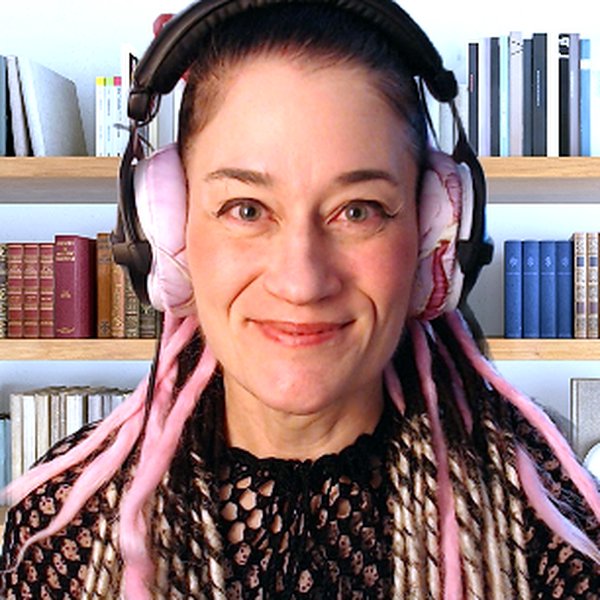

PhD (in progress), Educational Technology – Walden University, Winter 2026PhD, Public Policy & Administration – Walden University, Nov 2019M.S., Education (eLearning & Online Teaching) – University of Wisconsin-Stout, Aug 2019M.A., Political Science &... · • Adult Basic Education (ABE) Certification – Hamline University, 2023• Communication Sciences Disorders – UW-Eau Claire, 2020• Phonetic English as a Second Language (PESL) Certification – Institute of Language and Phonology, 2017• TESOL & Young Learne...
Clear American English, Taught with Insight, Bridging Languages. Building Confidence!
Personally vetted · Strommen’s note
PhD-trained, Marshelle teaches English through psycholinguistics and Multiple Intelligences theory. Aviation English and speech therapy are both on the list.
Specialties
Also speaks: German, Russian
PhD (in progress), Educational Technology – Walden University, Winter 2026PhD, Public Policy & Administration – Walden University, Nov 2019M.S., Education (eLearning & Online Teaching) – University of Wisconsin-Stout, Aug 2019M.A., Political Science &... · • Adult Basic Education (ABE) Certification – Hamline University, 2023• Communication Sciences Disorders – UW-Eau Claire, 2020• Phonetic English as a Second Language (PESL) Certification – Institute of Language and Phonology, 2017• TESOL & Young Learne...
Clear American English, Taught with Insight, Bridging Languages. Building Confidence!
Specialties
I also speak: German, Russian
Personally vetted · Strommen’s note
PhD-trained, Marshelle teaches English through psycholinguistics and Multiple Intelligences theory. Aviation English and speech therapy are both on the list.


MBA · TEFL
PROFESSOR
Personally vetted · Strommen’s note
Ewe, a West African language rarely offered anywhere, sits right alongside English and French on Komi's schedule, taught out of Ghana.
Specialties
Also speaks: German
MBA · TEFL
PROFESSOR
Specialties
I also speak: German
Personally vetted · Strommen’s note
Ewe, a West African language rarely offered anywhere, sits right alongside English and French on Komi's schedule, taught out of Ghana.

Speech and language methods
5 methods our speech-language tutors actually use
Practical, evidence-based approaches that show up across most sessions. Useful to recognize whether you're booking for a kid, an ESL learner, or yourself.
-
01
Sentence-level articulation drills
Working a target sound in actual sentences, not in isolation. Single-word drills ("say sun, say sing, say six") rarely transfer to natural speech. Pulling the sound through real sentences ("I saw seven swans Saturday") and conversation builds the motor pattern in context, which is where it has to live.
e.g. Working on the English "th" sound across a paragraph about Thursday plans, then unscripted conversation about the same topic.
-
02
The IPA-based diagnostic
For ESL learners, we map the student's actual pronunciation to the International Phonetic Alphabet to identify which English sounds are missing or substituted. The IPA gives a precise vocabulary for what's happening in the mouth, which abstract instructions like "say it harder" don't.
e.g. A Korean speaker substituting /b/ for /v/ in "very"; the IPA names the gap exactly and the fix follows.
-
03
Semantic-network vocabulary building
Teaching new words inside the web of related words and contexts they live in, not as standalone definitions. The student learns "furious" along with its intensity neighbors (annoyed, angry, enraged), its morphology (fury, infuriate, furiously), and the situations where each fits. Retention and usage both improve.
e.g. A 6th grader with a language-processing diagnosis learning "reluctant" together with hesitant, unwilling, dragging-feet, and example sentences from a book she's reading.
-
04
Fluency vs. accuracy trade-off
Articulation work has a tension: drilling for perfect production can slow speech to a halt, while building natural pace can let errors slip back in. Skilled tutors balance the two, knowing when to interrupt for a correction and when to let the sentence finish and clean up the pattern afterward.
e.g. During conversation, the tutor lets a misarticulated "th" pass and notes it. After the student finishes the thought, they revisit the word together.
-
05
Morphology as a spelling and vocabulary anchor
Teaching the building blocks (prefixes, roots, suffixes) so that a student who learns one word picks up the family. Photograph, photographer, photographic, photography. Especially valuable for students with language-processing differences who benefit from explicit pattern-teaching the way neurotypical peers benefit from osmosis.
e.g. Teaching the Latin root "port" (to carry) unlocks portable, transport, deport, important, support.
About Speech Language Therapy
Articulation and language work as a tutoring complement
A note on what this page is and isn't. Strommen's speech-language tutors are not clinical speech-language pathologists. We don't diagnose communication disorders, we don't write treatment plans for state-funded services, and we don't replace an SLP on a student's IEP. What we do is the tutoring layer that sits alongside clinical work: targeted articulation practice between SLP sessions, vocabulary-building for kids with language processing differences, pronunciation work for adult ESL learners, fluency drills for older students with residual articulation patterns. Useful work, complementary to clinical care, distinct from it.
Who these tutors are. Most have a linguistics background, a phonetics background, or years of accent-coaching experience. Several have worked alongside school SLPs as paraprofessionals or aides. A few are bilingual or trilingual themselves, which matters when the student's first language is influencing their English articulation patterns. None of them present themselves as licensed clinicians, because they aren't.
Who asks for this kind of tutoring. Three common groups. First, parents of kids who get 30 minutes a week of school-based SLP and want more practice between sessions. The school caseload is full; the SLP can't add hours; a tutor can pick up the drill work. Second, adult ESL learners whose English is fluent but whose pronunciation still flags them as non-native, and who want targeted articulation work. Third, students with vocabulary or language processing gaps, often tied to a learning disability, who need explicit teaching of word relationships and semantic networks that neurotypical peers built passively.
The methods. For articulation, we work at sentence and conversation level, not single-word level, because single-word drilling rarely generalizes. We use the International Phonetic Alphabet (IPA) when it helps, especially for ESL learners whose first language doesn't have a particular English sound. For vocabulary, we teach in semantic networks rather than isolated word lists: when a student learns "furious," they also learn the spectrum (annoyed, irritated, angry, furious, enraged), the contexts, and the related morphology (fury, infuriate). For language-processing gaps, we slow down, repeat, externalize the structure (sentence diagrams, graphic organizers), and rebuild from the ground up.
For ESL students working on accent reduction or pronunciation refinement, the work is its own subfield. Some sounds in English don't exist in the speaker's first language; the mouth has never been trained to produce them. We diagnose the specific sound patterns by ear and by IPA, then drill them with mirror feedback, recordings, and slow shadowing of native speech. Garrett, Strommen's founder, was a working dialect coach before founding the company, and several of our tutors come from the same accent-coaching pedigree. If you're working on English accent specifically, our English accent tutors page is the dedicated landing.
For school-aged kids working alongside an SLP, coordination matters. With parent consent, our tutors will read the most recent SLP report or speech goals and align practice to them. We don't want to undermine clinical work by drilling something the SLP isn't yet ready to target. The point is reinforcement, not parallel programs.
One honest caveat. Some communication challenges genuinely require a clinical SLP, full stop. Apraxia of speech, severe fluency disorders, swallowing dysfunction, communication aspects of autism that need licensed clinical intervention. If a student presents with those, we'll say so on the trial call and recommend a referral. The work we do is best for academic complement, accent refinement, vocabulary expansion, and articulation maintenance, not as a substitute for the diagnostic and treatment authority of a licensed SLP.
Most work happens online via Zoom or Jitsi, which suits articulation tutoring well: clear audio, screen-share for IPA charts and mouth-position diagrams, easy recording. In-person sessions are available around LA. Book a free 30-minute trial; we'll calibrate.
What you'll cover
Lessons & classes tailored to Speech Language Therapy
Articulation practice between SLP sessions
For school-aged kids on a school-based SLP caseload, we provide reinforcement drilling between sessions. With parent consent, we read the SLP's goals and align practice to them. The point is extra repetitions of work the clinician has already targeted, not new programs that might cross-cut the clinical plan. School SLP caseloads are full; this is the extra practice the clinician would assign if they had hours to do it themselves.
ESL pronunciation and accent refinement
For adult ESL learners whose English is fluent but who want to reduce the markers of their first language. IPA-based diagnosis, targeted drilling of missing sounds, prosody and rhythm work, shadowing of native speech. Many of our tutors come from a Hollywood dialect-coaching background, which is where Strommen began. Dedicated page at English accent tutors.
Vocabulary and language-processing work
For students with diagnosed language-processing differences or vocabulary gaps. We teach in semantic networks, build morphology awareness, work explicitly on inference and figurative language (the parts that don't come naturally for many language-impaired students), and use graphic organizers to externalize sentence and paragraph structure.
Fluency and conversational confidence
For older students or adults with residual articulation patterns or who self-monitor heavily during conversation and lose their thread. Work focuses on building automatic motor patterns at conversational pace and on the metacognitive piece of letting go of perfection long enough to actually communicate. We also see this work for our autistic adult students who want to refine social-pragmatic conversation patterns.
FAQ
About Speech Language Therapy lessons & classes
Are your tutors licensed speech-language pathologists?
No. This is important to be clear about. Our tutors are not licensed SLPs and don't represent themselves as such. They have backgrounds in linguistics, phonetics, accent coaching, or paraprofessional work alongside SLPs. We provide tutoring-level support that complements clinical SLP work. If your situation requires licensed clinical care (apraxia, severe fluency disorders, communication-aspect-of-autism work that requires a clinician), we'll refer you to a qualified SLP.
My kid has a school SLP. Can your tutor coordinate with them?
Yes, with parent consent. We can read the most recent SLP report or speech goals and align our practice to what the clinician is already targeting. The goal is reinforcement, not running a parallel program. Some parents prefer to keep clinical and tutoring work separate, which is also fine; in that case we focus on adjacent academic vocabulary or articulation maintenance.
Can adult ESL learners use this for accent reduction?
Yes, and a good share of our clients are exactly this. IPA-based diagnosis of which English sounds are missing or substituted, targeted drilling, prosody and rhythm work, shadowing of native speech. If accent refinement is the main goal, our English accent tutors page is the more direct fit; the methods overlap heavily.
How long until we hear improvement?
Articulation work typically shows audible change in 8 to 16 weeks of consistent practice, faster for adults than for kids because adults can engage with the cognitive piece more actively. Vocabulary and language-processing work moves slower and shows up in writing samples and reading comprehension over a semester rather than weeks. Realistic timelines, not magical ones.
Online or in person?
Both work. Online via Zoom or Jitsi has the advantage of clean audio, easy screen-share for IPA charts, and easy recording for the student to review later. In-person sessions are available around LA when a more present coach helps younger students focus. Each tutor's profile shows their available formats.
Do you work with students who have autism or other diagnoses?
Yes, often. Many language and communication challenges overlap with autism, ADHD, or learning disabilities. Tell us about any active diagnoses when you book; we'll match accordingly. Our autism-experienced tutors include several with language-focused backgrounds, which lets us blend specialties when both apply.
Ready for Speech Language Therapy lessons or classes?
Book a free 30-minute trial with one of our personally vetted tutors. Private lessons or small-group classes — your choice.