



Personally vetted instructors
Trigonometry tutors, lessons & classes
Open the unit circle What every trigonometry tutor says when the warm-up is done and the first sin or cos problem comes up.
Personally vetted Trigonometry tutors. Lessons that build the unit circle as fluent muscle memory, ground identities in geometric meaning instead of memorization, and prepare students for the calculus and physics that wait on the other side.

Your instructors
Trigonometry tutors for private lessons & classes
Strommen has prepped Trigonometry students from US high schools, international schools, and university precalculus programs. Most students arrive with a course or exam date, a target grade, and an honest sense of one weaker area (often unit circle recall, identity manipulation, or the law of sines and law of cosines). Every tutor below was met and vetted by us in person or via thorough video interview. No marketplace. No automated profile-creation. Real teachers with real trig and precalculus track records.
Filter by location, age, or price. Then book a 30-minute free trial.
Below are the Strommen tutors who specialize in Trigonometry. Photos, ratings, and rates are real. Click any card to read their bio and book a free 30-minute trial.
I want to learn…
Every tutor, personally met. — founder-vetted since 2006, in Los Angeles and online worldwide.
Get a personalized plan
Pick your language — a language advisor will match you with the right tutor and map out your path.

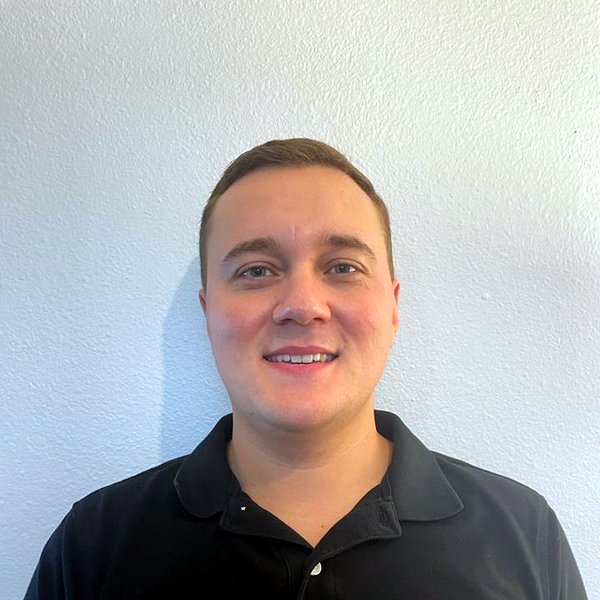

MSc · N/A
Austrian teaching my native language German
Personally vetted · Strommen’s note
Austrian-born, Thomas teaches native German alongside math. Calculus and trigonometry sit right next to German grammar on his schedule.
Specialties
MSc · N/A
Austrian teaching my native language German
Specialties
Personally vetted · Strommen’s note
Austrian-born, Thomas teaches native German alongside math. Calculus and trigonometry sit right next to German grammar on his schedule.



Bachelor of Education (B.Ed.) and pursuing a degree in Aerospace Engineering. · I have a TEFL certification | Certifications in Adobe Graphic Design (Level 1 & 2) for interactive presentations and educational materials.
English, German, and Arabic classes
Personally vetted · Strommen’s note
Arabic, English, and German sit alongside AP Calculus and AP Physics on Omar's schedule, a genuinely rare tutor who crosses from language straight into STEM.
Specialties
Also speaks: French, Italian, Spanish
Bachelor of Education (B.Ed.) and pursuing a degree in Aerospace Engineering. · I have a TEFL certification | Certifications in Adobe Graphic Design (Level 1 & 2) for interactive presentations and educational materials.
English, German, and Arabic classes
Specialties
I also speak: French, Italian, Spanish
Personally vetted · Strommen’s note
Arabic, English, and German sit alongside AP Calculus and AP Physics on Omar's schedule, a genuinely rare tutor who crosses from language straight into STEM.

B.sc (Ed) · TEFL
Top-Rated English, Math, ESL and Common Emtrance Exam Tutor | Helping Global Learners Achieve Fluency & Academic Excellence
Personally vetted · Strommen’s note
English and math come as a pair in Deborah's lessons out of Nigeria, SAT, ACT, IGCSE, and ISEE all covered for students prepping toward specific exams.
Specialties
B.sc (Ed) · TEFL
Top-Rated English, Math, ESL and Common Emtrance Exam Tutor | Helping Global Learners Achieve Fluency & Academic Excellence
Specialties
Personally vetted · Strommen’s note
English and math come as a pair in Deborah's lessons out of Nigeria, SAT, ACT, IGCSE, and ISEE all covered for students prepping toward specific exams.

Bsc. Computer Science, Cognitive Science
From Algebra to Calculus—Learn Math with Confidence.
Personally vetted · Strommen’s note
Ulka has taught math with us since 2015, SAT and ACT included, and she'll drop a Star Wars reference mid-calculus if that's what makes a concept land.
Specialties
Bsc. Computer Science, Cognitive Science
From Algebra to Calculus—Learn Math with Confidence.
Specialties
Personally vetted · Strommen’s note
Ulka has taught math with us since 2015, SAT and ACT included, and she'll drop a Star Wars reference mid-calculus if that's what makes a concept land.

Trigonometry strategy — course playbook
5 Trigonometry moves students wish they'd drilled earlier
These aren't textbook tips. They're the geometrically-grounded habits that turn trig from a memorization chore into the foundation calculus and physics rest on. Screenshot the infographic, then book a tutor to drill the rest.
-
01
Drill the unit circle until it's muscle memory
Every standard trig exam question, every calculus problem involving trig, every physics problem requiring vector decomposition, and every engineering problem with sinusoidal signals relies on instant recall of unit circle values at increments of pi/6 and pi/4 across all four quadrants. Students who can produce sin(5pi/6) without thinking save three minutes per exam and arrive in calculus prepared. Drill it in the first two weeks. Test it weekly.
e.g. What is cos(7pi/6)? Without thinking: negative root 3 over 2. That's the level of fluency calculus assumes.
-
02
Ground identities in geometry, not memorization
The Pythagorean identity is the unit circle equation. Sum and difference formulas have geometric proofs involving rotations. Double-angle and half-angle formulas follow from sum and difference. Students who memorize identities as algebraic strings forget them under exam pressure. Students who can sketch the geometric derivation can recover any identity in a minute, even months later. Prove each identity at least once before you start applying it.
e.g. sin(2A) = 2 sin(A) cos(A): derive from sum formula sin(A+A). The proof takes 30 seconds and makes the formula permanent.
-
03
Learn all six trig functions, not just three
American high schools teach sine, cosine, and tangent thoroughly and treat cosecant, secant, and cotangent as afterthoughts. This produces students who stumble in calculus on identities involving sec or csc, on derivatives of sec or csc, and on integrals that produce arctan or arcsec. The reciprocal functions are not optional later. Learn them when they are introduced alongside the primary three.
e.g. sec(x) = 1/cos(x), csc(x) = 1/sin(x), cot(x) = 1/tan(x). Domain, range, asymptotes, graph. All of it.
-
04
Law of sines or law of cosines? Read the configuration
Law of sines applies when you have ASA, AAS, or the SSA ambiguous case (which produces zero, one, or two triangles). Law of cosines applies when you have SAS or SSS. Students who treat the two laws as interchangeable and pick at random waste time on every triangle problem. Read the configuration first; pick the law; solve. The SSA ambiguous case is a predictable test question; drill it separately.
e.g. Given side, angle, side (SAS): law of cosines for the third side. Given angle, side, angle (ASA): law of sines for the missing side.
-
05
Degrees for geometry, radians for calculus
Geometry-style problems and most engineering surveying use degrees. Calculus, advanced math, and most physics use radians, because the derivative of sin(x) equals cos(x) only when x is in radians. The conversion factor is pi over 180. Mishandling unit conversion costs predictable points on standardized tests and produces wrong answers on calculus problems where the student forgets to switch modes.
e.g. Calculus integral with sin(x): assume radians. Surveying problem with bearings: degrees. Check the context before you start.
About Trigonometry
Trigonometry, from the unit circle outward
Trigonometry is the bridge math course. It sits between algebra (which most American students have spent two or three years on by the time they arrive) and calculus (which waits on the other side and assumes the trig is fluent). The subject grew historically out of practical needs (astronomy, navigation, surveying) and the early mathematicians who developed it (Hipparchus, Ptolemy, then the Indian and Islamic mathematicians who extended the work in the early medieval period) were solving real problems about triangles, arcs, and angles. Modern trigonometry inherits that practical origin and the abstract framework that grew on top of it. The result is a course that asks students to hold two pictures at once: the right-triangle picture inherited from geometry, and the unit-circle picture that generalizes the trigonometric functions to all real numbers. Students who master the unit circle picture early sail through trig and into calculus; students who treat the unit circle as a memorization chore stumble through trig and arrive in calculus with shaky foundations.
Where trigonometry sits in the US high school sequence varies by school. Some schools teach it as a standalone semester or year, often in 10th or 11th grade. Others fold it into a precalculus course alongside algebra 2 review, exponentials, logarithms, and an introduction to limits. A few schools split it across geometry (right-triangle trig) and precalculus (unit-circle trig, identities, equations). Whatever the local format, the content covered is similar: definitions of sine, cosine, and tangent from right triangles; the unit circle as the generalization; the other three trig functions (cosecant, secant, cotangent) as reciprocals of the first three; graphs of trig functions; trigonometric identities (Pythagorean, sum and difference, double-angle, half-angle); inverse trig functions; trigonometric equations; the law of sines and law of cosines for non-right triangles; and an introduction to polar coordinates. Stronger courses also touch complex numbers in polar form, which previews the complex analysis some students see in higher math.
The unit circle is the central object and the prep priority. Memorizing the unit circle (the values of sine and cosine at every angle in increments of pi/6 and pi/4 across all four quadrants) sounds tedious until you realize how much downstream work it eliminates. Every standard trig exam question, every calculus problem involving trig functions, every physics problem requiring decomposition of a vector, and every electrical engineering problem involving alternating current relies on instant recall of these values. Students who can produce sin(5pi/6) without thinking save roughly three minutes per exam compared to students who derive each value on the fly. Beyond exam time, the unit circle is the conceptual foundation: it shows why sine and cosine are periodic with period 2pi, why their graphs are shifted versions of each other, why the Pythagorean identity (sin squared plus cos squared equals one) is just the Pythagorean theorem applied to the unit circle, and why every trig identity is in some sense a statement about geometry. Drill the unit circle in the first two weeks. Test it weekly. Make it muscle memory.
The six trig functions, not just three. American high schools tend to teach sine, cosine, and tangent thoroughly and treat cosecant, secant, and cotangent as afterthoughts. This produces students who can solve a basic triangle problem but stumble on identities involving sec or csc, on integrals that produce arctan or arcsec, and on derivatives of sec or csc. The reciprocal functions are not optional later, and they are easier to learn early when they are introduced alongside the primary three than to retrofit later when they appear in a calculus or physics problem. Lessons cover all six functions, their definitions on the unit circle, their graphs (including the asymptotes of tan, cot, sec, csc), and the identities relating them.
Identities are where most students freeze, and the right approach is to ground them in geometry rather than memorize them as algebra. The Pythagorean identity (sin squared plus cos squared equals one) is the unit circle equation. The sum and difference formulas (sin of A plus B, cos of A minus B) have geometric proofs involving rotations. The double-angle formulas (sin of 2A, cos of 2A) follow from the sum formulas. The half-angle formulas follow from the double-angle formulas. Students who memorize the identities as algebraic strings without understanding where they come from cannot reconstruct them under exam pressure when one is forgotten. Students who can sketch the geometric derivation can recover any identity in a minute even if they have not seen it for months. Tutors prove each identity at least once with the student, then drill the application until recognition is automatic.
The law of sines and law of cosines extend trigonometry from right triangles to non-right triangles. The law of sines (the ratio of a side length to the sine of the opposite angle is the same for all three sides) is straightforward to derive and to apply, but has an ambiguous case (the SSA configuration, where two sides and a non-included angle are given) that produces zero, one, or two possible triangles depending on the values. The ambiguous case is a predictable test question and worth specific drill. The law of cosines (a squared equals b squared plus c squared minus 2bc cos A) generalizes the Pythagorean theorem and applies to any triangle when two sides and the included angle are given (SAS) or when all three sides are given (SSS). Together the two laws solve any triangle. Students who know when to apply which law (law of sines for ASA or AAS or SSA, law of cosines for SAS or SSS) move through these problems quickly. Students who treat the two laws as interchangeable and pick at random waste time on every triangle problem.
Polar coordinates and complex numbers in polar form are the bridge from trigonometry to higher math. Polar coordinates represent points in the plane by a distance from the origin and an angle from the positive x-axis, which is the natural language for problems with rotational symmetry (planetary motion, electromagnetic fields, fluid flow in cylindrical geometries). Converting between rectangular and polar coordinates is straightforward once the unit circle is fluent. Polar form of complex numbers (r times the quantity cos theta plus i sin theta, often written compactly using Euler's formula as r e to the i theta) is the form in which complex multiplication becomes intuitive: multiplying complex numbers in polar form multiplies the magnitudes and adds the angles. Students aiming at engineering, physics, or advanced math should see polar form even if their high school course skips it; the form is universal in complex analysis, signal processing, quantum mechanics, and any field that uses Fourier analysis.
The stumble points are predictable across schools and curricula. Students treating the unit circle as a memorization chore and never reaching automatic recall, then losing time on every downstream problem. Memorizing identities as algebraic strings rather than grounding them in geometric meaning, then losing them under exam pressure. Underinvesting in the reciprocal functions (sec, csc, cot) and discovering later in calculus that they were not optional. Confusing the law of sines with the law of cosines and applying the wrong one. Skipping the ambiguous-case practice on SSA configurations and losing predictable test points. Mishandling unit conversion between degrees and radians (degrees for geometry-style problems, radians for calculus-style problems, and the conversion factor is pi over 180). And the single biggest one: arriving in calculus with trig that is not fluent, which makes the calculus much harder than it needs to be.
How our tutors prep students. Most lessons start with a diagnostic against a recent course test, a placement-style problem set, or a calculus-readiness check if the student is preparing for the next course. The tutor identifies the dragging area: unit circle fluency, identity manipulation, equation solving, triangle problem techniques (law of sines and law of cosines), or graphing of trig functions. The first six weeks build around the dragging area. Unit circle drilling runs in parallel from week one regardless of where the student starts. Closer to test or course-end dates, lessons shift to full timed mock problem sets under exam conditions, with detailed review on every miss. For students preparing to enter calculus, the trig content covered emphasizes the parts calculus uses heavily: derivatives and integrals of trig functions assume instant unit circle recall, integration techniques like trig substitution assume identity fluency, and applications in physics and engineering assume both. Tutors prepping pre-calculus students also include a soft introduction to limits and continuity if the student's course covers them, smoothing the transition into calculus.
The SAT Math, ACT Math, and standardized test contexts touch trigonometry. SAT Math includes right-triangle trig (sin, cos, tan ratios) in the Geometry and Trigonometry content domain. ACT Math goes deeper, including identities, the law of sines and law of cosines, and graphs of trig functions. Students prepping for either exam benefit from trig fluency that goes beyond what the test minimally requires; the marginal points on hard trig questions are easier to earn when the unit circle is automatic. For parallel SAT and ACT prep, our SAT Math and ACT pages cover the related work. For the calculus that follows, our Calculus page covers AP Calculus AB and BC, university single-variable, and multivariable calculus. For other math-track specialties, our Statistics, IGCSE Math, and CBSE Math pages cover the adjacent territory.
Between lessons, the right materials matter. Khan Academy's trigonometry and precalculus playlists cover the standard US high school trig curriculum systematically and are free. Paul's Online Math Notes (tutorial.math.lamar.edu) covers trigonometry with clear worked examples at both the high school precalculus and the university precalculus level. For deeper geometric intuition, the YouTube channel 3Blue1Brown's video on the unit circle and trigonometry shows the geometric meaning visually in a way that textbook treatments often skip. For textbook references, Stewart's Algebra and Trigonometry is the standard at many American high schools and early universities; Sullivan's Trigonometry is the alternative many community colleges use. The OpenStax Algebra and Trigonometry textbook (free as a PDF at openstax.org) is the open-access reference and covers the standard curriculum.
The Strommen Trigonometry roster includes private school math specialists, former US high school math teachers who have taught trig and precalculus for years, university-level instructors who have taught precalculus at American universities and community colleges, and a few tutors with strong physics or engineering backgrounds who bring the applied perspective on why the trig matters and how it gets used downstream. Each tutor's bio specifies their background, the courses they prep (high school trigonometry, precalculus, calculus-readiness), and the student profile they fit best. Match yourself to a tutor whose specialty matches your target course or exam. Browse the tutor list, find a bio that matches your situation, and book the free trial.
What you'll cover
Lessons & classes tailored to Trigonometry
Diagnostic + unit circle fluency drilling
Your first lesson is usually a diagnostic against a recent course test, a placement-style problem set, or a calculus-readiness check. The tutor identifies the dragging area and confirms unit circle fluency. The first two weeks drill the unit circle until recall is automatic regardless of starting point, because every downstream topic assumes it. Weekly unit circle quizzes run as a baseline throughout the prep cycle.
Identities, equations, and graphs
Pythagorean, sum and difference, double-angle, half-angle, and product-to-sum identities. Each derived geometrically at least once, then drilled through application problems until pattern recognition is automatic. Solving trig equations across multiple cycles. Graphing sine, cosine, tangent, secant, cosecant, and cotangent with attention to amplitude, period, phase shift, and asymptotes. Inverse trig functions and their restricted domains.
Triangle problems and law of sines and cosines
Right-triangle trigonometry: SOHCAHTOA, the Pythagorean theorem, special right triangles (30-60-90 and 45-45-90). Non-right triangles: law of sines for ASA, AAS, and the SSA ambiguous case; law of cosines for SAS and SSS. Reading the configuration to pick the right law. The ambiguous-case practice gets dedicated time because it is the most-missed triangle question type.
Polar coordinates + calculus readiness
Polar coordinates and conversion between polar and rectangular forms. Polar form of complex numbers and Euler's formula for students whose courses cover them. For students preparing to enter calculus, the trig content emphasizes the parts calculus uses heavily: derivatives and integrals of trig functions, trig substitution, and applications in physics. A soft introduction to limits and continuity for students whose course covers precalculus content alongside trig.
FAQ
About Trigonometry lessons & classes
Where does trigonometry fit in the US high school math sequence?
Varies by school. Some schools teach it as a standalone semester or year, often in 10th or 11th grade. Others fold it into a precalculus course alongside algebra 2 review, exponentials, logarithms, and an introduction to limits. A few schools split it across geometry (right-triangle trig in 10th grade) and precalculus (unit-circle trig, identities, equations in 11th or 12th grade). The content covered is similar across these formats. Whatever the local sequence, trig sits between algebra and calculus, and the strength of the trig foundation directly determines how the calculus year goes.
Why do I need to memorize the unit circle?
Because every downstream topic assumes you have it. Every standard trig exam question, every calculus problem involving trig functions, every physics problem requiring vector decomposition, and every engineering problem involving sinusoidal signals relies on instant recall of sine and cosine values at increments of pi/6 and pi/4 across all four quadrants. Students who can produce sin(5pi/6) without thinking save roughly three minutes per exam compared to students who derive each value on the fly, and they arrive in calculus with the foundation calculus assumes. Treating the unit circle as a memorization chore produces a downstream tax on every math course that follows.
Can I learn trig without memorizing identities?
Not really. The identities are the working vocabulary of the subject. The Pythagorean identity, the sum and difference formulas, the double-angle and half-angle formulas appear constantly in trig problems, in calculus problems, and in physics applications. The good news is that grounding the identities in geometric meaning (the Pythagorean identity is the unit circle equation; the sum and difference formulas have geometric proofs involving rotations) makes them recoverable even when not freshly memorized. Students who understand where the identities come from can reconstruct any forgotten formula in a minute. Students who memorize them as algebraic strings without understanding lose them under exam pressure and never quite get them back.
What's the difference between degrees and radians?
Different units for measuring angles. Degrees split a full circle into 360 equal parts; radians measure the angle by the arc length on the unit circle subtended by the angle, which makes a full circle equal to 2 pi radians. The conversion factor is pi over 180 (multiply degrees by pi over 180 to get radians, or divide radians by pi and multiply by 180 to get degrees). Geometry-style problems and most engineering surveying use degrees. Calculus, advanced math, and most physics use radians, because the derivatives and integrals of trig functions assume the input is in radians. Mishandling unit mode (calculator set to degrees when the problem is in radians) is a predictable source of wrong answers.
How does trigonometry connect to physics and engineering?
Heavily. Physics uses trig throughout: vector decomposition (any vector can be split into perpendicular components using sine and cosine), simple harmonic motion (the position of an oscillator is sinusoidal in time), wave mechanics (waves are described by sinusoidal functions), and electromagnetism. Electrical engineering uses trig in alternating current analysis: the voltage and current in AC circuits are sinusoidal, and the phase relationships between them are trig functions. Mechanical and civil engineering use trig for structural analysis, surveying, and any rotational system. Students aiming at any of these fields benefit from deep trig fluency that goes beyond the high school course minimum, because the applications are immediate and constant.
I'm preparing for calculus. How much trig do I need?
More than the high school course minimum. Calculus uses trig functions extensively: derivatives and integrals of all six trig functions, derivatives and integrals of the inverse trig functions, the chain rule applied to trig functions, integration by trig substitution, and the trig identities used to simplify integrals. Students who arrive in calculus with shaky unit circle recall, fragmented identity knowledge, or weak fluency on the reciprocal functions (sec, csc, cot) struggle more than necessary. A summer of focused trig review before starting calculus, particularly if the high school trig course was rushed or split across geometry and precalculus, pays off across the entire calculus year.
How is trig tested on the SAT and ACT?
SAT Math includes right-triangle trigonometry (sine, cosine, tangent ratios) in the Geometry and Trigonometry content domain. This is the lighter trig coverage. ACT Math goes deeper: identities, the law of sines and law of cosines, graphs of trig functions, and trigonometric equations. Students prepping for either exam benefit from trig fluency that exceeds what the test minimally requires, because the marginal points on hard trig questions are easier to earn when the unit circle is automatic and the identities are familiar. Our SAT Math and ACT pages cover the standardized test prep specifically.
Can trigonometry tutoring be online?
Yes, and most students do. Most of our trigonometry tutors prep students entirely online via Zoom or Jitsi with a shared whiteboard or digital tablet for drawing unit circles, graphing trig functions, and working through triangle problems. The visual nature of trig (unit circles, graphs, triangles) translates cleanly to a shared digital workspace. Several tutors also offer in-person lessons in Los Angeles for students who prefer face-to-face work. The booking widget on each tutor's profile shows available formats.
Ready for Trigonometry lessons or classes?
Book a free 30-minute trial with one of our personally vetted tutors. Private lessons or small-group classes — your choice.