



Personally vetted instructors
AP English Literature tutors, lessons & classes
Open the prompt What the tutor says at the start of a timed FRQ practice session.
Personally vetted AP English Literature tutors. Lessons built around the actual AP Lit exam College Board administers each May, with close-reading drills, FRQ rubric work, and the canon coverage that separates a 3 from a 5.

Your instructors
AP English Literature tutors for private lessons & classes
Strommen has prepped AP English Literature candidates for years, with steady demand from juniors and seniors at LAUSD magnets, LA-area independent schools, and online from students at high schools across the US. Most students arrive with a target score, a test date set by College Board, and an honest sense of one weaker skill (often analytical writing, sometimes close reading, sometimes time management). Every tutor below was met and vetted by us in person or via thorough video interview. No marketplace. No automated profile-creation. Real teachers with real AP Lit experience.
Filter by location, age, or price. Then book a 30-minute free trial.
Below are the Strommen tutors who prep students for the AP English Literature exam. Photos, ratings, and rates are real. Click any card to read their bio and book a free 30-minute trial.
I want to learn…
Every tutor, personally met. — founder-vetted since 2006, in Los Angeles and online worldwide.
Get a personalized plan
Pick your language — a language advisor will match you with the right tutor and map out your path.

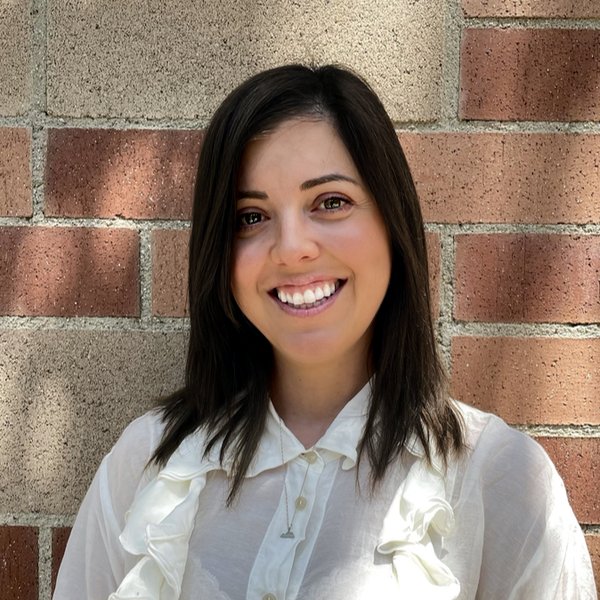
M.A. and Ph.D.
Former UCLA Italian Instructor with 16+ Years of Experience!
Personally vetted · Strommen’s note
A former UCLA Italian instructor with us since 2009, Marianna moves easily between Italian instruction and legal translation.
Specialties
M.A. and Ph.D.
Former UCLA Italian Instructor with 16+ Years of Experience!
Specialties
Personally vetted · Strommen’s note
A former UCLA Italian instructor with us since 2009, Marianna moves easily between Italian instruction and legal translation.

Masters of Fine Art, Bachelor in Foreign Language and Literature. · Over 2,000 hours of one‑on‑one teaching experience. Published literary translator, with work reviewed in Kirkus Reviews, Times Literary Supplement, Art Book D.A.P., and multiple international journals.
Master English, French & Italian with a Published Literary Translator
Personally vetted · Strommen’s note
A published literary translator, Colombina teaches English, French, and Italian, plus SAT prep, college essay coaching, and learning-disability support.
Specialties
Masters of Fine Art, Bachelor in Foreign Language and Literature. · Over 2,000 hours of one‑on‑one teaching experience. Published literary translator, with work reviewed in Kirkus Reviews, Times Literary Supplement, Art Book D.A.P., and multiple international journals.
Master English, French & Italian with a Published Literary Translator
Specialties
Personally vetted · Strommen’s note
A published literary translator, Colombina teaches English, French, and Italian, plus SAT prep, college essay coaching, and learning-disability support.

AP Lit playbook — exam strategy
5 AP Lit moves students wish they'd drilled earlier
These aren't textbook tips. They're the rubric-aware habits that separate a 3 from a 5. Screenshot the infographic, then book a tutor to drill the rest.
-
01
The thesis must take a position, not paraphrase the prompt
The thesis point on the 6-point rubric goes to essays that respond to the prompt with a defensible interpretation. A thesis that simply restates what the prompt asks does not earn the point. Most students who lose the thesis point are paraphrasing without committing. Pick an interpretation, state it clearly, and write toward it.
e.g. Not: The author uses literary devices to develop a theme. Instead: The author uses fractured chronology to suggest that trauma resists linear narrative.
-
02
Commentary explains what the evidence does, not what it says
Evidence-and-commentary points are lost most often when commentary stays at the summary level. The fix is moving from what the quotation says to what the quotation does. Each piece of textual evidence should be followed by commentary that explains how the language works to produce a specific effect on the reader and to support the thesis.
e.g. Not: This shows that Hamlet is sad. Instead: The repetition of "O" interjections collapses Hamlet's speech into pre-verbal grief, dramatizing the breakdown the soliloquy thematizes.
-
03
The sophistication point goes to context, complexity, or tension
Sophistication is the hardest single point to earn and the one that separates a high 4 from a 5. It goes to essays that situate the work in a broader literary or historical context, demonstrate complex understanding of the author's choices, or sustain a tension rather than resolving it neatly. Aim for one explicit move toward sophistication per essay, not at every paragraph.
e.g. Connect the text's formal choices to its historical moment, or to a literary tradition it answers, in one deliberate paragraph.
-
04
Pick 3 to 5 FRQ 3 works and know them deeply
FRQ 3 asks the student to choose a work to analyze. Knowing dozens of works superficially is worse than knowing 3 to 5 deeply. Most successful students settle on a Shakespeare tragedy (Hamlet, Macbeth, or Othello), one nineteenth-century novel (Frankenstein, Wuthering Heights, Jane Eyre), one twentieth-century American novel (Beloved, Their Eyes Were Watching God, Gatsby, Invisible Man), and occasionally a fourth or fifth. Read those works the way the rubric rewards.
e.g. If you have one Shakespeare and one Morrison ready to deploy at exam time, you can hit nearly any FRQ 3 prompt.
-
05
40 minutes is really 30 minutes of writing
Section II gives 40 minutes per essay. Reading and planning typically consume the first 8 to 10 minutes, which leaves 30 minutes of writing time. A strong fourth paragraph finished cleanly scores higher than a fifth paragraph started but not finished. Practice the time discipline under exam conditions, not just the writing in isolation.
e.g. Set a timer for 40 minutes. Read and outline for 8. Write for 30. Stop on the dot. Review what you wrote, not what you wished you had written.
About AP English Literature
Reading like the AP Lit rubric rewards
AP English Literature and Composition, usually shortened to AP Lit, is the College Board's senior-year course and exam for high school students taking a college-level survey of fiction, poetry, and drama. The exam runs three hours, splits into a 60-minute multiple-choice section and a two-hour free-response section with three essays, and is scored on the standard AP scale of 1 to 5. Most US universities give credit or placement for a 4 or 5; some accept a 3 for elective credit. The exam is administered in May, with the date set by College Board each year, and most students sit it at the end of their AP Lit course rather than as a standalone test.
The structure first. Section I is 55 multiple-choice questions across about five passages, with the passages drawn from prose fiction, poetry, and occasionally drama, dating from the sixteenth century through the present. Each passage carries 8 to 13 questions on craft, meaning, structure, and the relationship between technique and theme. Section II is three free-response questions: a poetry analysis (FRQ 1), a prose fiction analysis (FRQ 2), and a literary argument (FRQ 3) where students choose their own work from a list College Board provides or, for the right student, from outside the list with appropriate justification. The three essays are scored on a 6-point analytic rubric covering thesis, evidence and commentary, and sophistication, with the highest scorers consistently producing essays that demonstrate complex understanding of the text's literary techniques and their thematic implications.
The rubric is the most important document in AP Lit prep, and surprisingly few students read it carefully. The 6-point rubric awards 1 point for a defensible thesis that responds to the prompt, up to 4 points for evidence and commentary (with the high end requiring specific textual evidence integrated with commentary that consistently explains how the evidence supports the thesis), and 1 sophistication point awarded for essays that demonstrate complexity in argument, situate the work in a broader context, or show a sophisticated grasp of the author's rhetorical situation. Most students lose points not because they cannot write well but because they have not internalized what the rubric specifically rewards. Coaching covers reading the rubric like a checklist and writing toward it deliberately, especially the sophistication point, which is the hardest single point to earn and the one that separates a high 4 from a 5.
The canon is the second pillar of preparation. AP Lit can draw passages from any work in the literary tradition, but certain texts return frequently enough that reading them carefully pays off both for the multiple-choice section and for FRQ 3, where students choose a work to analyze. The high-frequency works on the AP Lit list include Hamlet, Macbeth, King Lear, Othello (Shakespeare's tragedies are the most-tested single author), Frankenstein by Mary Shelley, Their Eyes Were Watching God by Zora Neale Hurston, Beloved by Toni Morrison, Wuthering Heights by Emily Bronte, Jane Eyre by Charlotte Bronte, The Great Gatsby by F. Scott Fitzgerald, Heart of Darkness by Joseph Conrad, The Awakening by Kate Chopin, A Streetcar Named Desire by Tennessee Williams, Death of a Salesman by Arthur Miller, and Invisible Man by Ralph Ellison. The College Board's official course description includes a longer list of recommended works; tutors usually help students pick three to five to know deeply rather than dozens to know superficially, because FRQ 3 rewards deep textual knowledge of a single work more than a survey reading.
Close reading is the skill that drives everything else. The multiple-choice questions test close reading directly. The poetry and prose FRQs require it explicitly. Sophistication on FRQ 3 depends on it. Close reading at the AP Lit level means more than identifying literary devices, which is what students learned in middle school. It means tracking how specific choices the author makes (a particular word, a syntactic pattern, an image, a structural choice) produce specific effects on meaning, and articulating that connection clearly in prose. The AP Lit phrase for this is the analytical move, and coaching drills it directly through annotation work on passages, with the tutor showing the moves and then asking the student to make them. Most students arrive able to identify devices (metaphor, alliteration, irony) but struggle to articulate what the device does for the work's thematic concerns. The bridge from identification to analysis is the central pedagogical challenge of AP Lit prep, and it takes practice.
A few honest tutor observations on what most often costs students points. The thesis is the easiest point to lose and the easiest to recover. A thesis that simply restates the prompt does not earn the thesis point; a thesis that takes a position on the prompt does. Most students who lose the thesis point are paraphrasing the prompt without committing to an interpretation. Evidence-and-commentary points are most often lost when commentary stays at the level of summary: the student quotes the text, then explains what the quotation says, instead of explaining what the quotation does. The sophistication point goes most often to essays that connect the work's literary techniques to broader thematic or contextual implications: how the text engages with a literary tradition, what it suggests about the author's historical moment, what tension it sustains rather than resolves. Time management on Section II costs students more than they realize: 40 minutes per essay sounds like enough, but with reading time and planning the writing window is closer to 30 minutes, and a strong fifth paragraph never written scores worse than a strong fourth paragraph finished cleanly.
The canon-versus-craft tension is real and tutors handle it differently. Some lean into deep coverage of three to five anchor texts (often Hamlet, Frankenstein, Beloved, and one more) that the student can deploy for FRQ 3 with confidence. Others emphasize close-reading skill on unfamiliar passages, on the theory that strong close reading transfers across texts and the FRQ 3 work can be drilled separately in the last six weeks. Both approaches work; the right one depends on where the student is starting. A student with strong reading instincts but light canon exposure usually benefits from the second; a student with broad reading but weak analytical writing benefits from the first. The trial lesson includes a diagnostic so the tutor can read the student honestly before recommending a path.
Between lessons, the most effective preparation is reading well and reading widely. The College Board publishes released exams from previous years with scoring guidelines and sample student responses, available free from the AP Central website, and these are the gold standard for FRQ practice because they show exactly what scored at each level. The Norton Anthology of American Literature and the Norton Anthology of English Literature are the standard surveys, and students working through anchor texts often benefit from a Norton Critical Edition of the work, which includes the text plus contemporary criticism and scholarly essays. For poetry specifically, The Norton Anthology of Poetry and the Poetry Foundation website (poetryfoundation.org) cover the range AP Lit draws from. SparkNotes and CliffsNotes are not substitutes for reading the text; they are useful as memory aids after reading, not as replacements.
The Strommen AP English Literature roster includes high school AP teachers with multi-year exam-prep experience, current PhD candidates in English literature with strong teaching reputations, college-level instructors who teach the same texts in undergraduate survey courses, and former AP Lit readers (the College Board contractors who actually score the exam each summer) who know the rubric from the scoring side. Each tutor's bio specifies their background, the score band they typically work with, and which student profile fits them best (foundational 1-2 student needing structural support, intermediate 3-4 student pushing for the 5, advanced 5-track student who wants to land the sophistication point reliably). Match yourself to a tutor whose specialty matches your target. For broader academic writing skill, our academic writing help specialty page covers the longer-form skills, and the English Literature for High School page covers the related but distinct work of high school lit class itself. Browse the full tutor list, find a bio that matches your situation, and book the free trial.
What you'll cover
Lessons & classes tailored to AP English Literature
The AP Lit rubric and what each point requires
The 6-point analytic rubric is the most important document in AP Lit prep. Lessons cover what the thesis point actually rewards (a defensible interpretation, not a paraphrase of the prompt), what evidence-and-commentary points require (specific textual evidence with commentary that explains how the evidence supports the thesis), and how to earn the sophistication point (broader context, complex argument, sustained tension). Coaching reads the rubric like a checklist and writes toward it deliberately.
Close reading drills on poetry and prose
Close reading at the AP Lit level means tracking how specific authorial choices produce specific effects on meaning, then articulating the connection in prose. Lessons drill the analytical move directly through annotation work on passages: the tutor shows the move, then asks the student to make it. Coverage includes the standard literary devices but emphasizes the bridge from identifying devices to analyzing what they do for the text's thematic concerns.
FRQ 3 canon coverage: three to five anchor texts
Rather than surveying dozens of works superficially, lessons cover three to five anchor texts in depth so the student can deploy them confidently for FRQ 3. The most-tested choices include Shakespeare's tragedies (Hamlet, Macbeth, Othello, King Lear), Frankenstein, Beloved, Their Eyes Were Watching God, Wuthering Heights, Jane Eyre, The Great Gatsby, Invisible Man, and the modern American drama (A Streetcar Named Desire, Death of a Salesman). Pick the anchors that fit the student's reading taste and learn them the way the rubric rewards.
Timed essay practice and FRQ-by-FRQ strategy
Lessons include timed FRQ practice under exam conditions with detailed score-report review afterward. Coaching covers the specific moves for each FRQ type: FRQ 1 (poetry analysis) rewards close attention to formal elements (rhyme scheme, meter, structure, imagery); FRQ 2 (prose fiction analysis) rewards close attention to narrative technique (point of view, characterization, structure, voice); FRQ 3 (literary argument) rewards deep textual knowledge of the chosen work and the sophistication point.
FAQ
About AP English Literature lessons & classes
What is the AP Lit exam structure?
Three hours total. Section I is 55 multiple-choice questions in 60 minutes across about five passages of prose fiction, poetry, and occasionally drama from the sixteenth century through the present. Section II is three free-response essays in two hours: FRQ 1 (poetry analysis), FRQ 2 (prose fiction analysis), and FRQ 3 (literary argument on a student-chosen work). Each FRQ has 40 minutes recommended. The exam is scored on the standard AP scale of 1 to 5. Most US universities give credit or placement for a 4 or 5; some accept a 3 for elective credit.
How is the FRQ rubric scored?
Each FRQ is scored on a 6-point analytic rubric: 1 point for thesis (a defensible interpretation that responds to the prompt), up to 4 points for evidence and commentary (specific textual evidence integrated with commentary that consistently explains how the evidence supports the thesis), and 1 sophistication point (for essays that demonstrate complex understanding, situate the work in broader context, or show a sophisticated grasp of the rhetorical situation). The sophistication point is the hardest single point to earn and the one that separates a high 4 from a 5.
Which works should I read for FRQ 3?
FRQ 3 lets the student choose a work to analyze, with College Board providing a list of recommended works each year. Knowing dozens of works superficially is worse than knowing three to five deeply. Most successful students prepare a Shakespeare tragedy (Hamlet, Macbeth, Othello, or King Lear), one nineteenth-century novel (Frankenstein, Wuthering Heights, Jane Eyre), one twentieth-century American novel (Beloved, Their Eyes Were Watching God, The Great Gatsby, Invisible Man), and occasionally one or two more. Pick anchors that fit your reading taste, and read them the way the rubric rewards.
How long does AP Lit prep typically take?
Depends on the baseline and target. Most students prep across the academic year alongside their AP Lit course, with one or two tutoring sessions per week as exam date approaches. Compressed prep over 8 to 12 weeks before the May exam is realistic for students with strong baseline reading skills who need rubric-specific coaching. Compressed prep over 4 to 6 weeks is possible but mostly limits gains to one or two of the three FRQs. The trial includes a diagnostic so the tutor can give you an honest read on your timeline.
What score should I aim for?
Depends on your goals. A 3 earns elective credit at some US universities and is a respectable AP Lit score. A 4 earns credit or placement at most universities and reflects strong college-readiness in literary analysis. A 5 is the top score and the one selective universities expect to see on applications when AP Lit is offered at the student's high school. For most students, the realistic target is one band above their baseline diagnostic score. The trial includes a baseline so the tutor can set an honest target with you.
Can I prep for AP Lit and AP Lang together?
Yes, but they are different exams with different skills. AP English Language and Composition focuses on rhetorical analysis of nonfiction prose and argumentative writing. AP English Literature focuses on analysis of fiction, poetry, and drama. The skills overlap (close reading, evidence-based argument, rhetorical awareness) but the FRQ rubrics and the canon are different. Most students take one or the other, often AP Lang in junior year and AP Lit in senior year. If you are prepping for both, the same tutor can usually cover both, though some specialize in one or the other.
Can sessions be online or only in person?
Both. AP Lit coaching translates cleanly to video because most of the session is spent on a shared text. Most of our AP Lit tutors work entirely online via Zoom or Jitsi with screen-share on the passage. Several also offer in-person sessions in Los Angeles for students who prefer face-to-face work. The booking widget on each tutor's profile shows their available formats.
Do you also prep for the SAT or ACT?
Yes, often with the same students. AP Lit prep and SAT Reading and Writing prep share close-reading skills, and many of our students prep for both across the same year. Our SAT Reading and Writing specialty page covers the digital SAT format. For deeper academic-writing skill that transfers across high school AP, undergraduate, and graduate work, our academic writing help page covers the longer-form skills.
Ready for AP English Literature lessons or classes?
Book a free 30-minute trial with one of our personally vetted tutors. Private lessons or small-group classes — your choice.