



Personally vetted instructors
Korean Grammar tutors, lessons & classes
그럼 시작합시다 Geureom sijakhapsida. The way a Korean teacher actually opens the lesson: "Well then, let's begin."
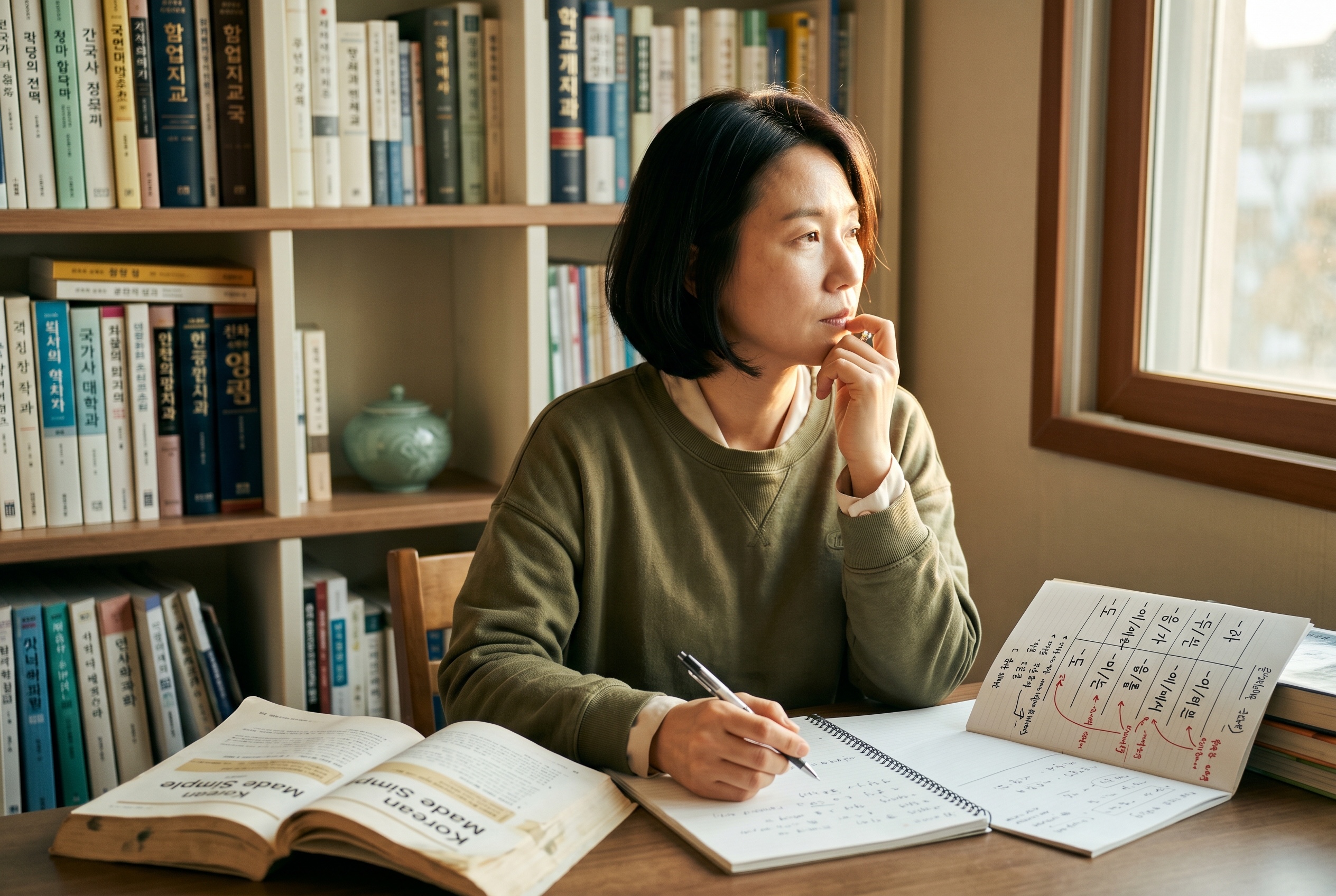
Personally vetted tutors who teach Korean grammar as a working system: particles, verb conjugation chains, the politeness levels, and the sentence-final endings that decide whether your Korean reads as natural or merely correct.
Your instructors
Korean Grammar tutors for private lessons & classes
Strommen has been teaching languages since 2006, and we vet every teacher ourselves rather than running an open marketplace. The grammar-focused Korean roster is curated tightly because grammar instruction rewards a tutor who can explain the system rather than only present it.
Filter by location, age, or price. Then book a 30-minute free trial. Bring a recent Korean sentence you wrote that did not feel right; a good tutor will use it to diagnose where the grammar is leaking.
Below are the Strommen tutors who specialize in Korean grammar. Photos, ratings, and rates are real. Click any card to read a bio and book a free 30-minute trial.
I want to learn…
Every tutor, personally met. — founder-vetted since 2006, in Los Angeles and online worldwide.
Get a personalized plan
Pick your language — a language advisor will match you with the right tutor and map out your path.

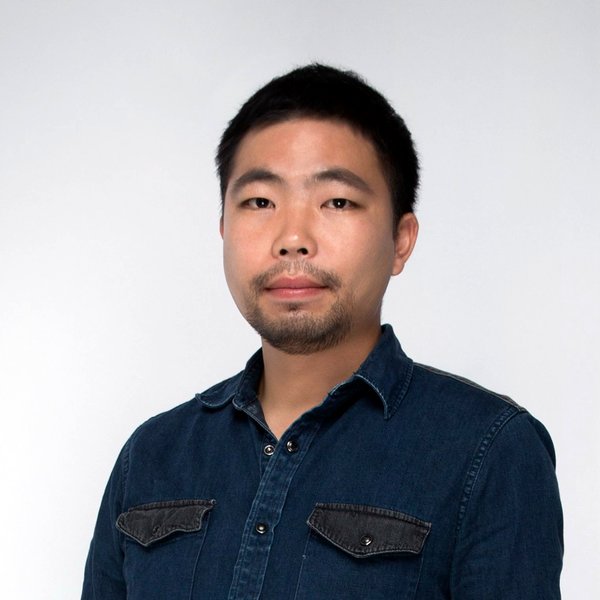


Master of Arts (M.A.) in Education from the University of the People (US)Bachelor of Arts (BA) in Teaching Korean as a Second Language from the Korean Education Bank (Korea)Bachelor of Arts (BA) in International Commerce and Logistics from Seoul Cyber... · Level 2 Certificate of Korean Language Teaching
Multilingualism, Specialized Education, Extensive Experience, Target Audience, Practical Skills
Personally vetted · Strommen’s note
Sanghoon teaches Chinese, English, and Korean out of Hangzhou, pulling material from work with students across very different backgrounds.
Specialties
Master of Arts (M.A.) in Education from the University of the People (US)Bachelor of Arts (BA) in Teaching Korean as a Second Language from the Korean Education Bank (Korea)Bachelor of Arts (BA) in International Commerce and Logistics from Seoul Cyber... · Level 2 Certificate of Korean Language Teaching
Multilingualism, Specialized Education, Extensive Experience, Target Audience, Practical Skills
Specialties
Personally vetted · Strommen’s note
Sanghoon teaches Chinese, English, and Korean out of Hangzhou, pulling material from work with students across very different backgrounds.
bachelor
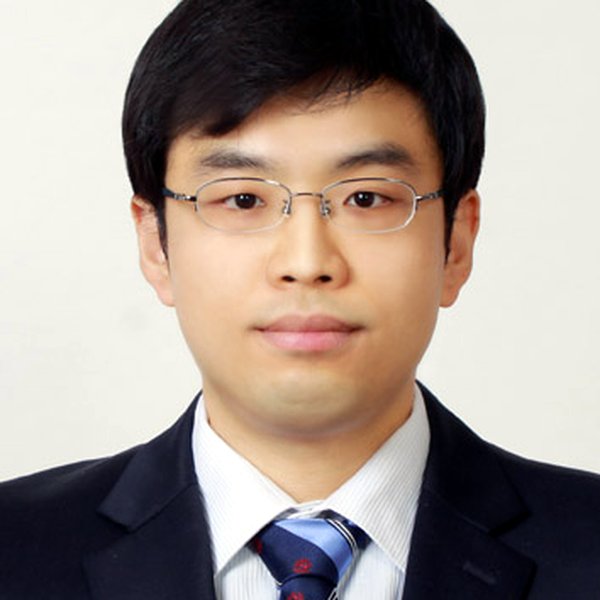
Korean teacher fluent in Chinese and English
Specialties
bachelor
Korean teacher fluent in Chinese and English
Specialties

문법 munbeop — the working system
5 grammar pieces every Korean learner has to get right
These are not advanced topics for someone preparing for TOPIK 6. They are the core grammar pieces that determine whether a learner sounds intermediate or sounds like they are still translating from English. Save the list and book a tutor to drill them.
-
01
은/는 vs 이/가
The most famous distinction in Korean grammar and the slowest to settle. 은/는 marks the topic of the sentence, often translatable as "as for X," and frequently introduces information both speakers already know. 이/가 marks the grammatical subject, often introducing new or contrastive information, and is required for the subject of a subordinate clause. Question words like 누가 (who) take 이/가. A tutor teaches the clear cases first, drills them until reflexive, then introduces the harder contrastive cases.
e.g. 저는 학생이에요 (jeoneun haksaengieyo, topic). 누가 했어요? 제가 했어요 (jega haesseoyo, new-information subject).
-
02
Three speech levels (합쇼체 / 해요체 / 반말)
Modern Korean collapses the historic seven speech levels into three working ones. 합쇼체 (hapsyoche) is the formal-polite of presentations and broadcasts. 해요체 (haeyoche) is the everyday polite register a learner uses with strangers and adults outside the family. 반말 (banmal) is casual, used with close friends, family, and people younger than the speaker. The three are encoded in the verb ending, and choosing the wrong one reads as a misjudgment of the relationship.
e.g. 가다 (to go) → 갑니다 (formal-polite, presentation). 가요 (everyday polite, default). 가 (casual, close friend).
-
03
Verb conjugation chain (가다 → 가요 → 갑니다 → 가십니다)
Korean verbs are built by stacking endings on a stem, and the stack carries tense, aspect, politeness, and honorifics all at once. Once the core conjugation patterns are reflexive, every subsequent topic (subordinate clauses, embedded quotation, modal endings) sits on top of the system. A learner who has the chain in working memory can build any Korean verb form on the fly rather than recalling each one separately.
e.g. 가다 (dictionary) → 가요 (polite) → 갑니다 (formal-polite) → 가십니다 (honorific) → 갔어요 (past polite) → 갈 거예요 (future polite).
-
04
Sentence-final endings (거든 / 잖아 / 네 / 군 / 지)
Small endings that carry the speaker's stance toward what they are saying. 거든 explains or justifies. 잖아 appeals to something the listener already knows. 네 marks fresh observation. 군 marks a realization. 지 invites agreement. Korean encodes in grammar what English handles with tone of voice. A learner who masters the polite endings and stops there can sound grammatically perfect and flat; adding these endings is the largest single jump from textbook Korean to natural-sounding speech.
e.g. 비가 와서 늦었어요, 우산이 없었거든요. ("I was late because of the rain, I didn't have an umbrella, you see.")
-
05
Honorifics layer (-시- infix and noun substitutions)
On top of the speech-level system sits a honorific layer that elevates the subject of the sentence. The -시- infix turns 가다 into 가시다 when the subject is an elder or superior. A small set of nouns has dedicated honorific substitutions: 밥 to 진지 (meal), 나이 to 연세 (age), 이름 to 성함 (name), 집 to 댁 (home). Korean also prefers a title with -님 over the word "you," which English speakers reach for reflexively and Korean speakers tend to avoid.
e.g. 할아버지께서 진지를 드십니다 ("Grandfather is eating his meal") stacks honorific subject marker 께서, honorific noun 진지, and honorific verb 드시다.
About Korean Grammar
Korean grammar as a working system
Korean grammar has a reputation for being harder than it is. The reputation comes partly from the writing system, which most learners discover is easier than feared, and partly from a small set of features (particles, agglutinative verb endings, three levels of politeness) that look intimidating in a table and turn out to be tractable once a tutor teaches them as a connected system rather than as a stack of independent topics. The system is the key word. Korean grammar is tightly interlocked, and a learner who studies it piece by piece in textbook chapter order ends up with the pieces but not the working machine. A grammar-focused tutor's job is to teach the machine.
A short note on Hangul, since it sits underneath everything else. The Korean alphabet was commissioned in 1443 by King Sejong the Great and published as Hunminjeongeum, the correct sounds for the instruction of the people. It is phonemic, alphabetic, and was designed for fast learning. The standard system has 14 consonants and 10 vowels combined into syllable blocks, and a focused learner reads syllabically within one or two lessons. This matters for grammar study because every grammatical feature below sits in Hangul, and a learner who is still decoding letters cannot focus on what those letters spell. A tutor establishes Hangul fluency in the first sessions and moves on.
Particles are the first real grammar piece, and the one Korean is famous for. Korean is a topic-prominent, subject-object-verb language. Particles attach to nouns and tell you what role each noun plays in the sentence. The core set is small. 은/는 (eun/neun) marks the topic, what the sentence is about. 이/가 (i/ga) marks the grammatical subject, often introducing new information. 을/를 (eul/reul) marks the direct object. 에 (e) marks time, location of existence, and direction. 에서 (eseo) marks location of an action. 에게 / 한테 marks the indirect object. 와/과 / 하고 marks "with" and "and." 도 means "also." 만 means "only." The trouble is not memorizing the list, which most learners do within a few weeks. The trouble is the 은/는 versus 이/가 distinction, which is notoriously the slowest point of Korean to settle and the one where adult learners stay unsure for longest.
The 은/는 versus 이/가 distinction deserves its own paragraph, because it gets framed as mysterious and is mostly rule-governed. 은/는 marks the topic, often translatable as "as for X," and frequently introduces information that both speakers already know. 이/가 marks the grammatical subject and tends to introduce new or contrastive information, and is required for the subject of a subordinate clause. Question words like 누가 (who) and 뭐가 (what) take 이/가, and 은/는 with them is awkward. None of this is captured by a single rule, and a tutor who teaches the contrastive cases honestly serves a learner better than one who pretends a single formula works. The distinction is also the one where reading and listening exposure pays off most reliably; the more native Korean a learner takes in, the more the choice becomes a felt pattern rather than a calculated one.
Verb conjugation is the second core topic and the place where the agglutinative nature of Korean shows itself. Korean verbs are built by stacking endings onto a stem, and the stack can be long. A single verb form can carry the stem, an honorific marker, a tense marker, an aspect marker, a modality marker, and a sentence-final ending all at once. The progression every learner climbs is the same: the dictionary form 가다 (gada, to go), the polite 가요 (gayo), the formal-polite 갑니다 (gamnida), the honorific 가십니다 (gasimnida), the past 갔어요, the future 갈 거예요, the negative 안 가요, the connective 가서, the conditional 가면. The order may vary between textbooks, but the system is the same. A grammar tutor drills the conjugation patterns until they are automatic, because every subsequent topic (subordinate clauses, embedded quotation, modal endings) sits on top of the conjugation system.
Honorifics are the part of Korean grammar that most learners find culturally distinctive and that classroom courses sometimes underexplain. Historically Korean had seven speech levels. Modern Korean collapses them in practice to three: 합쇼체 (hapsyoche), the formal-polite of presentations and broadcasts; 해요체 (haeyoche), the everyday polite register a learner uses with strangers, colleagues they do not know well, and adults outside the family; and 반말 (banmal), the casual register used between close friends, family, and people younger than the speaker. The three levels are encoded directly in the verb ending. The same verb 가다 can end as 갑니다, 가요, or 가, and choosing the wrong one is not a small slip. It reads as a misjudgment of the relationship. Layered on top of the speech level is the honorific 시- infix, which elevates the subject of the sentence (가시다 instead of 가다 when an elder is going), and a small set of honorific noun substitutions (밥 to 진지, 나이 to 연세, 이름 to 성함, 집 to 댁) that mark elevated reference. A grammar tutor teaches the polite 해요체 first as the safe default, drills it until it is automatic, then introduces 합쇼체 for formal situations and banmal for the appropriate relationships. The 반말 move between adults is something the senior party explicitly invites with the phrase 말 놓으세요, please lower your speech. Until then, both sides stay polite. American students often try to skip past the polite register toward banmal as a sign of warmth, and a tutor will slow that down. Warmth in Korean lives inside the polite register, not by abandoning it.
Sentence-final endings are the layer that separates flat correct Korean from natural Korean, and they are almost never taught with enough context in a beginner course. 거든 (geodeun) explains or justifies, the rough equivalent of "you see." 잖아 (janha) appeals to something the listener already knows, the equivalent of "as you know" or "don't you remember." 네 (ne) marks fresh observation, the surprise of noticing. 군 / 군요 (gun / gunyo) marks a realization or new information taken in. 지 / 지요 (ji / jiyo) invites agreement or confirms shared knowledge. These endings carry the speaker's epistemic stance toward what they are saying, which Korean encodes in grammar where English would handle it with tone of voice or a separate adverb. A learner who masters the standard polite endings and stops there can speak grammatically perfect Korean that sounds flat. A learner who adds the sentence-final endings sounds connected and present. A grammar tutor introduces these endings in real dialogue rather than as a chart, because their meaning lives in context.
Connective endings are the other place Korean grammar carries weight English does not. -고 connects clauses ("and"). -지만 contrasts ("but"). -아서 / -어서 gives reason or sequence. -니까 gives reason from the speaker's perspective. -면 makes a conditional. -ㄹ 때 marks "when." -면서 marks two actions happening at once. Each connective slots into the verb-ending stack at a specific point, and combining them with tense, aspect, and politeness markers is what produces the long verb forms that look intimidating on the page and become straightforward once the stack is internalized. A tutor drills the connectives in real sentence-building rather than from a list, because the goal is reflex, not recall.
The TOPIK examination is the standard external benchmark for Korean proficiency, and grammar lessons often track its requirements. TOPIK I covers Levels 1 and 2 (basic) and tests reading and listening. TOPIK II covers Levels 3 through 6 and tests reading, listening, and writing, with the writing section the most-cited reason capable students plateau between Level 5 and Level 6. Grammar work prepares students for both. The early levels reward control of the core grammar set covered above; the upper levels reward subtler features (the sentence-final endings, the connective system, embedded quotation with -다고, hedging endings like -ㄹ 것 같다) that build on it. For students whose goal is the upper levels, our academic Korean tutors handle the writing register the TOPIK II writing section actually rewards, and the advanced Korean tutors handle the late-intermediate plateau where most learners stall.
Our Korean grammar tutors include native speakers with teaching credentials, TOPIK examination experience, and a strong feel for where English-speaking adults stumble. They calibrate to your actual level and to the gaps your current Korean has, and they teach the system rather than the chapter. If broader study is on the table, our conversational Korean work pairs naturally with grammar lessons, and the Korean classes page covers the small-group options. The full Strommen tutor directory lists every Korean teacher Strommen works with. The arc from absolute beginner grammar through TOPIK II upper-band structural fluency takes years, but the early wins compound fast once the system clicks.
What you'll cover
Lessons & classes tailored to Korean Grammar
Hangul, then particles in contrastive pairs
Hangul gets handled in the first sessions, because no grammar topic past it works without it. Particles then come in the pairs that actually matter (은/는 vs 이/가, 에 vs 에서, 와/과 vs 하고), with example sentences where swapping the particle changes the meaning. The 은/는 vs 이/가 distinction gets the most time, because it is the slowest to settle and the one adult learners stay unsure for longest. Lessons drill the clear cases until reflexive before introducing the contested ones.
The verb conjugation chain as a system
Korean is agglutinative, and the verb conjugation system is the engine underneath every spoken sentence. Lessons teach the chain explicitly (dictionary form, polite -요, formal-polite -ㅂ니다, honorific -시-, past, future, negative, connective, conditional) and drill until a learner can build any form on the fly rather than recalling each one. Once the system is reflexive, every later topic sits on top of it without new memorization.
Three speech levels, sentence-final endings, and connectives
Modern Korean's three working speech levels (합쇼체 formal-polite, 해요체 everyday polite, 반말 casual) get taught in that order, with the polite as the safe default before casual ever enters. Sentence-final endings (거든, 잖아, 네, 군, 지) come in once the polite register is automatic, because they are how Korean marks the speaker's stance toward what they are saying. The connective system (-고, -지만, -아서/-어서, -니까, -면, -ㄹ 때, -면서) gets drilled in real sentence-building rather than from a list.
Grammar tied to a real proficiency target
Lessons connect to whatever benchmark fits your goal: TOPIK I or II at any level, university placement testing, a workplace credential, or simply structural fluency for conversation and reading. Tutors with TOPIK examination experience know which grammar points appear at each level and design study plans around them. For students aiming at the upper TOPIK II bands, our academic Korean tutors handle the writing register that actually moves the score, and our advanced Korean tutors handle the late-intermediate plateau where most learners stall. See the Korean classes page for small-group options.
FAQ
About Korean Grammar lessons & classes
Is Korean really easier than Japanese?
Mixed answer, and it depends on the part. The writing system is far easier in Korean. Hangul is phonemic and alphabetic, with 14 consonants and 10 vowels, and most learners read syllabically within one or two lessons. Japanese requires three scripts (hiragana, katakana, and a working set of kanji) that takes years to build. Grammar is closer to even. Both languages are subject-object-verb, both are agglutinative, both have a politeness system that takes time to control. The conjugation systems are different in detail and similar in difficulty. Vocabulary overlap from Sino-Korean and Sino-Japanese roots can help a learner of one if they already know the other. Pronunciation is arguably easier for Japanese; Korean's three-way plain, aspirated, and tense consonant contrast takes adult learners a while to hear.
Why are there 7 levels of formality in Korean?
Historically there were seven, and they are still listed in grammar textbooks. In modern spoken Korean the system has collapsed in practice to three working levels. 합쇼체 (hapsyoche) is the formal-polite of presentations, broadcasts, and first-impression contexts. 해요체 (haeyoche) is the everyday polite register a learner uses with strangers and adults outside the family. 반말 (banmal) is the casual register used between close friends, family, and people younger than the speaker. Some of the historic intermediate levels survive in literary or regional usage, but a learner who controls the three working levels is fully equipped for spoken Korean.
How do I actually memorize the particles?
Memorization is the easy part. Most learners know the basic particle list within a few weeks. The hard part is using the right particle reflexively in real speech, especially for distinctions where the contexts overlap, like 은/는 versus 이/가 or 에 versus 에서. A grammar tutor drills particles in contrastive pairs with example sentences where swapping the particle changes the meaning, then runs production exercises where you build sentences and the tutor corrects the particle in real time. The reflex develops through repetition with feedback, not through more list study.
What is the actual difference between 은/는 and 이/가?
Mostly rule-governed, with a small contested core. The clear cases: 은/는 marks the topic of the sentence, often translatable as "as for X." 이/가 marks the grammatical subject, often introduces new or contrastive information, and is required for the subject of a subordinate clause. Question words like 누가 (who) take 이/가. The contested cases involve new versus known information and contrastive contexts, where the choice carries nuance that is felt rather than parsed. A tutor teaches the clear rules first, drills them until reflexive, then introduces the harder cases through contrastive example pairs. Most learners stop feeling stuck on the distinction within a few months of focused work.
Is Hangul actually easy?
Yes, unusually so by world-script standards. Hangul was commissioned in 1443 by King Sejong specifically to be easy to learn, and the design holds up. The system is phonemic, alphabetic, and syllabically organized, with 14 consonants and 10 vowels. A focused learner reads syllabically within one or two lessons and is reading at conversational pace within a few weeks of practice. There is no shortcut around it for someone serious about Korean grammar, since every grammar topic sits in Hangul, and there is no good reason to put the work off.
How important are the sentence-final endings (거든, 잖아, 네, 지)?
More important than most beginner courses suggest. Grammatically perfect Korean without these endings sounds flat. Korean encodes the speaker's stance toward what they are saying directly in the ending, in a way English handles with tone of voice or a separate adverb. 거든 explains or justifies; 잖아 appeals to shared knowledge; 네 marks fresh observation; 지 invites agreement. Adding these endings is the largest single jump from textbook Korean to natural-sounding speech, and a grammar tutor introduces them in real dialogue rather than as a chart, because their meaning lives in context.
Should I be working on grammar alone or alongside conversation?
Alongside, in almost every case. Grammar lessons are not the opposite of conversation lessons; they are the structural foundation that makes conversation lessons stick. A learner who has the conjugation chain, the connective system, and the polite endings as reflexive knowledge picks up new vocabulary and patterns far faster than a learner still untangling the basics every time they speak. Most students benefit from running grammar and conversation in parallel, and several of our tutors handle both inside the same lesson when the student wants the integration. Our conversational Korean tutors handle the speaking side.
Can I take Korean grammar lessons online?
Yes. Most of our grammar-focused Korean tutors teach online via Zoom or Jitsi worldwide. Several also teach in person around Los Angeles. The booking widget on each tutor profile shows the available formats and times. Grammar lessons work especially well online because the tutor can share their screen for sentence breakdowns, conjugation charts, and on-screen annotation of your written sentences in real time.
Ready for Korean Grammar lessons or classes?
Book a free 30-minute trial with one of our personally vetted tutors. Private lessons or small-group classes — your choice.