



Personally vetted instructors
Korean for Kids tutors, lessons & classes
친구야 chinguya "Hey friend!" The warm, casual greeting a Korean teacher uses with kids.
Personally vetted Korean tutors who teach children. Lessons built for a child's attention span, anchored in the cultural draw of K-pop and K-drama that brought your kid here, with hangul songs and picture books that make the alphabet stick before adulthood.
Your instructors
Korean for Kids tutors for private lessons & classes
Strommen is a curated boutique school, and the bar for tutors who work with children is higher than for adult tutors. We look for rapport with kids, patience under five-year-old attention spans, and the instinct to turn a lesson into a song, a story, or a game. The teachers below cleared that bar.
Filter by location, age, or price, read the bios, then book a 30-minute free trial. Parents are welcome on the trial call and often sit in on the first few lessons.
Below are the Strommen tutors who specialize in teaching Korean to children. Photos, ratings, and rates are real. Click any card to read the bio, see the age range they teach, and book a free 30-minute trial.
I want to learn…
Every tutor, personally met. — founder-vetted since 2006, in Los Angeles and online worldwide.
Get a personalized plan
Pick your language — a language advisor will match you with the right tutor and map out your path.

N/A
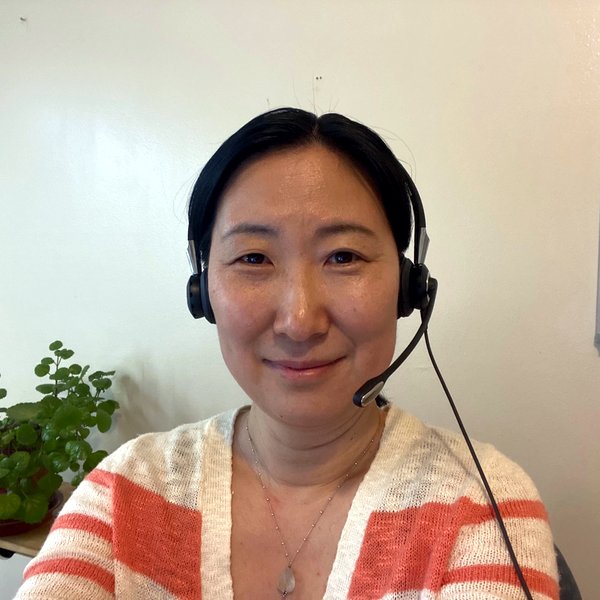
15 Years of Teaching Experience, Passionate about Language, Culture, and Education
Personally vetted · Strommen’s note
Yunhee has taught Korean for fifteen years. She reads what a student actually needs fast, then adjusts the lesson on the spot.
Specialties
N/A
15 Years of Teaching Experience, Passionate about Language, Culture, and Education
Specialties
Personally vetted · Strommen’s note
Yunhee has taught Korean for fifteen years. She reads what a student actually needs fast, then adjusts the lesson on the spot.


Master of Arts (M.A.) in Education from the University of the People (US)Bachelor of Arts (BA) in Teaching Korean as a Second Language from the Korean Education Bank (Korea)Bachelor of Arts (BA) in International Commerce and Logistics from Seoul Cyber... · Level 2 Certificate of Korean Language Teaching
Multilingualism, Specialized Education, Extensive Experience, Target Audience, Practical Skills
Personally vetted · Strommen’s note
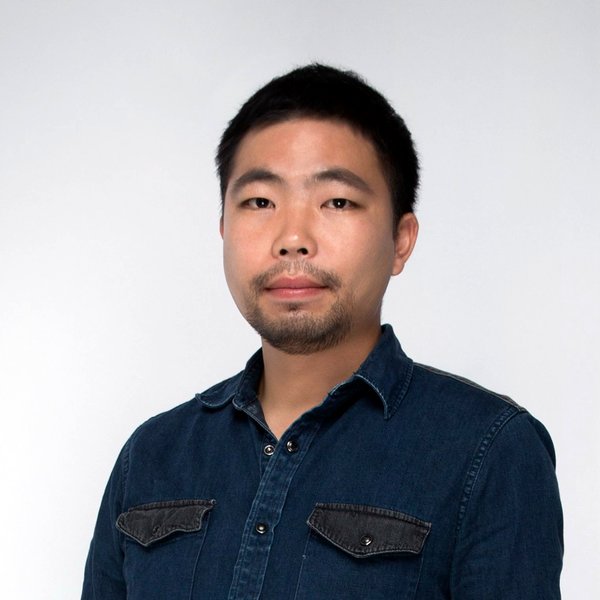
Sanghoon teaches Chinese, English, and Korean out of Hangzhou, pulling material from work with students across very different backgrounds.
Specialties
Master of Arts (M.A.) in Education from the University of the People (US)Bachelor of Arts (BA) in Teaching Korean as a Second Language from the Korean Education Bank (Korea)Bachelor of Arts (BA) in International Commerce and Logistics from Seoul Cyber... · Level 2 Certificate of Korean Language Teaching
Multilingualism, Specialized Education, Extensive Experience, Target Audience, Practical Skills
Specialties
Personally vetted · Strommen’s note
Sanghoon teaches Chinese, English, and Korean out of Hangzhou, pulling material from work with students across very different backgrounds.


Bachelor's degree · Chinese learning, Certified Korean language teacher
Light, Learning, Growth your languages.
Personally vetted · Strommen’s note
Jihoon starts with pronunciation basics, tongue position included, before moving into grammar. He teaches Chinese and Korean both, out of Bogotá.
Specialties
Also speaks: Japanese
Bachelor's degree · Chinese learning, Certified Korean language teacher
Light, Learning, Growth your languages.
Specialties
I also speak: Japanese
Personally vetted · Strommen’s note
Jihoon starts with pronunciation basics, tongue position included, before moving into grammar. He teaches Chinese and Korean both, out of Bogotá.

아이들 — songs, stories, K-content
5 things every Korean-learning kid loves
These are the pieces a good Korean-for-kids tutor reaches for in the first lessons. They turn a class into something a child will repeat at home all week. Screenshot the list, then book a tutor to learn the rest.
-
01
K-pop and K-drama as cultural draw
The single biggest motivation a Korean-for-kids tutor has to work with. A kid who arrived at Korean because they love BTS, BLACKPINK, NewJeans, Stray Kids, or the K-content their parents stream has a pull that no curriculum can manufacture. Tutors use song lyrics, drama clips, and dance covers as input material in lessons, pairing the cultural energy with structured vocabulary and pronunciation work. The same kid who finds traditional homework dull will memorize an entire song's lyrics in hangul over a weekend.
e.g. A nine-year-old who can sing every word of a BLACKPINK song from memory often picks up hangul reading faster than the standard curriculum predicts, because the alphabet is already attached to music they care about
-
02
"안녕! 안녕!" the greeting song
The staple greeting song of Korean preschool curricula and the first piece of Korean almost every Korean kid learns. "Annyeong! Annyeong!" sets the casual hello to a simple tune that sticks. Tutors use it in the first lesson because it works for any age, takes ten seconds to learn, and gives a child a small, real piece of Korean they can perform for a parent the moment the lesson ends.
e.g. 안녕, 안녕, 친구야 안녕 — Annyeong, annyeong, chinguya annyeong ("Hi, hi, hello friend")
-
03
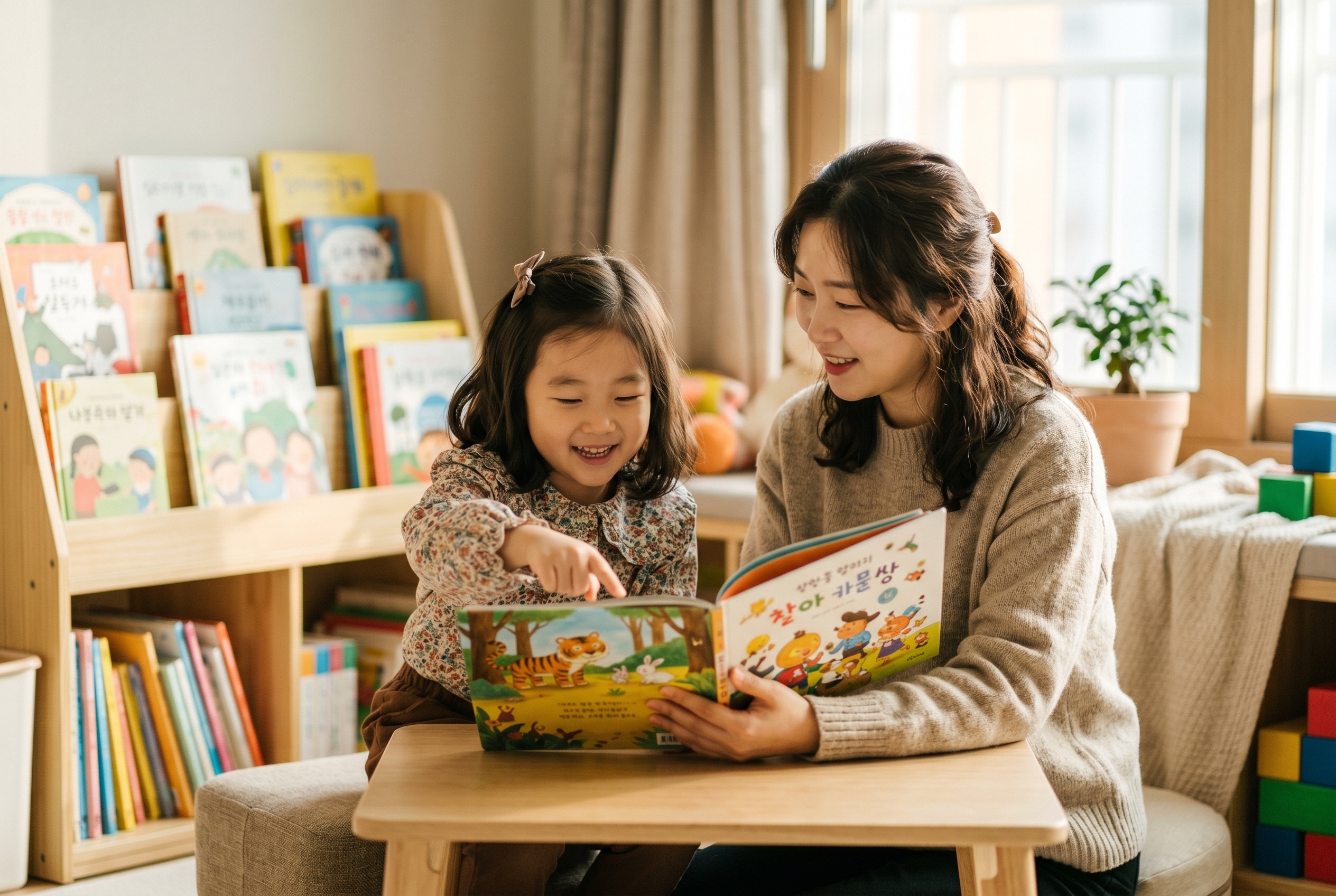
구름빵 Cloud Bread and Korean picture books
구름빵 (Gureum-bbang, "Cloud Bread") by Baek Hee-na is one of the most beloved Korean picture books worldwide, made into a popular animated series. Tutors keep small libraries of Korean picture books on hand (구름빵, 강아지똥, the Guri and Gura series, the 만희네 집 series) and read them aloud with kids, pausing to teach new vocabulary and point out the hangul as it appears. Picture books work for both heritage and new-learner kids.
e.g. Reading 구름빵 aloud with a six-year-old, the tutor pauses on the word 빵 (bbang, bread) and the child learns the word the way Korean kids do, attached to a story they want to hear again
-
04
한글날 Hangul Day, October 9th
The Korean national holiday celebrating the hangul alphabet, marked by elementary schools across Korea with calligraphy contests, alphabet songs, and lessons on King Sejong, the fifteenth-century monarch who commissioned the writing system. Tutors flag Hangul Day with kids around early October (often by reading the simple picture-book biographies of King Sejong) to give the child a sense of the alphabet as something celebrated rather than just studied.
e.g. An October lesson might pair a short reading on King Sejong with the child writing their own name in hangul calligraphy, the way Korean kids do in school that week
-
05
형 / 누나 / 오빠 / 언니 — age-relative pronouns
Korean kids learn 형 (older brother for a boy), 누나 (older sister for a boy), 오빠 (older brother for a girl), and 언니 (older sister for a girl) as core relational vocabulary, not just for siblings but for any older child or young adult they have a relationship with. A young girl student might call her tutor 언니, the warmth of the relationship marked by the title. The Strommen post on Korean honorific titles is a useful family-side reference.
e.g. A first-grade girl meeting her tutor: "안녕하세요, 언니!" (Hello, older sister!), where the form marks both politeness and warmth
About Korean for Kids
Korean a child actually wants to keep learning
Korean-for-kids lessons split into two practical worlds, and a tutor who tries to teach both kinds of children the same way loses one of them quickly. The first world is heritage: a child in a Korean-speaking household, often the second or third generation in a Korean-American family, who hears Korean at home and at grandparents' houses but reflexively answers in English. The second world is new-learner: a child with no household Korean at all, learning the language because the parents value an additional language in the child's future, because there is a Korean-speaking community nearby that the family wants the child to participate in, or because the child has fallen in love with K-pop or a K-drama and asked, on their own, to learn the language. Both children can become genuinely fluent in Korean and both deserve a real lesson plan. The plans look almost nothing alike.
For the heritage child, the work is activation rather than construction. The receptive vocabulary is usually intact: the child understands when 엄마 (eomma, mom) calls them to dinner, understands the grandparents on FaceTime, understands the conversation drifting in from the next room. What is missing is the productive courage to answer in Korean rather than English, the school-and-life vocabulary that household conversation never needed (subjects, friendship dynamics, after-school activities, the texture of an adult-track conversation), and usually the full hangul writing system, which Korean-speaking parents in the diaspora rarely manage to teach their kids at home. A good tutor for a heritage Korean kid spends the first weeks on hangul (reading and writing, often through songs and picture books the child can take home), then widens the active vocabulary into topics the household never used, then opens lessons into structured conversation, story reading, and writing that nudges the child from passive bilingualism into productive bilingualism. The arc is typically faster than for new learners because the foundation is already in place; many heritage kids show real productive gains within 4 to 6 months of weekly lessons.
For the new-learner child, the work is constructive from the ground up. Hangul comes first and stays fun: tutors use the famous "안녕! 안녕!" greeting song (a staple of Korean preschool curricula), the alphabet song that sets the consonant and vowel order to music, and picture books that pair simple text with bright illustrations. Hangul was designed in the fifteenth century to be learnable by ordinary people; it is learnable by a six-year-old in a few weeks of patient lessons, and the script becomes a source of pride rather than a barrier. Survival vocabulary follows: greetings, family words, colors, numbers, animals, food, the days of the week, the weather. The polite -요 ending is taught from the start as the universal form, because Korean kids speak politely to adults and the polite forms are the safe default in any new context. Grammar is introduced organically through whole phrases rather than as rules; a kid learning "I want apples" picks up the object marker 을 on 사과 (apple) without ever being told what a topic-comment marker is, and that buried-grammar approach is fundamentally easier on a child's brain than the chart-based approach that adult learners endure.
The K-pop and K-drama cultural draw is the largest single asset a children's Korean tutor has, and the good ones use it deliberately. A kid who arrived at Korean because they love BTS, BLACKPINK, NewJeans, Stray Kids, or the music their older sibling plays in the car has a motivation that no curriculum can manufacture. A kid who fell in love with a K-drama (Strong Girl Bong-soon, Hospital Playlist, Crash Landing on You, or the K-content their parents stream) has built up an ear for Korean rhythm and a starter vocabulary of phrases they have already absorbed. Tutors use song lyrics, drama clips, and the broader K-content world as input material in lessons, pairing the cultural pull with structured vocabulary and pronunciation work. The same kid who finds a traditional curriculum dull will memorize an entire song's lyrics in hangul over a weekend. A good tutor knows when to lean into that energy and when to redirect it toward the grammar work that needs to happen too.
Korean children's books deserve their own paragraph because the picture-book tradition in Korea is extraordinary. 구름빵 (Gureum-bbang, "Cloud Bread") by Baek Hee-na, which became an animated series and a beloved cultural reference, is one of the most-used early-reader books in Korean kids' classrooms worldwide. 강아지똥 (Gangaji-ttong, "Puppy Poo") by Kwon Jung-saeng is the classic Korean picture book about self-worth, with hand-painted illustrations and accessible prose. The 구리와 구라 (Guri and Gura) series, translated from Japanese and beloved across East Asia, offers gentle adventures with rich food vocabulary. The 만희네 집 (Manhee's House) series gives a window into Korean home life and family dynamics. Tutors keep a small library of these books on hand and read them aloud with kids, pausing to teach the new vocabulary and to point out the hangul as it appears on the page. Picture books work for both heritage and new-learner kids and remain useful through ages four to nine.
The diminutive and age-relative vocabulary is the next piece of warmth Korean offers that English does not have an equivalent for. Korean kids learn 형 (hyeong, older brother for a boy), 누나 (nuna, older sister for a boy), 오빠 (oppa, older brother for a girl), and 언니 (eonni, older sister for a girl) as core relational vocabulary, not just for siblings but for any older child or young adult they have a relationship with. Tutors use these forms in lessons (a young girl student might call her tutor 언니, the warmth of the relationship marked by the title) because the vocabulary is how Korean speakers structure social closeness. The Strommen post on Korean honorific titles is the companion most heritage-family parents bookmark.
Hangul Day on October 9th (한글날 Hangulnal) is the Korean national holiday celebrating the alphabet, marked by elementary schools across Korea with calligraphy contests, alphabet songs, and lessons on King Sejong, the fifteenth-century monarch who commissioned the writing system. It is one of the genuinely special cultural holidays of the Korean calendar, and a tutor who flags Hangul Day with kids around early October (often by reading the simple picture-book biographies of King Sejong widely available in Korean) gives the child a sense of the alphabet as something celebrated rather than just studied. Lunar New Year (설날 Seollal), the autumn harvest festival (추석 Chuseok), and Children's Day (어린이날 Eorininal, May 5th) are the other anchor holidays in a year of Korean-for-kids lessons, each with its own food, costumes, and family rituals worth teaching as lived culture rather than as flat facts.
For heritage kids specifically, the Korean-American diaspora context is worth a paragraph. The Korean-American community in the United States is concentrated in Los Angeles (especially in Koreatown), in the New York metropolitan area, and in northern New Jersey, with smaller communities throughout the country. Many heritage kids grow up bilingual but with the Korean gradually losing ground to English as schooling intensifies, and the moment when parents seek out a tutor is often the moment the kid has started answering halmoni's phone calls in English. That moment is exactly when intervention is most valuable, because the receptive Korean is still strong and the productive Korean can be revived with the right kind of outside-the-family adult to practice with. Tutors who specialize in heritage kids understand the diaspora-family dynamic and approach the work with the gentleness it requires.
A practical note on age. Most Strommen Korean-for-kids students are between four and twelve. Below four, the productive vocabulary is too small for formal lessons to be fully effective; the time is better spent on family-led immersion, shared songs, and picture books, with maybe a 20-minute introductory session occasionally. Above twelve, the child is usually ready for a more conversation- or grammar-anchored approach (the conversational Korean or Korean for Beginners rosters often suit teens better than the kids' track). Lesson length calibrates to age (30 minutes for younger kids, 45 to 60 minutes for older ones), and cadence beats length: a child seen weekly for a year picks up more than one seen biweekly for two hours per session. Most tutors recommend a parent presence for the trial and the first few lessons, then adjust based on how the kid does with and without a parent in the room.
The tutors below teach Korean to heritage kids, to new-learner kids, and to teenagers transitioning from kid-curriculum to adult-curriculum lessons. The broader Korean program is on the main Korean classes page; the full Strommen roster across languages is on the tutor directory.
What you'll cover
Lessons & classes tailored to Korean for Kids
Heritage activation: passive understanding to productive speech
For kids in Korean-speaking households who understand the language but answer in English. The work is activation: building the courage to respond in Korean, widening vocabulary into school-life and friendship topics the household never used, and teaching the hangul writing system that parents rarely manage to teach at home. Heritage kids often show real productive gains within 4 to 6 months of weekly lessons because the foundation is already in place. Tutors who specialize in heritage kids understand the diaspora-family dynamic and approach the work with the gentleness it requires.
New-learner Korean from zero, anchored in song and story
Hangul comes first through the "안녕! 안녕!" greeting song, the alphabet song, and picture books like 구름빵 that pair simple text with bright illustrations. Survival vocabulary follows: greetings, family words, colors, numbers, animals, food. The polite -요 ending is taught from the start because Korean kids speak politely to adults. Grammar is introduced organically through whole phrases rather than rules; a kid learning "I want apples" picks up the particle system without ever being told what a particle is.
K-content as input, used deliberately
The K-pop and K-drama cultural draw is the largest single asset a children's Korean tutor has. Tutors use song lyrics, drama clips, and dance covers as input material in lessons, pairing the cultural pull with structured vocabulary and pronunciation work. A tutor who knows when to lean into a child's K-content energy and when to redirect toward the grammar work keeps kids engaged in a way no chapter sequence can match.
Cultural holidays and the lived-culture layer
Hangul Day on October 9th, Lunar New Year (설날 Seollal) in late January or February, the autumn harvest festival (추석 Chuseok) in September or October, and Children's Day (어린이날 Eorininal) on May 5th each anchor a piece of the year's lessons with food, costumes, and family rituals worth teaching as lived culture rather than as flat facts. Tutors fold the holidays in as they arrive on the calendar. For teens ready to transition to adult lessons, paths open into conversational Korean or Korean for Beginners. See also the Korean classes page for group options.
FAQ
About Korean for Kids lessons & classes
Is my child too young to start Korean?
Probably not, but the answer depends on how young. Below age four, formal lessons are less effective than family-led immersion (songs, picture books, parent-speaking-Korean-at-home), with maybe a 20-minute introductory session occasionally. Between four and twelve is the sweet spot for structured kid-curriculum lessons. Above twelve, the child is usually ready for a more conversation- or grammar-anchored approach, often better suited to the conversational Korean or Korean for Beginners rosters than the kids' track.
My child is a heritage learner who understands but barely speaks. Will this help?
Almost certainly. Heritage kids are the most common and the most rewarding group of students for Korean-for-kids tutors. The receptive vocabulary is usually strong, the family pronunciation foundation is in place, and what is missing is the productive courage to answer in Korean, the vocabulary for topics the household never used (school subjects, friendship dynamics), and usually the hangul writing system. Most heritage kids show real productive gains within 4 to 6 months of weekly lessons because they are activating something that is already there rather than building from scratch.
My kid got into Korean through K-pop. Is that a real learning path?
Yes, and a tutor who knows how to use it can ride that motivation a long way. A kid who fell in love with BTS or BLACKPINK has a pull no curriculum can manufacture, plus an ear that has absorbed Korean rhythm and a starter vocabulary of phrases they already half-know. Tutors use song lyrics, drama clips, and dance covers as input material alongside structured vocabulary and pronunciation work. The kid who finds traditional homework dull will memorize an entire song's lyrics in hangul over a weekend, which is a teaching opportunity worth seizing.
How long does it take a child to learn hangul?
Less time than you would expect. Hangul was deliberately designed in the fifteenth century by King Sejong to be learnable by ordinary people in a short time, with consonant shapes that echo mouth position and vowel shapes built from three primary elements. Most kids read basic hangul words within a few weeks of weekly lessons and read fluently within a couple of months of light daily practice. Tutors usually pair the alphabet learning with songs (the staple "안녕! 안녕!") and picture books, which makes the script stick faster than flashcards alone.
Are your kids' Korean tutors native speakers?
Most are native speakers, primarily from Seoul and other Korean cities. A few are longtime bilingual teachers who have spent years working specifically with kids and have strong rapport across age ranges. Each tutor's bio specifies their background, the age ranges they actually teach, and how they run a young learner's lesson. The skill of holding a six-year-old's focus for thirty minutes is its own craft, separate from knowing Korean well, and we screen for both.
Can my child take Korean lessons online, or do they need to be in person?
Both work, though young kids often do better in person for the first few months because attention is easier to hold in shared physical space. Older kids (eight and up) often do fine online, especially if they are already comfortable with screens for school. Many of our Korean kids' tutors offer both formats; the booking widget on each tutor profile shows which they teach. For a small-group option, our Korean classes page covers that route.
Should I be in the room during my child's lessons?
For the trial and the first few lessons, yes, almost always. Parent presence helps a young child settle and gives you a clear read on how the tutor works. After the first few sessions, most tutors prefer the child to be alone with them for the lesson itself, with a quick parent debrief at the end. This is partly so the child commits to the relationship with the tutor, and partly so they speak more freely without performing for a parent in the room. Tutors will tell you when they think it is time.
What if my child resists practicing between lessons?
Normal, and the right response is usually to lower the bar. Five minutes of Korean a day (a song, a picture book, a single new word) beats half an hour twice a week, because language learning compounds through frequency. Tutors give parents specific, short, low-stakes tasks for the week ("watch this five-minute YouTube clip," "read these four hangul flashcards") rather than open-ended practice. Almost no kid practices between lessons the way an adult learner would, and good tutors design around that reality rather than fighting it.
Ready for Korean for Kids lessons or classes?
Book a free 30-minute trial with one of our personally vetted tutors. Private lessons or small-group classes — your choice.