



Personally vetted instructors
Intensive English tutors, lessons & classes
Welcome to today's lesson What an immersion-style English tutor says at the top of a 90-minute session.
Personally vetted intensive English tutors for ESL and EFL students on accelerated timelines. Immersive lessons calibrated to the CEFR ladder, the famous TOEFL/IELTS arc, and the Foreign Service Institute's baseline hours for English proficiency.

Your instructors
Intensive English tutors for private lessons & classes
Strommen has been running intensive English programs for international adults since 2006. Most intensive students arrive with a hard deadline: an admissions decision in eight months, a corporate relocation in six, a fellowship start in twelve, a visa interview in four. Every tutor below was met and vetted by us in person or by thorough video interview, and several have direct backgrounds at university IELP programs and major language schools.
Filter by location, age, or price. Then book a 30-minute free trial. The trial begins with an honest placement against the CEFR scale so we can be straight with you about timeline.
Below are the Strommen tutors who specialize in intensive English. Photos, ratings, and rates are real. Click any card to read their bio and book a free 30-minute trial.
I want to learn…
Every tutor, personally met. — founder-vetted since 2006, in Los Angeles and online worldwide.
Get a personalized plan
Pick your language — a language advisor will match you with the right tutor and map out your path.

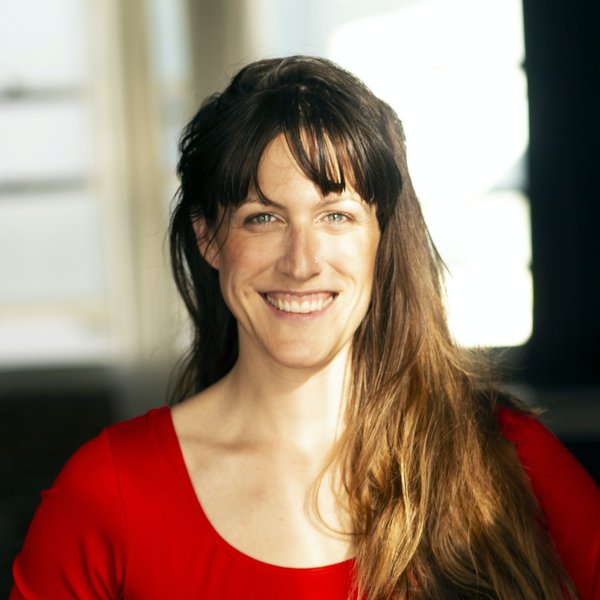
Bachelor of Fine Arts, Master of Fine Arts and Research
French and English teacher with University level teaching Experience - Top Rated Instructor
Personally vetted · Strommen’s note
Erin teaches French and English with university-level credentials, and her specialties stretch from accent work to art history to college prep.
Specialties
Bachelor of Fine Arts, Master of Fine Arts and Research
French and English teacher with University level teaching Experience - Top Rated Instructor
Specialties
Personally vetted · Strommen’s note
Erin teaches French and English with university-level credentials, and her specialties stretch from accent work to art history to college prep.


Bachelor's · TEFL 120h (Graded A)
Damon, the ESL teacher
Personally vetted · Strommen’s note
Damon treats every student like someone he's building a long relationship with. He teaches Chinese, English, and Russian out of Bangkok.
Specialties
Bachelor's · TEFL 120h (Graded A)
Damon, the ESL teacher
Specialties
Personally vetted · Strommen’s note
Damon treats every student like someone he's building a long relationship with. He teaches Chinese, English, and Russian out of Bangkok.
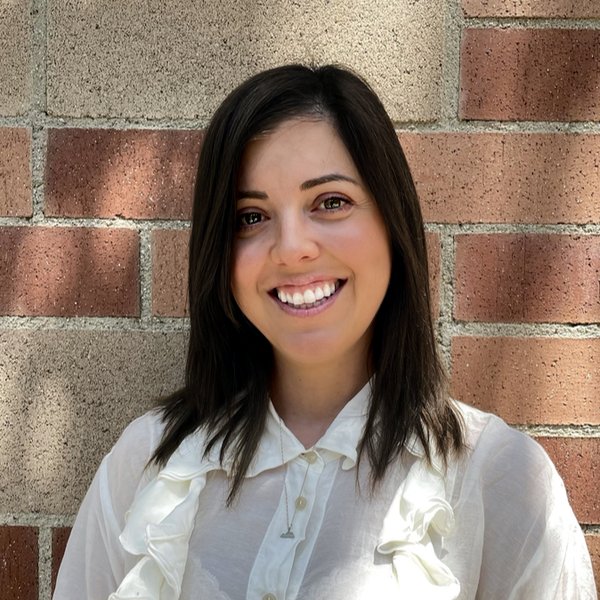
M.A. and Ph.D.
Former UCLA Italian Instructor with 16+ Years of Experience!
Personally vetted · Strommen’s note
A former UCLA Italian instructor with us since 2009, Marianna moves easily between Italian instruction and legal translation.
Specialties
M.A. and Ph.D.
Former UCLA Italian Instructor with 16+ Years of Experience!
Specialties
Personally vetted · Strommen’s note
A former UCLA Italian instructor with us since 2009, Marianna moves easily between Italian instruction and legal translation.

M.A. in TESOL B.A. in Journalism A.A. in Library Science · Community College Credential (lifetime)
Master's Degree in TESOL
Personally vetted · Strommen’s note
Ariel has taught English for thirty-eight years and holds a Master's in TESOL. He's taught in university intensive programs on both sides of the Pacific.
Specialties
M.A. in TESOL B.A. in Journalism A.A. in Library Science · Community College Credential (lifetime)
Master's Degree in TESOL
Specialties
Personally vetted · Strommen’s note
Ariel has taught English for thirty-eight years and holds a Master's in TESOL. He's taught in university intensive programs on both sides of the Pacific.

Masters of Fine Art, Bachelor in Foreign Language and Literature. · Over 2,000 hours of one‑on‑one teaching experience. Published literary translator, with work reviewed in Kirkus Reviews, Times Literary Supplement, Art Book D.A.P., and multiple international journals.
Master English, French & Italian with a Published Literary Translator
Personally vetted · Strommen’s note
A published literary translator, Colombina teaches English, French, and Italian, plus SAT prep, college essay coaching, and learning-disability support.
Specialties
Masters of Fine Art, Bachelor in Foreign Language and Literature. · Over 2,000 hours of one‑on‑one teaching experience. Published literary translator, with work reviewed in Kirkus Reviews, Times Literary Supplement, Art Book D.A.P., and multiple international journals.
Master English, French & Italian with a Published Literary Translator
Specialties
Personally vetted · Strommen’s note
A published literary translator, Colombina teaches English, French, and Italian, plus SAT prep, college essay coaching, and learning-disability support.
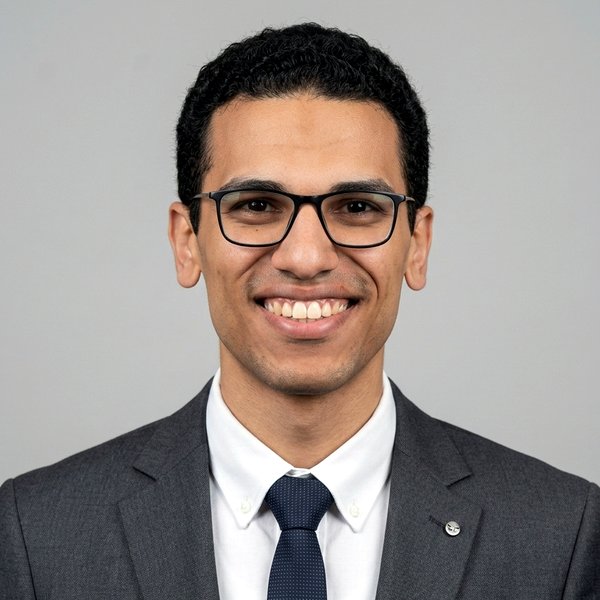


Bachelor of Education (B.Ed.) and pursuing a degree in Aerospace Engineering. · I have a TEFL certification | Certifications in Adobe Graphic Design (Level 1 & 2) for interactive presentations and educational materials.
English, German, and Arabic classes
Personally vetted · Strommen’s note
Arabic, English, and German sit alongside AP Calculus and AP Physics on Omar's schedule, a genuinely rare tutor who crosses from language straight into STEM.
Specialties
Also speaks: French, Italian, Spanish
Bachelor of Education (B.Ed.) and pursuing a degree in Aerospace Engineering. · I have a TEFL certification | Certifications in Adobe Graphic Design (Level 1 & 2) for interactive presentations and educational materials.
English, German, and Arabic classes
Specialties
I also speak: French, Italian, Spanish
Personally vetted · Strommen’s note
Arabic, English, and German sit alongside AP Calculus and AP Physics on Omar's schedule, a genuinely rare tutor who crosses from language straight into STEM.

BSc (Hons) Software Engineering – Cardiff Metropolitan UniversityBusiness Studies – SIST British Education Morocco · • TEFL Certification• Cambridge English Certification• Cardiff Metropolitan University Certification• UI/UX Design Certification• Preply Language Teaching Certification
Speak English Naturally. Build Confidence. Make Real Progress.
Specialties
Also speaks: Arabic, French
BSc (Hons) Software Engineering – Cardiff Metropolitan UniversityBusiness Studies – SIST British Education Morocco · • TEFL Certification• Cambridge English Certification• Cardiff Metropolitan University Certification• UI/UX Design Certification• Preply Language Teaching Certification
Speak English Naturally. Build Confidence. Make Real Progress.
Specialties
I also speak: Arabic, French

M.A Oxford foreign languages and literature BSN University of Oklahoma.Working part time towards MSN · RN license for California
language learners unite!
Personally vetted · Strommen’s note
Miriam teaches English, French, German, and some Latin, adapting by age: constructivist methods for adults, inquiry-based learning for kids.
Specialties
M.A Oxford foreign languages and literature BSN University of Oklahoma.Working part time towards MSN · RN license for California
language learners unite!
Specialties
Personally vetted · Strommen’s note
Miriam teaches English, French, German, and some Latin, adapting by age: constructivist methods for adults, inquiry-based learning for kids.
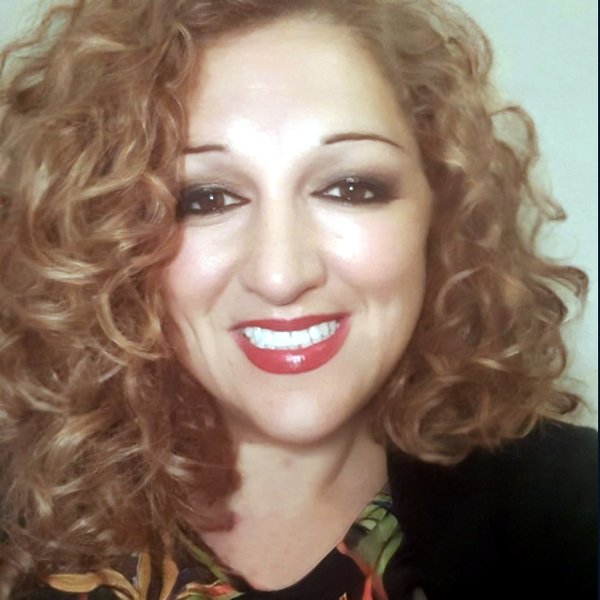
Interpreter /translator · Celta
Inspire the love for learning and cultural exploration
Personally vetted · Strommen’s note
Out of Turin, Caterina teaches Ladin, the Dolomite minority language, alongside Italian and English.
Specialties
Interpreter /translator · Celta
Inspire the love for learning and cultural exploration
Specialties
Personally vetted · Strommen’s note
Out of Turin, Caterina teaches Ladin, the Dolomite minority language, alongside Italian and English.
Bachelors degree in business Masters in logistics · TEFL Translation
Certified French & Spanish Language Coach | Business, Exams, & Conversational Mastery
Personally vetted · Strommen’s note
A Berlitz-trained language consultant, marielyne teaches English, French, and Spanish, built for business communication and exam prep specifically.
Specialties
Bachelors degree in business Masters in logistics · TEFL Translation
Certified French & Spanish Language Coach | Business, Exams, & Conversational Mastery
Specialties
Personally vetted · Strommen’s note
A Berlitz-trained language consultant, marielyne teaches English, French, and Spanish, built for business communication and exam prep specifically.

BSc · ITEFL 120hr Tefl Certificate
Professional ESL Teacher
Specialties
BSc · ITEFL 120hr Tefl Certificate
Professional ESL Teacher
Specialties

Bachelor English and Psychology · TEFL, Oxford Aviation Train-the-Trainer Certificate
Your cheat code for German
Specialties
Bachelor English and Psychology · TEFL, Oxford Aviation Train-the-Trainer Certificate
Your cheat code for German
Specialties

ESL playbook — intensive realities
5 things any honest intensive English program names up front
These aren't motivational posters. They are the structural realities of intensive ESL work that good programs name on day one and bad ones obscure. Screenshot to share with anyone trying to compress a language timeline.
-
01
CEFR A1 → C2 is a real ladder, not a vibe
The Common European Framework of Reference for Languages, published by the Council of Europe in 2001, defines six levels: A1 survival, A2 functional, B1 intermediate, B2 upper-intermediate, C1 advanced, C2 near-native. Cambridge English, IELTS, and TOEFL all map onto this scale. Honest intensive programs place every student on the ladder in lesson one and report progress against it weekly. Watch for any school that claims a student is "almost fluent" without naming the level.
e.g. B2 ≈ IELTS 5.5-6.5 ≈ TOEFL 72-94 ≈ Cambridge B2 First.
-
02
The ESL classroom protocol
Reputable ESL instruction follows a few conventions: lessons in English from the first session (no translation crutch), selective correction (not every mistake every time), the four skills rotated through the curriculum (listening, speaking, reading, writing all every week), and homework that does the compounding work between lessons. A student who skips homework in an intensive program is paying intensive prices for extensive results.
e.g. 60-minute lesson, 90+ minutes of structured homework before the next lesson. Non-negotiable.
-
03
The TOEFL/IELTS arc, and when to start it
TOEFL iBT and IELTS are designed for B2-and-up candidates. Drilling test strategy when the underlying proficiency is still B1 produces frustration, low scores, and wasted prep time. The right sequence is general English to B2, then test-specific prep for 3-6 months, then sit the test. Most candidates who skip the general-English phase end up sitting twice. Our TOEFL and IELTS specialty pages cover the test-specific work.
e.g. B1 plateau? Build to B2 first, then layer TOEFL or IELTS prep on top.
-
04
Immersion + classroom + private tutor is the strongest combination
Immersion (living in an English-speaking country) supplies listening hours and unscripted speaking. Classroom courses supply curriculum spine and peer practice. Private tutoring supplies per-student calibration and high-volume speaking time. The three are complements, not alternatives. Students on tight budgets pick the highest-leverage element for their gap, usually private tutoring; students with budget combine all three.
e.g. School AM, private tutor 2 evenings/week, immersion in everything else.
-
05
The FSI 600-900 hours for an adult ESL/EFL arc
The US Foreign Service Institute has trained adult learners for nearly 80 years. Their published baseline for an English speaker reaching professional working proficiency in a Category I language is 600-750 classroom hours; the inverse math applies to English. A European-language speaker can reasonably target B2 in 9-15 months at 15 weekly hours; an Asian-language speaker needs 18-30 months for the same target. Anyone promising shorter timelines is selling fairy tales.
e.g. 15 hours/week × 50 weeks = 750 hours = one realistic year of intensive work.
About Intensive English
Real progress on a compressed timeline
Intensive English is what we run when a student has more urgency than time. The profile is consistent across nationalities and ages: an adult ESL or EFL learner with a hard deadline (an admissions cycle, a relocation, a corporate transfer, a new job, a visa renewal, a fellowship start date) and a need to compress what conventional schools spread over years into months. The Foreign Service Institute, which has trained American diplomats in foreign languages since 1947, classifies the major European languages in Category I and budgets roughly 600-750 classroom hours for an English speaker to reach professional working proficiency. The same math runs in reverse for English: a Spanish or Italian or French speaker generally needs the same 600-750 hours to reach professional working English from zero, and a speaker of a Category IV language (Mandarin, Cantonese, Korean, Japanese, Arabic) needs 1,500-2,200. Intensive courses are designed to deliver those hours in 6-12 months rather than three to five years, which means the daily load is real and the curriculum has no slack for unfocused work.
The ESL versus EFL distinction matters here, and gets glossed over too often. ESL (English as a Second Language) refers to learning English inside an English-speaking environment, where the language surrounds the learner in shops, public transit, neighbors, and media. EFL (English as a Foreign Language) refers to learning English in a country where English is not the dominant language, where the only English exposure is the lesson itself plus whatever the learner pulls in through media. The curriculums differ. An ESL student in Los Angeles, London, or Toronto can build comprehension hours simply by living their day, and lessons spend more time on producing English under pressure and calibrating to the regional accent. An EFL student in Seoul, Riyadh, São Paulo, or Berlin has to construct the immersion environment artificially, which means deliberate daily listening, structured speaking practice with the tutor and partners, and a heavier reliance on lesson time to generate the speaking volume an ESL student gets for free. Both paths work. They are not the same path.
The CEFR ladder is the right scaffold for any intensive program because it gives student and tutor a shared map. A1 is survival English (the alphabet, basic introductions, present tense, around 80-100 classroom hours from zero for a European-language speaker). A2 is functional everyday English (past tense, common future forms, simple opinions, another 80-100 hours). B1 is the intermediate threshold where a learner can hold an unscripted conversation on familiar topics and handle most situations encountered while traveling in an English-speaking country (another 150-200 hours). B2 is upper-intermediate, the level at which most international universities will accept a candidate and the level corporate environments expect for non-native English-speaking professionals (another 200-300 hours). C1 is advanced, the operating level for academic study in English and senior corporate work (another 300-400 hours). C2 is near-native mastery. A realistic intensive arc for a motivated European-language speaker is A1 to B2 in 12-18 months at 10-15 hours per week of structured work; the same arc takes a Mandarin or Arabic speaker 18-30 months. Anyone selling shorter timelines is selling fairy tales.
The ESL classroom protocol, the set of conventions that any reputable English-language school uses, has a few elements worth knowing in advance. The lesson is conducted entirely in English from the first session, even with absolute beginners (the tutor uses gesture, pictures, repetition, and slow speech rather than translation). Mistakes are corrected selectively, never every mistake every time, because constant correction blocks the flow that produces fluency. The four skills (listening, speaking, reading, writing) are rotated through the curriculum rather than separated into different course tracks, because they reinforce each other and because language proficiency is not a single skill. Homework is real and is the hours that compound between lessons; an intensive student who skips homework is taking an extensive course at intensive prices. Pair and group work appears in school settings to multiply speaking volume; one-on-one tutoring uses the same principle differently, with the tutor as the conversation partner and the homework time as the silent-reading and listening volume.
The immersion-versus-classroom-versus-private-tutor decision is one almost every intensive student faces, and the honest answer is that the three work best as a combination rather than as alternatives. Immersion (living in an English-speaking country) provides the listening hours and the unscripted speaking opportunities that no classroom can replicate. Classroom instruction (a structured course at a language school) provides the curriculum spine, the peer cohort, and the practice in classroom conventions a student will need in any English-language academic setting. Private tutoring (what this page is about) provides the calibration to the individual student's gaps, the speaking volume per hour that no group class can match, and the flexibility to target specific weaknesses (an Italian student's chronic article problem, a Korean student's R/L difficulty, a French student's plateau on the present perfect) that a generic curriculum cannot. Students with budget and time often combine all three: school in the morning, one-on-one tutoring two evenings a week, immersion in everything else. Students on a tighter budget choose the highest-leverage element for their gap, usually private tutoring for the calibration and the focused speaking time.
A typical adult intensive English arc looks like this. From zero to B1 takes 600-900 hours for a European-language speaker, 900-1,400 for an Asian-language speaker. At 15 hours a week (split across lessons, homework, listening, and reading), that is 9-15 months for the European track and 14-22 months for the Asian track. From B1 to B2 takes another 200-300 hours, another 3-5 months at the same pace. From B2 to C1 takes another 300-400 hours, another 5-7 months. From C1 to C2, if a student ever genuinely needs C2, takes another 200-400 hours of often years of advanced exposure. The honest delivery on these numbers is that very few students need C2; B2 unlocks most international university programs and most professional contexts, and C1 unlocks the rest.
The famous TOEFL/IELTS arc deserves its own paragraph because it is where intensive lessons earn back their cost most visibly. TOEFL iBT is the dominant English credential for US university admission, scored 0-120, with most top-25 US graduate programs expecting 100+ and Ivies often looking for 105+. IELTS is the dominant credential for the UK, Australia, Canada, and New Zealand, scored 0-9 per skill, with university admissions typically asking for 6.5-7.0 overall and skilled-migration tracks asking for 7.0 in every section. Both tests assume a B2-to-C1 candidate. Both are entirely learnable but reward rubric-aware preparation. A student moving from a baseline around CEFR B1 to a competitive TOEFL 100+ or IELTS 7.0 typically needs 4-6 months of intensive work, 10-15 hours a week, with at least two of those weekly hours in tutor-led mock-and-feedback cycles. Our TOEFL and IELTS specialty pages cover the test-specific work in more depth; the intensive English page is where students start when they need the underlying proficiency before the test-specific drilling makes sense.
Lessons calibrate to your starting level, target, and deadline. The trial begins with a short conversation in whatever English you already have so the tutor can place you on the CEFR ladder honestly. From there the tutor proposes a weekly cadence, a study plan including the listening and reading hours that have to happen outside of lessons, and a realistic finish date. The most common honest pushback we give to new intensive students is that the timeline they arrived with is too short for the target they have set, and we propose a longer arc rather than promise a faster one. Many students take the longer arc. Some take the shorter arc, miss the target, and come back better calibrated. We would rather lose a student to honesty than collect three months of lessons for a goal we know is out of reach. The Strommen intensive English roster includes native speakers from the US, the UK, Canada, and Australia, several with prior backgrounds in IELP (Intensive English Language Programs) at US universities, plus longtime ESL specialists with formal CELTA or DELTA credentials. For broader programs across the family, see our ESL course page, the conversational English, Business English, and English for beginners pages for adjacent profiles, or just browse the full tutor list and book a trial.
What you'll cover
Lessons & classes tailored to Intensive English
CEFR-aligned diagnostic and weekly progress tracking
Your first session is a CEFR placement against the public level descriptors: a short conversation, a reading sample, a writing prompt, a listening segment. The tutor places you on the A1-C2 ladder honestly and proposes a target level and timeline. Weekly lessons re-test progress against the same descriptors so improvement is measurable, not vibes. Test-track students get IELTS or TOEFL band mapping layered on top so the CEFR work and the test work stay coordinated.
All four skills, every week, with deliberate emphasis
Listening (graded audio for beginners, real podcasts and lectures for intermediates, native-speed media for advanced), speaking (one-on-one with the tutor as conversation partner, role-play, structured topic discussion, presentation rehearsal), reading (graded readers, news articles, academic excerpts, novels by level), writing (paragraphs to essays to academic registers, with weekly graded submissions and rewrite cycles). The mix shifts by level and by goal but every week touches all four. The skill you most need to build gets extra weight; the others stay in the curriculum so they don't atrophy.
ESL-versus-EFL calibration and immersion strategy
For ESL students (in the US, UK, Canada, Australia), lessons leverage your daily environment: vocabulary from yesterday's commute, register from a real conversation that went sideways, listening practice with the regional accent you'll actually hear. For EFL students (studying English from a non-English-speaking country), lessons supply more of the immersion work directly and the tutor builds an artificial immersion environment through structured listening assignments, media-tracking homework, and asynchronous writing exchanges between sessions. Both paths work. They are not the same path.
Test prep bridge to TOEFL, IELTS, and Cambridge English
When your underlying proficiency reaches B2 and a test deadline is on the calendar, the curriculum pivots to rubric-aware test preparation. We do not run test prep on top of B1 English because the math does not work. Once you are at the right baseline, the bridge into our TOEFL, IELTS, or Cambridge English specialty work is straightforward and the same tutor often continues you through both phases.
FAQ
About Intensive English lessons & classes
How fast can I get to B2 from zero?
Honest answer: 12-18 months for a European-language speaker (Spanish, Italian, French, German, Portuguese) at 10-15 hours per week of structured work including homework. 18-30 months for a speaker of a Category IV language (Mandarin, Cantonese, Korean, Japanese, Arabic) at the same intensity. These ranges come from the Foreign Service Institute's eight decades of adult-learner data and our own decades of teaching. Some students move faster, some slower. Anyone promising shorter timelines without a specific reason (you live in an English-speaking country full-time, you already have a related language, you have unusual aptitude or unusual study time) is overpromising.
What's the difference between ESL and EFL?
ESL (English as a Second Language) means learning English inside an English-speaking environment, where the language surrounds you outside the classroom. EFL (English as a Foreign Language) means learning English in a country where English is not the dominant language. ESL students get free immersion hours every day (shops, transit, media); EFL students have to construct immersion artificially through deliberate listening and reading. The curriculums differ: ESL lessons can lean more on producing language and processing real-world input; EFL lessons have to supply more of the language environment directly. Both paths reach the same destinations; the routes are not identical.
Should I take an intensive course at a language school instead of (or in addition to) private tutoring?
Often both, if budget allows. Language schools provide curriculum spine, peer cohort, and practice in classroom conventions you'll need in any academic English context. Private tutoring provides per-student calibration, high speaking volume, and flexibility to target specific gaps. The combination is genuinely powerful. If you have to choose one, private tutoring usually delivers more progress per hour for adult learners because the speaking time is higher and the calibration is sharper. School works better if you specifically need the peer practice or the classroom culture (often the case for younger students or those bound for university programs).
How many hours a week should I commit?
Real intensive work is 10-15 hours per week minimum, split across lessons, homework, listening, reading, and writing. Below 5 weekly hours is extensive English, not intensive, and timelines stretch accordingly. The most common failure mode in intensive programs is committing to 3-5 lesson hours per week without the corresponding 8-12 hours of homework and immersion outside the lesson. The lesson is where the calibration happens; the hours between lessons are where the proficiency is built. A tutor cannot do those hours for you.
Can intensive lessons take me from B2 to a test score (TOEFL 100+ / IELTS 7.0)?
Yes, and this is one of the most common intensive arcs. From a baseline around B2 (CEFR), 4-6 months of focused work at 10-15 weekly hours is realistic for TOEFL 100+ or IELTS 7.0, with at least two of those weekly hours in tutor-led mock-and-feedback cycles. The test-specific prep on top of B2 English is largely strategy, rubric-awareness, and timing under pressure. Trying to drill test strategy when underlying proficiency is still B1 produces low scores and wasted prep time.
I have a hard deadline in 8 months. Is that enough time?
Depends on starting level and target. Zero to B1 in 8 months is achievable at 15+ weekly hours for a European-language speaker. Zero to B2 in 8 months is not realistic for anyone; the FSI hour math doesn't support it. B1 to B2 in 8 months is achievable at 10-15 weekly hours. B2 to a strong TOEFL/IELTS score in 8 months is comfortable. We will tell you honestly in the trial whether your deadline and your target line up, and propose either a more realistic target or a more aggressive weekly hour count if you insist on the deadline.
Are your intensive tutors specialists or generalists?
Specialists. The Strommen intensive English roster filters for tutors with formal CELTA or DELTA credentials, prior backgrounds at university IELP (Intensive English Language Program) departments or accredited language schools, and years of experience with adult-learner cohorts on accelerated timelines. Each tutor's bio specifies CEFR levels they specialize in (some are stronger with A1-B1 beginners, others with B2-C1 advanced work) and any test-prep certifications. We match you in the trial.
Can lessons be online, in person, or both?
All three. Many of our intensive English tutors teach online via Zoom or Jitsi from anywhere in the world, several teach in person around Los Angeles, and some combine. Most intensive students settle into a fully online cadence because the per-hour rate is consistent and the scheduling flexibility makes the heavy weekly load sustainable. The booking widget on each tutor's profile shows formats and times.
Ready for Intensive English lessons or classes?
Book a free 30-minute trial with one of our personally vetted tutors. Private lessons or small-group classes — your choice.